
The 5 Freezer-Safe Labels That Hold Through Frost, Condensation and Thaw
A label survives a freezer when the facestock cannot absorb water, the adhesive is rated for cold, and the surface is dry and warm enough at the moment the label goes down. Here are the five pieces a cold-chain product actually needs, in the order they get applied.
A freezer-safe label set is five pieces: a waterproof branded face, a food panel, a handling warning, a vinyl label for reusable totes, and a shipping label for the outer carton. The single most common failure is not the glue. It is applying a label to a surface that already carries frost, which means the adhesive bonds to ice and lets go the moment that ice melts.
The picks
Five labels, from the vinyl face to the warning panel
Start with the piece your line is missing, or order all five together so one adhesive spec and one brand run through the whole pack. Prices come straight from the configurator and fall as the quantity climbs. Every item can be laid out from scratch in the free online designer or started from a design template.
| Pick | What it does | Why this one | From |
|---|---|---|---|
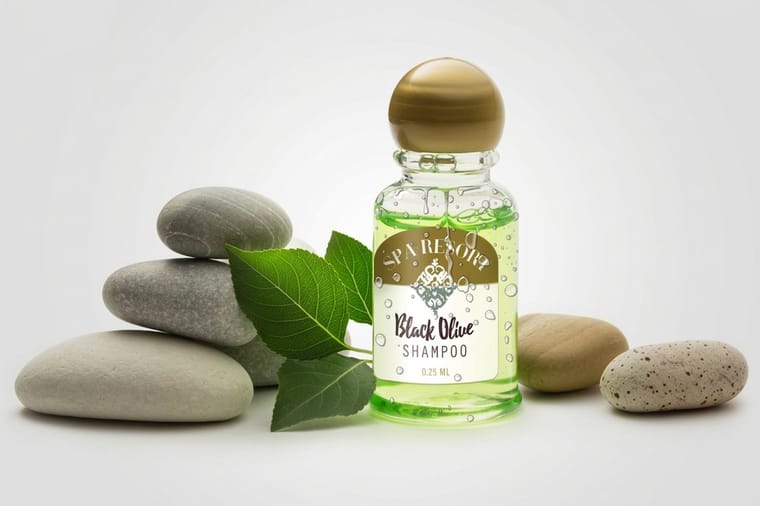
| 1. Premium Waterproof Labels | The face of the frozen pack | A plastic facestock that does not soften when condensation runs down it. This is the one label on the pack that has to look sharp after four freeze and thaw cycles in a retail case. | $84.68 |
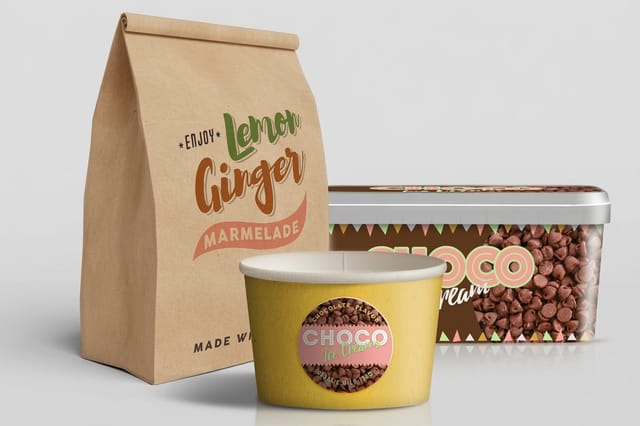
| 2. Premium Food Labels | Ingredients, allergens, net weight | The regulated panel. Print it once for the whole run, leave a matte block for the lot code, and size it to the flat back of the tray rather than the curve. | $29.16 |
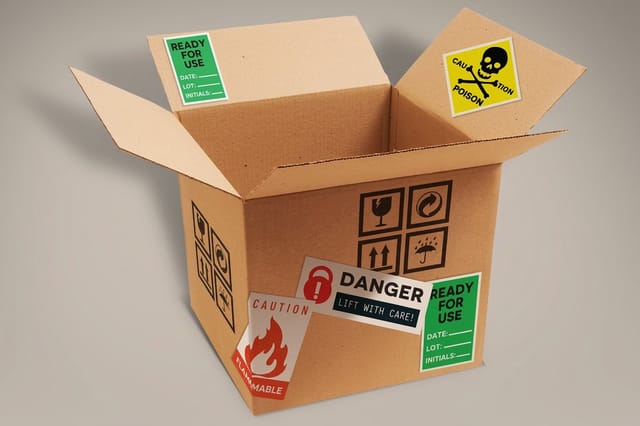
| 3. Premium Warning Labels | Keep Frozen and Do Not Refreeze | A small, loud second label. Separating it from the main panel means you can change the handling copy without reprinting the ingredient artwork. | $29.16 |
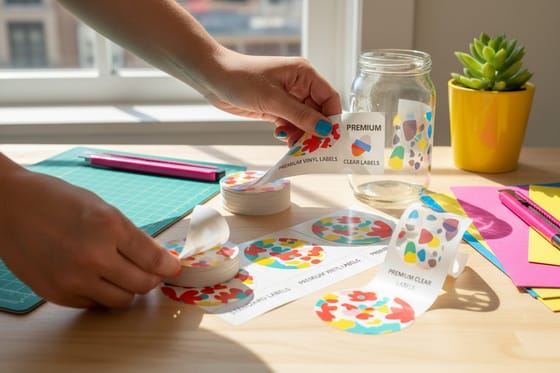
| 4. Premium Vinyl Labels | Totes, racks and walk-in shelving | Vinyl survives a bin that gets hosed down, stacked wet and dragged across a steel rack. Paper on a returnable tote lasts about one wash. | $29.16 |
| 5. Premium Shipping and Mailing Labels | The outer carton of a cold pack | The carton sweats the moment it leaves the cooler. A preprinted, laminated sender panel stays readable when the carrier label beside it has gone gray. | $29.16 |
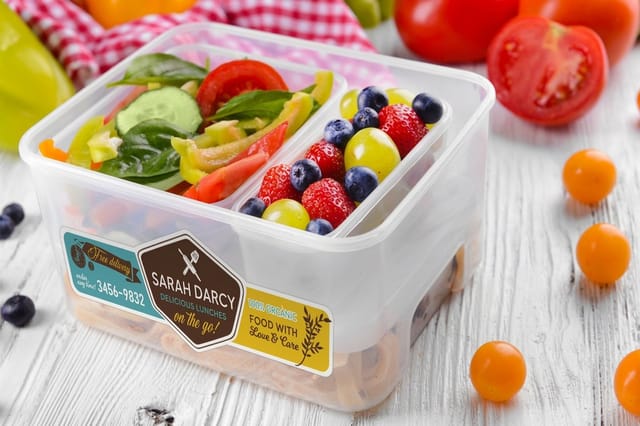
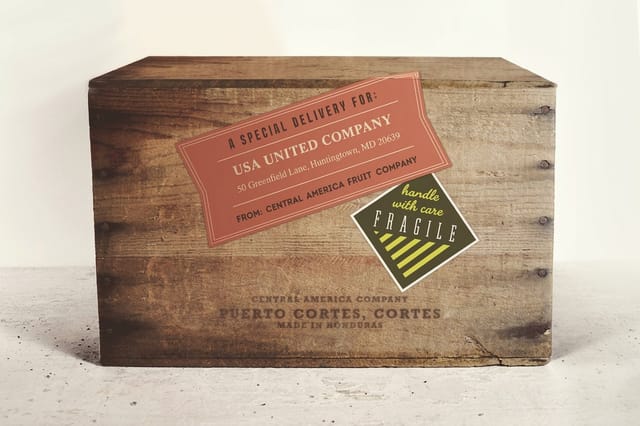
The number nobody reads
Service temperature and application temperature are not the same spec
Adhesive datasheets carry two cold numbers. Service temperature is how cold the bond survives once it is made. Minimum application temperature is how cold the surface may be at the instant the label touches it, and it is always the warmer of the two. Nearly every freezer label that fails in the field failed on the second number.
Materials
Which facestock to put on a cold pack
The adhesive decides whether the label stays attached. The facestock decides whether it still looks like a label after a thaw. Four faces cover almost every cold-chain job, and the cheapest one is only cheap where condensation never reaches it.
| Facestock | Water | Cold behavior | Where it belongs | Cost |
|---|---|---|---|---|
| Coated paper | Absorbs. Cockles and greys after one thaw | Adhesive can hold, facestock cannot | Inner cartons and case labels that never meet condensation | Lowest |
| White BOPP | None. Water sits on the surface and wipes off | Stays flexible below zero | The main panel on any pack that enters a retail freezer case | Mid |
| Vinyl | None, and it tolerates detergent | Stays flexible and conformable on a curve | Reusable totes, racks, shelving, anything washed | Mid to high |
| Clear polyester | None | Holds, but frost behind it kills the no-label look | Glass jars and clear tubs kept in a cooler, not a freezer | High |
1. Waterproof labels: the face of the pack, after four thaw cycles
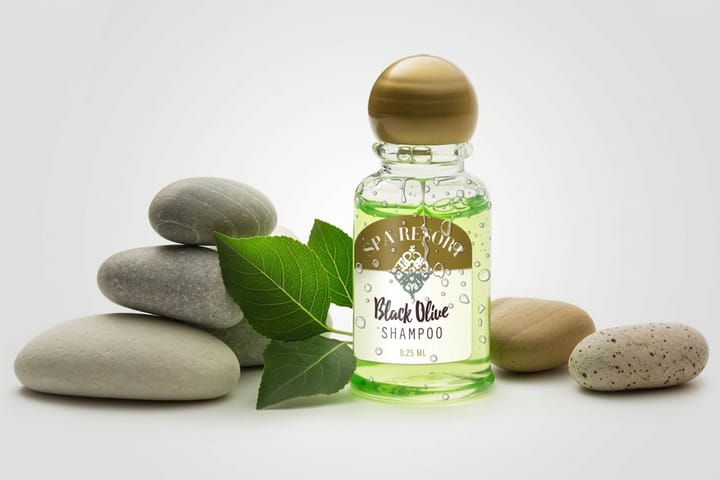
A frozen pack does not sit at one temperature. It goes from the blast freezer to a delivery truck, into a retail case that defrosts itself twice a day, then home in a warm bag. Every one of those swings pulls moisture onto the surface, and that is what destroys a paper label. Premium waterproof labels print on a plastic facestock that has nothing to absorb, so the sheet stays flat and the ink stays sharp long after a paper label would have greyed and curled.
Ask for a laminate over the print, not just a waterproof face. The face keeps the label from swelling; the laminate is what stops a wet cotton glove or an ice crystal from scuffing the ink off the top. Matte laminate hides fingerprints on a black background better than gloss does, which matters on a premium frozen line where every pack in the case is handled.
The limit worth knowing: a waterproof label is not a repositionable one. Freezer adhesives are aggressive by design, so if you put one down crooked on a printed film pouch, taking it back off usually takes the film with it. Run a short test batch before a full production line commits. If you are still weighing materials, our comparison of paper, vinyl and clear labels lays out where each face gives up, and what BOPP labels are and when to use them covers the specific film most frozen packs end up on.
2. Food labels: the regulated panel that has to stay legible at 0 F
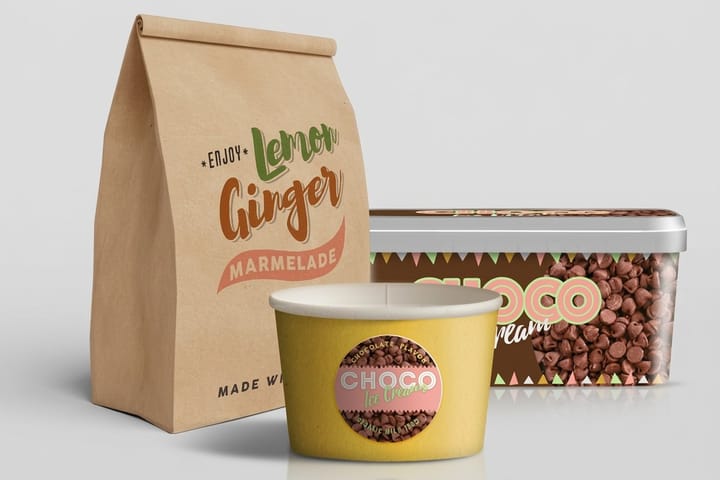
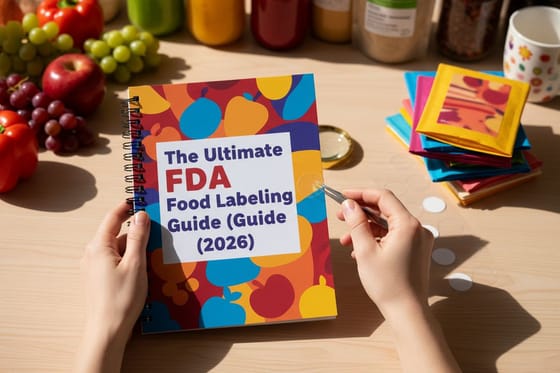
Every frozen retail item carries a panel nobody reads until something goes wrong: ingredients in descending order by weight, the allergen statement, net weight, and the name and address of the firm. Premium food labels are where that panel lives, and the format rules do not relax because the product is frozen. Our FDA food labeling guide walks the required elements, and how to create a custom nutrition label covers the panel itself.
Two practical decisions decide whether this label works on a freezer line. First, put it on the flat back or bottom of the tray, not wrapped around a small-radius tub. Adhesive loses tack as it cools, and a stiff face bent around a 2 inch diameter container is a spring trying to lift itself off. Second, leave a matte, uncoated block for the lot code and the date. A glossy laminate rejects both ballpoint and most thermal transfer ribbons, so an operator ends up writing on tape and sticking it to your artwork.
Print the recipe copy in the long run and keep the date variable separate. That way a formula change is the only thing that ever forces a reprint. If you are unsure how big the panel needs to be before it stops being readable, choosing the correct label size gives the working dimensions, and the complete label size guide lists the stock sizes that cost least to die.
3. Warning labels: Keep Frozen, Do Not Refreeze, Cook From Frozen
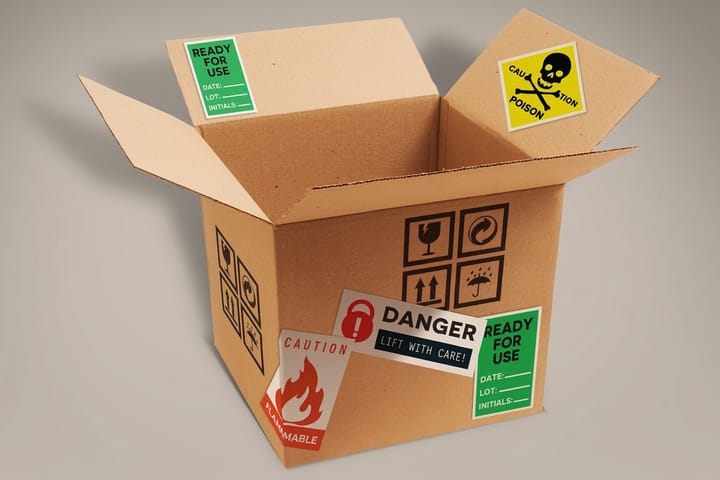
Handling copy fails when it is buried in six point type at the bottom of a busy panel. A separate warning label gives the instruction its own field, its own contrast, and its own reprint cycle. Keep Frozen, Do Not Refreeze, Thaw In Refrigerator, Cook From Frozen, and Use By are all short enough to read from arm's length inside a lit freezer case, which is exactly where they need to work.
Colour does the heavy lifting here, and cold complicates it. A freezer case is lit hard and cold, the pack is often behind a fogged door, and low-contrast pairings vanish. Black on a saturated yellow or a solid red reads through fog. Grey on white does not. The same reasoning behind compliant warning label design applies whether the hazard is chemical or a broken cold chain.
There is one more use for this piece that has nothing to do with the shopper. A bright Do Not Refreeze flag on the outside of a case is how a warehouse crew tells at a glance which pallet came back on a warm truck. Print a small run of those in a color you use nowhere else and the receiving dock will never confuse them with production stock.
4. Vinyl labels: for the totes, racks and shelving that come back wet
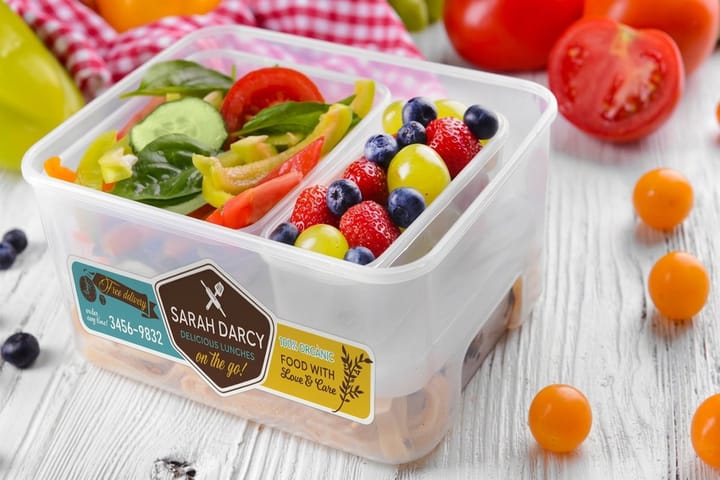
The pack leaves. The tote comes back. Reusable cold-chain containers get emptied, hosed down with hot water and detergent, stacked wet, and shoved onto a steel rack, and a paper label survives about one round of that. Premium vinyl labels are built for the part of the operation that never goes out the door: bin identification, rack zones, shelf tags, allergen segregation, and the first-in-first-out markings that keep a walk-in honest.
Vinyl conforms better than a stiff film, which is why it holds on a ribbed tote wall or a curved rack upright where a rigid face would tent and pop. Ask for a permanent adhesive on anything meant to stay for a season and a removable one on anything you will re-zone. Getting that backwards is a slow, expensive afternoon with a scraper. The broader system for naming and placing these is covered in inventory labeling best practices.
One caution about the walk-in cooler specifically: labels applied inside a room at 38 F are being applied below the minimum application temperature of a general purpose adhesive. Take the tote out, let the surface come up, wipe it dry, apply, and give it a day at room temperature before it goes back to work. A freshly applied label reaches full bond strength over about 24 hours, not instantly.
5. Shipping labels: the carton sweats the second it leaves the cooler
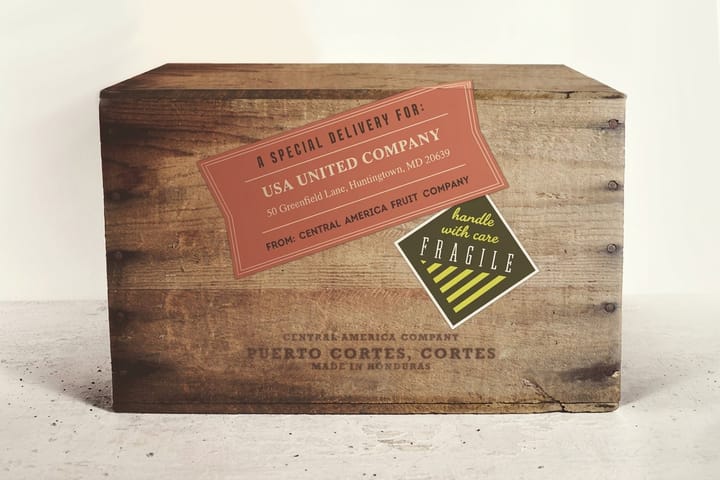
An insulated carton packed with gel packs or dry ice condenses moisture on its outside surface within minutes of hitting a warm dock. That is bad news for a corrugated box and worse news for anything printed on it. Premium shipping and mailing labels carry your return address, the Perishable and Keep Refrigerated call-outs, and the handling arrows, printed once and laminated rather than run off a thermal printer that fades in a damp cooler.
Apply the label to a dry, room-temperature carton before you pack it, not after. Kraft corrugated is porous and dusty, so wipe the panel and press the label with a hand roller rather than a thumb; corrugated flutes mean the middle of a large label can be bridging air if you only press the edges. Our step-by-step on how to label a package for shipping covers placement, and microwave-safe labels is worth reading if any part of the pack goes from freezer straight to reheat.
Sheet or roll is a real decision at this stage, not a preference. Hand-applying under 500 labels a run is faster from a sheet; anything above that, or any applicator head, wants a roll with a specified core and wind direction. Roll labels compared with sheet labels sets out where the crossover sits, and bulk discounts apply once the quantity climbs.
Specs and pricing
The two labels most cold-chain brands reorder
The waterproof face and the food panel are the pieces that repeat with every production run. Both print in 3 business days, the waterproof label on white vinyl permanent and the food label on uncoated label stock.


| Quantity | Price Per Unit | Total |
|---|---|---|
| 1 | $29.16 | $29.16 |
| Quantity | Price Per Unit | Total |
|---|---|---|
| 1 | $84.68 | $84.68 |
Wally explains why the label let go
The glue bonded to frost, not to the pack
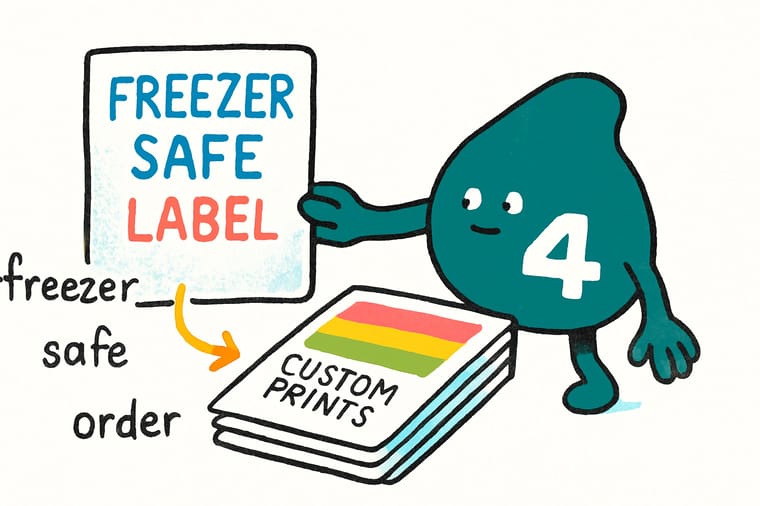
Wally puts two packs side by side. One was labeled warm and dry before it went into the freezer, so the adhesive flowed into the surface and set. The other was labeled after freezing, on a film already carrying a haze of frost, so the glue gripped a thin layer of ice that melted the first time the pack hit a warm dock. Same label, same adhesive, opposite result. Label before the freeze, wipe the surface dry, and round the corners so nothing has a lever to start a peel.
Shop packaging printing →See it in use
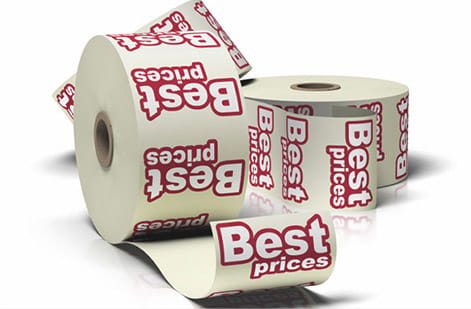
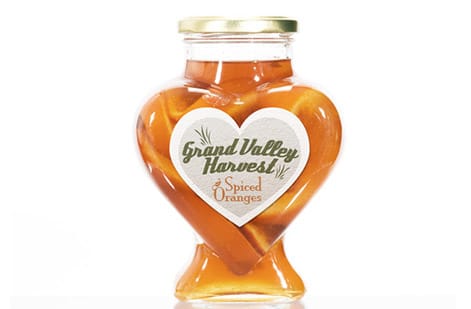
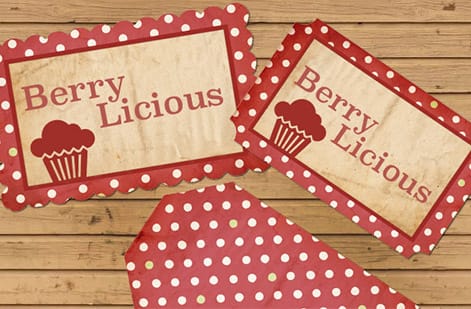
Packaging labels other cold-chain brands print

Explore more
Where to go next


By the numbers
The stock range behind a cold-chain label order
Common Questions
Common questions about freezer-safe labels
Will an ordinary label stay stuck in a freezer?
Sometimes, and that is the trap. A general purpose acrylic adhesive is usually rated to hold down to about 20 F once it has bonded, so a label applied warm on a dry surface may ride through a home freezer fine. It fails at the edges of that range: a blast freezer, a long thaw with heavy condensation, or a coated paper face that swells with moisture. If the pack is sold frozen, order a freezer-grade adhesive on a plastic face and stop guessing.
How cold can the surface be when I apply a freezer label?
Colder than most people expect, but not as cold as the label is rated to survive. Freezer-grade acrylic typically needs a surface around 25 F or warmer at the moment of application, then holds down to roughly -20 F. All-temperature adhesives go on as cold as -20 F and hold to about -65 F. The practical rule for a production line is simpler: label the product before it is frozen, never after.
Why do my freezer labels peel at one corner?
Three usual causes, in order of how often we see them. The surface had frost or condensation on it when the label went down, so the adhesive bonded to ice. The face is paper and it wicked water from a thaw, swelled, and levered itself up. Or the label is wrapped around a container with a tight radius, and the stiffness of the face is fighting an adhesive that loses tack as it cools. Rounding the corners to a 1/8 inch radius removes the starting point for all three.
Do I need waterproof labels, or is a freezer adhesive enough?
They solve different halves of the problem. The adhesive decides whether the label stays attached. The facestock decides whether it still looks like a label after a thaw. A freezer adhesive under a coated paper face will hold on grimly while the paper greys, cockles and smears. For anything a customer sees, pair the cold adhesive with a plastic face and a laminate.
Can I write a date or lot code on a freezer label?
Only if you specify an uncoated matte area for it. A gloss laminate rejects ballpoint ink and most thermal transfer ribbons, and a marker written on gloss will smear the first time a wet glove touches it. Leave a matte block sized for the code, or plan on a second small label carrying the variable data. Designing for that from the start saves an operator inventing a workaround with masking tape.
Are direct thermal labels a good choice for cold storage?
Not for anything that has to stay readable. Direct thermal print darkens with heat and friction and fades with time, and in a damp cooler the surface streaks where a wet glove drags across it. It is fine for a short-lived pick ticket. For the pack itself, or for a carton that has to survive a delivery route, preprint the fixed artwork and add only the variable data on site.
Does a frozen retail product need a nutrition panel?
A packaged food offered for retail sale in the United States generally carries the same required elements frozen as it does shelf-stable: a statement of identity, net quantity, an ingredient list in descending order by weight, allergen labeling, the nutrition facts panel where required, and the name and place of business of the manufacturer, packer or distributor. Frozen status adds handling copy rather than removing anything. Our FDA food labeling guide walks through each element.
How many labels should I order for a first frozen run?
Order the fixed artwork long and the variable pieces short. The ingredient panel and the branded face are the same on every pack for the life of a recipe, so the per-unit price rewards a big run. Handling and date labels change with the season, the co-packer and the recall you hope never happens, so keep those in small batches. Prices at 4OVER4.COM start at $84.68 for premium waterproof labels and $29.16 for premium food, warning, vinyl and shipping labels, and the configurator updates the per-unit price live as the quantity climbs.
Get Started
Order waterproof labels on white vinyl permanent
Print the five-piece freezer set as one matched order at 4OVER4.COM. Pick the facestock, the adhesive and the size, and watch every price update live as you build it.
Legal Disclaimer
Gold Standard guarantees apply to all standard orders placed through 4over4.com. Price match requires verifiable proof of a competitor's published price for an equivalent product with matching specifications and turnaround time. Satisfaction guarantee covers manufacturing defects and print quality issues. Contact support with order number and documentation. On-time delivery rate based on tracked orders 1999 to 2026. Individual results may vary based on shipping carrier performance.
