
The 11-Piece Bank Branch Marketing Set for New Customers
A bank sells trust, and trust is judged on paper: the folder the documents come home in, the brochure that survives the kitchen-table conversation, the card that makes an institution a person. Here are the eleven pieces, in the order a new customer meets them.
The bank branch marketing set is eleven print pieces that win and onboard new customers: brochures, financial business cards, gloss presentation folders, business forms, posters, business banners, postcards, rack cards, letterheads, printed envelopes, and a retractable banner stand. The banner and postcard drop announce the branch, brochures, rack cards, and lobby posters win the visit, and the welcome folder with matching forms, letterhead, and envelopes turns account opening into a branded package. One institutional look across all eleven.
The picks
Eleven products, from the street banner to the teller form
Start here. Eleven products, from $16.48 for 50 postcards and $17.57 financial business cards to $120.82 carbonless forms and gloss presentation folders from $844.54, each priced live from the configurator. Order them together so the institutional colors match from the street banner to the teller-window form, then read on for the moment each piece owns in the customer journey.


Design and print help
Keep the institution consistent
In financial services, consistency is credibility, so the same colors have to hold on a 13oz banner, a gloss folder and a two part carbonless form. These 4OVER4.COM services keep every piece exact, through every rate change and reprint.
How they work together
Print in the order a customer arrives
Three stages, in order: the neighborhood learns the branch exists, the first visit builds the case, and the onboarding sends it home as a package.
The banner puts the opening offer on the street, a postcard drop puts it in every mailbox in the radius, and the banner stand fronts the branch at community events and chamber mornings. All three work before a single appointment is booked.
Brochures explain each account without the jargon, the banker's card makes the relationship personal, lobby posters sell the rate while people wait, and rack cards send the rates home in a pocket.
The welcome folder sends every new account home as a branded package, printed forms keep the paperwork itself on brand and organized, and the letterhead and envelope carry every follow-up letter with institutional weight.
1. Standard brochures: the account explained at the kitchen table
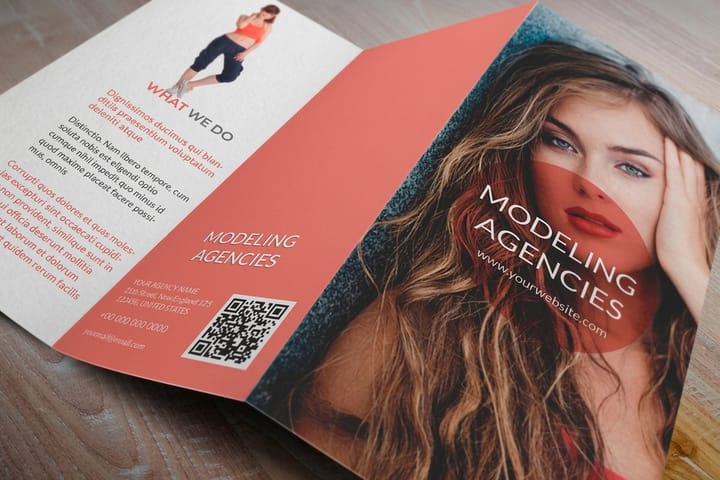
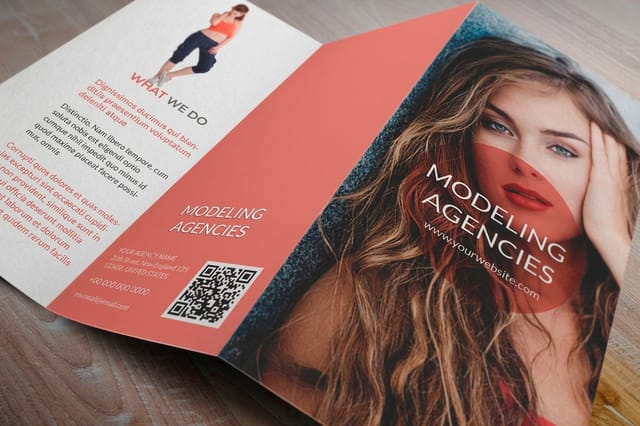
Nobody opens a checking account because a teller was persuasive; they open it after the offer survives the kitchen-table conversation. The brochure is the piece that attends that conversation. One product per brochure, checking, savings, the small-business package, with the rates, the fees stated plainly, and one clear next step.
Write it in the customer's language, not the compliance department's, and let the fold do the pacing: cover hook, inside explanation, back-panel action. Our guide on how to make brochures that convert covers the structure, and the eight fold styles shows which fold suits a rate sheet versus a product story.
Keep the rack full and current. An empty brochure rack in a bank lobby reads like an empty shelf in a pharmacy.
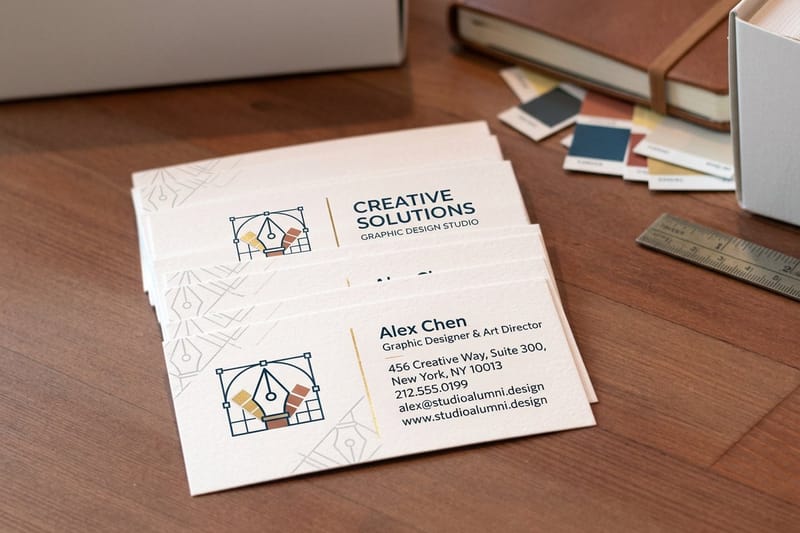
2. Financial business cards: the banker made personal
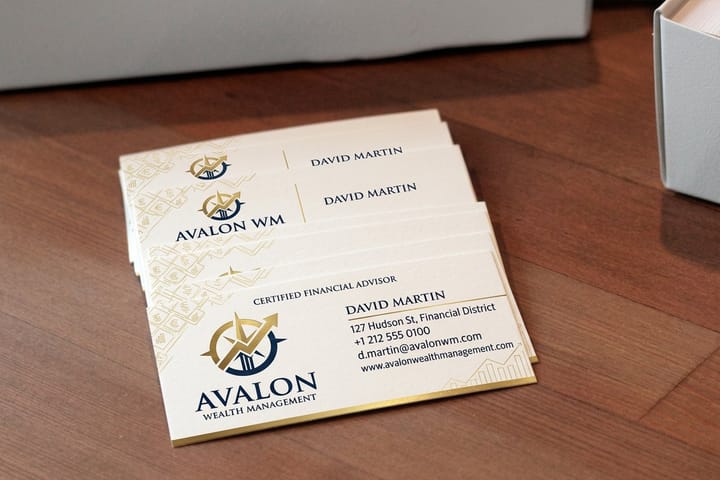
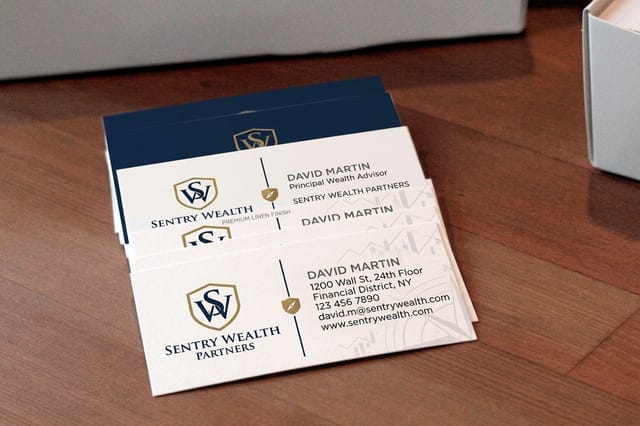
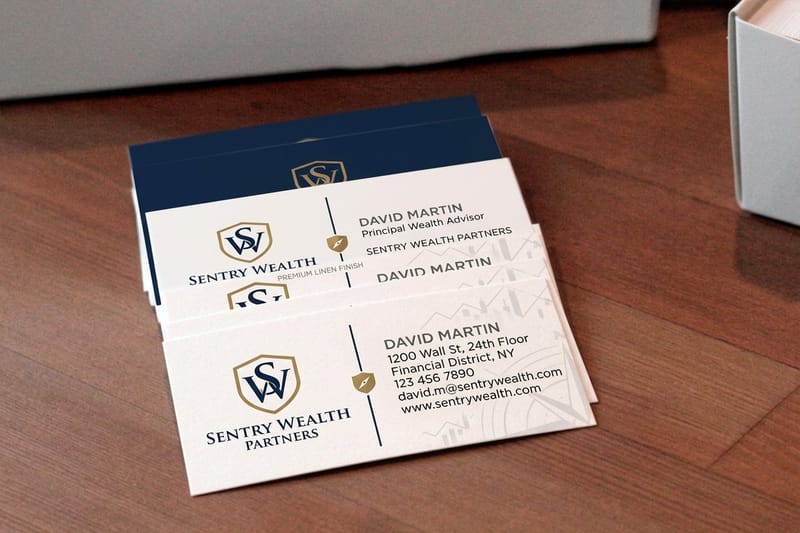
People do not have a bank, they have a banker. The card handed across the desk, name, direct line, NMLS number where required, turns an institution into a person the customer can call, and that personal thread is what keeps an account from moving to whichever app shouts loudest. Every banker, teller lead, and branch manager needs their own.
Keep the design austere and the stock heavy; in financial services, restraint is the flex. The formatting rules in proper business card format keep the hierarchy clean, and the finish comparison compares gloss with the soft-touch and uncoated stocks that read as restrained in this industry.
Print the card in the same run as the folder it slots into. The die-cut slot holding a perfectly matched card is a small detail customers notice without knowing why.
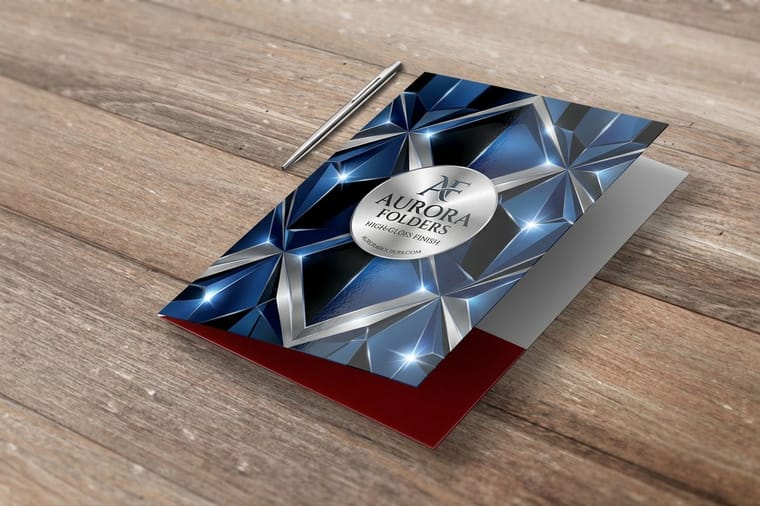
3. Gloss presentation folders: the welcome package customers judge you by
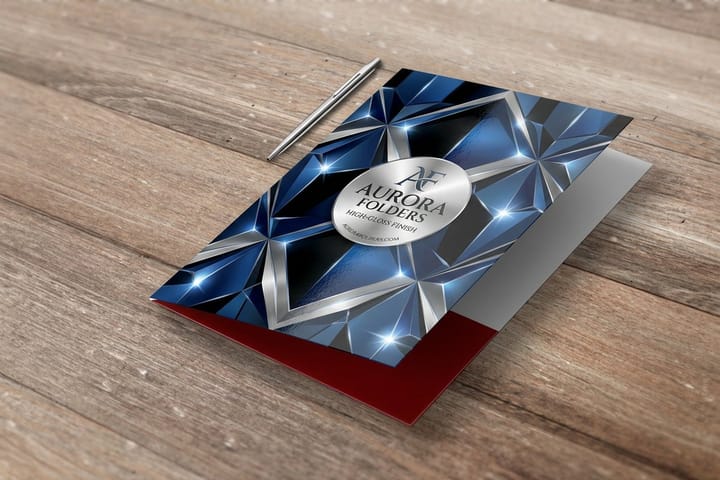
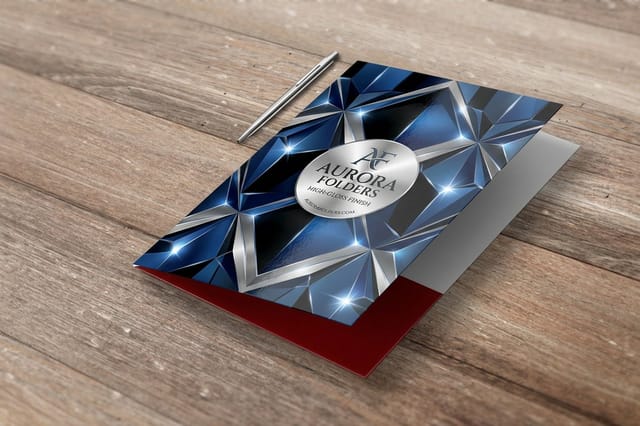
A new account produces a stack of paper: disclosures, agreements, the debit card letter, the rate sheet. Handed over loose, that stack says bureaucracy. Handed over in a gloss presentation folder with the institution's mark on the cover, it says welcome. The folder is the single most-judged object in the onboarding, because it is the one the customer takes home and keeps.
Spec it with two pockets and a business card slot, and print enough for every new account plus the mortgage and small-business meetings where documents travel. The primer on what pocket folders do for branding makes the case, and the standard folder sizes guide keeps the letter-size documents actually fitting.
This is the premium item in the set, from 250 for $844.54 at 9 by 12 inches on 14pt gloss cover, with 16pt gloss, uncoated and linen stocks and card slits on either pocket as options.
4. Business forms: the paperwork itself, on brand
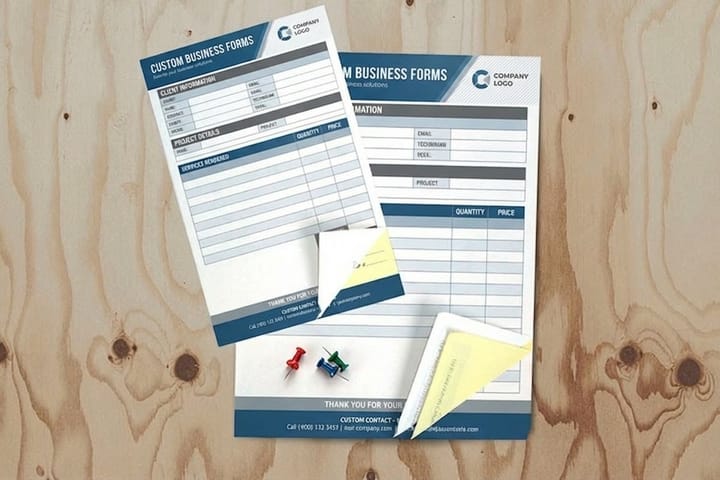
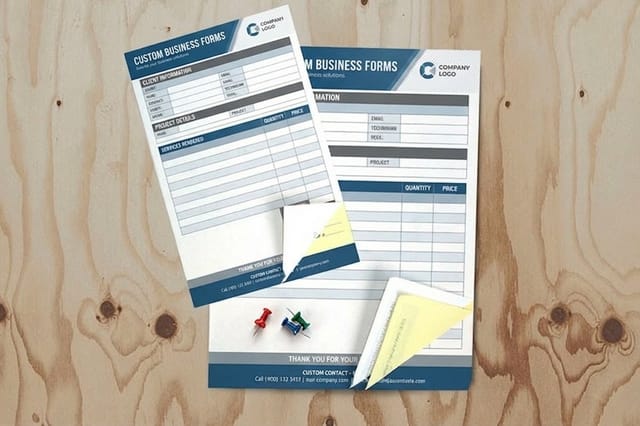
Forms are where a branch's brand usually dies: photocopied deposit slips, generic receipt books, a fax-era font on the safe-deposit register. Custom-printed business forms, carbonless duplicates for anything the customer signs and keeps a copy of, close that gap: two part white and canary sets at 5.5 by 8.5 inches, from $120.82 for 100. The paperwork is the product in banking, so the paperwork should look like the institution.
Standardize the header and the two brand colors across every form the branch uses, and the back office gets faster at the same time the front office gets sharper. Pair them with the letterhead thinking in letterhead design tips so the whole document family reads as one system.
Order by the year's volume, not the month's. Forms are the set's highest-volume item and the unit price rewards planning ahead.
5. Standard posters: the rate, sold to a captive lobby

The branch lobby is the rarest thing in marketing: an audience that stands still. Posters there, one product, one rate, one line of type readable from the queue, sell CDs, auto loans, and savings promos to people who came in for something else. It is cross-selling without a single awkward pitch.
Design them like the bank's voice: calm, exact, generous white space. The method in how to design a poster in 8 steps keeps the hierarchy disciplined, and swap them the day a rate changes, a stale rate on the wall is the fastest way to look asleep.
Print the quarter's set in one run: lobby, window facing the street, and the community board version. Same message, three audiences.
6. Business banners: the opening offer on the street

A new branch has one chance to be news. The banner across the facade, now open, the checking bonus, the anniversary rate, tells every passing car that something changed on this corner, and it keeps telling them through the whole opening quarter. For an institution, the banner is also a signal of confidence: this branch intends to be noticed.
Keep the message to the offer and the name, sized for the street's speed; typical banner sizes matches dimensions to viewing distance, and how to hang banners covers the mounting a masonry facade actually needs.
When the opening quarter ends, reprint for the next campaign rather than leaving the old offer up. A current banner is marketing; an expired one is evidence of neglect.
7. Standard postcards: the branch introduced to every mailbox
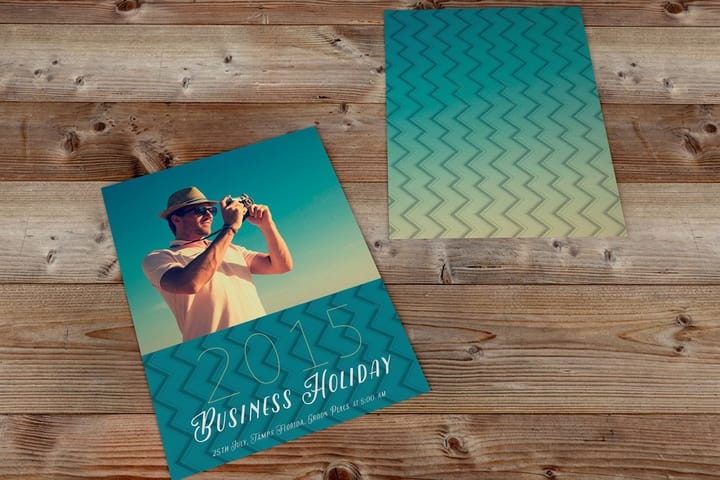
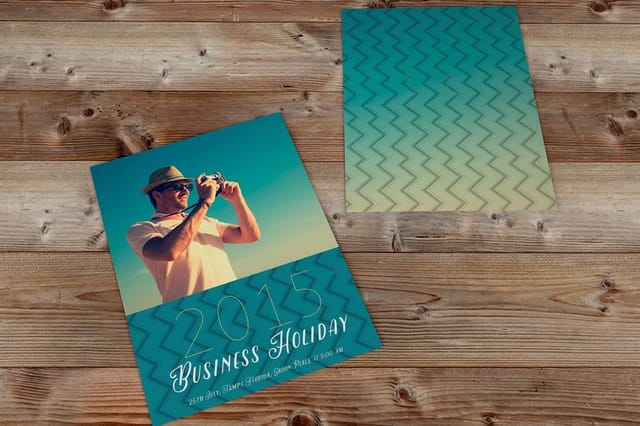
The households within the branch radius are the deposit base, and the postcard is how you introduce yourself to all of them at once. A card with the opening offer, a small map, and the date lands in the mailbox, gets read on the walk from the door, and leaves one fact behind: there is a new bank three blocks away, and it is paying a bonus.
Design for that short read: offer huge, map clear, terms honest. The ten elements in how to design a direct mail postcard are the checklist, and five steps to send direct mail walks the mailing itself, lists, permits, and drop timing.
Mail the radius twice: once before opening, once with the ninety-day reminder. The second card reaches the households the first one only informed.
8. Rack cards: the rate sheet that goes home in a pocket
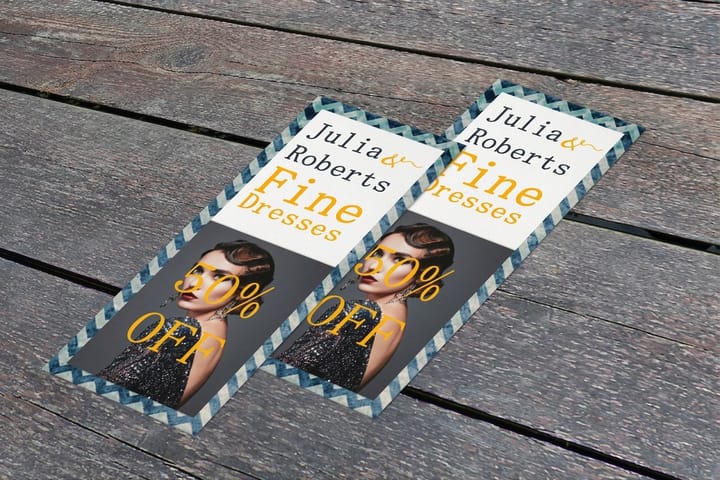
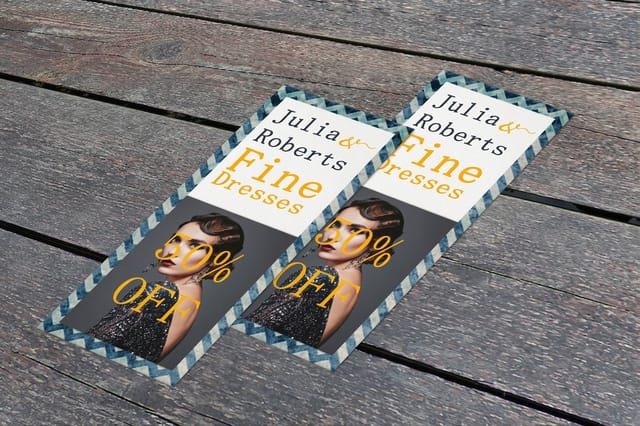
Between the poster on the wall and the brochure in the rack sits a simpler need: the customer who wants today's rates on something they can take. A rack card, one tall panel with the CD ladder, the checking tiers, or the current mortgage promo, answers it. It fits the lobby rack, the teller window, and a coat pocket, which is exactly the path a rate takes on its way to a kitchen-table decision.
Keep it scannable: product names left, rates right, terms in honest small type at the bottom, and the branch phone where a thumb lands. The format basics, and how to keep the narrow canvas from turning into a spreadsheet, live in what rack cards are.
Reprint on every rate change and date the corner. In a bank, a current rack card is marketing and compliance at once.
9. Letterheads: the letter that carries institutional weight
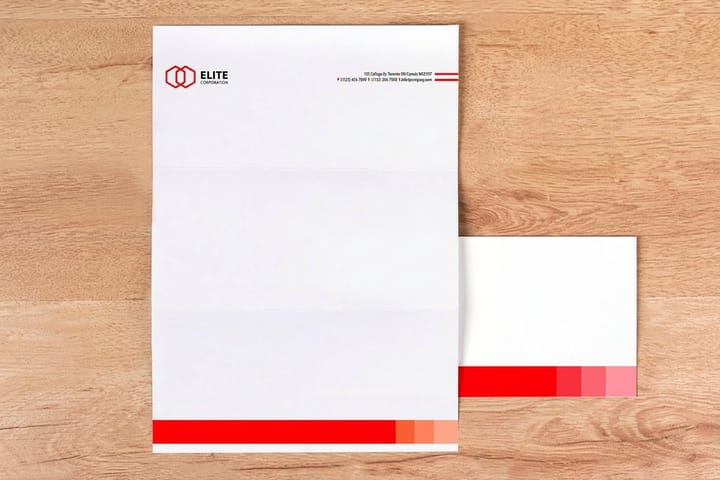
Banks still put the things that matter in writing: the loan approval, the welcome letter, the rate-change notice. Printed letterhead is what separates that correspondence from a photocopy. A letter on real letterhead looks like it is meant to be kept and filed.
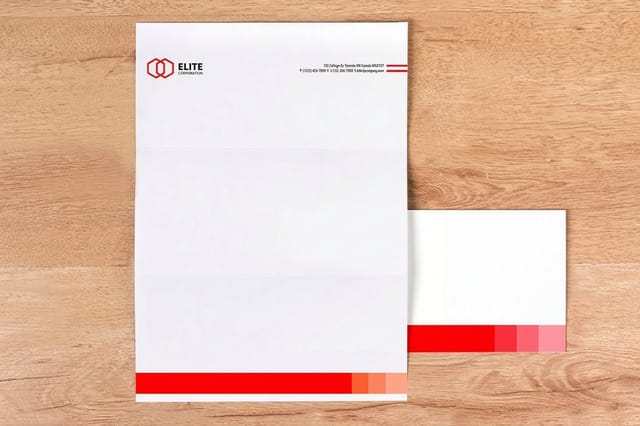
Design it once and design it quiet: the mark, the branch address, the regulatory footer, and nothing else competing with the message. The rules in letterhead design tips cover margins and font sizing, and the wider options live under letterheads printing.
Print the year's supply with the forms so the whole document family matches. The welcome letter on branch letterhead inside the welcome folder is the onboarding done properly.
10. Printed envelopes: the brand on the outside of every letter
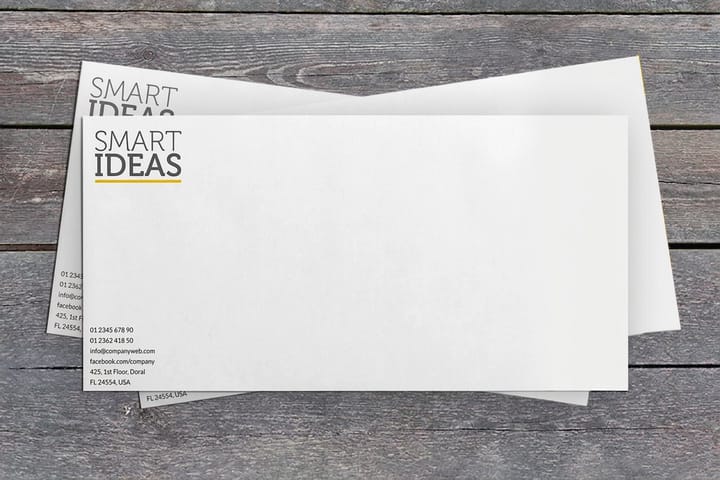
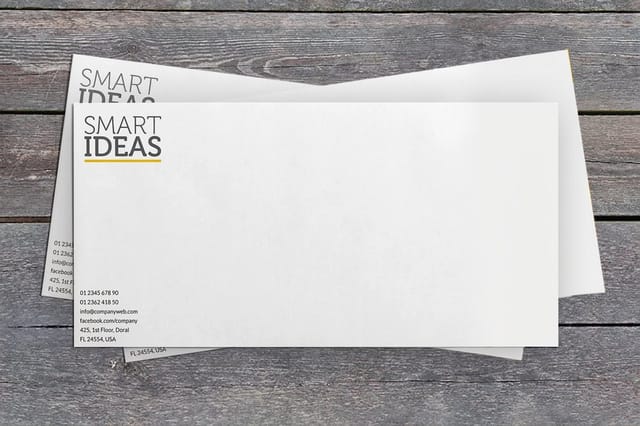
The envelope decides whether the letter gets opened. A printed envelope with the institution's mark and return address reads as official the moment it hits the mail pile, which is precisely the treatment the debit card letter, the statement notice, and the loan documents deserve. Plain envelopes make official mail look like offers; printed ones make it look like banking.
Match the envelope stock and blue to the letterhead so the pair reads as one system, and keep the front austere: mark top-left, nothing else. The range of sizes and windows lives under envelopes printing, including the double-window formats that keep addressing automated.
Order envelopes and letterhead in the same run. Correspondence is the branch's quietest channel and the one that touches every single customer.
11. Banner stands: the branch at the community table
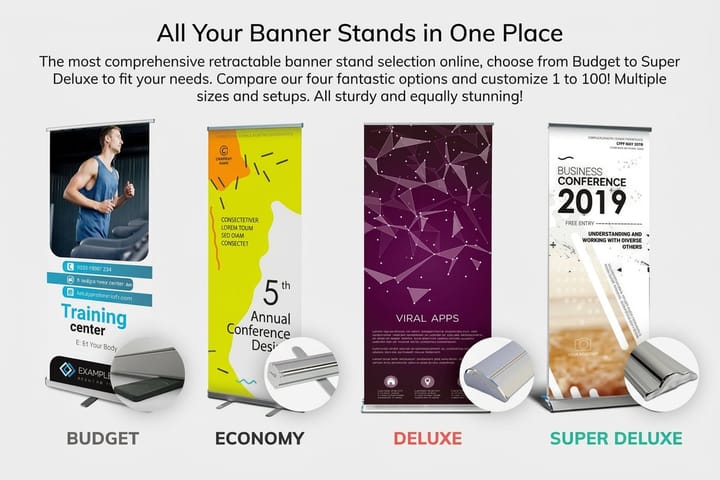
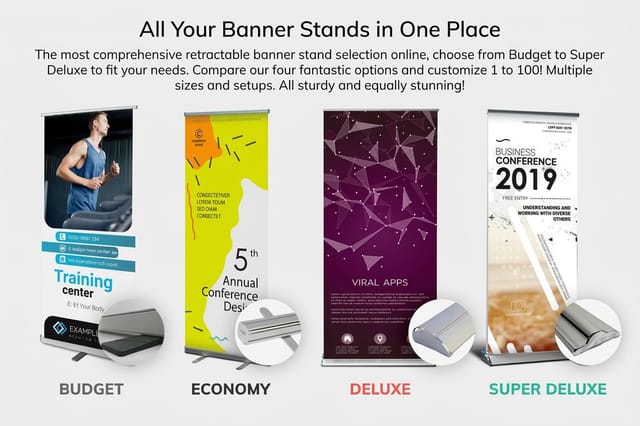
A new branch wins deposits by showing up: the chamber breakfast, the school fundraiser, the farmers market, the first-time-homebuyer seminar in its own lobby. A retractable banner stand makes every one of those tables look like the institution meant to be there, full-height, on brand, with the offer readable across the room, and it sets up in the minute before the event starts.
Design it around one line, the community bank for this neighborhood, plus the current lead offer, and keep it evergreen enough to survive a year of events. Setup really is a minute, as this guide shows, and the size guide picks the footprint for a lobby versus a booth.
Between events, it stands by the entrance selling the seminar series. A branch that is visibly part of the neighborhood is the one the neighborhood banks with.

Specs and pricing
Brochure specs: 50 for $57.11 on three text stocks
The brochure rack is the branch's silent sales team, so its stock and color set the standard. Here are the live specs and price-per-unit for standard brochures at 4OVER4.COM, straight from the configurator.

| Quantity | Price Per Unit | Total |
|---|---|---|
| 50 | $1.14 | $57.11 |
| 100 | 82.4¢ | $82.38 |
| 200 | 53.3¢ | $106.55 |
| 300 | 41.0¢ | $123.02 |
| 400 | 34.9¢ | $139.49 |
| 500 | 31.2¢ | $155.97 |
| 600 | 26.7¢ | $160.36 |
| 700 | 23.5¢ | $164.75 |
Wally explains the set
Eleven pieces, one institution, every handout counts
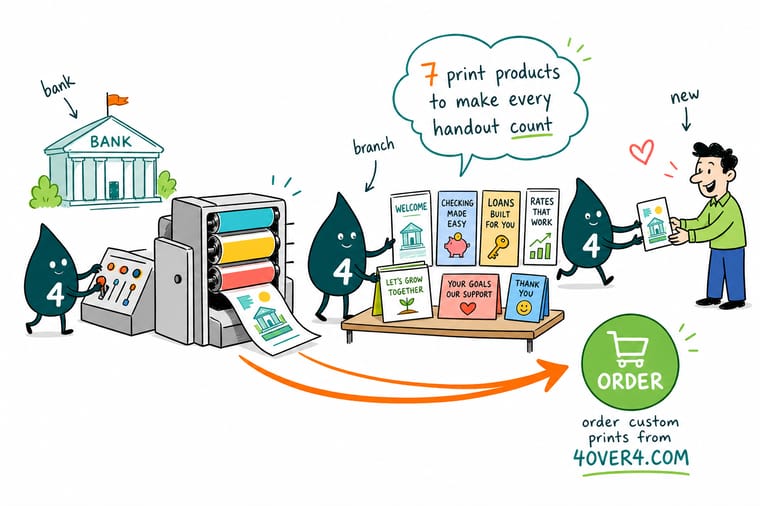
Wally sees a bank branch as a chain of handoffs. The postcard and banner hand the neighborhood a reason to visit, the brochure and banker's card hand the visitor a case they can take home, and the welcome folder hands the new customer a package that says the institution has itself together. Keep every piece in the same brand system and let 4OVER4 print the whole set exact, in one run.
Shop financial printing →See it in use
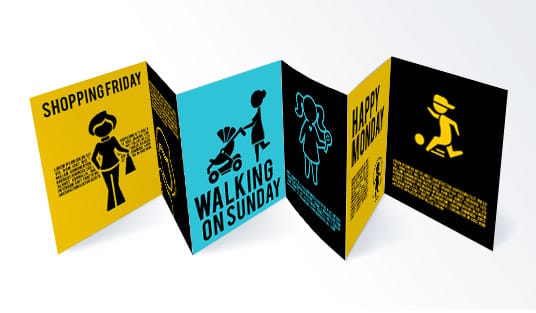
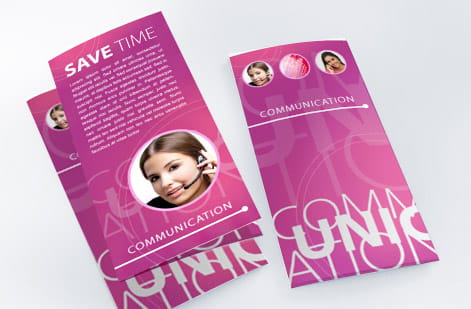
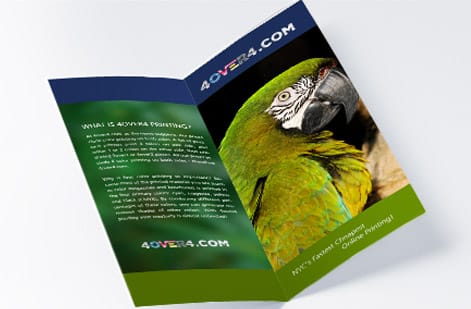
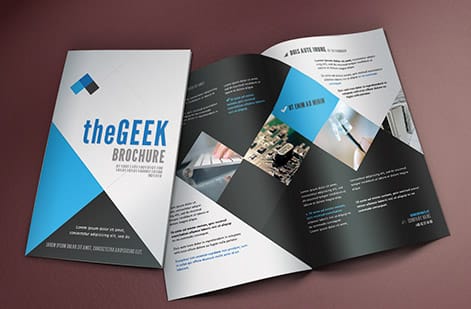
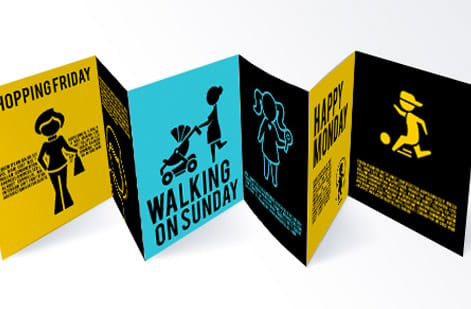
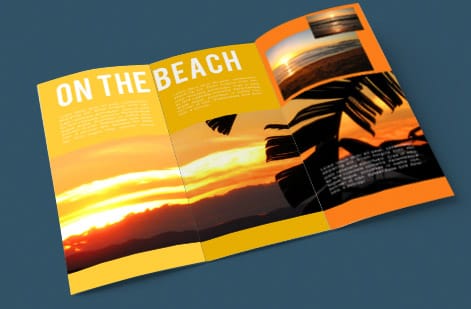
Brochures from bank branch lobbies



Explore more
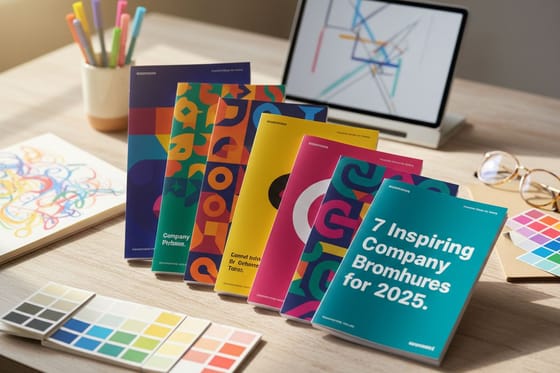
Where to go next


By the numbers
One set, printed to earn deposits
Common Questions
Common questions about the bank branch set
What is the bank branch new-customer marketing set?
It is a curated set of eleven print products for winning and onboarding new banking customers: brochures, financial business cards, gloss presentation folders, business forms, posters, business banners, postcards, rack cards, letterheads, printed envelopes, and a retractable banner stand. The street and mailbox pieces announce the branch, the lobby pieces win the first visit, and the folder, forms, and correspondence pieces turn account opening into a branded experience.
Why does print matter so much for a bank branch?
Because banking is a trust purchase, and trust is judged on physical evidence. A customer cannot inspect your balance sheet, but they can feel the weight of the folder, notice that the brochure matches the poster, and see whether the branch presents itself with care. Consistent, well-printed materials are the visible proxy for institutional competence, especially for a branch that is new to the neighborhood.
What goes in the welcome folder?
Everything a new account generates: disclosures, the signature card copy, the debit card letter, a rate sheet, the banker's business card in the die-cut slot, and the relevant product brochures. The folder turns a pile of loose compliance paper into a package the customer keeps, and every time they open it at home, the brand is the first thing they see.
Do postcard drops still work for bank openings?
A postcard reaches every household in the branch radius, and it lands in the one place a bank's audience still checks daily: the mailbox. The formula that works is a concrete opening offer, a map, and a date. Households that bank elsewhere will not switch for an ad, but they will for a rate plus a branch they now know is three blocks away.
What should the lobby posters say?
The current rate offer, one product per poster, in type readable from the queue. The lobby is the one place your audience stands still for five minutes, so posters there get read. Rotate them when rates change, an outdated rate poster is a compliance problem as well as a marketing one.
How much does the full set cost to print?
Each piece is priced live on its product page and scales with quantity and options. Postcards start under twenty dollars, business cards under twenty, banners in the mid forties, brochures in the fifties, posters around a hundred, business forms in the low hundreds for carbonless sets, and gloss presentation folders are the premium item, from 250 for $844.54. Configure each to see exact totals.
How do I keep everything compliant and consistent?
Route every piece through the same brand template: logo placement, the two institutional colors, one typeface, and the required disclosures in the same footer position on every printed item. Ordering the set from one printer keeps one set of files, and reprints for rate changes become a one-field edit instead of a redesign.
Get Started
Order 50 brochures at $57.11
Fifty brochures are $57.11 and print in 3 business days. A business banner is $43.92 and prints in 2. Presentation folders start at 250 for $844.54 and take 7, so put those on the annual cycle.
Legal Disclaimer
Gold Standard guarantees apply to all standard orders placed through 4over4.com. Price match requires verifiable proof of a competitor's published price for an equivalent product with matching specifications and turnaround time. Satisfaction guarantee covers manufacturing defects and print quality issues. Contact support with order number and documentation.
