
Types of Packaging Materials Compared by Cost, Durability, and Eco Impact


No packaging material wins on everything. This guide compares paperboard, corrugated, kraft, plastic, glass, and metal on the four levers that actually decide a package: cost, durability, sustainability, and presentation.
Packaging materials each trade off cost, durability, sustainability, and presentation. Paperboard is the printable retail carton, corrugated protects in shipping, kraft is natural and recyclable, and plastic, glass, and metal are specialty picks for liquids, premium goods, and long shelf life. Rank those four levers for your product, then test your top pick with a sample.
Start here
Cost, durability, sustainability, shelf appeal
Match the material to your product across four levers: cost, durability, sustainability, and presentation. Paperboard is the printable retail carton, corrugated protects in shipping, kraft is affordable and natural, and plastic, glass, and metal handle liquids, premium goods, and long shelf life. The comparison chart below rates each material so you can choose with clear eyes.
Why packaging material is a trade-off, not a winner
There is no single best packaging material, and any guide that names one is oversimplifying. Every material balances four things differently: cost, durability, protection, and environmental impact. A material that is cheap and eco-friendly may not protect a fragile product, while one that protects beautifully may be heavy, costly, or hard to recycle. The right choice is the one that fits your specific product, budget, and brand values.
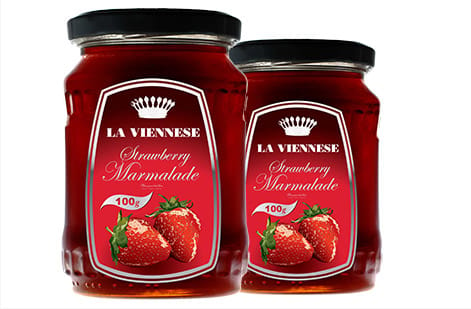
This guide compares the materials brands actually use, paperboard, corrugated, kraft, plastics, glass, and metal, on those four trade-offs, so you can pick with clear eyes. It also weaves in the printed pieces that turn raw material into finished packaging, from custom mailer boxes to custom labels.
Whatever you land on, the full packaging printing collection covers boxes, mailers, and labels in every material here. For a broader look at packaging formats, our guide on nine types of packaging is a useful companion.
The four levers for comparing any material
Before diving into specific materials, it helps to have one mental scorecard you apply to all of them. Four levers cover almost every decision. Cost is the per-unit price plus shipping weight. Durability and protection is how well it shields the product from crushing, moisture, and shock. Sustainability is how easily it is recycled or composted and whether it uses renewable fiber. And presentation is how well it takes print and how it feels in a customer's hands.
Rank those four for your product and the right material usually reveals itself. A fragile electronic shipping on its own weights protection heavily, pointing to corrugated shipping boxes. A cosmetic sold on a shelf weights presentation, pointing to printed paperboard. An eco-forward soap brand weights sustainability, pointing to kraft.
Most products score across several materials in layers, and that is fine. The skill is matching each layer to its job rather than forcing one material to do everything. Our guide on designing packaging for a product takes this further.
Paperboard: the printable retail carton
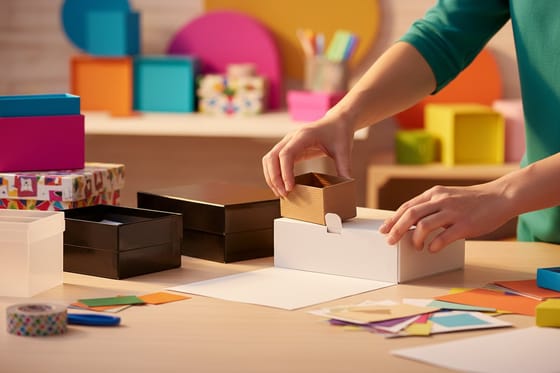
Paperboard is the material behind most retail cartons you handle every day, from cosmetics boxes to food packaging. It is a single thick, dense sheet of paper that is lightweight, smooth, and takes print beautifully, which makes it the default for anything that sells on a shelf. It comes in several grades: solid bleached sulfate for a bright white printable surface, coated recycled board for a greener option, and chipboard for rigid, non-bending structure.
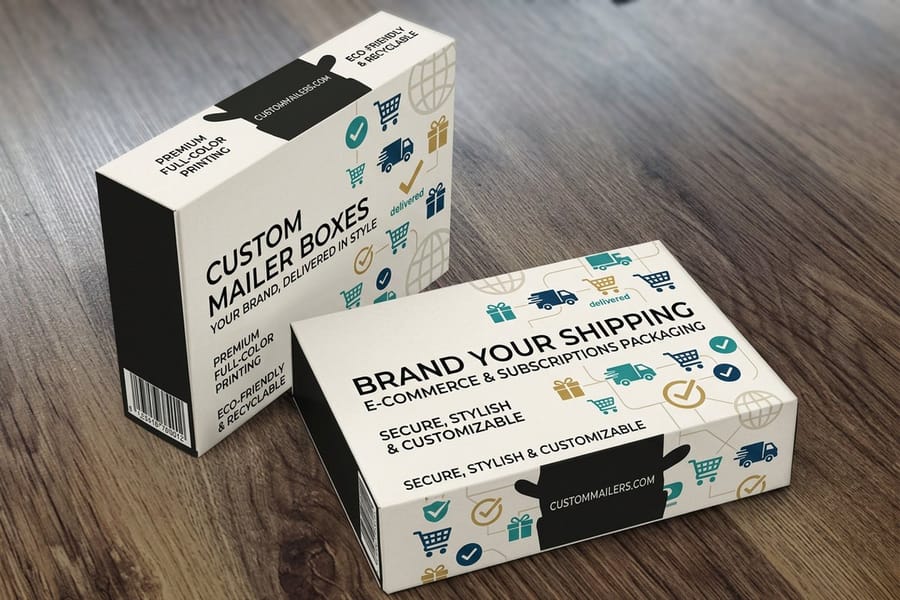
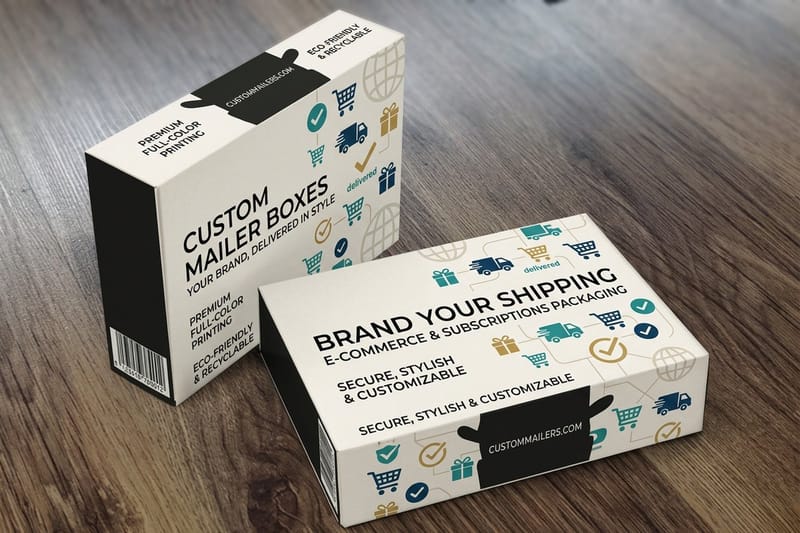
The trade-off is protection. Paperboard offers moderate strength, so it suits products that do not need heavy shock absorption, or that ship inside a sturdier outer box. Order printed custom mailer boxes and folding cartons in paperboard when shelf presence and clean printing matter most, and pair them with a roll end tuck top box for easy assembly.
Because it is recyclable and renewable, paperboard also scores well on sustainability, especially in recycled grades. For the deeper mechanics of folding cartons, see our guide on folding carton boxes.
Corrugated cardboard: protection and shipping
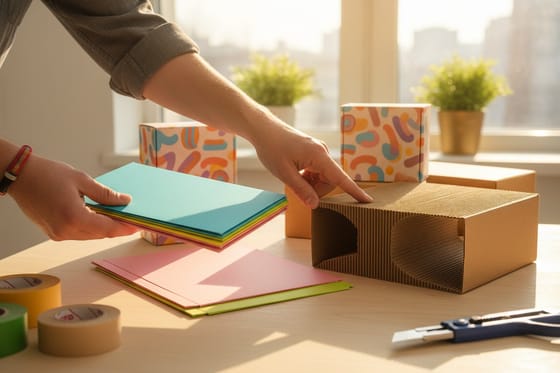
When a package has to survive transit, corrugated cardboard is the answer. Its structure, a wavy fluted layer glued between flat liners, absorbs shock and resists crushing far better than a single sheet, which is why it is the standard for shipping boxes and e-commerce mailers. The flute size can be tuned for more cushioning or a thinner, lighter profile.
Corrugated balances the four levers well for shipping: medium cost, high durability, strong protection, and full recyclability. Order shipping boxes for products that travel on their own, or branded custom mailer boxes when the corrugated box is also the unboxing experience. Our guide on cardstock versus corrugated helps you decide between print-first and protection-first board.
The one caution is that corrugated prints less crisply than smooth paperboard, so many brands ship in corrugated and present in a printed carton inside. Combined, they deliver both protection and shelf-quality print without compromise.
Kraft paper: natural, affordable, and recyclable

Kraft is unbleached paper with a distinctive brown, natural look, and it has become the signature material of eco-conscious and artisan brands. It is inexpensive, recyclable, and carries an earthy, small-batch feel that a glossy coated box cannot. That combination makes it a favorite for soaps, candles, coffee, baked goods, and subscription boxes.
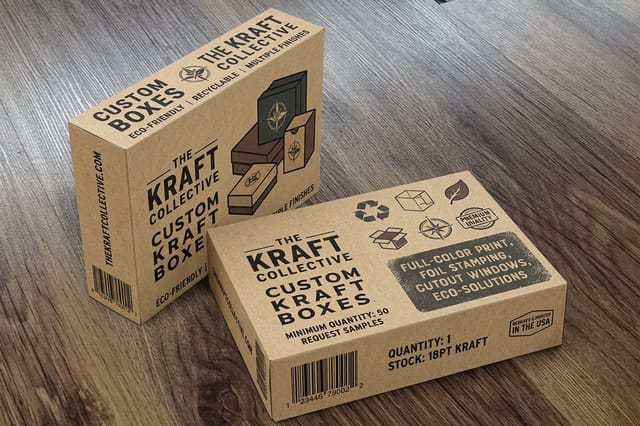
On the scorecard, kraft is low cost, medium durability, and high on sustainability, especially in recycled grades. It prints well in a rustic, understated way, though bright colors read softer on the brown surface than on white board. Order kraft boxes or custom kraft boxes when a natural, sustainable brand story is part of the product.
Kraft also comes as bags, wraps, and mailers, so a brand can carry the look across an entire packaging system. For inspiration on using it well, our article on a beautiful kraft packaging box shows the material in action.
Plastic, glass, and metal: the specialty materials
Beyond paper, three material families handle jobs paper cannot. Rigid plastic is durable and moisture-proof, ideal for liquids, cosmetics, and reusable containers, but its recyclability depends entirely on the resin type and local facilities. Flexible plastic film makes lightweight pouches and wraps at very low cost, though it is rarely recyclable in curbside streams. Weigh both against paper-based options before defaulting to them.
Glass is premium, inert, and infinitely recyclable, which is why it packages fine food, drinks, and cosmetics, but it is heavy and breakable, raising shipping cost and risk. Aluminum and steel offer an outstanding barrier against light and air plus high recyclability, making them the choice for cans, tins, and long shelf life.
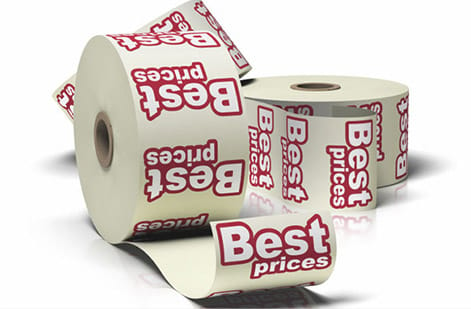
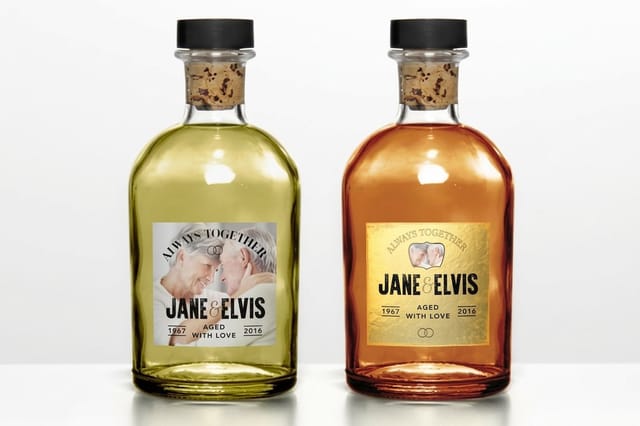
These materials rarely need custom printing themselves; instead, brands dress them with custom labels. A striking label turns a plain jar, bottle, or tin into branded packaging, which is why labeling is the bridge between these materials and your brand. Our guide on paper versus vinyl versus clear labels covers the options.
Labels, tape, and finishing that complete the package

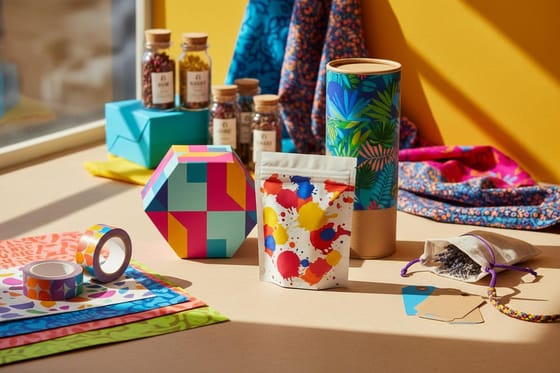
The material is the structure, but the finishing is what makes packaging feel like a brand. Almost every material, from a glass jar to a corrugated mailer, is completed with printed touches. Custom labels brand bottles, tins, and plain boxes. Branded tape seals and dresses a shipping box. Tissue, inserts, and stickers turn an opening into an experience.
These finishing pieces are often the highest-impact, lowest-cost part of a packaging system, because they let you use an affordable, sustainable base material and still deliver a premium unboxing. A kraft box with a beautiful label and a printed insert feels considered without the cost of a fully custom rigid box.
Plan the finishing alongside the material so the whole package reads as one design. Browse the packaging printing collection for labels, boxes, and finishing pieces, and see our guide on preparing files for packaging products to get the artwork press-ready.
How to choose, and what packaging costs
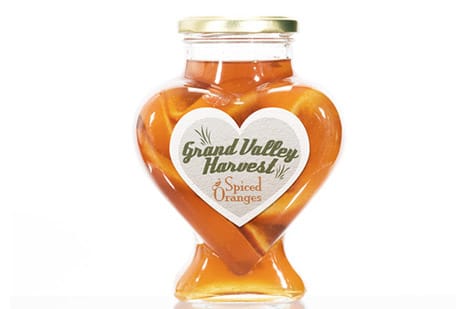
Choosing a material means ranking those four levers for your product, then testing your top pick with a sample. If protection leads, start with corrugated. If shelf presentation leads, start with paperboard. If sustainability leads, start with kraft or recycled board. If you need a moisture barrier or real weight for a liquid, consider rigid plastic, glass, or metal with a strong label.
On cost, paper-based materials are usually the most economical and get cheaper at volume, while glass and metal carry higher unit and shipping costs. In the 4OVER4.COM configurator you set the box type, size, material, and quantity and the price updates live, so you can compare a kraft mailer against a coated carton and see exactly how each choice changes the number before you order.
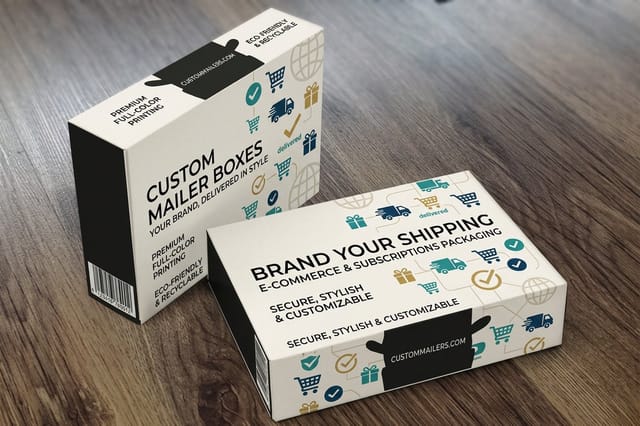
Use the live specs and pricing panel below to price your custom mailer boxes, and order samples in your top one or two materials so you can feel the weight and protection against your real product before committing to a full run.
Wally weighs the material trade-offs
Cost, durability, sustainability, and presentation
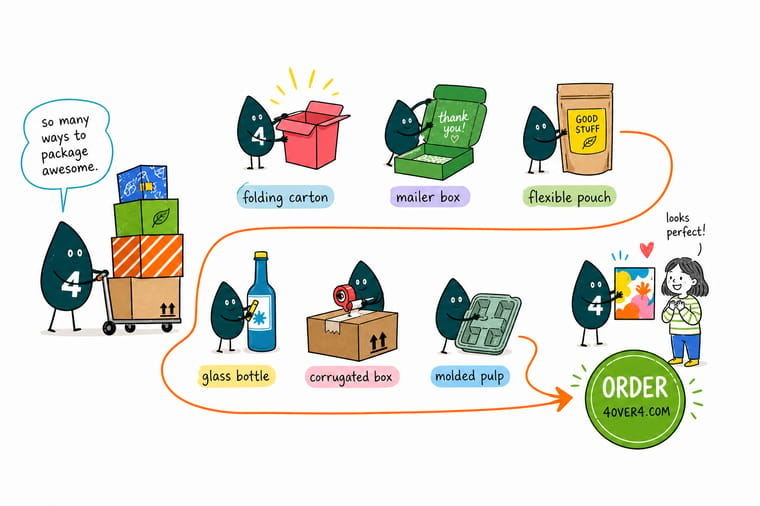
Wally never picks a packaging material by habit. He ranks four levers for the product, cost, durability, sustainability, and presentation, then matches each layer to its job. Corrugated protects in transit, printed paperboard sells on the shelf, kraft carries a natural story, and a great label dresses glass or metal. The winner is the material that fits your product, not a default.
Order your custom packaging →Quick reference
Packaging materials comparison chart
Every material rated on the levers that matter. Use this to shortlist the one or two materials worth sampling for your product.
| Material | Cost and strength | Best for |
|---|---|---|
| Paperboard (SBS, CRB) | Low cost, medium strength | Recyclable printable cartons for cosmetics, food, and retail boxes. |
| Corrugated cardboard | Medium cost, high strength | Fluted board that protects and stacks, ideal for mailers and shipping. |
| Kraft paper | Low cost, medium strength | Recyclable, natural look for bags, wraps, and eco-forward brands. |
| Rigid plastic | Medium cost, high strength | Durable and moisture-proof, but recycling is limited by resin type. |
| Flexible plastic film | Low cost, low strength | Lightweight pouches and wraps, hard to recycle in most streams. |
| Glass | High cost, high strength | Premium, inert, and fully recyclable, but heavy and breakable. |
| Aluminum / metal | High cost, high strength | Excellent barrier and recyclability for cans, tins, and long shelf life. |
Step by step
Choose a packaging material in 7 steps
- Define what the package must protect Weight, fragility, moisture, and shelf life set the baseline. A heavy or fragile product needs corrugated or rigid material, while light retail goods can use paperboard.
- Decide how it ships and sells A box that ships alone needs shipping-grade strength, while a carton sold on a shelf can prioritize print and presentation over raw durability.
- Weigh your sustainability goals If eco impact matters, favor paper-based, widely recyclable materials like paperboard, corrugated, and kraft over mixed plastics that are hard to recycle.
- Match the material to your brand feel Kraft reads natural and artisan, coated paperboard reads clean and premium, and specialty finishes on rigid stock read luxe.
- Set your budget against quantity Paper-based options usually cost the least per unit and drop further at volume, while glass and metal carry higher unit and shipping costs.
- Plan the print and finishing Choose a material that takes your artwork well, then plan labels, tape, and finishes so the package looks finished, not just functional.
- Order samples before you commit Request samples in your top one or two materials so you can feel the weight and protection against your actual product before a full run.
Specs and pricing
Custom mailer box specs and live pricing
Corrugated mailers are the most-ordered custom packaging. Here are the live specs and price-per-unit for custom mailer boxes at 4OVER4.COM, straight from the configurator.
| Quantity | Price Per Unit | Total |
|---|---|---|
| 250 | $2.85 | $711.78 |
| 500 | $1.42 | $711.78 |
| 1,000 | 79.7¢ | $797.02 |
| 2,500 | 53.5¢ | $1,338.30 |
| 5,000 | 44.6¢ | $2,231.42 |
| 10,000 | 40.4¢ | $4,044.70 |
| 15,000 | 39.0¢ | $5,844.45 |
| 20,000 | 38.3¢ | $7,657.73 |
Print it
Order custom packaging at 4OVER4
See it in use
Custom packaging from customer orders




Explore more
Where to go next


By the numbers
Stocks behind each packaging material choice
Common Questions
Common questions about packaging materials
What are the main types of packaging materials?
Packaging materials fall into a handful of families, each with its own strengths. Paper-based materials are the most common: paperboard for printed retail cartons, corrugated cardboard for shipping and protection, and kraft paper for bags, wraps, and an eco-friendly look. Plastics come in two forms, rigid plastic for durable, moisture-proof containers and flexible film for lightweight pouches and wraps. Glass suits premium liquids and food because it is inert and fully recyclable, though it is heavy and breakable. Metal, mostly aluminum and steel, provides an excellent barrier and high recyclability for cans and tins. Most products use a combination, such as a corrugated shipping box holding a printed paperboard carton, so the real skill is matching each layer to its job.
What is the difference between paperboard and corrugated cardboard?
They are both paper-based but built for different jobs. Paperboard is a single, thick sheet of dense paper, smooth and printable, used for folding cartons like cereal boxes, cosmetics packaging, and most retail boxes. It is lightweight and prints beautifully but offers only moderate protection. Corrugated cardboard is a sandwich: a wavy fluted layer glued between flat liners, which gives it far more strength and shock absorption. That structure is why corrugated is the standard for shipping boxes and mailers that must survive transit. A simple rule: paperboard sells the product on a shelf, corrugated protects it in transit, and many products use both.
Which packaging material is the most eco-friendly?
Paper-based materials generally lead on sustainability because they are made from renewable fiber and are widely recyclable and often compostable. Kraft paper, uncoated paperboard, and corrugated cardboard recycle in most curbside streams and break down far faster than plastic. Glass and aluminum are also highly recyclable and can be reprocessed indefinitely, but they carry a higher energy and shipping footprint because of their weight. Plastics are the trickiest: rigid plastics recycle only where facilities accept the specific resin, and flexible films are rarely recyclable in curbside programs. If eco impact is a priority, start with recyclable paper-based options, minimize mixed materials that are hard to separate, and choose recycled-content stock where possible.
Does my product need corrugated or paperboard?
Work through four questions in order. First, what must it protect: weight, fragility, moisture, and shelf life set the minimum strength, pushing heavy or fragile products toward corrugated or rigid materials. Second, how does it ship and sell: a box that ships on its own needs shipping-grade strength, while a carton sold on a shelf can prioritize print and presentation. Third, what are your sustainability goals: favor widely recyclable paper-based materials if eco impact matters. Fourth, what brand feel do you want: kraft reads natural, coated paperboard reads clean and premium, and specialty finishes read luxe. Balance those against your budget and quantity, then order samples in your top materials before committing.
What does custom packaging cost and how are prices set?
Custom packaging price scales with the material, the size and construction of the box, the quantity, and any printing and finishing. Paper-based options like paperboard cartons, kraft boxes, and corrugated mailers are usually the most economical, and the per-unit price drops sharply at higher volumes, which is why brands order full production runs. More complex constructions, heavier materials, and premium finishes such as foil or soft-touch add to the cost. At 4OVER4.COM you set the box type, size, material, and quantity in the configurator and the price updates live, so you can compare a kraft mailer against a coated paperboard carton and see exactly how material and quantity change the number before you order.
Can I mix packaging materials for one product?
Yes, and most well-designed packaging does exactly that, using each material for what it does best. A common setup is a sturdy corrugated shipping box on the outside, a printed paperboard carton inside for shelf presentation, and finishing touches like a custom label, branded tape, and tissue to complete the unboxing. The key is to keep the combination practical to recycle: pairing paper-based layers is easier for a customer to separate and recycle than bonding paper to plastic. Think in layers, protection on the outside, presentation in the middle, and branding details throughout, and choose the lightest, most recyclable material that still does each job.
Get Started
250 custom mailer boxes cost $711.78, or $2.85 each
Order custom boxes, mailers, and labels at 4OVER4.COM in paperboard, corrugated, or kraft, sized and printed to your product. Mailer, kraft, and shipping boxes all run 7 business days.
Legal Disclaimer
Gold Standard guarantees apply to all standard orders placed through 4over4.com. Price match requires verifiable proof of a competitor's published price for an equivalent product with matching specifications and turnaround time. Satisfaction guarantee covers manufacturing defects and print quality issues. Contact support with order number and documentation. On-time delivery rate based on tracked orders 1999 to 2026. Individual results may vary based on shipping carrier performance.
