
When a Blank Door Hanger Sheet Beats a Printed Run, and When It Costs More


Blank perforated sheets and a printed run are priced on completely different curves. The arithmetic sets a quantity where they cross, and the stock and weather limits override the math.
Blank DIY sheets win under roughly 100 door hangers, and a printed run wins above roughly 250. A blank sheet costs the same on piece 40 and on piece 4,000, while a printed run spreads one setup across the whole order so its per-piece price keeps falling. Two things override the arithmetic at any quantity: a desktop printer cannot print to the edge, and the light stock a desktop tray demands curls on a handle in humidity.
Quick answer
A flat line against a falling curve
Blank sheets are priced per sheet, so their cost per hanger never moves. A printed run carries a setup that gets divided by your quantity, so its cost per hanger falls the more you order. The two lines cross somewhere between 100 and 250 pieces for most small businesses. Below that, print your own and hang them tonight. Above it, order the run and get back the afternoon, the edge-to-edge color and the stock weight that keeps a hanger flat on a handle after rain.
The One Division That Decides It

Two numbers, one division each. Your DIY cost per hanger is the sheet price divided by the hangers on that sheet, plus the ink or toner it takes to cover it, plus whatever you decide an hour of your own time is worth. Your printed cost per hanger is the order total divided by the quantity, shipping included.
The reason people get this wrong is that the two numbers behave differently. The blank sheet is a straight line. It costs what it costs on piece 40 and on piece 4,000, and buying more of them changes nothing except how long you stand at the printer. A print run is a curve, because a large part of what you pay covers work that happens once no matter how many pieces come off the press: setting the job, matching the color, running the die, packing the box. Spread that across 100 pieces and it looks expensive. Spread it across 1,000 and it disappears into the paper cost.
That is why the honest answer to this question is a quantity rather than a preference. Below roughly 100 hangers, the fixed cost has nowhere to hide and the blanks win. Above roughly 250, the curve has dropped under the flat line and stays there. In between, it is your hour and your weather that decide. Set a real quantity in the configurator on real estate door hangers, divide, and you will have the second number in under a minute.
One caution before you divide: compare like with like. If you are pricing blanks at 65lb cover and a printed run at a heavy coated stock, the printed piece is not more expensive, it is a different product. Our door hangers vs flyers guide makes the same point about comparing a hanger against a folded flyer.
What a Blank Door Hanger Sheet Actually Is
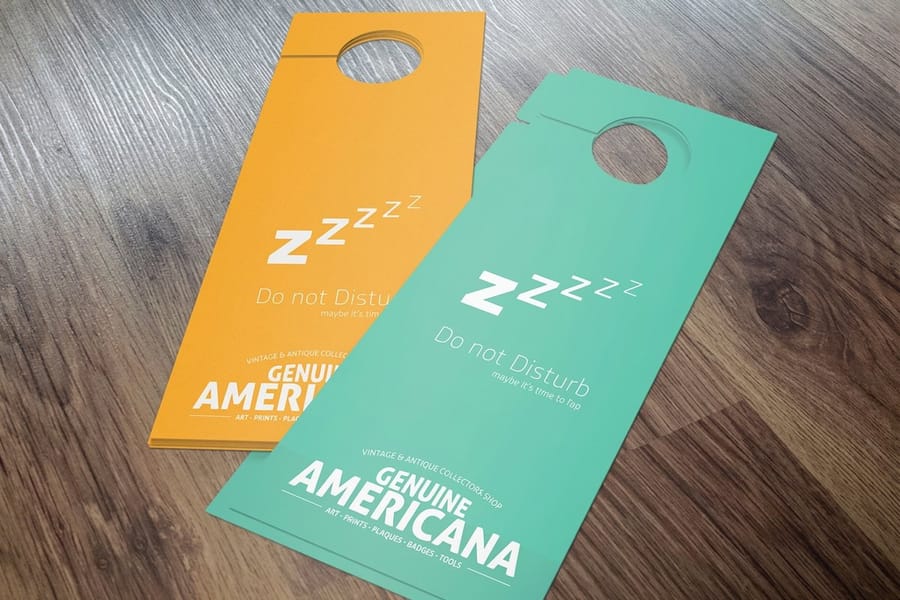
A blank door hanger sheet is an 8.5 by 11 inch piece of cover stock with two hanger shapes die-cut into it, joined by perforations, with the hole and the slit already punched. Everything about it is a compromise made so it will feed through a desktop printer.
That compromise shows up in three places. The stock sits in the 65lb to 80lb cover range, because a heavier sheet jams or refuses to pick up in an office tray. The printable area stops short of the edge, since a laser or inkjet grips the paper and leaves roughly a sixth of an inch it cannot reach, so a design that bleeds color off the edge has to be redrawn with a white border. And the perforation, however cleanly it is cut, leaves a faintly furry edge when you snap the two hangers apart, which reads differently in the hand from a guillotined or die-cut edge.
None of that makes blanks a bad choice. It makes them a specific choice. They are made for short, immediate, changeable runs, and they are excellent at exactly that. What they are not made for is a piece that sits outdoors on a handle for six hours in April. Before you commit to either route, get the measurements right in the door hanger dimensions reference and the layout right in the door hanger design guide, because a beautifully printed hanger with the copy running through the die-cut hole is wasted either way.
Blank Sheets, a Printed Run, and the Hybrid in Between

Most write-ups treat this as two options. There is a third that quietly solves a lot of cases: order a printed run with the permanent half of the message on it, and add the changing half yourself with a label or a handwritten line.
| What you are comparing | Blank DIY sheets | Printed run | Printed shell plus your overlay |
|---|---|---|---|
| Cost behavior | Flat. Never falls with quantity. | Falls steadily with quantity, then levels off. | Falls like a printed run, plus a small per-piece add-on. |
| Stock weight | Limited by what a desktop tray will feed. | Your choice, including genuinely rigid card. | Your choice, same as a printed run. |
| Weather | Dye ink bleeds when wet, toner holds up better. | Press ink plus a coating handles rain and handling. | Shell survives, the overlay is only as good as your pen. |
| Edge to edge color | No. A white margin is unavoidable. | Yes, full bleed on every side. | Yes on the shell. |
| Message changes | Instant. Change the file, print again. | Fixed until the next run. | Fixed shell, changeable detail. |
| Time you spend | Printing, jams, snapping perforations. | None. It arrives cut and boxed. | One pass to apply the overlay. |
| Best at | Under 100 pieces, or testing a message. | 250 and up, or anything that must look bought. | Recurring routes where only a date or price moves. |
Read the last row first. An agent who walks the same farm every quarter with a different sold price each time is the textbook hybrid case: the shell is printed once at a real quantity, the number changes on a sticker. A restaurant announcing one weekend of delivery is the blank sheet case. A hotel that needs a thousand privacy hangers that will be handled daily for a year is the printed run case, and hotel door hangers exist because nothing you print in the back office survives that.
What You Are Actually Buying With a Printed Run
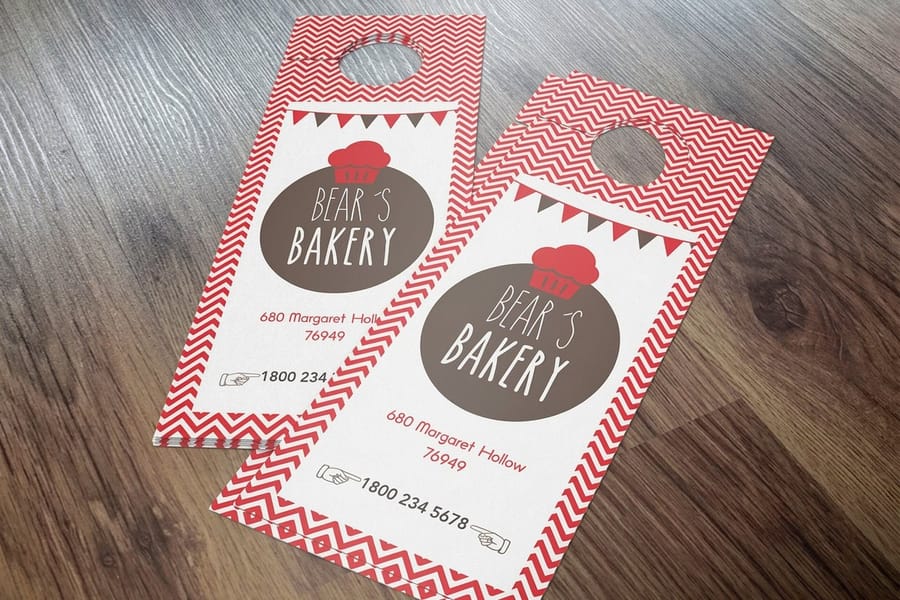
Cost per piece is only half of it. The other half is the list of things a desktop printer cannot do at any quantity, and it is worth being clear about which of them you actually need.
- Color that runs off the edge. Full bleed on all four sides, including around the die-cut hole, which is where a home-printed hanger gives itself away instantly.
- Stock that stays flat outdoors. A heavier card holds its shape on a handle in humidity instead of curling into a tube by mid-afternoon.
- A coating. Gloss or matte over the ink is the difference between a piece that shrugs off drizzle and one that spots.
- The shape and the hole you want. Custom die shapes and hole placement are a print-run option, never a blank-sheet one.
- Consistency across the whole order. Piece 900 matches piece 1, which no office printer manages as a cartridge drains.
- Your afternoon back. They arrive cut, counted and boxed, ready to walk.
Seasonal work is the clearest example of the whole argument, because the piece has to look bought and the window is short. Christmas door hangers carry heavy solid color edge to edge, which is exactly the coverage that empties a toner cartridge fastest and prints worst at home. Whichever route you pick, read the door hangers legal guide before the route is walked, and the size guide before the file is built.
Test With Blanks, Then Print the Winner

The two routes are not rivals, they are stages. The cheapest way to end up with a printed run that works is to spend a small amount on blanks first and let the doors tell you which message to commit to.
Print 50 blanks with one version and 50 with another. Walk two comparable streets, one version each, and put a different phone extension, a different short URL or a different offer code on each so you can tell which knock brought the call. Give it two weeks. Then order the version that won at a quantity where the per-piece price has actually dropped, and put the money you saved on the losing design into better stock instead.
That sequence is also the answer to the most expensive mistake in this format, which is ordering 2,500 hangers of an untested message because the per-piece price looked good. A cheap piece nobody responds to is not cheap. The guide on whether door hangers work covers what to measure, and the real estate door hanger ideas piece is a good source of the two versions worth testing. When the piece is the leave-behind for a door that actually opens, step up to sales sheets printing instead, and browse the rest of the format explainers in our product explainers hub.
Wally does the division
One line stays flat, the other keeps falling
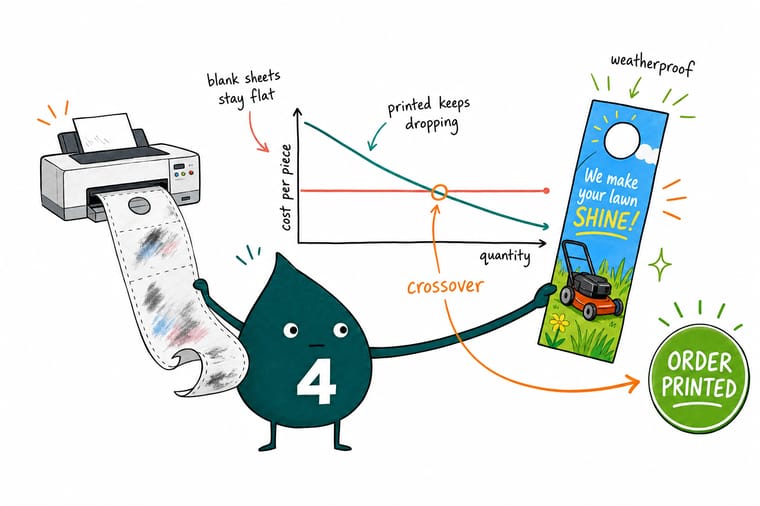
Wally prices 50 hangers and the blanks win easily, because there is no setup to spread. He prices 500 and the printed run wins, because that setup got divided by 500 instead of 50. The blank sheet never gets cheaper no matter how many he buys. Then he leaves both outside for an afternoon of drizzle: the printed one is still flat and readable, the home-printed one has curled and the dye ink has run. That is the whole decision, and it lives between 100 and 250 pieces.
Configure real estate door hangers →Specs and pricing
Door hanger sizes, stocks and starting prices
Set a real quantity in each configurator, then divide the total by the pieces. That per-piece number is the only figure worth comparing against a blank sheet plus ink plus your own hour.

Print it
Door hangers printed to hang outdoors, not to feed a desktop tray


Explore more
Where to go next




By the numbers
Perforated stock cut and scored for you
Common Questions
Printed versus DIY door hangers, answered
At what quantity does a printed door hanger run beat blank DIY sheets?
For most small businesses the line falls somewhere between 100 and 250 pieces. Below 100 the blanks win on cash and on speed, because you already own the printer and you can hang them the same evening. Above 250 the printed run almost always wins, since the setup cost that makes small orders look expensive is spread thinner with every extra piece while a blank sheet never gets cheaper. The band in the middle is decided by your own time and by whether the piece has to survive weather.
Can I print blank door hanger sheets on a home inkjet?
You can, with two caveats that catch people out. Consumer inkjets use dye ink that dissolves in water, so a sprinkler or a morning of rain will bleed the artwork down the door. And a desktop printer will not print to the edge of the sheet, so any design that runs color off the edge has to be pulled in with a white margin. Laser toner survives moisture much better because it is fused plastic rather than dye, but heavy solid coverage burns through a toner cartridge quickly and the toner can crack where the card is scored or bent.
What weight are blank door hanger sheets compared to printed ones?
Blank sheets have to feed through a desktop printer, which caps how thick they can be, so they usually sit in the 65lb to 80lb cover range with the hole and slit already die-cut, two hangers to an 8.5 by 11 inch sheet. Printed door hangers are not limited by a paper path in an office, so you can specify a genuinely rigid card stock and a coating. Open the configurator on any of our door hangers to see the exact stock, size and coating choices priced live.
Can I leave a door hanger in a mailbox instead?
No. In the United States a mailbox is reserved for material that carries postage, and putting an unstamped piece inside one is a violation of federal law. That restriction is exactly why the door hanger exists: it hangs on the handle or the knob, which is not the letter carrier's territory. Our door hangers legal guide covers the related rules on no-soliciting signs, gated communities and local permits before you send anyone out walking.
What size are door hangers, and does the DIY version limit me?
Common sizes run from roughly 3.5 by 8.5 inches up to 4.25 by 11 inches, and the printed route lets you pick a size or a custom die shape that the blank sheet market simply does not stock. Blanks come in whatever the manufacturer cut, usually one or two sizes, with the hole in one fixed position. If the hole placement or the shape matters to your design, that alone decides it.
What does a printed door hanger run cost at 4OVER4.COM?
Real Estate Door Hangers price from $252.51 in the configurator, and the rest of the door hanger line starts at the same $252.51 base. Set your quantity in the configurator and divide the total by the number of pieces to get your real per-piece cost, then compare it against a blank sheet plus ink plus your own hour. That single division is the whole decision.
Get Started
250 printed door hangers cost $252.51, or $1.01 each
Pick your size, choose a stock heavy enough to stay flat on a handle, and we print door hangers with color running edge to edge, cut, counted and boxed ready to walk.
Legal Disclaimer
Gold Standard guarantees apply to all standard orders placed through 4over4.com. Price match requires verifiable proof of a competitor's published price for an equivalent product with matching specifications and turnaround time. Satisfaction guarantee covers manufacturing defects and print quality issues. Contact support with order number and documentation. On-time delivery rate based on tracked orders 1999 to 2026. Individual results may vary based on shipping carrier performance.
