
Types of Packaging Boxes Compared by Material


Jordan is our labels, packaging and sustainability voice, built from the knowledge of our production team, with over 20 years in printing.
Corrugated for shipping, folding cartons for the shelf, kraft for an eco look, rigid for luxury, and specialty shapes for the odd item. Here is what each box material is really for, and how to pick without overpaying.
The main types of packaging boxes are corrugated, paperboard, kraft, rigid, and specialty. Corrugated fiberboard protects products in shipping, coated paperboard folds into crisp retail cartons, kraft gives a natural recyclable look, rigid setup boxes deliver a luxury unboxing, and specialty shapes like pillow boxes and sleeves suit small items. Match the material to whether the box ships, sells on a shelf, or gifts, then print it to a custom size.
Quick tips
How to pick a packaging box in one minute
Every packaging box is two choices: the structure it folds into and the material it is made from. Structure is the shape, an RSC shipper, a mailer, a folding carton, a rigid setup box, a telescope, pillow, sleeve, gable, display or tuck end box. Material is the board: corrugated protects products through shipping, coated paperboard sells them on a retail shelf, kraft signals an eco-friendly brand, and rigid boxes turn a gift into an experience. Pick the structure for how the box opens and stacks, pick the material for what it has to survive, then add a finish and order a custom size so the product fits snugly. The mailer most brands start with comes in 5 x 7 x 1.7 and 5.5 x 5.5 x 2.625 inches with a first run of 250, and pillow and wine boxes start at 50. 4OVER4.COM prints every box style in full color with lower per-unit pricing as your quantity grows.
Structure
Box styles by structure
Material decides whether a box survives the job. Structure decides how it opens, how it stacks and how it feels in a customer hand. Ten styles cover almost every order that comes through the shop, from a 3.625 x 1.5 x 7.25 inch pillow box for a bar of soap to an 11.75 x 1 x 10 inch presentation box for a sample kit.
- RSC shipping box. The regular slotted carton: corrugated, with four flaps that meet in the middle top and bottom and get taped shut. Cheapest strength per dollar and the default for anything heavy going through the mail.
- Mailer box. One piece of corrugated die cut so the lid folds over and tucks in with no tape at all. It ships and it presents, which is why subscription and ecommerce brands print the inside as well as the outside.
- Folding carton. Coated paperboard, flat shipped and glued on one seam, the box that sits on a retail shelf. No fluting, so it holds print beautifully and protects almost nothing on its own.
- Rigid two piece setup box. Thick greyboard wrapped in printed paper, in a base and a lid that lift apart. It does not fold flat, it costs the most per unit, and it is what makes an unboxing feel expensive.
- Telescope box. A base and a lid of nearly the same depth, so the lid slides down over the body and the box adjusts to the height of what is inside. Good for tall or awkward items and for kits that grow.
- Pillow box. A curved die cut that folds into a soft arc with tucked ends. Small, fast to assemble, no glue, and the natural home for jewelry, soap, favours and gift cards.
- Sleeve box. A printed band that slides over a tray or a mailer. The sleeve carries the artwork and the seasonal message, so you reprint the sleeve instead of the whole box.
- Gable box. The handled carry box with a peaked top that snaps together. Party favours, bakery orders and takeaway, where somebody has to walk out holding it.
- Display box. A carton with a tear away front or a shelf ready top, built to be opened once at the store and then sit on the counter as its own stand.
- Tuck end carton. The everyday paperboard box with flaps tucked at both ends. Straight tuck puts both flaps at the back for a clean face, reverse tuck alternates them and is cheaper to die cut, and that is the whole difference.
Why the box material decides everything
People shop for a box and end up staring at a wall of names: mailer, kraft, corrugated, rigid, folding carton. The confusing part is that some of those words describe the material and some describe the shape, and they get mixed together constantly. Kraft and corrugated name the board, mailer and folding carton name the shape, and a rigid box names both, a greyboard core built as a base and a lid. Sort that out first and every other decision gets easy.
The material is what the board is made of and how strong it is. The structure is how that board folds into a box. A single package pairs one material with one structure, and the right pairing depends on whether the box ships across the country or simply sits on a shelf. If you already know you want a printed box built to your own size, you can skip ahead to the 4OVER4.COM packaging collection or browse the full range of custom packaging options.
This guide walks the main types of packaging boxes by material, shows what each one is really for, and ends with a simple way to choose. No fabricated hype, just the trade-offs that matter when you place the order.
The five types of packaging boxes worth knowing
Almost every product launch is served by one of five box families. Learn these and you can spec packaging for a candle, a laptop, or a dozen cupcakes without second-guessing: the candle ships in a corrugated mailer, the laptop in a double-wall shipper, and the cupcakes leave the counter in a gable or tuck end bakery box.
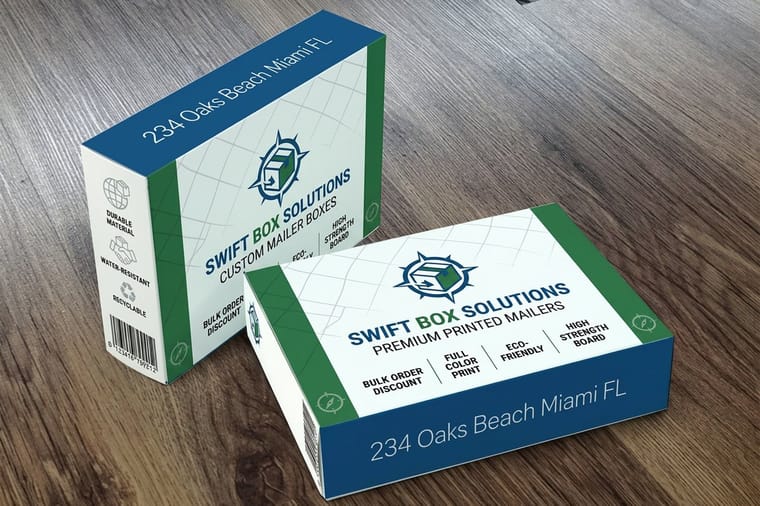
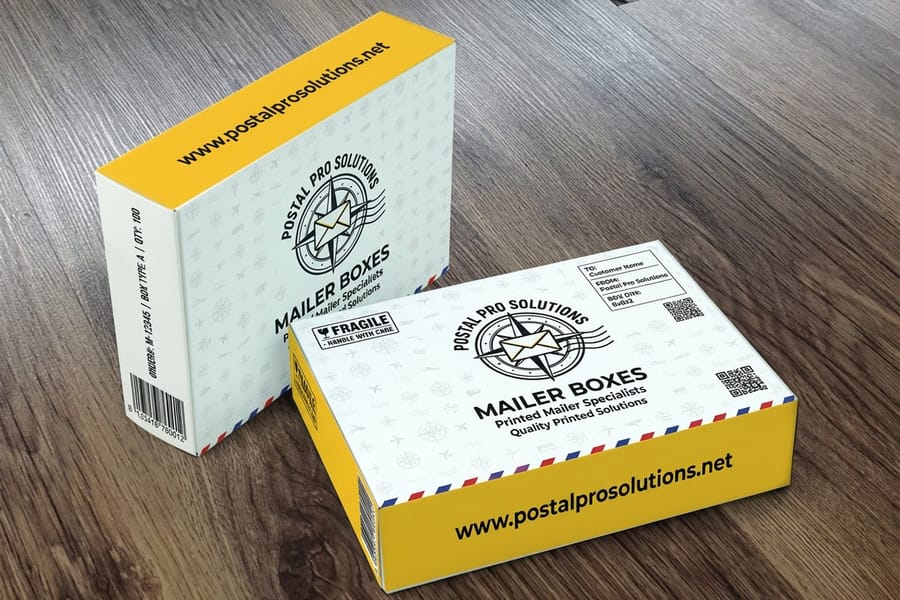
- Corrugated mailer boxes for anything that ships. The fluted wall absorbs knocks in the mail stream.
- Folding cartons made from coated paperboard for retail shelves, where crisp fold lines and bright print do the selling.
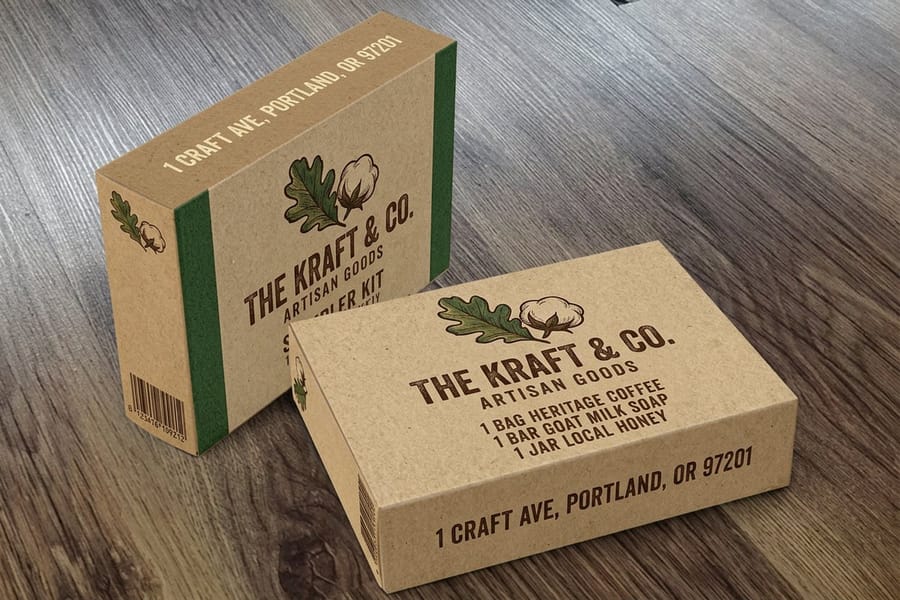
- Kraft boxes for a natural, recyclable look that signals a sustainable brand.
- Rigid setup boxes for luxury goods, where a thick, non-collapsing wall makes the unboxing feel like an event.
- Specialty shapes like pillow boxes, sleeves, and pouches for small, light, or oddly shaped items.
You can print all five to your own dimensions at 4OVER4.COM. Start with a custom mailer box if you sell online, or open the custom box printing range to compare structures side by side. For what goes inside and on the box, the 5 Print Picks That Protect Profit on Every Online Store Order kit covers thank you cards, labels, hang tags, tissue paper and packaging tape.
Corrugated cardboard boxes: the shipping workhorse
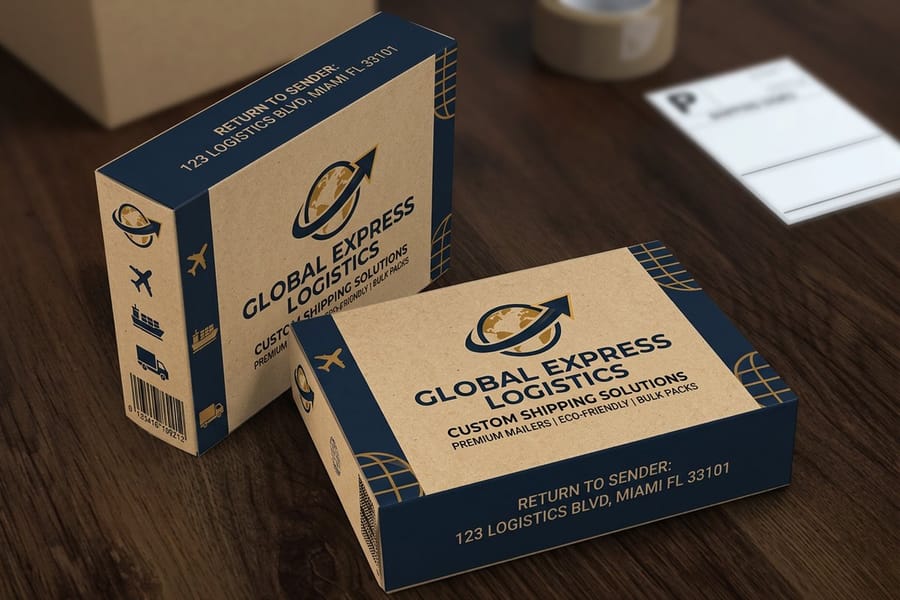
Corrugated is the brown box you picture when someone says "cardboard," but the name really describes its construction. A wavy middle layer, the flute, is glued between two flat liners. That air-filled ripple is what lets a light box carry a heavy, fragile product without crushing.
Because the flute does the structural work, corrugated is the default for mailer boxes and shipping boxes that travel through carriers and sorting belts. Single-wall board handles most ecommerce orders, while double-wall is reserved for heavy or premium goods. It prints well in full color, recycles curbside, and can be cut into a self-locking mailer that needs no tape. If you are choosing between a corrugated mailer and a padded one, Custom Corrugated and Bubble Mailers for Ecommerce Brands shows how each one fails in transit.
The trade-off is texture. Corrugated has a slightly ribbed surface, so it reads rugged rather than glossy. If your product needs a polished retail face, you pair the shipping box with a printed folding carton inside, or step up to a rigid box.
Paperboard and cardstock boxes: the retail folding carton

Paperboard, sometimes called cardstock or folding boxboard, is a single solid layer with no fluting. It is thinner than corrugated and folds into the crisp, clean cartons you see on store shelves: cereal boxes, cosmetics, soap, supplements. This is the material behind our gloss boxes and retail boxes, which print on 14pt uncoated cover or 18pt cover with gloss on one side.
The reason it dominates retail is print quality. A coated white paperboard takes ink like a business card, so photography and brand color stay sharp and vivid. Add a gloss, matte, or soft-touch coating and the same carton can feel budget-friendly or genuinely premium. Fold styles like the reverse tuck and the roll end tuck top let the box snap together fast on a packing line.
Paperboard is not built to survive a solo trip through the mail, though. It is a shelf material and an inner-packaging material. For online orders you tuck the printed carton inside a corrugated mailer, which is exactly how most subscription boxes are built.
Kraft boxes: the eco-friendly all-rounder
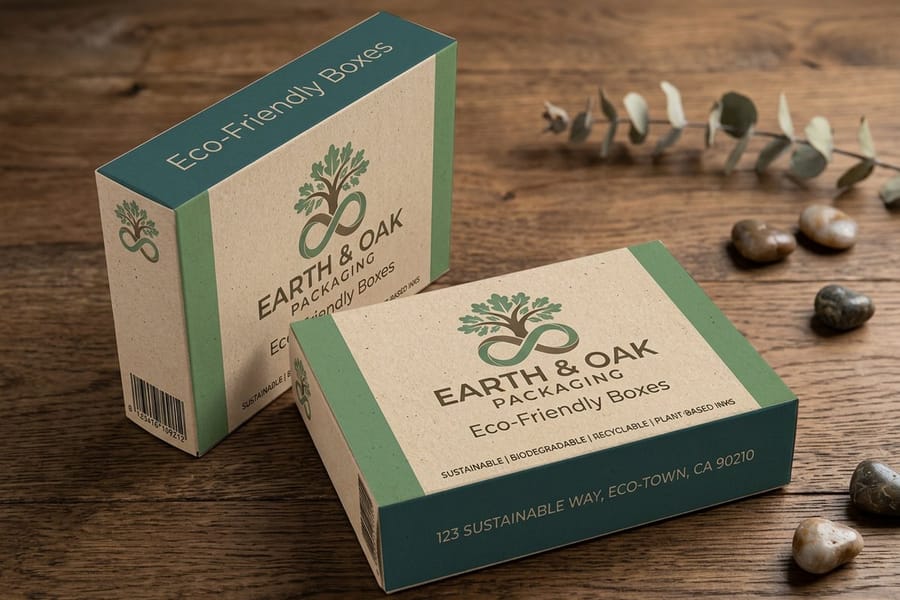
Kraft is a material, not a shape. It is unbleached pulp left its natural brown, and it comes in both thin folding-carton weights and thick corrugated walls. That flexibility is why kraft boxes show up everywhere from artisan soap to hardware. Ours come in the same 5 x 7 x 1.7 and 5.5 x 5.5 x 2.625 inch footprints as the mailers, from 250 pieces.
Brands reach for kraft for two reasons. It looks honest and handmade, which suits candles, coffee, cosmetics, and anything with a sustainability story. And it recycles easily, which pairs naturally with our eco-friendly boxes and the green printing practices we run in-house. One-color or two-color print on kraft has a distinctive, grounded look that full-bleed gloss cannot copy.
The catch is contrast. Ink sits on a brown surface, so bright whites and neon colors mute out. Designers lean into that with earthy palettes, foil, or a white-ink underlay. For hands-on inspiration, the DIY kraft packaging box guide shows how far a simple brown box can go.
Rigid setup boxes: luxury unboxing

Rigid boxes, also called setup boxes, are the heavyweight of packaging. A thick greyboard core is wrapped in printed paper, and unlike every other box here, it arrives already formed and does not collapse flat. Think phone boxes, jewelry cases, and high-end sales presentation boxes, which we print at 11.75 x 1 x 10 inches from 250 pieces.
The whole point is the feel. That dense wall, a magnetic or lift-off lid, and a soft-touch or foil-stamped surface turn opening the box into part of the product experience. It is the natural home for foil stamping and embossing, and it signals value before the customer ever sees what is inside. Gift-forward formats like wine boxes use the same rigid build.
Rigid is the most expensive box per unit because of the material and the hand assembly, so it is reserved for premium products, limited editions, and gifting, not everyday shipping.
Specialty shapes: pillow boxes, sleeves, and pouches
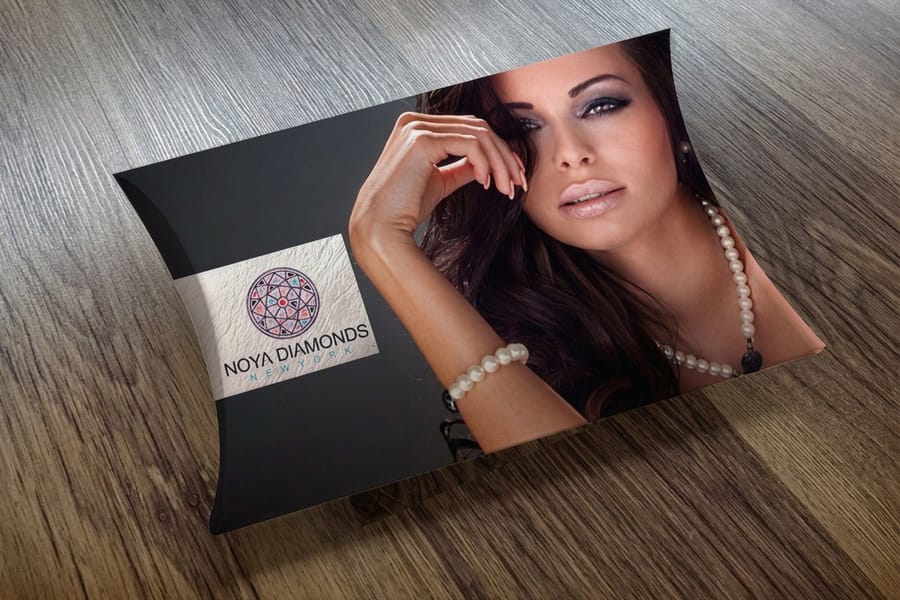
Not everything fits a square. Specialty structures solve for small, light, or awkward products, and they often cost less because they use less board. Our pillow box is 3.625 x 1.5 x 7.25 inches with an edge lock or a glued join, and our wine box is 3.23 x 3.23 x 13.125 inches with a handle or a tuck top, and both start at 50 pieces.
Pillow boxes curve into a soft, cushion shape that is perfect for jewelry, scarves, gift cards, and party favors. Our pillow boxes ship flat and pop open in a second. Sleeves wrap a band of printed board around a plain inner tray, which is a smart, low-cost way to add branding to a kraft base. Pouches and bags take over when the product is soft or granular.
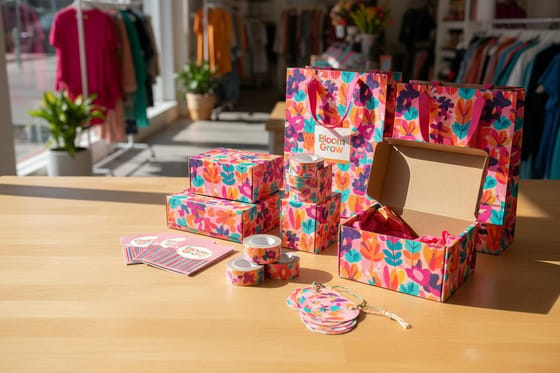
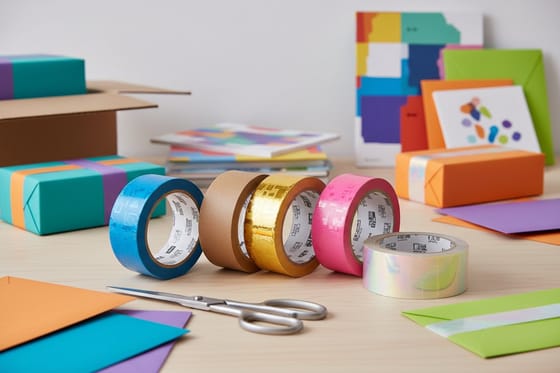
These shapes also pair well with the small print pieces that finish a package: custom tissue paper, branded packaging tape, and hang tags. For more directions, the unique packaging box ideas article is a good next stop.
Box materials at a glance

Here is the fast comparison when you already know the shortlist. Read each row as strength, best use and how it prints, then check the first run: 250 pieces for the mailer, retail carton, kraft and presentation boxes, 50 for a pillow box.
| Material | Best for | Strength | Print look |
|---|---|---|---|
| Corrugated | Shipping and ecommerce | High | Full color, slightly ribbed |
| Paperboard | Retail shelf cartons | Medium | Sharp, glossy or matte |
| Kraft | Eco and artisan brands | Medium to high | Natural brown, earthy |
| Rigid | Luxury and gifting | Very high | Premium, foil-ready |
| Specialty | Small or soft items | Light | Compact, custom shape |
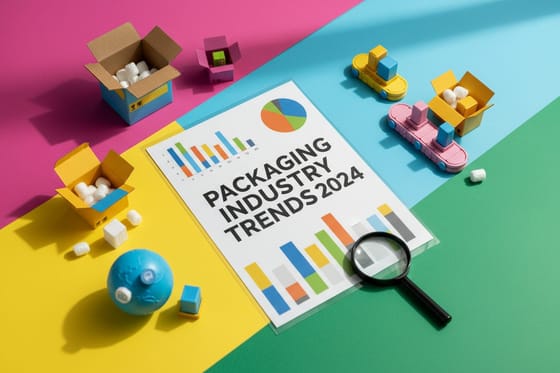
If you want the wider market picture behind these choices, our packaging industry data covers where custom and sustainable packaging is heading. And every material above prints in full color at 4OVER4.COM, so the decision is about the job, not about what we can produce.
Which box each kind of product ends up in
Material and structure are the two halves of the decision. Here is where common products land once both are settled.
- Ecommerce orders. A corrugated mailer box, printed inside as well as out, because the customer opens it personally.
- Heavy or fragile freight. A double wall RSC shipping box, taped top and bottom, where protection matters more than presentation.
- Store shelf goods. A coated paperboard folding carton from our retail boxes, since crisp fold lines and sharp print do the selling.
- Bakery and takeaway. A gable box or a tuck end carton, because somebody has to carry it out by hand.
- Jewelry, soap and favors. A pillow box, which ships flat and pops open in a second.
- Premium and limited editions. A rigid two piece setup box such as our sales presentation boxes, where the unboxing is part of the product.
- Bottles. A telescope build, which is what our wine boxes use.
Every one of these prints to a custom size, so the product sits snug instead of rattling inside filler.
How to choose the right packaging box
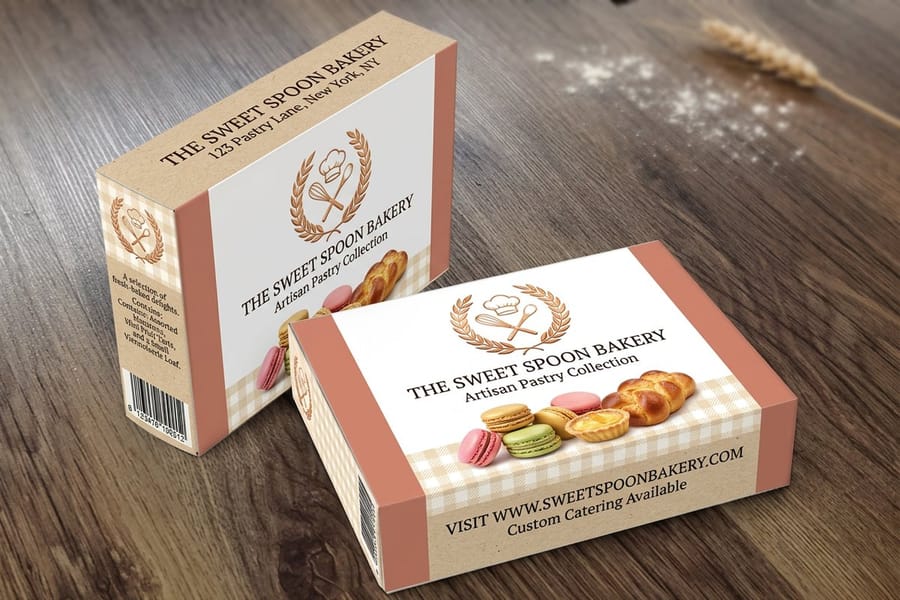
Skip the guesswork with three questions, in order, and measure the product's length, width and height in inches before you start.
- Where does it end up? A carrier and a doorstep mean corrugated: a mailer when the customer opens it personally, an RSC shipper when weight and distance are the problem. A store shelf means a printed folding carton. A gift means rigid or specialty.
- How heavy and fragile is it? Heavy or breakable pushes you up in board strength, from single-wall to double-wall or rigid.
- What should opening it feel like? Everyday and practical, or a moment worth photographing? That answer sets your finish and whether foil or soft-touch earns its cost.
Once you have the material and structure, order a custom size so the product fits snugly with less void fill, cheaper shipping, and a cleaner unboxing. Larger runs also lower the per-unit price through bulk discounts, and tight timelines are covered by rush delivery. To see the payoff in practice, read how one brand used custom packaging in this retail packaging case study.
When you are ready, configure any style in the 4OVER4.COM packaging collection and print your box to spec.
Wally explains box materials
Pick the board first, then the shape
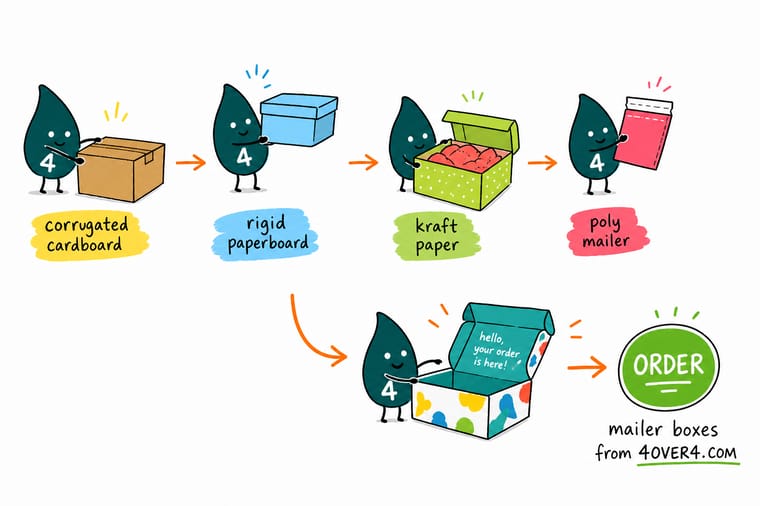
Wally sorts every packaging box into two questions: what is it made of, and what does it need to do. Corrugated survives the mail, paperboard sells on a shelf, kraft looks honest and recycles, and rigid makes a gift feel expensive. Once you know the job, the material picks itself, and printing it to your exact size at 4OVER4 means less wasted space and a cleaner unboxing.
Order custom boxes →Order the style
Where each box style is printed
Pick the structure, then order it here. Every one prints to a custom size, so the product sits snug instead of rattling inside filler, and the per unit price drops as the quantity climbs.
- Shipping boxes for the RSC shipper: corrugated, taped top and bottom, the box you use when weight and distance are the problem.
- Custom mailer boxes for the one piece die cut that folds and tucks with no tape, printable inside and out.
- Retail boxes for folding cartons and tuck end cartons that have to sell the product from a shelf.
- Custom kraft boxes for the unbleached brown look, on a mailer or on a carton, when the brand reads natural.
- Pillow boxes for the curved die cut with tucked ends that suits jewelry, soap, favours and gift cards.
- Gloss boxes when the coating has to make color jump under retail lighting.
- Wine boxes for the tall telescope and two piece styles built around a bottle.
- Sales presentation boxes for the rigid setup box that turns a sample kit into an unboxing.
- Eco friendly boxes when the brief calls for recyclable board and minimal coating.

Specs and pricing
Custom mailer box specs and pricing
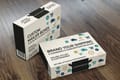
The corrugated mailer is the box most brands start with, so here are its live specs and price-per-unit straight from the 4OVER4.COM configurator. Change the size and quantity to see your exact cost.
| Quantity | Price Per Unit | Total |
|---|---|---|
| 250 | $2.85 | $711.78 |
| 500 | $1.42 | $711.78 |
| 1,000 | 79.7¢ | $797.02 |
| 2,500 | 53.5¢ | $1,338.30 |
| 5,000 | 44.6¢ | $2,231.42 |
| 10,000 | 40.4¢ | $4,044.70 |
| 15,000 | 39.0¢ | $5,844.45 |
| 20,000 | 38.3¢ | $7,657.73 |
Print it
Popular custom box styles at 4OVER4


Explore more
Where to go next
By the numbers
Sixty paper and board stocks behind a box
Common Questions
Common questions about types of packaging boxes
What are the three types of boxes?
When people say three, they usually mean the corrugated box, the folding carton and the rigid setup box. Corrugated has a fluted middle layer between two liners and survives the mail. A folding carton is a single layer of paperboard, flat shipped and glued on one seam, built to sell from a shelf. A rigid box is thick greyboard wrapped in printed paper that does not fold flat and costs the most per unit. Almost every other box style is a variation on one of those three.
How many types of boxes are there?
It depends whether you are counting materials or shapes. By material there are four families in regular use, corrugated, paperboard, kraft and rigid greyboard, plus the specialty stocks. By structure there are about ten styles worth knowing, from the RSC shipper and the mailer to tuck end cartons, telescope boxes, pillow boxes, sleeves, gable boxes and display boxes. A single package is always one material paired with one structure.
What is a carton box?
A carton is a folding carton, a box made from a single layer of coated paperboard with no fluting. It arrives flat, glued along one seam, and pops into shape on a packing line. Because there is no flute, it holds print beautifully and protects almost nothing on its own, which is why retail goods travel inside a corrugated outer and sit on the shelf in a carton. Cereal boxes, cosmetics and supplement packs are all cartons.
What are the 5 types of packaging for special products and exclusive items?
The five that cover almost every launch are corrugated mailer boxes for shipping, folding cartons made from coated paperboard for retail shelves, kraft boxes for an eco-forward look, rigid setup boxes for luxury unboxing, and specialty shapes like pillow boxes, sleeves, and pouches for small or awkward items. At 4OVER4.COM you can print all five to your exact dimensions and artwork from the packaging collection.
What are the different types of packaging boxes?
Packaging boxes are usually grouped by the board they are made from and the way they fold. By material you have corrugated fiberboard, solid paperboard or cardstock, kraft, and rigid greyboard. By structure you have mailer boxes, reverse and straight tuck cartons, roll end tuck top boxes, sleeves, pillow boxes, and two-piece rigid setup boxes. Most products land on a single material and structure once you know the weight, the shipping method, and the shelf it needs to sit on.
What is the difference between corrugated and kraft boxes?
Corrugated describes the construction, a fluted middle layer glued between two liners, which is why corrugated boxes protect heavy items in the mail. Kraft describes the paper itself, an unbleached brown pulp that looks natural and recycles easily. The two overlap because a box can be corrugated and kraft-colored at the same time, but a thin kraft folding carton has no fluting and is meant for light retail items, not shipping.
What is the most common type of box?
The regular slotted carton, the RSC, is the most common box in the world. It is corrugated, it ships flat, and its four flaps meet in the middle top and bottom so one blank makes the whole box with a strip of tape. Almost everything heavy that moves through the mail travels in one. For anything that has to present as well as protect, the mailer box is the common alternative, because it opens like a lid and needs no tape.
What is the difference between a mailer box and a shipping box?
A shipping box is an RSC: taped top and bottom, built purely to protect, usually plain brown inside. A mailer box is one piece of corrugated die cut so the lid folds over and tucks in, no tape required, with the inside printable so the unboxing is part of the brand. Mailers suit light to medium products that a customer opens personally. Shipping boxes suit weight, distance and rough handling.
What is the difference between a folding carton and corrugated?
A folding carton is a single layer of paperboard, flat shipped and glued on one seam. Corrugated has a fluted middle layer glued between two liners, and that flute is what carries a load. The carton is thin, prints sharply and sells on a shelf. Corrugated is thicker, absorbs impact and survives the mail. Retail packaging usually means a carton, an outer shipper almost always means corrugated, and plenty of products use both.
How do I choose the right type of packaging box?
Start with three questions. Does it ship to a customer or sit on a store shelf? How heavy and fragile is the product? And what does the brand need to feel like when the box opens? Shipping and weight push you toward corrugated mailers, shelf presence points to printed folding cartons, and a premium first impression calls for rigid or specialty boxes. From there you pick the finish and order a custom size so nothing rattles inside.
What do custom packaging boxes cost and how is the price set?
Price is driven by the board and coating you choose, the box dimensions, the print finish, and the quantity. Larger runs lower the per-unit cost, which is why bulk pricing exists. The live configurator on each 4OVER4.COM box product shows the exact price per unit as you change size and quantity, so you never guess. Mailer, kraft, gloss, and retail boxes each carry their own base price you can compare side by side.
Are 4OVER4.COM packaging boxes eco-friendly, and what materials can I get?
Yes. Corrugated and kraft boxes are recyclable and can be printed on FSC-certified stock, and our eco-friendly boxes are built specifically for brands that want a low-waste footprint. You can choose kraft, coated white, gloss, and rigid boards, add soft-touch or foil finishes, and print full color across the whole box. See the green printing practices behind it before you order.
Get Started
Ready to order custom packaging boxes?
Pick your material and structure, drop in your artwork, and we print a box built to your exact size that protects, sells, and looks like your brand.
Legal Disclaimer
Gold Standard guarantees apply to all standard orders placed through 4over4.com. Price match requires verifiable proof of a competitor's published price for an equivalent product with matching specifications and turnaround time. Satisfaction guarantee covers manufacturing defects and print quality issues. Contact support with order number and documentation.
