
Cardstock vs Corrugated Boxes, How to Choose the Right Material


Jordan is our labels, packaging and sustainability voice, built from the knowledge of our production team, with over 20 years in printing.
Two materials, two very different jobs. Cardstock is built to look premium on a shelf. Corrugated is built to protect through the mail. A cardstock box inside a corrugated shipper is the combination most premium ecommerce lands on.
Cardstock is one smooth solid layer (a folding carton) chosen for how it looks and prints. Corrugated is a fluted board built in three layers, chosen for how it protects. Use cardstock for retail and product boxes that live on a shelf, and corrugated for shipping boxes and mailers that have to survive a delivery route. If the box sells the product, lean cardstock. If it has to protect the product, lean corrugated.
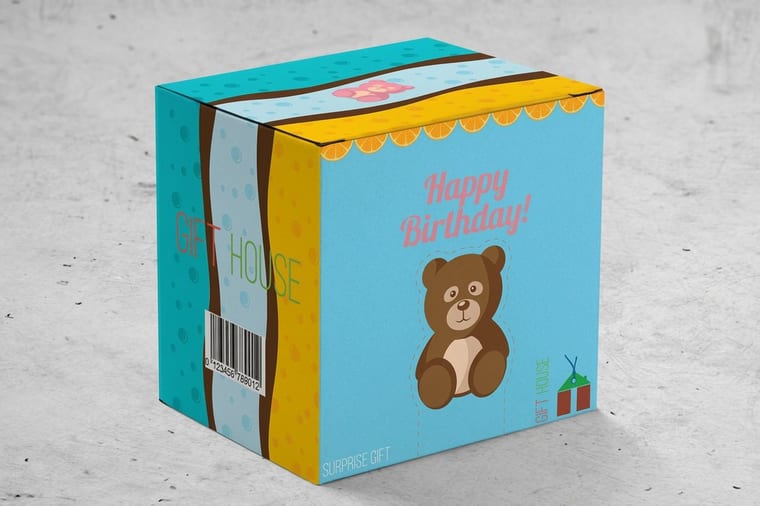
Start here
Shelf or shipping lane
Cardstock is a single smooth sheet folded into a box, chosen for how it looks. Corrugated is a fluted three-layer board, chosen for how it protects. Cardstock folding cartons win on retail and product packaging that has to look premium on a shelf. Corrugated wins on shipping boxes and mailers that have to survive a delivery route. Match the material to the job, and the finish, the fit, and the price all follow. Our printed boxes run on 14pt uncoated or 18pt cover with gloss on one side, from 50 cube boxes for $213.09 in 7 business days. The comparison chart further down sums it all up at a glance.
Why the box material decides more than you think

The box is the first thing a customer touches, sometimes before the product is even out of the wrapping. It has two jobs that pull in opposite directions: look good enough to sell, and hold up well enough to protect. A 14pt folding carton gives you 0.014 inches of solid board to print on, while a corrugated wall puts a fluted core between two liners to take the knocks. Cardstock leans hard into the first job. Corrugated leans hard into the second. Picking the wrong one is how a beautiful box arrives crushed, or a bombproof one looks cheap on the shelf.
That is the whole comparison in a sentence, but the details matter once you are choosing a real spec. This guide breaks down what each material actually is, how thick it comes, where it shines, and how to make the call in under a minute. If you want the broader map of every box style first, our types of packaging boxes guide lays them all side by side.
Both materials are printed the same way at heart, but they are engineered for different lives. Get the material right and the finish, the fit, and the price all fall into place. Get it wrong and no amount of good design saves it.
What is cardstock (folding carton)?
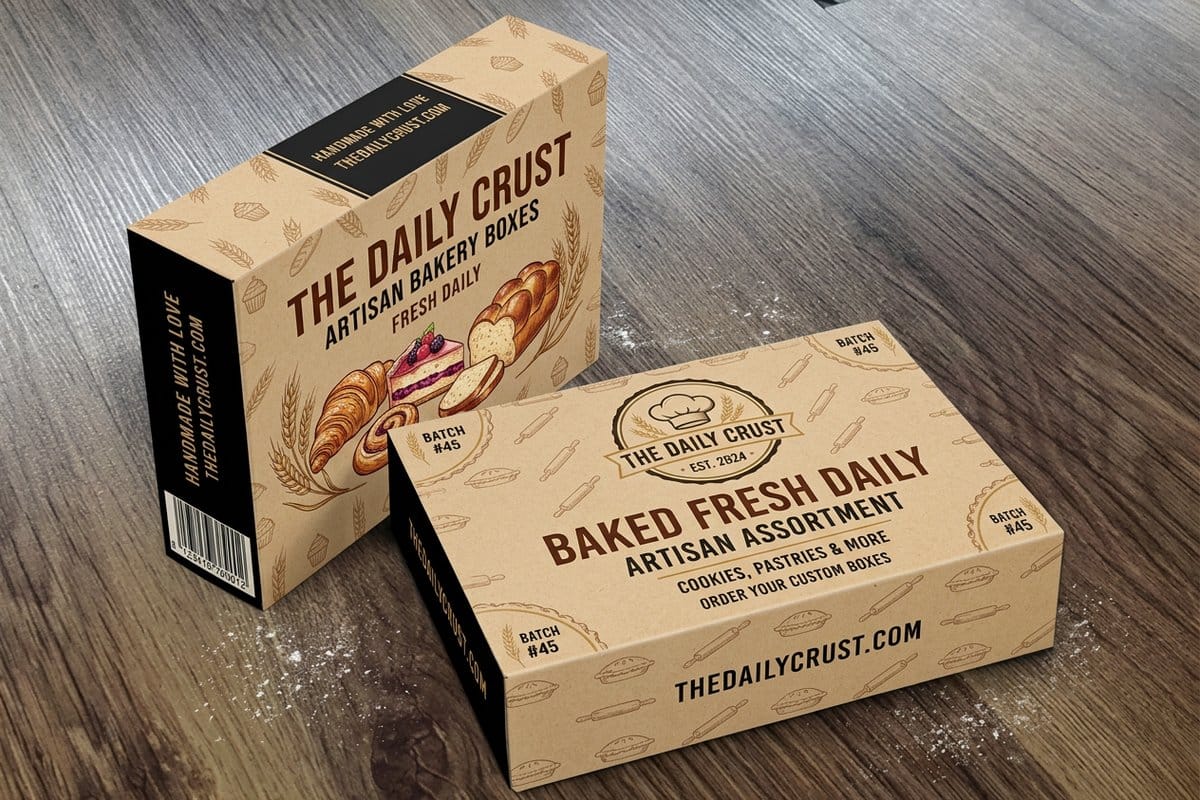
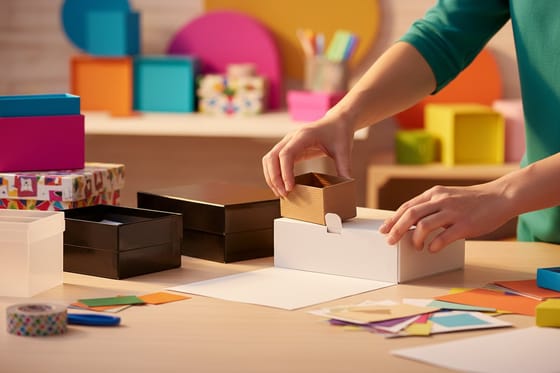
Cardstock is a thick, smooth paperboard made of a single solid layer. Cut it, crease it and fold it into a box and you have a folding carton, the shape most retail packaging takes. The surface is flat and uniform, so it prints in sharp, saturated color and takes gloss, matte, soft-touch, and foil without a fight. Nearly every product box on a store shelf, from cosmetics to cereal, is a folding carton. Our box cardstock comes as 14pt uncoated cover or 18pt cover with gloss on one side.
If you want the deep version of how these are built and coated, our folding carton packaging guide covers it end to end, and cardstock vs paper stock explains exactly where cardstock sits on the paper spectrum. In box form it shows up as everything from bakery boxes to gloss boxes and magnet-close gift boxes.
Not sure a photo of a box tells you enough? It usually does not. The best way to judge a stock is to hold it, so order a set of free samples before you commit. Feeling the caliper and the coating in your hand settles most of these decisions faster than any spec sheet.
Common cardstock thicknesses, and what they mean

Cardstock is measured in points, where one point is one thousandth of an inch, so a 16pt sheet is 0.016 inches thick. For boxes, most work lands between 14pt and 24pt. Lighter points fold crisply and keep costs down on smaller cartons. Heavier points feel substantial and hold their shape on larger or premium boxes, the kind you want to feel expensive the moment it is picked up.
The same points system runs across print, which is why our business card thickness guide and paper stocks and materials guide use the exact vocabulary. The number itself is only half the story: a thick point on a huge box can still feel flimsy, while a mid point on a small box feels rock solid. Match the caliper to the size and weight of what goes inside.
Finish changes the perceived thickness too. A matte or soft-touch coating reads richer than a thin gloss, so if you are weighing coatings, our matte vs gloss finish comparison is worth a read before you lock the spec.
When cardstock works best
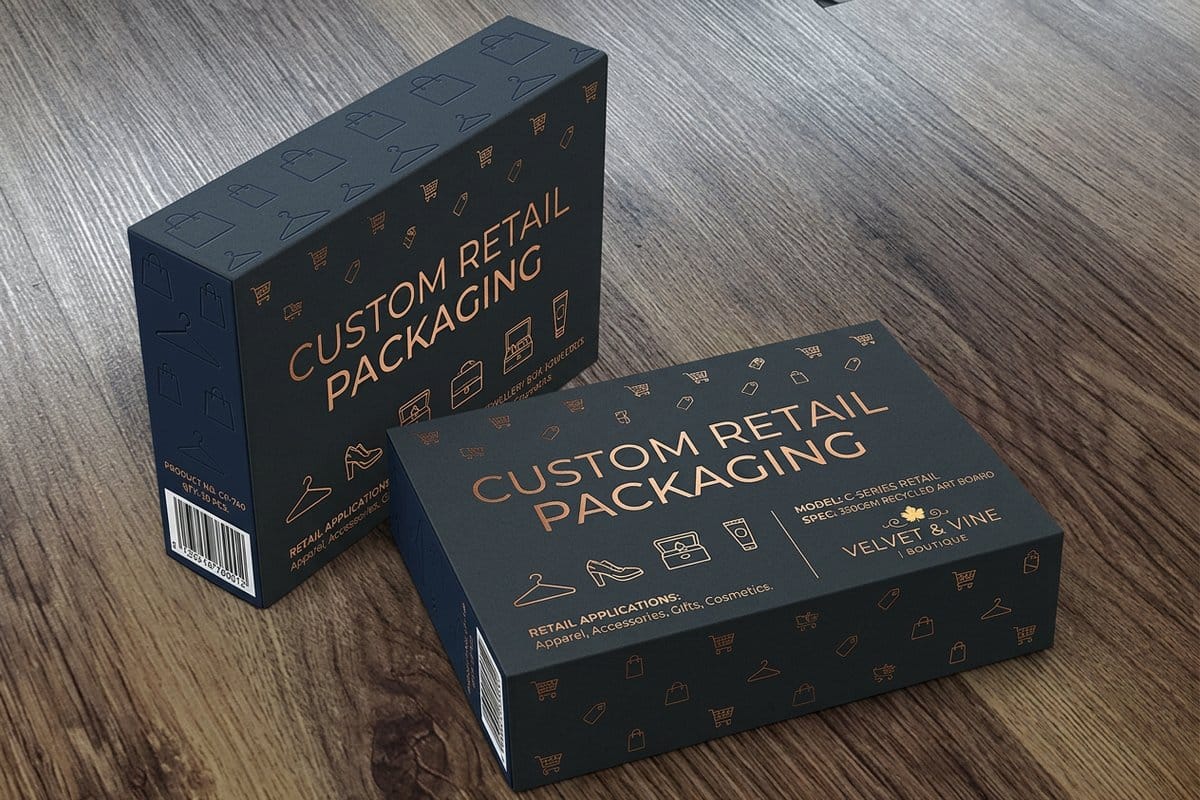
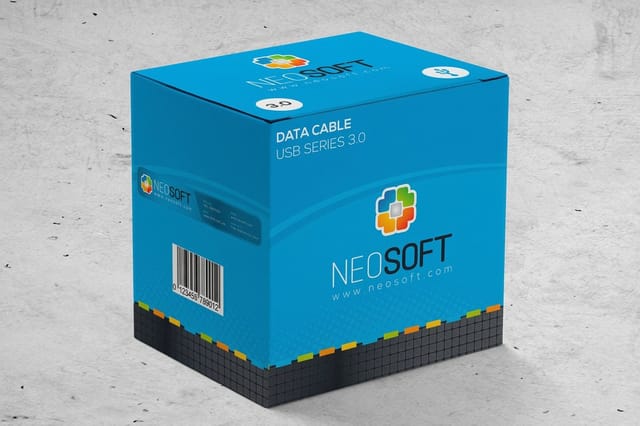
Reach for cardstock whenever the box is part of the sale. Retail shelves, gift sets, subscription reveals, and product launches all live or die on how the packaging looks under light, and a smooth folding carton delivers the crisp photography, clean type, and premium coatings that make a product feel worth the price. It is the right material for retail boxes, cube boxes, and bakery boxes alike. A 2.75 inch cube suits a candle, a lip balm set or a few truffles, and the 4 inch cube a larger gift, at 50 boxes for $213.09. If you are planning a custom subscription box, our guide walks through the insert, the reveal and the shipper.
Cardstock also carries lighter contents comfortably, so it is ideal for cosmetics, confectionery, small electronics, apparel, and anything more about presentation than protection. If the box is a gift in its own right, our notes on getting corporate gifting right pair naturally with a premium carton.
Where cardstock struggles is under real stress. It does not absorb impact the way a fluted board does, so it is not the material for heavy items, long shipping journeys, or boxes that get stacked. When protection outranks presentation, that is corrugated territory.
What is corrugated cardboard?
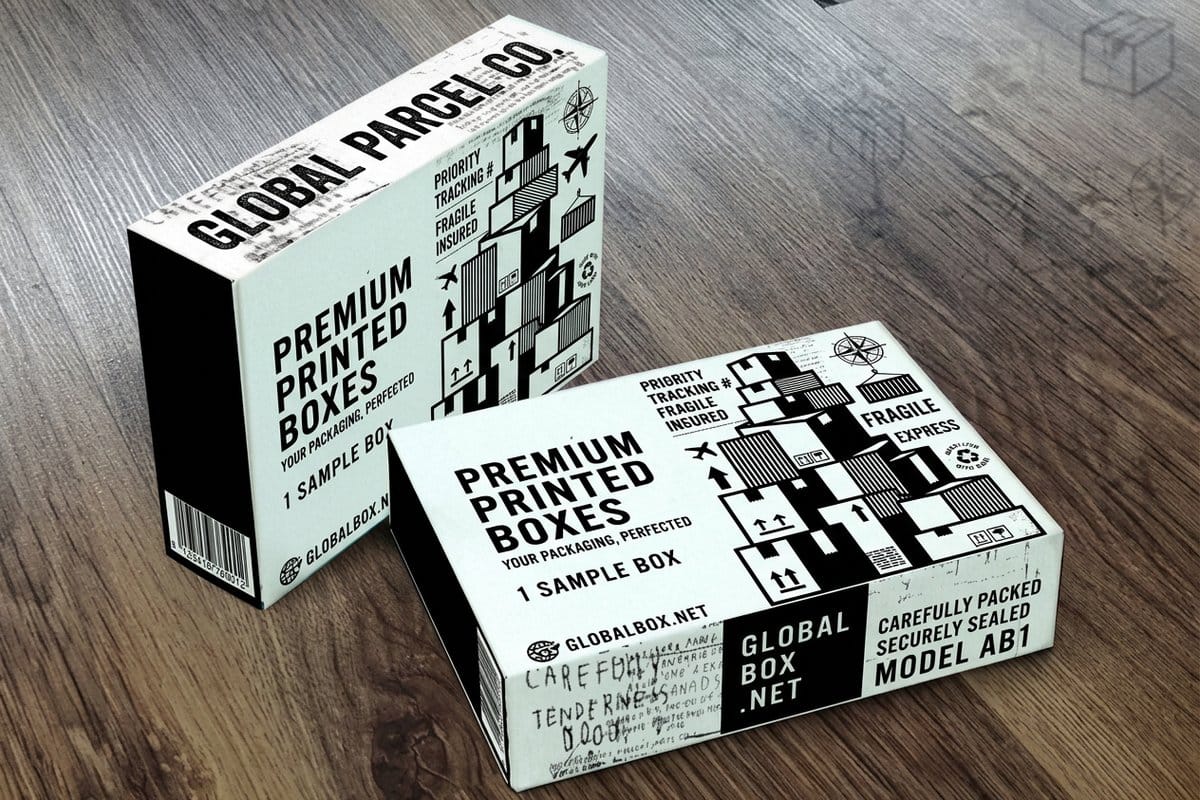
Corrugated is a structural board built from three parts: a wavy fluted layer glued between two flat liners. That fluted middle traps air, springs back from impact, and carries weight without collapsing, which is exactly why it is the material behind shipping boxes, mailer boxes, and moving cartons. Most people call it cardboard, but corrugated is a specific engineered board, not a generic term. To order custom sized cardboard boxes built to your exact dimensions, start from the inside measurements of the product.
The strength comes from the flute profile, the size and shape of those waves, combined with the total wall thickness. That is why you cannot rate corrugated in points like cardstock. The two use different measuring systems entirely. If you are spec-ing custom shippers from scratch, our how to make custom boxes guide walks the whole process from dieline to delivery.
One quick clarification, because the words look alike: corrugated cardboard is not the same as corrugated plastic. The plastic version, used for yard and event signs, is covered in our coroplast signs guide. Same wavy structure, completely different material and use. Paper corrugated turns up in signage too, and our guide to cardboard signs covers how long it holds up.
When corrugated is the better choice
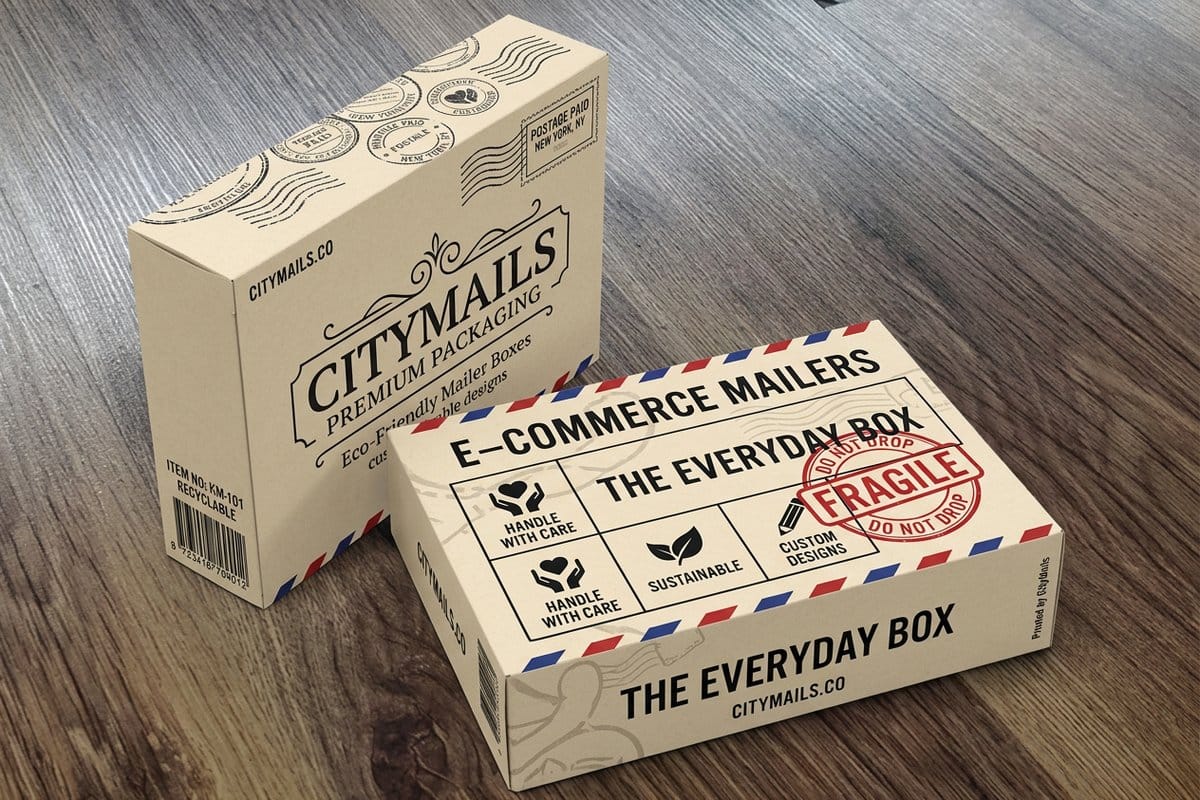
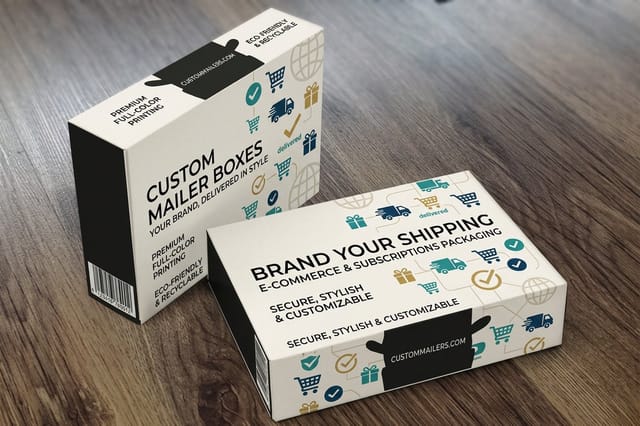
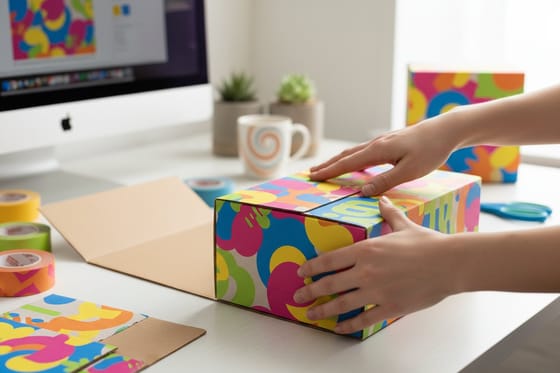
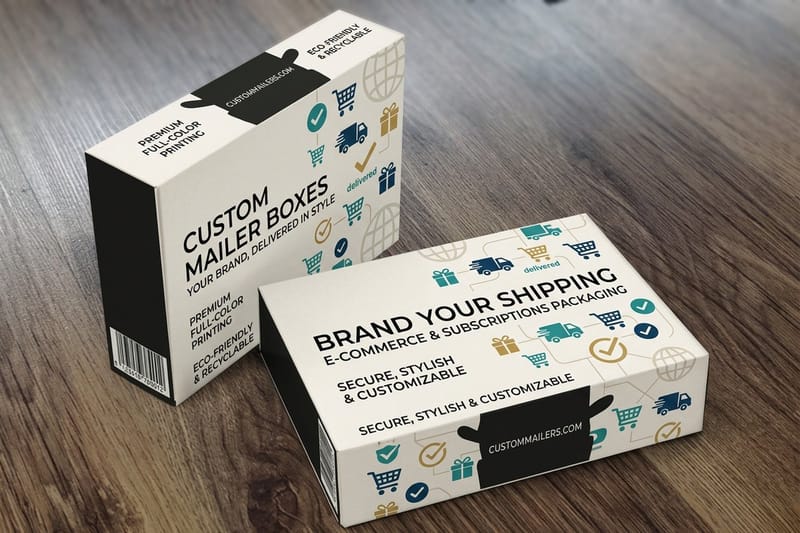
Choose corrugated the moment the box has to travel. Ecommerce orders, wholesale shipments, and anything that gets handed off to a carrier need a board that shrugs off drops, stacking, and the general abuse of a delivery route. Corrugated mailer boxes and custom mailer boxes are the standard for subscription and ecommerce brands for exactly this reason: they protect the product and still print your brand across the outside. Our printed mailer boxes come in 5 by 7 by 1.7 and 5.5 by 5.5 by 2.625 inches on 14pt or 18pt cover, 250 for $711.78, so check that board against your product weight or ship them inside a corrugated outer carton. For custom boxes wholesale, the packaging collection lists every box we print by size and run.
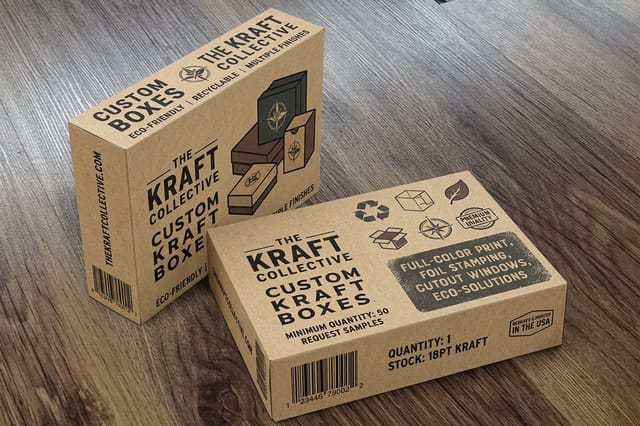
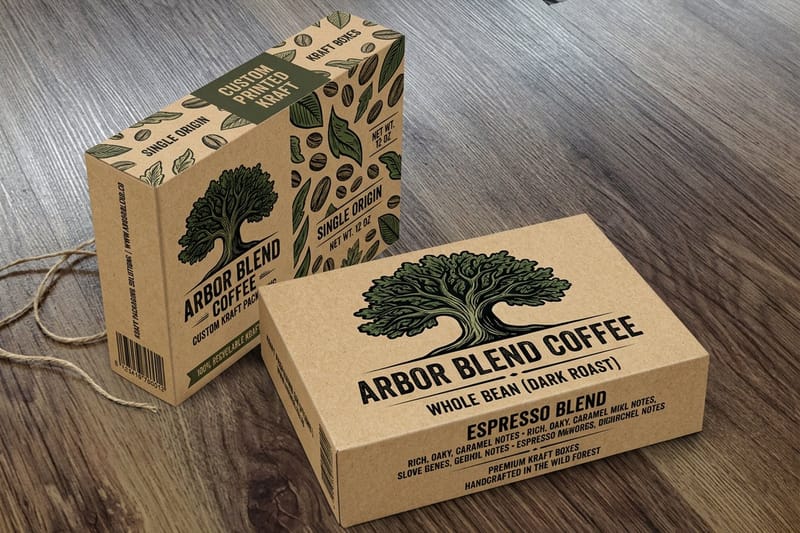
It is also the right call for weight. Heavy or dense items, multipacks, and larger formats all need the load-bearing strength that only a fluted board provides. For a rustic, sustainable look with the same protection, kraft mailer boxes and plain shipping boxes keep the structure while dialing back the polish.
The trade-off is surface. A corrugated liner has a faint texture, so it is superb for logos, type, and solid brand color but not the place for a gallery-grade photograph. When you need both a beautiful print surface and shipping protection, many brands ship a cardstock product box inside a corrugated mailer and get the best of each.
Cardstock vs corrugated, side by side

The table sets the two boards against six questions. The pattern is clear from the thickness row down: cardstock at 14pt to 24pt is a display surface, and fluted corrugated is a shock absorber. Almost every packaging decision turns on which of those two jobs matters more for your product.
| Cardstock (folding carton) | Corrugated | |
|---|---|---|
| Structure | One smooth solid layer | Fluted board between two liners |
| Typical thickness | 14pt to 24pt | Flute profile and wall, not points |
| Print surface | Premium, photo sharp | Good for logos and type, lightly textured |
| Best for | Retail and product boxes | Shipping boxes and mailers |
| Protection | Light to medium contents | Absorbs impact, heavier contents |
| Where it shines | On a shelf | In transit |
Still torn? You do not have to choose in the abstract. A run of kraft boxes in each build, held in your own hands, ends the debate faster than any chart. Order both as free samples and let the material tell you.
A fast way to make your decision

When you need to decide right now, skip the spec sheets and answer one question: where does this box spend its life? If it sits on a shelf, in a gift, or on a display and its main job is to look premium, choose cardstock. If it has to survive shipping, get stacked, or protect something heavy, choose corrugated. That single filter settles the large majority of packaging choices.
Two follow-ups clean up the edge cases. First, match the weight to the contents: lighter goods forgive lighter material, heavier goods demand corrugated no matter how they look. Second, decide whether you need one box or two, because a cardstock product box inside a corrugated shipper is common in premium ecommerce.
From a small golf ball box to a full mailer, the same rule holds. When the answer is close, do not guess. Our how to choose the best paper guide walks the same reasoning across the wider print catalog.
What each material costs to print
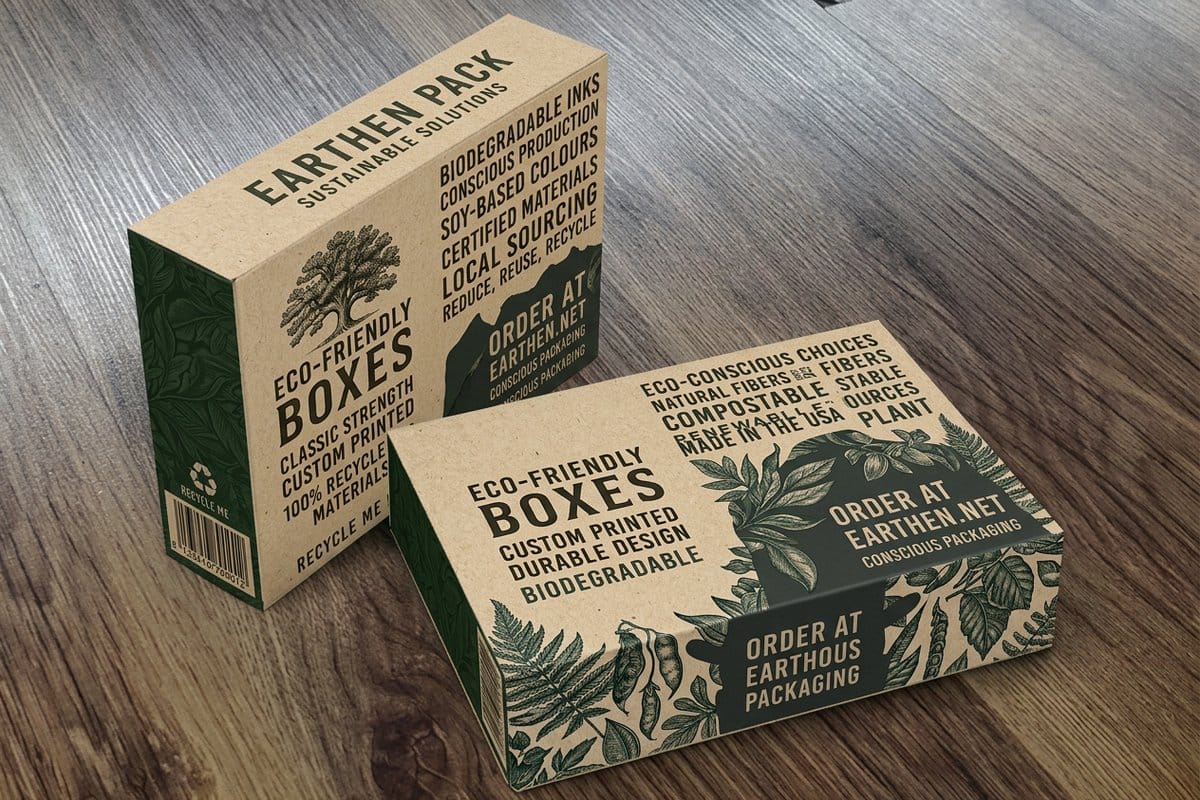
Cost on both materials moves with the same levers, so once you understand them you can predict the price of any spec. The big four are quantity (more boxes lower the unit price), size, board weight, and finishing such as gloss, matte, soft-touch, or foil. Corrugated formats usually start higher than small folding cartons because the fluted board uses more material and the cutting dies are larger. Our custom corrugated boxes guide breaks down the flute and wall choices that move a shipper's price.
Concrete numbers help. A run of cardstock cube boxes starts at $213.09, and you can watch the number move live in the configurator as you change quantity, size, and finish. Corrugated mailers and shippers begin higher for the material reasons above. Rather than memorize a table, use the specs and pricing panel below to price a real spec against your own contents.
One more money-saver: order free samples before a big run. Spending nothing to confirm the stock beats spending on a full order you would have changed. Once the material is right, the rest of the spec, and the price, comes together quickly.
Wally weighs the two boards
One is a display surface, the other is a shock absorber
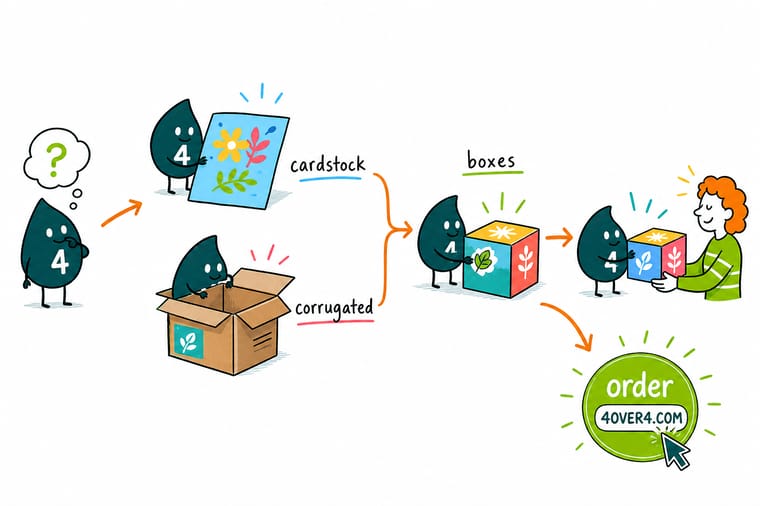
Wally keeps it simple: he asks where the box spends its life. On a shelf, it needs to look premium, so he reaches for smooth cardstock. On a delivery truck, it needs to protect, so he reaches for fluted corrugated. Match the material to the job first, then let 4OVER4 print it sharp on the size, weight, and finish you choose.
Configure your boxes →
Infographic
Cardstock vs corrugated, at a glance
Cardstock at 14pt to 24pt on the left, fluted corrugated on the right, and the shelf or shipment rule underneath. Save it as a checklist the next time you spec a retail box or a shipping mailer.
When you need both, a cardstock product box inside a corrugated shipper gives you a premium unbox and full transit protection at once.
Specs and pricing
Cube box specs and live pricing
Cube boxes come as a 2.75 inch or a 4 inch cube on 14pt uncoated or 18pt cover with gloss on one side, printed in full color outside in 7 business days. They run 50 for $213.09, which is $4.26 a box, and 100 for $250.42.
| Quantity | Price Per Unit | Total |
|---|---|---|
| 50 | $4.26 | $213.09 |
| 100 | $2.50 | $250.42 |
| 150 | $1.89 | $283.38 |
| 200 | $1.59 | $317.44 |
| 250 | $1.43 | $356.98 |
| 500 | 76.7¢ | $383.34 |
| 1,000 | 42.7¢ | $427.27 |
| 2,500 | 29.0¢ | $723.84 |
Print it
Put the right material into print at 4OVER4
%22%2F%3E%3Ccircle%20cx%3D%2244%22%20cy%3D%221%22%20r%3D%2219%22%20fill%3D%22%23a78bfa%22%20opacity%3D%220.15%22%2F%3E%3Ccircle%20cx%3D%2240%22%20cy%3D%2250%22%20r%3D%225%22%20fill%3D%22%23a78bfa%22%20opacity%3D%220.1%22%2F%3E%3Crect%20x%3D%2274%22%20y%3D%22-7%22%20width%3D%2229%22%20height%3D%2210%22%20rx%3D%224%22%20fill%3D%22%23a78bfa%22%20opacity%3D%220.08%22%20transform%3D%22rotate(9%2080%2030)%22%2F%3E%3C%2Fsvg%3E)
Explore more
Where to go next

By the numbers
Board and cardstock options, product count, and the delivery record
Common Questions
Common questions about cardstock vs corrugated boxes
What is cardstock (folding carton)?
Cardstock is a thick, smooth paperboard made of a single solid layer. When it is cut, creased, and folded into a box, that box is called a folding carton. Because the surface is flat and uniform, it prints in sharp, saturated color and takes coatings and foil beautifully, which is why almost every retail and product box you see on a shelf is a folding carton. It is rated in points, and 14pt to 24pt covers most box work.
What is corrugated cardboard?
Corrugated is a structural board made of three parts: a wavy fluted layer glued between two flat liners. That fluted middle is the whole point, because it traps air, absorbs impact, and lets the board carry weight without crushing. It is what shipping boxes, mailer boxes, and moving cartons are made from. People often call it cardboard, but true cardboard and corrugated are not the same thing.
What is cardstock vs cardboard?
The short version: cardstock is one smooth solid layer, and corrugated (what most people mean by cardboard) is a fluted board built in three layers for strength. Cardstock is chosen for how it looks and prints, so it wins on retail and gift boxes. Corrugated is chosen for how it protects, so it wins on shipping and mailers. One is a display surface, the other is a shock absorber.
Does this box go on a shelf or into the mail?
Start with the job, not the price. Ask where the box spends its life. If it sits on a shelf or under a tree and has to look premium, choose cardstock. If it has to survive a delivery route, get stacked, or hold something heavy, choose corrugated. Then match the weight to the contents, and if it is close, order free samples of both and feel the difference before you commit to a run.
What does cardstock vs cardboard cost, and how are prices set?
Price on both scales with the same levers: quantity (more boxes lower the unit price), size, board weight, and finishing like gloss, matte, or foil. Cardstock folding cartons such as cube boxes start at $213.09, and corrugated formats begin higher because the fluted board and larger cutting dies add material. At 4OVER4.COM you set each option in the configurator and the price updates live as you go, so you can see exactly what a given spec costs before you order.
How is cardstock thickness measured?
Cardstock is measured in points, where one point equals one thousandth of an inch. A 16pt sheet is 0.016 inches thick. For boxes, 14pt to 24pt is the common range, with heavier points chosen for larger cartons or premium products. Corrugated is not measured in points at all. It is described by its flute profile and total wall thickness, which is why you cannot compare the two with a single number.
Can you print full color on both cardstock and corrugated?
Yes. Both take full color CMYK printing, but the surfaces behave differently. Cardstock is smooth, so photos and gradients land crisp and rich, and it handles gloss, matte, and specialty coatings cleanly. Corrugated has a slightly textured liner, so it prints well for logos, type, and solid brand colors, and looks great as kraft or white, though it is not the surface for a gallery-grade photo.
Get Started
Order 250 bakery boxes at $2.85 each
Bring your design to 4OVER4.COM and print it on the board that fits the job, cardstock for the shelf or corrugated for the shipment. Kraft and mailer boxes run 250 for $711.78, which is $2.85 a box.
Legal Disclaimer
Gold Standard guarantees apply to all standard orders placed through 4over4.com. Price match requires verifiable proof of a competitor's published price for an equivalent product with matching specifications and turnaround time. Satisfaction guarantee covers manufacturing defects and print quality issues. Contact support with order number and documentation.
