
Folding Carton Boxes, the Complete Printed Cardstock Packaging Guide


Jordan is our labels, packaging and sustainability voice, built from the knowledge of our production team, with over 20 years in printing.
Folded box printing turns one die-cut, printed paperboard sheet into a folding carton that ships flat and folds to shape. Shipping flat is the whole economic argument, and it is why the dieline matters more than the artwork.
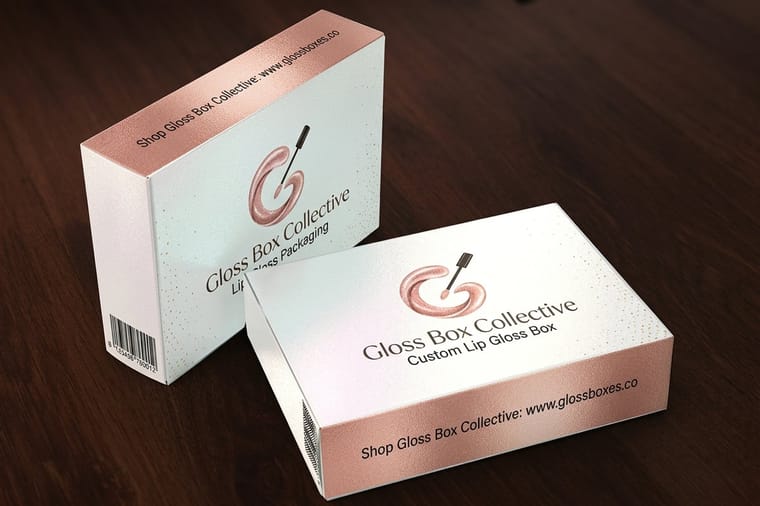
A folding carton box is a printed box cut from a single sheet of paperboard (cardstock) that is die-cut, scored, and glued along one seam so it ships and stores flat, then folds and tucks into a finished box. It is the standard style of retail packaging, and 4OVER4.COM prints custom cartons in gloss, matte, and kraft with live specs and pricing on every box. For custom paperboard specs beyond cartons, read custom paper packaging explained.
Quick take
Flat sheet, scored, folded, filled
A folding carton is a printed paperboard box that ships flat and folds to shape. Choose a style that fits your product, from reverse tuck cartons for retail to roll-end tuck-top boxes for heavier goods, then pick a paperboard weight and a gloss, matte, or kraft finish. Our roll-end tuck-top cartons come in 5 by 7 by 1.7 or 5.5 by 5.5 by 2.625 inches, start at 250 for $711.78 and print in 7 business days. Set up artwork on the supplied dieline with bleed and safety, and let quantity drive your unit price down. 4OVER4.COM prints custom cartons that fold clean and ship on time from New York.
Folded box printing at 4OVER4
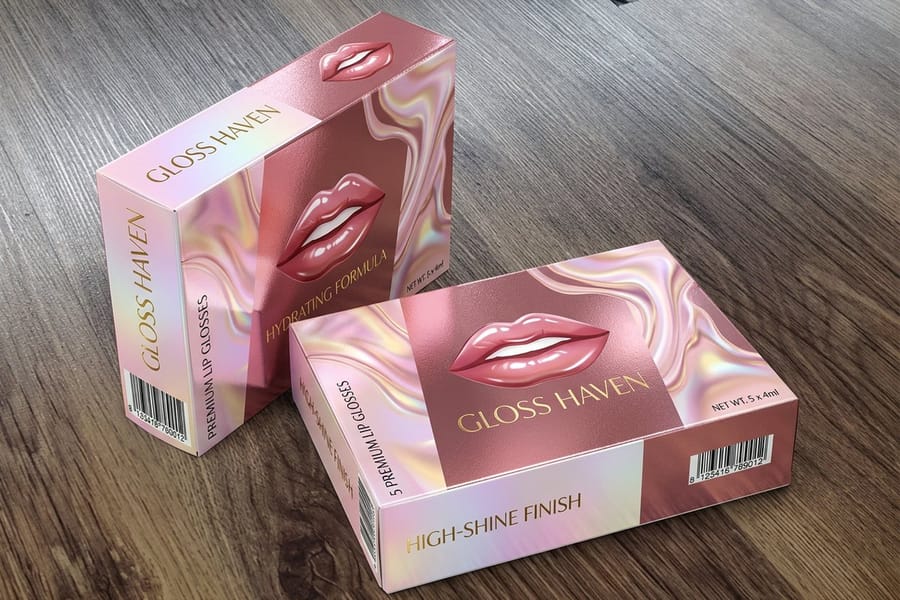
Folded box printing at 4OVER4.COM starts with a roll-end tuck-top carton in one of two sizes, 5 by 7 by 1.7 inches or 5.5 by 5.5 by 2.625 inches. You pick 14pt uncoated cover or 18pt cover with a gloss face on one side, and the outside prints in full color.
Runs start at 250 boxes for $711.78. A run of 1,000 costs $797.02 and 10,000 cost $4,044.70, so the unit price falls from about $2.85 to about 40 cents. Each run prints in 7 business days.
The cartons are printed, die-cut and scored while the sheet is flat, then ship flat and fold to shape when you fill them.
What is a folding carton box?
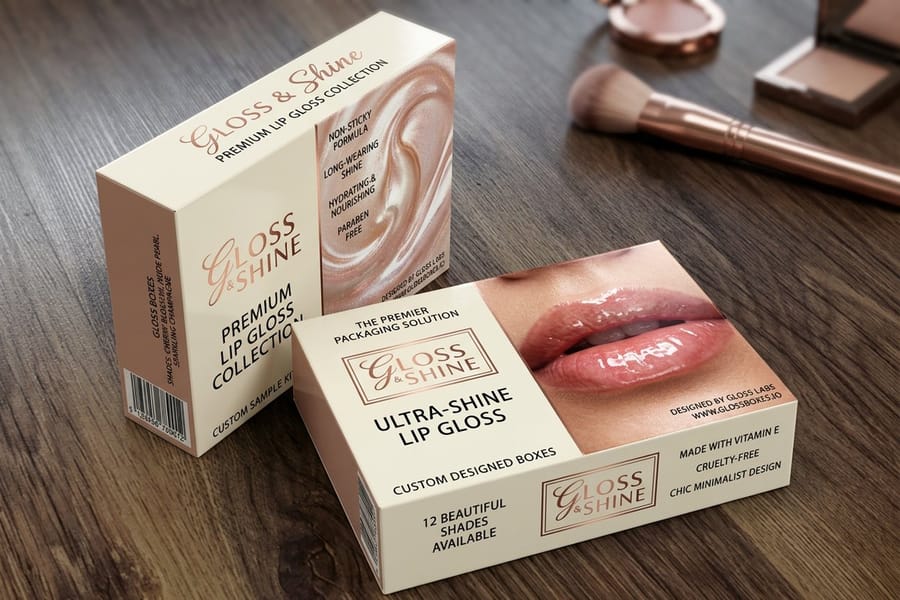
A folding carton box is a printed box cut from a single sheet of paperboard, also called cardstock. The sheet is die-cut into a flat blank, scored where it needs to bend, and usually glued along one seam. On our roll-end tuck-top cartons that sheet is 14pt uncoated cover or 18pt cover with a gloss face on one side. That blank ships and stores flat, then folds and tucks into a finished box exactly when you need it. It is the packaging you see on almost every retail shelf, holding everything from cosmetics and supplements to bakery treats and small electronics.
Because the carton lies flat until the last moment, it is light to ship, cheap to store, and fast to assemble by hand or machine. That combination is why folding cartons carry most of retail packaging. If you are ready to build one, 4OVER4.COM prints custom cartons across the full packaging printing collection, with live specs and pricing on every box.
This guide walks through the whole topic: how cartons differ from other boxes, the anatomy of a dieline, the common styles and when to use each, how to choose stock and finish, how pricing works, and how to set up artwork so your first run comes out clean. For deeper file-prep detail, our guide to preparing files for packaging products is the companion read.
Folding cartons vs corrugated and rigid boxes
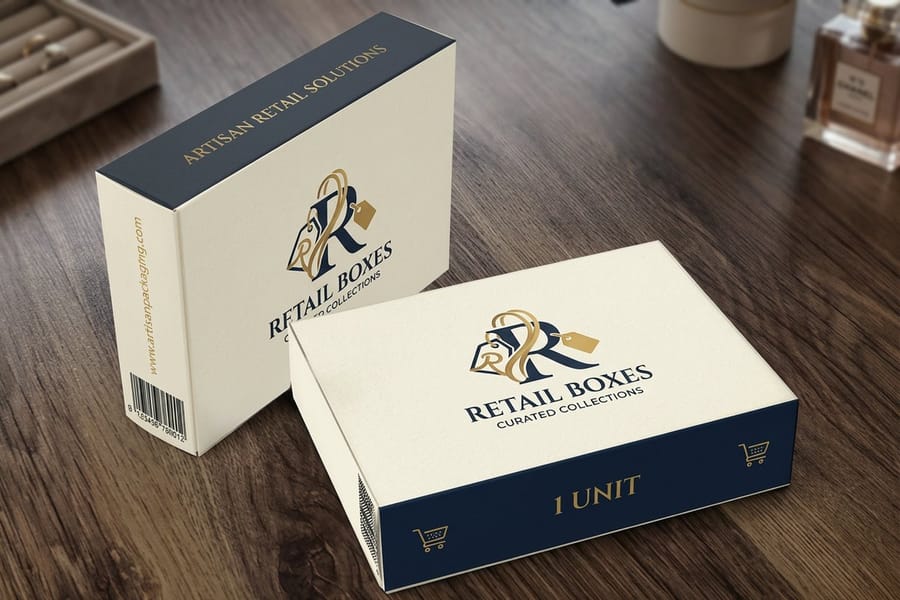
Not every box is a folding carton. Knowing the difference helps you spec the right one.
Folding cartons are single-layer paperboard. They print beautifully, fold flat, and are built for retail presentation and light-to-medium protection. The cartons we print use a single layer of 14pt or 18pt cover. This is the box style covered in this guide.
Corrugated boxes add a fluted middle layer between two liners. That flute makes them far stronger for shipping and stacking, but bulkier and less refined on the shelf. Many brands pair the two: a printed folding carton around the product, and a corrugated shipper to move cases. Our mailer boxes and shipping boxes cover the sturdier shipping side.
Rigid boxes are the premium end, made from thick chipboard wrapped in printed paper, like the box a phone or a luxury watch arrives in. They do not fold flat and cost more, but they feel unmistakably high-end. For most product packaging, a well-chosen folding carton hits the sweet spot of print quality, protection, and cost. Browse the full lineup on the custom box printing page.
The anatomy of a folding carton: panels, tucks and glue seams
Every folding carton starts life as a flat dieline, the outline that tells the die-cutter where to cut and where to score. Understanding the parts makes it far easier to design artwork that folds clean.
Panels are the walls of the box, front, back, and two sides, that wrap around your product. Score lines are the pressed creases where the board bends, shown here as dashed teal lines. Tuck flaps close the top and bottom, and the glue seam is the tab that bonds the blank into a tube. Keep important artwork off the score lines and glue tab, and hold text inside the safety margin so nothing lands on a fold.
Common folding carton styles and when to use each
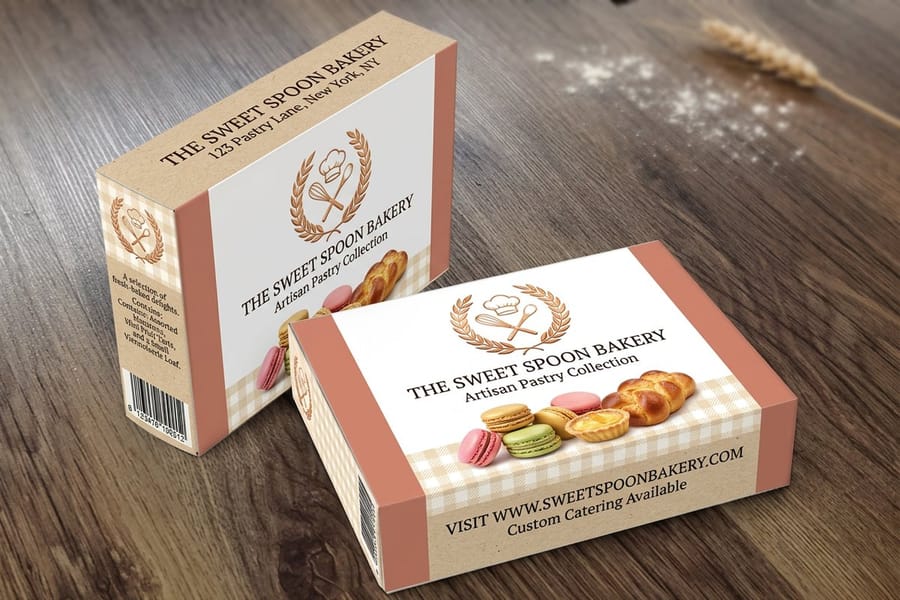
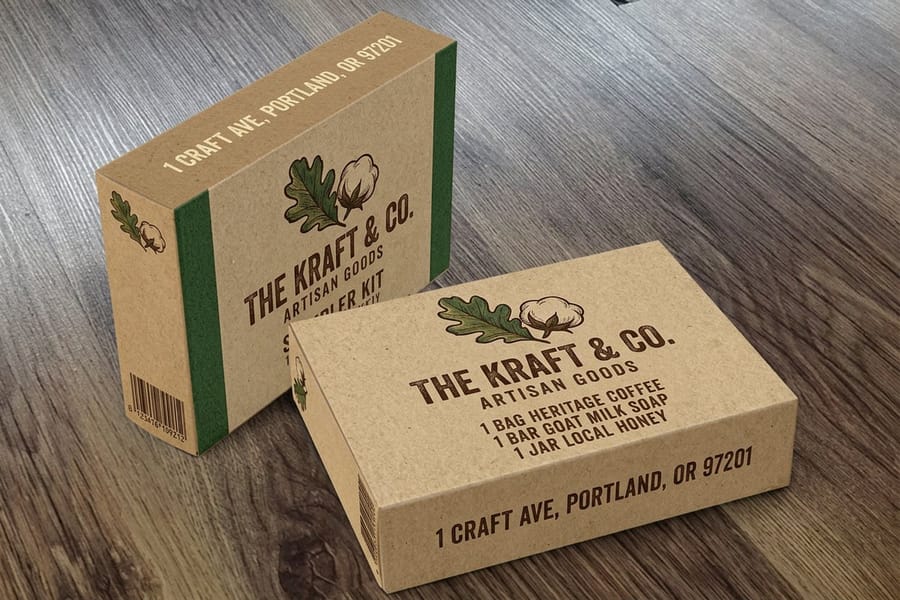
Folding cartons come in a handful of proven styles. Pick the one that matches how your product sits, how heavy it is, and how much of a moment you want the unboxing to be. Sizes differ by style: a roll-end tuck-top carton runs 5 by 7 by 1.7 or 5.5 by 5.5 by 2.625 inches, and a pillow box is 3.625 by 1.5 by 7.25 inches with an edge lock or glued join.
- Reverse and straight tuck cartons are the classic retail box. Flaps tuck in at top and bottom, they fold flat, and they suit light products like cosmetics, supplements, and small goods.
- Roll-end tuck-top boxes have reinforced rolled edges and a tuck lid, giving them more strength for heavier or shippable items while still printing edge to edge.
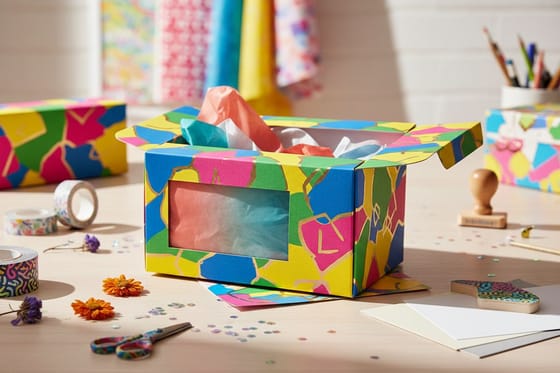
- Bakery boxes are built for food, with easy-fold bottoms and often a window to show off what is inside.
- Pillow boxes and sleeves dress up small, soft, or gift items with a curved, premium silhouette.
- Magnetic closure boxes deliver a rigid, high-end unboxing for luxury and subscription products.
See the full range side by side on the packaging printing collection, then narrow down by product weight and shelf presence.
Choosing the right cardstock and finish
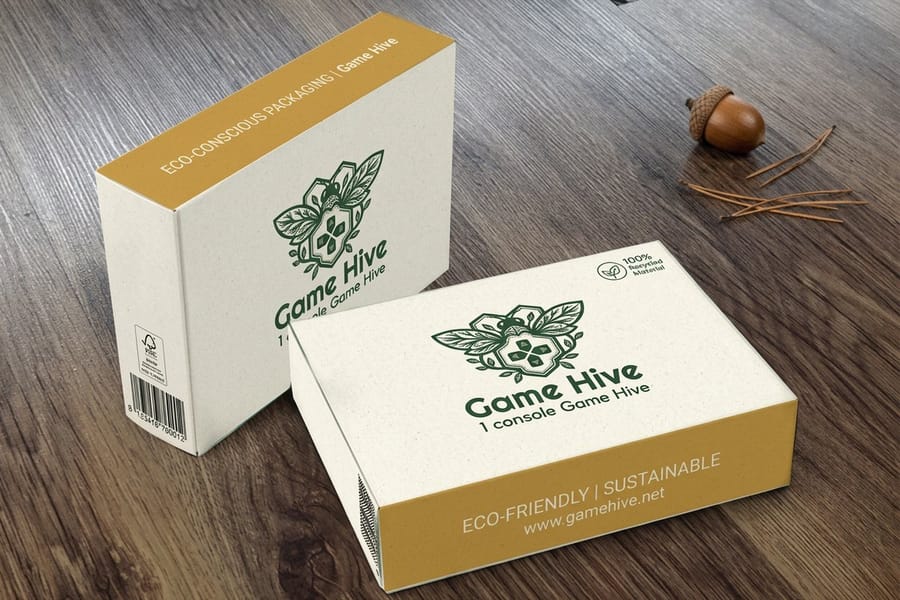
The paperboard and finish decide how your carton looks, feels, and holds up. This is where a box goes from ordinary to premium.
Paperboard weight is the foundation. Our cartons offer two, 14pt uncoated cover and 18pt cover with a gloss face on one side. Lighter cardstock keeps small retail cartons trim and economical, while heavier board gives larger boxes the rigidity to protect their contents and feel substantial in hand. Match the weight to the product weight so the carton never feels flimsy.
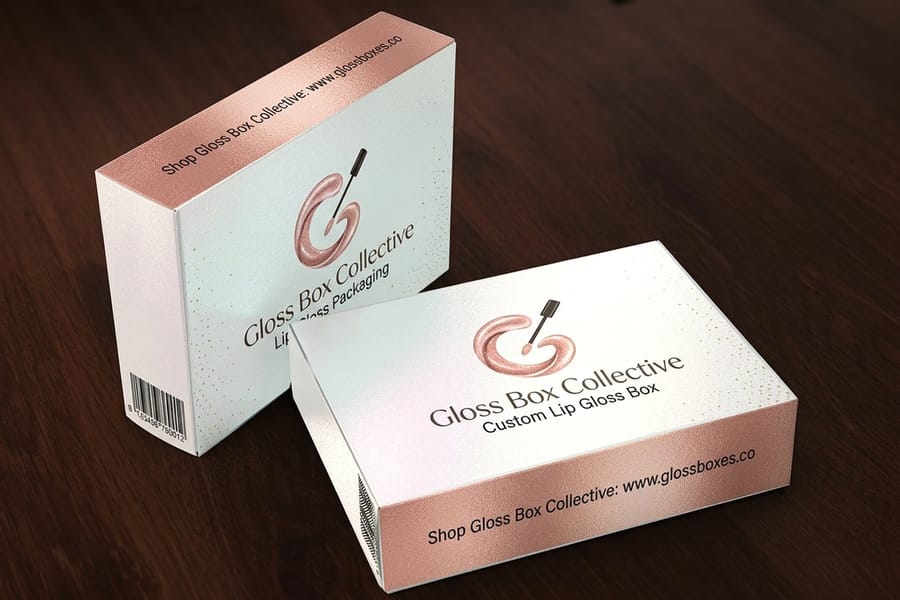
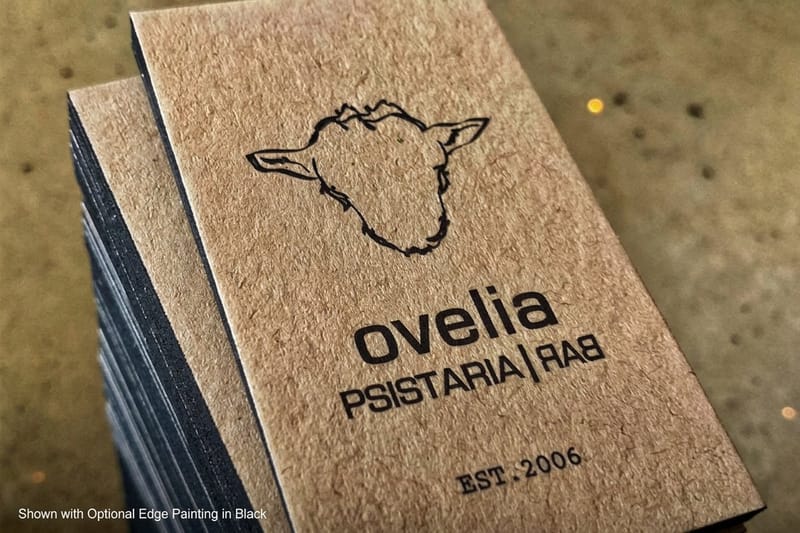
Finish sets the mood. A high-gloss carton pops with saturated color and a reflective sheen, ideal for beauty and consumer goods. A soft matte reads calm and modern. Natural kraft board signals handmade, organic, and eco-forward, and pairs well with simple one-color printing. For sustainability-minded brands, eco-friendly boxes use recycled and recyclable board without giving up print quality.
Add-ons like spot gloss, foil, embossing, and die-cut windows layer on extra shelf appeal. If you want a coordinated look across kraft packaging and print, the kraft printing collection keeps everything consistent.
Folding carton materials and board grades explained
Every folding carton starts as a single sheet of paperboard, and the grade of that board decides how white the print sits, how much abuse the box takes, and what it costs. Four grades cover almost all retail packaging.
- SBS, solid bleached sulfate. Bleached virgin fiber, white through the whole thickness, with a clay-coated print face. It is the premium grade for cosmetics, confectionery, pharmacy cartons and anything where color has to land exactly against a bright white ground.
- CUK or CNK, coated unbleached kraft. Unbleached virgin kraft fiber, brown on the reverse, coated white on the print side. It is the strongest of the common grades at a given caliper and it shrugs off moisture, which is why it carries beverage multipacks, frozen food and hardware.
- FBB, folding box board. A layered board with mechanical pulp in the middle and bleached fiber on the outside. That sandwich buys high stiffness for the weight, so a lighter FBB carton stands as square as a heavier board and creases cleanly. Common on health and beauty and on larger cartons that must not bow.
- CRB, coated recycled board. Recovered fiber with a coated white liner and a gray interior. The economical and sustainable pick for dry goods and any run where recycled content matters more than a pure white break. Its fibers are shorter, so give it a little more caliper than SBS for the same job.
Caliper is the other half of the decision. Light retail contents sit happily on thinner board, mid-weight products want the middle of the range, and heavy or shippable goods want the thickest board the die can still crease cleanly. Weigh the product first, then pick the grade for how the box has to look and the caliper for how much it has to carry. Our kraft board cartons take the unbleached route, gloss cartons the bright coated one, and eco-friendly boxes the recycled one.
How folding cartons are manufactured
A carton is made in one pass through four stations, and that order explains most of the artwork rules on this page.
- Printing. The sheet is printed while it is still a flat rectangle, offset or digital depending on the run, and coatings, foil and spot gloss go down at the same stage or immediately after.
- Die-cutting and creasing. A steel-rule die cuts the outline, the tuck flaps and any window in a single strike, while blunt creasing rules press the fold lines into the board at that same moment. A crease is not a scratch on the surface, it is a crushed channel so the board folds on one predictable line instead of cracking.
- Stripping and gluing. Waste is stripped out, then a folder-gluer folds the blank and lays adhesive on the glue tab to bond a single seam. That is exactly why ink and coating have to stay off the tab: the adhesive needs raw board to grip.
- Shipping flat. The carton leaves as a flat glued blank, which is what makes folding cartons cheap to ship and store. It is popped open, folded and tucked when the product goes in.
Two things follow from that sequence. Print happens before the fold, so any image crossing a crease has to survive being bent, and heavy ink over a crease is where cracking shows up first. And the die is a physical tool cut to your dieline, so the dieline is the contract: what it says is what gets cut.
Sizing and setting up your artwork
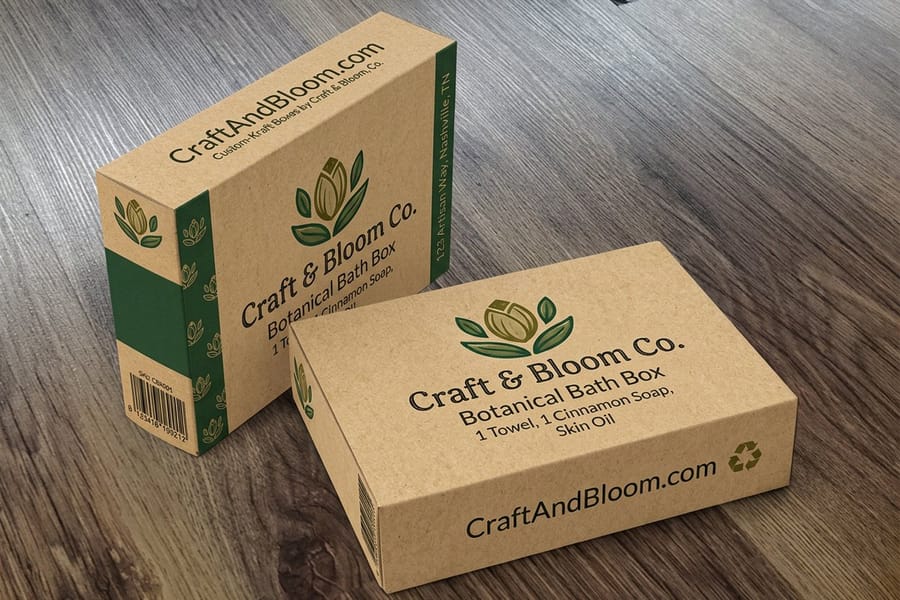
The single most common reason a carton run disappoints is artwork that ignores the dieline. A few habits keep every fold and trim clean.
- Design on the dieline, not around it. Place the supplied dieline on its own layer and build your art to match the exact panels, tucks, and glue tab.
- Extend bleed past every cut edge. Run background color and images beyond the trim so no white slivers appear after die-cutting.
- Keep text inside the safety margin. Pull logos and copy away from score lines and edges so nothing lands on a fold or gets trimmed.
- Mind the glue seam. Leave the glue tab clean, because ink and coating there can weaken the bond that holds the box together.
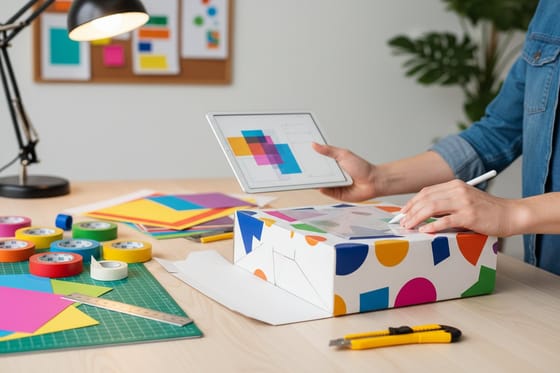
Not a designer? The 4OVER4.COM Online Designer lets you lay out carton art in the browser with the dieline already in place. For the full technical rundown on bleed, safety, and file formats, read how to prepare files for packaging products.
What folding carton boxes cost and how prices are set
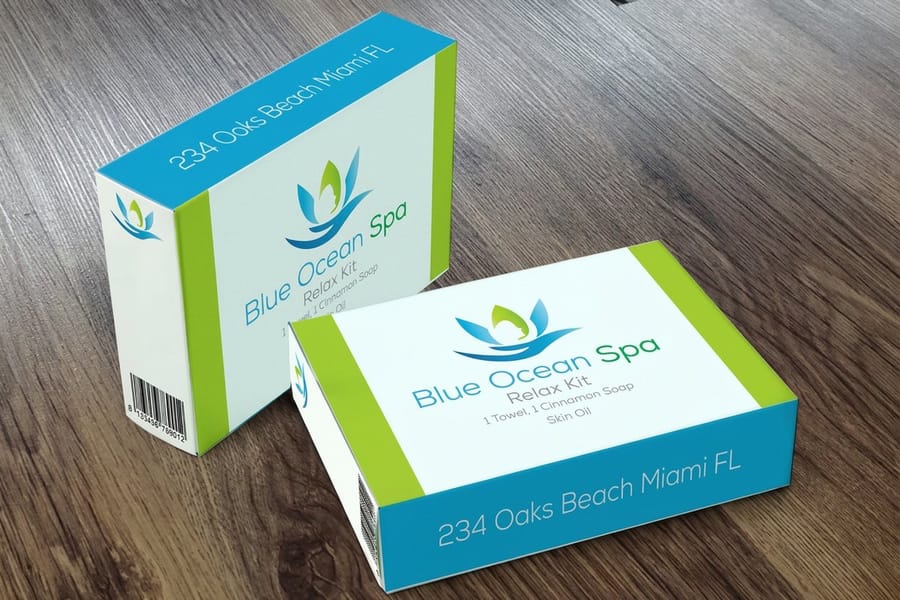
Folding carton pricing is not a single number, it is a function of a few inputs you control. Once you understand them, it is easy to hit a target unit cost. Gloss boxes show the spread: 250 cost $711.78, 2,500 cost $1,338.30 and 10,000 cost $4,044.70.
Size comes first, because a larger carton simply uses more board. Paperboard weight is next, with heavier stock costing more per sheet. Print and finish add up: full-color printing, gloss or matte coating, foil, and spot treatments each raise the price. Add-ons like die-cut windows or embossing layer on more. And quantity is the big lever, because setup cost is spread across the whole run.
That last point matters most. Small runs carry a higher per-box price because the fixed setup is divided among fewer boxes, while larger quantities drop the unit cost quickly. The live price table further down this page shows exactly how the per-unit number moves as you change size and quantity, with no guessing. For market context on where packaging spend is heading, our packaging industry statistics page has the numbers.
Eco-friendly folding cartons
Paperboard cartons are already one of the more sustainable packaging formats, since the board is widely recyclable and often made with recycled content. A few choices push a carton further.
Reach for recycled and recyclable board, keep coatings light so the carton stays curbside-recyclable, and lean on natural kraft or eco-friendly box stocks that skip heavy bleaching. Right-sizing the carton to the product also cuts material and shipping weight, which is good for both the planet and your freight bill. On our cartons that means the 14pt uncoated cover over the gloss-faced 18pt, and whichever of the two sizes, 5 by 7 by 1.7 or 5.5 by 5.5 by 2.625 inches, sits closest to the product.
Folding carton mistakes to avoid

Even experienced buyers trip on the same few things. Avoid these and your first run comes out right.
Guessing the interior size. Measure your product and add a little clearance, then size the carton to that. A box that is too tight rips on assembly, and one that is too loose lets the product rattle.
Ignoring the dieline. Art built without the die placed on the file almost always lands text on a fold or into the glue tab. Always design on the supplied dieline.
Skipping bleed. No bleed means white edges after die-cutting. Extend color and images past every trim line.
Over-coating the glue seam. Ink and gloss on the glue tab weaken the bond and pop the box open. Keep that strip clean.
Ordering too few to test at scale. If you are launching, order enough to feel the real per-unit price and confirm the fit before committing to a huge run. Start on the packaging printing collection, where every carton shows live specs and pricing.
Wally explains folding cartons
Flat sheet in, finished box out
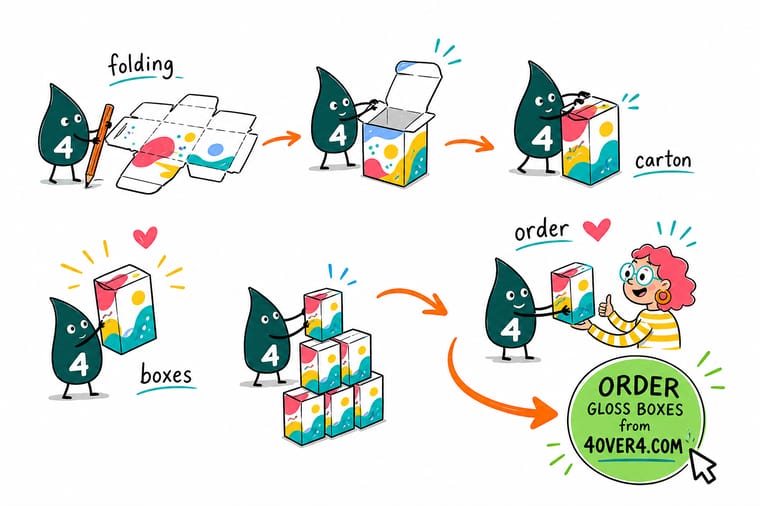
Wally treats a folding carton like origami with a job: one printed sheet of cardstock, a few clean creases, and a tuck or two turns it into a box that sells your product. Keep the art on the dieline and off the glue seam, match the stock to the weight, and the carton folds crisp every time. When you are ready, 4OVER4 prints your carton in gloss, matte, or kraft with live pricing before you commit.
Order folding cartons →%22%2F%3E%3Ccircle%20cx%3D%2247%22%20cy%3D%2220%22%20r%3D%2222%22%20fill%3D%22%23a78bfa%22%20opacity%3D%220.15%22%2F%3E%3Ccircle%20cx%3D%2254%22%20cy%3D%2227%22%20r%3D%22-3%22%20fill%3D%22%23a78bfa%22%20opacity%3D%220.1%22%2F%3E%3Crect%20x%3D%2277%22%20y%3D%22-9%22%20width%3D%2232%22%20height%3D%2220%22%20rx%3D%224%22%20fill%3D%22%23a78bfa%22%20opacity%3D%220.08%22%20transform%3D%22rotate(42%2080%2030)%22%2F%3E%3C%2Fsvg%3E)
Specs and pricing
Custom folding carton specs and pricing
Gloss boxes run 250 for $711.78, which is $2.85 a box, with live specs and price-per-unit below. Change the size and quantity to watch the unit price move.
| Quantity | Price Per Unit | Total |
|---|---|---|
| 250 | $2.85 | $711.78 |
| 500 | $1.42 | $711.78 |
| 1,000 | 79.7¢ | $797.02 |
| 2,500 | 53.5¢ | $1,338.30 |
| 5,000 | 44.6¢ | $2,231.42 |
| 10,000 | 40.4¢ | $4,044.70 |
| 15,000 | 39.0¢ | $5,844.45 |
| 20,000 | 38.3¢ | $7,657.73 |
Print it
Popular custom folding cartons at 4OVER4
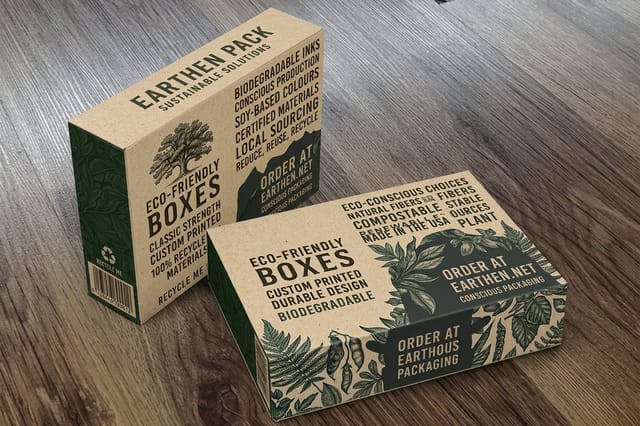
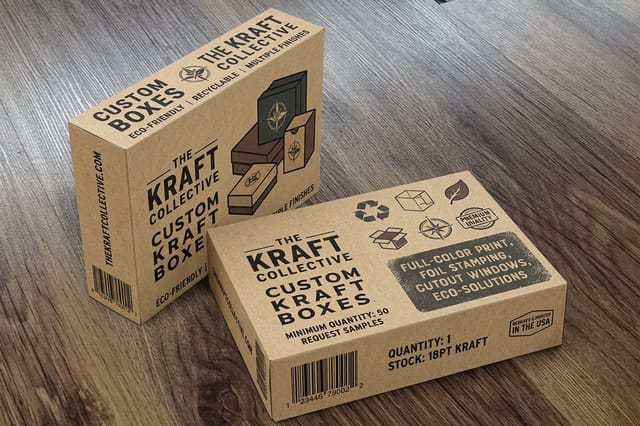
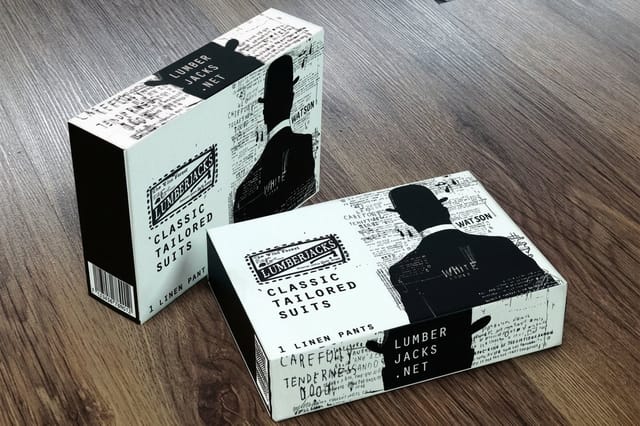
How it works
How to order custom folding cartons
Four steps from blank paperboard to a printed carton on your dock, all in the browser.
- 1 Pick the carton style Choose a tuck carton, roll-end tuck-top, mailer, sleeve, or specialty box that fits how your product sits and ships.
- 2 Set size, stock and finish Dial in the interior dimensions, paperboard weight, and a gloss, matte, or kraft finish in the live configurator.
- 3 Upload artwork on the dieline Drop your print-ready file onto our dieline, or build it in the Online Designer with bleed and safety already marked.
- 4 Approve, print and fold We print, finish, die-cut, and fold your cartons, then ship them flat or set up, on time from our New York facility.

Explore more
Where to go next

By the numbers
Sixty paper types a folding carton can be cut from
Common Questions
Common questions about folding carton boxes
What is a folding carton box?
A folding carton is a printed box made from a single sheet of paperboard (cardstock) that is die-cut, scored, and often glued along one seam so it ships and stores flat. When you need it, you pop it open and fold the panels and tuck flaps into a finished box. It is the most common style of retail packaging you see on shelves, from cosmetics and supplements to bakery treats and small electronics.
How are folding cartons manufactured?
The board is printed first, while it is still a flat sheet. A steel-rule die then cuts the outline, the tuck flaps and any window in one strike, and blunt creasing rules press the fold lines into the board at the same moment so it bends on a predictable line instead of cracking. Waste is stripped away, a folder-gluer folds the blank and bonds a single glue seam, and the carton ships flat to be popped open, folded and tucked when the product goes in. Every artwork rule follows from that order: print before fold, keep heavy ink off the creases, and leave the glue tab bare so the adhesive can grip raw board.
What paperboard grades are folding cartons made from?
Four grades cover almost all retail cartons. SBS, solid bleached sulfate, is white through its whole thickness and prints the cleanest, so it suits cosmetics, confectionery and pharmacy. CUK or CNK, coated unbleached kraft, is unbleached brown fiber coated white on the print side and is the strongest at a given caliper, which is why it carries beverage multipacks and frozen food. FBB, folding box board, layers mechanical pulp between bleached outers for high stiffness at a lighter weight. CRB, coated recycled board, uses recovered fiber with a coated white liner and is the economical, recycled-content choice for dry goods.
Which carton style folds without a glue machine?
Start with the product: its weight, size, and how much protection it needs. Light retail items do well in a reverse or straight tuck carton, heavier or shippable goods suit a roll-end tuck-top or mailer style, and delicate or premium items shine in a sleeve, pillow box, or magnetic closure box. Then pick a paperboard weight and finish that matches your brand, confirm the interior dimensions fit your product with a little room, and set up a dieline before you commit to a run.
What does a folding carton box cost and how are prices set?
Price is driven by five things: the finished size of the carton, the paperboard weight, the print and finish (full color, gloss, matte, or kraft), any add-ons like spot coating or windows, and the quantity you order. Bigger boxes use more board, heavier stock and special finishes add cost, and smaller runs carry a higher per-unit price because setup is spread across fewer boxes. Larger quantities drop the unit price quickly. The live price table on each product page shows exact per-unit pricing as you change size and quantity.
What sizes, stocks and finishes are available for folding carton boxes?
Folding cartons come in stock sizes plus custom dimensions built to your product. Paperboard runs from lighter cardstock for small retail cartons to heavier board for sturdier boxes, and finishes include high-gloss, soft matte, and natural kraft. You can add spot coatings, foil, embossing, and die-cut windows depending on the style. The configurator on each box product page lists the exact size, stock, and finish options available for that carton.
How long do folding carton boxes take to print and ship?
Turnaround depends on the carton style, finish, and quantity, but most custom folding cartons move through print, finishing, and folding within a standard production window and then ship from our New York facility. Simpler cartons on stock sizes turn faster than large custom runs with special finishes. You will see the available production and shipping options at checkout once your specs are set, and 4OVER4.COM ships on time 99.8% of the time.
What is the difference between a folding carton and a corrugated box?
A folding carton is made from a single layer of paperboard and is meant for retail presentation and light protection, so it prints beautifully and folds flat. A corrugated box has a fluted middle layer sandwiched between liners, which makes it much stronger for shipping and stacking but bulkier and less refined on the shelf. Many brands use both: a printed folding carton for the product itself, and a corrugated shipper to move cases of them.
Get Started
Order 250 gloss boxes at $2.85 each
Pick a style, set your size and finish, drop your art on the dieline, and we print cartons that fold clean and ship on time.
Legal Disclaimer
Gold Standard guarantees apply to all standard orders placed through 4over4.com. Price match requires verifiable proof of a competitor's published price for an equivalent product with matching specifications and turnaround time. Satisfaction guarantee covers manufacturing defects and print quality issues. Contact support with order number and documentation.
