
Event Postcards for Invitations, Announcements and Fast RSVPs


One flat card, no envelope, and a reply that has to happen somewhere else. Here is the size that keeps postage cheap, the wording that gets an answer back, and where a QR code survives the mail.
An event postcard is a flat, unfolded card that announces one event and asks for one response, mailed without an envelope or handed out at the door. Print it 4 by 6 inches to stay inside the USPS postcard rate, or 5 by 7 when it needs to read as an invitation and you accept letter postage. It carries no reply card, so the RSVP runs through a short URL, a phone number or a QR code, and that code has to stay clear of the barcode zone in the lower right of the address side.
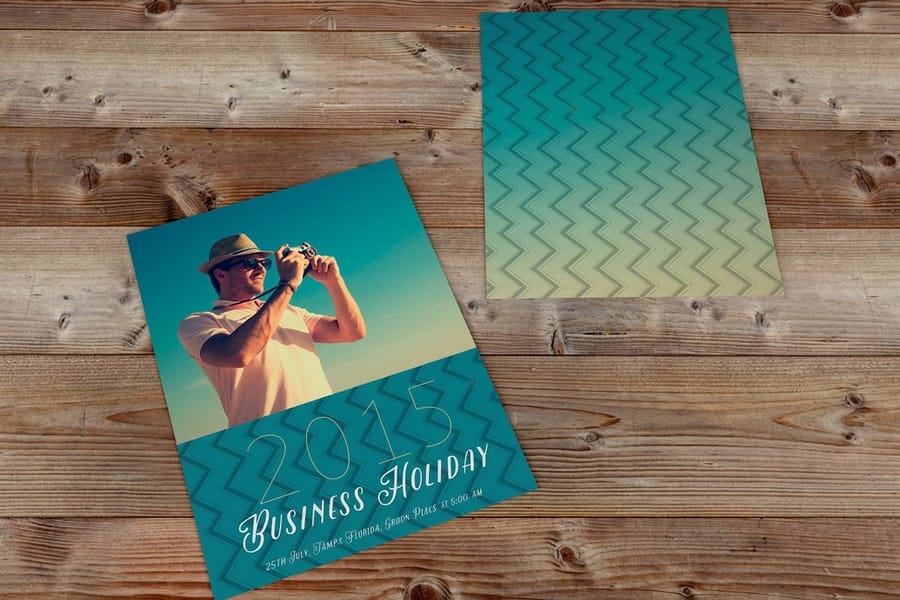
Quick answer
One card, one instruction, and a reply route that works
An event postcard does the job of an invitation without the envelope. Keep it at 4.25 by 6 inches or under and it mails at the USPS postcard rate. Go bigger and it mails as a letter, which is a fair trade when the card has to be kept rather than skimmed. Because there is no reply card to send back, the RSVP has to live on a short URL, a phone number or a QR code, and that code belongs on the design side or the message half, never in the barcode clear zone across the lower right of the address side.
When an Event Postcard Beats an Invitation or a Flyer
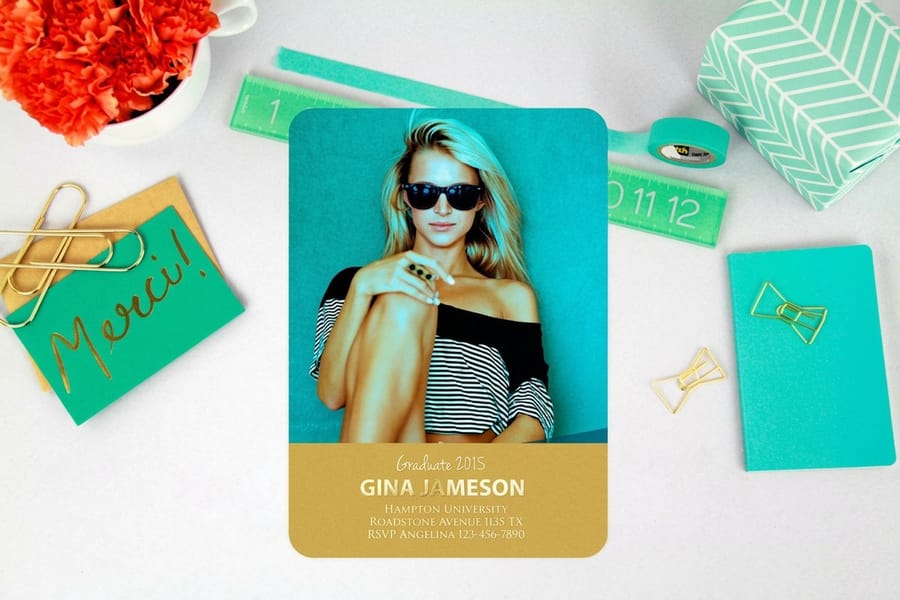
Reach for a postcard when the message is short, the list is wide, and the date is the point. A grand opening, a fundraiser, an open house, a class reunion, a workshop, a seasonal sale preview: all of them fit on one card because the reader only needs four facts and one action.
Move up to a folded piece when the wording gets formal or long. A wedding, a black-tie gala or a ceremony with a programme needs room for host lines, a schedule and a reply card, and it needs the envelope that signals the occasion is worth opening. Folded invitations start at $38.22 against $16.48 for standard postcards, so the format decision is also a budget decision on a list of 300.
Two limits are worth naming before you commit. A postcard is open mail, so everyone who handles it reads it, which rules it out for a surprise party or anything with a private address on the front. And it gives the guest nothing to mail back, so the reply has to happen by phone, form or scan. If you want the fold explained further, our comparison of folded and flat invitations walks through both sides.
The flyer question is simpler. A flyer is for stacks on a counter and for hands at a door. It carries more copy and no address panel, and it is not built to survive a mail stream. If the piece has to travel through USPS, print a postcard.
Sizes, Stock and the Postage Line They Sit On
Size is the one design choice that changes what you pay per piece for the rest of the campaign. USPS charges its postcard price only for a rectangular card between 3.5 by 5 inches and 4.25 by 6 inches, with a thickness of 0.007 to 0.016 inch. One eighth of an inch over that limit and the card mails at letter rates.
| Size | How it mails | What fits on it | Pick it when |
|---|---|---|---|
| 4 x 6 | Postcard rate, the cheapest class there is. | Event name, date, place, one instruction, small map. | The list is long and postage is the biggest line in the budget. |
| 5 x 7 | First-Class letter rate, since it exceeds the postcard limit. | Invitation wording with host lines, a full details block, a QR code. | The card has to read as an invitation and get kept on a fridge. |
| 6 x 9 | Letter rate, at the top of the letter size range. | A large image plus an agenda or a parking panel. | The card competes with other mail and has to be seen first. |
| 6 x 11 | Flat or oversize rates, priced well above a letter. | A full programme, a coupon strip, a tear-off section. | The announcement doubles as the promotional piece for the venue. |
Stock comes next, and there are only two real decisions. Weight: 14pt is enough for a mailed announcement, 16pt feels noticeably more solid in a hand at the door, and the difference shows most on anything above 5 by 7. Coating: gloss UV makes photographs snap and shrugs off rain in a mailbox, but a pen will not mark it. Order matte or uncoated if a host has to write a guest name, a table number or a personal line on the card. Our postcard paper and cardstock guide covers the weights in detail, and the complete postcard size guide lists every dimension we run.
One layout rule catches people out. You can design the front vertically, but the address side has to read horizontally, because that is the orientation the sorting equipment expects. A portrait front with a landscape back is normal and correct.
Mailing the Card Versus Handing It Out
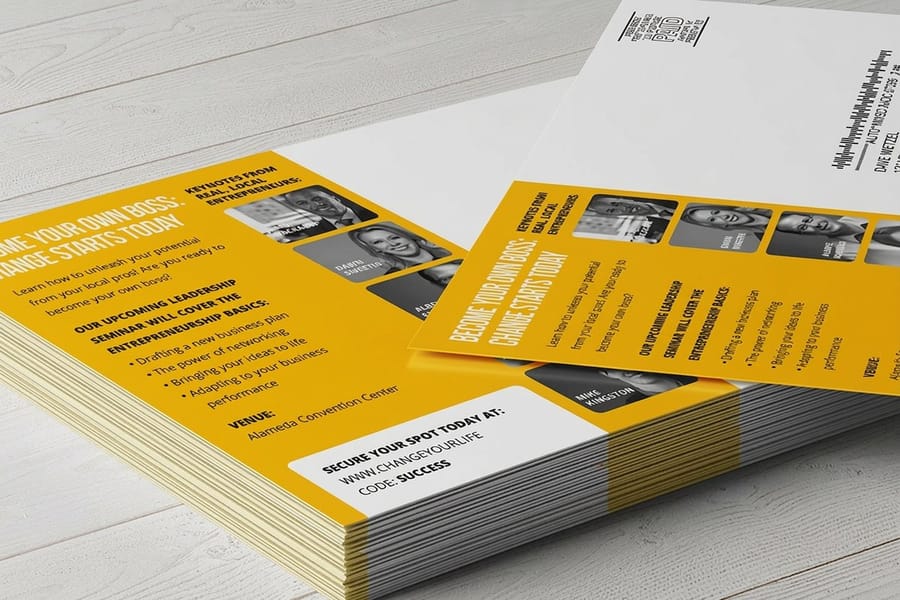
The same front works for both. The back does not. A mailed card gives up its right half to the address block, the postage area and the return address, and it has to keep the lower right clear for the USPS barcode. A handout keeps the whole back for a map, a parking note, an agenda or a coupon.
If the event needs both, print two versions rather than one compromise. The cost of a second file is nothing next to a handout that wastes a third of its back panel on a blank address panel. Set the mailed layout with our address side layout rules and start from a correctly sized file in the blank template library.
Timing decides the class you mail at. Save the date six to eight weeks out, invite three to four weeks out, remind about a week before. First-Class Mail postcards move in a few days. USPS Marketing Mail is cheaper per piece and can take two weeks or more, which suits a save the date and ruins a reminder. For a neighbourhood event where the list matters less than the radius, Every Door Direct Mail hits whole carrier routes without a mailing list at all, explained in our guide to how EDDM works.
You can also hand the whole job over. Direct mail postcards start at $89.68 and cover the printing and the mail drop together, so the cards go from our press into the mail stream without a box arriving at your office first. If you would rather see the steps yourself, how postcard mailing services work lays out the sequence, and the postage and address rules cover the details USPS enforces.
Design and Copy That Actually Gets an RSVP Back
Give the front one job: make someone stop and read the date. Event name, date, and an image that says what kind of night it is. That is the whole front. Every detail you cram in beside it costs you the one thing the front is for.
The back carries the details and exactly one instruction. Write the RSVP line so it names three things, in this order: the deadline, the method, and the person. "Reply by October 3 at the link below, or call Dana at the front desk" beats "RSVP appreciated" by a wide margin, because it removes the two questions that make people put the card down. Set the deadline two to three weeks before the date if a caterer needs a headcount, and plan on chasing the last quarter of the list by phone anyway. That is not a failure of the card, it is how RSVPs work.
- Keep live text 1/8 inch inside the trim and build 1/8 inch of bleed, or the cutter will clip a date you needed.
- Set the address block dark on light, at least 10pt, with no photograph running behind it. Scanners read contrast, not intent.
- Do not go below 8pt for the details block. A reunion list skews older than you think.
- Name the venue and the cross street. A venue name alone sends people to a search engine and half of them do not come back.
- Put the dress code on the card if there is one. It is the question the host gets asked most, and it costs one line.
For the wording itself, our invitation wording guide has host lines and reply phrasing you can lift, and how to design a postcard covers the layout mechanics for the card as a whole.
Adding a QR Code Without Killing the Scan
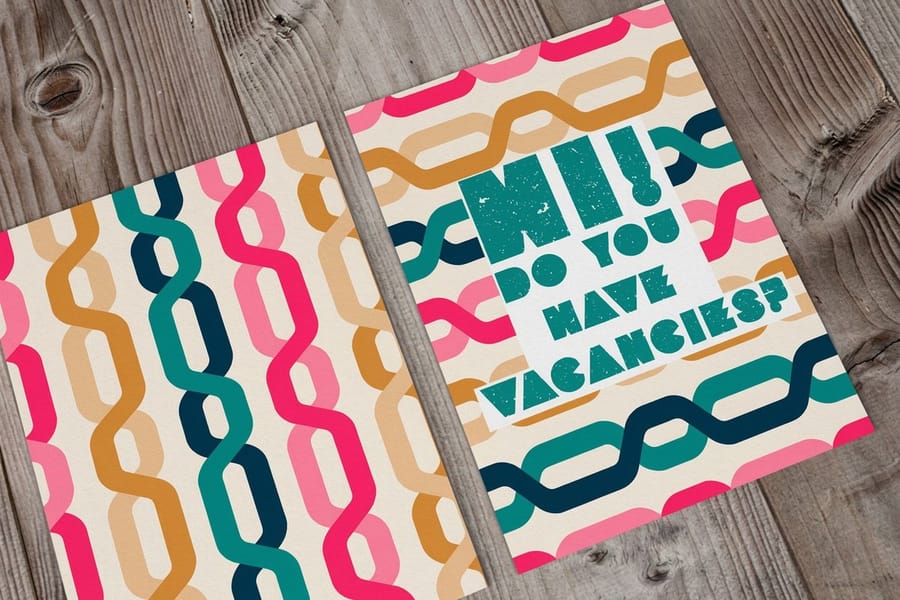
A QR code turns a printed card into a measurable one, which is the main reason to add it: you find out how many people scanned, when, and from which drop. Point it at the reply form or the ticket page, and use a redirectable short link so you can change the destination after the cards are printed. That single habit has saved more events than any design choice on this page.
One code, one job. Two codes on one card split the attention and roughly halve the scans on both, so pick the action that matters and drop the other. Print the plain URL underneath it as well, because a meaningful share of guests will never point a phone at a card.
The physical rules are short. Print the code at 0.8 inch square or larger. Leave a quiet zone of four modules of clear space on all four sides, which means no border, no photo edge and no type crowding it. Keep it dark on light rather than reversed, because plenty of scanners still refuse an inverted code. Keep it off the lower right of the address side, where the USPS barcode lands. And check the printed proof rather than the PDF, because a gloss UV finish can throw enough glare at some angles to defeat a scan that worked perfectly on screen. If that is a risk for your card, order the coating matte.
Our step by step on adding a QR code to postcards covers generation and testing, and the complete QR code guide explains error correction levels and why a busier code needs more size, not less.
How to Order Event Postcards Without a Reprint
Work in this order and the job goes through cleanly. Pick the size against the postage line first, because it sets the layout. Pick the stock and coating second, based on whether anyone writes on the card. Then set the quantity, and check the price break above the number you had in mind, since the jump from 250 to 500 cards is usually smaller than the cost of a second short run later.
Build the file at full size with 1/8 inch bleed, fonts outlined, and images at 300 dpi at final size. Upload it, or start from a blank postcard template so the trim and safety margins are already right. Choose the turnaround that lands the cards in your hands before the mail date, not on it. Leave a working day of slack for the drop.
Before you approve the proof, read the address side out loud: is the barcode clear zone empty, is the address block dark on light, does the QR code sit outside it. Then scan the code from the proof itself. Those three checks catch nearly every event postcard reprint we see.
Order from standard postcards at $16.48 for the plain mailed announcement, invitation cards at $19.77 when the piece has to look like an invitation, or direct mail postcards at $89.68 when you want the cards printed and mailed in one pass. The full range sits in postcard printing, and the invitation formats live under invitation printing.
Wally explains event postcards
One card, one instruction, and a QR code that stays out of the mail barcode
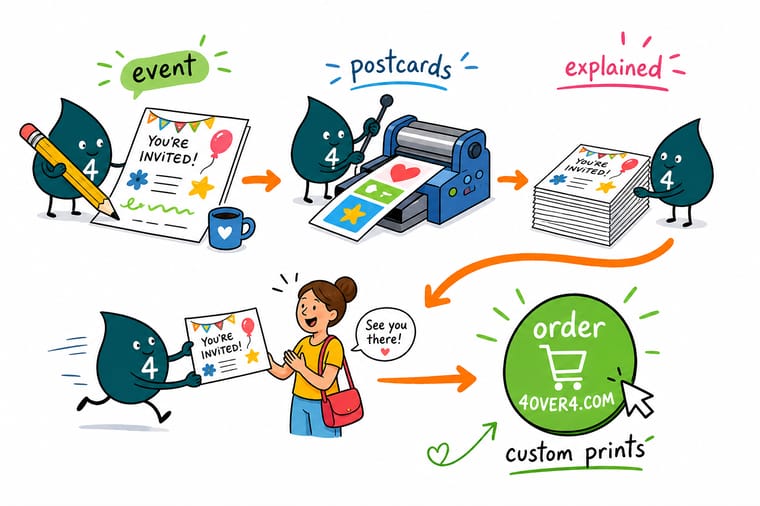
Wally puts the event name and the date on the front and nothing else. On the back he writes the deadline, the method and a name, because a reply line without those three gets ignored. Then he keeps the lower right of the address side empty, since USPS prints its barcode there and it will run straight over a QR code. The reply code goes on the design side, at least 0.8 inch square, dark on light, with clear space all around it.
Print your event postcards →Specs and pricing
Sizes, stocks and starting prices for event cards
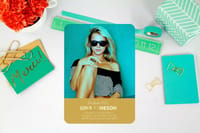
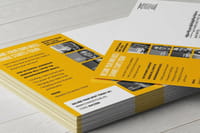
Compare the three formats an event usually needs, with live configuration options and starting prices straight from the 4OVER4.COM configurator.

Print it
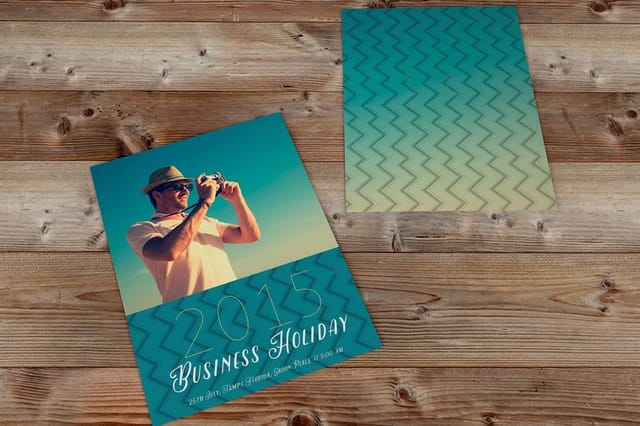
Order the card your event actually needs
Explore more
Where to go next


By the numbers
Event printing you can count on at 4OVER4
Common Questions
Your event postcard questions, answered
What is an event postcard?
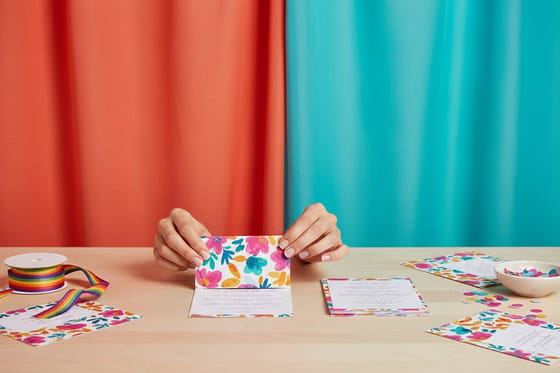
It is a flat, unfolded card that announces an event and asks for one response. The front carries the event name, the date and an image. The back carries the details, the RSVP instruction and, if it is going in the mail, an address panel. It does the work of an invitation without an envelope, which is why it costs less to print and less to mail than a folded invitation with a reply card.
What size should an event postcard be?
Print 4 by 6 inches if the priority is cheap postage, because that fits inside the USPS postcard limit of 4.25 by 6 inches. Print 5 by 7 if the card has to read as an invitation and sit on a fridge, and accept that it mails at letter rates. Go to 6 by 9 or larger only for promotional announcements where standing out in the stack is worth the higher postage.
Can guests RSVP on a postcard?
Not on the card itself, because there is no reply piece to send back. Give them a route instead: a short URL, a QR code that opens the reply form, a phone number, or all three. If the event genuinely needs a mailed reply card, that is the moment to move up to folded invitations with a separate RSVP card rather than fight the format.
How far ahead should I mail event postcards?
Send a save the date six to eight weeks out, the invitation three to four weeks out, and a reminder about a week before. Add transit time on top of that. First-Class Mail postcards usually move in a few days, while USPS Marketing Mail can take two weeks or longer, so a bulk-rate reminder that leaves on Monday may arrive after the doors open.
Where do I put the QR code so USPS does not cover it?
Put it on the design side, or in the left message half of the address side. Keep it out of the lower right of the address side, which is the barcode clear zone, 4.75 inches wide and 5/8 inch tall. Print it at least 0.8 inch square, leave a clear margin of four modules around it, and keep it dark on a light background rather than reversed.
How much do event postcards cost to print?
Standard postcards start at $16.48 at 4OVER4.COM, invitation cards start at $19.77, and folded invitations start at $38.22. Print-and-mail direct mail postcards start at $89.68 because the price covers the mailing run as well as the cards. Cost per piece drops steeply with quantity, so the difference between 250 and 500 cards is smaller than most people expect.
Get Started
Ready to get the date in front of your guests?
Pick the size that matches your postage plan, choose a coating that suits how the card gets handled, and we print event postcards that arrive ready to mail.
Legal Disclaimer
Gold Standard guarantees apply to all standard orders placed through 4over4.com. Price match requires verifiable proof of a competitor's published price for an equivalent product with matching specifications and turnaround time. Satisfaction guarantee covers manufacturing defects and print quality issues. Contact support with order number and documentation. On-time delivery rate based on tracked orders 1999 to 2026. Individual results may vary based on shipping carrier performance.
