
How to Choose Postcard Paper and Cardstock for Print and Mail


A postcard has to survive the mail with no envelope, so its stock has to be stiff. Choose the right cardstock weight, meet USPS thickness rules, and coat each side so your card mails cheap and lands crisp.
Postcards print on cardstock, not text paper, so they survive the mail. Use 14 pt for everyday mailers, 16 pt for extra stiffness, and 100 lb cover for luxe invitations. Any 14 pt or heavier stock clears the USPS 0.007 in thickness minimum. Coat the front gloss to sell and the back matte or uncoated so the address stays readable.

Start here
Why a mailer needs cover stock, not text
Postcards need cardstock stiff enough to mail without an envelope. Use 14 pt for everyday mailers, 16 pt for a premium feel, and 100 lb cover for luxe pieces. Any 14 pt stock clears the USPS 0.007 in minimum, and staying under 0.25 in keeps the postcard rate. Coat the front gloss to sell the image and the back matte or uncoated so it takes ink, and your card from 4OVER4.COM lands crisp. The map below shows how thickness and rate connect.
Why postcard stock is different from any other paper

A postcard is the only print piece that has to survive the postal system completely naked. There is no envelope to protect it, no folder to stiffen it, nothing between your artwork and the rollers, belts, and sorting arms of an automated mail facility. That single fact shapes everything about postcard stock: it has to be rigid enough to travel unprotected and arrive flat, crisp, and readable.
That is why postcards are printed on cardstock, not on the lighter text paper you might use for a flyer. The two decisions in front of you are the weight of that cardstock and the coating on each side, and both have to satisfy two masters at once: the look you want and the rules the post office enforces. This guide walks through weight, thickness, and coating in the order you would actually decide them.
Postcard cardstock, measured in points and cover weight

Postcard stock is described two ways. Most of the time you will see it in points of thickness, where 14 pt and 16 pt are the everyday postcard weights. The number is literally the thickness of the sheet, so a 16 pt card is meaningfully thicker and more substantial than a 14 pt one. Premium pieces are sometimes quoted in cover weight instead, like 100 lb cover, which is a heavier, richer board for invitations and luxury mailers.
The two scales line up point by point:
- 14 pt cardstock, 0.014 in, roughly 300 gsm. The everyday postcard weight and the best price per card at volume. It clears the USPS 0.007 in floor twice over.
- 16 pt cardstock, 0.016 in, roughly 350 gsm. Noticeably stiffer between finger and thumb, the step up for premium retail and real-estate mailers.
- 18 pt cardstock, 0.018 in, roughly 400 gsm. A thick, rigid card for pieces where the stock itself is part of the message.
- 100 lb cover, about 0.010 in, 270 gsm. A rich board for invitations and announcements. Cover weight measures the weight of a ream, not the caliper, so a 100 lb cover card can feel luxurious in the hand and still measure thinner than 14 pt.
Read the gsm column as a conversion rather than a promise. Points are the measurement that decides how a postcard mails, which is why every stock above is quoted in points first, and the live specs panel further down this page lists the exact stock options we run for postcards.
For most campaigns, 14 pt is the smart default: sturdy, mailable, and cost-effective at volume, which is exactly why it anchors direct-mail postcards. When the piece needs to feel special in the hand, 16 pt or a heavy cover stock earns its higher price. If you would rather not build the file yourself, our online design tool sets the layout and bleed for you, and our ready-made products skip file prep. See the full range on the postcard printing category, including folded postcards for more room.
USPS thickness rules and why they matter
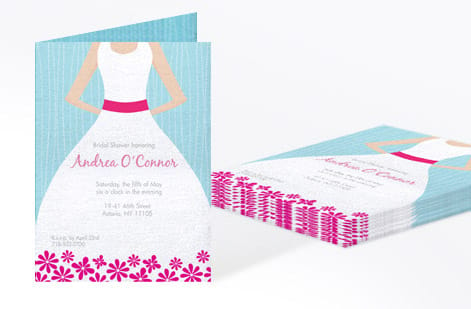
The post office cares about thickness because its machines do. To qualify for the lower postcard postage rate, a card has to be at least 0.007 in thick so it is stiff enough to feed through sorting equipment, and no more than 0.25 in thick so it still counts as a card rather than a parcel. Fall below the floor and the card can jam or get surcharged; go above the ceiling and it mails at a higher rate.
The good news is that standard postcard stocks make this easy. Any 14 pt or 16 pt cardstock sits comfortably above the 0.007 in minimum, so you clear the floor without thinking about it, and no normal postcard comes close to the 0.25 in maximum. The rule only becomes a factor at the extremes, an unusually thin novelty card, or a thick layered specialty piece. When in doubt, a standard cardstock keeps you safely inside both limits. Our guide on postcard mailing dimensions covers the size rules that pair with these.
Thickness and weight are not the same measure, and only thickness is written into the rule. The post office reads the caliper of the card along with its length and width, and never puts a single postcard on a scale. A 4 x 6 card and a 6 x 9 card printed on the same 14 pt board weigh very different amounts and both measure the identical 0.014 in, which is why a heavier stock buys you feel rather than compliance. Clear the 0.007 in floor with the caliper, keep the trim size inside the postcard limits, and the weight of the piece looks after itself.
Two sides, two coatings: front to sell, back to read
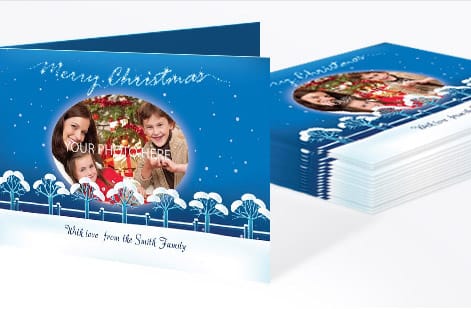
A postcard is unusual because its two sides do different jobs, and the coating should follow. The front is the billboard: a photo, an offer, a headline meant to stop someone as they sort the mail. A gloss or high-gloss UV coating there deepens color and sharpens imagery so the picture side does the selling.
The back does the practical work: it carries the address, the message, the barcode, and often a stamp or meter mark. That side needs to be readable and to accept ink, so a matte or uncoated surface is ideal because a pen, a printer, or a postage meter can write on it without smearing or beading up. Many postcards are printed exactly this way, gloss front, uncoated or matte back, which is why the address side stays crisp and the picture side still pops.
Match the stock to your campaign

The right stock depends on what the postcard is for. A high-volume direct-mail drop, where you are mailing thousands and cost per piece rules, is the classic case for 14 pt cardstock with a gloss front, because it looks sharp, mails cheaply, and keeps the budget for a bigger list. A premium retail or real-estate mailer that wants to feel substantial steps up to 16 pt.
An invitation, save-the-date, or announcement is where a heavy 100 lb cover stock earns its keep, since the weight itself signals importance the moment the card is picked up. And a folded postcard on heavier stock gives you double the message space for a more detailed offer. Name the campaign and the stock choice gets simple. The quick-reference table below pairs each use with a recommended weight and finish.
One more thing worth weighing before a large drop, literally: the mail piece. A postcard weighs a fraction of an ounce, and both levers above move it, so a 4 x 6 on 14 pt is about the lightest thing you can mail while a 6 x 9 on 16 pt or 100 lb cover is more than twice the card. If you need the figure for a whole run, weigh ten printed cards, divide by ten, and multiply by the quantity, which also answers how many postcards make a pound. The postcard rate itself is set by size and thickness rather than ounces, so the stock decides how the card feels and the trim size decides what it costs to mail.
What postcard stock costs and how pricing works

Postcard stock never appears as its own charge; it is one of the levers that set your print price, alongside quantity, size, and finish. Bigger runs lower the cost per card, heavier cardstock costs more than lighter stock, and premium coatings like UV add a little on top. Then postage sits on top of printing, and it is driven by the card's size and thickness, which is why stock and size decisions ripple into your mailing budget too.
Because the configurator prices every option live, you can weigh those trade-offs before you commit. If 14 pt hits your goal, you keep the savings for a larger mailing list. If the piece needs to feel premium, you can see exactly what 16 pt or a cover stock costs. Use the live specs and pricing panel below to compare weights and finishes for your quantity, or order free paper samples first so the stock is in your hands before you print and mail.
Wally picks postcard stock that mails right
Stiff enough for the mail, coated for each side
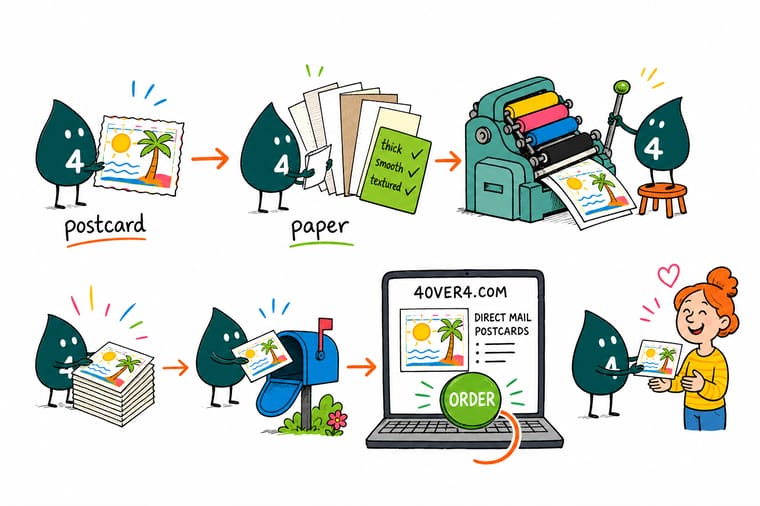
Wally treats a postcard like a traveler with no luggage: it mails naked, so the stock has to be stiff. He reaches for 14 pt as the everyday default, steps up to 16 pt or cover for premium pieces, and checks that it clears the USPS 0.007 in thickness floor. Then he coats the front gloss to sell and the back matte so it takes a pen, and 4OVER4 prints a card that lands crisp.
Order your postcards →Weight
How much does a postcard weigh
A single printed postcard weighs a fraction of an ounce. The exact figure depends on size and stock, so a small 4 x 6 card on 14 pt stock is far lighter than a 6 x 9 mailer on 16 pt, and a full box is easiest to weigh by multiplying the per-card weight by the count.
Only two things move that number: the area of the card and the caliper of the board. A 6 x 9 covers a bit more than twice the area of a 4 x 6, so on the same stock it weighs a bit more than twice as much, and stepping from 14 pt to 16 pt adds roughly a seventh again on top of that. A 100 lb cover invitation is heavier still. Coating barely registers, though a UV gloss adds a shade more than a matte.
To weigh a run without guessing, set ten finished cards on a postal or kitchen scale, divide by ten, and multiply by the quantity. Ten cards register cleanly on scales that round a single card down to zero, and the same figure answers how many postcards make a pound: divide 16 ounces by the weight of one card. Ask for a sample of the exact stock if you need the number before the job prints.
For postage, weight is rarely the deciding factor. USPS sets the postcard rate on size and thickness rather than ounces: the card has to be at least 0.007 in thick and no more than 0.25 in, and every 14 pt and 16 pt stock clears that. Size the card for the rate you want, then choose the stock for how it should feel.
Quick reference
Postcard stock by the job, at a glance
Name the campaign and the recommended weight and finish follow. Match these and your postcard prints and mails right.
| The job | Recommended stock | Why it fits |
|---|---|---|
| Everyday mailer | 14 pt cardstock | Sturdy, mailable, and low cost, the default weight for direct mail. |
| Premium standard | 16 pt cardstock | Noticeably thicker and higher-value in hand without a big price jump. |
| Luxe invitation | 100 lb cover or heavier | Rich and rigid for save-the-dates, announcements, and upscale offers. |
| Photo-forward front | Gloss or UV coating | Deepens color and sharpens imagery so the picture side sells. |
| Address and message side | Matte or uncoated | Reads cleanly and accepts pen, meter ink, and handwriting. |
| USPS postcard rate | 0.007 in min, 0.25 in max | Stay inside both limits to qualify for the lower postcard postage. |
Step by step
Choose your postcard stock in 7 steps
- Start with how the postcard travels A postcard mails with no envelope, so the stock has to be stiff enough to survive sorting machines. That rules out flimsy text paper and points you straight to cardstock as the baseline.
- Pick your cardstock weight Use 14 pt for everyday mailers, 16 pt when you want more heft, and 100 lb cover or heavier for invitations and luxury pieces. Heavier feels richer but costs a little more.
- Check the USPS thickness rules For postcard postage rates, a card must be at least 0.007 in thick and no thicker than 0.25 in. Any 14 pt or heavier stock clears the minimum, so thickness is rarely a problem, but confirm before you commit to an oversized card.
- Choose coatings side by side A postcard has two jobs on two sides. Gloss or UV on the front makes photos pop, while a matte or uncoated back keeps the address and message readable and takes ink from a pen or postage meter.
- Confirm the size for your rate Postcard postage also depends on dimensions. Standard postcard sizes qualify for the lowest rate, while larger cards mail at a higher rate, so pick the size with both design and postage in mind.
- Order a sample or proof Cardstock feels different in hand than on screen. Request free paper samples or a printed proof so you can judge the weight, coating, and color on the real stock before printing thousands.
- Set your run and upload Choose the size, stock, and finish in the configurator, watch the price update as you go, and upload your press-ready file or design it in our online tool.
Specs and pricing
Postcard specs and live pricing
Once you have picked a stock, the rest is size, finish, and quantity. Here are the live specs and price-per-unit for direct-mail postcards at 4OVER4.COM, straight from the configurator.
| Quantity | Price Per Unit | Total |
|---|---|---|
| 500 | 17.9¢ | $89.68 |
| 1,000 | 17.1¢ | $170.53 |
| 2,000 | 9.35¢ | $186.95 |
| 3,000 | 6.84¢ | $205.13 |
| 4,000 | 5.58¢ | $223.31 |
| 5,000 | 4.83¢ | $241.51 |
| 6,000 | 4.56¢ | $273.85 |
| 7,000 | 4.37¢ | $306.18 |
Order it
Print your postcards on the right stock
See it in use
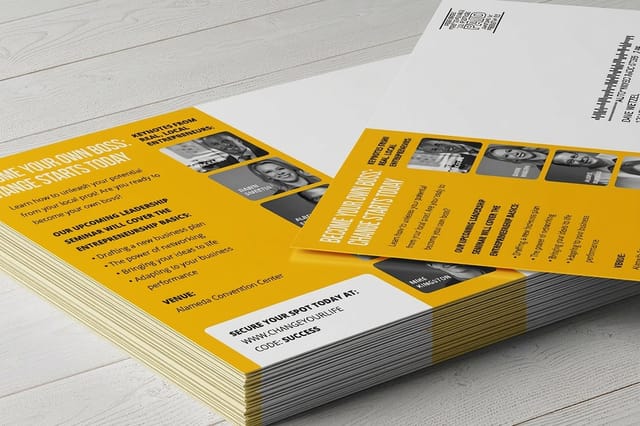
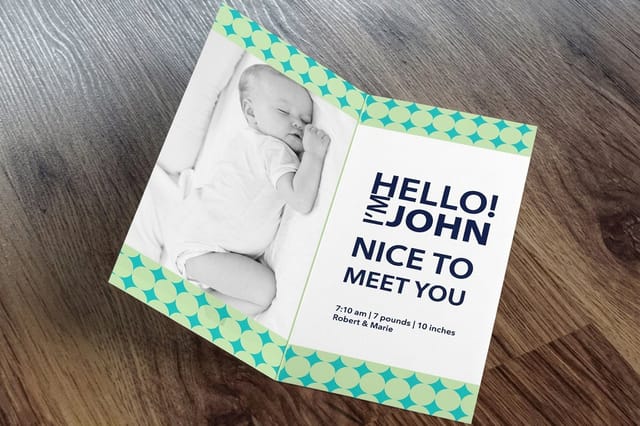
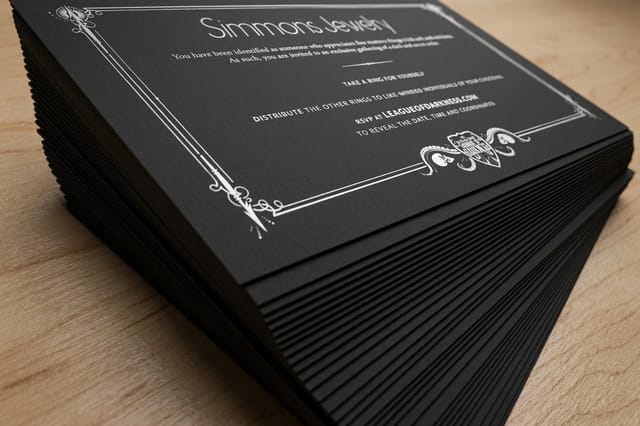
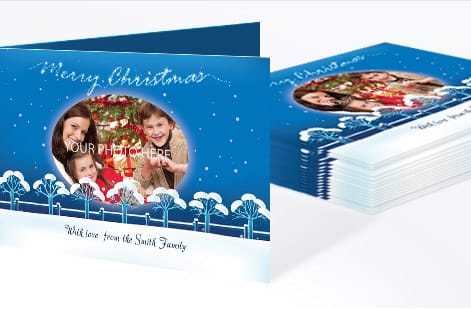
Direct mail postcards on real cardstock






Explore more
Where to go next


By the numbers
The stocks we keep on the floor
Common Questions
Common questions about postcard paper
What is postcard paper?
Postcard paper is really postcard cardstock: the thick, rigid stock a postcard prints on so it can travel through the mail without an envelope. It is described by thickness in points, most commonly 14 pt and 16 pt, or by cover weight like 100 lb cover for premium pieces. Because a postcard has no envelope to protect it, the stock has to be stiff enough to survive automated sorting, which is why standard printer or text paper is not used. On top of the weight sits a coating, gloss, matte, or uncoated, that shapes how the picture side looks and how well the address side takes ink.
Is 14 pt or 16 pt right for my mailer?
Begin with the job. For a high-volume direct-mail campaign, 14 pt cardstock is the affordable, mailable default, and pairing gloss on the front with a matte or uncoated back gives you vivid images and a readable address side. For more heft, step up to 16 pt, and for invitations, save-the-dates, or luxury offers, choose 100 lb cover or heavier. Then confirm the size and thickness qualify for the postcard postage rate you want. When exact feel matters, order free paper samples so the stock is in your hands before you print and mail the whole run.
What does postcard paper cost and how are prices set?
Postcard stock is one of several levers that set the total price, along with quantity, size, and finish. Larger runs lower the cost per card, heavier cardstock costs more than lighter stock, and premium coatings like UV add a little on top. Mailing adds its own cost through postage, which depends on the card size and thickness. In the configurator you set each print option and the total updates live, so you can see exactly what moving from 14 pt to 16 pt, or adding a gloss coat, does to the number before you order, and plan postage around the size you choose.
What sizes, stocks and finishes are available for postcard paper?
Postcards print in a range of sizes from standard small cards that qualify for the lowest postage up through jumbo and oversized formats, on cardstocks from 14 pt through 16 pt and heavier 100 lb cover, plus specialty options. Finishes include gloss and high-gloss UV for the image side, matte for a soft readable surface, and uncoated for a natural stock that takes pen and meter ink. Folded postcard formats add even more room. Not every size pairs with every stock and coating, so the live product page shows the exact combinations and their prices.
How long does postcard paper take to print and ship?
Print and ship time depends on the product, finish, and quantity rather than the stock alone. Standard 14 pt and 16 pt postcards on common coatings print and ship quickly, while heavier cover stocks or specialty finishes can add a little production time. If you are using a direct-mail service, mailing adds its own timeline on top of printing. The live estimate on the product page shows the current window for your exact size, stock, and quantity, so you can plan the drop date around both print and postage.
What thickness does USPS require for postcards?
To mail at the lower postcard postage rate, USPS requires a card to be at least 0.007 in thick and no more than 0.25 in thick, along with meeting the size limits for postcards. The thickness minimum is easy to hit: any 14 pt cardstock is well above 0.007 in, so standard postcard stocks qualify without effort. The rules matter most at the edges, an unusually thin novelty stock could fall below the minimum, and an extra-rigid or layered card could approach the maximum, so when in doubt, a standard 14 pt or 16 pt cardstock keeps you safely inside both limits.
Get Started
500 direct mail postcards cost $89.68 and ship in 4 business days
Pick your size, cardstock, and finish at 4OVER4.COM and watch the price update live. From 14 pt mailers to heavy cover invitations, we print your postcards exactly as designed.
Legal Disclaimer
Gold Standard guarantees apply to all standard orders placed through 4over4.com. Price match requires verifiable proof of a competitor's published price for an equivalent product with matching specifications and turnaround time. Satisfaction guarantee covers manufacturing defects and print quality issues. Contact support with order number and documentation. On-time delivery rate based on tracked orders 1999 to 2026. Individual results may vary based on shipping carrier performance.
