
Your Event Printing Checklist From Invitations to On-Site Signage


The whole event print kit in one list, with the piece, the thing that locks it, and the week you should be ordering it. Written from the load-in, not the brochure.
An event needs five kinds of print: something that invites, something that admits, something that directs, something that brands the space, and something guests take away. Order the pieces that carry only your brand first, because they have nothing to wait for and they get reused. Order anything carrying a name, a date or a serial number last, because it is locked by information that keeps changing until the week of the event.
Quick answer
Sort the list by what locks each piece
Two clocks run on an event print order. Undated, brand-only pieces such as a table throw or a retractable stand can be ordered as soon as the artwork is signed off, and they come back to the next event. Pieces carrying a name, a date, an agenda or a serial number sit on a second clock and cannot be finished until that information is. Sort your list into those two piles, count backwards from the event with production days and transit days added separately, and the schedule stops being a guess.
The Full Event Print Kit, Piece by Piece

Every event print list, from a fifty person launch to a three day conference, is the same five jobs at different scales. Invite, admit, direct, brand, take away. Write the five headings down and fill them in, and you will stop discovering at the last minute that nobody printed a parking sign.
| Piece | Job it does | What locks it | Reusable |
|---|---|---|---|
| Save the dates | Holds the date in a diary before details exist. | The date only. | No |
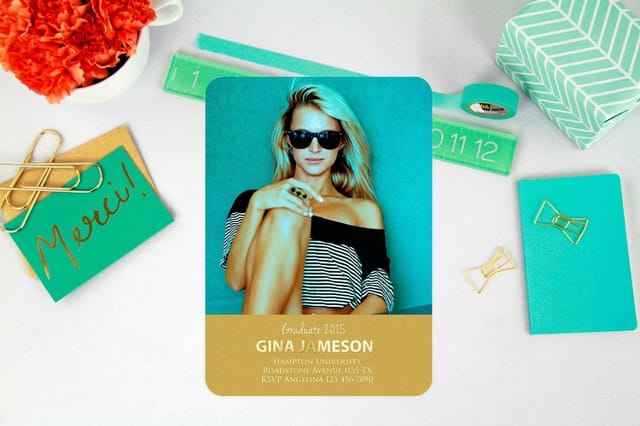
| Invitation cards | Carries the detail and sets the tone of the event. | Venue, time, dress code, RSVP route. | No |
| Tickets | Admits, and reconciles takings against stubs. | Price, date, seat or tier numbering. | No |
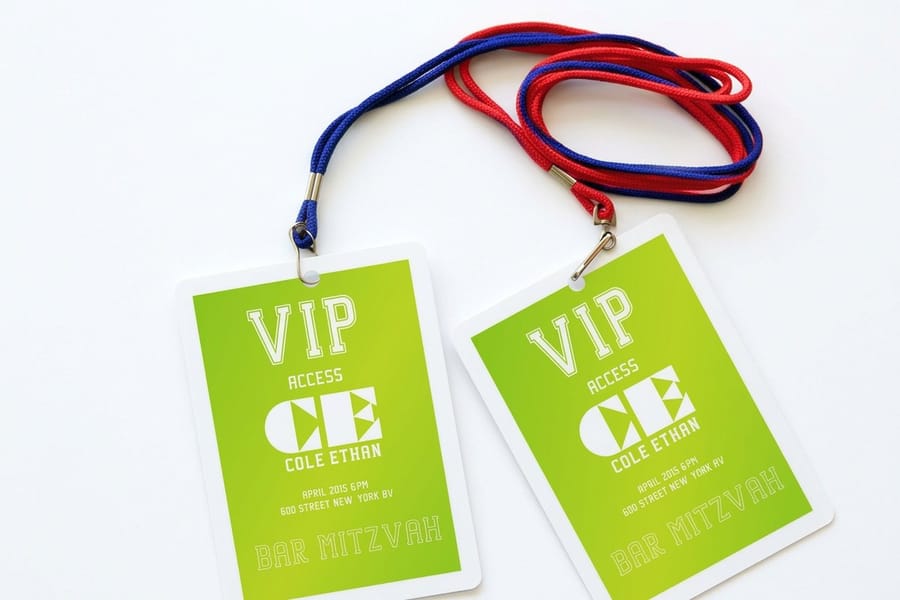
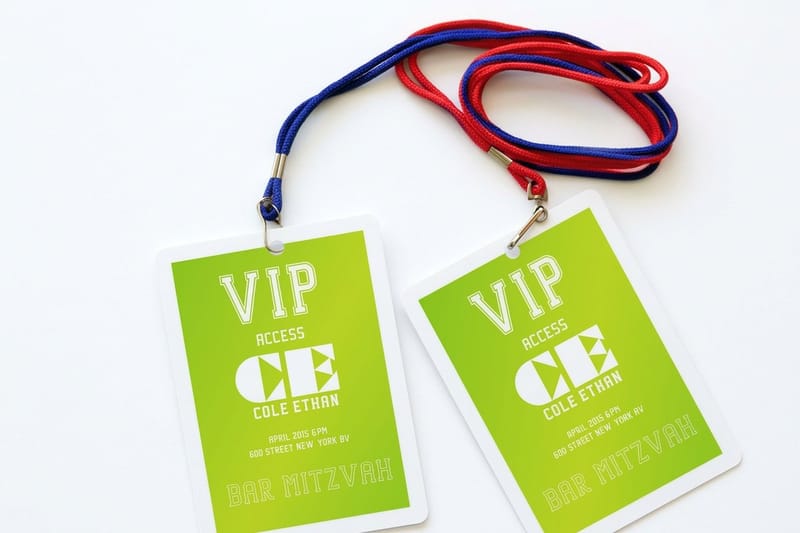
| Badges | Identifies people and shows their access level. | The final attendee list. | No, but the lanyard is |
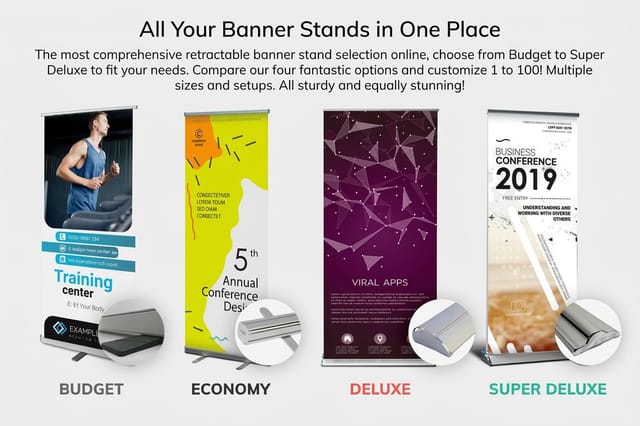
| Retractable stand | Brands a doorway, a stage flank or a booth corner. | Artwork approval, nothing else. | Yes, if undated |
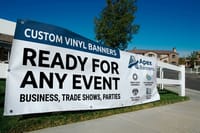
| Vinyl banner | Covers a long wall, a railing or an outdoor frame. | The size the venue allows. | Yes, if undated |
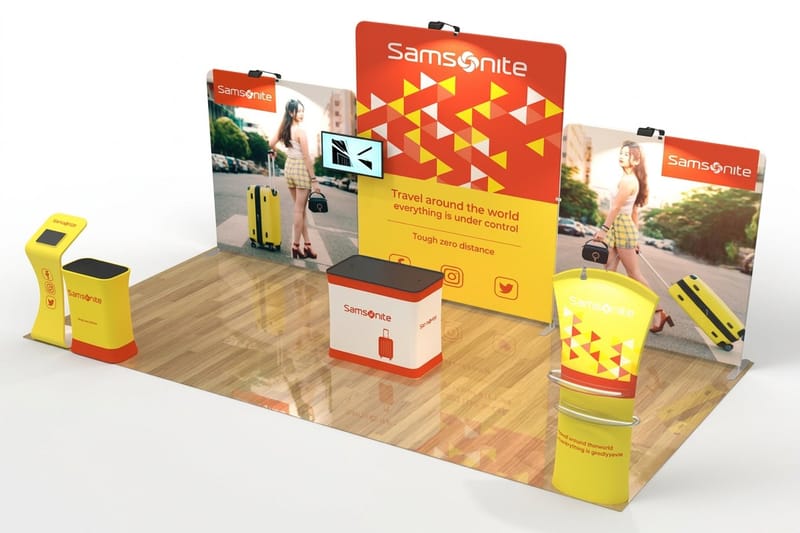
| Table throw | Brands the registration desk and hides the crates. | Table length, usually 6 ft or 8 ft. | Yes |
| Signs and posters | Directs, and posts the running order. | The agenda settling down. | Arrows yes, agenda no |
Read the last two columns together. The pieces that lock late are also the pieces you cannot reuse, which is convenient: it means the expensive hardware is exactly the part you are free to order early. A printed table throw starts at $225.00 and a retractable banner stand at $139, so those two are an investment across several events rather than a line on one budget. Event badges start at $49.88 and get printed fresh every time, which is fine, because that is what the badge is for.
Invitations and Save the Dates
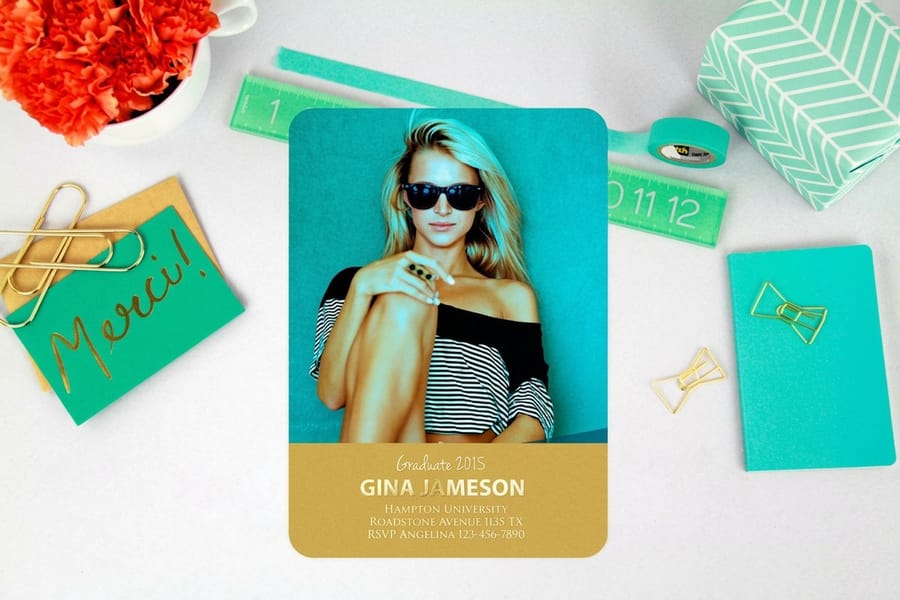
A save the date has one job and should be treated as a separate print run rather than an early invitation. It carries the date, the city and nothing else, which is why it can go out months ahead while the venue contract is still being argued over. The invitation follows when the details are real.
Mail timing is where most corporate events slip. The convention that works is to have invitation cards in hand early enough to mail four to six weeks before the date, which means ordering with enough room for a proof round and transit before that. Weddings run longer and have their own etiquette, covered properly in our guide on when to send wedding invitations. Whatever the occasion, the mailing date is the deadline you count backwards from, not the event date.
On stock, an invitation is one of the few pieces where the weight is doing real work. A card that flexes in the hand reads as a flyer. Something rigid reads as an occasion, and the difference costs very little across a couple of hundred pieces. Invitation cards start at $19.77, and if you want the full range of shapes, folds and finishes the invitations printing category lists them side by side. If you are starting from a blank page, how to make invitations walks through the wording and layout before you get to the press.
On-Site Signage and Banners That Survive the Venue
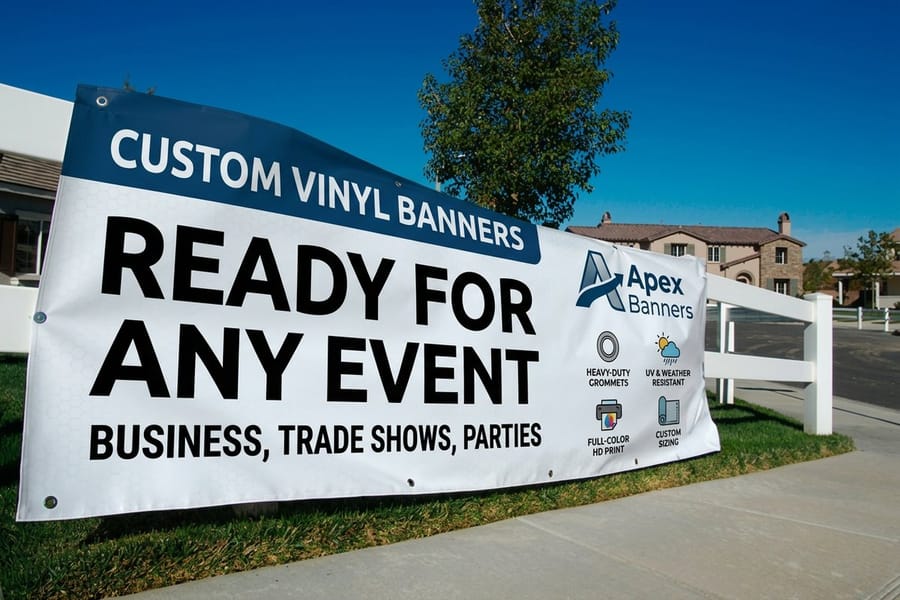
The signage question is not what looks best. It is where the piece has to stand, for how long, and what the wind is doing. Get that wrong and you spend the first hour of your event taping a fallen display back up.
| Where it stands | What to use | Why | Where it fails |
|---|---|---|---|
| Indoor, carpet or hard floor | Retractable banner stand | Sets up in under a minute, packs into a case, no hardware. | Any breeze, a doorway draught, an open loading bay. |
| Long indoor wall or railing | Vinyl banner with grommets | Cheap per square foot and covers a lot of ground. | Needs anchor points, sags if it is under-tensioned. |
| Outdoors, exposed | Mesh or grommeted vinyl on a frame | Mesh lets wind through instead of catching it like a sail. | Fine detail and small type disappear in mesh. |
| Registration desk | Table throw plus one stand | Brands at eye level and at table level at the same time. | Wrong table length, so measure before ordering. |
| Direction and wayfinding | Rigid signs and posters | Readable at a distance, cheap enough to place generously. | Foam board outdoors in damp weather, which warps it. |
Two numbers to hold on to. A vinyl banner starts at $79, which makes it the cheapest way to cover a large surface, and a retractable stand starts at $139 but comes back every event. Between them they handle most indoor floors. For the sizes that actually fit venue walls and booth backs, typical banner sizes for events and displays lists the ones worth ordering, and how to hang banners covers grommet spacing and tensioning. Browse the whole family in the banners printing collection.
Badges and Tickets, the Two Pieces That Have to Be Right
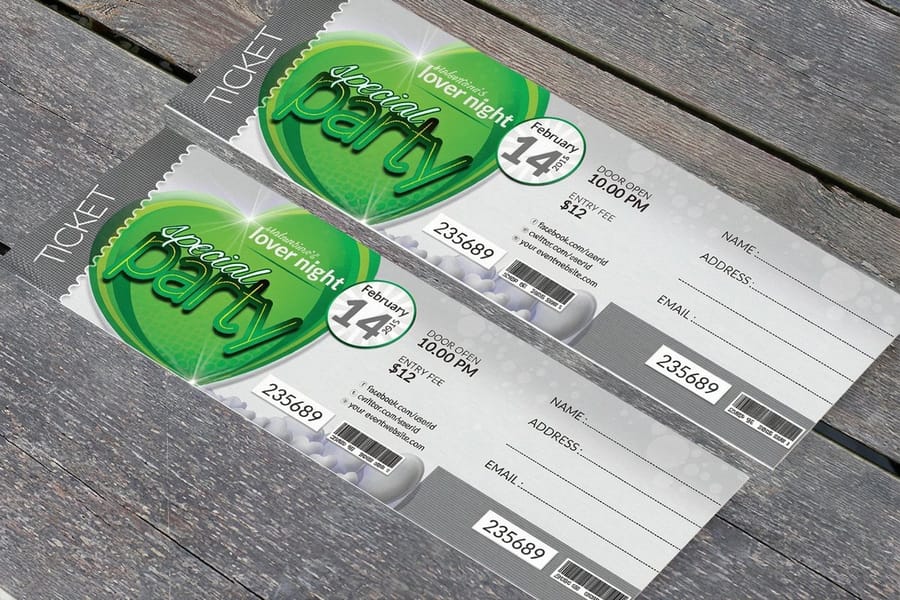
These two carry data, which makes them different from everything else on the list. A banner with a typo is embarrassing. A ticket run with duplicate numbers is a problem at the door and a bigger one when you count the takings.
On tickets, sequential numbering is the whole point of printing them rather than emailing a QR code. A perforated stub means the door keeps half and the guest keeps half, and at the end of the night the stubs count against the cash. Decide the numbering range before you order, order above your seat count if you sell on the door, and do not reprint a range you have already issued. Event tickets start at $25.27, and if you are running a draw as well, how to make raffle tickets covers the stub layout in detail.
On badges, the practical decision is whether names get printed with the design or added on site. Printing everything in one pass looks better and needs no equipment at the venue, but it locks the list. Overprinting names yourself keeps the list open until the morning, at the cost of a stock constraint: order the shell uncoated or matte, because toner does not grip a gloss aqueous coating and will rub off. Whichever route you take, add a blank overrun for walk-ups. Design advice for the badge itself lives in designing conference badges that stand out, and the stock and size options are in event badges printing.
Timelines for Ordering, Counted Backwards
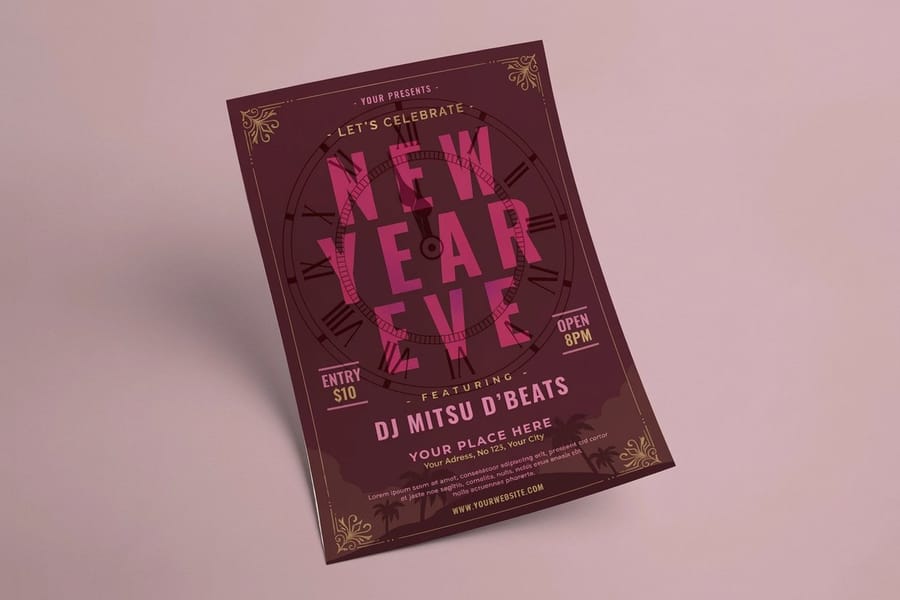
Count backwards from the event, never forwards from today. Forwards feels comfortable and hides the fact that two clocks are running: how long the job takes to produce, and how long the carrier takes to deliver it. Those numbers stack, and the second one is the one people forget.
A working order of operations. Ten to twelve weeks out, order the undated hardware: table throw, retractable stand, generic directional signs. Eight weeks out, save the dates. Six weeks out, invitations printed and ready to mail, plus the ticket run once the price is locked. Three weeks out, the agenda posters and table tents, once the running order has stopped moving. One week out, badges, with the list frozen at a stated cut-off and a blank overrun for anyone who turns up anyway.
Two things break that schedule. A proof revision costs a day or two and always happens on the piece you were least worried about, so build one in. And the turnaround you choose in the configurator changes the price, which means a late order is not just risky, it is more expensive: you pay for speed you would have got for free three weeks earlier. If you are pricing a whole event kit at once, our guide to how online printing works explains where files, proofs and production days sit in the schedule.
Setup and Display Tips From the Load-In
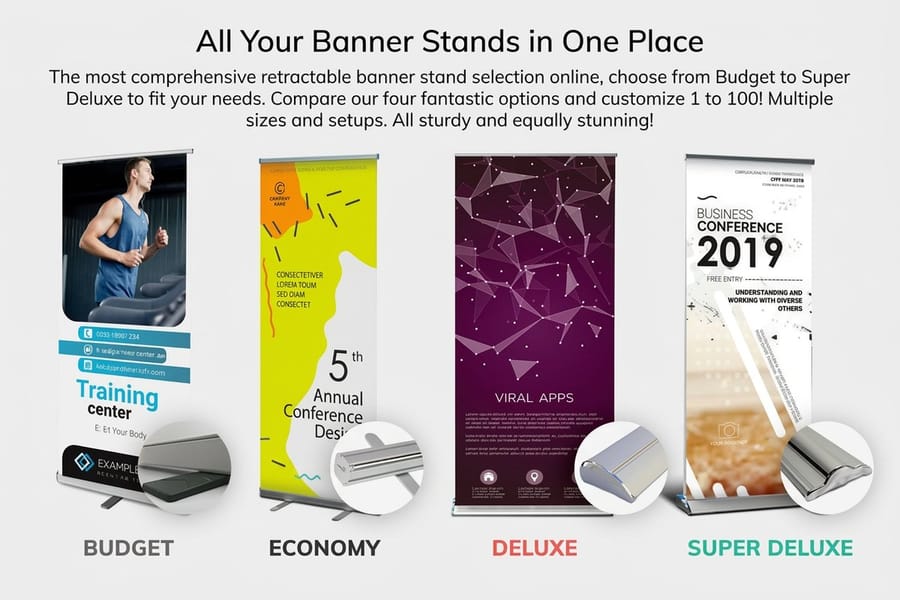
Print that arrives correct still fails if it goes up badly. A few habits fix most of it.
- Unroll retractable banners the night before. A stand that has been in its case for weeks holds a curl, and it relaxes out overnight rather than in front of guests.
- Measure the registration table before ordering the throw. Six foot and eight foot are both standard and they are not interchangeable. A throw meant for the larger table pools on the floor and looks like a dust sheet.
- Place directional signs at decision points, not at landmarks. People need the arrow where the corridor forks, not where the building is easy to find.
- Bring more fixings than the venue promises. Zip ties, bungees and gaffer tape weigh nothing and every venue turns out to have a rule about what you may attach to what.
- Keep a spare of anything with a number on it. A handful of blank badges and a short reserve of tickets solve problems that otherwise involve a pen and an apology.
- Pack the reusable pieces separately. The throw and the stand are next year's budget saving, so they should not go home in the same box as the recycling.
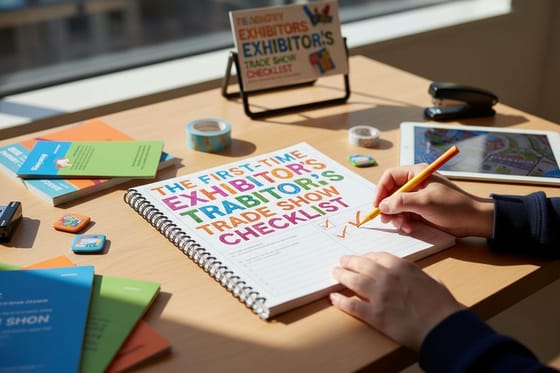
If your event is a trade show rather than a private occasion, the booth adds its own list of dimensions and rules. The first-time exhibitor's trade show checklist covers what the hall expects of you, and the trade show printing collection lists the displays that fit a standard booth footprint.
Wally runs the event print list
Undated pieces first, named pieces last
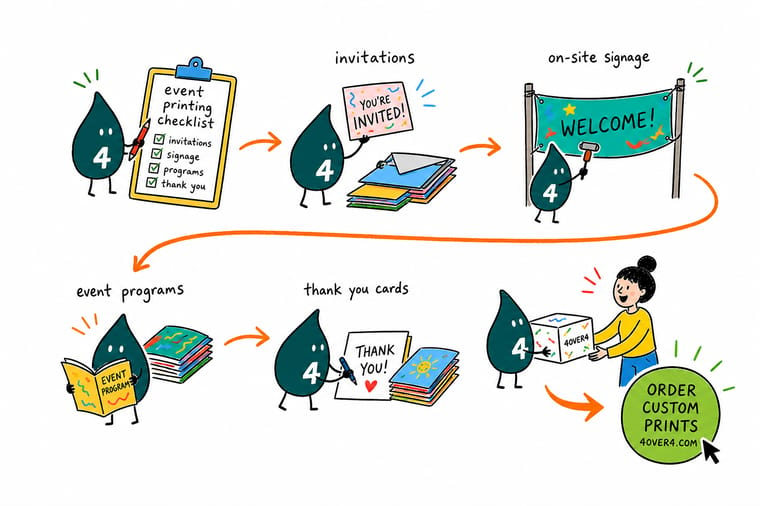
Wally sorts the list into two piles. On the left go the pieces with no date and no names on them: the table throw, the retractable stand, the arrow signs. Those get ordered early and packed away for next year. On the right go the invitations, the numbered tickets and the badges, which cannot be finished until the venue, the price and the guest list stop moving. Then he counts backwards from event day, adds the shipping days on top of the production days, and puts one spare week in for the proof revision that always happens.
Shop event badges →Specs and pricing
Badges, tickets and banners, with live options
The three pieces most events order together, with sizes, stocks, turnaround choices and starting prices straight from the 4OVER4.COM configurator.

Print it
Order the pieces that come back next year

Explore more
Where to go next



By the numbers
Event printing you can schedule around
Common Questions
Your event printing questions, answered
What should I print for an event?
Work through five jobs and the list writes itself. Something that invites people, so save the dates and invitation cards. Something that admits them, so numbered tickets and badges. Something that directs them once they arrive, so arrow signs, a registration board and a parking sign. Something that brands the space, so a retractable stand, a vinyl banner and a table throw. Something they take away, so a programme, a flyer or a card with the follow-up on it. Anything that does not do one of those five jobs is decoration, and decoration is the first thing to cut when the budget tightens.
How far in advance should I order event printing?
Split the list by what locks each piece. Undated, reusable items such as table throws and retractable banner stands can be ordered as soon as the artwork is approved, which is usually ten to twelve weeks out. Save the dates go early and invitation cards want to be in hand in time to mail four to six weeks before the date. Numbered tickets follow once the price and the date are final. Agenda posters, directional signs and table tents go about three weeks out, when the running order stops changing. Badges are last, roughly a week out, because the attendee list is the last thing to settle.
How many badges and tickets should I order?
Order to your expected headcount plus a deliberate overrun, because a reprint costs more per unit than the extra you print in the first run and it costs you the schedule as well. For badges, a small run of blanks covers walk-ups, misspelled names and the ones that get dropped in the car park. For tickets, order above your seat count if you sell at the door, and keep the numbering sequential so reconciling stubs against takings at the end of the night is arithmetic rather than guesswork.
Can I print attendee names onto badges myself?
Yes, and it is a sensible way to handle a list that keeps moving, but the stock choice decides whether it works. Toner from an office laser printer sits poorly on a gloss aqueous coating and can rub or flake, so order the pre-printed badge shell uncoated or matte if staff will overprint names on site. Run a test sheet through the actual printer before the event rather than the morning of it. If the list is final and you want the names to match the design properly, printing everything in one pass gives a cleaner result.
What is the difference between production turnaround and delivery date?
Production turnaround is how long the job spends being made after the file is approved. Transit is how long the carrier takes to bring it to you. They are separate numbers and they stack. When you configure a product on 4OVER4.COM the turnaround options change the price, so a tight deadline is a real cost decision rather than a checkbox. Count backwards from the event, add the transit days for your address, add a buffer for a proof revision, and order to that date instead of the one you wish were true.
What event print can I reuse next time?
Anything without a date, a year, a sponsor list or an agenda on it. A table throw with your logo, a retractable banner stand with your positioning line, a set of directional arrows with no wording beyond the arrow itself. That is the argument for keeping the year off the reusable pieces even when the design team wants it there. Put the changing information on the cheap pieces, the printed programme and the badges, and keep the expensive hardware generic.
Get Started
Ready to print the whole event kit?
Badges, numbered tickets, banners, table throws and directional signs, printed together so the load-in box arrives complete and on schedule.
Legal Disclaimer
Gold Standard guarantees apply to all standard orders placed through 4over4.com. Price match requires verifiable proof of a competitor's published price for an equivalent product with matching specifications and turnaround time. Satisfaction guarantee covers manufacturing defects and print quality issues. Contact support with order number and documentation. On-time delivery rate based on tracked orders 1999 to 2026. Individual results may vary based on shipping carrier performance.
