
The 7 Barcode and POS Prints Every Retail Counter Needs
Seven pieces cover a scanned store from the stockroom to the till: the labels that carry the SKU, the tags for stock a label will not stick to, the plastic that runs loyalty and gift balances, and the paper that keeps you trading when the terminal drops. Every price below is live.
A working retail barcode and POS set is seven printed pieces: sheet product labels, roll labels once the volume justifies them, hang tags for soft goods, a counter card at the register, plastic gift cards, loyalty key tags, and a carbonless receipt book. The barcode on any of them scans reliably when it obeys four rules: vector bars in 100% black, an empty quiet zone either side, a size between 80% and 200% of the 1.469 in nominal, and dark bars on a light background.
The picks
Seven pieces, from a $21.97 counter card to $309.69 key tags
Start at the number that matches the gap in your counter. A shop that scans everything already needs picks 1, 3 and 7. A shop launching loyalty needs 4, 5 and 6. Every price is the live starting price from the configurator and falls as the quantity climbs.
- 1
Standard Product Labels From $23.88
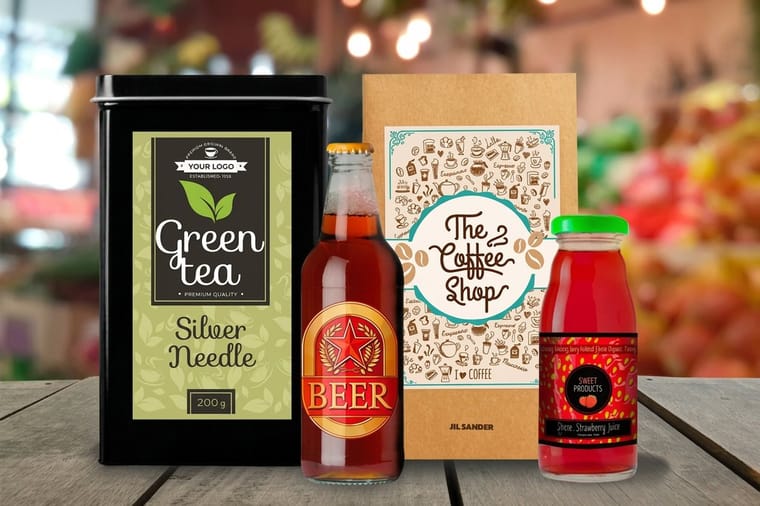
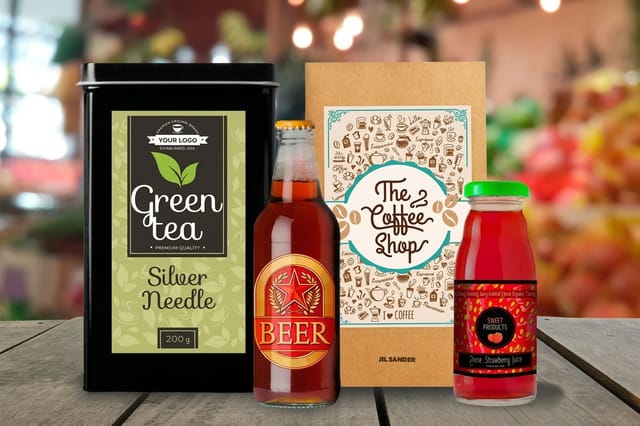
The sheet of SKU labels you stick on the product, the box, or the shelf edge. One artwork per SKU, printed offset or digital, so the bars come out with a hard edge instead of the fuzzy heat marks a desktop thermal unit leaves.
- 2
Roll Product Labels From $322.98
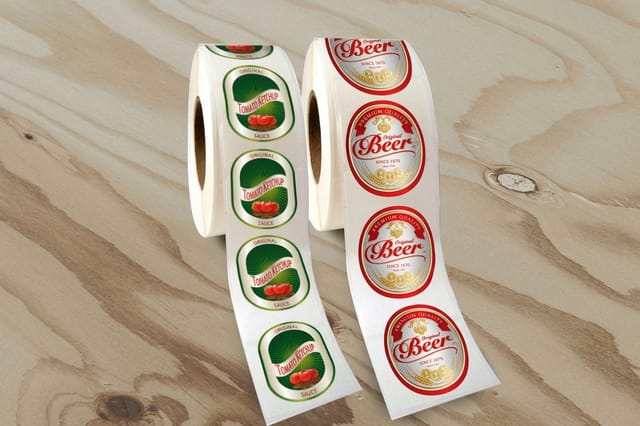
The same label wound on a roll so it feeds a hand dispenser or a bench applicator. Worth it once someone in the stockroom is peeling labels for an hour a day, and not before, because the roll entry price is more than ten times a sheet order.
- 3
Retail Hang Tags From $25.27
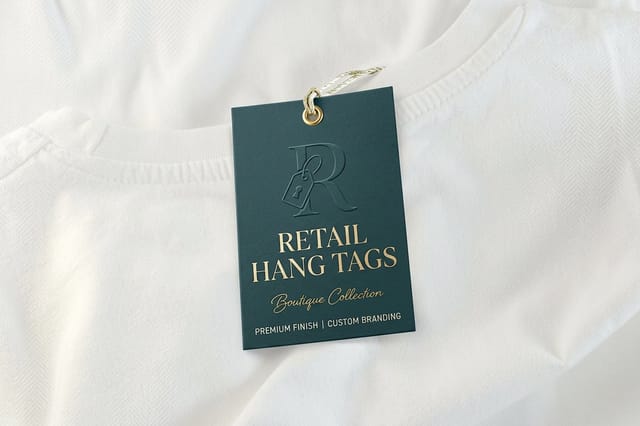
For anything adhesive will not hold or will damage: knitwear, suede, leather, unfinished wood, loose textiles. The barcode goes on the back of the tag and the string hole stays well clear of it.
- 4
Counter Cards From $21.97
The one printed ask at the register, on heavy stock with an easel back. It is competing with a payment terminal and a phone, so it gets a single line, not a paragraph.
- 5
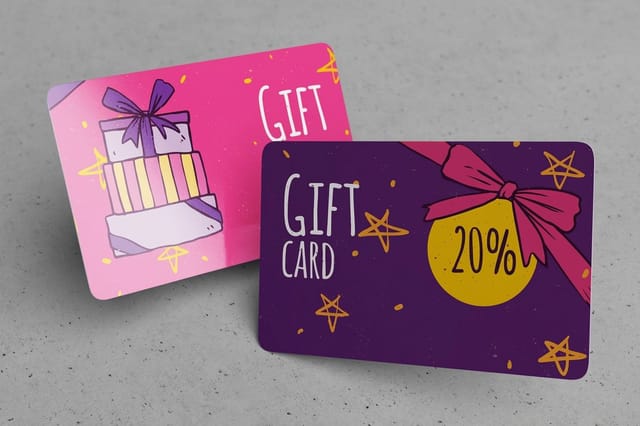
Plastic Gift Cards From $226.11
A 30 mil PVC card carrying the barcode your POS reads to load and redeem a balance. The card is the part we print. The numbering scheme and the activation both live with whoever runs your gift card program.
- 6
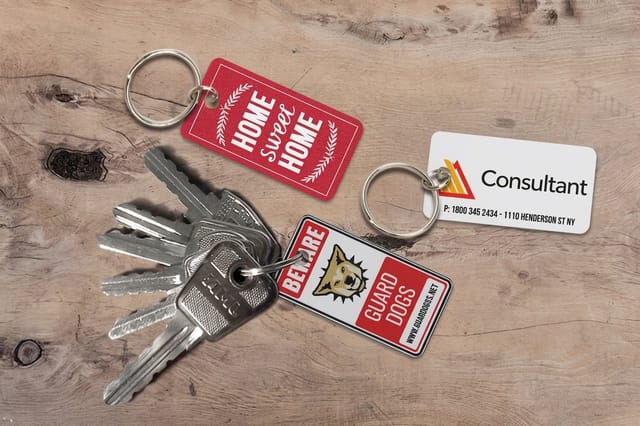
Key Tags From $309.69
Loyalty on a keyring, scanned in about a second at the till. Still the fastest lookup in a store whose POS was installed before phone wallets, and it never needs the customer to find their phone.
- 7
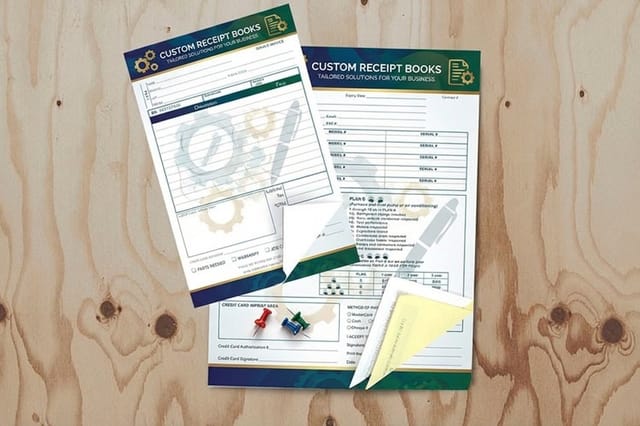
Receipt Books From $120.82
Carbonless sets with sequential numbering, for the morning the terminal will not connect and for the market stall where there is no terminal at all. Cheap insurance against a day of untracked sales.
Shop the set
All seven products, ready to configure
Each card opens the live configurator, where the price moves with size, stock, quantity and turnaround. Lay any piece out from scratch in the free online designer, or start from a design template and drop in your logo and your barcode.

What goes where
What each piece carries and where it gets read
The seven pieces divide cleanly by what they hold and who reads them. Five carry a barcode for a scanner, one carries a message for a customer, and one carries handwriting for your books. Tap a piece in the picks above to jump to how it is specified.
| Piece | What it carries | Where it gets read | Usual size |
|---|---|---|---|
| Standard product labels | The UPC or SKU barcode, size, price | Handheld scanner on the shop floor, lane scanner at the till | Common runs are 2 in x 1 in, 2 in x 3 in and 4 in x 3 in |
| Roll product labels | The same SKU barcode, high volume | Same scanners, applied from a dispenser in the stockroom | Wound on a 3 in core, hundreds to thousands per roll |
| Retail hang tags | Barcode on the back, price and brand on the front | Handheld scanner, turned over by the cashier | 2 in x 3.5 in and 2 in x 4 in are the usual retail sizes |
| Counter cards | One offer or one loyalty ask, no barcode | Eyes only, from about three feet at the register | 5 in x 7 in for a small counter, 8.5 in x 11 in behind the till |
| Plastic gift cards | A barcode, a magnetic stripe, or both | Lane scanner or the card reader on the terminal | Credit card format, 3.375 in x 2.125 in, 30 mil thick |
| Key tags | The loyalty account barcode | Handheld or lane scanner at the start of the sale | Card with two or three snap-out tags on one 30 mil sheet |
| Receipt books | Hand-written line items and a printed serial number | Read by the customer and by your bookkeeper | 5.5 in x 8.5 in in 2-part or 3-part carbonless sets |
Artwork rules
Six rules that decide whether the symbol scans
A barcode is the cheapest element on any of these prints and the only one that can stop a queue. These six are the ones we send back files for, and every one of them is settled in the artwork rather than at the press.
| Rule | What to specify | What happens when it is ignored |
|---|---|---|
| Build the bars as vector | 100% K only, no rich black, no rasterized image | Four-color registration shift thickens the bar edges and the scanner reads the wrong widths |
| Keep the quiet zone empty | 9 modules of clear space each side of a UPC-A, about 0.12 in at full size | A border, a starburst, or a fold running through it stops the scan cold |
| Stay inside the size band | 80% to 200% of the nominal 1.469 in by 1.02 in | Below 80% the bars fall under the scanner resolution and big retailers reject the artwork |
| Never trim the height alone | Scale width and height together | A truncated symbol only reads when the cashier lines it up by hand, which costs seconds at every lane |
| Dark bars on a light ground | Black, dark blue or dark green on white or a pale tint | Red, orange and yellow reflect the 660 nm laser and read as white, so the symbol is invisible |
| Watch the finish and the substrate | Matte laminate over the symbol, white ink under it on clear stock | Gloss throws a specular flash back at the scanner, and clear on glass gives no contrast at all |
Two more worth knowing before you send a file. A symbol printed across a fold, a seam, or the curve of a bottle under about an inch in diameter will distort, so run the bars parallel to the axis of a cylinder rather than around it. And check what sits on top of the ink: a gloss laminate throws a specular flash back into a laser scanner at certain angles, while a matte laminate over the barcode area scatters it harmlessly. There is more on stock and finish choices in paper versus vinyl versus clear labels, and on the two-dimensional alternative in printing QR code stickers.
1. Standard product labels: the barcode that starts every sale
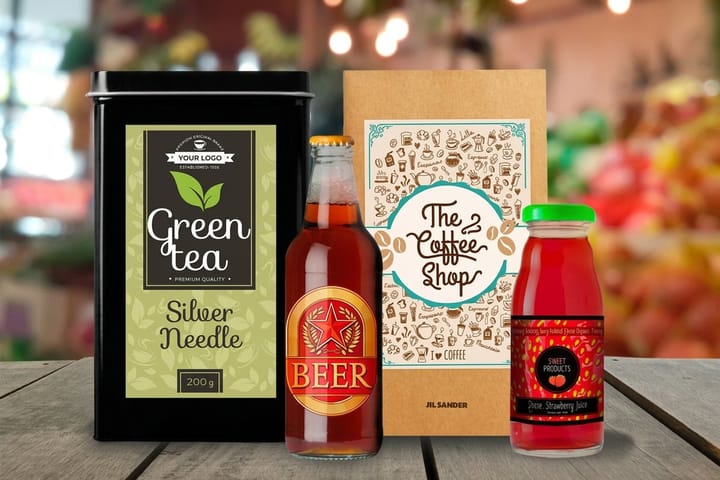
Every sale in a scanned store begins with one small rectangle. Standard product labels come on sheets, print in full color, and carry the SKU or UPC barcode alongside whatever else the item needs: size, colorway, price, your logo. One artwork per SKU, one order, and the symbol comes off an offset or digital press with a hard, clean bar edge.
That edge is the whole argument for pre-printing. A desktop thermal printer forms bars with heat, and heat spreads slightly into the label stock, so the bars come out marginally wider than the file says and the white spaces marginally narrower. A fresh printhead with a good ribbon handles that fine. A printhead with a worn element, or direct thermal stock that has been sitting near a window, does not, and by then nobody notices until the lane scanner starts refusing items.
Set the artwork up properly and it will scan for the life of the label. Build the barcode as vector art in 100% K, never as a placed JPEG or PNG and never as a rich black built from four inks, because a fraction of a millimeter of registration shift on a four-color press turns crisp bars into slightly fat ones. Our step-by-step on how to make barcode labels covers generating the symbol, and choosing the correct label size works out the trim size before you commit the run.
One limit to be straight about. Pre-printed labels are for numbers that do not change. If every unit needs its own serial, a batch code, or a weight-derived price, that is variable data and it belongs on a thermal transfer printer with blank stock. Fixed SKU, pre-print. Different number on every item, thermal. Plenty of stores run both.
2. Roll product labels: the same label, in a format you can apply fast
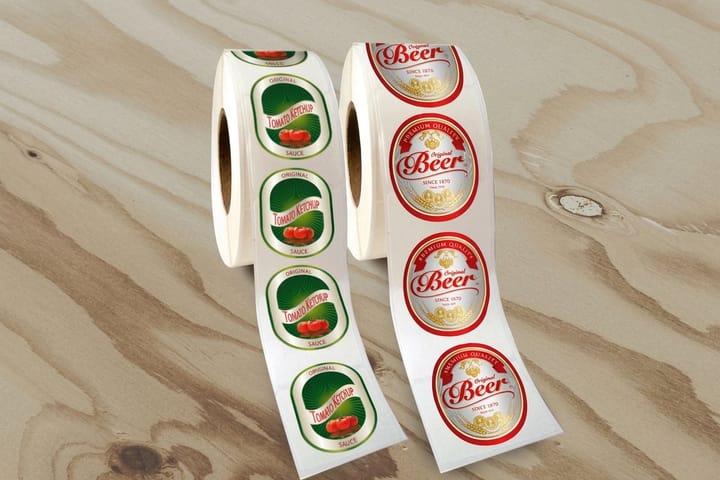
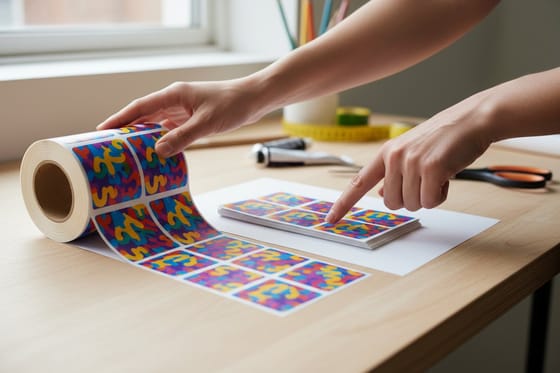
Roll product labels are the same printed label wound on a core so it feeds a hand dispenser, a bench applicator, or an inline machine. Nothing about the print changes. What changes is how many you can put on stock per minute, and that is a labor question rather than a printing one.
The number that decides it is on this page already. Sheets start at $23.88 and rolls at $322.98, because a roll order is a bigger run by nature. Under a few hundred labels, buy sheets and peel them. Once someone in the stockroom is spending a real part of their shift applying labels, a roll and a $20 hand dispenser pay for themselves in about a week. We lay the two formats side by side in roll labels versus sheet labels.
Two things to specify when you order a roll, because getting them wrong means the roll will not run. Core size decides whether the roll fits your dispenser spindle, and 3 in is the usual retail core. Wind direction decides which way the label faces as it comes off, and an applicator that expects the label leading edge first will jam on a roll wound the other way. Say what machine it is going on and the specification writes itself.
If you are ordering enough to think about rolls, you are probably ordering enough to care about price breaks. Ordering bulk labels covers where the quantity steps sit, and inventory labeling practice covers what else belongs on the label besides the barcode.
3. Retail hang tags: for stock a label will not stick to
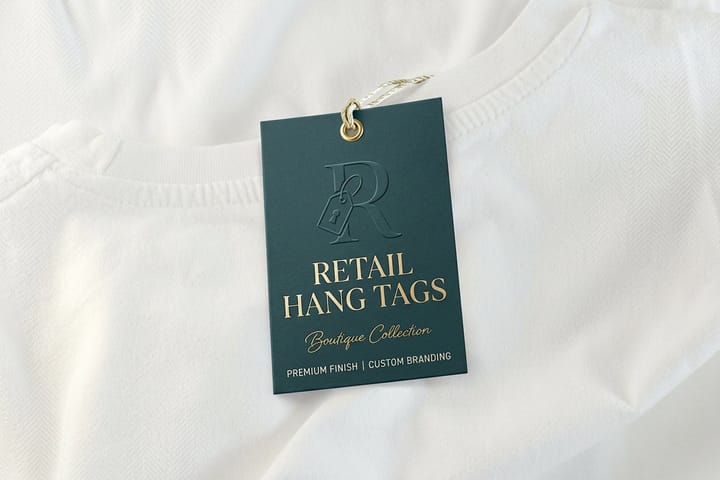
Adhesive needs a smooth, clean, non-porous surface. A cable-knit jumper is none of those, and neither is suede, raw wood, or unfinished leather, where a label will either fall off in the fitting room or pull the nap off when it comes away. Retail hang tags solve that by hanging the barcode off the item instead of sticking it on.
The layout convention worth following is barcode on the back, brand and price on the front. It keeps the selling face clean and it gives the cashier a whole blank side to point a scanner at. Print on 14pt or 16pt card, and pick 16pt for anything above about 2 in by 3.5 in, because a bigger tag on lighter stock curls in a warm shop and a curled tag is one a laser scanner has to be argued with.
The mistake we see most often is the string hole. It gets punched last, usually by whoever is stringing the tags, and if it lands within the quiet zone beside the barcode it kills the symbol just as effectively as printing a border through it. Set the hole position in the artwork, keep it in the top margin, and leave the clear space either side of the bars completely empty. Hang tag sizes has the standard trims, and what hang tags are covers the attachment options if you are choosing between string, plastic barb and safety pin.
4. Counter cards: one ask, at the one moment they are standing still

The register is the only place in the shop where a customer stops moving and waits. A counter card on heavy stock with an easel back is how you use those twenty seconds: join the loyalty scheme, a gift card offer, this week's add-on, the returns policy in plain words.
Keep it to one message. The card is competing with a payment terminal, a receipt printer, a cashier talking, and a phone in the customer's hand, and a card with three offers on it gets read as zero. One headline that reads from three feet, one line of detail underneath, and nothing else. If the store needs to say four things, that is four cards rotated through the month, not one crowded card.
Counter cards are the cheapest entry in this whole set at $21.97, which makes them the easy piece to reprint whenever the offer changes. Same-day turnaround is what keeps that practical, so a promotion decided on Thursday morning is on the counter for the weekend rather than the following week. Our guide to retail signage covers how the counter card fits with window and shelf-edge signs, and there are more till-side tactics in eleven ways to increase retail sales. If the timing is tight, same-day printing is the option to check first.
5. Plastic gift cards: a barcode your POS can load money onto
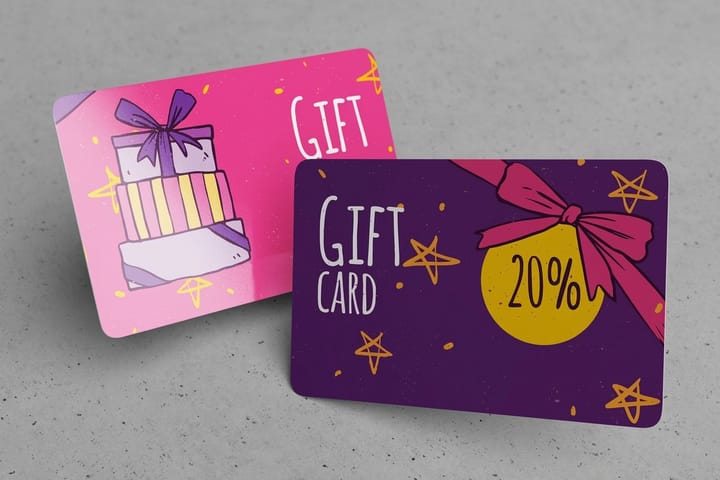
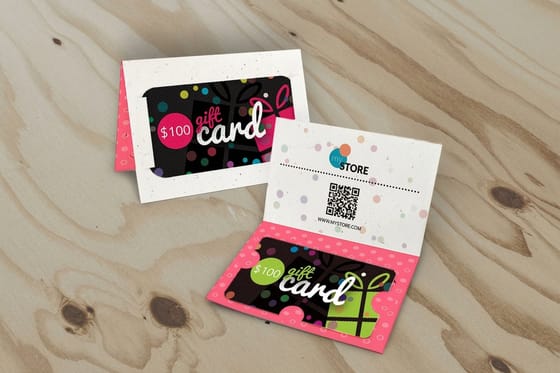
Plastic gift cards print on 30 mil PVC at credit card size, 3.375 in by 2.125 in, and carry a barcode, a magnetic stripe, or both on the reverse. At the till, the cashier scans the card to load a balance and scans it again to spend one. It is the highest-value barcode in the store, because unlike a SKU label it is attached to real money.
Here is the division of labor, and it catches people out. We print the card. The numbering scheme, the activation, and the balance all live inside your point of sale or your gift card provider, and they will hand you the number range and the symbology to print. Get that range from them before you place the print order, because a beautifully printed batch of cards with numbers your POS does not recognize is a very expensive coaster.
Barcode or magnetic stripe is a genuine trade-off rather than a preference. A barcode is cheaper, scans on the same lane scanner as everything else, and can be read off a photo of the card. A magnetic stripe cannot be photographed and copied, which is the reason a lot of programs still use one, but it needs a reader on the terminal and it wears out with use. Our guide to gift card printing with stripes and barcodes goes through both, and plastic membership cards use the same construction if you also need a staff or trade card.
6. Key tags: loyalty lookup in about a second
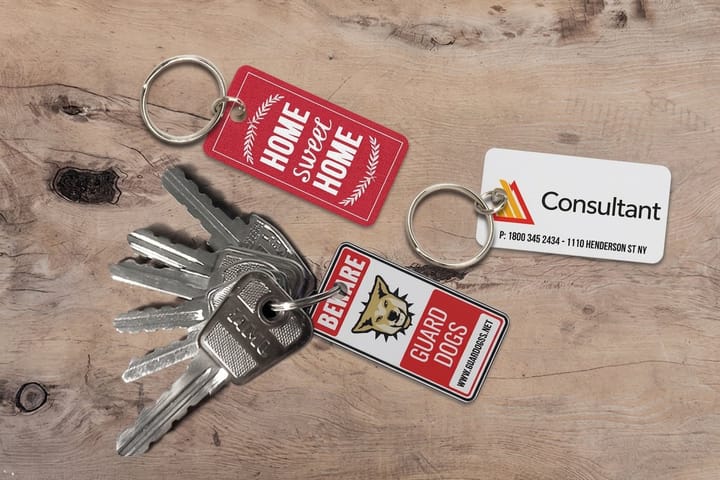
Key tags are usually printed three-up on a single 30 mil PVC card, with the tags snapped out and hung on a keyring while the card goes in the wallet. Every piece carries the same account barcode, so whichever one the customer produces, the lookup at the till is one scan and it is done.
The honest question is whether a physical tag still earns its place when phone wallets exist. For a store on a modern POS with a loyalty app, probably not. For everybody else it wins on two counts. It is faster than the phone routine of waking the screen, finding the app, turning the brightness up and holding it at the right angle. And it works for the part of your customer base who will not install anything, which in most neighborhood retail is a bigger share than the software vendor's slide deck suggests.
Print rules are the same as for gift cards, with one addition: the barcode number has to match the account record your POS creates, so agree the range with the system first. Order in the quantity you will actually issue over a year, because tags are printed as one run and reordering fifty of them costs nearly what five hundred cost. Key tags start at $309.69 for that reason.
7. Receipt books: the fallback that pays for itself once
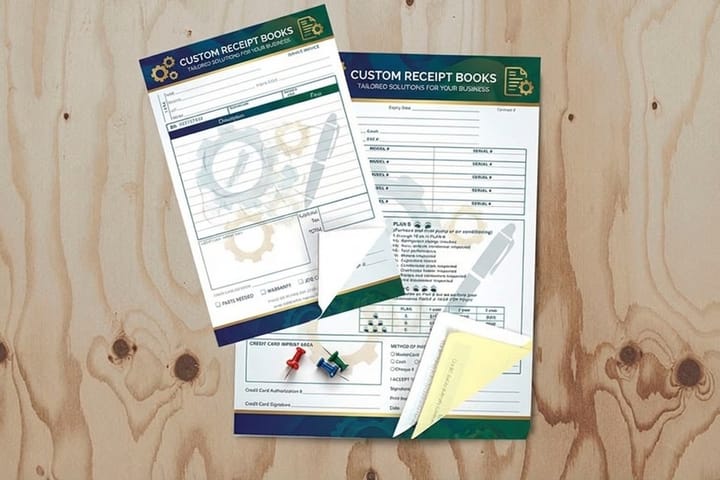
Every store has the morning where the internet is down, the card terminal will not authorise, and there is a queue. Receipt books are what you reach for then, and they are also the whole system for a market stall, a pop-up, or a delivery driver taking payment at the door.
They are printed on carbonless paper, which is the modern replacement for carbon paper. A coated back sheet on top transfers to a coated front sheet below under pen pressure, so a 2-part set gives the customer the top copy and keeps the second, and a 3-part set adds one for the books. Two-part is right for most counters. Go to three only if a copy genuinely goes somewhere different, because every extra part means firmer handwriting to get through the stack.
Specify sequential numbering when you order, and start the sequence somewhere your bookkeeping can live with rather than at 1. Consecutive numbers are what make a missing receipt visible, which is the actual reason the format has survived. Add your trading name, address, and tax number to the printed part so the top copy is a real document. If you are setting up a counter from scratch, the retail storefront starter pack covers the signage side, and the Black Friday retail pack covers the seasonal push.
Specs and pricing
The two pieces a store reorders most: labels and tags
Product labels and hang tags get consumed rather than kept, so they come back on the order sheet every season. Here are the live specifications and price ladders for both, straight from the configurator.

| Quantity | Price Per Unit | Total |
|---|---|---|
| 25 | 95.5¢ | $23.88 |
| 50 | 72.9¢ | $36.44 |
| 100 | 42.7¢ | $42.72 |
| 150 | 32.7¢ | $49.01 |
| 200 | 27.6¢ | $55.29 |
| 250 | 24.6¢ | $61.57 |
| 300 | 22.0¢ | $65.97 |
| 400 | 17.6¢ | $70.36 |
| Quantity | Price Per Unit | Total |
|---|---|---|
| 1 | $21.97 | $21.97 |
| 2 | $15.93 | $31.86 |
| 3 | $13.55 | $40.64 |
| 4 | $12.36 | $49.43 |
| 5 | $11.65 | $58.23 |
| 10 | $10.11 | $101.05 |
| 15 | $9.67 | $144.98 |
| 20 | $9.45 | $188.92 |
Wally explains why the symbol fails
It is almost never the printing
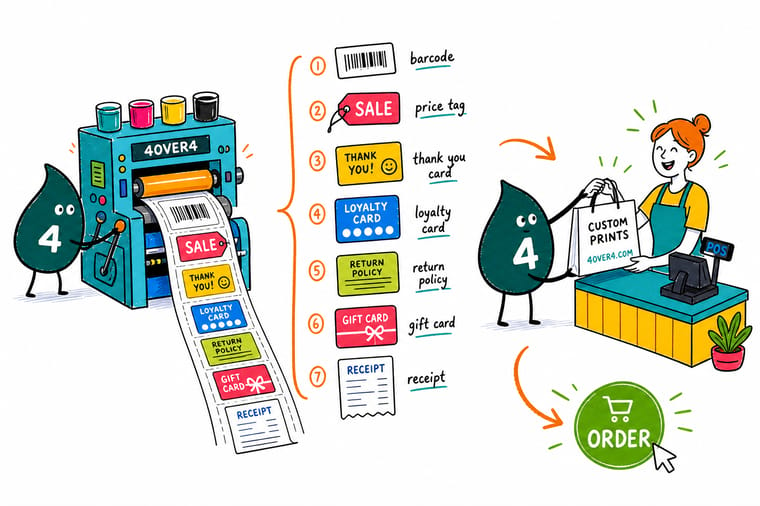
Wally has seen the same three files come back all week. One had the barcode placed as a screenshot, so the bars went soft the moment they hit the press. One had a price starburst tucked neatly into the quiet zone, which is the one place on a label that has to stay empty. One had the symbol squashed to 60% to fit a small tag. Build the bars as vector art in 100% black, leave nine modules of clear space each side, keep the whole symbol between 80% and 200% of nominal, and 4OVER4 will print you something that scans first pass every time.
Shop retail printing →See it in use
Barcode labels counters have scanned
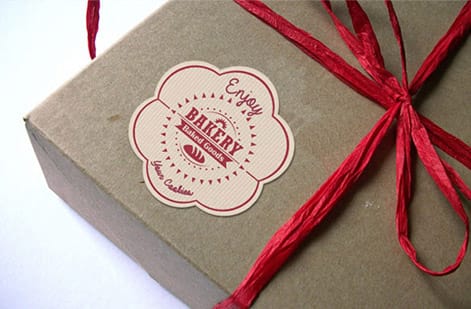
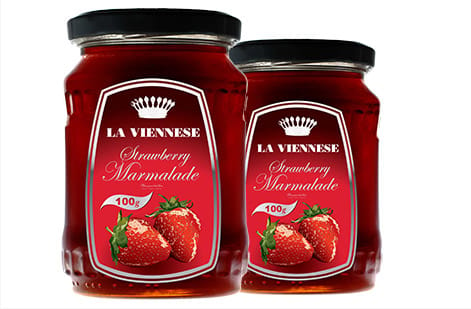
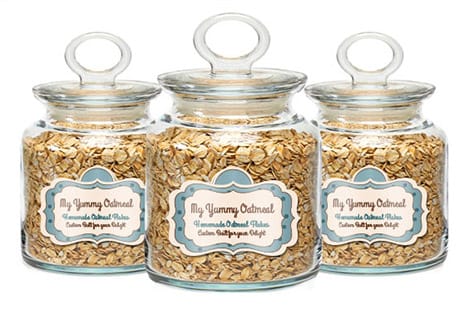
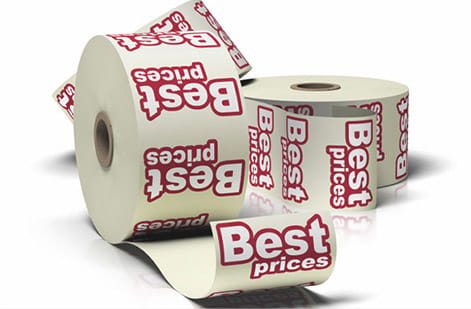


Explore more
Where to go next

By the numbers
What a checkout counter can be printed with
Common Questions
Common questions about barcode and POS printing
Can 4OVER4 print my barcodes, or do I need to supply them?
You supply the symbol as part of your artwork and we print it. We do not generate barcode numbers, because the number has to come from your own system: a UPC comes from the GS1 company prefix issued to your business, and a loyalty or gift card number comes from your point of sale provider. Generate the symbol as vector art in 100% K, place it in the file, and send the whole label or tag as one print-ready document.
Where do I get UPC numbers for my products?
From GS1, which issues the company prefix that the first digits of every UPC on your products are built from. You buy a prefix once, then assign your own item numbers inside it and calculate the check digit. Cheap resold single codes exist, and most large retailers will not accept them, so if you plan to sell into a chain, buy the prefix properly the first time. No printer can issue you a valid UPC.
What size should a UPC barcode be on a retail label?
Nominal size for a UPC-A is 1.469 in wide by 1.02 in tall including the quiet zones, and that is 100% magnification. Anything from 80% to 200% of that is inside specification, so the smallest you should ever print is about 1.175 in wide. Scale width and height together. Squashing the height alone to fit a narrow label is the single most common reason a symbol needs three passes at the lane instead of one.
Should I use pre-printed barcode labels or a thermal printer?
It depends entirely on whether the number changes. A SKU that always carries the same UPC is better pre-printed: sharper bars, full color branding on the same label, and a lower cost per piece at volume. A number that differs on every item, such as a serial, a batch, or a weight-based price, needs a thermal transfer printer and blank stock. Many stores run both, pre-printing the SKU labels and keeping a thermal unit for the exceptions.
Will a barcode scan on a clear label?
Only if there is something white behind it. A laser scanner reads the contrast between dark bars and a light background, and a clear label on clear glass gives it nothing to work with. The fix is a white ink layer printed under the symbol area, which keeps the rest of the label transparent while giving the barcode a proper white ground. The same logic applies to a dark bottle: put the symbol on a white block.
What colors can a barcode be printed in?
Black on white is the safe answer, and dark blue or dark green on a white or pale background also work. Red, orange and yellow do not, because a lane scanner reads with a laser at about 660 nm and those colors reflect it almost as well as white paper does, so the bars simply are not there as far as the scanner is concerned. Never reverse the symbol either. White bars on a dark background defeat most laser scanners.
Can the barcode go on a hang tag instead of a label?
Yes, and for knitwear, suede, unfinished leather or anything with a nap it is the better answer, because adhesive either will not hold or will mark the goods. Put the barcode on the back of the tag so the front stays clean for brand and price, print on 14pt or 16pt card, and set the string hole position in the artwork so it never lands inside the clear space beside the bars.
What does a full barcode and POS print set cost to start?
Every price moves with size, stock, finish and quantity in the configurator, and all of them fall as the quantity climbs. As starting points at 4OVER4.COM, counter cards begin at $21.97, standard product labels at $23.88, retail hang tags at $25.27, receipt books at $120.82, plastic gift cards at $226.11, key tags at $309.69, and roll product labels at $322.98. Most independent shops start with sheet labels, hang tags and a counter card, then add the plastic once the loyalty or gift card program is running.
Get Started
Print the counter, not just the labels
Order the seven-piece barcode and POS set at 4OVER4.COM. Pick sizes, stocks and finishes, and watch every price update live as you build the order.
Legal Disclaimer
Gold Standard guarantees apply to all standard orders placed through 4over4.com. Price match requires verifiable proof of a competitor's published price for an equivalent product with matching specifications and turnaround time. Satisfaction guarantee covers manufacturing defects and print quality issues. Contact support with order number and documentation. On-time delivery rate based on tracked orders 1999 to 2026. Individual results may vary based on shipping carrier performance.
