
How to Order Bulk Labels and Lower Your Per Label Cost


Bulk labels are priced per run, not per label. Here is how the setup charge works, when a roll beats a sheet, which material to lock in, and how to read the quantity tiers.
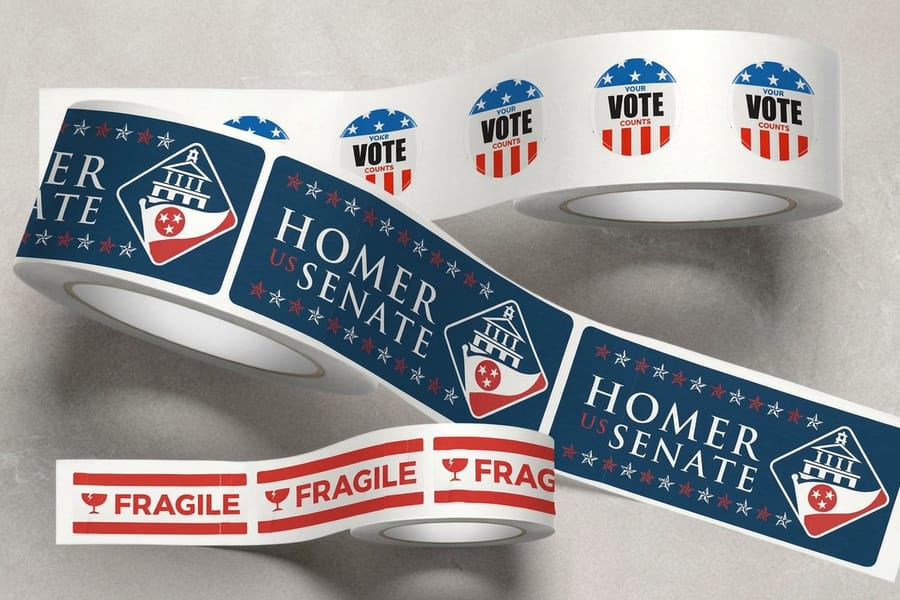
Order bulk labels in this sequence: sheet or roll, material, size and shape, then quantity. Sheet labels start at $23.88 and are peeled by hand, so they win under a few thousand. Roll Labels start at $322.98, arrive wound on a core, and win once a machine applies them or one person is doing hundreds a day. Because the plate, the die and the press setup are charged once per run, one large order beats two smaller ones for the same total quantity.
Quick answer
One run beats two, and application method picks the format
The setup charge on a label order is paid once per run, so quantity is the lever and frequency is the leak. Choose sheets when a person peels labels by hand and the volume sits in the hundreds. Choose rolls when an applicator feeds them or one person applies hundreds a day. Fix the material against the wettest condition the label will meet, freeze the size and shape before the first bulk run so every reorder reuses the same die, and compare quantity tiers on the per-label figure rather than the order total.
What You Are Actually Paying For in a Bulk Label Order
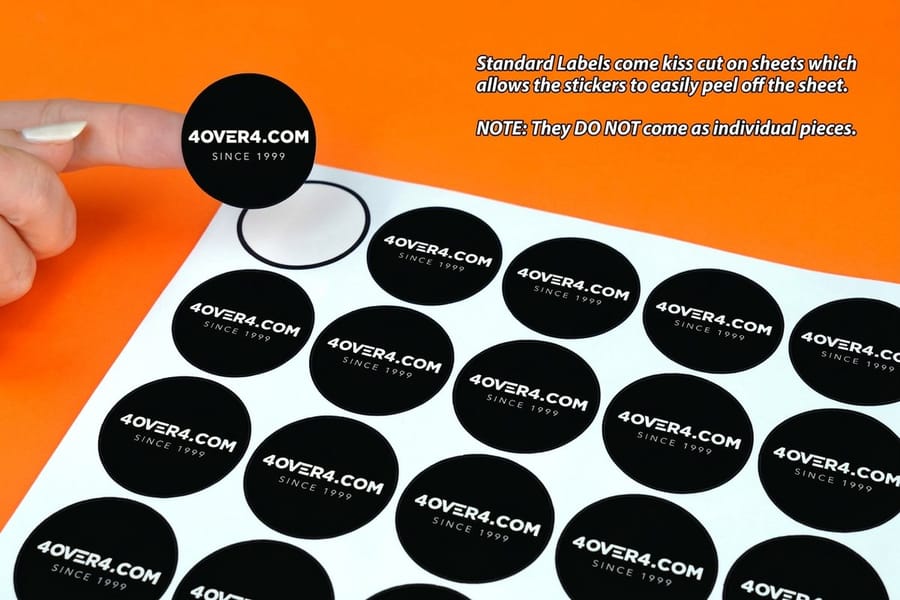
A label price is two things stacked together: a fixed setup and a running cost. The setup covers the plate, the cutting die and the press make-ready, and it is charged once for the run whether you print 500 labels or 50,000. The running cost is material, ink and time, and that part scales with quantity.
Everything about ordering in volume follows from that split. Doubling a quantity does not double the price, because the setup half does not move. Ordering the same quantity twice, six months apart, comes close to doubling it, because you pay the setup twice. That single fact is worth more than any negotiation, and it is the reason a yearly run beats four quarterly ones for a label design that is not going to change.
The starting prices show the shape of the curve. Standard Labels begin at $23.88 and Premium Labels at $29.16, both cut from printed sheets where the setup is light. Die-Cut Labels begin at $93.37, and the jump is the die. Roll Labels begin at $322.98, which looks steep until you notice the quantity that price covers and the fact that nobody hand-peels a roll.
So the first question is not "how much are labels". It is "how many will I genuinely use before the artwork changes". Answer that honestly and the rest of the order almost fills itself in.
Roll or Sheet, Decided by How the Label Gets Applied
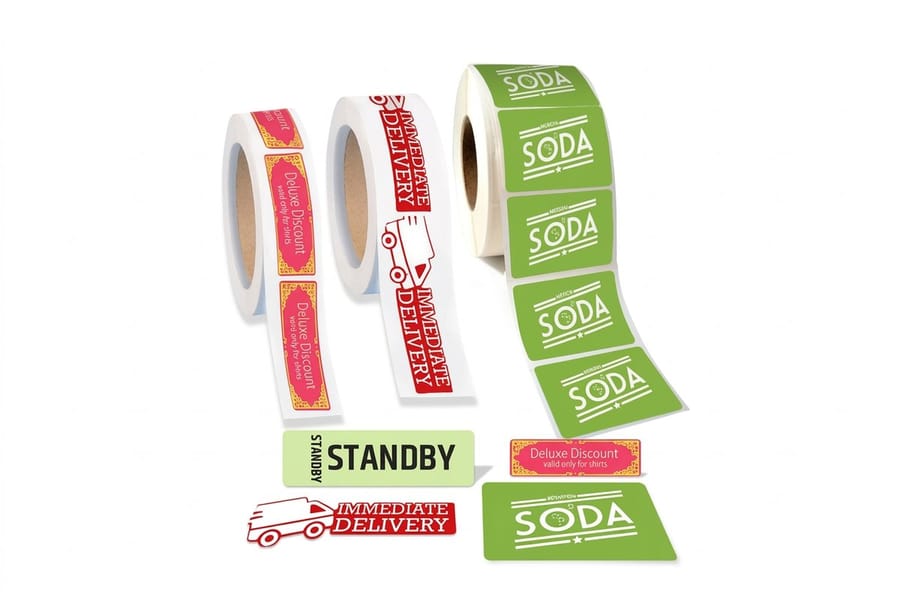
Pick the format by the hand or the machine that puts the label on the product. Everything else follows.
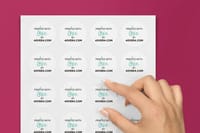
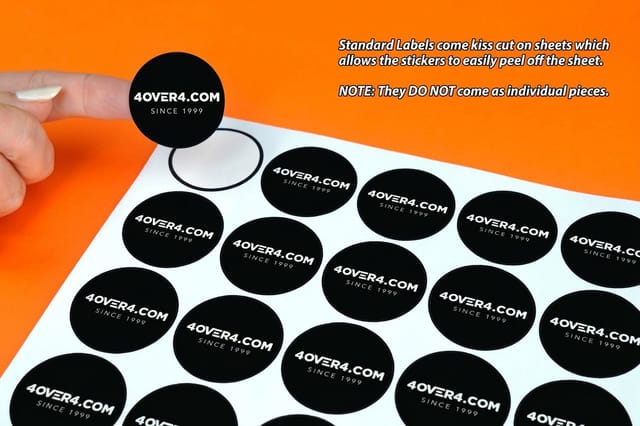
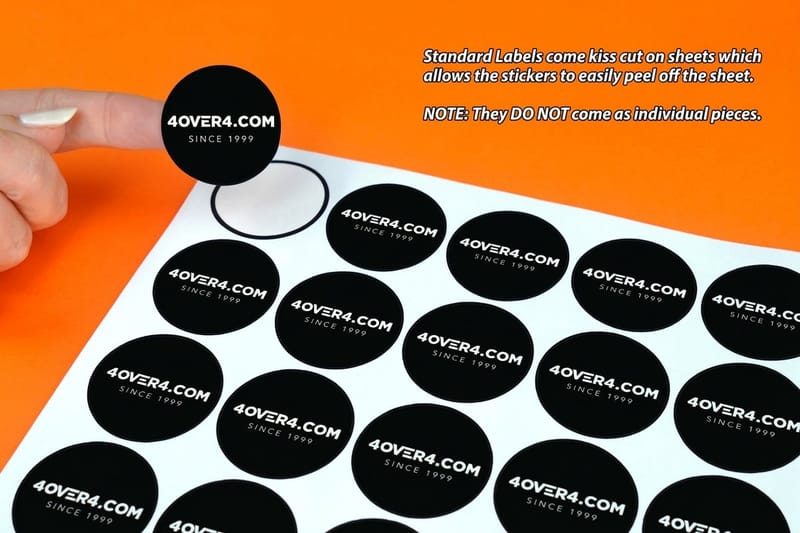
Sheets suit hand application. Labels arrive cut on a backing sheet, a person peels one at a time, and the whole order stores flat in a drawer. They are cheap to enter, easy to split between two people at a packing table, and forgiving if you only need a few hundred. The ceiling is labor: past roughly a thousand labels in a sitting, peeling becomes the slowest part of the day.
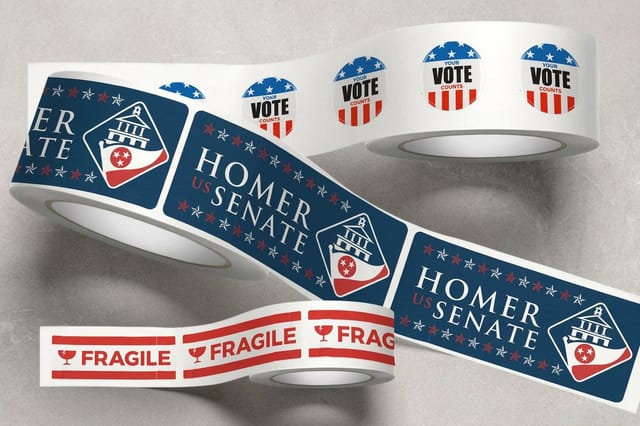
Rolls suit machines and repetition. The labels come wound on a core, in order, with a fixed gap between them, so an applicator or a hand dispenser can pull them off continuously. That format is what makes a few thousand units a morning possible rather than a week.
Rolls carry four specifications people forget until the box arrives. Get them right at order time:
- Core diameter. 3 inch is standard for most tabletop and inline applicators, 1 inch for small hand dispensers. Your machine accepts one of them, not both.
- Maximum outside diameter. The roll has to physically fit the machine, which caps how many labels can go on one roll and sets how many rolls your quantity becomes.
- Labels per roll. Ask for this in writing. It is what tells you how often a packing line stops to reload.
- Unwind direction. Which edge comes off first, and whether the face points out or in. Order it wrong and every single label lands rotated.
If the run is a first for you, the full roll versus sheet comparison walks through both workflows side by side. When the shape is not a plain rectangle, Shaped Roll Labels start at $300.05 and carry the same core and unwind questions.
Choosing the Material by What Touches the Label
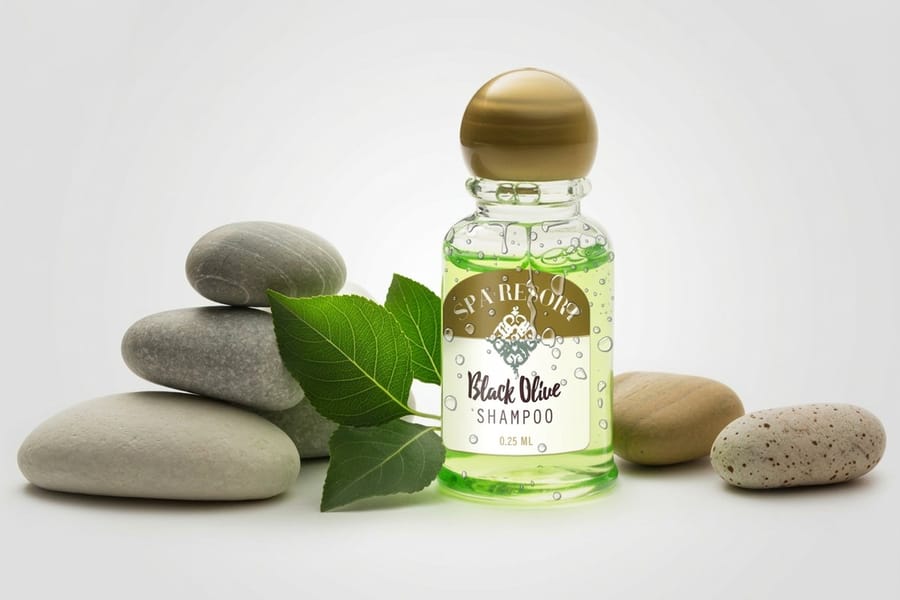
Material is the decision you cannot walk back after the run, so make it against the real conditions the label meets rather than the ones in the product photo. A paper label on a jar in a cupboard is perfect. The same label on a chilled bottle turns to pulp the first time it sweats.
| Material | Survives | Looks like | Where it costs you |
|---|---|---|---|
| Coated paper | Dry indoor handling, cartons, gift jars, asset tags. | Bright white, ink sits crisp, matte or gloss. | Any moisture at all. It stains, wrinkles and tears at the edge. |
| White vinyl or BOPP | Condensation, fridge shelves, ice buckets, hand washing, outdoor use. | Slight plastic sheen, flexes around a curve without creasing. | More per label, and it is harder to peel off cleanly later. |
| Clear BOPP | The same wet conditions, with the no-label look on glass. | Nearly invisible film, the container becomes the background. | Needs a white ink layer under solid artwork, or the liquid shows through and light type disappears. |
| Metallic and foil | Indoor premium packaging, spirits, cosmetics, candles. | Reflective base, every ink over it reads as a tint of silver. | Photographs and pale colors go muddy. Proof it before committing a bulk run. |
The wet column is the one that catches people. Premium Waterproof Labels start at $84.68 and Premium Clear Labels at $86.17, both meaningfully above a paper equivalent, and both cheaper than reprinting a run that failed in a cooler. If you are still weighing the three, our paper, vinyl and clear comparison puts them against each other in detail, and the waterproof label range lists everything we print on durable film.
Sizing and Shape Before the Die Is Cut
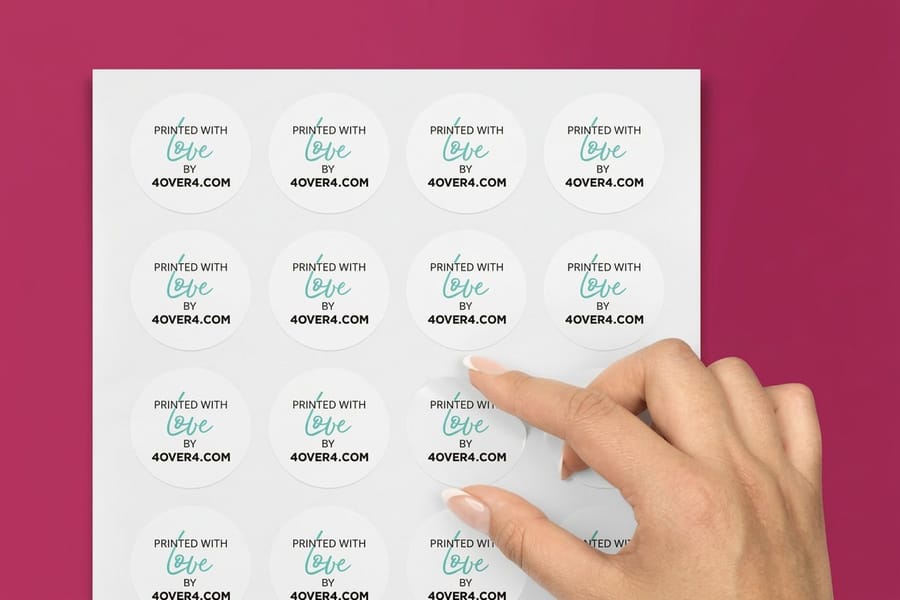
Size and shape are worth more attention in a bulk order than in a small one, because the die is what you are locking in. A standard rectangle, circle or oval uses a die that already exists, which is why Standard Labels enter so much lower than a custom cut. A shape drawn to your artwork means a new die, and that charge appears once, on the first run.
Measure the container, not the artwork. For a flat panel, find the straight-walled area and stay inside it, because a label that runs onto a curve or a seam wrinkles as it is applied. For a full wrap around a cylinder, make the label slightly longer than the circumference so it overlaps itself. For a partial wrap, make it shorter than the circumference so the two ends never meet, which is the honest way to avoid a visible mismatch.
File setup is short and unforgiving. Build at final size, add 0.125 inch of bleed on every edge, keep type and logos at least 0.125 inch inside the cut line, outline the fonts, and export a CMYK PDF at 300 dpi. On roll labels the gap between labels is set by the die rather than by you, so a size change later is a die change, not a setting.
Pull a correctly sized layout from the blank template library rather than building the dimensions yourself. Choosing the correct label size covers the measuring step properly, and round versus die-cut labels is the right read if you are deciding whether the custom shape is worth its die.
Working the Quantity Tiers Without Wasting the Run
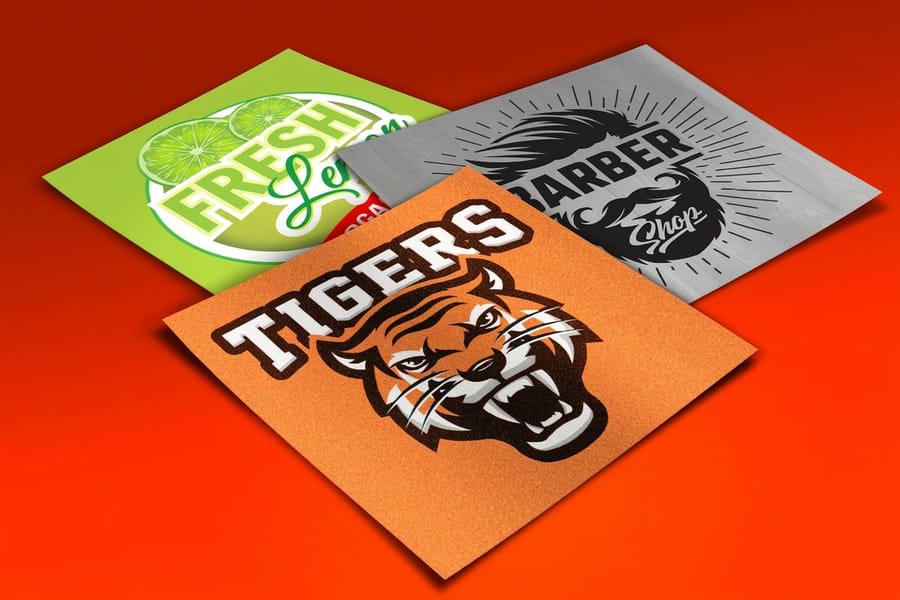
Quantity pricing on labels moves in steps, not on a smooth curve, and the steps are where the money is. Enter your quantity in the configurator, note the total, then enter the next tier up and note that one. Divide each by its quantity and compare the two per-label figures. It is common for the larger tier to cost a small amount more in total while landing well below on the per-label number.
Then apply the brake. Buy the quantity you will genuinely use before the artwork changes, and no more. A price break on 20,000 labels is not a saving if a compliance line, a phone number or a flavor name changes at month four and the rest go in the bin. Two things predict that: regulated copy, and anything printed with a date on it.
Four habits keep a bulk label program cheap over a year:
- Freeze the die before the first big run. Same size and same shape on every reorder reuses work you have already paid for.
- Keep variable information off the main label. Print the brand artwork in volume and add batch codes, dates or weights with a small second label or a printer at the packing bench.
- Proof on the actual container. Order a small run first, stick it on the real bottle or box, and look at it under the light where it will be sold. Screen approval is not the same test.
- Reorder from the same file. A repeat with no file change is the fastest and cheapest path through the shop.
| Product | Format | From | Best for |
|---|---|---|---|
| Standard Labels | Sheet, standard shapes | $23.88 | Hand application, low hundreds, dry indoor use. |
| Premium Labels | Sheet, upgraded stock | $29.16 | Retail packaging where the label is part of the product. |
| Die-Cut Labels | Sheet, custom shape | $93.37 | Logo-shaped labels and anything a rectangle would spoil. |
| Roll Labels | Roll on a core | $322.98 | Applicators, packing lines, thousands of one design. |
Browse the full range on the label printing pages, or go straight to product labels if the run is going on retail packaging.
Wally explains bulk labels
Pay the setup once, then let the press run
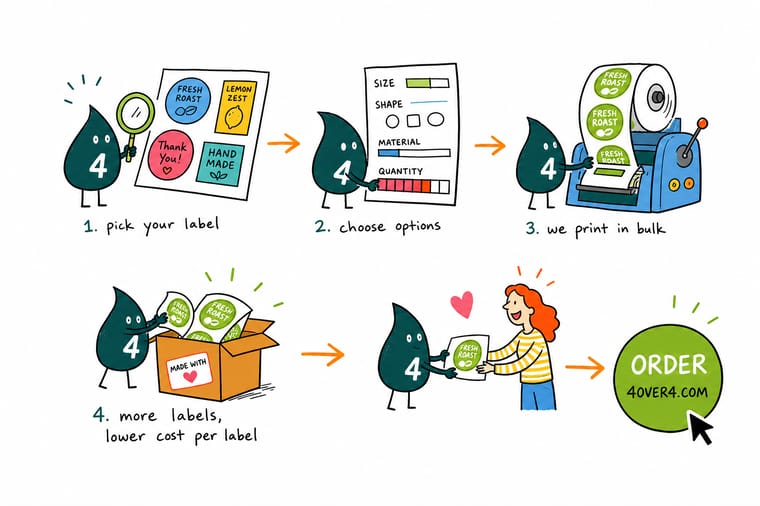
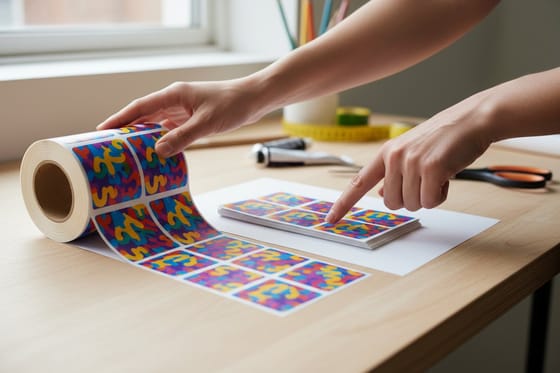
Wally holds a sheet of labels in one hand and a roll in the other. The sheet is cheap to start and he peels them one at a time, which is fine for a few hundred. The roll costs more to begin because the die and the press setup are paid up front, and after that every extra label is nearly free. So he orders a year at once instead of four quarters, freezes the size and shape so the same die comes back, and picks vinyl the moment the bottle is going anywhere near a fridge.
Price roll labels for your run →Specs and pricing
Label sizes, materials and starting prices
Compare the sheet formats side by side, with live size and material choices and starting prices straight from the 4OVER4.COM configurator.

Print it
Order the label format that matches your line

Explore more
Where to go next

By the numbers
Label runs you can count on at 4OVER4
Common Questions
Your bulk label questions, answered
How many labels count as a bulk order?
There is no industry threshold, but the economics change around a few thousand. Below that, sheet labels almost always win, because you are paying mostly for material and the setup is small. Above roughly 2,000 to 5,000 of one design, the per-label price on a roll starts to pull ahead, since the die and make-ready are already covered and the press simply keeps running. The honest test is not the number, it is the quantity price on the configurator: put in the two quantities you are weighing, divide each total by its quantity, and compare.
Is it cheaper to order roll labels or sheet labels in bulk?
It depends entirely on volume. Standard Labels start at $23.88 and Premium Labels at $29.16, so a sheet order is cheap to enter. Roll Labels start at $322.98 because the roll setup is front-loaded, and that price buys a quantity a sheet order cannot reach. For a few hundred labels, sheets are cheaper by a wide margin. For tens of thousands applied by machine, rolls win on both price per label and labor.
What is unwind direction and why does the printer ask for it?
Unwind direction describes which edge of the label leaves the roll first and whether the label faces out or in. It exists because an applicator grabs the label in one orientation only. If you order the wrong unwind, every label comes out of the machine rotated, and there is no fix short of rewinding the roll. Check the label manual on your applicator, or send us a photo of the roll you are currently running, and match it exactly. Hand application does not care.
Can I mix several designs in one bulk label order?
Not inside a single roll, and not usefully inside a single sheet run. A roll runs one file continuously, so five flavors of a drink means five rolls, each with its own quantity. Sheet labels are cut from a printed sheet, so a mixed sheet is possible only if every design shares the same size and shape and you accept a fixed ratio on every sheet. Most people order the shared elements as one design and add the variable part with a smaller second label.
What file setup do bulk labels need?
Build the artwork at final size with 0.125 inch of bleed on every edge, keep all type and logos at least 0.125 inch inside the cut, convert fonts to outlines, and supply a print-ready PDF in CMYK at 300 dpi. On a clear material, add a white ink layer under anything that must stay opaque, or the container color shows through the artwork. If you are starting from scratch, take a correctly sized file from the blank template library rather than measuring it yourself.
How long do printed labels last in storage before I use them?
Kept flat, dry and out of direct sun at normal room temperature, a year of stock is safe and most printed labels hold well beyond that. Heat is what actually ruins them. A box left in a van or a hot attic softens the adhesive, and labels stored in a damp basement curl at the edges and lift after application. If you are buying a large run to get the price break, spend a moment on where the boxes will sit, because storage is what decides whether the saving survives.
Get Started
Ready to price your label run?
Pick the format, choose paper or a durable film, set the quantity, and see the per label price move before you commit to the run.
Legal Disclaimer
Gold Standard guarantees apply to all standard orders placed through 4over4.com. Price match requires verifiable proof of a competitor's published price for an equivalent product with matching specifications and turnaround time. Satisfaction guarantee covers manufacturing defects and print quality issues. Contact support with order number and documentation. On-time delivery rate based on tracked orders 1999 to 2026. Individual results may vary based on shipping carrier performance.
