
8 Food-Safe Product Labels That Survive Cold, Grease and Condensation
One label material does not cover a food business. A jar on a dry shelf, a bottle out of the cooler and a lid carrying an allergen line all want different builds. Here are the eight we would put in a starter set, priced live, with the failure mode of each one named.
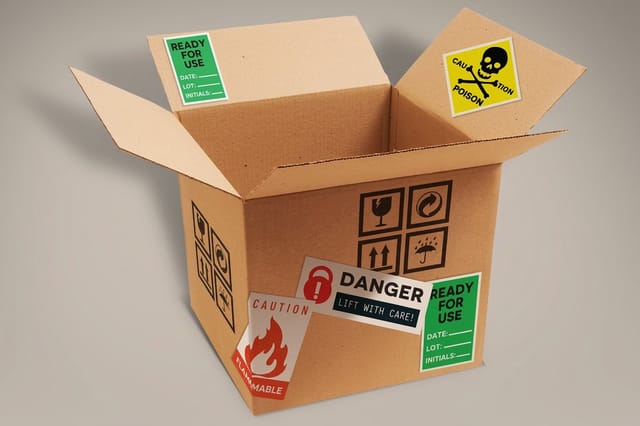
A food-safe label set is four builds, not one label. Coated paper for sealed dry goods, a laminated synthetic for anything cold or wet, clear film for glass you want to show off, and a small warning label for allergens and dates. All eight sit on the outside of the container, which is indirect contact; a label that touches bare food is a separate specification.
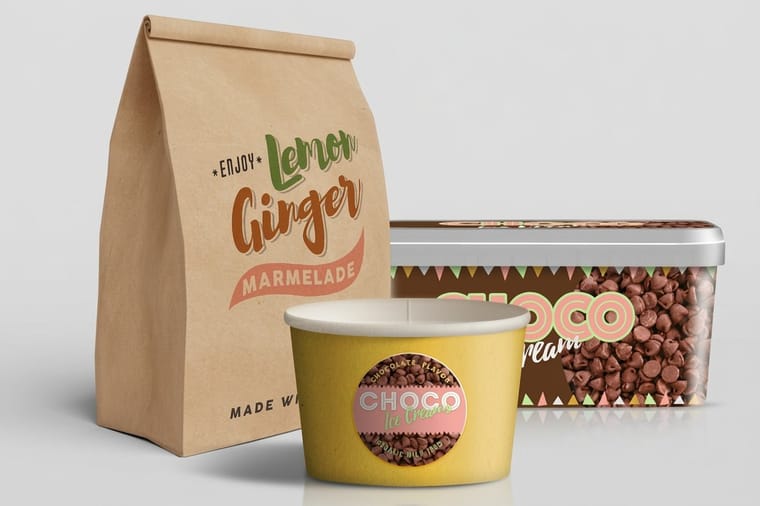
The picks
The 8 food-safe label picks, priced live
Read the number, then the reason. Each pick below is priced from the configurator and drops as the quantity climbs. Start with the build that matches your container, add the warning label whatever else you choose, and start the artwork from a design template if you would rather not begin on a blank page.
- 1 Standard Food Labels from $23.88 Coated paper, cut to size on sheets. The cheapest correct answer for a sealed jar or a bakery box that lives at room temperature. Read the detail →
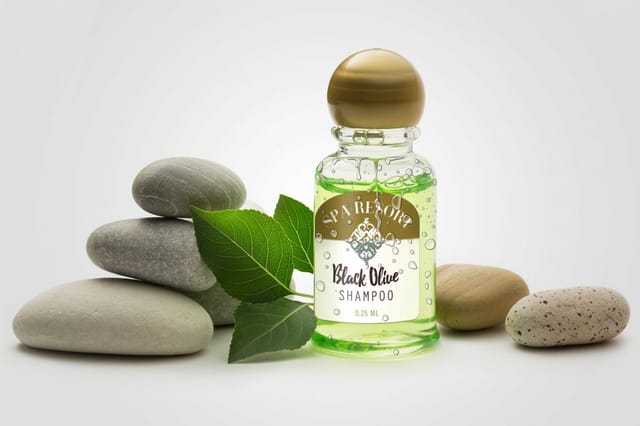
- 2 Premium Food Labels from $29.16 The same shapes with a laminate over the print. Six dollars more per order buys you grease resistance and a face that survives a wipe-down. Read the detail →
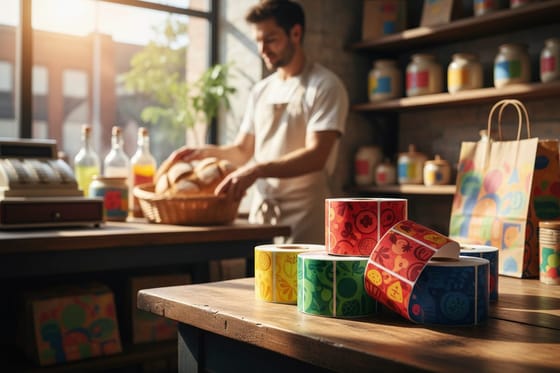
- 3 Roll Food Labels from $322.98 Wound on a core for a hand applicator. The starting price is high because the starting quantity is high, and the per-label cost is the lowest in the set. Read the detail →
- 4 Premium Waterproof Labels from $84.68 Synthetic face plus laminate for the cooler, the ice bucket and anything that sweats when it comes out of the fridge. Read the detail →
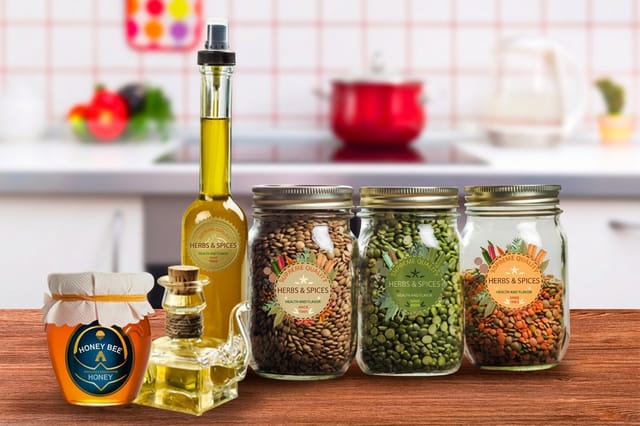
- 5 Standard Canning Labels from $23.88 Sized for the straight wall of a mason jar, so the label does not tent across the shoulder curve. Read the detail →
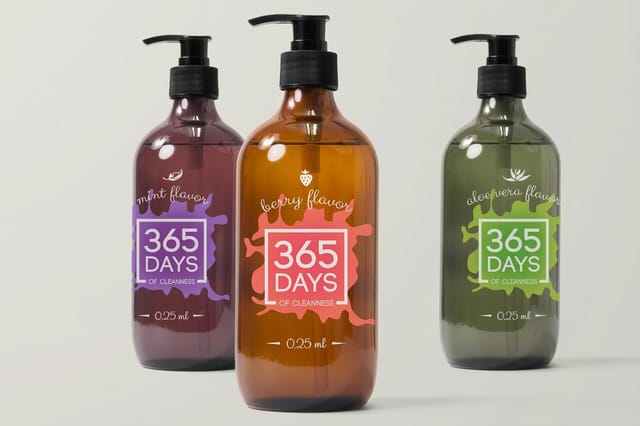
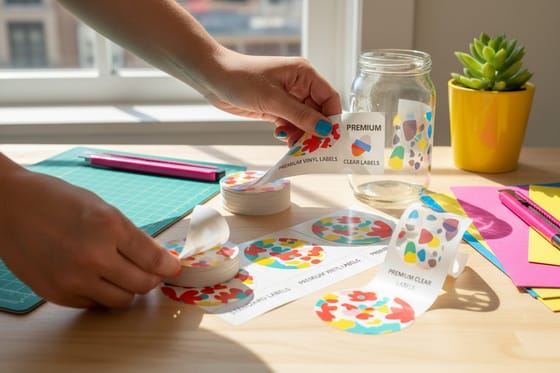
- 6 Premium Clear Labels from $86.17 Clear film on glass reads as no label at all. Budget for a white underprint behind any color artwork. Read the detail →
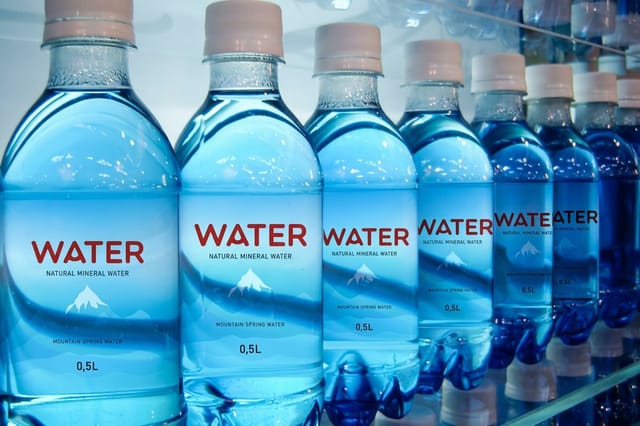
- 7 Premium Beverage Labels from $29.16 Bottle and can proportions, on a face conformable enough to sit flat on a curve without flagging at the ends. Read the detail →
- 8 Premium Warning Labels from $29.16 The allergen line, the keep-refrigerated line and the use-by box, on a second small label so the front label never has to change. Read the detail →
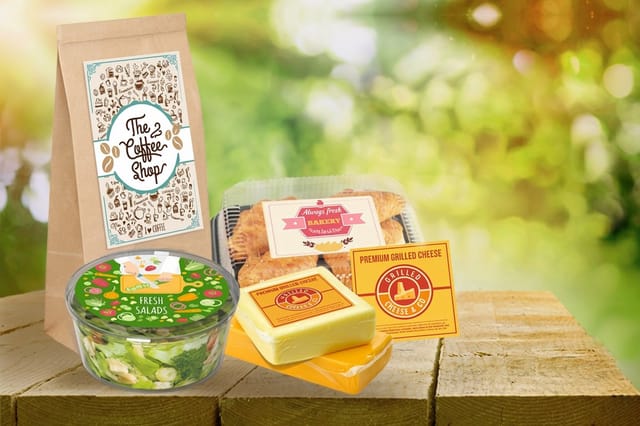
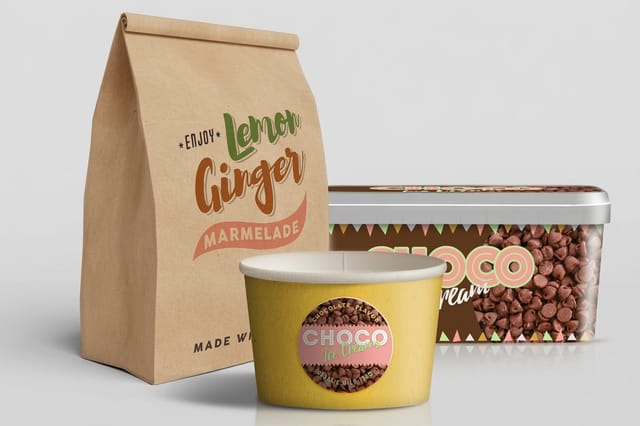
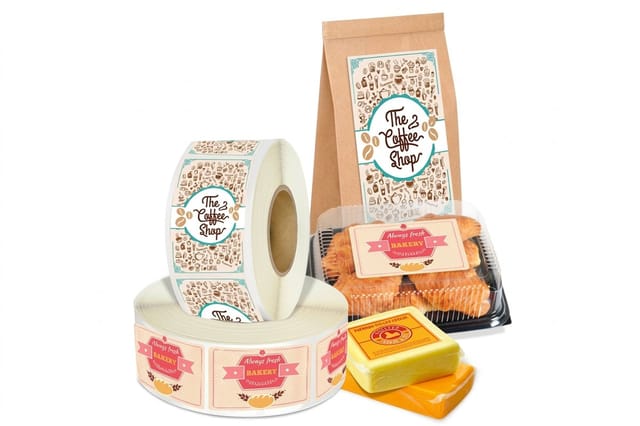
Start here
Match the build to the container, not to the budget
The face stock decides how the label looks, and the adhesive plus the surface temperature decide whether it is still there next week. That single sentence explains most label complaints in food service. A paper label on a sweating bottle fails; a waterproof label applied to that same cold bottle fails too, just a day later. Work down the list below in the order a product moves, from the dry shelf to the cooler to the back panel where the allergen copy lives.
Material and placement
Which food label goes on which container
Eight builds, three things you need to know about each: what the face is made of, where it holds, and where it does not. Tap a pick to jump to the full detail, then order the build that matches the coldest, wettest, greasiest place your container will ever sit.
| Pick | Face and finish | Where it holds |
|---|---|---|
| 1. Standard food labels | Coated paper, no laminate | Sealed dry goods at room temperature: granola, coffee, spice jars, bakery boxes that go out the same day. |
| 2. Premium food labels | Coated paper with a gloss or matte laminate | Anything oily or handled often: nut butters, infused oils, sauce jars that get wiped at the shelf edge. |
| 3. Roll food labels | Paper or synthetic on a wound roll | A production line or a hand applicator, from a few thousand pieces upward. Not for a fifty-jar batch. |
| 4. Premium waterproof labels | Synthetic face with a laminate | Coolers, ice buckets, freezer packs, anything that comes out cold and sweats on the counter. |
| 5. Standard canning labels | Coated paper, jar proportions | Mason and Weck jars of jam, pickles and preserves, applied after the jars are back at room temperature. |
| 6. Premium clear labels | Clear film, laminated, white underprint optional | Glass and clear pouches where you want the product itself to be the packaging. |
| 7. Premium beverage labels | Conformable laminated face | Bottles, cans and growlers, wrapped around a curve and clear of the neck taper and the base rim. |
| 8. Premium warning labels | Small format, laminated, high contrast | Back panel or lid: allergen declaration, keep refrigerated, use-by date, tamper seal copy. |
1. Standard food labels, the sheet-cut everyday piece
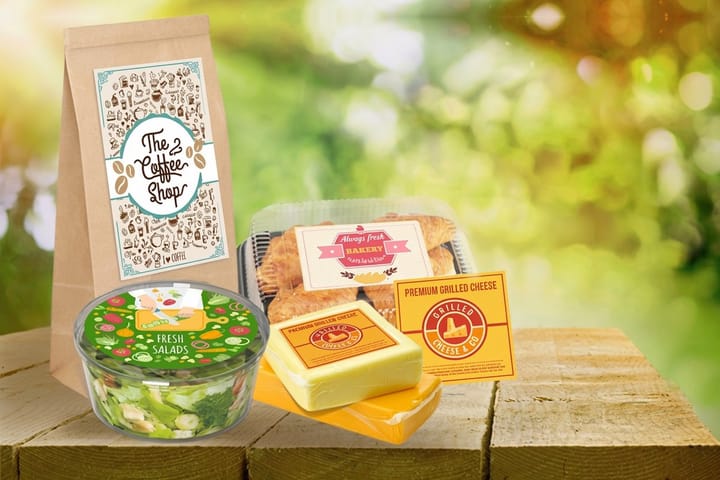
Start here if you are labeling jars of sauce, deli containers or bakery boxes in runs of a few hundred. Standard food labels come cut to size on sheets with a coated paper face and a permanent adhesive, and for a sealed jar sitting on a dry shelf, nothing more expensive buys you anything you can see.
Paper is also the face that gives up first. An uncoated stock wicks fridge damp, and oil from a dressing or an infused butter creeps out through the paper and dulls the ink within about a week. If the jar will be handled with greasy hands or stored cold, skip to the laminated build below instead of buying paper twice.
Get the size right before you get the artwork right. Our walkthrough on how to choose the correct label size covers measuring the flat area you actually have, and roll labels versus sheet labels explains why sheets win at low volume.
2. Premium food labels, the same label with armor on top
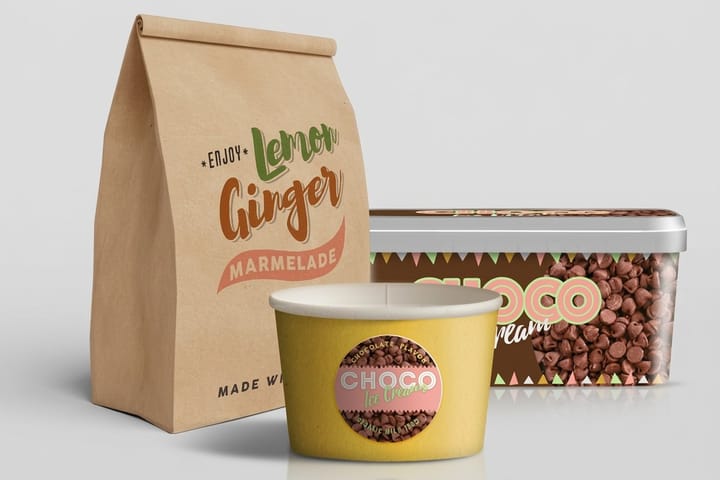
Premium food labels are the same shapes and the same adhesive with a laminate laid over the printed face. The laminate is what stops grease, water and a wet cloth from reaching the ink, and it is the single upgrade that decides whether a label still looks new on the shelf in month three.
Pick the laminate deliberately. Gloss beads water and makes color look saturated, which suits sauces and sweets. Matte kills glare and photographs better, but it shows a fingerprint burnish as a shiny patch, and on a jar that gets picked up twenty times a day that patch is permanent. There is no third option that does both.
Once the material is settled, the layout does the selling. Read how to optimize food labels for shelf appeal for the front panel, then how to design a product back label for the crowded side nobody plans for. A real example of both working together sits in our food brand label case study.
3. Roll food labels, for when hand-peeling stops being sane
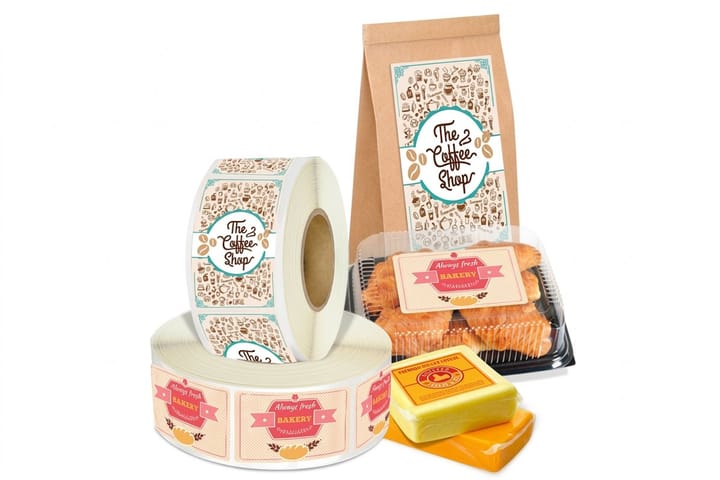
Roll food labels arrive wound on a core instead of cut onto sheets, which is what a hand applicator or a bench-top labeler needs to feed. The price starts at $322.98 because the quantity starts high, and that is the honest trade-off: the per-label cost is the lowest of anything in this set, and the entry cost is the highest.
Two lines on the order form decide whether the roll actually runs. Core size has to match your applicator, and wind direction, meaning which edge of the label leaves the roll first, has to match how the machine presents it to the container. Get either one wrong and you have a correct label you cannot apply without rewinding the whole roll by hand.
The volume math is worth doing before you order. How to order bulk labels lays out where the per-unit price crosses over, and how label printing works covers what happens between your file and the finished roll.
4. Premium waterproof labels, built for condensation
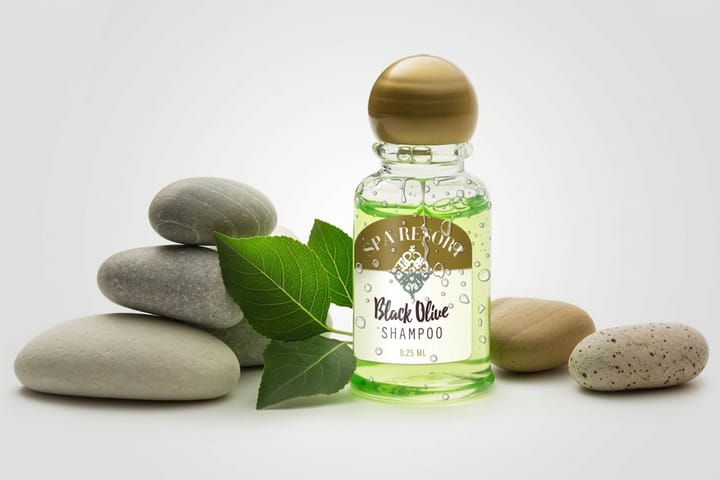
Condensation, not rain, is what kills labels in food service. A bottle out of the cooler grows a film of water under the label edge and a paper face swells, cockles and eventually peels. Premium waterproof labels replace paper with a synthetic film face and add a laminate, so the label sheds the water instead of drinking it.
Here is the part most people miss: the face stock is rarely the failure point. The adhesive is. Press a label onto a cold, sweating bottle and there is water sitting between the glue and the glass, and by the next morning a corner has lifted no matter what the face is made of. Label the container dry, at room temperature, give it an hour, then chill it. That sequence fixes more peeling complaints than any material change.
If you want the reasoning behind the film choice, what BOPP labels are and when to use them explains the standard synthetic, and paper versus vinyl versus clear labels puts all three faces side by side.
5. Standard canning labels, sized to the straight wall of the jar
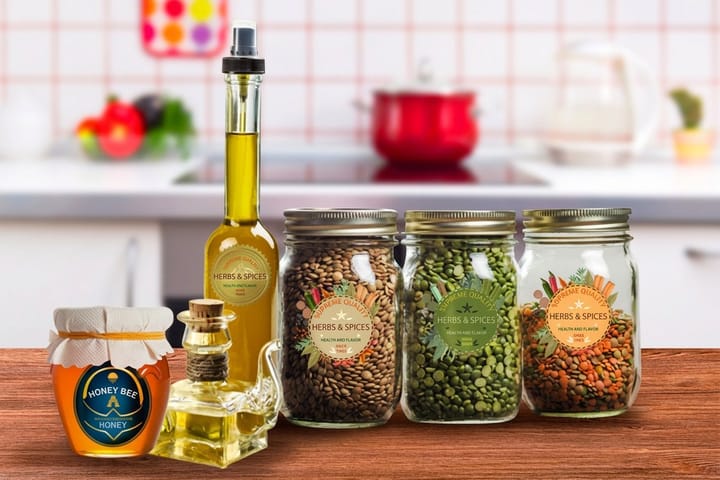
A jar is not a flat surface, and that is the whole problem. Standard canning labels are proportioned for the straight section of a mason or Weck jar, the band between the base curve and the shoulder. Go taller than that band and the label has to bend in two directions at once, which it cannot do, so it tents and traps air along the top edge.
Width has a rule too. Keep the label a little short of the full circumference, roughly a quarter inch of bare glass at the join, or the two ends overlap into a ridge that catches on the next jar in the case. Label after the jars have cooled to room temperature and after the water-bath residue has dried, because a warm damp jar shrinks slightly as it cools and drags the adhesive with it.
For the numbers on common jar sizes, the complete label sizes guide has the measurements. And if a customer ever asks how to get the jar back for reuse, removing labels without the sticky residue is a genuinely useful thing to be able to answer.
6. Premium clear labels, the no-label look on glass
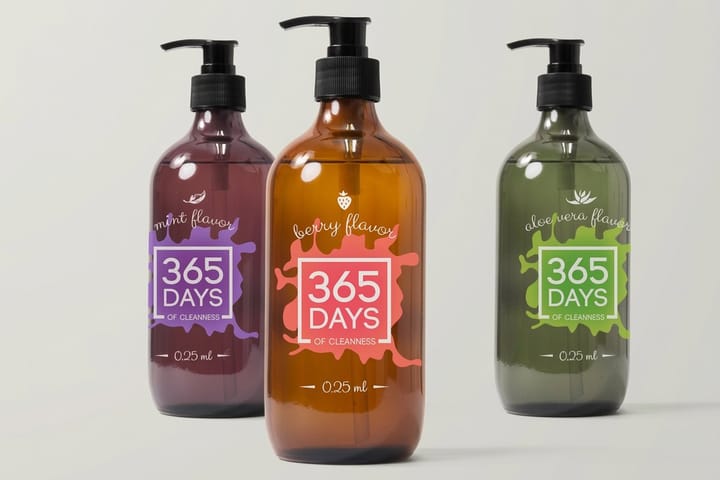
Premium clear labels print on transparent film so the product becomes the packaging. On a bottle of chili oil or a jar of honey it is the cheapest way to look expensive, because the eye reads the contents first and the branding second.
The catch is opacity. Clear film has none, so whatever is inside the jar sits behind your artwork. Black text holds up on almost any background, but a pastel logo over a dark oil simply disappears. The fix is a white underprint, a layer of white ink laid down first so the color sits on white instead of on your product, and it is a line item you should ask about rather than assume. Choose it deliberately, panel by panel: white behind the logo, clear behind the window.
Paper versus vinyl versus clear compares the three faces on cost and durability. If you want the graphics to wrap the whole container instead of sitting as a panel, shrink sleeve labels are the other route, and they behave nothing like a pressure-sensitive label.
7. Premium beverage labels, wrapped around a curve
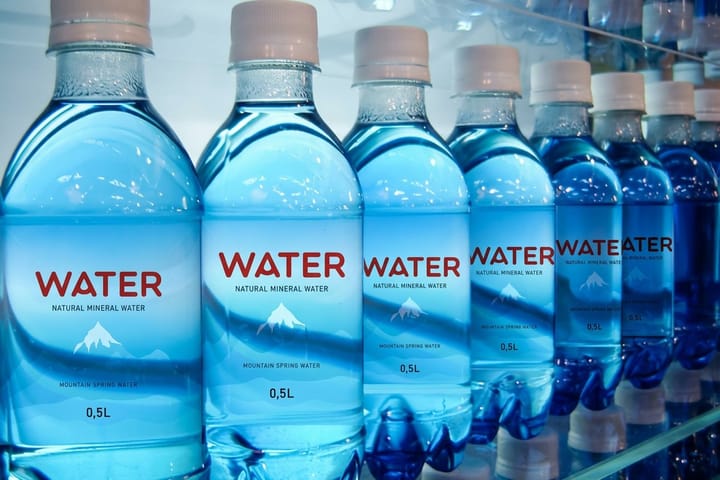
Premium beverage labels are cut in the long, low proportions a bottle wants and printed on a face conformable enough to lie flat on a tight radius. A stiff stock on a small-diameter bottle flags at both ends, which is the little raised lip you feel with a thumbnail on a badly specified label.
Two clearances matter more than the artwork. Stay off the neck taper, because the diameter is changing there and no flat label follows it. Stay off the rolled rim at the base for the same reason. On a can, that usually leaves you a band a good deal shorter than the can itself, so measure the parallel section before you set up the file rather than after.
Cold-chain drinks belong on the waterproof build above. For everything else, our custom nutrition label walkthrough covers the panel most beverage brands have to carry, and stickers versus labels versus decals settles which product you are actually ordering when the terms get used interchangeably.
8. Premium warning labels, the copy that keeps changing
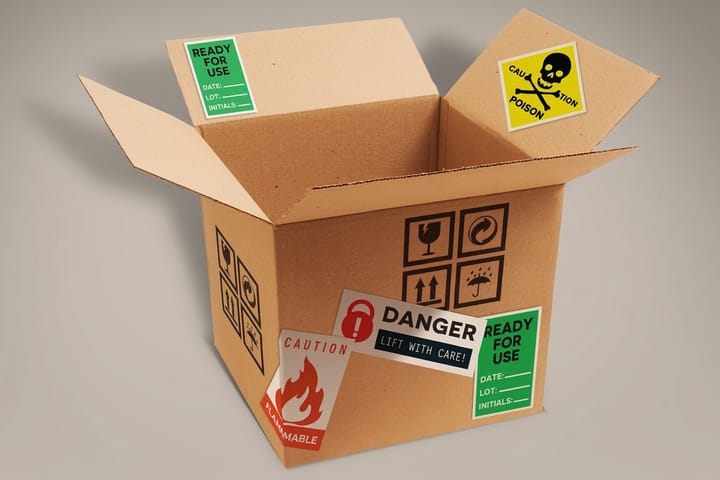
The last piece is the smallest and the one that saves you the most money. Premium warning labels carry the allergen declaration, the keep-refrigerated instruction, the use-by box and the tamper copy on a separate small label, usually on the back panel or the lid.
Splitting it out has a practical payoff. Recipes change, suppliers change and a new allergen appears; if that copy lives on the front label you scrap the expensive print run. On its own label you reprint fifty cents worth. Leave a blank white box in the layout for a date stamp and the same run covers every batch you make this year.
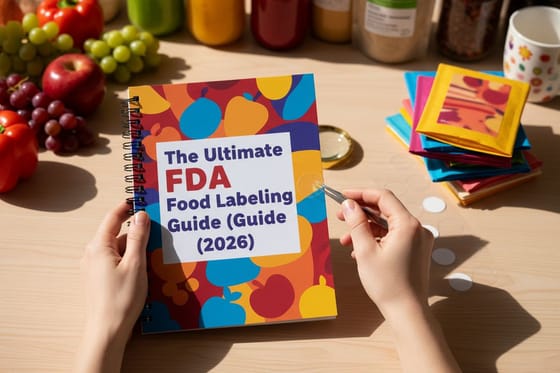
What has to appear is not a design decision. The FDA food labeling guide covers the required panel elements, and if you seal cartons or lids, tamper-evident stickers explains how the destruct-face versions actually work. For takeout containers that need the same treatment, see custom restaurant packaging ideas.
Specs and pricing
Compare the two you will reorder most
The everyday food label and the waterproof one are the two most food businesses buy again and again, and they sit at opposite ends of the price ladder. Here are the live specs and quantity breaks for both, straight from the configurator.

| Quantity | Price Per Unit | Total |
|---|---|---|
| 25 | 95.5¢ | $23.88 |
| 50 | 72.9¢ | $36.44 |
| 100 | 42.7¢ | $42.72 |
| 150 | 32.7¢ | $49.01 |
| 200 | 27.6¢ | $55.29 |
| 250 | 24.6¢ | $61.57 |
| 300 | 22.0¢ | $65.97 |
| 400 | 17.6¢ | $70.36 |
| Quantity | Price Per Unit | Total |
|---|---|---|
| 1 | $84.68 | $84.68 |
Wally explains the four builds
One container, one face stock, one adhesive decision
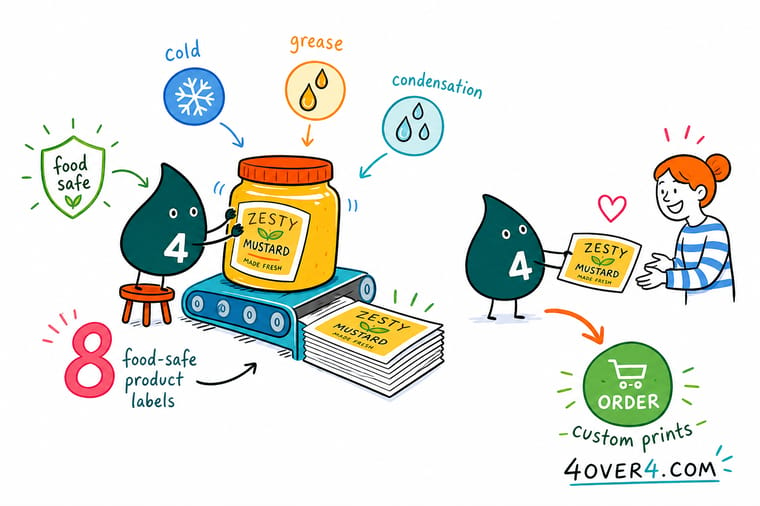
Wally works the line the way your product does. The sealed jar on the dry shelf gets coated paper and nothing more. The bottle coming out of the cooler gets a synthetic face with a laminate, applied warm and dry before it is chilled. Glass you want to show off gets clear film with a white underprint behind the logo. And the lid gets a small warning label so the allergen line can change without scrapping the pretty one. Match the build to the container and the label is still there in month three.
Shop food service printing →See it in use
Food labels on our press
Explore more
Where to go next
By the numbers
Printing that survives a freezer and a wash
Common Questions
Common questions about food-safe labels
Are these labels actually food safe?
They are food-safe in the sense that matters for packaged goods: they go on the outside of a sealed container, which is indirect contact, and the materials are the standard pressure-sensitive stocks used across grocery shelves. A label intended to touch bare food, such as a sticker placed on an unwrapped loaf or a cheese rind, is a direct food contact application with a different adhesive and face specification. Tell us that is the use before you order rather than assuming a food label covers it.
Which label survives a freezer?
A synthetic face with a laminate, so premium waterproof labels rather than paper. The bigger variable is application temperature: most permanent adhesives are designed to be applied at room temperature and then taken cold, not applied cold. Label the container dry and warm, let it sit an hour so the adhesive can flow into the surface, then freeze it. Labels applied directly to frozen or sweating packaging lift at the corners within a day.
Do I need a Nutrition Facts panel on my labels?
Most packaged foods sold at retail do, along with a statement of identity, net quantity, an ingredient list, an allergen declaration and the name and address of the manufacturer, packer or distributor. There are exemptions, including some very small businesses and food sold for immediate consumption. Our FDA food labeling guide walks the panel requirements, and the nutrition label guide covers building the panel itself.
What size label fits a 16 oz mason jar?
Measure the straight wall, not the jar. On a standard 16 oz regular-mouth mason jar you have roughly two and a half inches of parallel glass between the base curve and the shoulder, so keep the label height under that and leave a small margin. For width, run a strip of paper around the jar, mark the overlap, then subtract about a quarter inch so the ends do not build a ridge. The complete label sizes guide has the common jar and bottle numbers.
At what point do roll labels beat sheet labels?
When you are applying by machine, or when the hand-peeling time costs more than the price difference. Roll food labels start at $322.98 against $23.88 for standard sheet-cut food labels, so the roll only makes sense once the quantity is in the thousands and the per-label price has crossed over. A weekend market batch of two hundred jars is a sheet job, every time.
Why does my label look washed out on a clear bottle?
Because clear film has no opacity, so the contents of the bottle are showing through the ink. A dark oil behind a pale logo will eat it. The fix is a white underprint, a layer of white ink printed first so the color sits on white rather than on your product. You can apply it selectively, white behind the branding and clear behind a window that shows the food.
Can I put a printed label through the microwave or the oven?
No, not the labels in this set. Paper faces scorch and standard adhesives break down well below oven temperatures, and a laminate can blister. If a container is meant to be reheated with the label still on it, that is a specific microwave-safe material, and our microwave-safe labels guide covers what changes.
How fast can I get food labels reprinted when a recipe changes?
That is exactly why the set splits the fixed brand label from the small warning label. Reprinting the little back-panel label is a short, cheap run, and time-sensitive jobs like it are what same-day printing is built for. Keep the front label artwork stable across the year and you only ever rush the piece that costs the least.
Get Started
Roll food labels start at 100 for $322.98
Print the eight-piece food-safe label set at 4OVER4.COM. Pick your shapes, face stocks and finishes, and watch every price update live as you build the order.
Legal Disclaimer
Gold Standard guarantees apply to all standard orders placed through 4over4.com. Price match requires verifiable proof of a competitor's published price for an equivalent product with matching specifications and turnaround time. Satisfaction guarantee covers manufacturing defects and print quality issues. Contact support with order number and documentation. On-time delivery rate based on tracked orders 1999 to 2026. Individual results may vary based on shipping carrier performance.
