
What Flyers Are, the Types That Work, and How to Print Them


One unfolded sheet, one message. Here is what separates a flyer from a leaflet and a brochure, the four types and what each has to survive, the sizes and stocks that suit them, and how to get a run printed and into hands.
A flyer is a single sheet of paper, printed on one or both sides and never folded, built to carry one message to one audience. Fold it and it is a brochure, bind it and it is a booklet. Leaflet is simply the British word for the same thing. Flyers run from a 4 by 6 club card up to an 11 by 17 posted sheet, and the size you pick decides the paper: 100lb gloss text for volume handouts, 100lb gloss cover when the sheet has to stand up on its own, 16pt card with UV when it lives in a pocket.
Quick answer
One sheet, no fold, one job
A flyer is an unfolded printed sheet that carries a single message. The fold is the dividing line: add one and you have a brochure with panels and a bindery pass on the invoice. Size drives the stock, not taste. A counter handout wants 5.5 by 8.5 on 100lb gloss text, a real estate sheet in a riser box wants 8.5 by 11 on 100lb gloss cover, and a pocket flyer wants 4 by 6 on 16pt card with UV. Build the file with 0.125 inch of bleed outside the trim and 0.125 inch of safety inside it, and remember that a flyer cannot legally go in a mailbox.
What a Flyer Is, and Where Leaflets and Brochures Diverge
A flyer is a single sheet, printed on one or both sides, with no fold. That is the entire definition, and every other format in this family is a variation on it.
Leaflet is the same object under a British name. Walk into a print shop in Manchester and ask for flyers and you will get leaflets, at the same price, in the same sizes. Where the two words drift apart it is about weight rather than shape: leaflet tends to describe the light text weight sheet that comes through a letterbox, flyer the slightly heavier thing somebody puts in your hand. No printer quotes them differently.
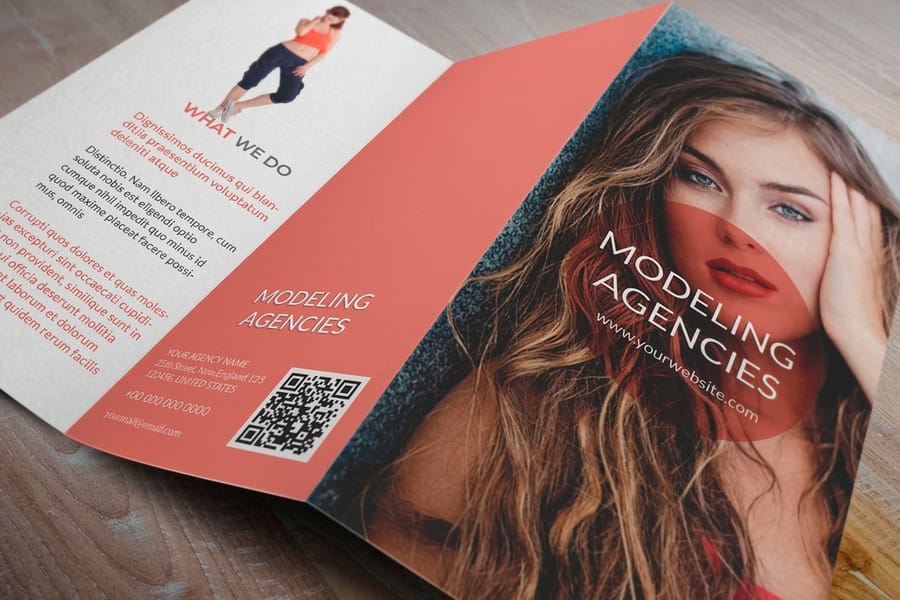
The real divide is the fold. Add one and the sheet becomes a brochure with panels, a reading order and a bindery pass on the invoice. Add stitching and it becomes a booklet with pages.
| Format | Panels | Messages it carries | What it costs you |
|---|---|---|---|
| Flyer | One side, or two | One offer, taken in at a glance | Cheapest per piece. Standard flyers start at $39.54. |
| Leaflet | One side, or two | Same as a flyer, usually on lighter stock | Same press, same price. Only the word changes. |
| Brochure | Four to eight, from one or two folds | A sequence: problem, range, proof, contact | Adds a folding pass. Standard brochures start at $57.11. |
| Booklet | Eight pages and up, bound | A catalog or a program | Adds stitching and a page count minimum in multiples of four. |
The trade-off is simple and people get it wrong in one direction. A flyer that has been crammed with four topics wanted to be a brochure, and a brochure with three near empty panels wanted to be a flyer. Count your messages before you count your panels. If you are genuinely undecided, the format comparison guide walks the same decision with page counts attached, and you can price both against each other with standard flyers and standard brochures open in two tabs.
The Four Flyer Types, and What Each One Has to Survive

Flyers get sorted by what they promote, but the useful way to sort them is by what happens to them physically after they leave your hand. That is what dictates size, stock and coating.
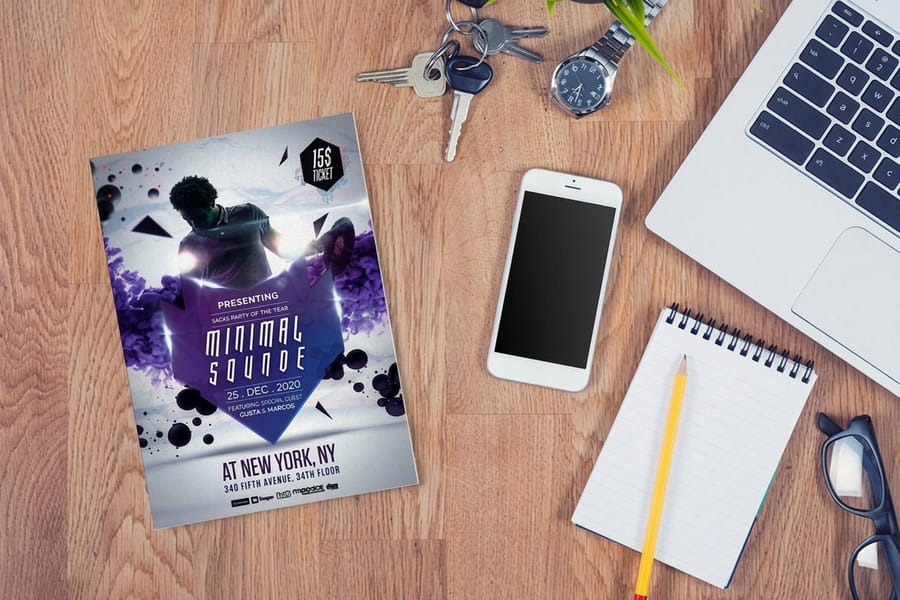
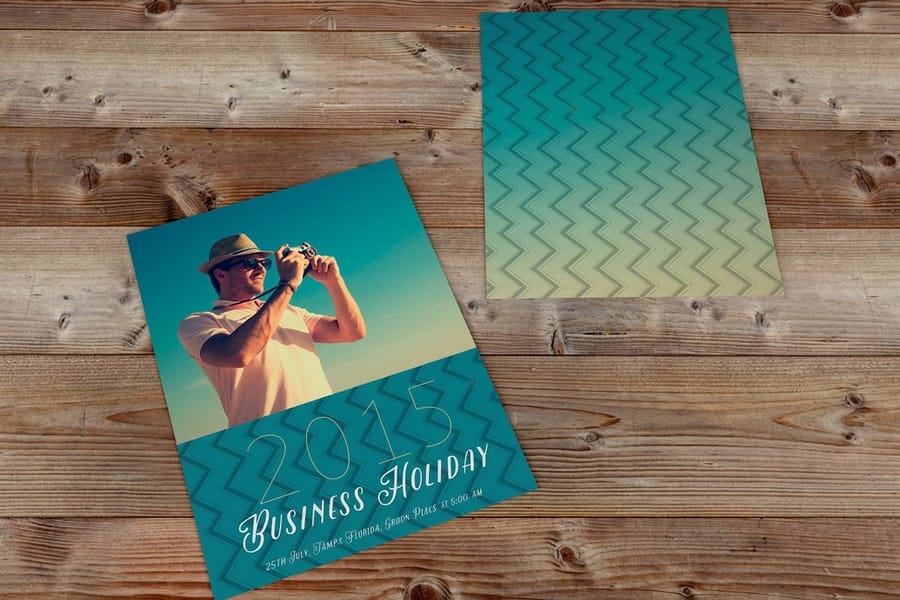
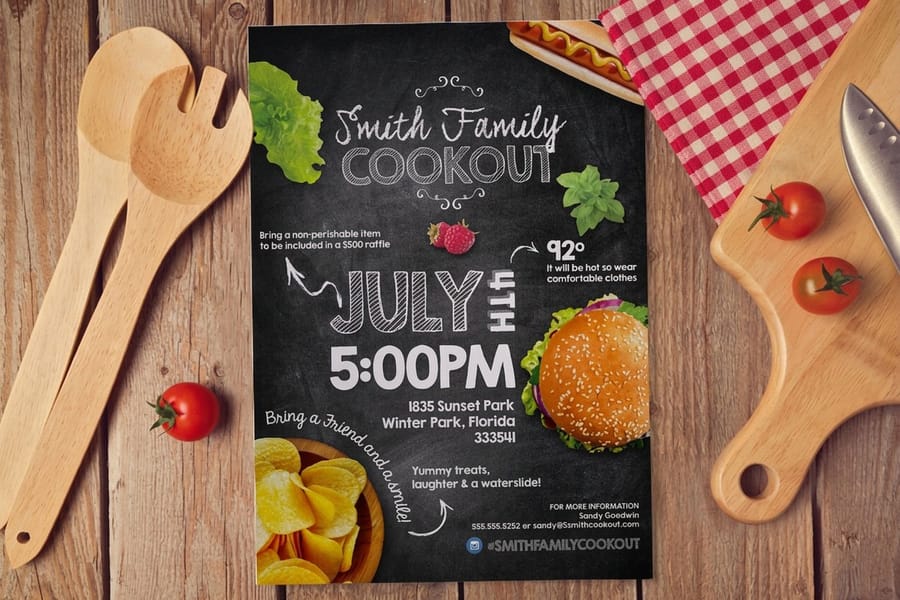
Promotional and retail flyers. A sale, a grand opening, a seasonal menu. These get handed across a counter or stuffed into a bag, read once, and thrown away within a day. 5.5 by 8.5 on 100lb gloss text is the workhorse here because two cut from a single parent sheet, which is why the per piece cost is the lowest of any format. Do not spend on card stock for something with a two day life.
Event and club flyers. A show, a night, a festival. These go into pockets and bags, get sat on, and have to still look sharp when somebody pulls one out at the door. That is why the format standardized on 4 by 6 at 16pt with UV coating on both sides. Club flyers start at $16.48 and are built for exactly this abuse. Print the lineup on the back, not the front, and keep the date large enough to read in low light. Our nightclub flyer design guide goes deeper on the layout conventions the format has settled into.
Business and service flyers. A price list, a service menu, a class schedule. These need room, so 8.5 by 11 wins, and they often sit on a counter or a noticeboard for weeks. Uncoated stock matters more than people expect here, because staff write on them: a phone extension, a changed time, a name. Nothing takes a ballpoint on a gloss coating.
Real estate flyers. Property sheets live outdoors in a wire riser box, in sun and damp, and they have to stand upright. Text weight paper flops over inside the box within a day and the listing disappears. 8.5 by 11 on 100lb gloss cover is the answer, and it is one of the few flyer jobs where the heavier stock is not a vanity spend. Sector by sector examples sit on the shop by industry pages.
When a Flyer Beats a Postcard, a Poster or a Door Hanger
A flyer wins on two things: space and control of the handoff. It gives you a full sheet for a menu, a schedule or a price grid, and you decide who receives it. It loses the moment the piece has to travel on its own.
Here is the rule people trip over. You cannot put a flyer in a mailbox. Under 18 U.S.C. 1725 the mailbox is US Postal Service property and anything deposited in it needs postage, so hand delivery means the door, the doorknob, a windshield where local ordinance allows it, or a counter. If you want the piece to arrive by mail, it has to be mailed properly.
That pushes you toward one of two formats. A standard postcard starts at $16.48, needs no envelope, and carries postcard postage, which is why direct mail campaigns default to it. The postcard mailing layout guide covers the address block and the clear zone the USPS requires. Alternatively, mail the flyer itself through Every Door Direct Mail, but only if it qualifies as a flat: the piece has to exceed at least one of 6.125 inches high, 11.5 inches long, or 0.25 inch thick. An 8.5 by 11 flyer clears that on height. A 5.5 by 8.5 half sheet clears none of the three and cannot go EDDM at all.
For residential delivery without postage, door hangers are the honest alternative, since they hang on the knob rather than going anywhere near the mailbox. And when the piece never has to be carried at all, print a poster instead: an 11 by 17 or larger sheet on a wall does a job no handout can, because it is read at distance by people who never asked for it.
Flyer Sizes and Paper Stocks, With the Weights That Actually Differ
Two numbers decide how a flyer feels: the trim size and the stock. The sizes are straightforward. The stock numbering is where almost everyone gets caught.
| Size | Best for | Stock that suits it | Watch for |
|---|---|---|---|
| 8.5 x 11 in | Price lists, service menus, real estate sheets | 100lb gloss text, or 100lb gloss cover to stand upright | Text weight flops over in a riser box. |
| 5.5 x 8.5 in | Counter handouts, coupons, high volume drops | 100lb gloss text | Too small to mail EDDM. Postcard rates instead. |
| 4 x 6 in | Club and event flyers, pocket handouts | 16pt card with UV both sides | UV will not take a pen. Leave a matte panel if staff write on it. |
| 6 x 9 in | Mailers and inserts that need more room than a postcard | 100lb gloss cover | Check the mailing class before you commit to the size. |
| 11 x 17 in | Posted sheets, window bills, noticeboards | 100lb gloss text | Nobody carries one home. Design it to be read, not kept. |
Now the trap. 100lb text and 100lb cover carry the same number and feel nothing alike, because paper weight in the US is the weight of 500 parent sheets, and the parent sheet is a different size for each grade. Text is weighed at 25 by 38 inches, cover at 20 by 26. The result is that 100lb cover is roughly twice the caliper of 100lb text. If you order by the number alone you will get a sheet half as thick as you pictured, and it is the single most common flyer complaint. The flyer paper weight guide lays the grades side by side, and gloss cover paper explained covers what the coating adds.
Coating is the second decision and it is a genuine trade-off, not an upgrade. Gloss makes photographs snap and protects against damp, but it shows fingerprints under fluorescent light and refuses a ballpoint. Matte reads better under bright venue lighting and photographs without glare. Uncoated is the only one that takes handwriting, which matters more often than anyone plans for. Every size and coating we run is priced live on flyer printing.
Design Rules That Hold Up After the Blade Comes Down
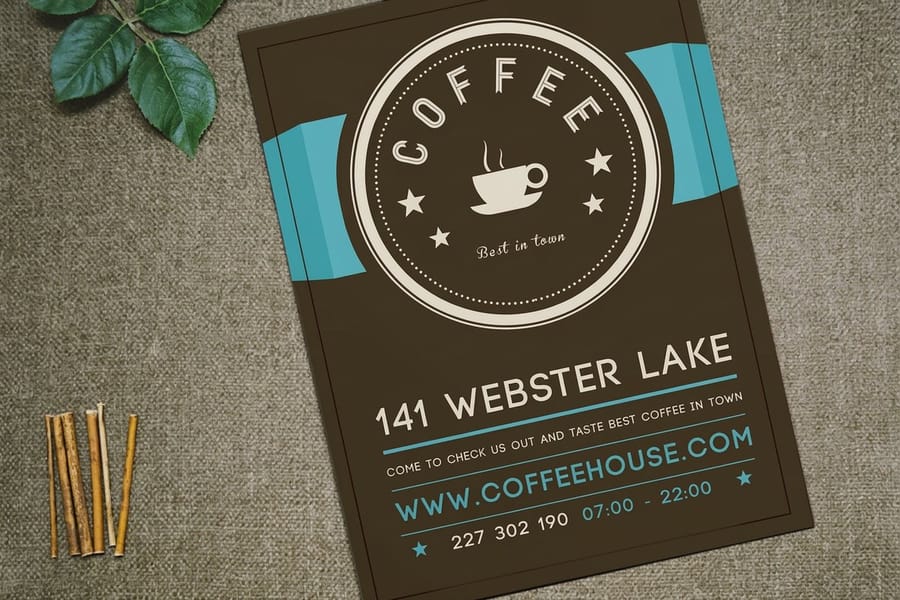
A flyer has about two seconds to earn a third one. Everything below is aimed at those two seconds, or at surviving the guillotine that trims the stack.
Build the file with both dashed lines. Background art extends 0.125 inch past the trim on every edge, and every word, logo and QR code stops 0.125 inch inside it. Cutting stacks of paper moves by a hair, and a phone number sitting on the trim line will lose its last digit on part of the run. Bleed and trim explained shows what that looks like in the file, and the blank template library gives you the guides already drawn at the right size.
One offer, one action. A flyer with three calls to action gets none of them. Decide what the reader should do, put it in the bottom third where the hand holds the sheet, and let everything above it justify that one action.
Size type for the distance. A handout is read at arm length, so 9 or 10 point body copy is fine and 8 point is the floor. A posted 11 by 17 is read at six feet, which means the headline needs to be around 60 point or larger and the body copy needs to be short enough that nobody has to walk closer. Weight matters as much as size, and the flyer font guide covers which faces hold up small.
Two specifics that quietly ruin flyers. First, large solid black areas should be built as rich black, roughly 60 cyan, 40 magenta, 40 yellow and 100 black, not 100 black alone, which prints as a washed grey once it covers half a page. Second, do not reverse small type out of a four color background: registration shifts by a fraction and the white letters fill in. Reverse out of a single solid color, or print the type dark on a light panel.
Make the QR code big enough. 0.8 inch square is the practical minimum, with a clear margin around it, and it should point at a page that works on a phone. A QR code printed at half an inch on a gloss coating under a bar light will not scan, and you will never find out that it did not.
Printing the Run and Getting It Into Hands
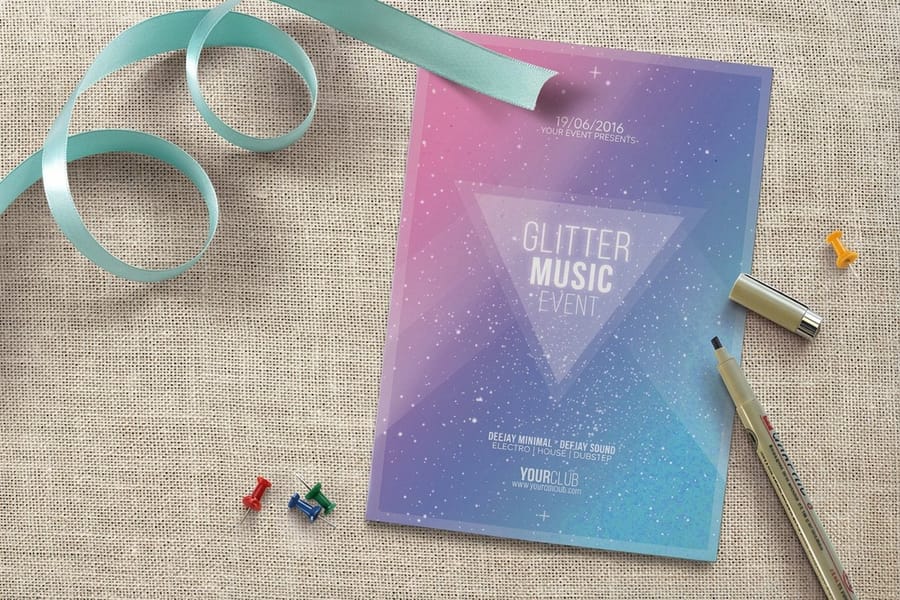
Ordering a flyer run comes down to four choices, and only one of them is really about money.
Quantity. The per piece cost falls hard through the first breaks, because setup is a fixed cost spread across the run. Doubling from 500 to 1,000 rarely doubles the price. Print for the distribution you have actually booked, add roughly 10 percent for damage and reprints, and stop there. The real waste is not overpaying for paper, it is 5,000 dated flyers for an event that moves.
Sides. On an offset run the second side is close to free, since the sheet is already on press. Use it. Put the offer and the hook on the front, and the detail, the map, the hours or the lineup on the back.
Turnaround. Decide your in hand date first and work backward through production and shipping, not the other way round. How online printing works lays out where each stage sits in the schedule, and print and deliver covers having the run shipped straight to a venue or a distribution team instead of to your office.
Distribution. The reliable channels are counter drops at businesses that share your customers, staffed handouts at the exact moment of intent such as outside a venue before doors, doorknob and door hanger drops in a defined radius, inserts into partner bags and local publications, and noticeboards in libraries, gyms and campuses. Skip windshields unless you have checked the local ordinance, and never the mailbox. The flyer distribution guide covers the timing and the tracking, and you can configure the run itself on standard flyers.
Wally explains flyers
No fold, one message, and the paper does the rest
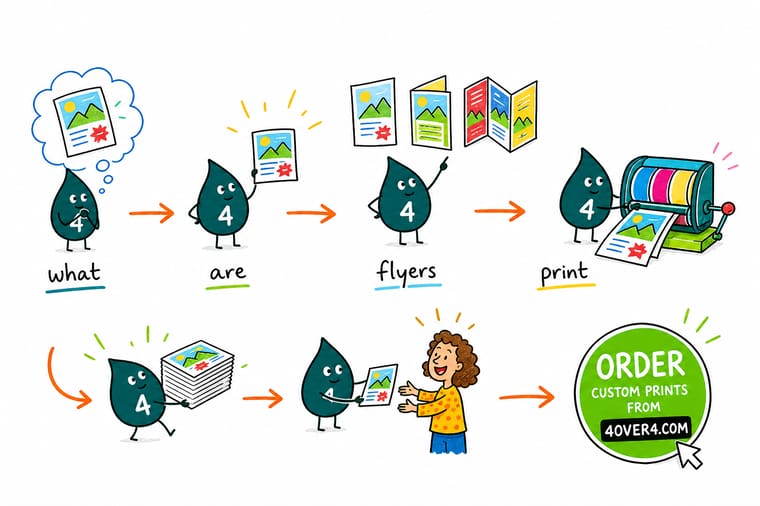
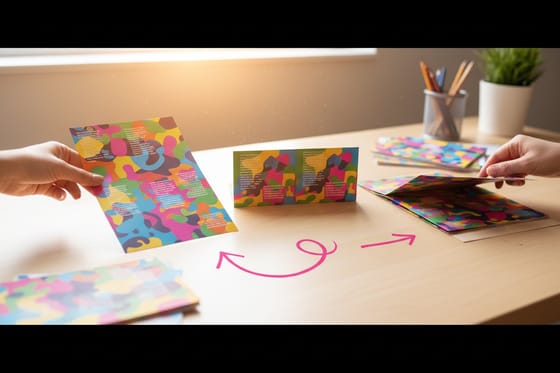
Wally holds up two sheets. The flat one is a flyer and the reader takes it in at a glance. The folded one is a brochure and it costs more because a machine had to fold it. Then he picks the paper by what the sheet has to survive: thin gloss text for a handout that lasts a day, gloss cover for a listing sheet standing in a box outside, 16pt card with UV for a flyer that lives in a jacket pocket. Last, he draws the two dashed lines, art past the outer one, words inside the inner one, so the blade never cuts off the phone number.
Configure standard flyers →Specs and pricing
Flyer sizes, stocks and starting prices
Compare the flat sheet, the pocket flyer and the folded alternative side by side, with live configuration options and starting prices straight from the 4OVER4.COM configurator.



Print it
Order the format that fits the handoff

Explore more
Where to go next
By the numbers
Flyer runs you can count on at 4OVER4
Common Questions
Your flyer questions, answered
What is a flyer?
A flyer is a single sheet of paper printed on one or both sides, unfolded, built to carry one message to one audience. It is handed out, posted, slipped under a door or left on a counter. The format is defined by what it is not: it does not fold into panels like a brochure and it does not bind into pages like a booklet, so all the space and all the attention go to one offer. Sizes run from a 4 by 6 club flyer up to an 11 by 17 sheet meant to be posted rather than handed over.
What is the difference between a flyer and a leaflet?
In practice, nothing. Leaflet is the standard British and European word for the same unfolded printed sheet, and flyer is the American one. Where a difference is implied, it is about weight rather than shape: a leaflet is usually the thin text weight sheet you get pushed through a letterbox, while a flyer often means something a little heavier that gets handed to you. Neither word has a fixed size, and no printer will quote them differently.
What is the difference between a flyer and a brochure?
The fold. A brochure has at least one fold, which turns one sheet into two or more panels and lets you sequence a story across them. A flyer has no fold, so the reader takes it in at a glance. That has a real cost consequence: folding adds a bindery pass, so a brochure of the same size and stock costs more per piece than a flyer. Standard brochures start at $57.11 at 4OVER4.COM against $39.54 for standard flyers. If your content genuinely needs panels, fold it. If it does not, the flyer will be read faster.
What size should a flyer be?
Match the size to how it reaches the reader. 8.5 by 11 is the default for real estate sheets, service menus and anything that sits in a riser box or on a counter, because it holds a full price list. 5.5 by 8.5 is the cheapest per piece and the easiest to hand across a counter, since two of them cut from the same parent sheet. 4 by 6 is the club flyer size, small enough to pocket. 11 by 17 is for posting on a wall, where the headline has to read from across a room and nobody is going to carry it away.
What paper weight is best for flyers?
For a handout in volume, 100lb gloss text. It has enough body to feel deliberate, it prints saturated color, and it stays cheap enough to print thousands. For anything that has to stand up on its own, such as a real estate sheet in an outdoor riser box, move to 100lb gloss cover, which is roughly twice the caliper of the text weight despite carrying the same number. Text and cover are measured against different parent sheet sizes, which is why 100lb text and 100lb cover feel nothing alike. For pocket flyers, skip both and use 16pt card.
Can I mail a flyer?
Yes, but not by dropping it in a mailbox. Anything placed in a US mailbox needs postage under 18 U.S.C. 1725. To mail flyers through Every Door Direct Mail the piece has to qualify as a flat, which means exceeding at least one of 6.125 inches high, 11.5 inches long, or 0.25 inch thick. An 8.5 by 11 flyer clears that on height. A 5.5 by 8.5 half sheet clears none of the three, so it has to be mailed as a postcard instead.
How many flyers should I print?
Print for the distribution you have actually scheduled, plus about 10 percent for reprints, damage and the people who ask for a second one. The per piece price drops sharply through the first quantity breaks, so 1,000 rarely costs twice what 500 costs. What kills a flyer budget is not the print run, it is printing 5,000 with a date on them for an event that gets moved. Put the date on one side only, or leave it off and let the QR code carry the schedule.
Get Started
Ready to put a flyer in somebody's hand?
Pick the size, choose gloss, matte or uncoated, print both sides for almost nothing, and we ship the run wherever it needs to land.
Legal Disclaimer
Gold Standard guarantees apply to all standard orders placed through 4over4.com. Price match requires verifiable proof of a competitor's published price for an equivalent product with matching specifications and turnaround time. Satisfaction guarantee covers manufacturing defects and print quality issues. Contact support with order number and documentation. On-time delivery rate based on tracked orders 1999 to 2026. Individual results may vary based on shipping carrier performance.
