
How Print and Deliver Works, From Press to Doorstep or Mailbox


One press run, two ways out of the plant: boxes to your door by carrier, or pieces to your whole mailing list through USPS. Here is how each route works, what each one costs, and when to pick which.
Print and deliver means the printer handles the last leg of the job, two ways: print-and-ship sends the finished run in boxes to any single address by carrier, while print-and-mail addresses every piece from your list, applies postage, and hands the run to USPS from the plant. Shipping is priced by weight and distance and suits stock you distribute yourself. Mailing is priced per piece, needs a list or an EDDM route, and puts the campaign in mailboxes without you touching it.
Quick answer
One press run, two exits
Every print-and-deliver order forks after the cutter. Route A boxes the run and hands it to a carrier, priced by weight and zone, tracked to one address you choose. Route B addresses each piece from your mailing list, applies presorted postage, and inducts the run into USPS, priced per piece, landing in every mailbox on the list. Ship when you are the distributor. Mail when the mailbox is the point.
How Print and Deliver Works, Step by Step
Both routes start identically. You upload the file, approve the proof, and the job goes on press with whatever finishing it needs. The fork comes after the cutter.
Route one, ship to you. The run is boxed, weighed, and labeled to a single address. A carrier picks it up and moves it by ground or air, you get tracking, and the whole order arrives at one door. That address does not have to be yours: an event venue, a franchise location, or a client all work, and resellers routinely have us blind-ship so the client never sees a printer's name on the box.
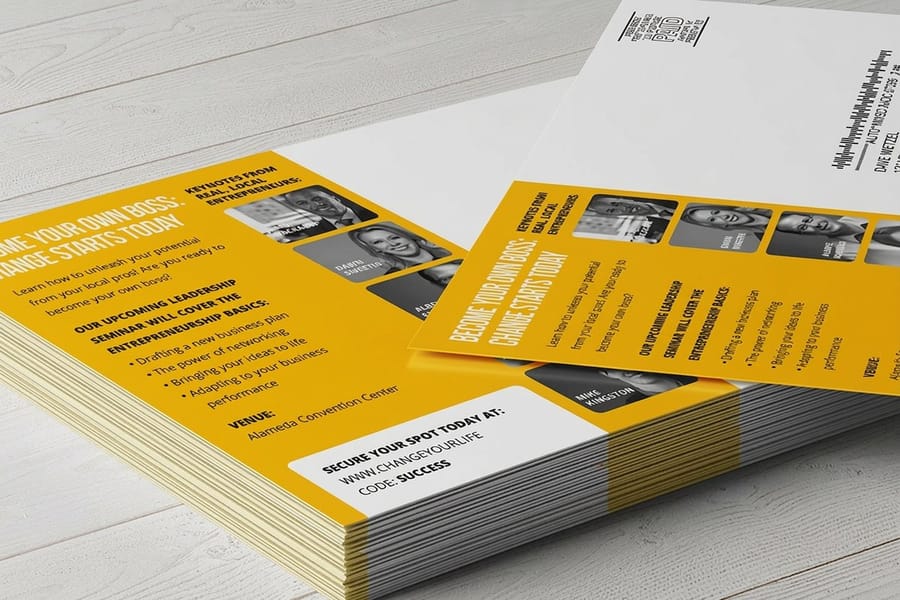
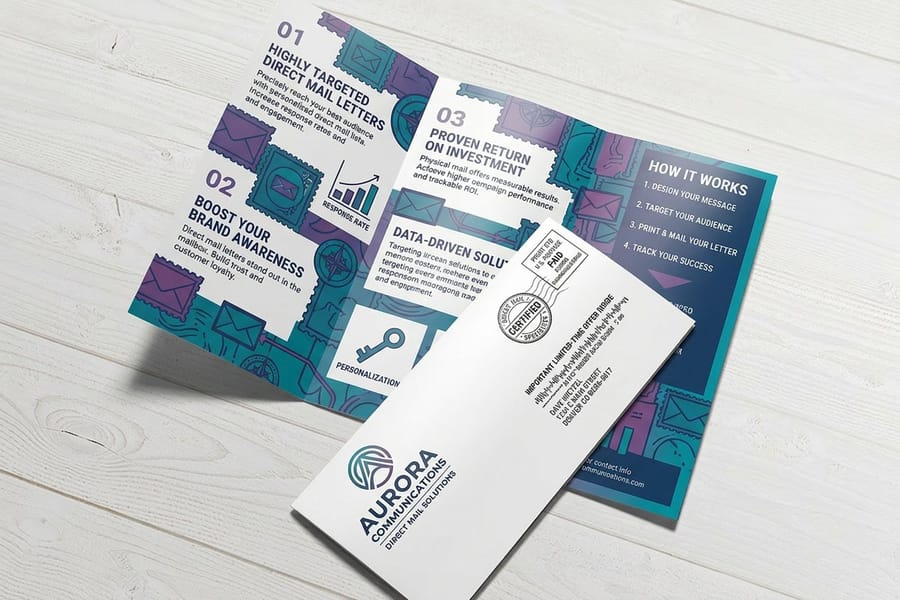
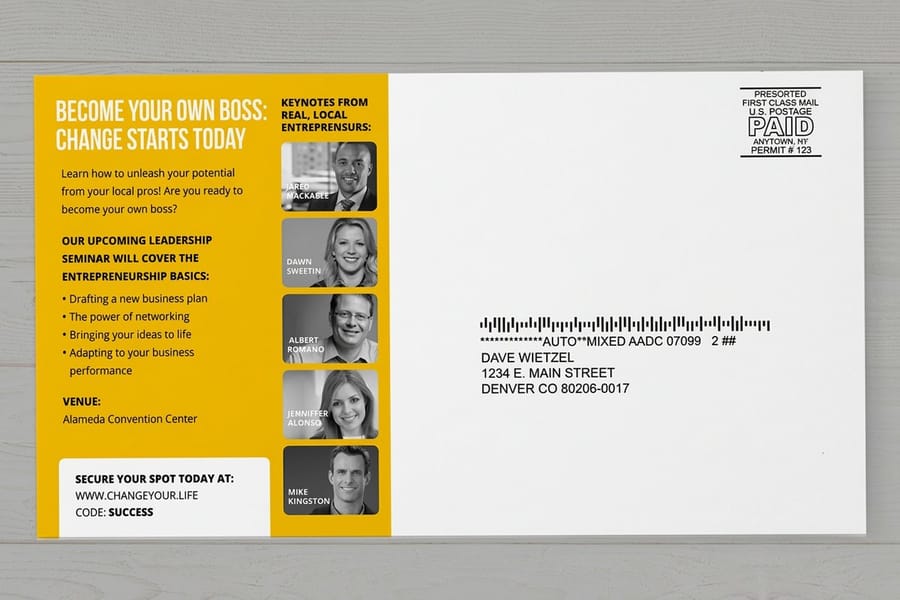
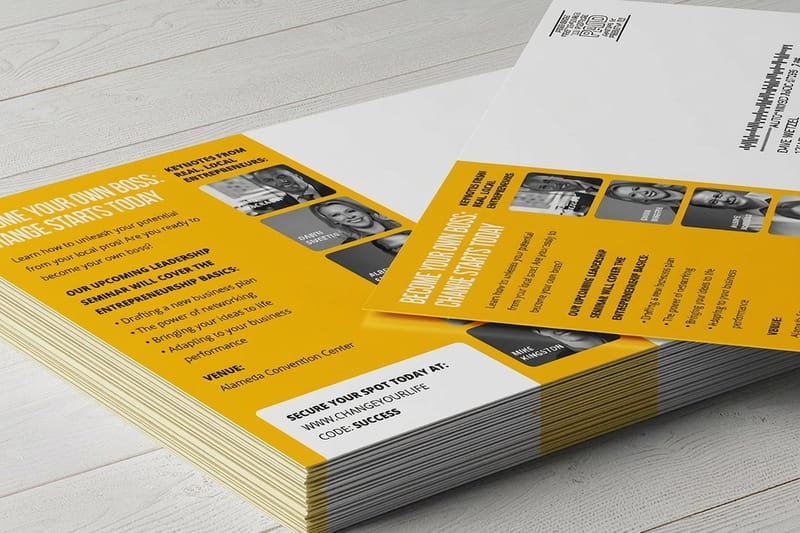
Route two, mail to your list. The printer takes over the part you were dreading. Your mailing list gets standardized and deduplicated, each piece is addressed digitally during the run, postage is applied at presorted rates, and the finished mailing is inducted directly into USPS from the plant. Direct mail postcards and direct mail letters both work this way: you never touch a single piece.
The difference sounds procedural and is actually strategic. Route one delivers product; route two delivers a campaign. Everything else on this page, cost, speed, and minimums, follows from that split. The direct mail services collection lists every format we print and mail in one order.
Carrier Shipping, Addressed Mail and EDDM Compared
Three routes out of the plant, and each one prices and behaves differently. The fastest way to choose is to ask where the pieces must end up and who is supposed to do the addressing.
| Question | Carrier shipping | Addressed direct mail | EDDM |
|---|---|---|---|
| Where it lands | One address, the whole run in boxes. | Every address on your mailing list. | Every mailbox on chosen carrier routes. |
| List needed | None. | Yes: owned, rented, or built. | None, routes are picked by geography. |
| What delivery costs | Freight by weight and zone, cheap per piece at volume. | Postage per piece at presorted bulk rates. | The lowest postage of the three, per piece. |
| Timing control | Tracked, plannable to a day with air services. | First-Class is quick; Marketing Mail arrives in a window. | A delivery window, not a date. |
| Best for | Stock you hand out yourself: events, counters, sales kits. | Targeted campaigns to named people or businesses. | Saturating a neighborhood around a physical location. |
Read the timing row twice, because it is where campaigns go wrong. Boxes you can chase with a tracking number; a Marketing Mail drop you cannot. And note what the table implies about mixing: plenty of orders sensibly split, with a brochure run shipped to the sales team while the same artwork goes out as mailed postcards. Our guide to EDDM covers the route-picking mechanics, and building or renting a list covers where the addresses come from.
Turnaround: Two Clocks, Not One

The turnaround you select in the configurator is the production clock only: printing, finishing, and packing. Delivery is a second clock that starts when the first one stops, and the two never overlap.
On the shipping route, the second clock is carrier transit. Ground crosses the country in 1 to 5 business days depending on how many zones the boxes cross, and air services cut that to 1 or 2 for a real price jump. The practical rule: upgrade production before you upgrade freight, because a faster press slot is usually cheaper than overnight shipping the same weight. The zone mechanics are laid out in our transit times guide, and shipping methods for print orders explains when freight beats parcel.
On the mail route, the second clock belongs to USPS. First-Class pieces generally land in 1 to 5 business days; Marketing Mail costs less per piece and takes longer, arriving across a spread of days rather than on one. That spread is fine for an evergreen offer and dangerous for a grand opening. Plan date-sensitive mail backward from the week it must be in homes, and give Marketing Mail at least two weeks of slack.
One more clock hides inside direct mail: list processing. Standardizing addresses and removing duplicates happens before the run prints, so a messy list delays the whole mailing. Clean data going in is the single cheapest way to speed the job up. The broader schedule logic, including rush options, is in print delivery and turnaround explained.
Which Route Should You Order?
Order print-and-ship when you are the distribution channel. Trade show handouts, menus for the counter, sales kits, and anything a person hands to another person should arrive at your door in boxes. Standard postcards start at $16.48 and standard flyers at $39.54, and the freight on a box is trivial next to the postage the same quantity would cost mailed one by one.
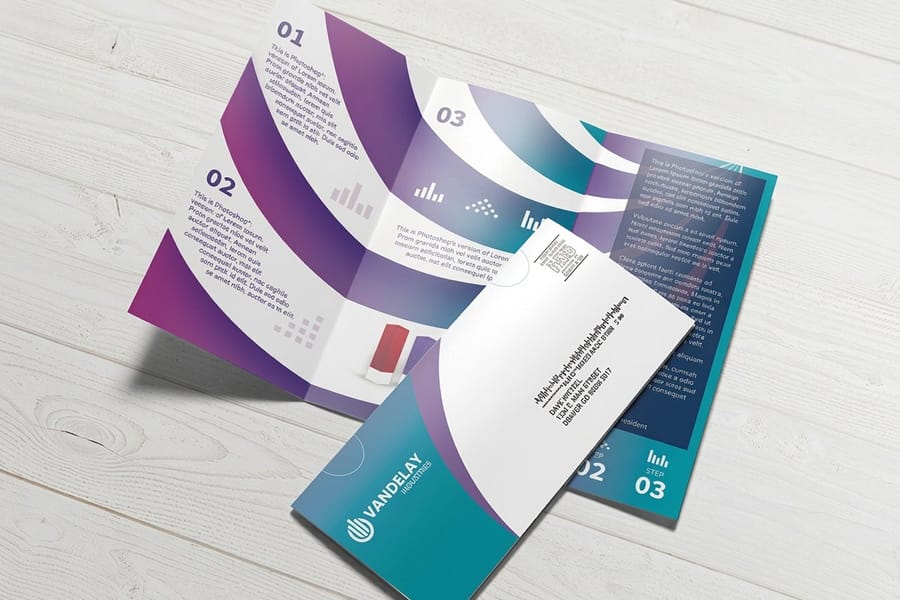
Order print-and-mail when mailboxes are the destination. Direct mail postcards start at $89.68 with the addressing and mailing built into the workflow, and the same service runs for letters and brochures. The premium over plain postcards is not really a printing cost: it buys list processing, presorted postage handling, and the elimination of the stuff-stamp-and-schlep afternoon. For a few hundred pieces that afternoon is survivable. At 5,000 it is a week of someone's job.
The honest limits, so you are not surprised: addressed mail needs a usable list, Marketing Mail cannot hit a precise date, and USPS bulk rates require at least 200 pieces per mailing, so tiny runs should ship to you and go out with stamps. If you know how to address and stamp a postcard correctly, a small mailing is a fine DIY job. Past the 200-piece line, the math tilts hard toward letting the plant mail it.
Wally explains print and deliver
Boxes go to one door, pieces go to every mailbox
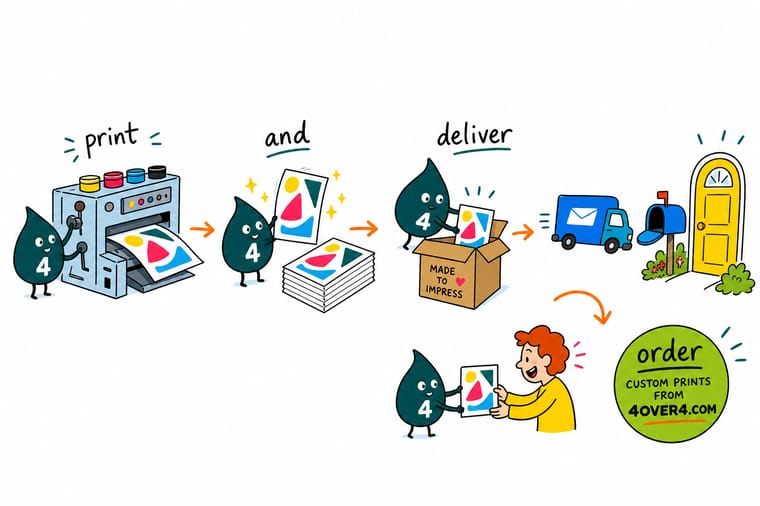
Wally finishes the press run and stands at the fork. Hand him one address and he boxes the whole job, slaps a label on it, and a carrier drives it to your door with tracking the entire way. Hand him a mailing list and he addresses every single piece, sorts them the way USPS likes, pays the postage, and wheels the bins straight to the post office. Either way you never lick a stamp. Just decide who the delivery is for: you, or everyone on the list.
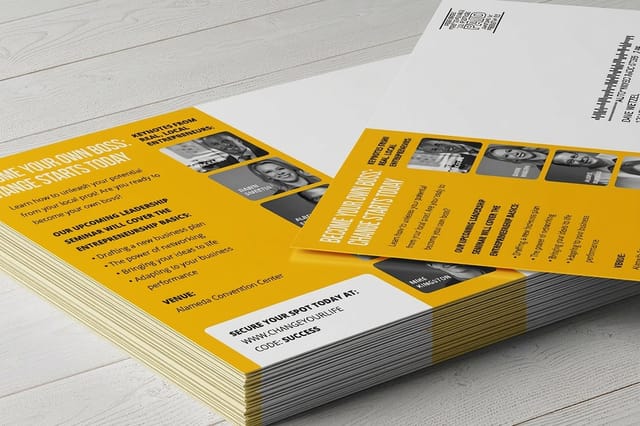
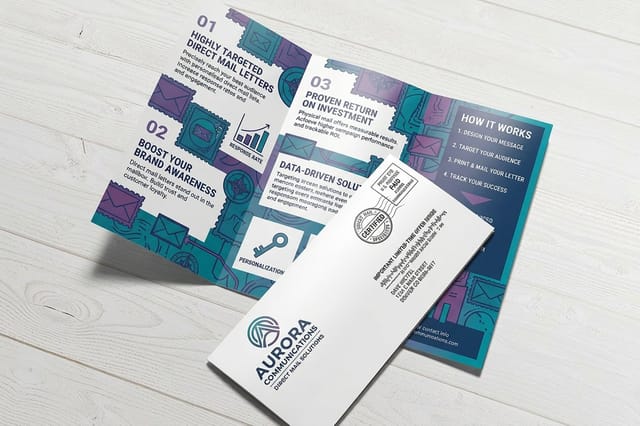
Order direct mail postcards →Specs and pricing
Mailed or shipped, sizes and starting prices
Compare the mailing and shipping formats side by side, with live configuration choices and starting prices straight from the 4OVER4.COM configurator.



Print it
Order it printed, delivered, done

Explore more
Where to go next



By the numbers
Printing and delivery you can count on at 4OVER4
Common Questions
Your print and deliver questions, answered
What does print and deliver actually mean?
It means the printer handles the last leg, not just the press run. In practice there are two versions. Print-and-ship: the finished job is boxed, labeled, and sent by carrier to an address you choose, which can be your office, an event venue, or a client. Print-and-mail: the printer addresses every piece from your mailing list, applies postage, and inducts the whole run into USPS, so the pieces go straight from the plant to the recipients without ever passing through your hands.
Which is cheaper, shipping the boxes to me or mailing the pieces?
For getting product into YOUR hands, shipping wins every time, because a carrier charges by weight and distance and a box of 5,000 postcards is one shipment. For getting pieces into RECIPIENTS' hands, mailing through the printer usually beats doing it yourself: bulk presort postage rates are below single-piece stamp prices, and you skip buying labels, stamps, and an afternoon of stuffing. The honest comparison is postage per piece against your own time plus retail postage, not against the freight cost.
Do I need my own mailing list for direct mail?
For addressed mail, yes: a list you own, rent, or build, with a name or address per row. The printer runs it through address standardization and deduplication before printing. If you have no list, EDDM is the workaround: USPS lets you pick carrier routes by geography and demographics, and every mailbox on the route gets a piece, no names required. EDDM suits neighborhood businesses; a rented list suits anyone targeting a profession or industry.
Can you ship my order to my client without any 4OVER4 branding?
Yes. That is blind drop shipping, and resellers use it constantly. The box carries a plain label with your details as the sender, so your client sees your name, not the printer's. Set the shipping address to the client at checkout and note the blind-ship requirement, and nothing inside or outside the box reveals where it was printed.
How long does print and deliver take end to end?
Add two clocks together. Production runs first, and the turnaround you pick in the configurator covers printing and finishing only. Then the delivery leg starts: carrier ground typically crosses the country in 1 to 5 business days depending on zone, while air services compress that to 1 to 2. For mail, First-Class pieces generally arrive in 1 to 5 business days and Marketing Mail takes longer with a wider spread, which is why campaigns tied to a date should be planned backward from the in-home week, not the mail date.
Is there a minimum quantity for direct mail?
USPS sets one for the discounted rates: Marketing Mail requires at least 200 pieces or 50 pounds per mailing to qualify for bulk prices. Below that you are in single-piece territory, where mailing 75 postcards with stamps you bought is perfectly reasonable and needs no printer involvement. Bulk mailing starts to pay off once the presort discount and the saved labor outweigh the setup, which for most businesses is right around that 200-piece line.
Get Started
Ready to have it printed and just show up?
Pick a format, upload your file, and choose the exit: tracked boxes to your door, or addressed pieces straight into USPS from our plant in Queens.
Legal Disclaimer
Gold Standard guarantees apply to all standard orders placed through 4over4.com. Price match requires verifiable proof of a competitor's published price for an equivalent product with matching specifications and turnaround time. Satisfaction guarantee covers manufacturing defects and print quality issues. Contact support with order number and documentation. On-time delivery rate based on tracked orders 1999 to 2026. Individual results may vary based on shipping carrier performance.
