
Mini Booklet Printing Explained for Pocket Guides, Menus and Programs


The small bound format behind pocket guides, event programs and short manuals. Here are the sizes we run, why the page count jumps in fours, and the point where a booklet is the wrong buy.
A mini booklet is a saddle stitched booklet printed at a small trim, normally 5.5 by 8.5 inches or 6 by 9, built from folded sheets so its page count is always a multiple of four. At 4OVER4.COM it uses the standard booklet configurator: 14 page counts, seven inside stocks, three cover papers, a choice of full color or black inside, and a starting price of $240.55. Stitching suits thin books that lie flat; past a thick stack, perfect binding at $375.05 is the honest answer.

Quick answer
Small trim, folded sheets, page counts in fours
Mini booklet is a size, not a product. You order a standard saddle stitched booklet at 5.5 by 8.5 or 6 by 9 inches, and it is assembled from sheets folded in half and nested, which is why one extra sheet always adds four pages. The cover stock is chosen separately from the inside stock, so a heavier cover is a one click upgrade. Stitching lets artwork run across the spine and keeps the piece flat in the hand. It gives up a printable spine and a high page count, and those are the two reasons to move to a glued binding instead.
What a Mini Booklet Actually Is
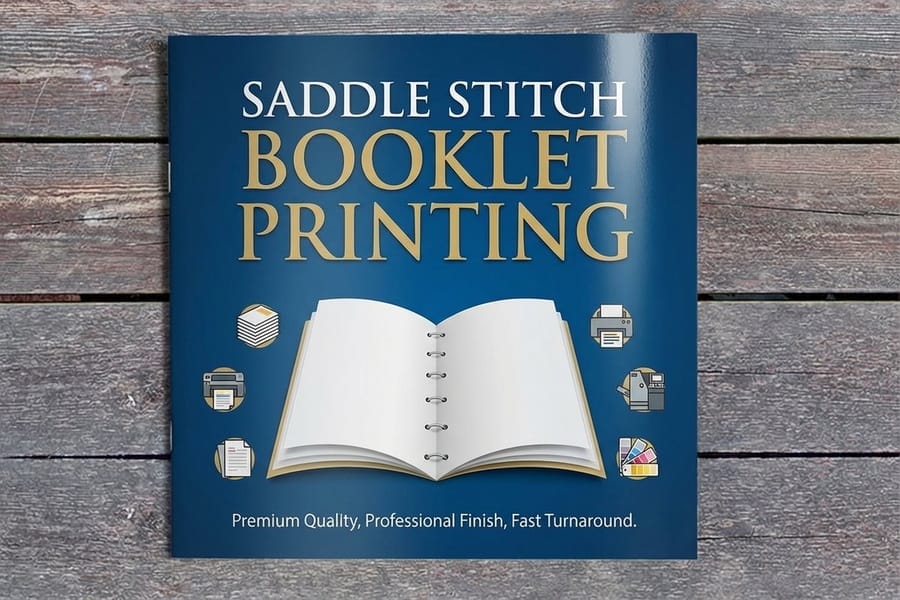
A mini booklet is not a separate product. It is an ordinary saddle stitched booklet ordered at one of the smaller trim sizes, which is why it shares the same configurator, the same stocks, and the same rules as its bigger siblings.
The construction is worth understanding because it drives every decision that follows. Sheets are printed, folded down the middle, nested one inside another, stapled through the fold, then trimmed on three edges. That is saddle stitching, and it is the reason a booklet has a page count rather than a sheet count. One folded sheet carries four printed faces, so a booklet built from three sheets is a 12 page booklet, not a 3 page one.
The two staples through the fold are what people mean by stitch, and they are also what limits the format. Staples hold a modest stack well, lose grip on a thick one, and cannot produce a flat spine you can print a title on. Everything a mini booklet is good at follows from that: it is light, it lies open flat, it opens across the gutter cleanly, and it is cheap to fold. Everything it is bad at follows from it too. Our explainer on saddle stitched booklets takes the method apart step by step, and the standard booklets page shows the live configuration.
The Mini Sizes We Run, and What Each One Suits
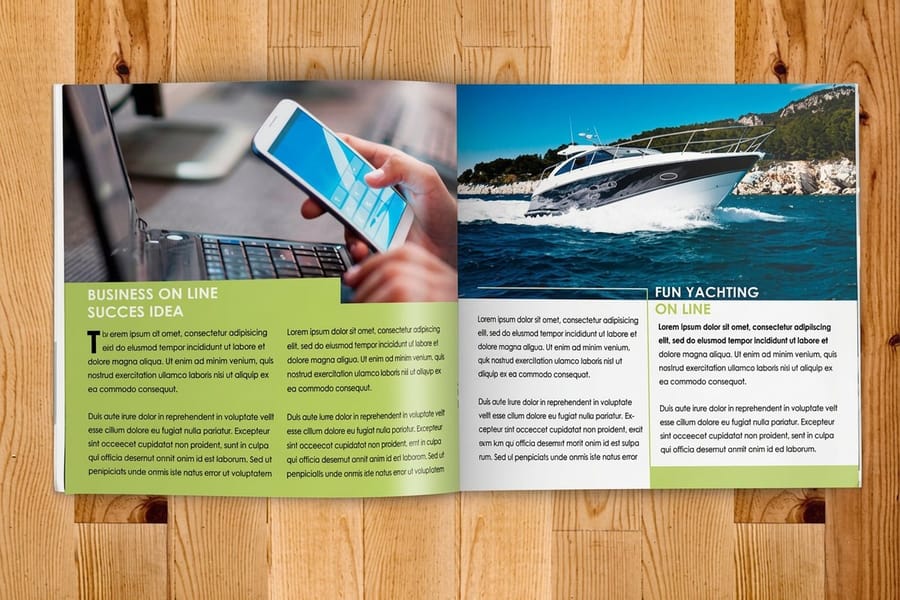
Three trim sizes are offered on standard booklets, and two of them count as mini. Both mini sizes come off a standard press sheet without special trimming, so neither carries a size premium.
| Trim size | Where it comes from | What it suits | Watch for |
|---|---|---|---|
| 5.5" x 8.5" | A letter sheet folded once. The default size on the configurator. | Pocket guides, event programs, product care leaflets, short training handouts. | Narrow columns. A two column layout at this width is usually a mistake. |
| 6" x 9" | The digest trim, cut from a larger parent sheet. | Manuals, short reports, poetry and course booklets that want a book feel. | It reads as a book, so a thin one at 8 pages can feel underweight. |
| 8.5" x 11" | Full letter, folded from tabloid. | Catalogs, price lists, anything with photography or a spec table. | Not mini. Heavier to mail and it will not sit in a jacket pocket. |
Pick by the hand it lands in rather than by the page count. A booklet handed out at a trade show has to survive a pocket, and 5.5 by 8.5 is the size that does. A booklet a customer reads at a desk can be 6 by 9 without any loss. If you want a shape that is neither, square booklets use the same binding on a square trim and break the row of rectangles on the table.
Set your file up at the finished trim with bleed on all four sides and keep live text a quarter inch inside. The blank template library has correctly sized layouts, and the booklet template guide walks through page order, which trips up more files than bleed ever does. Standard catalog sizes and booklet formats covers the larger end.
Binding, and the Point Where Stitching Stops Being Right
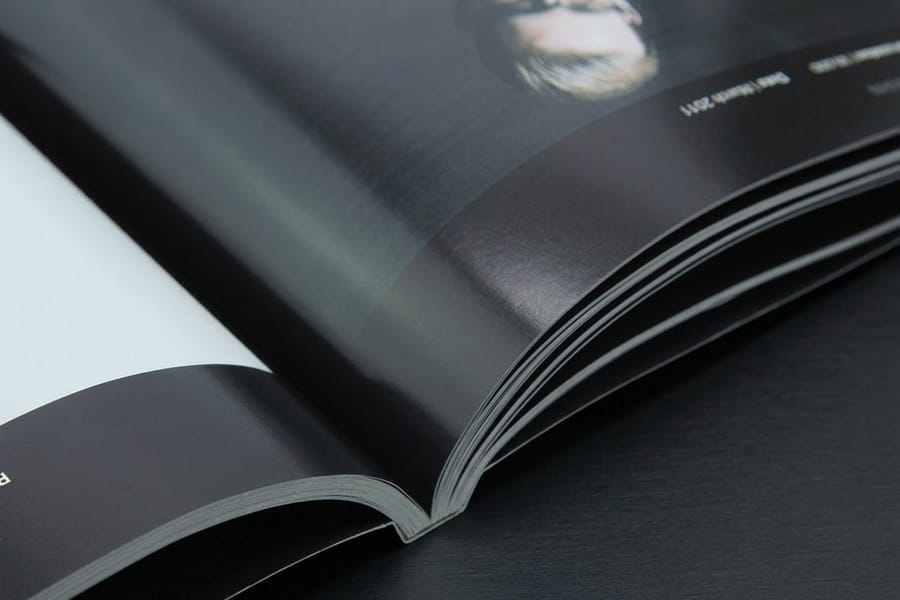
Saddle stitch is the right answer for a mini booklet until the stack gets thick, and then it is the wrong answer very suddenly. The switch point is physical rather than a rule someone wrote down.
| Method | How it holds | Page range on our configurator | Starting price |
|---|---|---|---|
| Saddle stitch | Folded sheets nested and stapled through the spine. | 14 page count choices, all multiples of four. | $240.55 |
| Perfect bound | Pages glued to a wrapped cover at a milled, flat spine. | 131 inside page choices. | $375.05 |
Three things tell you the stitch has run out. The booklet no longer stays shut on a table. The staples start to dimple the cover instead of sitting flush. And creep, the outward drift of the inner pages, gets large enough that the trim visibly narrows the middle spread. On a 12 or 16 page mini booklet none of that happens. Push a stitched booklet toward a hundred pages and all three do at once, which is where perfect bound books take over and give you a printable spine as a bonus.
There is a second decision people miss. The configurator carries a binding dimension choice, so a 5.5 by 8.5 booklet can be stitched on the long edge for a normal portrait read, or on the short edge for a top bound flip format that suits inspection sheets and field references. Choose before layout, because the page order and the margins are different. A three hole punch option is also there for booklets that end up in a binder. Our booklet binding methods guide and the full binding types guide compare every method we offer, including coil and wire.
What Mini Booklets Are Good For, and When to Skip One
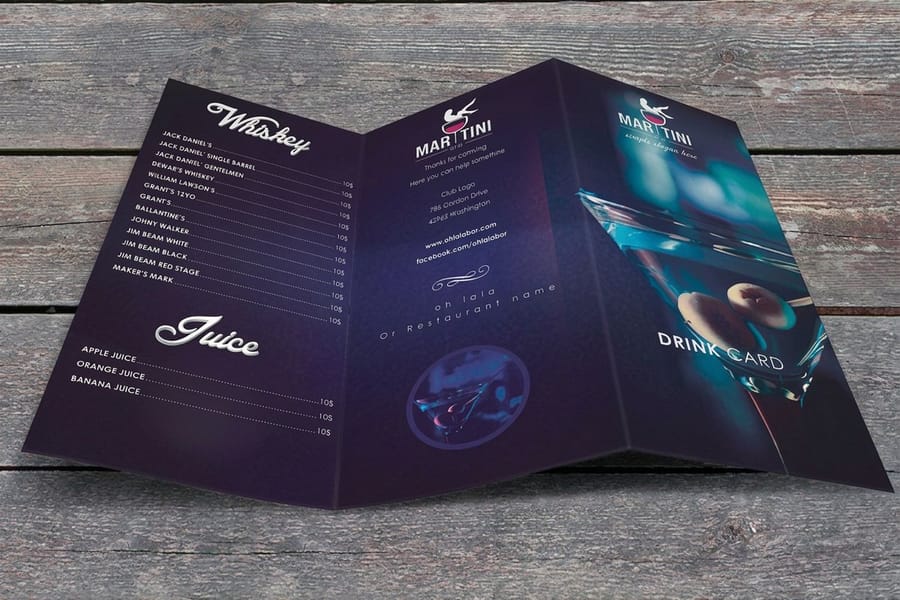
A mini booklet earns its keep when the reader has to move through a sequence: a program with a running order, a manual with steps, a menu with courses, a workbook with exercises. Sequence is the thing a folded sheet handles badly and a bound piece handles well.
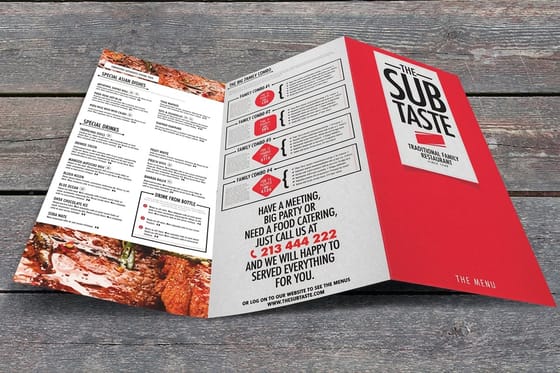
The formats we see most are event programs and wedding orders of service at 5.5 by 8.5, product manuals and care guides packed in the box, dine in menus that run past a single fold, training workbooks with room to write, and small catalogs where the run is too short to justify a perfect bound spine. Black only inside pages keep the cost down on anything text heavy, and the configurator carries that as an ink choice.
Now the part most guides leave out. If your content fits on six panels or fewer, a booklet is the expensive way to print it. Standard brochures start at $57.11 against $240.55 for a bound booklet, and a well folded brochure reads better than a four page booklet, which is really just a folded sheet with staples in it. For a restaurant, a single sheet menu at $57.11 beats a booklet unless the list genuinely runs long. Booklet vs brochure vs flyer walks through that comparison properly, and how to order booklet printing covers the steps once you have decided. Browse the whole bound range in booklets and catalogs printing.
Wally explains mini booklets
Fold a sheet, nest it, staple the spine
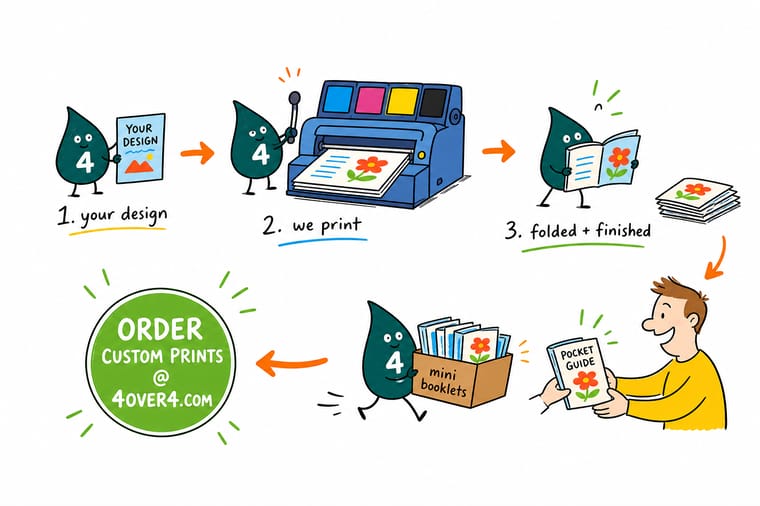
Wally prints a sheet, folds it in half, and it becomes four pages rather than two. Nest three of those and staple through the fold and he has a 12 page pocket booklet at 5.5 by 8.5 inches. Ask him for 14 pages and he cannot do it, because half a sheet does not exist, so he adds a notes page and makes it 16. Give him a heavier cover stock over lighter inside pages and the whole thing feels like a book instead of a handout.
Configure standard booklets →Specs and pricing
Booklet formats, page counts, and starting prices
The three bound formats side by side, with live option counts and starting prices straight from the 4OVER4.COM configurator.


Print it
Order a small booklet that holds together

Explore more
Where to go next



By the numbers
Saddle stitch, square and perfect bound booklets
Common Questions
Your mini booklet questions, answered
What size is a mini booklet?
The two everyday mini sizes are 5.5 by 8.5 inches, which is a letter sheet folded once, and 6 by 9 inches, which is the digest size used for programs and short manuals. Both are offered on standard booklets at 4OVER4.COM, alongside the full 8.5 by 11. Anything smaller than 5.5 by 8.5 stops being practical: the inside margin eats the text block, and a stapled spine on a very small trim tends to bow.
Why does my booklet have to be a multiple of four pages?
Because a saddle stitched booklet is made from whole sheets folded in half and nested inside each other. One folded sheet gives four printed page faces, so every sheet you add moves the count by four. There is no way to add a single page without physically half a sheet, which does not exist. If your content runs to 14 pages, you either add two blanks or a notes page to reach 16, or you cut copy back to 12.
How much does mini booklet printing cost?
Standard booklets start at $240.55 at 4OVER4.COM, and that starting price covers a bound short run rather than a single copy. Perfect bound books start at $375.05. The variables that move the number most are page count, the inside stock, and whether the inside runs full color or black only. Black inside pages are the cheapest way to add depth to a manual or a workbook without adding much cost.
Saddle stitch or perfect binding for a small booklet?
Saddle stitch for anything thin. It lies flat, it lets artwork cross the spine, and it is the cheaper of the two. Perfect binding gives you a flat printable spine and holds far more paper, which is why the perfect bound book configurator offers 131 inside page counts against 14 for a stitched booklet. The practical test is whether the finished piece needs a spine you can read on a shelf. If it does not, stitch it.
What is creep, and does it matter on a small booklet?
Creep is the outward shift of the inner pages in a nested booklet. Every sheet nested inside another pushes the middle spread slightly further out, and the trim knife takes that difference off the outside edge, so the innermost pages end up marginally narrower. On a 12 or 16 page mini booklet on text stock it is small enough to ignore. It grows with page count and paper thickness, which is why folios, rules and page numbers should sit at least a quarter inch inside the trim.
Can I bind a mini booklet on the short edge?
Yes. The booklet configurator carries a binding dimension choice, so a 5.5 by 8.5 piece can be stitched on the 8.5 inch edge for a normal portrait booklet, or on the 5.5 inch edge for a top bound flip format used by field guides and inspection pads. Decide before you lay the file out, because the two need different margins and the page order differs.
Get Started
Order 25 saddle stitch booklets from $240.55 at mini size
Pick a trim size, set a page count in fours, choose a cover stock heavier than the inside pages, and we fold, stitch and trim it in our Queens plant.
Legal Disclaimer
Gold Standard guarantees apply to all standard orders placed through 4over4.com. Price match requires verifiable proof of a competitor's published price for an equivalent product with matching specifications and turnaround time. Satisfaction guarantee covers manufacturing defects and print quality issues. Contact support with order number and documentation. On-time delivery rate based on tracked orders 1999 to 2026. Individual results may vary based on shipping carrier performance.
