
How to Design a Hotel Brochure That Books More Guests


Sofia is our design and templates voice, built from the knowledge of our production team, with over 20 years in printing.
Six panels, one fold, one booking action. Here is the size and fold decision, a panel by panel content map, the paper choice, and the pre-press numbers that keep a folded piece clean.
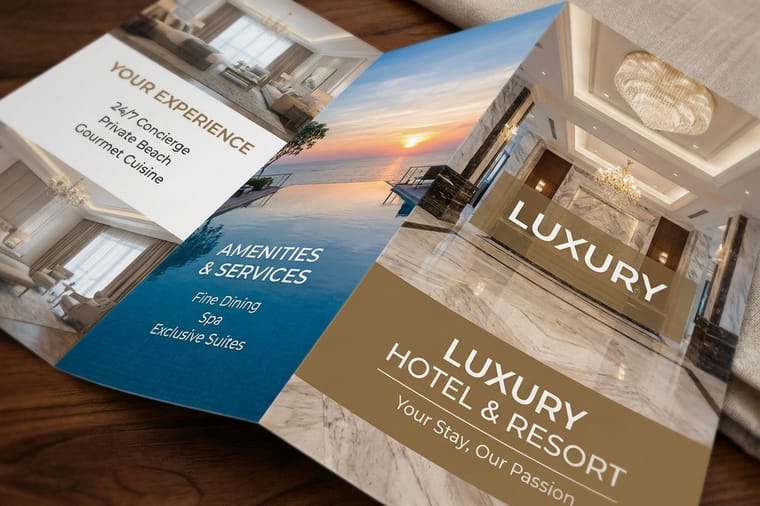
Design a hotel brochure as an 8.5 by 11 inch sheet folded in thirds, with one job on each of the six panels: cover, rates, contact details on the outside, and rooms, amenities and location inside. Lay the outside face out as tuck-in panel, back cover, front cover, cut the inward-folding panel about a sixteenth of an inch narrower, and keep the hotel name and one photograph in the top four inches so the piece reads in a rack. Print on gloss for rack life, plain stock if the desk writes on it.
Quick answer
Six panels, one job each, and a cover that reads at rack height
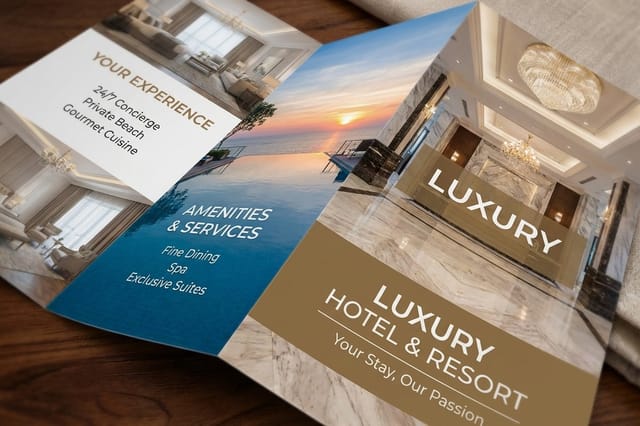
The fold decides the brochure, so pick it first. An 8.5 by 11 sheet folded in thirds finishes at roughly 3.67 by 8.5 inches and gives you six panels. Outside, left to right, they run tuck-in panel, back cover, front cover. Inside they run rooms, amenities, location. Give each panel one job, keep the hotel name and one photograph in the top four inches where a rack pocket leaves them visible, and cut the inward-folding panel a sixteenth of an inch narrower so the fold sits flat. When a single card might do the job, compare the two in our guide to rack brochure printing.
Why a Paper Brochure Still Books Rooms
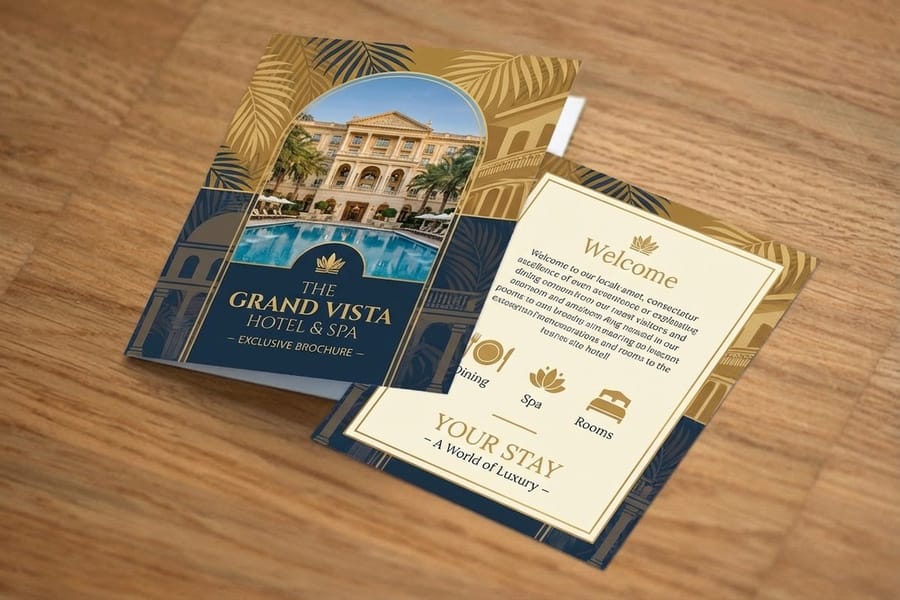
A hotel brochure earns its cost at three specific moments, and none of them is browsing. The first is the literature rack at a visitor center or a partner lobby, where a traveler who has not chosen a hotel is scanning twenty spines. The second is the front desk, when a walk-in asks what the rooms are like and the clerk needs something to put in their hand. The third is the room itself, where a printed sheet answers the breakfast and parking questions that would otherwise reach the desk phone at seven in the morning.
Those three jobs pull in different directions, and that is the part most hotel brochures get wrong. The rack version needs its name and city readable from four feet. The desk version needs rates and room detail. The in-room version needs times and phone extensions. You can serve all three with one six-panel piece if you assign each panel a single job, which is what the panel map further down does. If you try to serve them with one dense wall of copy, the rack ignores it and the guest folds it back up.
Print also does something a booking site cannot: it stays in the room. A guest who has already checked in is the cheapest upsell in hospitality, and a brochure sitting on the desk is what sells the spa slot and the second night. Browse the full range at brochure printing, or go straight to Hotel Brochures, which start at $57.11.
Choose the Fold and Size Before You Write a Word
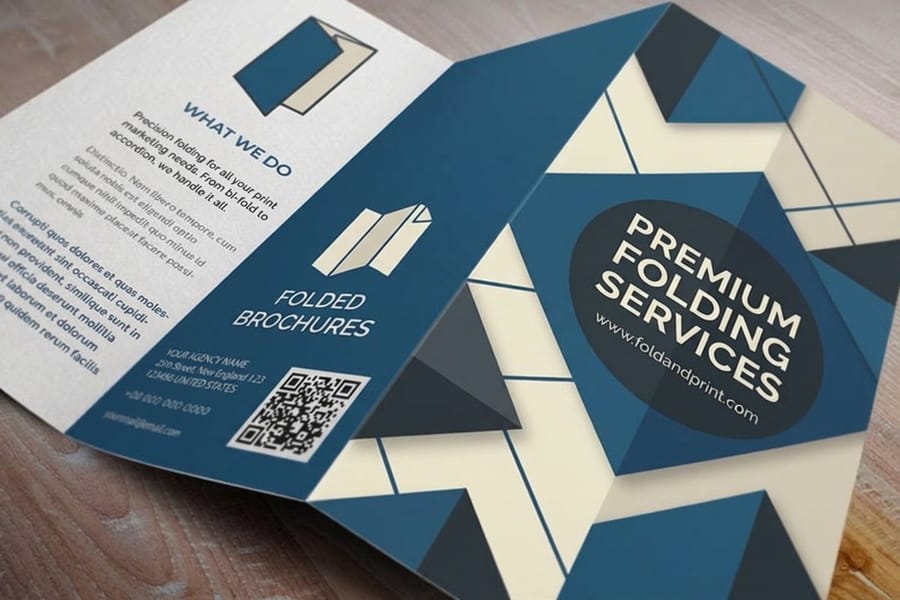
The fold sets the panel width, the panel width sets the word count, and the word count sets what story you can tell. Decide it first and the copy writes itself into fixed boxes. Decide it last and you will cut two paragraphs from every panel.
| Flat size | Folded to | Panels per side | Where it fits |
|---|---|---|---|
| 5.5" x 8.5" | 4.25" x 5.5" on a half fold | 2 | Small property with one or two room types, or an in-room card for breakfast and wifi. |
| 8.5" x 11" | 3.67" x 8.5" on a letter fold | 3 | The default hotel brochure. Fits a standard rack pocket with room to spare. |
| 8.5" x 14" | 4.67" x 8.5" on a letter fold | 3 | Four or more room types, or a property that needs a full-panel floor plan. |
| 11" x 17" | 8.5" x 11" on a half fold | 2 | Resorts and conference hotels handed over at the desk. Too large for a rack. |
| 11" x 25.5" | 8.5" x 11" on a roll fold | 3 | Group sales and wedding packets. Available on Standard Brochures. |
Read the last column before the first. Almost every hotel that asks for something bigger is really asking for a piece that stops fitting the rack it was printed for, and a brochure lying flat on a table gets picked up far less often than one standing in a pocket. If the piece is genuinely a rack piece, the honest answer may not be a brochure at all: a rack card at 4 by 9 inches fills the pocket completely and starts at $42.84.
Hotel Brochures and Folded Brochures both run the same four flat sizes and both carry folding and scoring in the configurator, so the choice between them is about the catalog you are shopping, not the press. If you are still weighing formats, booklet versus brochure versus flyer lays out where each one stops working.
The Panel Map: One Job Per Panel
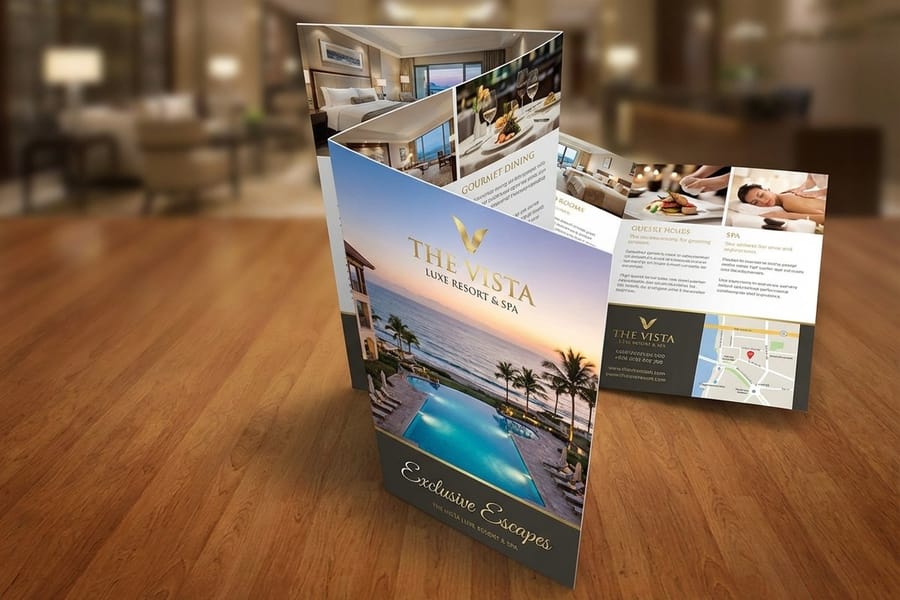
Six panels, six jobs. Assign them on paper before anything goes into the layout, because the most expensive mistake in a folded piece is discovering at proof stage that the amenities copy is split across a fold.
| Panel | What it carries | The mistake to avoid |
|---|---|---|
| Front cover | One photograph, the hotel name, the city or neighborhood. | Stacking a tagline, an award badge and three photos into a strip that is four inches tall in the rack. |
| Tuck-in panel | Rates as from figures, check-in and check-out times, cancellation window. | Printing a fixed nightly rate that goes stale before the box is empty. |
| Back cover | Address, phone, booking URL, QR code, a small map. | Burying the phone number in six point type under the map. |
| Inside left: rooms | Room types with bed count, occupancy and one photo each. | Using the same corner-suite photograph for every category. |
| Inside center: amenities | Named facilities: pool hours, breakfast service, parking cost, meeting rooms. | Adjectives instead of facts. Luxurious tells a guest nothing about the pool. |
| Inside right: location | Walking times to the three places guests actually ask about. | A map with no scale and no walk times, which answers nothing. |
The layout trap is the outside face. Read left to right it goes tuck-in panel, back cover, front cover, which feels backwards until you fold a sheet of paper and see it. The panel that folds inward first must also be cut narrower than the other two, by roughly a sixteenth of an inch, or it presses against the fold and the whole piece bows. Our guide to brochure fold types covers what changes when you move to a gate or accordion fold, and bifold setup and dimensions has the two-panel version of the same maths.
The hotel brochure information a guest acts on, the address, the phone number and the booking link or QR code, belongs on the back cover panel. On a letter sheet that panel finishes at about 3.67 by 8.5 inches, so set the block below the top four inches the rack pocket shows and keep it 1/8 inch inside the trim.
Photography That Sells the Stay
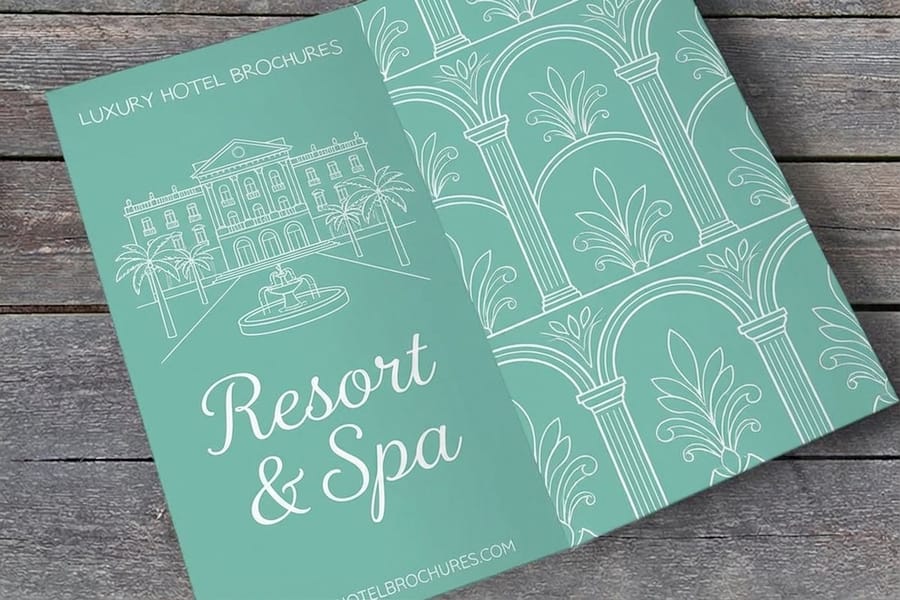
Guests book a feeling and verify it with facts, so the photographs carry the first half of the job. Three rules cover most of it.
- One hero, not a grid. A single photograph running the full front panel beats four thumbnails, because at rack distance a grid reads as texture rather than as a hotel.
- Shoot the room a guest gets. Photographing only the suite is the fastest way to produce a disappointed check-in. If the standard king is the room you sell most, it belongs on the inside spread at the same size as everything else.
- Show one human moment. Breakfast being served, a bike being handed over, a dog at reception. It gives the amenities panel something to attach to.
On the technical side, every image needs 300 DPI at its final printed size. A photo across a full 3.67 by 8.5 inch panel wants around 1,100 by 2,550 real pixels, and enlarging a web-sized file in the layout does not create them. Convert to CMYK before you place the images, because saturated pool blues and warm tungsten lobby light are exactly the colors that shift on press. Converting files from RGB to CMYK walks through the profile settings, and choosing a color profile explains which one to embed.
Copy That Books Rooms Instead of Describing Them
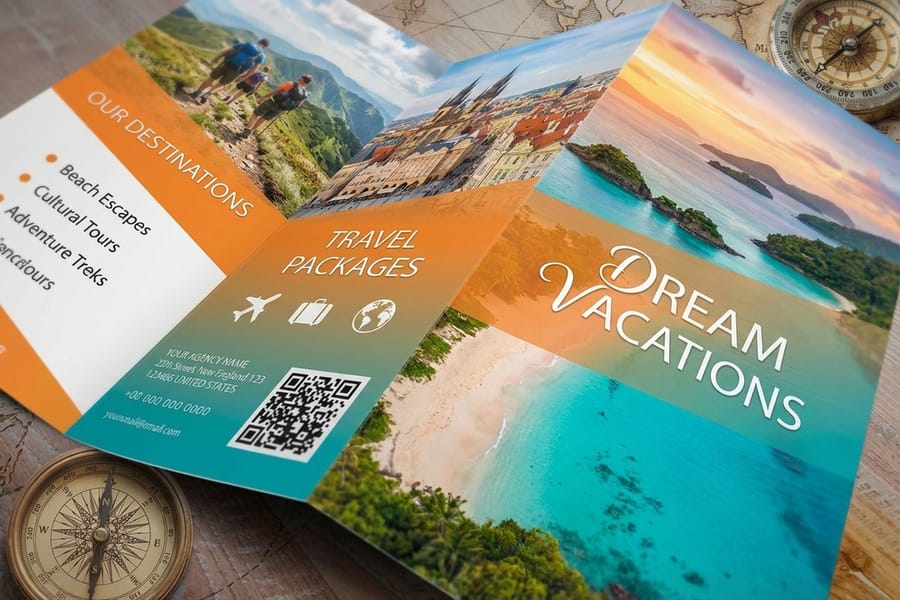
Cut every sentence that would survive being moved to a competitor's brochure. Nestled in the heart of downtown is not a location, it is a placeholder. Four blocks from Union Station, six minutes on foot is a location, and it is the kind of line a traveller repeats to a colleague.
Write to the panel, not to the page. A tuck-in panel holds roughly 60 to 90 words at a readable size, an inside panel around 120. That constraint is useful: it forces the amenity list into named facts with numbers, which is what a guest is comparing anyway. Parking is 24 dollars a night, self park, entrance on the alley. Breakfast runs 6:30 to 10:00 and is included on all rates. Those two sentences answer more questions than a paragraph about hospitality.
End with one action, not four. A brochure that offers a phone number, a website, a QR code, an email address and a social handle offers no clear next step. Pick the booking action you actually want, give it the largest type on the back cover, and let the rest sit small underneath. Keep the tone consistent with the rest of your printed set, whether that is a rack card in a partner lobby or the folded piece at the desk.
Paper Stock and Finish for a Premium Feel
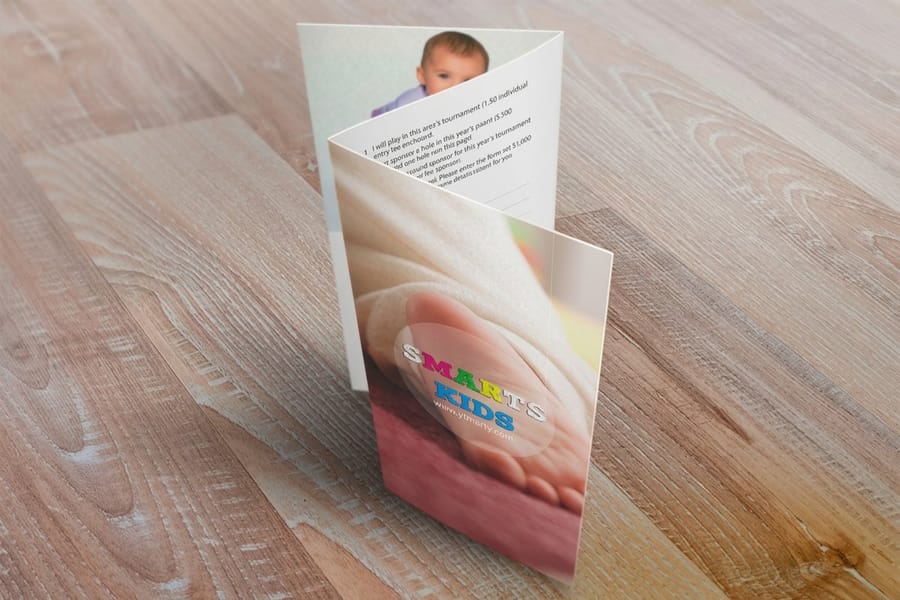
Stock is where a brochure quietly tells a guest what kind of hotel this is, and it is the cheapest upgrade on the order. Hotel Brochures run four paper types and two finishes: Standard Finish and High Gloss UV Coating.
The real decision is not gloss versus matte for looks, it is what happens to the piece afterward. High Gloss UV Coating resists the fingerprints, spilled coffee and lobby humidity that a rack display produces, and it deepens photography, which is why resort brochures almost always run it. It also refuses ink. If your desk staff circle a rate, write a confirmation number, or stamp a partner discount, gloss makes that impossible and Standard Finish is the correct answer.
Weight matters more than most people expect on a folded piece. Text weight paper folds cleanly and mails cheaply but flops in a rack pocket, so the top of the brochure curls forward and the name stops being readable. Cover weight stands up but needs scoring before it folds, or the coated surface cracks along the crease. Both scoring and folding sit in the configurator alongside the paper choice. Paper types for brochure printing compares the weights in detail, and the paper weight chart translates between pounds and points if your designer quotes one and your printer quotes the other.
Pre-Press: Bleed, Margins, Folds and the Panel Maths
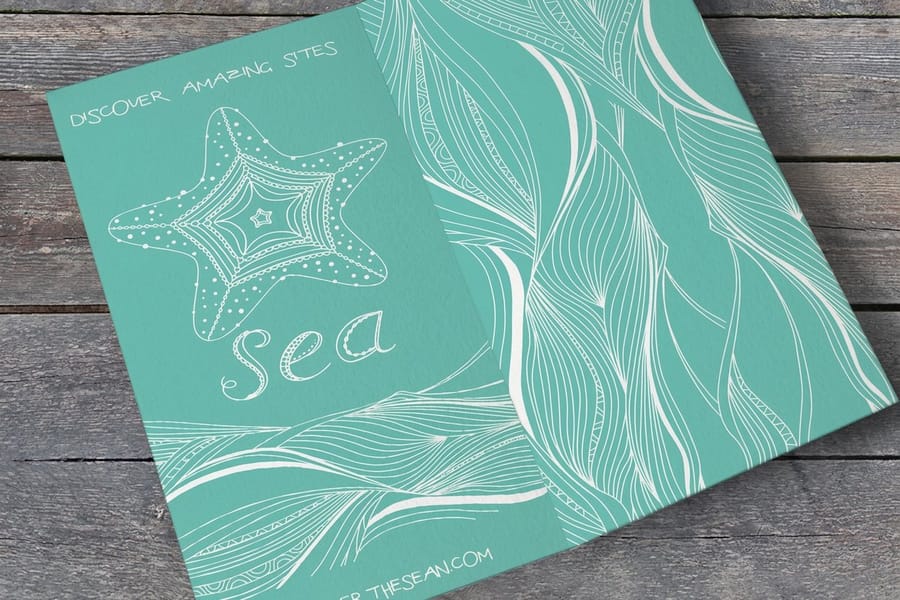
A folded piece has more ways to go wrong than a flat one, and all of them are avoidable in the file. Work through this before you upload.
- Bleed 0.125 inches on all four outer edges. Any color or photo that touches the trim extends that far past it, so a fraction of movement on the cutter does not leave a white sliver.
- Safety 0.125 inches inside the trim. Nothing you cannot afford to lose goes closer, including page numbers, QR codes and the last line of an address block.
- Keep type 0.25 inches off every fold. Text that sits right on a crease reads as if it is falling in, and it becomes unreadable once the piece has been opened and closed a few times.
- Make the tuck-in panel narrower. On a letter fold, the panel that folds in first is cut about 0.0625 inches short of the other two. Three equal panels buckle.
- 300 DPI at final size, CMYK, fonts outlined. Check the effective resolution in your layout software rather than the source file resolution.
- Score before you fold on cover weight. Ask for scoring when the stock is heavy or coated, or the fold will crack along the printed surface.
Build the document as a single flat spread with fold guides on their own layer, not as separate panel files. Export one PDF per side. The bleed, cut line and safety checklist covers the three boundaries in full, creating commercial print-ready files covers the export settings, and the blank template library has correctly sized layouts so you are not measuring panels with a ruler.
Order the Run and Get It Into the Right Racks
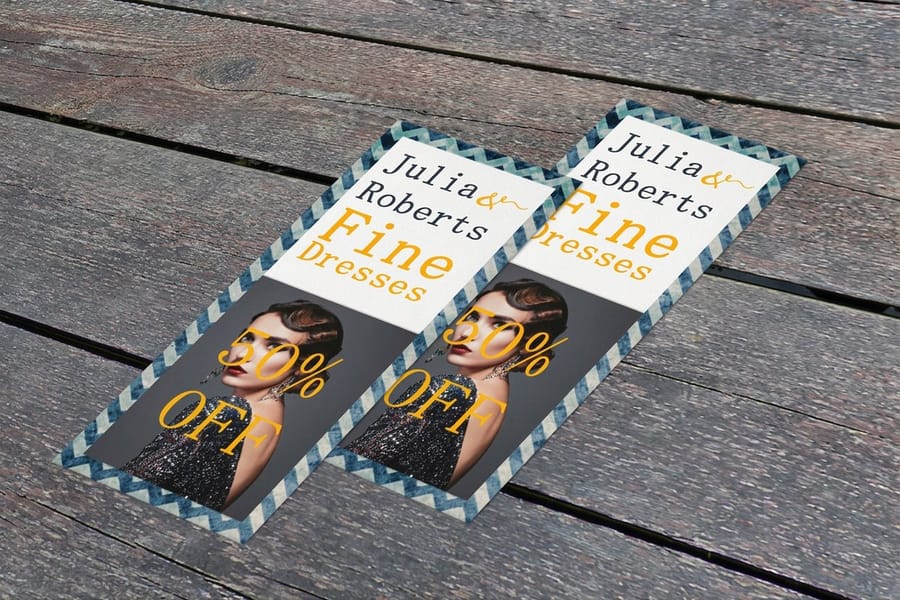
Print quantity follows refill cadence, not optimism. Count how many pieces leave the lobby rack in a normal week, multiply by the number of weeks until your rates or your photography change, and order that plus a partner allowance. Hotels that order a two-year supply usually end up recycling half of it after a renovation or a rate change.
Split the run by placement. The six-panel piece belongs at the front desk and in the rooms, where a guest has time to open it. Away from the property, in visitor centers, partner restaurants and airport racks, a 4 by 9 rack card fills the pocket properly and survives handling with no fold to buckle. Standard Rack Cards start at $42.84 and run 15 paper stocks, which is more choice than the brochure line carries.
Order a small run first if the design is new. Seeing the fold in your hand tells you in seconds whether the cover strip reads at rack height, which no on-screen proof will. When it is right, Hotel Brochures at $57.11 and Travel Brochures at $57.11 both run the same folding and scoring options, and everything in brochure printing ships from the same production floor. The travel brochures story shows finished pieces.
| Hotel brochure order | What you choose |
|---|---|
| Flat size | 5.5 x 8.5, 8.5 x 11, 8.5 x 14, 9 x 12, 11 x 17 or 11 x 25.5 in |
| Stock | 100 lb gloss or silk text, 70 lb uncoated text, or 14pt gloss cover |
| Finish | Standard or High Gloss UV, one side or both, optional perforation |
| Quantity and time | From 50 up to 25,000, 3 business days of standard production |
| What to upload | One PDF per side as a flat spread, 300 DPI, CMYK, fonts outlined, fold guides on their own layer |
Wally explains the six panels
One job per panel, and the cover goes on the right
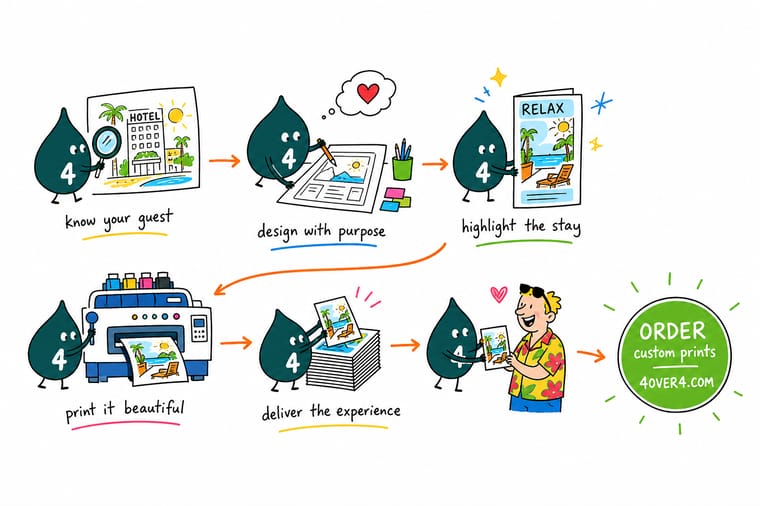
Wally folds the sheet in thirds and hands you the map. Outside, left to right: the panel that tucks in, the back cover, then the front cover. Inside: rooms, amenities, location. He cuts the tuck-in panel a sixteenth of an inch narrower so it does not fight the fold, keeps the hotel name in the top four inches where the rack pocket lets it show, and puts one booking action on the back in type you can read across a lobby. Give him a photo at 300 DPI and he will make the pool look like the pool.
Order hotel brochures →
Specs and pricing
Brochure and rack card specs, side by side
Sizes, paper counts and starting prices straight from the 4OVER4.COM configurator, so you can size the artwork against what actually runs. Hotel and folded brochures share six flat sizes from 5.5 x 8.5 to 11 x 25.5 inches on four stocks from 50, and rack cards run 3.5 x 8.5 or 4 x 9 inches on cover stock from 50.


Print it
Print the piece your front desk hands over
Hotel brochures and standard brochures from 50 on 3 business days of standard production, and rack cards at 3.5 x 8.5 or 4 x 9 inches for the visitor center pocket.

Explore more
Where to go next
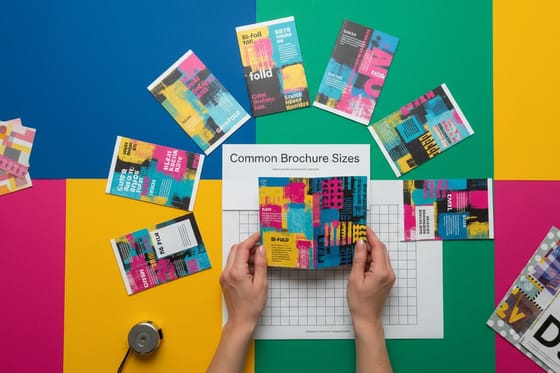
Four guides and two ranges: fold types, common brochure sizes, text against cover paper, the bleed and safety checklist, every brochure format, and the 4 by 9 rack card.
By the numbers
Hospitality print measured in years and products
Common Questions
Your hotel brochure questions, answered
What size should a hotel brochure be?
For most properties, an 8.5 by 11 inch flat sheet folded in thirds. It finishes at roughly 3.67 by 8.5 inches, which slips into a standard literature rack pocket and still holds three inside panels for rooms, amenities and location. Hotel Brochures at 4OVER4.COM run in four flat sizes: 5.5 by 8.5, 8.5 by 11, 8.5 by 14 and 11 by 17 inches. Go to 8.5 by 14 when you have more than four room types to show, and to 11 by 17 only when the piece is handed over at the desk rather than racked, because the folded result is letter size and will not sit in a rack.
How many panels does a hotel brochure need?
Six, and that is not a design preference, it is what a folded sheet gives you. Three panels on the outside face and three on the inside spread. The useful discipline is one job per panel: cover, rates and policies, back cover with contact details, then rooms, amenities and location inside. A property that tries to put rooms and amenities on the same inside panel ends up with type below 9 point, which is the point at which guests stop reading in lobby light.
Should a hotel brochure be glossy or matte?
Gloss if it lives in a rack, plain if it lives at the desk. High Gloss UV Coating resists the fingerprints and humidity a lobby display produces, and it makes room photography look deeper. The cost is that pens, stamps and highlighters will not take on it, so if your front desk writes a rate or a confirmation number on the brochure when a walk-in asks, order Standard Finish instead. Both finishes are available on Hotel Brochures.
Is a rack card better than a brochure for a visitor center?
For a visitor center or a partner lobby, usually yes. A rack card at 4 by 9 inches fills the pocket edge to edge instead of leaving a gap, it carries no fold to buckle, and it costs less per piece: Standard Rack Cards start at $42.84 against $57.11 for Standard Brochures. Use the rack card as the away-from-property piece and keep the six-panel brochure for the front desk, where a guest has time to open it.
What resolution do hotel photographs need to be?
300 DPI at the size the image prints, not the size it came off the camera. A photograph placed across a full 3.67 by 8.5 inch panel needs roughly 1,100 by 2,550 pixels of real detail. Scaling a 72 DPI web image up in the layout does not add any, and the giveaway in print is soft edges around window frames and bedding folds. Export the file in CMYK so the pool blues and warm lobby light land where you expect.
How much bleed and margin does a folded brochure need?
Extend artwork 0.125 inches past the trim on all four outer edges, keep anything you cannot lose 0.125 inches inside the trim, and add a wider allowance at the folds. Text sitting closer than about a quarter inch to a fold reads as if it is falling into the crease, and a heavy background color crossing a fold will crack slightly on cover stock. Start from a correctly built layout in the blank template library rather than measuring panels by hand.
Get Started
Print 50 hotel brochures from $57.11
Pick your flat size, add folding and scoring, choose gloss for the rack or plain stock for the desk, and we print a piece that stands up in a pocket and opens flat in a guest's hand.
Legal Disclaimer
Gold Standard guarantees apply to all standard orders placed through 4over4.com. Price match requires verifiable proof of a competitor's published price for an equivalent product with matching specifications and turnaround time. Satisfaction guarantee covers manufacturing defects and print quality issues. Contact support with order number and documentation.
