
How to Choose a Custom Packaging Design Company That Prints It Too


Every packaging company shows renders. The ones worth paying hand over a dieline, a named board, and a reorder price. Here is how to tell them apart before the money moves.
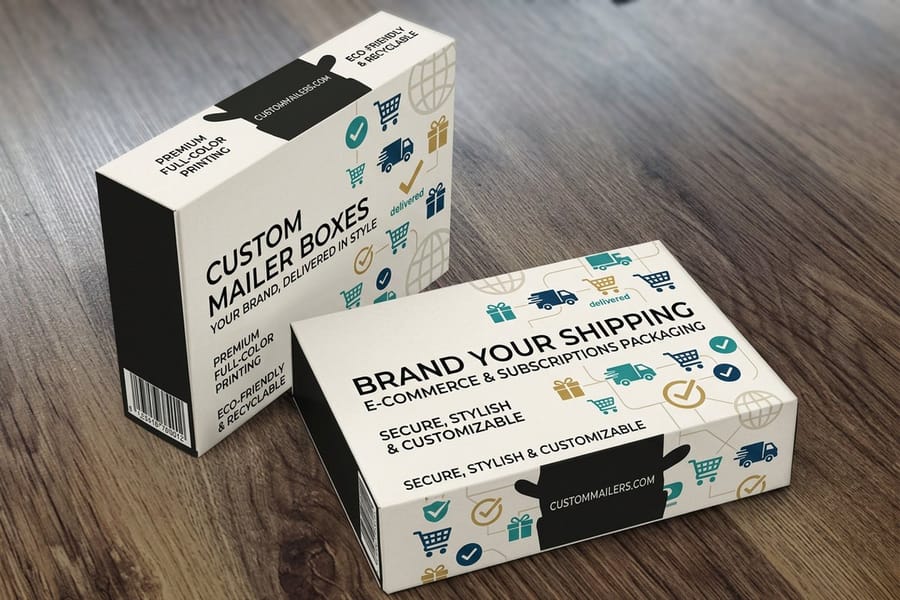
Choose a custom packaging company by what it hands over, not by its portfolio: the editable dieline, the board and caliper in writing, and a reorder price quoted with the cutting die already paid for. The second question is whether the same company draws the structure and cuts it, because a split between a design studio and a box plant leaves nobody responsible when the first sample does not fit. One supplier for both means one proof, one ink reference, and one named person who owns the ship date.
Quick answer
Three deliverables decide whether you can ever reorder the box
Ask for the editable dieline, the board named with its caliper, and the reorder price once the die exists. Those three answers separate a company that manufactures from one that resells, and they decide whether you are locked to one vendor for the life of the product. After that, the question is scope: a design studio draws, a box plant cuts, and only a company doing both owns the moment the first sample arrives and something is 3mm out.
What to Ask Before You Pay a Packaging Company Anything

Packaging companies all present the same way: a grid of beautiful renders, a page about storytelling, a contact form. None of that predicts whether you will get a box that closes. Five deliverables do, and you can ask for all five in one email before anyone quotes a number.
- The editable dieline. Not a picture of the flat, the working vector file with cut, fold and glue lines on their own layers. It is the only document that lets you re-quote the same box somewhere else next year.
- The board, named. Not "premium cardboard". A material and a caliper, such as E flute corrugated or 18pt cartonboard, because the dieline is drawn to that thickness and changing it later changes the fold allowances.
- A physical sample, and which kind. A blank structural sample proves the product fits. A printed proof proves the color. If the schedule allows only one, take the structural sample, because a box 3mm too tight scraps the run while a slightly warm red rarely does.
- The reorder price. A cutting die is bought once and stored. A quote that shows only the first run hides the number your finance team will live with for the next two years.
- A named approver on their side. One person who signs the proof and owns the ship date. Two account managers and a shared inbox is how a two week job becomes a six week job.
Run those five against a shortlist and it halves fast. If you want the same test written from the production side, our guide on choosing a custom packaging supplier covers what to verify about the plant itself, and how to spec custom product packaging shows what a complete brief looks like before it goes out.
Design Studio, Box Plant, or One Company That Does Both
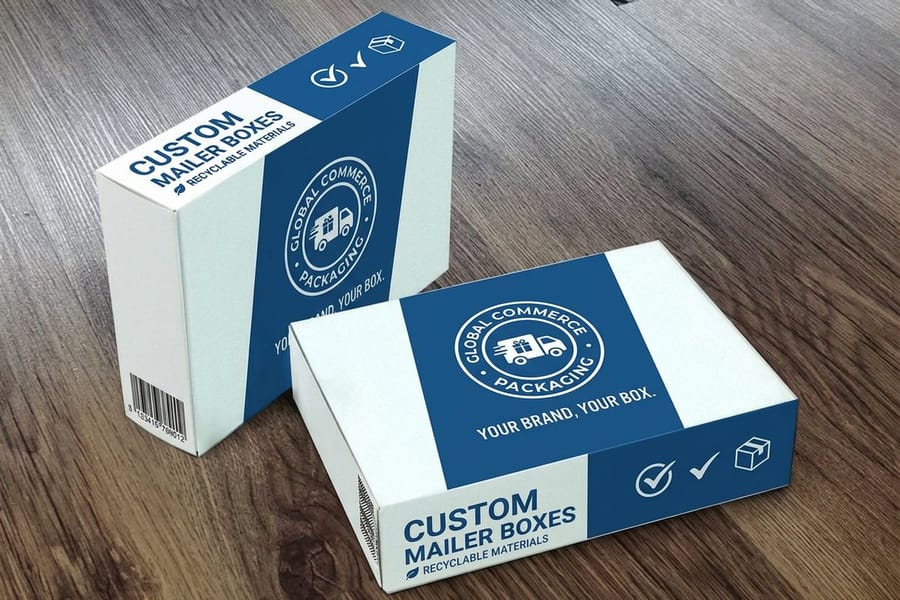
There are three ways to buy a custom box, and the difference between them shows up at exactly one moment: when the first sample arrives and something is wrong.
| Route | Who draws the dieline | Who owns the ship date | Where it breaks |
|---|---|---|---|
| Design studio only | The studio, to its own house standard. | Nobody. You buy production separately. | The plant receives a dieline drawn for a different board and quietly adjusts it, so the sample does not match the render. |
| Box plant only | The plant, from dimensions you supply. | The plant. | Structure is sound and artwork is your problem. Bleed stops at the fold and the lid prints short. |
| One company, design and print | The same company that cuts it. | One named person. | Less choice of exotic structures than a specialist studio, so a genuinely unusual form still needs one. |
The third column is the one to read twice. A split supply chain has no owner at the sample stage, and the two vendors will each be technically correct while your launch date moves. When the drawing and the die cutting happen under one roof, a fit problem is a revision rather than a negotiation.
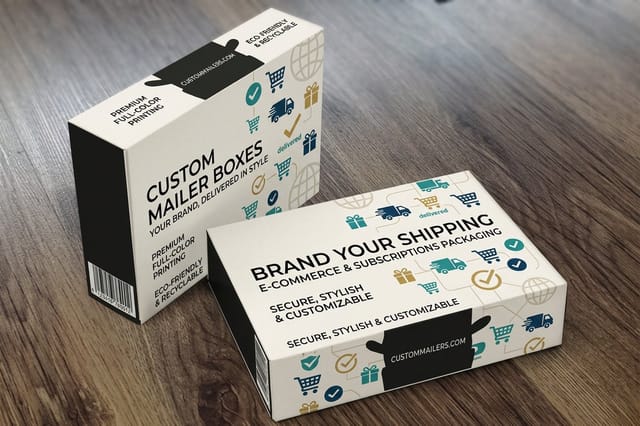
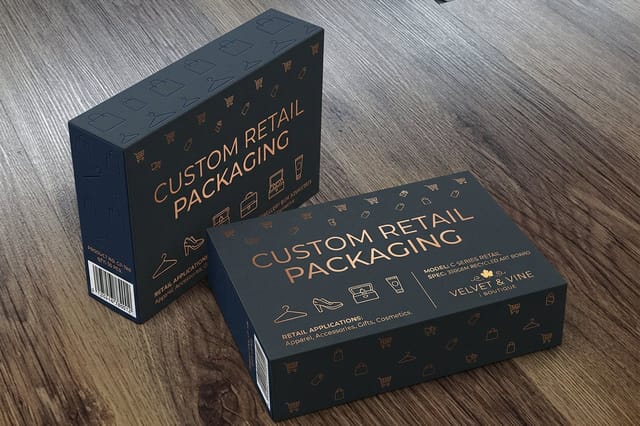
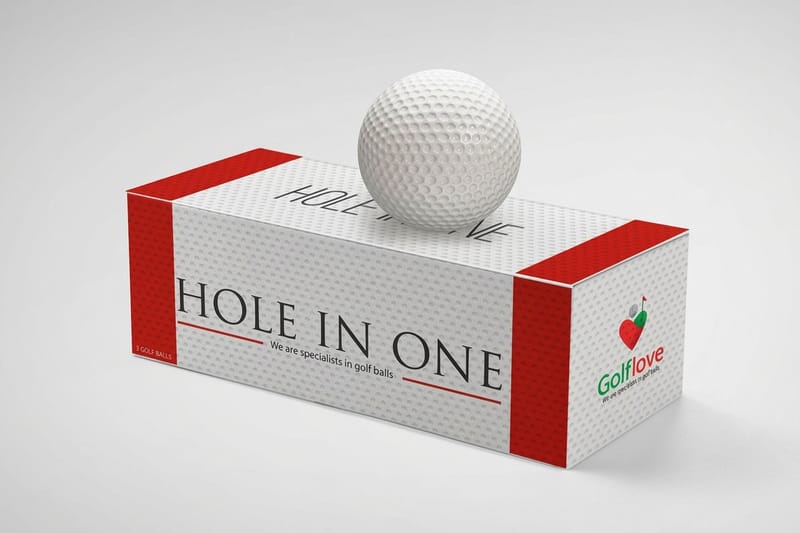
That is how the box line here is built. Custom mailer boxes are corrugated with a hinged lid and a locking front, sized for a carrier network. Retail boxes are cartonboard printed to face out on a shelf. Both are drawn, proofed and cut in the same workflow, and the full custom box printing range shows the stocks and closures with live configuration. If your shortlist still includes plants you are vetting yourself, our guide on choosing a custom packaging manufacturer is the checklist for that conversation.
The Dieline Is the File Everything Else Hangs On
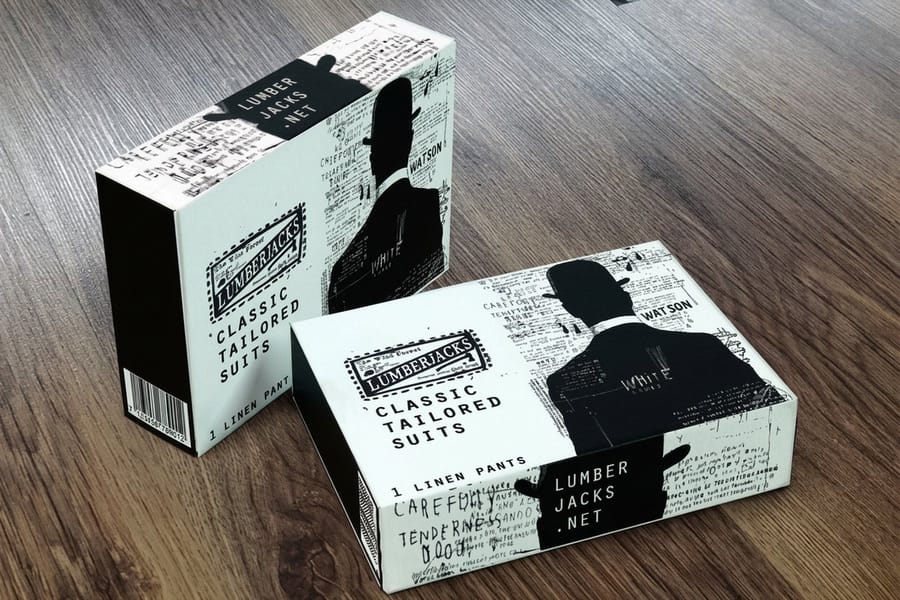
A dieline is the box unfolded and flat, with every cut line, fold line, glue tab and bleed edge marked. It is the drawing the cutting die is made from and the canvas your artwork is built on. Get it wrong and nothing downstream can save the job.
Three things about it are worth knowing before you brief anyone. First, it is drawn to a specific board caliper, because thicker board needs more material to travel around a fold. Move from 18pt cartonboard to E flute corrugated and the internal dimensions shift by a millimetre or two, which is enough to jam a snug product. Second, bleed has to continue across folds and onto glue tabs, since the sheet is cut after printing and a hairline of white at a corner is the most common reason a first proof gets rejected. Third, glue tabs do not print. Ink on a tab stops the adhesive from grabbing, so anything that lands there gets knocked back.
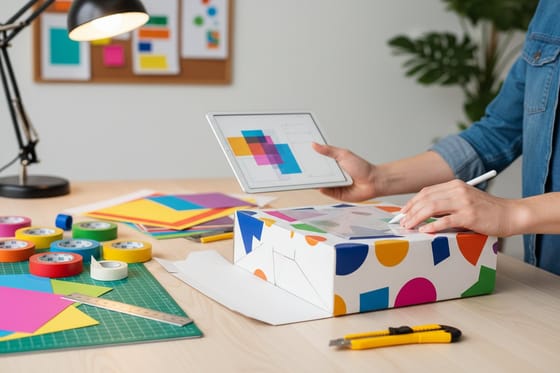
The practical test of a packaging company is what the dieline looks like when it comes back to you. A good one is layered, labelled, drawn at full size, and includes the panel names so your designer knows which face is the lid. A weak one is a flat outline with no fold distinction, which forces the designer to guess and pushes the error into production.
Build artwork onto the file you were given rather than a redrawn approximation. Our guide to preparing files for packaging products covers the handoff end to end, the blank template library has correctly sized layouts for the flat printed pieces that go with a box, and checking a packaging proof before approval lists what to look at once the first one lands.
Pick the Board Before Anyone Draws the Box
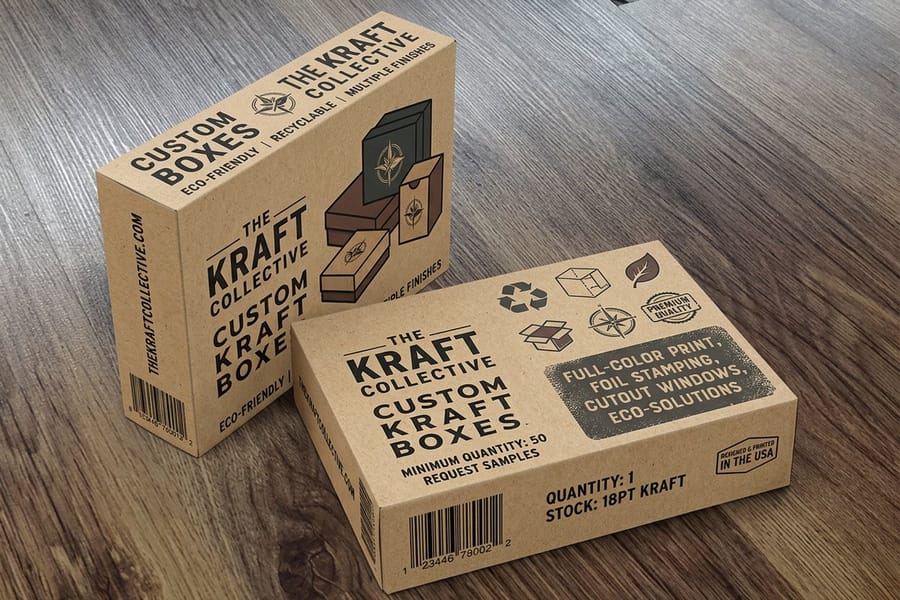
Material is a structural decision wearing an aesthetic costume. Choose it first, because the dieline, the price and the print quality all follow from it.
| Board | Structure | Print behaviour | Use it for |
|---|---|---|---|
| Corrugated | Fluted layer between two liners, absorbs impact. | Good on a white liner, softer detail on the flutes. | Anything that travels alone through a carrier network. |
| Folding cartonboard | Solid sheet, folds crisply, no impact protection. | Holds the finest detail and coating effects. | Shelf boxes shipped inside an outer carton. |
| Kraft | A surface, available on both of the above. | Uncoated brown, takes one or two ink colors well, never a photograph. | Brands that want the material to read as the design. |
| Rigid board | Thick greyboard wrapped in printed paper. | Print quality of the wrap, not the board. | Premium unboxing where the box is kept. |
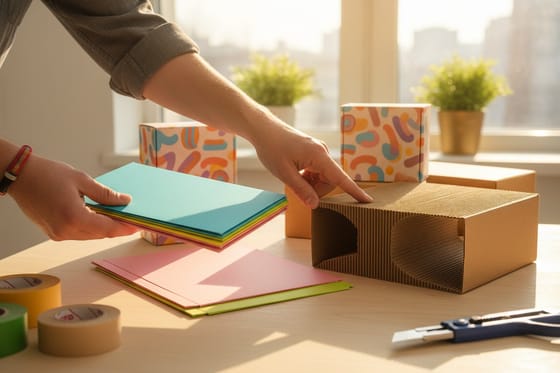
Two mistakes account for most regret. Choosing cartonboard for something that ships on its own, then discovering that a solid sheet has no give and arrives dented. And choosing kraft for a design that depends on a photographic image, which brown uncoated board will not reproduce no matter who prints it. Custom kraft boxes are the right answer for a two color mark and the wrong one for a full bleed lifestyle shot.
Sizing sits alongside the material choice. Our box size chart by product type gives realistic starting dimensions, cardstock against corrugated goes deeper on where each fails, and the materials comparison guide covers the full set including rigid.
Minimum Orders and Where the Weeks Actually Go
Two numbers decide whether a packaging company is workable for you right now: what it takes to start, and how long the first order runs. Both are usually quoted vaguely, and both can be pinned down.
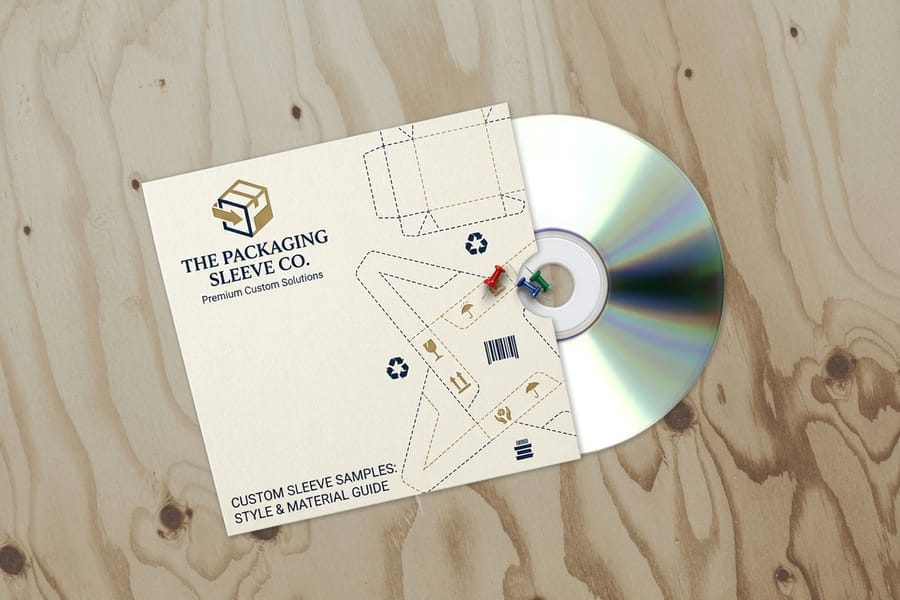
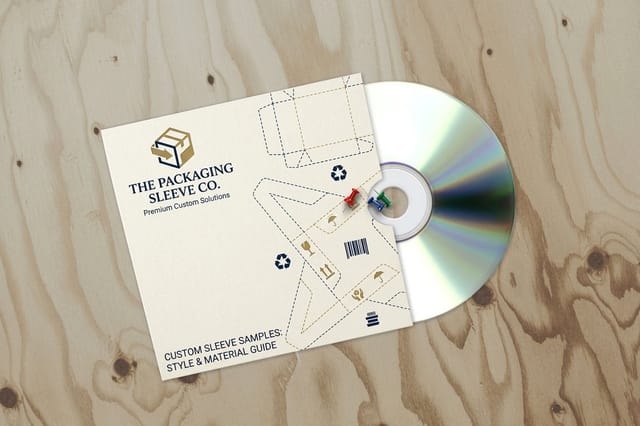
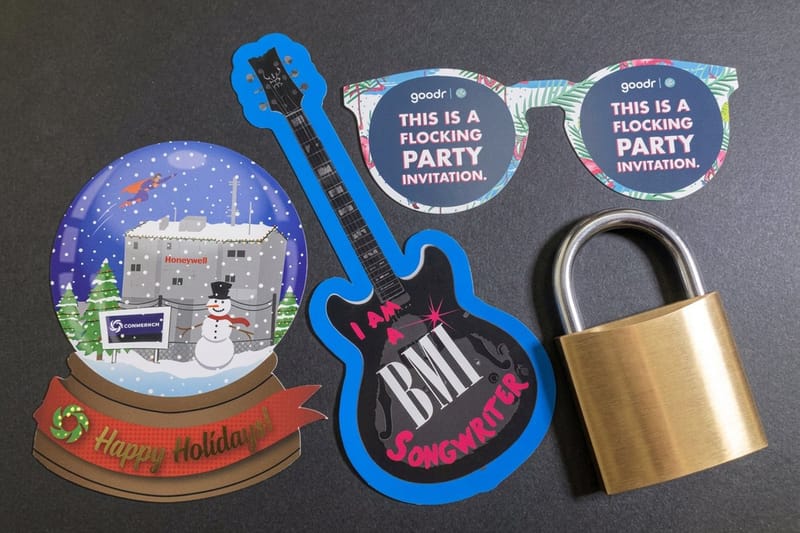
On minimums, ask for a starting price rather than a unit count, because a box is costed on board, ink coverage and the die together. Printed boxes here start at $711.78, which puts a first branded run inside reach of a small brand without a warehouse. Below that number there is a genuinely good alternative that most suppliers will not volunteer: dress a stock shipper instead of cutting a die. Premium packaging labels start at $29.16 and turn a plain white box into a branded one. Printed packaging tape at $347.11 brands the seam of every carton in the run. Packaging sleeves at $438.25 wrap a plain box with full color and no tooling at all. Hang tags from $25.27 carry price, size and care copy on the product itself. That set reads as fully custom at the unboxing, and none of it needs a die.
On lead time, be honest about where it goes. Press and die cutting are scheduled operations that behave. The days that disappear sit in approvals, and they disappear the same way every time: a proof waiting on a founder who is travelling, a logo supplied at screen resolution that has to be rebuilt as vector, or a dimension change requested after the die was already specified. Name one approver, send outlined artwork on the supplied dieline, and confirm the product dimensions before the structure is drawn. Those three habits are worth more than any expedite fee.
One more thing worth pricing early. Buying every part from one place gives you a single ink reference, so the teal on the tape matches the teal on the label. Split it across four vendors and you spend the savings reconciling color. The packaging labels range sits alongside the box line for exactly that reason, and what packaging design costs explains which fees are separate and which are folded into the print order.
Wally explains the dieline test
Ask for the flat drawing, not the pretty render
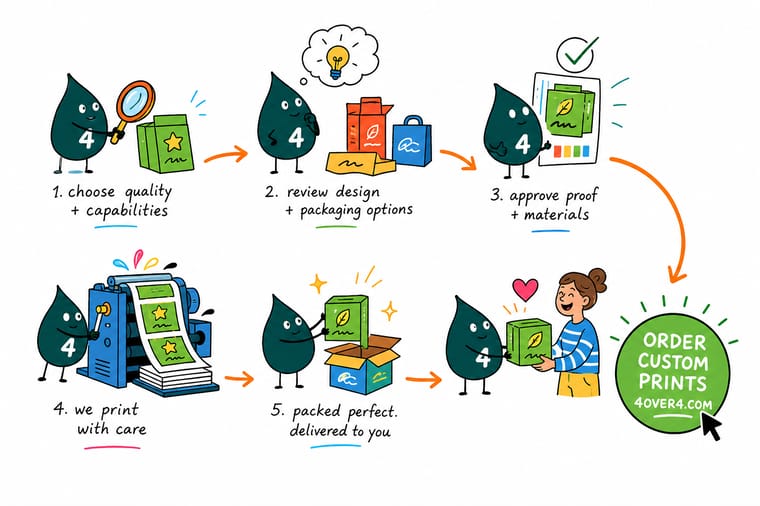
Wally does not judge a packaging company by its portfolio. He asks for the dieline, the flat drawing with the cut lines, fold lines and glue tabs marked, and he asks for it as an editable file. That drawing is sized to one specific board, so it also forces the material answer out into the open. If it comes back layered, labelled and full size, the company draws its own boxes. If it comes back as a flat picture, someone else is doing the cutting and you are paying twice to find out.
Configure custom mailer boxes →Specs and pricing
Boxes, sleeves and labels with live starting prices
Three ways to put your brand on a package, from a full custom box down to a printed label on a stock box. Sizes, options and starting prices come straight from the 4OVER4.COM configurator.
Print it
Order packaging from the company that draws it
Explore more
Where to go next

By the numbers
Packaging you can plan a launch around
Common Questions
Your packaging company questions, answered
What is the difference between a packaging design company and a packaging manufacturer?
A design company draws. It measures the product, works out a structure, produces the dieline and puts artwork on it. A manufacturer owns the press, the die cutter and the folder gluer, so it turns that file into physical boxes. Plenty of firms do both, and plenty of firms that say both actually do one and resell the other. The tell is a scheduling question. Ask what is on press this week and what the reorder price is once the cutting die exists. A company with production behind it answers in numbers. A design studio reselling production answers in ranges.
Do I own the dieline if a design company drew it?
Only if you agreed that upfront, and it is the single most expensive thing buyers forget to ask. A dieline is the flat layout of the box with cut lines, fold lines, glue tabs and bleed marked. Handed over as a working vector file it is portable, so you can quote the same box to three suppliers next year. Handed over as a flattened PDF proof it is a picture of a box, and redrawing it costs the design fee again. Put the words editable dieline in the purchase order before any money moves.
How much does custom packaging design cost?
It depends on whether design is billed separately or folded into the print order, which is the real fork in this decision. Independent studios quote structural design and artwork as their own line item and then production is bought on top. When the printing company draws the structure, the dieline is produced against the order rather than invoiced as a standalone project. Our breakdown of what product packaging design costs walks through both models and what each one includes.
Can I order custom packaging without a huge minimum?
Yes, though the answer is a price rather than a unit count, because a box run is costed on board, ink coverage and the die together. Printed boxes at 4OVER4.COM start at $711.78. Under that, the cheaper route is a stock shipper dressed with printed parts: premium packaging labels start at $29.16, packaging sleeves at $438.25, and printed packaging tape at $347.11. Brands routinely run that setup for a season, learn which sizes actually sell, and only then pay for a die.
How long does custom packaging take from first call to delivery?
Production is the predictable part. The variable is everything in front of it. Most late packaging jobs trace to three things: a proof sitting unapproved in someone else's inbox, a logo supplied as a low resolution raster that has to be rebuilt, or a dimension change requested after the die was already specified. Fix the sign-off chain first. One named approver, artwork built on the supplied dieline, fonts outlined, and the schedule stops slipping.
Should I send measurements or a 3D render to a packaging company?
Measurements, every time. Send the internal dimensions of the product in the orientation it will sit, its weight, whether it is fragile, and how many go in a box. A render shows what you hope the box looks like. Numbers let a structural designer pick a board, work out the caliper allowance on the folds, and draw a dieline that actually closes. If you have a sample product, offering to ship one is worth more than any file you can attach.
What should I check on a packaging proof before I approve it?
Four things, in this order. Fit, meaning the internal dimensions still match the product after the board caliper is accounted for. Fold direction, because artwork that reads correctly flat can end up upside down on the lid. Barcode placement and quiet zone, since a code across a fold or a glue tab will not scan. Then color, last, and only against a physical proof rather than a screen. Our walkthrough on checking a packaging print proof lists the traps in the order they usually bite.
Get Started
Ready to get a dieline back instead of a render?
Send the internal dimensions, pick the board, and get a working dieline for artwork. Boxes, sleeves, labels, tape and tags all print here, so one ink reference covers the whole set.
Legal Disclaimer
Gold Standard guarantees apply to all standard orders placed through 4over4.com. Price match requires verifiable proof of a competitor's published price for an equivalent product with matching specifications and turnaround time. Satisfaction guarantee covers manufacturing defects and print quality issues. Contact support with order number and documentation. On-time delivery rate based on tracked orders 1999 to 2026. Individual results may vary based on shipping carrier performance.
