
How Custom Logo Tape Is Made, From Printed Web To Slit Roll


Printed tape is made as one wide web and cut down at the end. Here is each stage of the line, the two adhesive families, the widths, and the reason the first case always costs the most.
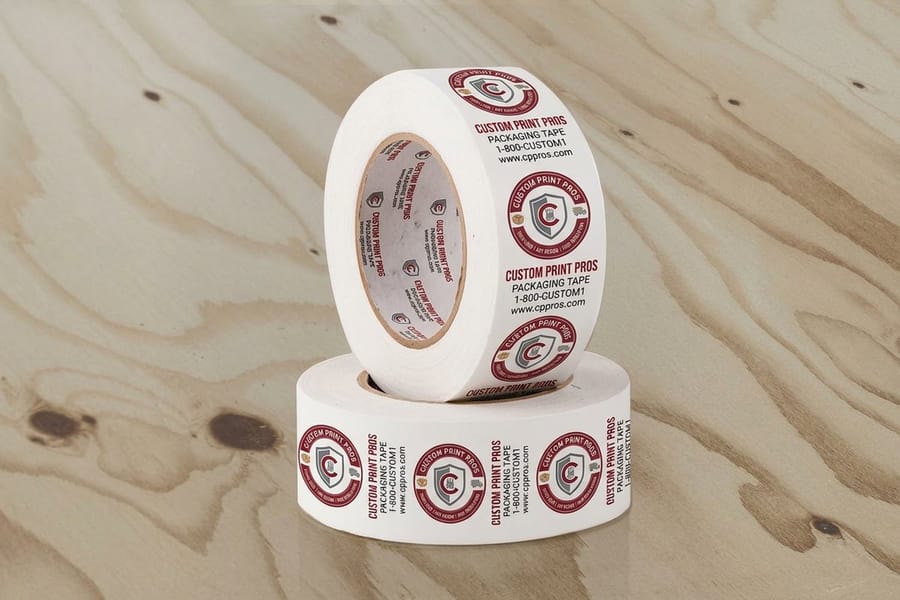
Custom logo tape is printed before it is ever sticky. A wide web of BOPP film or gummed kraft paper is surface treated, printed on a flexographic press with one plate per spot color, coated with adhesive on the back, wound into a jumbo log and slit into 2 inch or 3 inch rolls. The image repeats once per turn of the plate cylinder, so artwork has to be built to that repeat, and the plates plus press setup are why tape is sold by the case.
Quick answer
Print the web, coat the glue, slit the log
Logo tape is manufactured, not decorated. The carrier gets a surface treatment so ink will anchor, a flexographic press lays one solid spot color per station, a coater puts the adhesive on the back, and the finished web is wound wide and then slit into rolls. The consequences fall out of that order: the artwork must tile at the printer's repeat length, photographs and gradients are out, and the plate work sets a case minimum that no quantity discount removes.
The Five Stages Of A Printed Tape Line
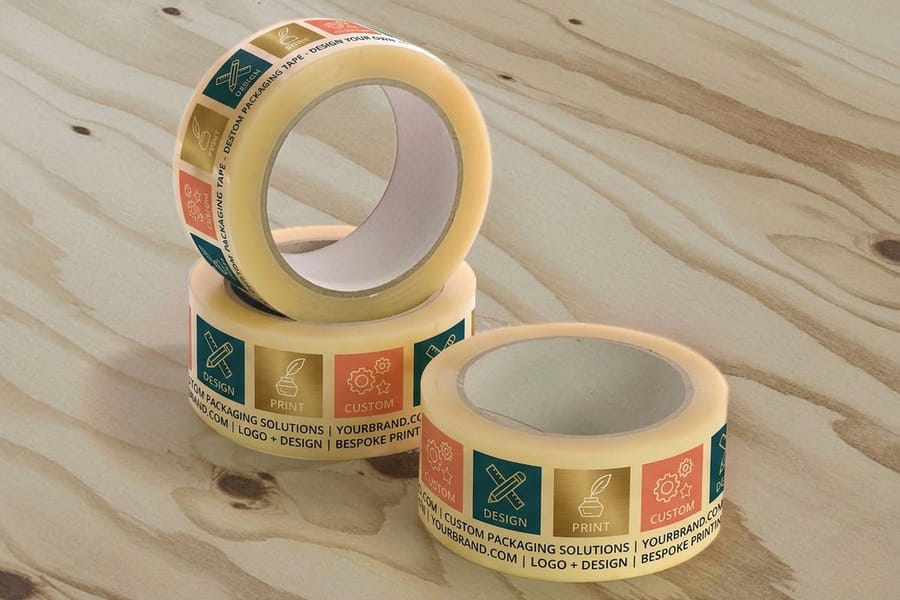
Watch the line once and every rule about tape artwork stops being arbitrary.
One, the web is treated. Raw polypropylene film is slick enough that ink beads on it. A corona unit passes an electrical discharge across the surface to raise its surface energy, which is what gives the ink and later the adhesive something to hold. Paper tape skips this because kraft is porous already.
Two, the press prints. Flexography uses a soft photopolymer plate wrapped around a cylinder, one plate and one ink station per color. A two color logo means two plates. The web runs continuously, so the image repeats forever rather than sitting on a page.
Three, the adhesive goes on the back. Only now does the tape become sticky. Some jobs are reverse printed instead, with the ink laid on the inside face of a clear film so the adhesive covers it, which makes the print immune to scuffing but only works on clear stock.
Four, the web is wound into a jumbo log. At this point you have one wide printed roll, no usable widths yet.
Five, the log is slit. Rotary blades cut it into the widths ordered, and those rolls are the ones that arrive on your pallet. That is why a change of width is a real change and not a checkbox, and why custom printed packaging tape is quoted by the case rather than the roll.
Film Or Paper, And How Each One Actually Sticks

There are really two families of logo tape, and they fail in different ways. Film tape is a plastic carrier with a pressure sensitive adhesive that grabs the moment you press it down. Paper tape is gummed kraft that does nothing until it is wet, then bonds into the corrugated fibers as it dries.
| Tape | How it sticks | Where it wins | Where it fails |
|---|---|---|---|
| BOPP with hot melt | Rubber based adhesive with high grab the instant it touches. | Fast hand packing, dusty recycled corrugated, the lowest cost per foot. | Goes brittle in cold storage and loses grip after long storage in heat. |
| BOPP with acrylic | Water based acrylic that builds its bond over the first hours. | Long transit, sunlight, warehouses that swing hot and cold, long shelf life. | Weaker in the first minute, so a heavy box can pop before the bond sets. |
| Water activated kraft | Starch adhesive wetted at the dispenser, bonding into the board fibers. | Tamper evidence, one strip sealing a carton, recycling with the box. | Needs a water dispenser, slower per box, and it will not stick to plastic. |
| Reinforced kraft | Same starch bond with fiberglass strands running through the paper. | Heavy or overpacked cartons that would split ordinary tape. | Costs the most, and the strands make it harder to tear cleanly by hand. |
Read the last column first. Most complaints about printed tape are the box failing, not the printing, and they trace to the wrong adhesive for the temperature the freight actually saw. If your cartons sit in a cold warehouse or ride in an unheated trailer through winter, an acrylic film or a paper tape is the safer specification. The custom kraft tape guide goes deeper on the gummed paper side, and custom shipping tape covers the film options roll for roll.
Widths, Repeat Length, And Artwork That Survives Slitting

Two inch tape, 48 mm, is the default and it seals most ecommerce cartons. Three inch, 72 mm, buys half again the print area and a firmer seal on heavy boxes, at a higher cost per foot and with a dispenser that has to match. Roll length is usually 55 or 110 yards, and the longer roll means fewer changeovers on a packing bench.
The part designers get wrong is the repeat. Your image comes back once per turn of the plate cylinder, so the printer gives you a fixed repeat length and the artwork has to fill it end to end with the finish of one image meeting the start of the next. A logo dropped in the middle of a blank rectangle looks fine in a proof and looks like a mistake on a roll, because the gaps read as a stutter when the tape crosses a box seam.
Three habits cover the rest. Keep critical marks off the two long edges, since slitting has a tolerance and a wordmark running to the edge can come back shaved on one side. Use Pantone references rather than a CMYK build, because flexo lays solid ink and the same build looks different on tan film and on clear. Supply type as outlines at full size. Our guide to preparing files for packaging products walks the handoff through, and the blank template library is where the correctly sized layouts live.
Ink Count, Case Minimums, And What Actually Drives The Price

Three things move a tape quote, and only one of them is the quantity.
Color count. Each spot color needs its own plate and its own station on the press. Going from one color to two adds a plate charge and a wash up, so a one color mark on a tan ground is by far the cheapest branded tape you can buy. A second color is worth it when the logo genuinely reads wrong in a single ink.
Coverage. A flood of solid ink across the full width uses more ink and needs more drying than a line of type and an icon on the bare film. Most well designed logo tape leaves plenty of ground showing, which is a cost decision as much as a taste one.
Setup, not rolls. Cutting plates and making the press ready costs the same for a small run as for a large one. That fixed block is the entire reason tape carries a minimum, and it is why the price per roll falls hard as quantity rises. Printed packaging tape starts at $347.11 at 4OVER4.COM, and the way to read that number is per case rather than per roll.
The practical move is to lock one width, one color count and one repeat, then reorder the same specification. Every reorder skips the plate work. If you are quoting for the first time, how to order custom packing tape sets out the order of operations that avoids a second run.
What Branded Tape Does At The Doorstep, And What It Does Not
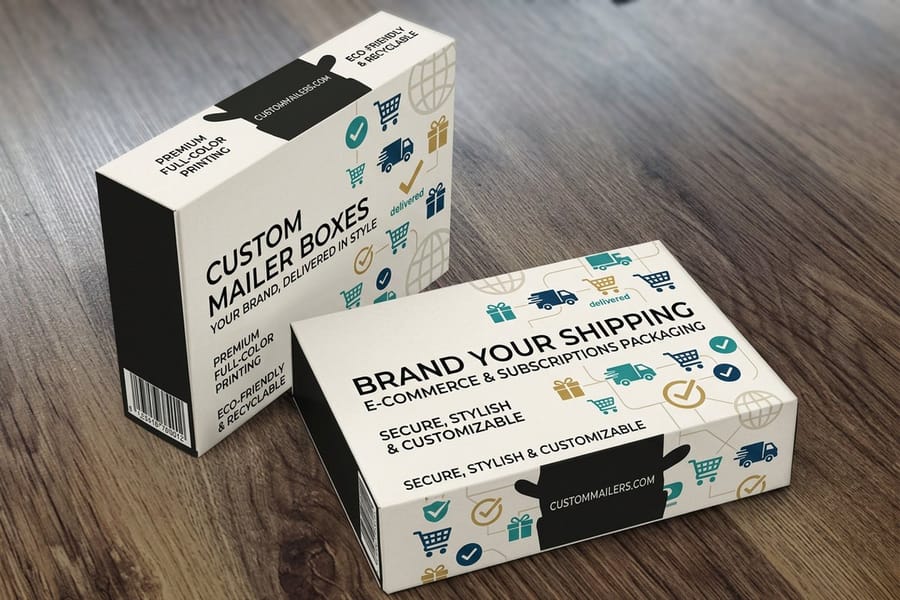
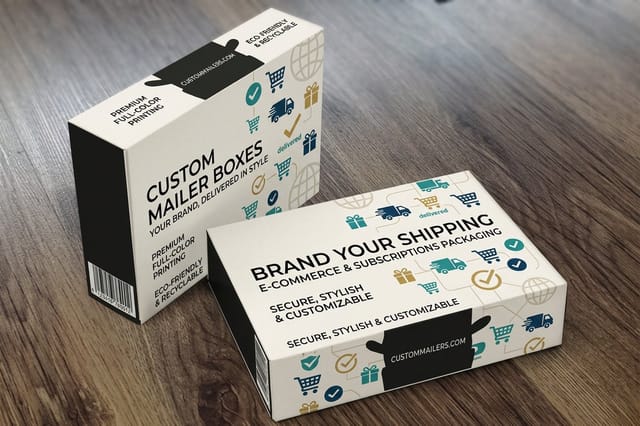
Tape is the cheapest branded surface on a shipment, and it is the one the customer sees first because it runs down the middle of the box and across the flaps. On a plain brown carton, a printed seal turns a generic parcel into your parcel for a fraction of what printed board costs. Custom mailer boxes start at $711.78, so tape is the sensible first step when the volume does not yet justify printed cartons.
It also does a quiet job that has nothing to do with branding. A repeating printed seal makes it obvious when a box has been opened and resealed with clear hardware store tape, and it makes your shipments easy to identify on a loading dock. Pair it with custom shipping labels from $25 and the outside of the box tells a complete story before anyone opens it.
Now the limit. Branded tape does almost nothing on a box that is already fully printed, where it competes with the artwork instead of carrying it. It does nothing inside the box either, so if the unboxing moment is the point, spend the next dollar on what the customer sees after the flaps open. Packaging sleeves start at $438.25 and wrap the product itself, and the ideas in packaging inserts that drive repeat sales are cheaper again. If you are still choosing the carton, mailer boxes versus shipping boxes is the decision to settle first, and the rest of the packaging guides cover the pieces around it.
Wally explains printed tape
One wide web in, a pallet of branded rolls out
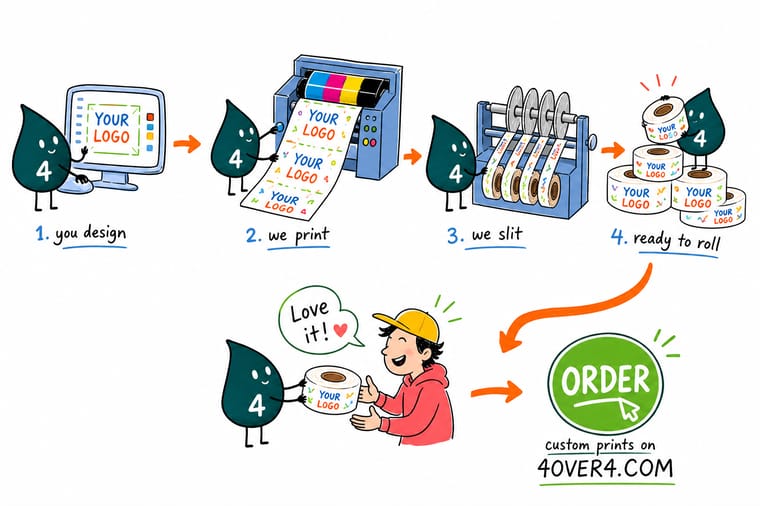
Wally treats the film so the ink will hold, runs it through the press with one plate per color, coats the glue on the back, winds the whole thing into a fat log, then slits the log into 2 inch or 3 inch rolls. The logo comes back once per turn of the cylinder, so he needs artwork that tiles instead of a logo floating in a box. Give him solid shapes and Pantone colors and it prints all day. Give him a photograph and there is no plate that can hold it.
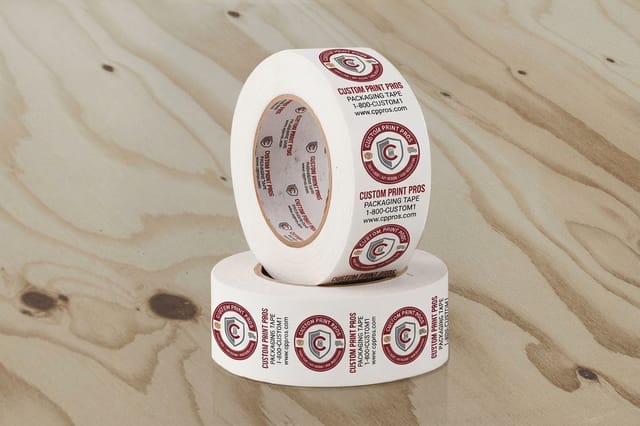
Order custom printed packaging tape →Specs and pricing
Tape, cartons and labels, with live starting prices
Configure the pieces that seal and label a shipment, with the options and starting prices pulled straight from the 4OVER4.COM configurator.

Print it
Put your logo on the outside of every box
Explore more
Where to go next

By the numbers
Packaging print you can count on at 4OVER4
Common Questions
Your printed tape questions, answered
How is custom logo tape made?
It is printed as a wide web and cut down at the end. The film or paper is corona treated so ink will anchor to it, then it runs through a flexographic press where each spot color has its own photopolymer plate and ink station. The printed web moves on to the coater, which lays the adhesive on the back, and the finished web is wound into a jumbo log. Rotary blades slit that log into the widths you ordered. The sequence matters for one practical reason: your artwork has to be right before the plates are cut, because nothing about the image can change once the run starts.
Can I print a photo or a gradient on packing tape?
No, and any supplier who says yes is quietly changing the process on you. Flexo tape presses carry a small number of ink stations and each one lays a solid spot color from a plate, so a photograph has nothing to be built from. Fine gradients break into visible steps and small reversed text fills in. Send solid shapes, a wordmark, a rule, a repeating icon, and pick Pantone references rather than a CMYK build so the color survives on tan film as well as clear.
What is the minimum order for printed tape?
Printed tape is sold by the case rather than by the roll, because the plates and the press makeready cost the same whatever the run length. That fixed cost is spread across the order, so the price per roll drops steeply as the quantity rises and a small run looks expensive per roll. Printed packaging tape at 4OVER4.COM starts at $347.11, and the configurator on the product page shows the quantities and widths we run so you can see where the curve flattens.
Should I use BOPP film or water-activated kraft tape?
Choose by how the box has to behave, not by looks. BOPP is the clear or tan plastic tape that runs off a hand dispenser, it is cheap, fast and fine for most ecommerce boxes. Water-activated kraft is gummed paper that you wet before it sticks, and its starch adhesive bonds into the fibers of the corrugated so the box cannot be opened and resealed without leaving a torn patch. Kraft needs a water dispenser and a little more handling time. If tamper evidence or curbside recycling with the box matters, kraft earns the extra step.
Does two inch or three inch tape make more sense?
Two inch, which is 48 mm, is the default and seals most cartons under about 30 pounds. Three inch, 72 mm, gives you half again the printable area and grips better on heavy boxes and on recycled corrugated, which has a dustier surface that fights adhesive. The catch is that a three inch roll costs more per foot and will not fit a standard two inch dispenser, so switching width means buying dispensers too. Pick one width and stay on it, or old stock becomes useless.
How do I set up artwork so the logo does not get cut in half?
Build the file to the repeat length your printer gives you, and keep anything you cannot afford to lose away from the two long edges. Slitting has a tolerance, so a wordmark that runs to the very edge of the web can come back trimmed on one side. Centre the mark across the width, leave a clear margin top and bottom, and design the repeat so the end of one image meets the start of the next without a visible join. Our guide on preparing files for packaging products covers outlines, bleed and color handoff in more detail.
Get Started
Ready to seal every box with your own name on it?
Pick a width, keep the color count tight, send artwork built to the repeat, and we print tape that identifies your shipment from across the dock.
Legal Disclaimer
Gold Standard guarantees apply to all standard orders placed through 4over4.com. Price match requires verifiable proof of a competitor's published price for an equivalent product with matching specifications and turnaround time. Satisfaction guarantee covers manufacturing defects and print quality issues. Contact support with order number and documentation. On-time delivery rate based on tracked orders 1999 to 2026. Individual results may vary based on shipping carrier performance.
