
Custom Cardboard Mailers Explained for Ecommerce Brands


Sizes measured the way a box plant measures them, what the flute letter buys you, why kraft eats your brand colors, and what the order minimum is actually paying for.
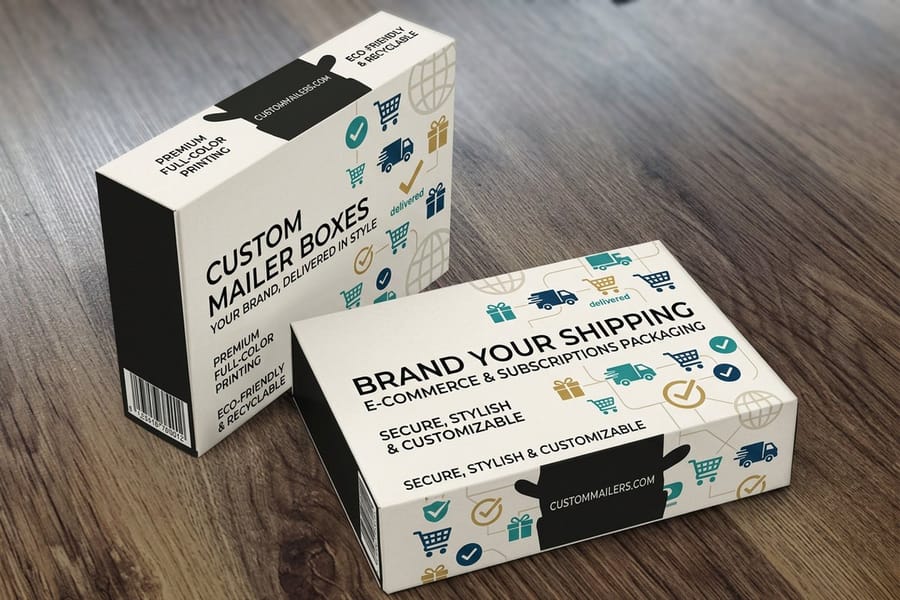
A custom cardboard mailer is a corrugated box folded from one die-cut blank into a base, four walls and a front tuck flap, so it closes without tape and opens like a book. Order it on inside dimensions in length by width by depth, on E flute for a smooth print face or B flute for heavier contents, on kraft for a natural look or white top for accurate color. Custom mailer boxes start at $711.78 because a cutting die and print plates are made once per design.
Quick answer
One die-cut blank, quoted inside, priced by the setup
A cardboard mailer is a one-piece corrugated box, not a taped carton. The blank folds into a base with side walls and a front tuck, so nothing crosses the printed lid and the customer opens it in one movement. Spec it on inside dimensions, add a quarter to half an inch of clearance around the product, and remember the outside grows by about two board calipers, which is what the carrier bills. E flute prints best and covers most ecommerce parcels, B flute takes heavier contents. Kraft cannot give you a true white; white top can. And the minimum exists because the die and plates are made once.
What a Custom Cardboard Mailer Actually Is
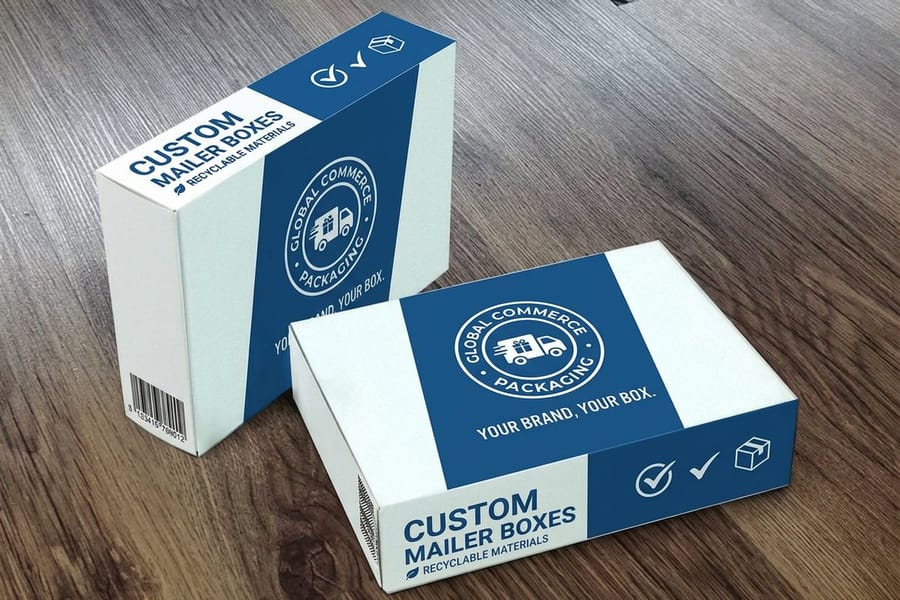
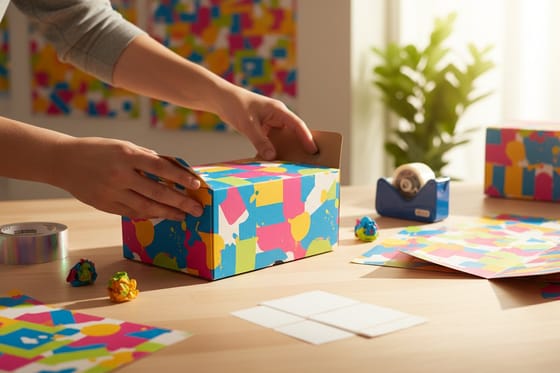
A cardboard mailer starts life as one flat, die-cut sheet of corrugated. The cut shape has a base panel, two side walls, two end walls with wings that fold in behind them, and a long front flap that tucks down the face of the box. Fold it along the creases and it locks together. That is the whole construction, and it is why the trade name for the style is roll end tuck front.
Everything people like about mailers follows from that one-piece build. There is no tape line across the top, so the printed lid stays clean. The tuck holds the box closed under a shipping label without adhesive. And because the lid swings open in one movement, the inside face of the flap is the first thing the customer sees, which is why so many brands print a message there.
The trade-off is the seam count. A regular slotted carton has flaps that overlap and get taped, which puts two layers of board and a strip of tape across the most vulnerable edge. A mailer has a single tucked flap. That is plenty for a two pound parcel and not enough for a fifteen pound one, which is where shipping boxes take over. If you are still choosing between the two styles, our mailer box against shipping box comparison lays the decision out side by side.
Sizing a Mailer Without Paying Freight on Empty Air
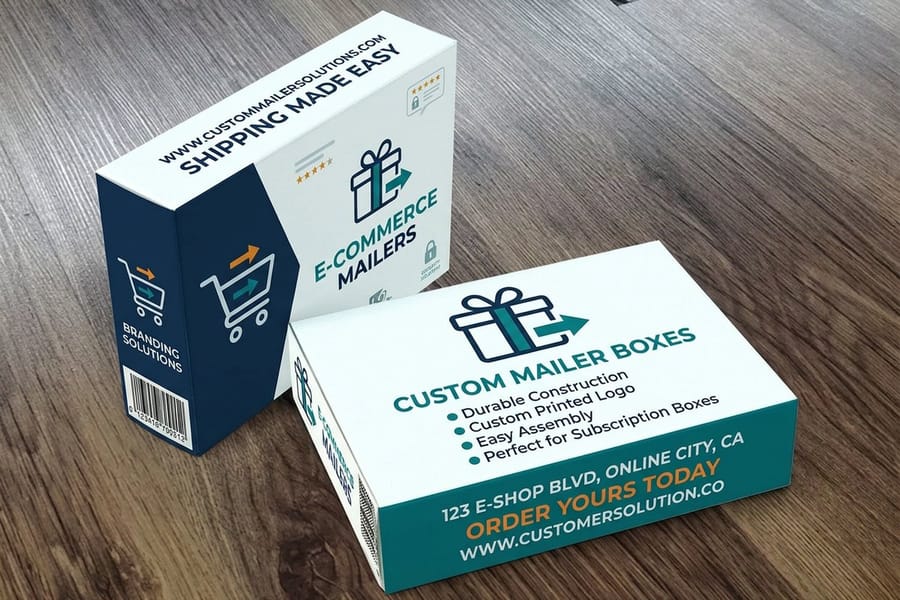
Boxes are quoted on inside dimensions, in length by width by depth order, and depth is the number people get wrong. Length and width are the footprint of the base panel. Depth is the height of the side wall, and on a mailer it is usually the smallest of the three because the style suits flat and shallow parcels better than tall ones.
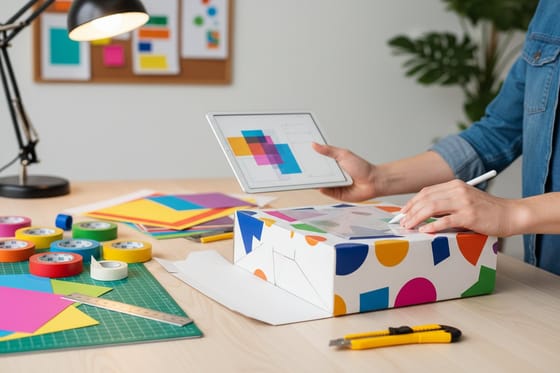
Start from the product, not from a size chart. Measure it at its widest point in every direction, then add clearance: about a quarter inch per dimension for something rigid that sits snug, half an inch to an inch if tissue, a thank-you card and a layer of void fill go around it. Under-clearance is worse than over-clearance, because a product that has to be forced in will bow the walls and split a crease in transit.
Then look at the outside. The outside cube is the inside plus roughly two board calipers, so an E flute mailer grows about an eighth of an inch overall and a B flute mailer about a quarter. That matters because carriers bill dimensional weight on outside measurements, and UPS and FedEx divide the cubic inches by 139 on standard domestic retail rates. One extra inch of depth you never needed is a surcharge you pay on every order for as long as that box exists.
Two references worth keeping open while you spec: our guide to measuring a box for shipping and the box size chart by product type, which gives you a sane starting point per category. When the size is settled, pull the dieline from the blank template library so your artwork lands on the right panels.
Board Strength, Flutes and the ECT Number
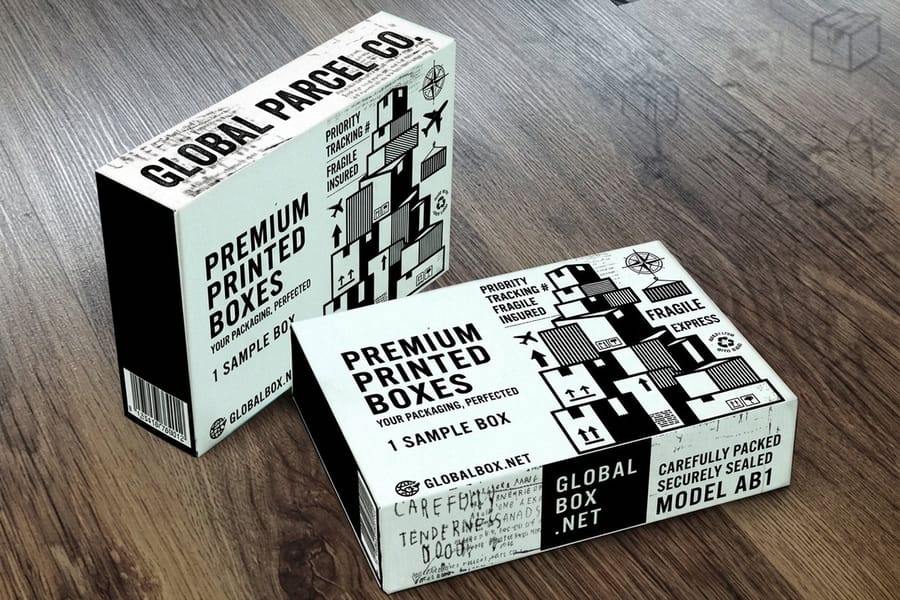
Corrugated is a sandwich: a wavy fluted layer glued between two flat liners. The flute letter tells you how tall that wave is, and that single choice sets both how much abuse the box absorbs and how well it prints.
| Board | Wall thickness | Print surface | Where it belongs |
|---|---|---|---|
| E flute | About 1/16 in single wall | Smoothest of the three, holds fine type and detailed artwork | The default ecommerce mailer: apparel, cosmetics, candles, small electronics, subscription boxes |
| B flute | About 1/8 in single wall | Good, though heavy solids can show the flute lines through the liner | Heavier or fragile contents, larger footprints, anything that gets stacked |
| Double wall | Two fluted layers, roughly 1/4 in | Coarsest, better suited to simple logos than fine artwork | Heavy goods, freight, boxes that carry weight on top of them |
Strength itself gets rated two ways, and mixing them up leads to over-buying. Edge crush test, written as ECT, measures how much force the standing wall takes before it collapses, which is what matters for stacking. The Mullen burst test measures how hard you have to push a probe through the face, which is what matters for rough handling and puncture. A 32 ECT single wall is roughly the everyday equivalent of a 200 pound burst board, and it is the workhorse spec behind most parcels moving through a carrier network today.
Practical rule from behind the counter: pick the flute for the print and the contents, not for reassurance. Going from E to B on a two pound apparel order buys you almost nothing and adds cube, weight and cost to every shipment. Going from E to B on a ceramic mug is money well spent. For the layer under all of this, read corrugated board explained, and if you are also weighing folding cartons, cardstock against corrugated covers where each material stops working.
Printing on Kraft, White Top, and the Inside Face
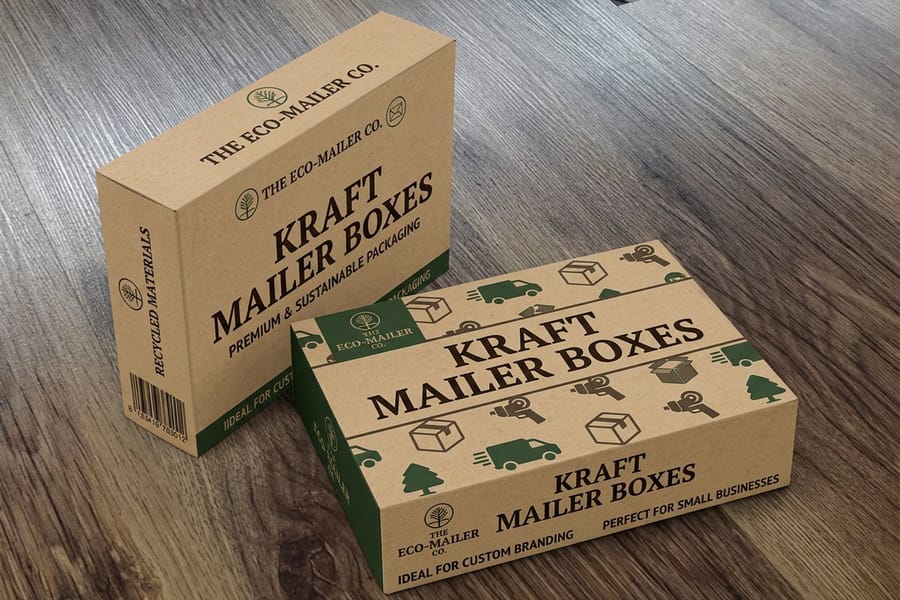
The board color decides your palette before a single file is opened. Ink is transparent, so it takes the color of whatever sits beneath it, and brown kraft pushes everything warm and dark. A crisp mid blue goes muddy. A soft pastel disappears. And white is not an ink in standard process printing, it is just unprinted board, which on kraft means brown.
| Option | What the color does | Relative cost | Best for |
|---|---|---|---|
| Kraft board | Every ink shifts warm, no true white, one or two colors look intentional | Lowest | Natural, minimal and sustainability-led brands |
| White top board | Accurate full color, clean whites, photographic artwork holds up | Higher than kraft | Color-critical brands and anything with product imagery on the lid |
| Printed inside | Adds a second printed face the customer sees on opening | Adds a print pass on top of either board | Unboxing moments, care instructions, referral codes |
One more thing about heavy coverage. Corrugated is a wave glued to a flat liner, so a large flood of solid ink can reveal faint stripes running with the flutes, an effect called washboarding. It is more visible on B flute than on E flute, and more visible in a dark solid than in a light one. If your design is one big black panel, ask for E flute and accept a small amount of texture as part of the material.
Set the file up on the dieline, not on a rectangle. Keep type and logos clear of the crease lines by a comfortable margin, because a fold running through a letterform looks like a defect. Our packaging file prep guide walks through bleed, dielines and proofing. When the box is set, printed packaging tape from $347.11 carries the same branding across cartons you have not customized, and kraft mailer boxes give you the natural look without a color management fight.
Recycled Options, and What the Minimum Really Buys
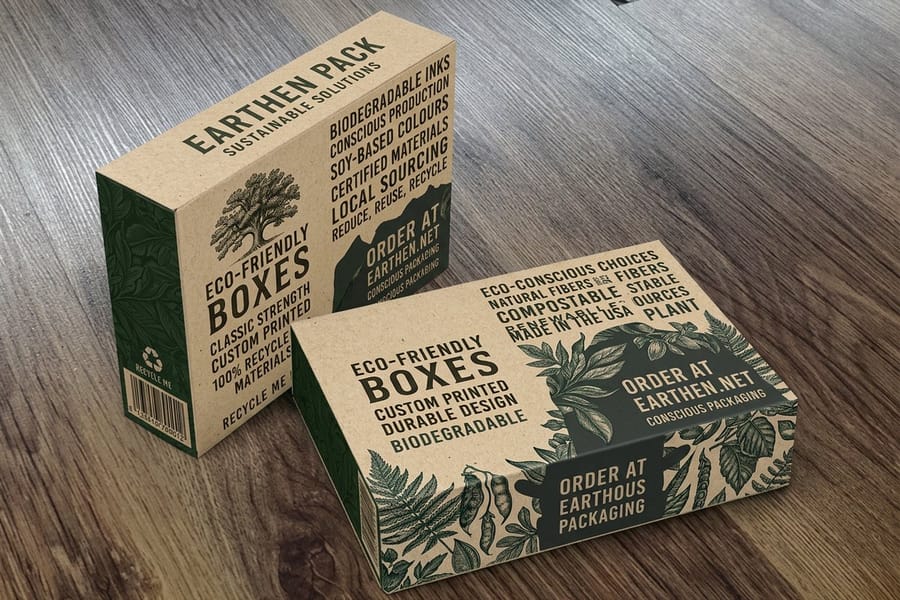
Corrugated is already the easy case in packaging: it is paper, it goes in the curbside stream, and recycled content in the liner is normal rather than a premium request. What ruins that is anything bonded to the board that is not paper. Gloss lamination, a metallized layer or a plastic window turns a recyclable box into a mixed material one. Water-based inks, soy inks and heavy coverage do not.
So the sustainable spec is mostly a list of things you leave off. Uncoated kraft or recycled white top, no lamination, ink limited to what the design genuinely needs, and a size that fits the product instead of a size that needs a bag of filler to stay still. Right-sizing is the biggest single lever and it saves you money at the same time, which is rare. Eco friendly boxes and the wider eco friendly printing collection group the recycled and uncoated options, and choosing an eco friendly printing service covers what to ask a supplier before you believe a claim.
Now the part nobody enjoys. Custom boxes carry a real setup: a steel cutting die is made for your exact size and style, and print plates are made for your artwork. That happens once, whether you order two hundred boxes or five thousand. Custom mailer boxes start at $711.78 at 4OVER4.COM, and kraft and eco friendly versions start at the same figure, because the setup dominates the first quantity break.
Read that number as an entry ticket rather than a unit price. The per-box cost falls steeply as the run grows, so the honest advice is to lock the size before you order rather than buy a small run to test one, and to hold the size for as long as your product line allows so repeat runs skip a new die. If you are not there yet, ship in a stock carton with printed tape and a custom shipping label from $25, then move to a printed mailer when the volume justifies the die. The full range sits in custom box printing and the packaging printing collection.
Wally folds a mailer
One flat blank, four creases, no tape
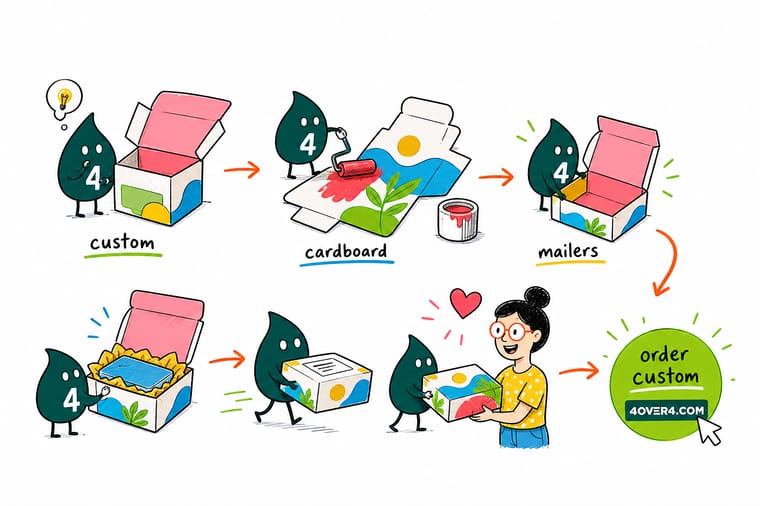
Wally starts with a flat die-cut sheet: a base panel, two side walls, two end walls with wings, and a long front flap. He folds the walls up, tucks the wings behind them and drops the flap down the face. Done, and nothing crossed the printed lid. Then he measures inside, because that is how a box plant quotes it, and adds a little clearance so the product is not forced in. Ask him for E flute when the artwork is detailed and B flute when the contents are heavy.
Configure custom mailer boxes →Specs and pricing
Mailer options, sizes, and starting prices
Compare the mailer options side by side, with live configuration choices and starting prices straight from the 4OVER4.COM configurator.

Print it
Order a mailer built around your product
Explore more
Where to go next
By the numbers
Packaging you can count on at 4OVER4
Common Questions
Your cardboard mailer questions, answered
What is the difference between a cardboard mailer and a shipping box?
A mailer folds from one die-cut piece of corrugated into a base, four walls and a front tuck flap, so it closes without tape and opens flat in front of the customer. A regular shipping carton is a regular slotted container: four flaps meet at the top, four meet at the bottom, and both seams need tape. Mailers suit small parcels that are meant to be seen when opened. Cartons suit bulk, odd shapes and anything heavy enough to need a taped and reinforced seam.
How do I pick the right size mailer?
Measure your product at its widest point in all three directions, then add about a quarter inch per dimension if the product is rigid and packed snug, or half an inch to an inch if you need tissue, a card and void fill around it. Quote those numbers as inside dimensions, in length by width by depth order. Then check the outside cube against carrier dimensional weight rules before you commit, because a mailer one inch deeper than it needs to be raises the freight on every order you ever ship in it.
Is E flute strong enough to ship?
For most ecommerce parcels, yes. E flute is a single-wall board roughly a sixteenth of an inch thick, and a standard 32 ECT single wall handles the typical apparel, cosmetics, candle or small electronics parcel through a carrier network without complaint. It stops being the right answer when the contents are heavy, when the box is large enough to flex across the face, or when several boxes get stacked on a pallet. At that point move to B flute or a double-wall board.
Can you print white ink on a kraft mailer?
Not the way most people expect. Standard process printing has no white ink, so anything white in your artwork is simply the unprinted board, which on kraft means brown. To get a true white on kraft you need an opaque white pass laid down first, which is an extra print unit and extra cost. If your logo relies on white, the cheaper route is usually a white top mailer with your brown or kraft look printed onto it.
What is the minimum order for custom cardboard mailers?
Custom mailer boxes at 4OVER4.COM start at $711.78, and kraft mailer boxes and eco friendly boxes start at the same entry point. That figure covers the cutting die and print setup as well as the boxes themselves, which is why the number looks steep next to a flat-print product and why the per-box cost drops sharply once you go past the first quantity break. Configure the size and quantity on the product page to see the exact price for your run.
Are printed cardboard mailers recyclable?
Plain and printed corrugated goes into curbside paper recycling in most of the United States. What breaks that is anything bonded to the board and not made of paper: gloss or matte plastic lamination, a metallized foil layer, or a full plastic window. Water-based and soy inks are fine, heavy full-coverage ink is fine, and a kraft mailer with one or two colors is the cleanest option of the lot. If recyclability is part of the brief, ask for an uncoated board and keep the finish off it.
Get Started
Ready to put your product in a box that fits it?
Set the inside size, pick E or B flute, choose kraft or white top, and we cut the die and print the mailer your parcels ship in from here on.
Legal Disclaimer
Gold Standard guarantees apply to all standard orders placed through 4over4.com. Price match requires verifiable proof of a competitor's published price for an equivalent product with matching specifications and turnaround time. Satisfaction guarantee covers manufacturing defects and print quality issues. Contact support with order number and documentation. On-time delivery rate based on tracked orders 1999 to 2026. Individual results may vary based on shipping carrier performance.
