
How to Measure a Box for Shipping the Right Way


Get the three numbers right and everything else follows: the correct label, an accurate rate and no surprise surcharges. Interior and exterior dimensions differ by the board thickness, and carriers bill on the outside.
Measure a box as length by width by height, in that order. Length is the longest side, width is the shorter side of the opening, and height is the depth. Measure the outside for shipping rates and the inside to fit a product, round up to the nearest whole or half inch, then compare actual weight to dimensional weight (L x W x H divided by the carrier divisor) and pay the higher.
Start here
Inside for the product, outside for the rate
Record a box as length by width by height. Length is the longest side, width the shorter side of the opening, height the depth. Use inside dimensions to fit a product and outside dimensions to price shipping, round up, then compare scale weight to dimensional weight and pay the higher. The diagram shows the three axes at a glance.
Length, width, and height, in that exact order
Every box has three dimensions, and carriers always read them the same way: length, then width, then height. Getting the order right keeps your label, your rate quote, and your carrier system all in agreement.
Length is the longest side of the box. Width is the shorter side of the same opening, measured perpendicular to the length. Height is the depth, measured straight up from the base and perpendicular to both. Lay the assembled box on a flat surface, keep the tape square to each edge, and read edge to edge rather than from a seam.
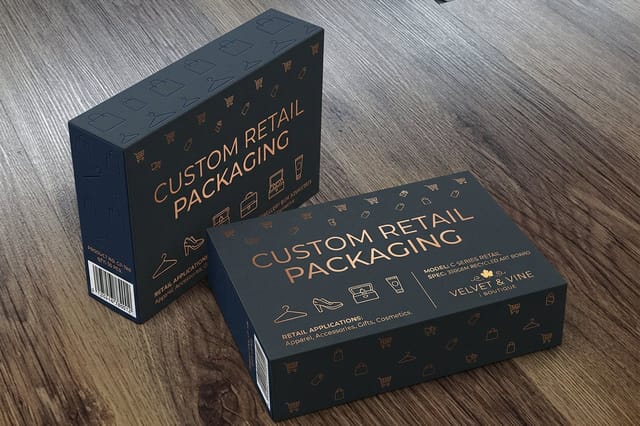
When you order custom shipping boxes, you enter these three numbers as the interior size and the box is built to fit. For a branded unboxing, mailer boxes and retail boxes use the same L x W x H logic. Our guide on how to make custom boxes walks the full spec from there.
Inside versus outside dimensions
The single most common measuring mistake is confusing the box you need with the box you are billed for. The two dimensions answer different questions.
Inside dimensions tell you what fits. Measure the interior cavity when you are choosing a box for a product so the item sits with room for cushioning and the flaps close flat. Outside dimensions set the price. Carriers rate parcels on their exterior size, so measure the outside for any shipping calculation. On corrugated board the wall adds roughly an eighth of an inch per side, so the outside is always a little larger than the inside.
When you order custom, you specify the interior size and we build the exterior around the board thickness. Sizing that cavity close to the product is the easiest way to cut both material cost and dimensional weight. To pick the right board, see cardstock vs corrugated.
Dimensional weight: when volume beats the scale

Carriers do not just weigh your parcel, they measure it. For a box that is light but bulky, they bill on volume using dimensional weight, so an oversized box full of packing peanuts can cost more than the scale suggests.
To find it, multiply length by width by height in inches, then divide by your carrier dimensional divisor, commonly 139 or 166 for domestic ground. The result is the dimensional weight in pounds. The carrier then charges you on whichever is greater, dim weight or actual scale weight. A 12 by 12 by 12 inch box, for example, is 1,728 cubic inches, which divided by 166 is about 10.4 pounds of billable weight even if the contents weigh two.
That same math, run on three common box sizes, with both divisors side by side. Carriers round the result up to the next whole pound, so treat the decimals as the floor rather than the final bill.
| Box size (length by width by height) | Cubic inches | Dim weight at divisor 139 | Dim weight at divisor 166 |
|---|---|---|---|
| Small, 10 by 8 by 6 inches | 480 | 3.5 lb | 2.9 lb |
| Medium, 12 by 12 by 12 inches | 1,728 | 12.4 lb | 10.4 lb |
| Large, 20 by 16 by 12 inches | 3,840 | 27.6 lb | 23.1 lb |
Read across the rows and the pattern is plain: the divisor decides how hard volume hits you, and the box size decides how much volume there is to bill. The same 20 by 16 by 12 inch box comes out near 28 pounds on a 139 divisor and near 24 pounds on 166, a four pound swing on a single parcel before anything goes inside it. Trim that large box by two inches on every side, down to 18 by 14 by 10, and it falls to 2,520 cubic inches, roughly 18.1 pounds at 139 and 15.2 pounds at 166. Two inches of air removed on each dimension is worth close to ten billable pounds.
The fix is to size the box to the product. A snug mailer box lowers both the material you buy and the dim weight you pay. Measure the packed product, add a quarter inch of clearance per side for cushioning, then round to the nearest quarter inch and build to that number. When you build a custom box in the configurator, you can right-size it to the exact contents.
Girth and oversized parcel limits
For larger boxes there is one more number carriers care about: girth. Girth is the distance around the thickest part of the parcel, calculated as length plus two times the width plus two times the height.
Carriers add length plus girth to decide whether a parcel is oversized. Cross a threshold, often around 130 inches of length plus girth for standard ground service, and the box picks up an oversized or additional-handling surcharge that can dwarf the base rate. If a parcel is close to a limit, measure carefully and consider a smaller or differently proportioned box to stay under it.
Run the numbers on the large box above and you can see how much room is left: 20 plus two times 16 plus two times 12 gives 20 inches of length and 56 inches of girth, 76 inches in total, well inside the 130 inch line. A long, flat box is what gets you in trouble, because length counts once but width and height each count twice.
Right-sizing again pays off. A box built to the product rather than a generic stock size keeps girth low and avoids surcharges. Our guide on types of packaging boxes helps you match the structure to the contents.
From measurements to an ordered box
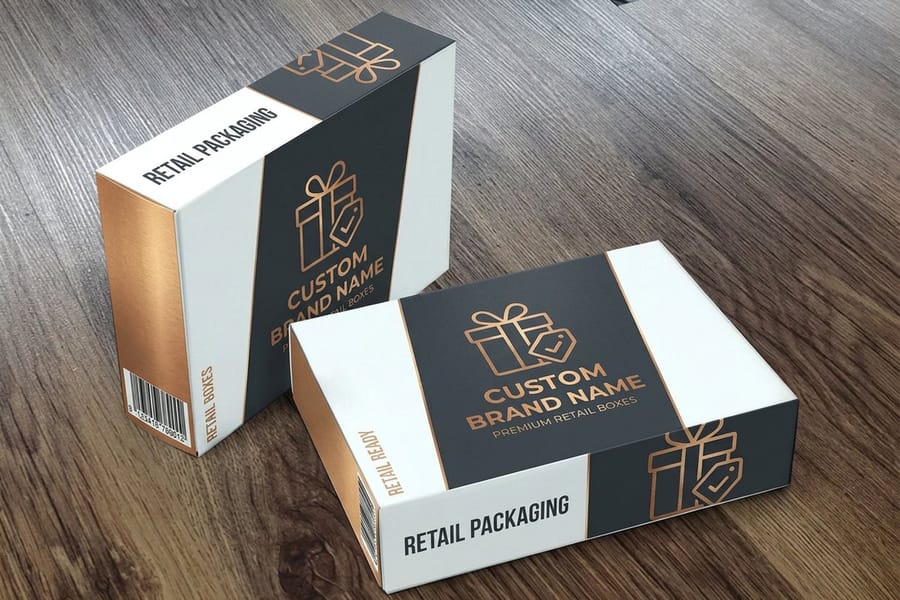
Once you have your three numbers, ordering the right box is straightforward. Decide whether you need a plain shipping box, a branded mailer for the unboxing moment, or a retail box that doubles as shelf display, then enter your interior dimensions in the configurator.
From there you set the board grade for the weight and fragility of the contents, add print if you want your logo on the box, and choose the quantity. Larger runs lower the unit price, and the total updates live as you adjust each option so you can balance protection against cost.
Before you finalize, run through your measurements once more: length longest, width shorter side, height the depth, rounded up, with the outside size checked against your carrier limits. To prep artwork for a printed box, see preparing files for packaging products.
Wally measures twice, ships once
Three numbers, always in the same order
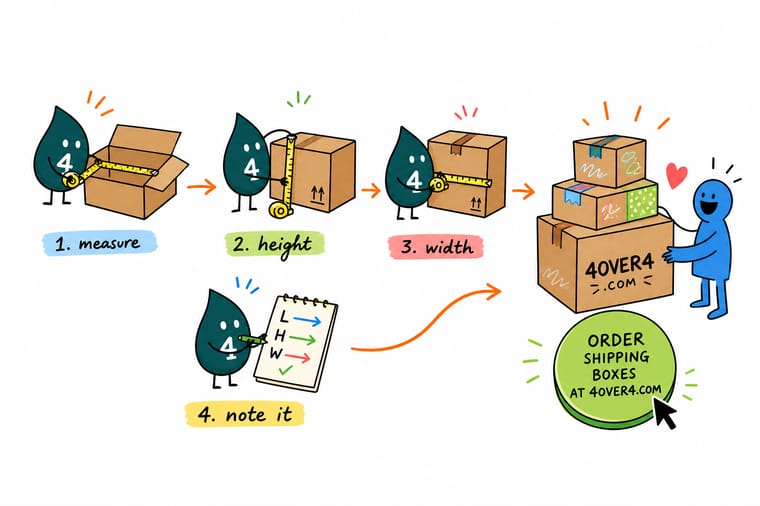
Wally reads a box the way a carrier does: length is the longest side, width the shorter side of the opening, height the depth. He measures the inside to fit the product and the outside to price the trip, rounds up, then checks dimensional weight so a light, bulky box never surprises him at the counter. Right-size the box and 4OVER4 builds it to your exact inside dimensions.
Order custom shipping boxes →Quick reference
The box measurement cheat sheet
Every shipping calculation starts from these figures. Take them in order and your rate and label will line up.
| Measurement | How to take it | Why it matters |
|---|---|---|
| Length | Longest side of the box | Carriers list the longest edge first, so measuring it correctly keeps your label accurate. |
| Width | Shorter side of the opening | The second dimension is the shorter side of the face where the box opens. |
| Height | Perpendicular to length and width | The depth of the box, measured straight up from the base. |
| Inside vs outside | Measure both | Inside tells you what fits with padding, outside sets the shipping rate. |
| Dimensional weight | (L x W x H) / divisor | Light, bulky parcels are billed on volume, so compare dim weight to actual weight. |
| Girth | L + 2W + 2H | Used to flag oversized parcels that carry a surcharge past a threshold. |
| Rounding | Up to nearest whole/half inch | Carriers round up, so measuring generously prevents a counter reclassification. |
Step by step
Measure a box for shipping in 7 steps
- Lay the box on a flat surface, opening upSet the assembled box down so you can see all three dimensions clearly and the seams are square.
- Measure the lengthFind the longest side of the box and measure edge to edge with a tape or ruler. This is the first number carriers read.
- Measure the widthMeasure the shorter side of the same opening, perpendicular to the length. This is your second number.
- Measure the heightMeasure the depth straight up from the base, perpendicular to both length and width. This is your third number.
- Choose inside or outside for the jobUse interior dimensions to confirm the product fits with padding, and exterior dimensions to calculate the shipping rate.
- Calculate dimensional weightMultiply length by width by height, divide by your carrier divisor (often 139 or 166), then compare that to the actual scale weight and use the higher figure.
- Check girth for oversized limitsAdd length plus two times width plus two times height. If the total crosses your carrier oversized threshold, expect a surcharge or size a smaller box.
Specs and pricing
Custom shipping box specs and live pricing
Enter your interior dimensions and the box is built to fit. Shipping boxes run 250 for $711.78, which is $2.85 a box.

| Quantity | Price Per Unit | Total |
|---|---|---|
| 250 | $2.85 | $711.78 |
| 500 | $1.42 | $711.78 |
| 1,000 | 79.7¢ | $797.02 |
| 2,500 | 53.5¢ | $1,338.30 |
| 5,000 | 44.6¢ | $2,231.42 |
| 10,000 | 40.4¢ | $4,044.70 |
| 15,000 | 39.0¢ | $5,844.45 |
| 20,000 | 38.3¢ | $7,657.73 |
Order it
Order custom boxes at 4OVER4
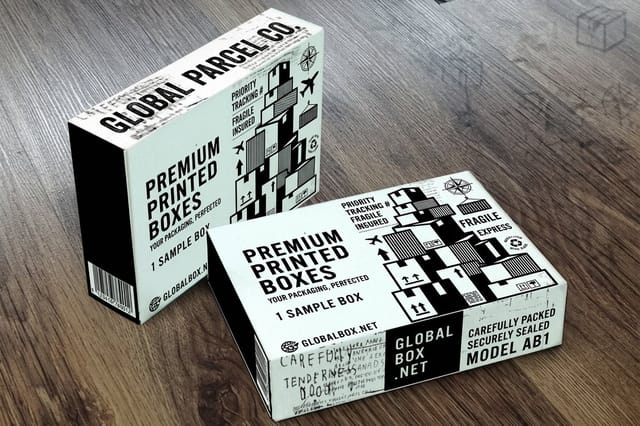
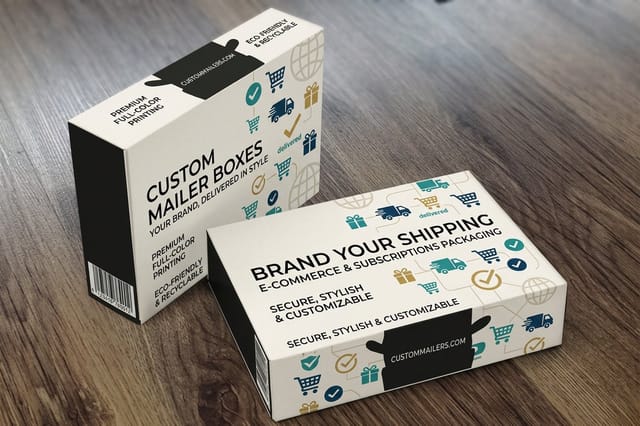
See it in use
Real boxes, printed and built in-house
Explore more
Where to go next




By the numbers
Length, width, height, and the 166 divisor
Common Questions
Common questions about measuring a box for shipping
How do I measure a box for shipping?
Measure the box in three dimensions and always list them as length, width, and height. Length is the longest side of the box. Width is the shorter side of the same opening, measured perpendicular to the length. Height is the depth, measured straight up from the base and perpendicular to both other dimensions. Measure the outside of the box for shipping rates and round each figure up to the nearest whole or half inch, since carriers round up when they price a parcel. Recording the numbers in the L x W x H order matters because carrier systems and labels read them in that sequence.
Should I measure the inside or the outside of the box?
It depends on what you are solving. Measure the inside dimensions when you are choosing a box for a product, so you can confirm the item fits with room for cushioning and the flaps close flat. Measure the outside dimensions when you are calculating shipping, because carriers price parcels on their exterior size and dimensional weight, not the interior cavity. For custom boxes you order to fit a product, you specify the inside dimensions and the manufacturer builds the outside around the wall thickness, which for corrugated is usually an eighth of an inch or so per wall.
What is dimensional weight and how do I calculate it?
Dimensional weight, also called dim weight, is a pricing method carriers use for parcels that take up a lot of space relative to how much they weigh. To calculate it, multiply length by width by height in inches to get cubic size, then divide by the carrier dimensional divisor, commonly 139 or 166 for domestic ground. The result is the dimensional weight in pounds. Carriers then bill you on whichever is greater, the dimensional weight or the actual scale weight. Because of this, a big box holding something light can cost more than the scale suggests, which is why sizing the box close to the product saves money.
What does box measuring and shipping cost, and how are prices set?
Measuring costs nothing but a tape measure and a minute of your time. Shipping cost is set by the carrier from the box outside dimensions, the dimensional or actual weight (whichever is higher), the distance zone, and the service speed. Ordering the boxes themselves scales with quantity, box style, size, and material: larger runs lower the unit price. On a custom box you set the interior size, style, and stock in the configurator and the total updates live, so you can right-size the box to the product and cut both packaging and shipping cost at once.
What sizes, stocks, and styles of shipping box can I order?
You can order shipping boxes, mailer boxes, and retail boxes in a wide range of sizes built to your interior dimensions, in corrugated and sturdier double-wall constructions for heavier or fragile goods. Styles include the standard regular slotted container for shipping, folding mailer boxes for a branded unboxing, and retail-ready boxes for shelf display. Use the live specs panel below to see the sizes, board grades, and print options available and how each choice affects the price.
How long do custom shipping boxes take to make and ship?
Turnaround depends on the box style, material, print, and quantity, and the configurator shows the available production speeds as you build the order. Simple stock-size boxes move faster than fully custom printed structures. 4OVER4.COM ships from New York with a 99.8 percent on-time record, so to hit a deadline, set your box options first and pick the production speed that lands your boxes in time.
What is girth and when does it matter?
Girth is the distance around the thickest part of the parcel, calculated as length plus two times the width plus two times the height. Carriers use length plus girth to flag oversized parcels. When a box crosses a carrier size threshold, often around 130 inches of length plus girth for standard service, it gets an oversized or additional handling surcharge. If your parcel is close to a limit, measure carefully and consider a slightly smaller or differently proportioned box to stay under the threshold.
Get Started
Order 250 shipping boxes built to your interior size
Enter your interior dimensions at 4OVER4.COM and we build the box to fit, in the board grade and print your product calls for. Retail boxes and mailer boxes run at the same 250 for $711.78.
Legal Disclaimer
Gold Standard guarantees apply to all standard orders placed through 4over4.com. Price match requires verifiable proof of a competitor's published price for an equivalent product with matching specifications and turnaround time. Satisfaction guarantee covers manufacturing defects and print quality issues. Contact support with order number and documentation. On-time delivery rate based on tracked orders 1999 to 2026. Individual results may vary based on shipping carrier performance.
