
Corrugated Coroplast Board Explained for Outdoor Signs


Corrugated board in signage means corrugated plastic, not cardboard. Flute direction is the spec that decides whether an H-stake grips or the sign flops.
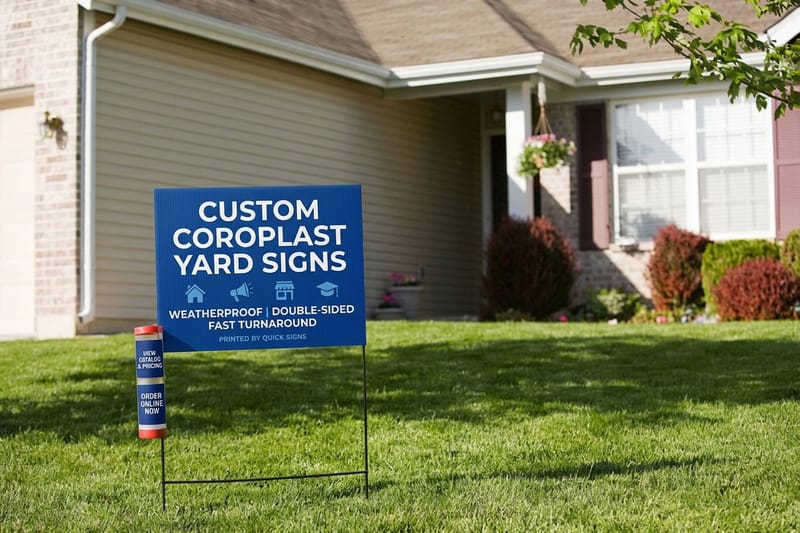
Corrugated board in signage means corrugated plastic (coroplast), a fluted polypropylene sheet that is light, rigid, and waterproof. The hollow flutes run vertically on yard signs so a wire H-stake slides up and holds the sign in grass. It does not absorb water or rot, 4mm is the standard thickness, and it prints full color on one or both sides.
Start here
Plastic, not cardboard
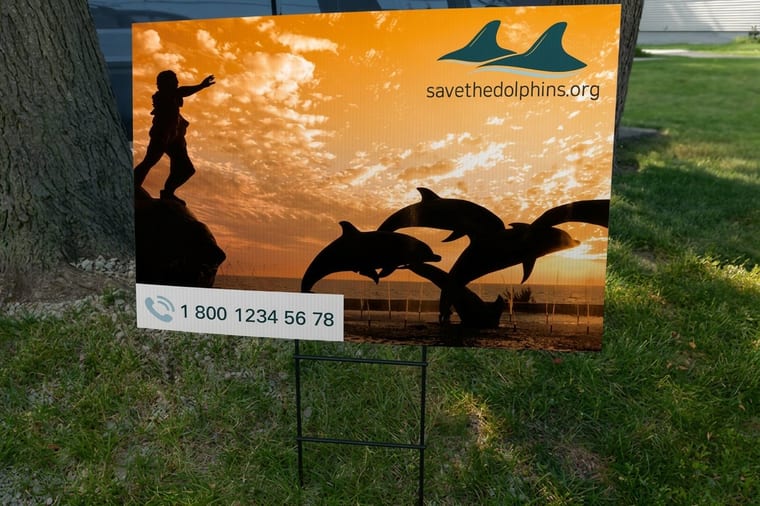
Coroplast is a fluted plastic board, two flat faces with hollow ribs between them, light, rigid, and waterproof. The flutes run vertically on yard signs so a wire H-stake slides up and holds the sign in grass. It does not absorb water or rot, 4mm is standard, and it prints full color on one or both sides. The diagram shows the flute cross-section and H-stake mount.
What is coroplast?
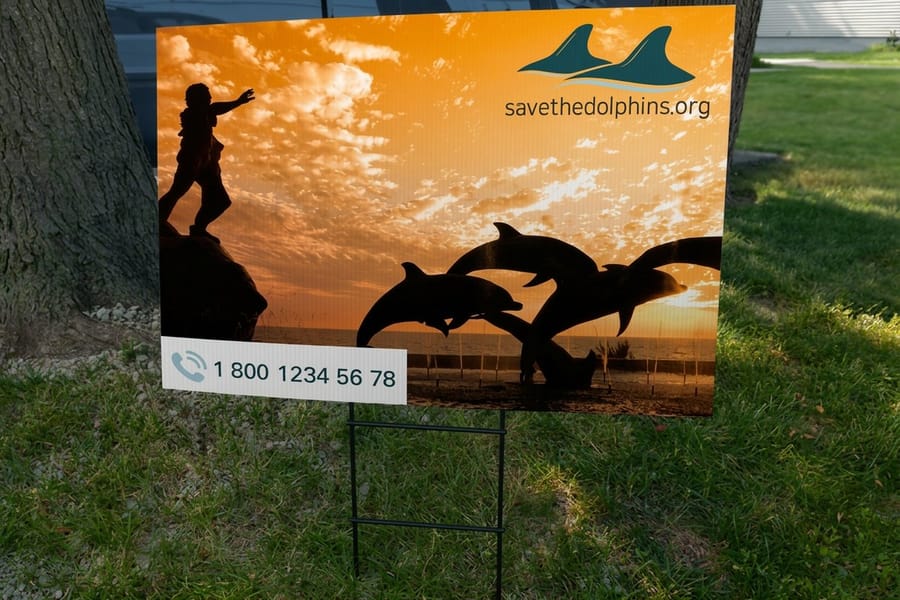
Coroplast is corrugated plastic sheet. Two flat polypropylene skins with hollow ribs, called flutes, running between them. Coroplast started as a brand name and became the word the whole trade uses for the material, so a coroplast sign and a corrugated plastic sign are the same board. It is waterproof, light, rigid, and printable on one or both sides.
Ask for it by any of those names and you get the same thing: 4mm is the standard gauge for a yard sign, and heavier gauges are there for larger panels or a campaign that has to hold up over a longer run. The flutes run vertically so the two legs of a wire H-stake slide straight up the hollow channels, which is how a coroplast sign stands in a lawn in seconds with no tools. Print one side when traffic passes one way, both sides for a corner lot or a two-way street.
What it is not: paper corrugated board. That is box material, it drinks water and softens. Coroplast is plastic all the way through, so rain, sprinklers, and sun do not warp or rot it, and a sign can be pulled up, stacked, and put out again for the next open house. Order it as coroplast signs, as staked coroplast yard signs, or as custom yard signs with matching H-stakes. The sections below cover flute direction, outdoor life, and mounting in detail.
What corrugated plastic board actually is
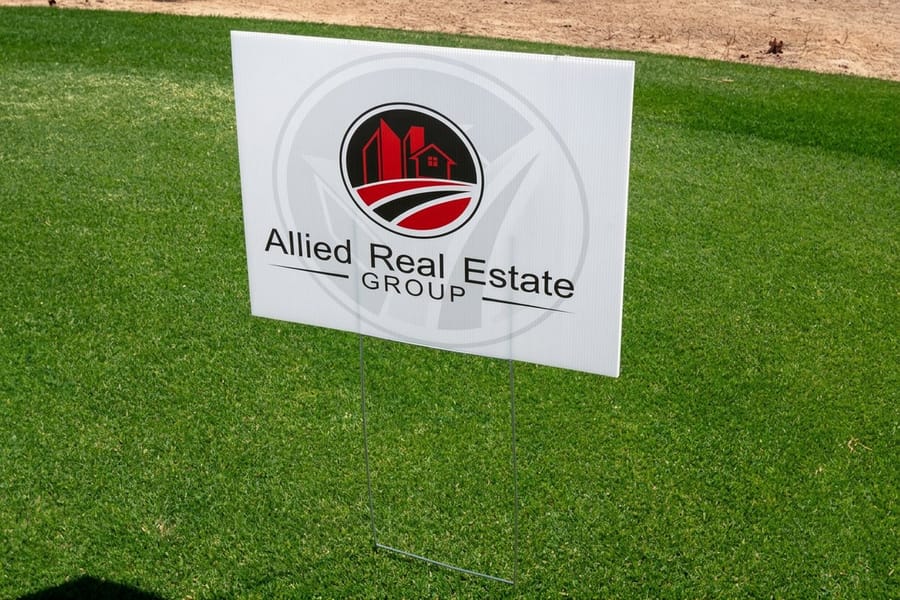
When a sign shop says corrugated board, they almost always mean corrugated plastic, best known by the brand name Coroplast. It is a fluted polypropylene sheet: two flat plastic faces with hollow ribs, the flutes, running between them, the same structure that makes cardboard rigid but built entirely from plastic.
That difference is everything outdoors. Because it is plastic, coroplast does not absorb water, warp, or rot the way paper corrugated board would. It is light enough to carry a stack under one arm, rigid enough to stand on a stake, and cheap enough to print in the hundreds for a campaign, which is why it dominates yard, event, and real estate signage.
This guide explains the flute direction, the weatherproofing, and the H-stake mounting that make it work. If you are weighing it against metal or PVC, our comparison of aluminum, coroplast, and PVC lays out the tradeoffs.
Flute direction, and why it matters

The flutes are the hollow channels running through the board, and their direction is not a detail, it is what lets the sign stand up. For a staked yard sign, the flutes must run vertically.
The reason is the stake: a wire H-stake mounts by sliding its two legs up into the flutes. When the flutes run vertically, the legs slide straight up and grip the full height of the sign, holding it steady in wind. If the flutes ran horizontally, the stake would have nowhere to seat and the sign would flop. That is why every coroplast yard sign is produced with vertical flutes.
A sign meant for wall mounting or zip-tie fixing to a fence may use a different orientation, so when you order we set the flute direction to match how you plan to mount it. Get this right and mounting takes seconds; get it wrong and the sign will not stand.
Why it lasts outdoors
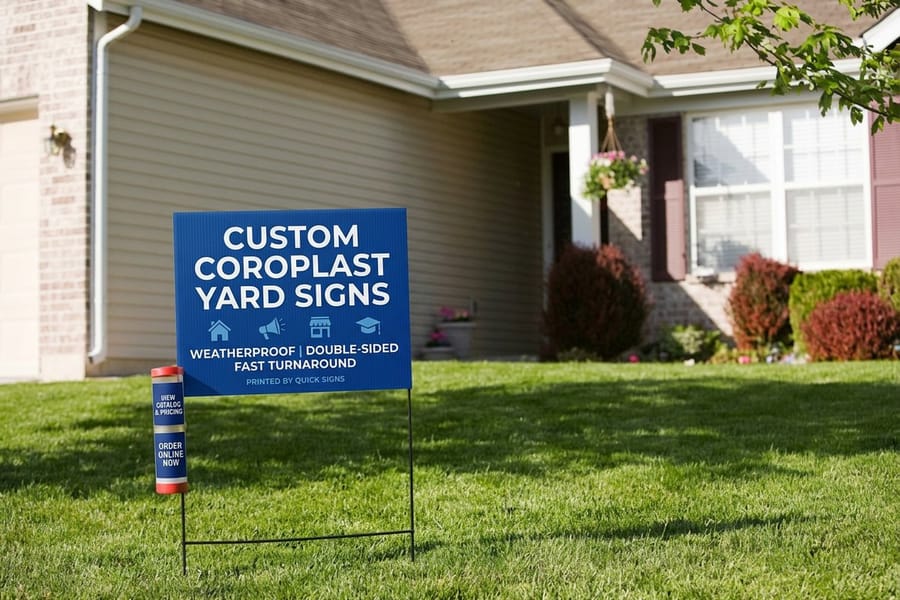
The reason coroplast owns the outdoor short-term signage market is simple: plastic does not care about weather. It does not absorb moisture, so rain runs off without swelling or warping the board, and it will not rot, mildew, or fall apart the way a paper sign would after one wet night.
Sun is handled well too. The printed inks are durable enough for weeks or months of exposure, which covers the lifespan of most campaigns, open houses, and events. Because the board is reusable, you can pull the signs, store them flat, and put them back out for the next event, getting several uses from a single print run.
For longer-term or higher-end permanent signage, a rigid metal or PVC panel may be the better call, which our material comparison covers. But for the vast majority of outdoor sign jobs measured in weeks and months, coroplast is the efficient choice.
H-stakes: a yard sign in seconds

The pairing of corrugated plastic and the wire H-stake is what makes yard signs so effortless. The stake is a simple double-pronged wire that pushes into the ground, with two legs that slide up into the vertical flutes of the board.
To set one up, you push the H-stake legs into the flutes, then press the whole assembly into the grass. No tools, no fasteners, no post. In under a minute a flat printed board becomes a freestanding sign, and pulling it back up is just as quick. That speed is why campaigns and open houses can blanket a neighborhood in an afternoon.
Order matching yard signs and stakes together so every sign has what it needs to stand. For a corner lot or a two-way street, print both sides so the message reads from either direction.
Designing and ordering coroplast signs
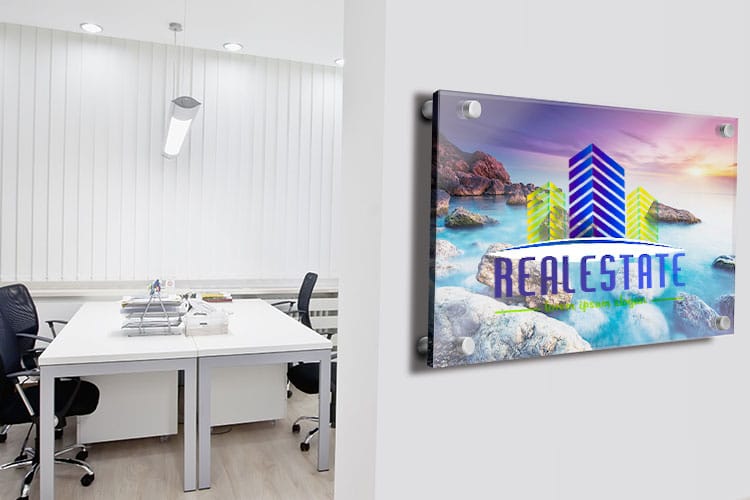
A coroplast sign is usually read from a distance, often from a moving car, so the design has to be bold. Keep the message short, use high-contrast colors, and make the type large enough to read in a glance from across a street. Fewer words at a bigger size always beat a crowded board.
Set the file in CMYK, add 0.125 inch of bleed so the print runs cleanly to the edge, and keep essential text inside a safe margin. Decide single or double sided based on how the sign will be seen, and confirm the thickness: 4mm is the standard for yard signs, with heavier gauges for larger panels.
Export a print-ready PDF, then use the live specs and price panel to choose your size, sidedness, and quantity. Because the material is inexpensive and prints fast, larger runs bring the per-sign cost down quickly.
Wally reads the flutes before he stakes
Vertical flutes plus an H-stake equals a standing sign
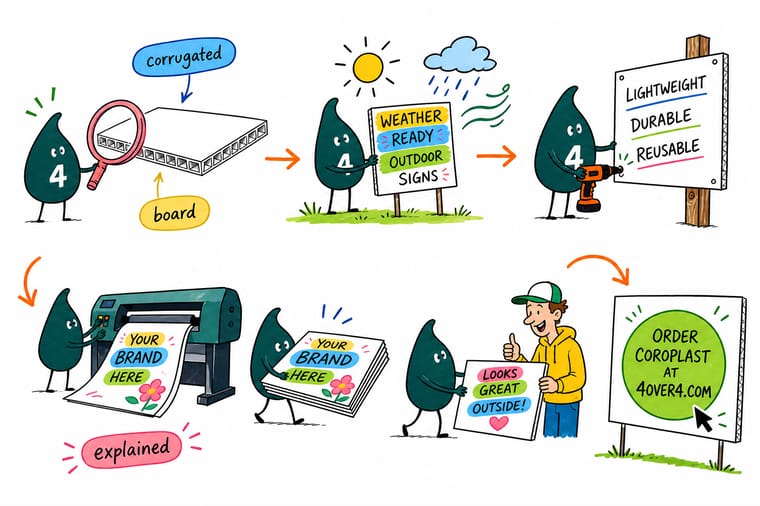
Wally treats coroplast for what it is: a waterproof plastic board with hollow flutes inside. He runs the flutes vertically so a wire H-stake slides straight up and grips the full height, then presses it into the grass in seconds. Rain runs off, it will not rot, and it stores flat to reuse. Design it bold, and 4OVER4 prints it full color on one or both sides.
Order coroplast signs →Quick reference
Corrugated plastic sign specs, at a glance
Match these choices to how and where the sign will be used and it will stand and last.
| Spec | Typical value | Why it matters |
|---|---|---|
| Material | Corrugated polypropylene | A fluted plastic board, waterproof and rigid, unlike paper corrugated cardboard. |
| Standard thickness | 4mm | The default gauge for yard signs; heavier options add rigidity. |
| Flute direction | Vertical for yard signs | Lets an H-stake slide straight up the hollow channels. |
| Mounting | Wire H-stake | Pushes into the flutes so the sign stands in grass with no tools. |
| Durability | Weatherproof, reusable | Plastic does not absorb water or rot, so it lasts outdoors. |
| Color mode | CMYK | Presses print process inks, so convert from RGB before you export. |
| Bleed | 0.125 in past every edge | Backgrounds run past the trim so no unprinted edge shows. |
Step by step
Spec a coroplast sign in 7 steps
- Confirm coroplast is the right materialChoose corrugated plastic when you need a light, waterproof, rigid sign for short to medium outdoor use, such as yard, event, or real estate signs.
- Pick the thicknessUse 4mm for standard yard signs, and step up to a heavier gauge for larger panels or signage that must stay rigid over a longer run.
- Set the flute directionFor a staked yard sign, orient the flutes vertically so a wire H-stake slides straight up the hollow channels and holds firmly.
- Design bold for distanceKeep the message short and high-contrast so it reads from a passing car; build in CMYK with 0.125 in bleed and text inside a safe margin.
- Choose single or double sidedPrint both sides when the sign will be seen from two directions, like a corner lot or a two-way street.
- Add the H-stakesOrder matching wire H-stakes so each sign can be pushed into the ground in seconds with no tools.
- Proof and orderExport a print-ready PDF, review the specs and price for your size and quantity, then order your coroplast signs.
Specs and pricing
Coroplast specs and live pricing
Once you have the size and thickness, sidedness and quantity are what is left. Coroplast signs print on 4mm White Coroplast in 3 business days.

| Quantity | Price Per Unit | Total |
|---|---|---|
| 1 | $25.00 | $25.00 |
Print it
Print coroplast and yard signs at 4OVER4
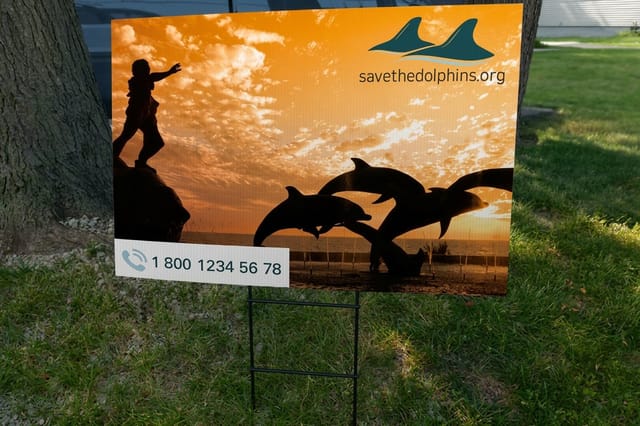
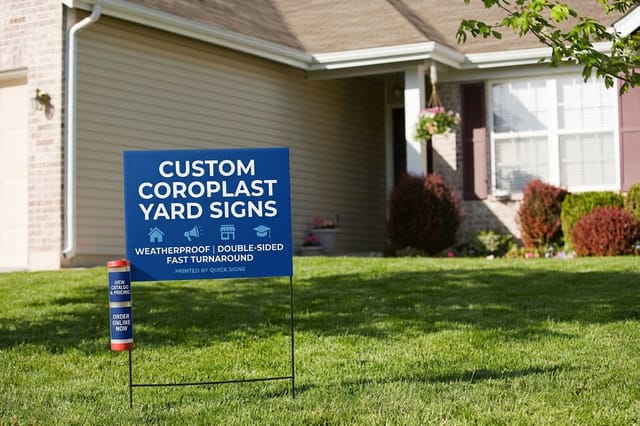

See it in use
Boards we cut with the flutes running up
Explore more
Where to go next




By the numbers
Four millimeters of waterproof plastic board
Common Questions
Common questions about corrugated plastic board
What is a coroplast?
Coroplast is corrugated plastic sheet: a fluted polypropylene board built from two flat plastic skins with hollow ribs, the flutes, running between them. Coroplast began as a brand name and became the everyday word for the material, so a coroplast sign and a corrugated plastic sign are the same board. It is waterproof, so it will not absorb moisture, warp, or rot outdoors, light enough to carry a stack of signs under one arm, and rigid enough to stand on a wire H-stake. 4mm is the standard gauge for yard, event, and real estate signs, with heavier gauges for larger panels or longer campaigns. Print one side for traffic passing one way, or both sides for a corner lot.
What is a corrugated sign?
A corrugated sign is a sign printed on fluted board, and in signage that nearly always means corrugated plastic rather than paper corrugated cardboard. The hollow flutes give the panel its rigidity at almost no weight, and they double as channels for the two legs of a wire H-stake, which is how a yard sign goes into the ground in seconds with no tools. Paper corrugated board belongs on boxes and indoor displays because it absorbs water and softens; a corrugated plastic sign stays flat through rain, sun, and sprinklers, which is why campaigns, open houses, and events order them in the hundreds and reuse them. Ask for 4mm with vertical flutes and you have the standard outdoor corrugated sign.
What is corrugated board and how is coroplast different from cardboard?
In signage, corrugated board usually means corrugated plastic, commonly known by the brand name Coroplast. It is a fluted polypropylene sheet: two flat plastic faces with hollow vertical ribs, called flutes, running between them. That structure makes it light yet rigid, much like corrugated cardboard, but because it is plastic it is completely waterproof and will not absorb moisture, warp, or rot. Paper corrugated board is for boxes and indoor use; corrugated plastic is built for the outdoors, which is why it dominates yard signs, event signage, and real estate signs. The hollow flutes also double as channels for mounting stakes.
Which way do the flutes have to run?
Start with where and how long the sign will be used. For standard yard, event, and real estate signs, 4mm corrugated plastic is the default because it balances rigidity and cost, while heavier gauges suit larger panels or longer campaigns. Decide the flute direction based on mounting: for a staked yard sign the flutes should run vertically so a wire H-stake slides up the channels. Choose single sided when the sign faces one way or double sided for corners and two-way traffic. Finally, size it and design it for the viewing distance, keeping the message short and high contrast so it reads from a moving car.
What does a coroplast sign cost and how are prices set?
Corrugated plastic signs are among the most cost-effective outdoor signage because the material is inexpensive and prints fast. Price scales with the size, the thickness, single or double sided printing, and the quantity, with larger runs dropping the unit price sharply, which is why campaign and event orders are so economical per sign. You set each option in the configurator and the total updates live as you adjust it, so you can see exactly how size, double-sided printing, or a bigger run changes the number before you commit. H-stakes are an inexpensive add-on.
What sizes, thicknesses, and finishes are available for coroplast?
Corrugated plastic signs come in standard yard-sign sizes such as 18 by 24 and 24 by 36 inches and larger custom panels, in 4mm as the standard thickness with heavier gauges available for added rigidity. Printing is full color on one or both sides, and you can add wire H-stakes for grass mounting. Because the material is naturally weatherproof, it needs no laminate for typical outdoor use, though the flute direction is set to match your mounting. Use the live specs panel below to see the available sizes and options and how each choice affects the price.
How long do corrugated plastic signs take to print and ship?
Turnaround depends on the size, sidedness, and quantity, and the configurator shows the available production speeds when you build your order. Coroplast prints quickly, which makes it a favorite for time-sensitive campaigns, events, and open houses. 4OVER4.COM ships from New York with a 99.8 percent on-time record, so to hit an event or launch date, set your sign options first and pick the production speed that lands them in time.
Why does flute direction matter for yard signs?
The flutes are the hollow channels running through the board, and a wire H-stake mounts by sliding its two legs up into them. For a yard sign that stands upright, the flutes must run vertically so the stake legs slide straight up and grip the full height of the sign, holding it steady in wind. If the flutes run horizontally, the stake has nowhere to seat and the sign will not stand properly. That is why yard signs are always produced with vertical flutes, while a sign meant for wall mounting or zip-tie fixing may use a different orientation. When you order, we set the flute direction to match how you plan to mount the sign.
Get Started
Order coroplast yard signs on 4mm White Coroplast
Pick your size, thickness, and sidedness at 4OVER4.COM and print weatherproof coroplast signs with matching H-stakes. Coroplast yard signs ship in 5 business days on the same 4mm board.
Legal Disclaimer
Gold Standard guarantees apply to all standard orders placed through 4over4.com. Price match requires verifiable proof of a competitor's published price for an equivalent product with matching specifications and turnaround time. Satisfaction guarantee covers manufacturing defects and print quality issues. Contact support with order number and documentation. On-time delivery rate based on tracked orders 1999 to 2026. Individual results may vary based on shipping carrier performance.
