
Custom Book Boxes Sized to Fit and Built to Survive Shipping


Book trim sizes, the two clearances that actually work, mailer against rigid, and the carrier rules that decide what a case of books costs to move.
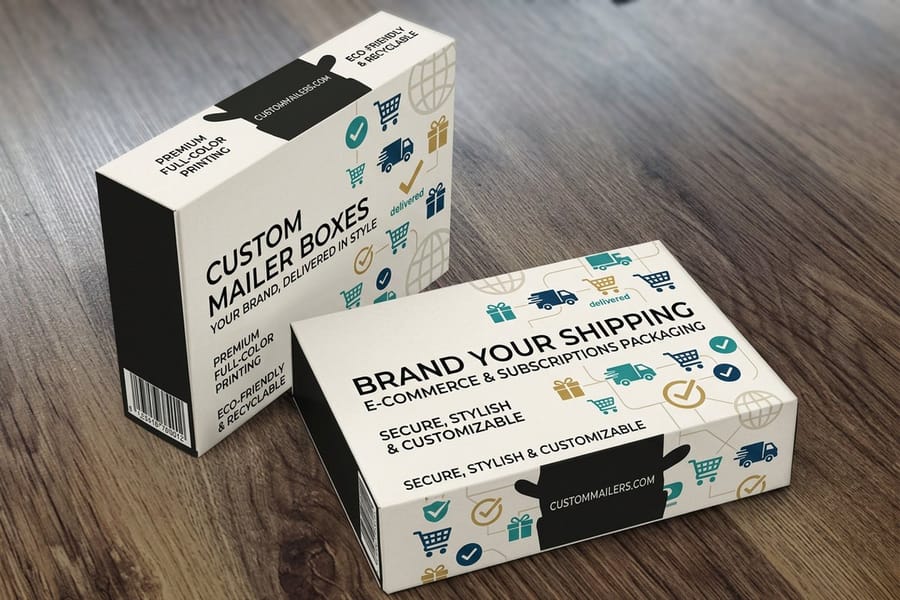
Size a custom book box from the book itself: trim width and trim height, then depth equal to book thickness multiplied by the copies per carton. Add about an eighth of an inch per side for a snug mailer that holds the book still, or a full inch per side for a shipping box you intend to fill with cushioning. Nothing in between works. Mailer boxes suit one to four copies, a taped C flute shipping box takes over once the packed carton passes roughly 20 pounds, and USPS Media Mail stays available on branded cartons as long as no advertising travels inside.
Quick answer
Trim size plus one clearance, chosen on purpose
The interior of a book box is the book footprint plus a clearance you commit to. An eighth of an inch per side gives a snug mailer where the fit is the cushioning. A full inch per side gives a shipping box with room for void fill. Depth is book thickness multiplied by copies per carton, plus the same clearance. Quote interior dimensions, because board thickness eats the difference. Then match the board to what stacks on top of you in the truck rather than to the weight of the books.
Sizing a Book Box From the Trim, Not From a Guess
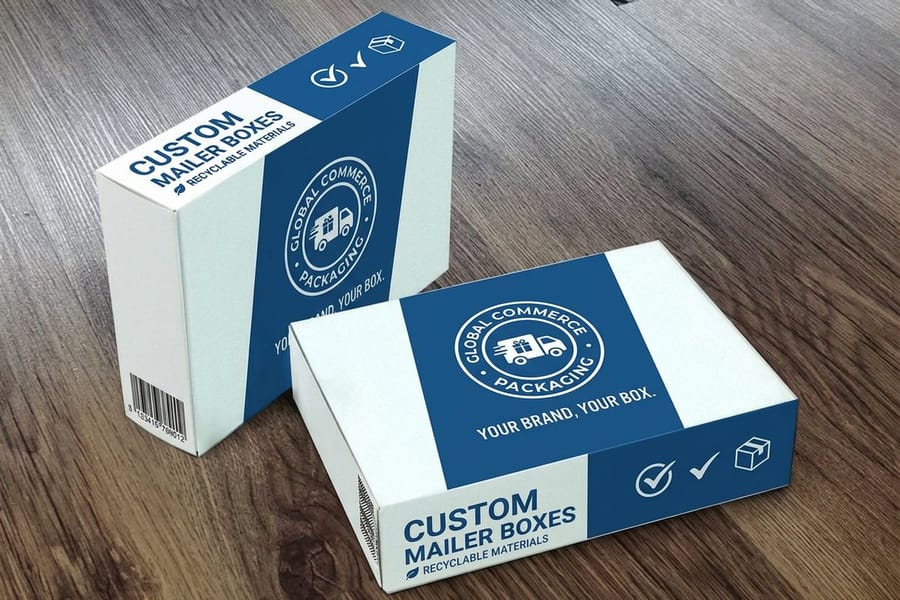
Every book box starts with three numbers off the book itself: trim width, trim height, and thickness at the spine. Measure a real copy, not the spec sheet, because a paperback with a heavy cover stock and deckled edges runs a hair over its stated trim.
Then add clearance, and pick a lane. A snug mailer adds about an eighth of an inch per side, roughly a quarter inch across each dimension. A cushioned shipping box adds a full inch per side, roughly two inches across each dimension, and you fill that inch with paper or foam. The mistake is landing halfway. Half an inch of loose space does not cushion anything, it just gives the book room to build up speed before it hits the wall.
| Book format | Typical trim | Snug mailer interior | Cushioned box interior |
|---|---|---|---|
| Mass market paperback | 4.25 x 6.87 in | 4.5 x 7.1 in | 6.25 x 8.9 in |
| Trade paperback | 5.5 x 8.5 in | 5.75 x 8.75 in | 7.5 x 10.5 in |
| Trade paperback, large | 6 x 9 in | 6.25 x 9.25 in | 8 x 11 in |
| US hardcover novel | 6.14 x 9.21 in | 6.4 x 9.5 in | 8.1 x 11.2 in |
| Textbook or art book | 8.5 x 11 in | 8.75 x 11.25 in | 10.5 x 13 in |
Depth is the number that gets fumbled. It is single book thickness multiplied by how many copies go in the carton, plus the same clearance you used on the other two dimensions. Stack six trade paperbacks on a desk and measure the pile before you commit to a depth, because the pile is almost always taller than the estimate in your head.
One more rule that saves a whole run: quote interior dimensions. Corrugated board has real thickness, so a box specified at outside dimensions comes back tighter inside than the drawing suggested. Our guide to measuring a box for shipping walks the same three measurements in more detail, and perfect bound books printed here list their finished trim on the product page so you can size the carton before the books exist.
Mailer Box, Shipping Box, or Rigid Box for Books

A mailer box is a one piece roll end tuck top that folds up from flat and closes with a tucked front panel, no tape needed. For one to four books it is the right answer nearly every time, because the snug fit does the cushioning and the flat outside panel takes full color print beautifully.
Move to a shipping box when you are packing a case. A regular slotted container in C flute with a taped seam handles the load better than a tuck closure once weight climbs, and the crossover is about weight rather than count. When the packed carton passes roughly 20 pounds, stop treating it like a mailer. Custom shipping boxes and custom mailer boxes both start at $711.78 for a printed run, so the choice is engineering rather than budget.
| Board | Approx thickness | Print detail it holds | Where it fits for books |
|---|---|---|---|
| E flute | about 1/16 in | Finest, close to a flat sheet | 1 to 3 copies in a printed mailer |
| B flute | about 1/8 in | Good, slight washboard on solids | 4 to 6 copies, sturdier mailer |
| C flute | about 5/32 in | Coarser, fine type suffers | Cases in a standard shipping box |
| BC double wall | about 1/4 in | Coarsest | Hardcovers in bulk, palletized loads |
Read the last column against what will sit on top of your carton in the truck, not against what the book weighs. Board strength is a stacking spec. A single wall box holding eight pounds of paperbacks is perfectly strong until three more cartons land on it.
Rigid boxes are the outlier. They are set up boxes with wrapped chipboard walls that do not fold flat, and for a signed edition, a boxed set, or a subscription unboxing they read as a gift rather than as freight. They cost more per unit and they ship to you as assembled volume rather than flat stacks, so reserve them for the copies where presentation is the point. Everything else is better served by a roll end tuck top box. The mailer box versus shipping box comparison covers the closure differences in full.
Packing Books So the Corners Survive the Route
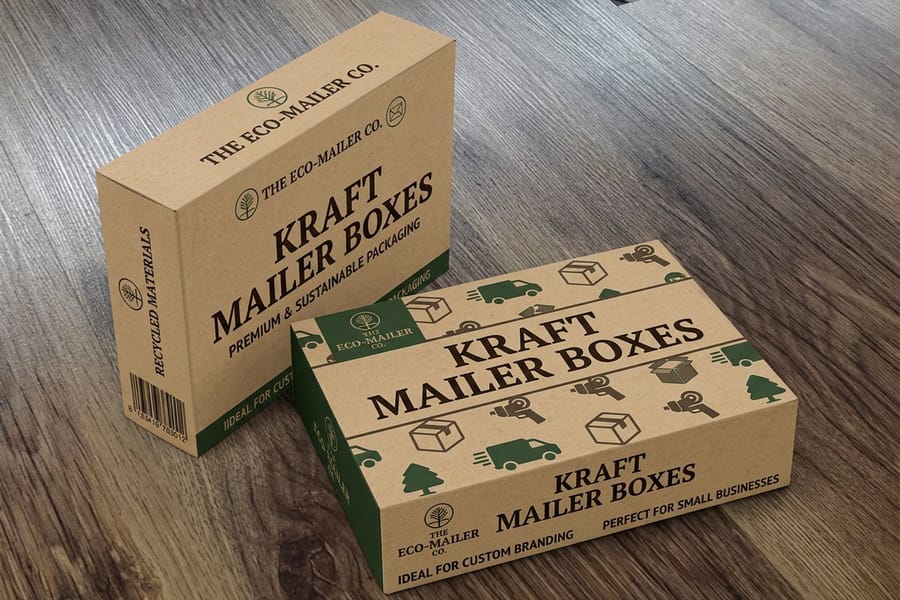
Damage claims on books are almost never about the cover or the block. They are about corners, and hardcover corners most of all. A hardcover sitting in an inch of loose space punches its own corner into the carton wall every time the parcel is set down.
Pack the books flat, lying face up, never on edge and never on the spine. Spine down in a loose box means the book lands on its own hinge for the whole trip, and that is how you get a cracked joint on an otherwise perfect copy. Put the heaviest title at the bottom, and keep the stack level so the top flap closes without bowing.
Wrap each hardcover individually if you are mixing titles. Two dust jackets rubbing against each other for three days will scuff both. A simple paper band or a poly sleeve is enough. The sleeve also earns its cost as moisture protection, which matters more than people expect on a ground route in humid weather, since corrugated wicks water fast and a damp book cockles permanently.
Then fill the void, all of it. Paper, air pillows, or a corrugated pad cut to the footprint all work. What does not work is a handful of fill dropped on top of a stack that can still slide sideways. If the closed box makes any noise when you shake it, it is not packed. Sizing the box tight is the cheaper fix, which is the whole argument for a custom interior over a stock one, and it is why we build to your dimensions across the custom box printing range. Before you send artwork, run through preparing files for packaging products and pull the right dieline from the blank template library.
Weight, Media Mail, and What the Carriers Actually Charge
Books are dense, which changes the shipping math in a way that surprises people coming from apparel or homeware. Carriers bill the greater of actual weight and dimensional weight, and dimensional weight is cubic inches divided by a published divisor, 139 on most daily ground rates. A box of books almost always hits its actual weight ceiling long before it gets bulky enough for the dimensional number to win.
The practical consequence: shrinking a book carton usually saves you board, packing time, and damage rather than a rate class. That is still worth real money, but it is a different argument from the one that sells right sized boxes to a candle brand.
Media Mail is the other lever, and it is widely misunderstood. It is a USPS rate for books and other qualifying media, it caps at 70 pounds per package, and it is subject to inspection. The restriction that catches sellers is advertising inside the parcel: a catalog, a coupon, or a promo sheet packed next to the book can get the parcel rerated. Printing on the carton itself is not the problem, so a branded box is fine. What you give up is speed, because Media Mail rides a slower network than Ground Advantage, which makes it a backlist and bulk tool rather than a release day one.
Watch the ceilings on big cases too. Length plus girth, girth being twice the width plus twice the height, is what pushes an oversized carton into a surcharge or out of parcel entirely. Our girth measurement walkthrough shows the calculation, and the carrier size and weight limits guide lists where each service stops. For fulfillment where the label matters as much as the box, writing a shipping label correctly is the last step worth getting right.
Wally sizes a book box
Measure the stack, then pick a clearance and stick to it
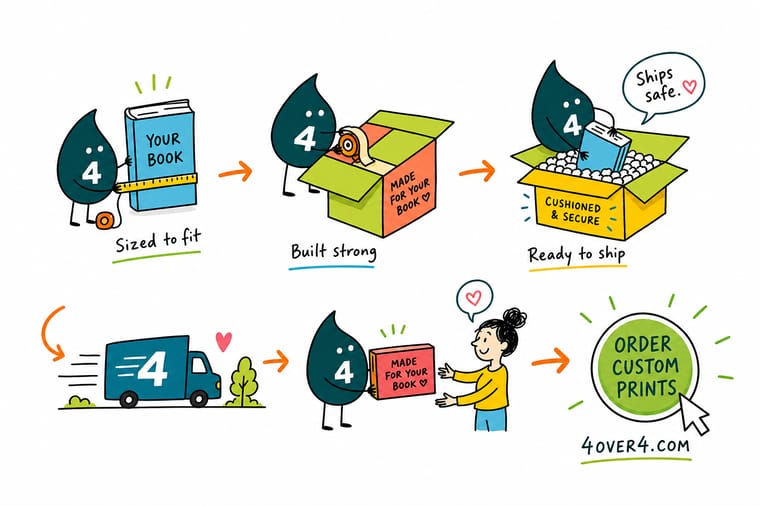
Wally measures a real copy, not the spec sheet, then multiplies the thickness by how many books go in the carton to get depth. From there he chooses one of two boxes. A snug mailer about an eighth of an inch bigger per side, where the fit holds the book still. Or a shipping box a full inch bigger per side, packed out with fill. He never builds the half inch box in between, because that one lets a hardcover get a running start at its own corner.
Order custom mailer boxes →Specs and pricing
Book box styles, sizes, and starting prices
Compare the three box styles that carry books, with live configuration choices and starting prices straight from the 4OVER4.COM configurator.

Print it
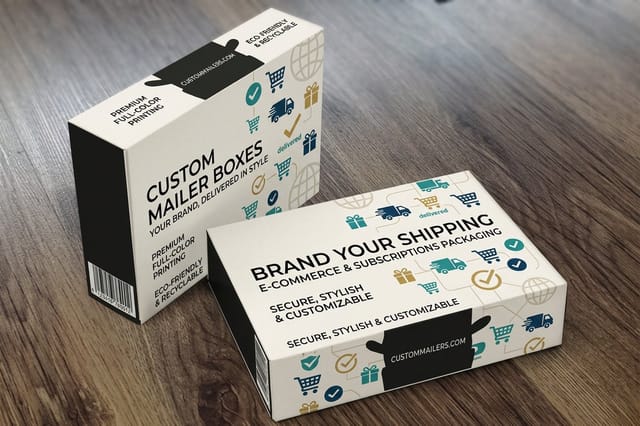
Order a box built around your trim size
Explore more
Where to go next
By the numbers
Packaging you can count on at 4OVER4
Common Questions
Your book box questions, answered
What size custom box do I need for one paperback?
Start from the trim size and add clearance in the direction you have chosen. A 5.5 by 8.5 inch trade paperback in a snug mailer wants an interior around 5.75 by 8.75 inches, with a depth of the book thickness plus a quarter inch. If you would rather cushion it, go to roughly 7.5 by 10.5 inches and plan on an inch of void fill on every side. Order interior dimensions, not exterior. Corrugated adds its own board thickness on the outside, and a box quoted at outside dimensions will be tighter inside than you expect.
Should I use a mailer box or a shipping box for books?
Use a mailer box for one to about four copies. The roll end tuck top style folds flat, needs no tape to close, prints edge to edge, and its snug fit is the cushioning. Move to a regular shipping box once you are packing a case, because a case of books is heavy enough that you want C flute or double wall board and a taped seam holding the load. The practical crossover is weight, not count: when the packed carton passes roughly 20 pounds, stop thinking of it as a mailer.
What board strength should a book box be?
E flute for one to three copies in a printed mailer, because the thin board takes fine litho detail and still holds shape. B flute when you want a sturdier mailer or you are packing four to six copies. C flute in a standard 32 ECT shipping box for cases. Double wall BC when you are moving hardcovers in bulk or the carton will be stacked on a pallet. Board strength is about stacking, so the question to answer is not what the book weighs but what will sit on top of it in the truck.
Can I ship books in a custom printed box at the Media Mail rate?
Yes. Media Mail rules govern what is inside the parcel, not what is printed on the carton, so your logo and your brand colors on the outside are not an issue. What breaks the rate is enclosed advertising: a catalog, a coupon sheet, or a promotional flyer packed alongside the book. Media Mail is subject to inspection, it caps at 70 pounds per package, and it moves on a slower network than Ground Advantage, so it suits backlist and bulk far better than a pre-order that has to land on release day.
How many books should go in one box?
Work backward from weight and from what you are willing to lose. Cases that pass about 40 pounds get dropped harder and handled worse, and one damaged carton then costs you every copy in it. Splitting a large order across two lighter boxes usually costs a few dollars more in freight and saves far more in replacements. If you are shipping to a retailer, ask for their receiving limit first, because some docks refuse cartons over a set weight.
Is a custom size worth it over a stock box?
It is worth it when you ship the same title repeatedly. A custom interior sized to your trim kills the void fill line item, cuts the packing time per order, and removes the rattle that generates damage claims. It is not worth it for a one time run or for a catalog of wildly different formats, where a couple of stock sizes plus paper fill will beat the setup. Custom mailer boxes at 4OVER4.COM start at $711.78 for a printed run, so the math turns in your favor once the volume is real.
Get Started
Ready to box your next print run?
Send us the trim size and the copies per carton and we build the interior around them, printed in full color inside and out.
Legal Disclaimer
Gold Standard guarantees apply to all standard orders placed through 4over4.com. Price match requires verifiable proof of a competitor's published price for an equivalent product with matching specifications and turnaround time. Satisfaction guarantee covers manufacturing defects and print quality issues. Contact support with order number and documentation. On-time delivery rate based on tracked orders 1999 to 2026. Individual results may vary based on shipping carrier performance.
