
How to Make a Subscription Box, From First Theme to First Shipment


The seven steps in the order they actually happen, what a shipment costs in print before the product goes in, and the lead times that decide your launch date.
Make a subscription box by narrowing the theme, choosing a cadence, packing one real sample month, costing that sample, then sizing the carton and ordering packaging around it. The sample box is the pivot: it sets the carton dimensions, the shipping weight and the price. Packaging runs about $4.90 a shipment at our smallest quantities, boxes come in lots of 250 on a 7 business day turnaround, and printed tape and tissue take 20 and 18 business days, so those go in first.
Quick answer
Pack one real box before you buy anything printed
A subscription box is built backward from a sample shipment. Narrow the theme, pick the cadence, buy the products at retail and pack one month by hand. That box gives you the dimensions, the weight, the packing time and the true cost per shipment, and every later decision falls out of it. Then set the price, spec the carton, and place the print order in lead-time order: tape and tissue first, boxes next, the card last.
The Seven Steps, In the Order They Actually Happen
Nearly every stalled subscription box got the order wrong. People design the logo and buy the carton before they have packed a single real month, then find the box is an inch too shallow or the price does not cover shipping.
- Narrow the theme until it hurts. "Coffee" is a category. "Single origin light roasts for people who brew with a pour-over" is a subscription. A tight theme makes curation faster, gives the card something to say every month, and makes the audience findable.
- Pick the cadence. Monthly, every other month, or quarterly. Monthly means twelve sourcing cycles and twelve pack days a year. Quarterly means four, with a bigger shipment and more room to negotiate on product cost.
- Build one real box. Buy the products at retail, pack them, weigh the result. This single afternoon settles the carton size, the shipping band and roughly what the thing costs you.
- Cost and price it. Add product, packaging, outbound shipping and payment fees per shipment, then decide the price. Do this with the sample box on the desk, not from a spreadsheet estimate.
- Spec the packaging. Carton size and style, what wraps the product, what seals it, what card sits on top. This is where the print order gets written.
- Order the long-lead items. Printed tape and tissue paper first, boxes next, cards last. The subscription box printing guide has the full spec sheet for each piece.
- Pilot with a small group before the public launch. Twenty-five to fifty shipments will expose the packing time per box, the damage rate and the questions your card failed to answer.
Steps three and four are the ones people skip, and they are the ones that decide whether the business works. A box you have physically packed tells you things no plan does: that the jar rattles, that packing takes four minutes rather than one, that the weight crosses into a more expensive shipping band.
What a Shipment Costs Before Anything Goes In It
Packaging is a fixed cost you pay every single month, for every subscriber, for as long as they stay. Price it as a line item rather than a launch expense.
At our smallest quantities the arithmetic is straightforward. A custom mailer box is $711.78 for 250, which is $2.85 a box. Custom tissue paper is $126.32 for 100 sheets, or $1.26 a sheet. An ecommerce thank-you card is $19.77 for 25, about $0.79 each. That is roughly $4.90 of print per shipment before the product, the shipping label or the payment fee.
| Piece | Starts at | Minimum | Per shipment |
|---|---|---|---|
| Custom mailer box | $711.78 | 250 boxes | $2.85 |
| Custom tissue paper | $126.32 | 100 sheets | $1.26 |
| Ecommerce thank-you cards | $19.77 | 25 cards | $0.79 |
| Printed packaging tape | $347.11 | 1 case, 36 rolls at 2" | Fractions of a cent per box |
Two things this table hides. The first is that the minimums are uneven on purpose: you can print 25 cards and 250 boxes, which is exactly why the theme lives on the card. The second is that print prices fall hard with volume while shipping does not, so a subscription that grows gets cheaper on packaging and stays flat on postage. If print is the biggest number in your first budget, that is normal at 250 units and it is temporary.
The trap is pricing off product cost alone. Add the $4.90 of print, add the real postage for the packed weight from the sample box, add the payment processor, and only then decide what to charge. A subscription priced $3 too low is not a problem you can fix later without losing subscribers.
Picking the Box Style and What Fits Inside It
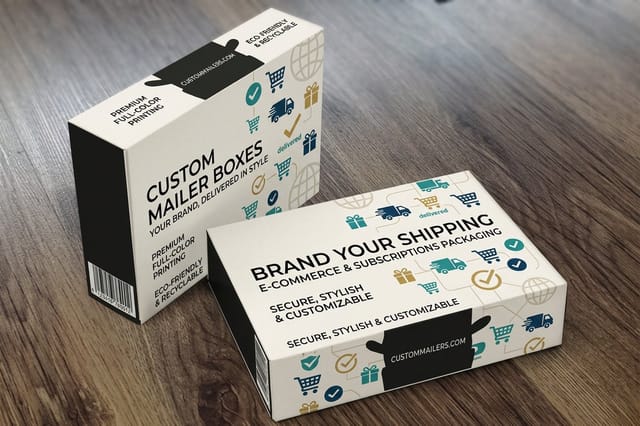
Measure the heaviest month, then choose a style around how you want the box opened. All four of our cartons share the same two footprints and the same starting price, so the decision is about stock and closure rather than cost.
| Style | Surface | How it opens | Best for |
|---|---|---|---|
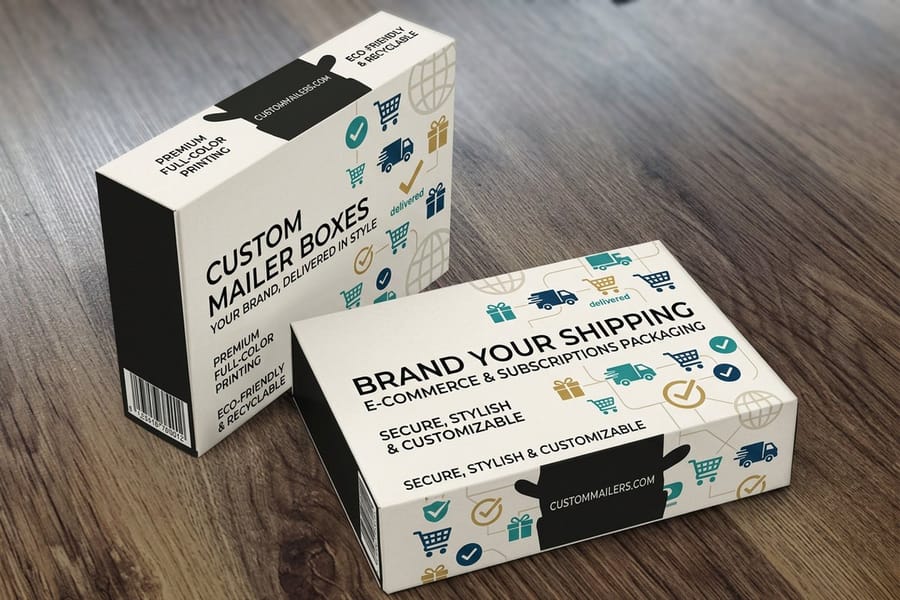
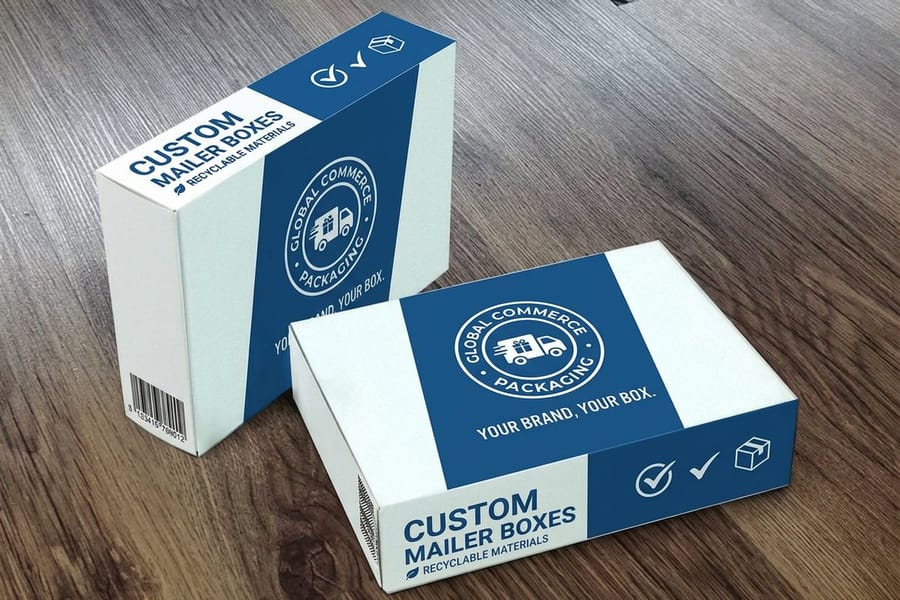
| Custom mailer box | 14pt uncoated cover, or 18pt cover with gloss on the printed side. | Folds flat, snaps into shape, closes without tape. | The default subscription carton, printed full color across the front. |
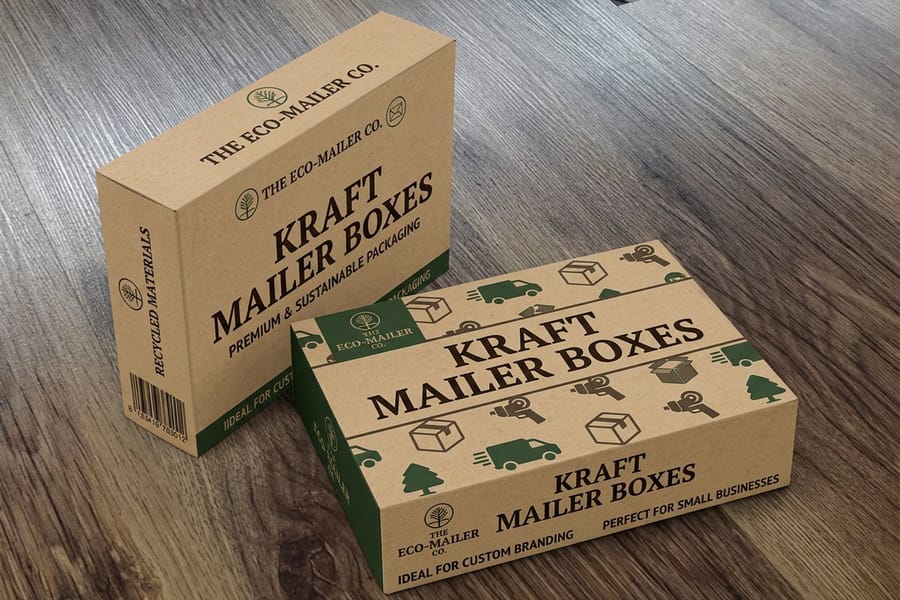
| Kraft mailer box | Natural brown kraft in the same two weights. | Same one-piece fold and tuck. | One or two color artwork, and scuffs from the mail that do not show. |
| Roll end tuck top | Same 14pt and 18pt cover stocks. | Lid rolls over the front and locks with a tuck flap, so it reseals. | Boxes you want subscribers to keep and reuse on a shelf. |
| Eco friendly box | 14pt or 18pt cover, printed on the front, blank back. | Flat pack, no glue, closes without tape. | Right-sized packaging that ships and stores flat between drops. |
Depth is where subscriptions get caught. A carton a quarter inch too shallow forces you to buy void fill every month for the life of the subscription, and that recurring cost beats the one-time saving of the smaller size within a few drops. Our sizes run 5" x 7" x 1.7" and 5.5" x 5.5" x 2.625", with a custom size made to order up to 6" x 7". That ceiling is real. If you are curating full-size apparel or a large ceramic, our packaging range is not the right fit and it is better to know that now.
Inside the carton, the two jobs are protection and presentation, and they are not the same job. Tissue paper presents. Anything fragile needs actual cushioning underneath it. The cardstock versus corrugated comparison settles which board to use for a heavy or breakable product, and the box size chart is a fast sanity check against your sample box. Browse the whole range on custom box printing.
Branding the Unboxing When the Interior Prints Blank
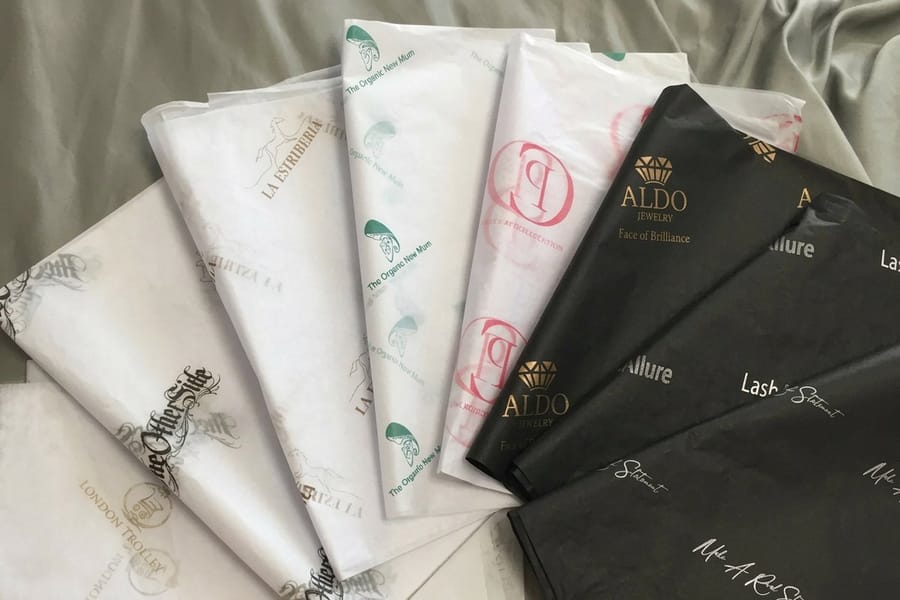
Our mailers print 4/0: full color outside, blank inside. So the moment the lid lifts, the moment the subscriber is actually paying attention, is built from three separate printed pieces rather than from the carton.
- The seal. Printed packaging tape is the first branded thing scissors go through. It is polypropylene film, so a box sealed with it is no longer a single-material package, which matters if you are making a recyclability claim.
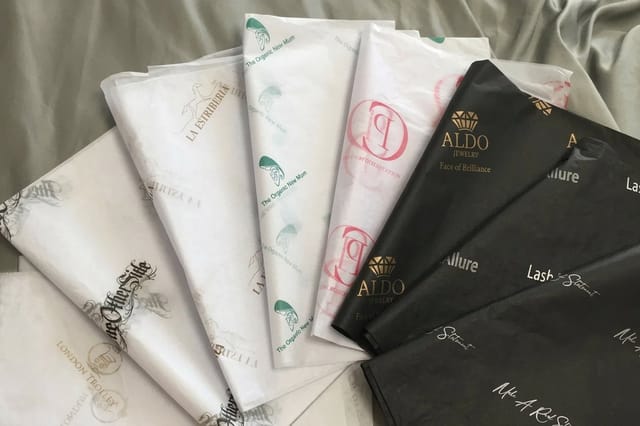
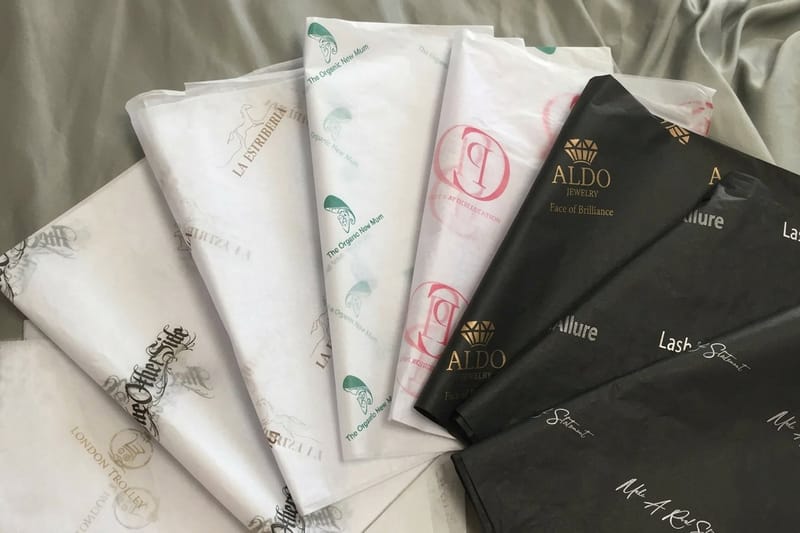
- The wrap. Custom tissue paper fills the empty interior and prints one or two spot inks on white or black tissue, from 10" x 15" up to 20" x 30". Bold marks, line patterns and type reproduce well. Gradients and photographs do not survive spot color, so design for flat ink.
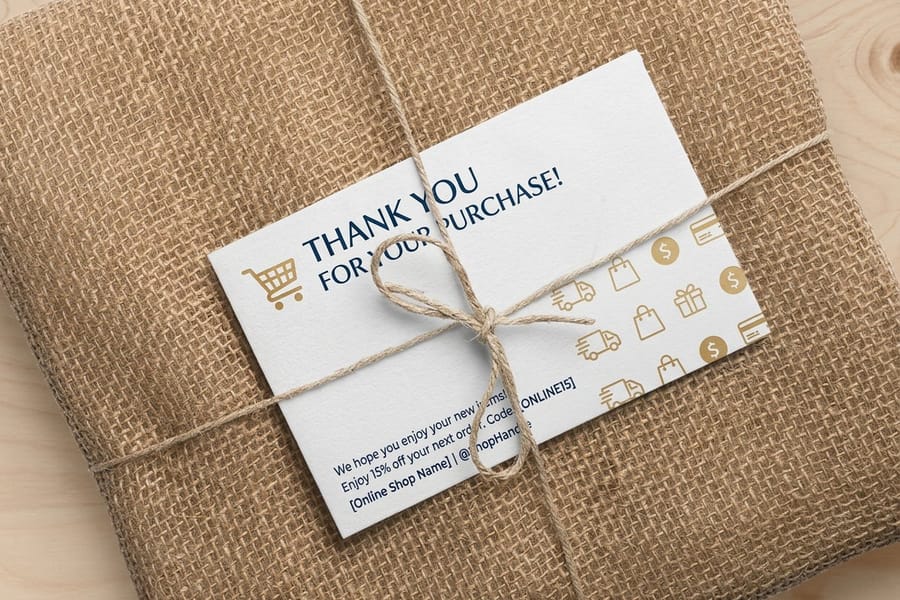
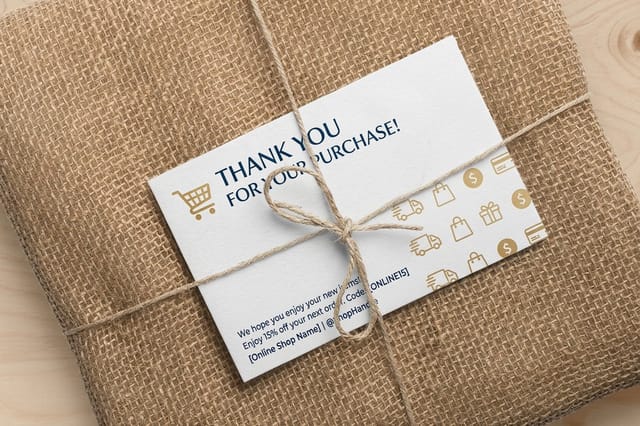
- The card on top. Face up on the tissue, this is the last piece designed and the first piece read. Give it one job per drop rather than a paragraph of thanks.
One detail that costs almost nothing: fold the tissue with the printed side up and close it with a single die-cut sticker instead of tape. The subscriber breaks one seal, the tissue opens like a page, and you have bought a second beat of attention before the product appears.
What goes on the card decides whether it earns its $0.79. A card that says only thank you is a wasted surface. Use it for the story behind this month's pick, a referral code unique enough to track, the exact review link, or the ship date of the next box so nobody emails support to ask. Print the back too. Our guides on using packaging inserts and inserts that drive repeat sales cover what to write, and preparing packaging files covers building artwork against a proper dieline.
The Calendar That Keeps a Monthly Box On Time
A subscription box runs on two clocks at once, and confusing them is the most common reason a drop ships late.
The slow clock is packaging. Printed tape takes 20 business days and tissue paper 18, so both are ordered a season ahead and held in stock. Boxes take 7 business days and come in lots of 250, so they are bought in blocks rather than per month. None of these belong inside the monthly loop.
The fast clock is the month itself: a billing cutoff date, contents locked, the card printed on a 3 business day turnaround, a pack day, a ship day. Only the card sits on this clock, which is the whole reason to keep the carton generic and put the changing message on paper that reprints in three days from 25 pieces.
Publish the cutoff date and hold it. Subscribers who join after the cutoff go into next month's run, and saying so plainly on the site prevents the single most common support ticket a new subscription gets. Build a day of your own review into the print schedule as well, since every order includes a free online proof and production starts when you approve it, not when you upload the file.
Then pack a real box and mail it to yourself before the first public run. You will find the depth problem, the tissue that is an inch short, or the card that curls against the tissue. Fixing any of those after 250 units is cheap. Fixing them after ten thousand is not. When the packaging is settled, place the recurring order on custom box printing and read the ecommerce branding guide to fit the box into the rest of the brand.
Wally packs the first box
One sample month settles the size, the weight and the price
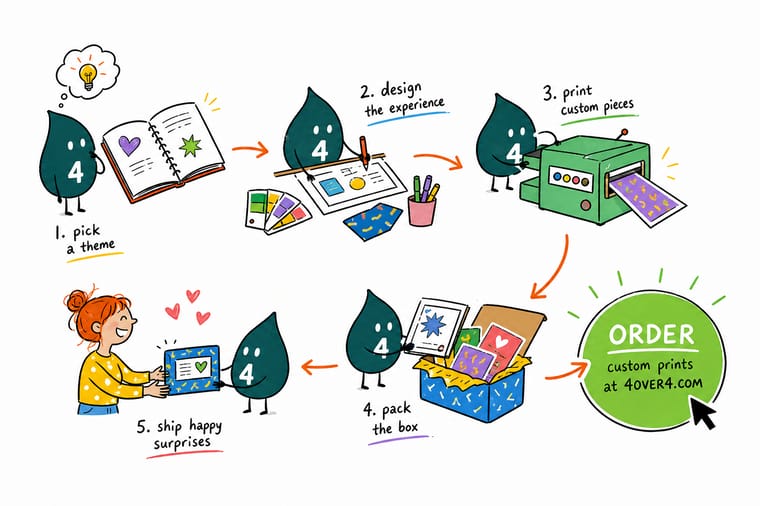
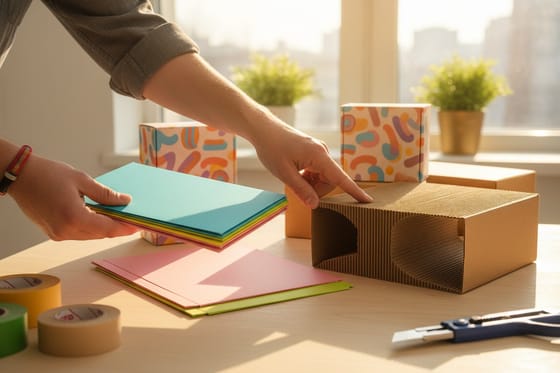
Wally buys the products at retail, packs one real month, and weighs it. That box tells him the carton size, the postage band and what a shipment truly costs. Then he orders in lead-time order: printed tape and tissue paper first because they take the longest, boxes next in a lot of 250, and the thank-you card last so it can carry news the box was printed too early to know. Keep the carton the same all year. Change the card.
Configure custom mailer boxes →Specs and pricing
Sizes, minimums and starting prices for each piece
The three pieces every subscription box needs, with live configuration options and starting prices straight from the 4OVER4.COM configurator.


Print it
Order the packaging for your first drop
Explore more
Where to go next

By the numbers
Packaging you can reorder on schedule at 4OVER4
Common Questions
Your subscription box questions, answered
How do I make a subscription box step by step?
Pick a narrow theme, decide how often it ships, build one sample box and cost it out, set a price that covers product, packaging and shipping, size the carton around the heaviest month, order the long-lead packaging, then run a pilot with a small group before the public launch. The sequence matters more than any single step, because the carton size and the price both depend on the sample box existing first. Most first-timers set the price before they have packed a real box, then discover the shipping cost has eaten the margin.
What is the minimum order for subscription box packaging?
Mailer boxes run in lots of 250, which is the honest floor for printed packaging. Tissue paper starts at 100 sheets and thank-you cards at 25, so the inside of the box can start much smaller than the outside. If you expect fewer than 250 subscribers in the first six months, a plain kraft shipper with a printed sticker and a printed card gets you to market with far less capital tied up, and you move to a printed carton once the subscriber count justifies it.
What size should a subscription box be?
Whatever holds your heaviest month with about a quarter inch of clearance, and nothing bigger. Our 5" x 7" x 1.7" mailer suits flat contents such as sachets, cosmetics and printed cards. The 5.5" x 5.5" x 2.625" square adds depth for jars, tins and a folded garment. Custom sizes are made to order up to 6" x 7". A box that is slightly too shallow means buying void fill every month for the life of the subscription, which costs far more over a year than moving up one size at the start.
How much does it cost to start a subscription box?
On the packaging side, the first run is the expensive one: 250 mailer boxes are $711.78, 100 sheets of tissue paper are $126.32, printed tape is $347.11 for a case of 36 rolls, and 25 thank-you cards are $19.77. That is the print budget before a single product goes in. Product cost, a payment or subscription platform, and outbound shipping sit on top of it. The cheapest honest start is to skip printed tape and printed tissue for the pilot, keep the box and the card, and add the rest once you know the subscription renews.
Can you print the inside of a subscription box?
Not on our mailers. They print 4/0, meaning full color on the outside and blank on the inside, so anything the subscriber sees when the lid lifts has to be printed on something else. That is why tissue paper, a sticker seal and a card on top do the work of an interior print. Design the reveal as three layers rather than trying to buy an interior you cannot get.
Should the first box a subscriber gets be different?
Usually yes, and it is one of the few reliable levers on churn. A welcome shipment carries an extra printed piece the recurring months do not: a short card explaining what the subscription is, when the next box ships, and how to skip or pause. Because thank-you cards start at 25 pieces on a 3 business day turnaround, printing a separate welcome card costs very little and stops the support emails that arrive when someone forgets they subscribed.
Get Started
Ready to print the first run?
Pick the carton size, choose kraft or full color, add tissue and a thank-you card, and we print the packaging for your first drop with a free online proof before production starts.
Legal Disclaimer
Gold Standard guarantees apply to all standard orders placed through 4over4.com. Price match requires verifiable proof of a competitor's published price for an equivalent product with matching specifications and turnaround time. Satisfaction guarantee covers manufacturing defects and print quality issues. Contact support with order number and documentation. On-time delivery rate based on tracked orders 1999 to 2026. Individual results may vary based on shipping carrier performance.
