
AI Profit Mastery That Actually Moves Small Business Margin


Three levers, one piece of arithmetic, and a short list of things the software still cannot do for you. Written for owners deciding what to automate and what to keep.
AI raises small business profit in exactly three places: the cost of an hour of work, the cost of getting a lead, and the share of leads that turn into paid jobs. A tool that touches none of those three is a hobby, however impressive the demo. The catch is the second half of the equation, and it is where most rollouts quietly fail: an hour saved only becomes margin when it is spent selling or billing, and the cheap channels AI floods get noisier for everyone at once.
Quick answer
The seat pays for itself in an hour, which is the wrong test
One subscription at about $60 a month against an owner hour worth $50 breaks even at 1.2 saved hours, so almost every tool passes. The test that matters is what happens to the hour after you win it back. Spent on quoting, chasing, or billable work, it lands in profit. Absorbed into a longer day, it never shows up anywhere. Run the same arithmetic across the whole stack rather than one seat at a time, because nine cheap tools nobody owns is how the line item gets away from you.
The Three Places AI Touches Your Margin
Margin is revenue minus cost, so software can only help by moving one of two things. In a small business that splits into three practical levers, and almost every honest AI win sits inside one of them.
| Lever | What AI does well | Where it fails | The number to watch |
|---|---|---|---|
| Cost per hour | Drafts, summaries, transcription, scheduling replies, first-pass bookkeeping categorisation. | Anything needing judgement about a specific customer or a legal consequence. | Hours on the task per week, before and after. |
| Cost per lead | Ad variants, audience research, landing copy, segmenting a list you already own. | Inventing demand where there is none. It cannot make a saturated market bigger. | Spend divided by qualified enquiries. |
| Close and repeat rate | Fast follow-up, quote formatting, reminders, review requests, reactivating old customers. | Trust. People buy locally from a person, and a bot cannot vouch for the work. | Quotes sent against jobs won, and second orders per customer. |
Read the third column before the second. The failures are the reason most AI rollouts feel busy and change nothing: the tool gets pointed at the part of the business it cannot fix. A landscaper whose problem is that half his quotes never get chased has a follow-up problem, and automated follow-up will move his numbers within a month. A landscaper whose problem is that nobody in the neighbourhood knows he exists has a demand problem, and no amount of drafting fixes it. Work out which one you have first, then read our small business marketing plan guide and pick the lever that matches.
Do the Break-Even Math Before You Buy the Seat
One seat at roughly $60 a month, against an owner hour worth $50, pays for itself at 1.2 saved hours. Nearly every tool clears that. Which is why the break-even test tells you almost nothing, and why so many businesses are running eleven subscriptions that all technically pay for themselves.
The real question is the second one: what happened to the hour. An hour saved on writing quote emails becomes profit if it goes into calling the three quotes that went quiet, or into a job you bill for. It becomes nothing if it dissolves into the day. Track the redeployment, not the saving. Write down, for one week, what you did with the time the tool gave back, and the honest answer will usually surprise you.
Then apply the same arithmetic to the stack as a whole. Nine tools at $29 is $261 a month, or $3,132 a year, which for many small operations is a real chunk of net profit and roughly the cost of a serious quarter of local marketing. Our cash flow system guide covers how to hold that spend against everything else competing for the same money, and the prompt engineering guide covers how to get more out of one good seat instead of buying a second.
Where the AI Funnel Leaks Into the Real World

AI made cheap channels cheaper for everyone at once. Your competitor is also sending more email, also posting more often, also replying faster. The inbox got louder, the feed got louder, and the cost of the last five percent of attention went up rather than down.
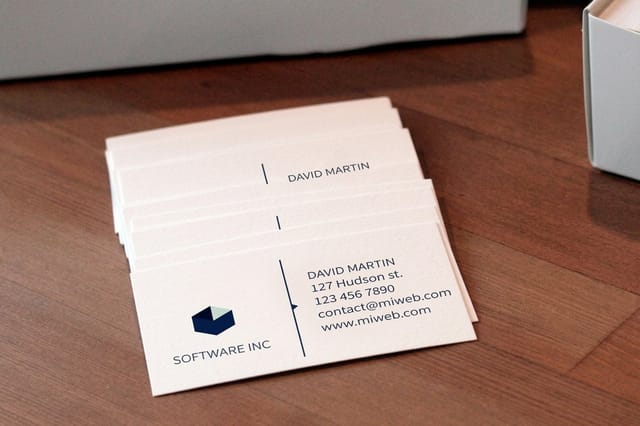
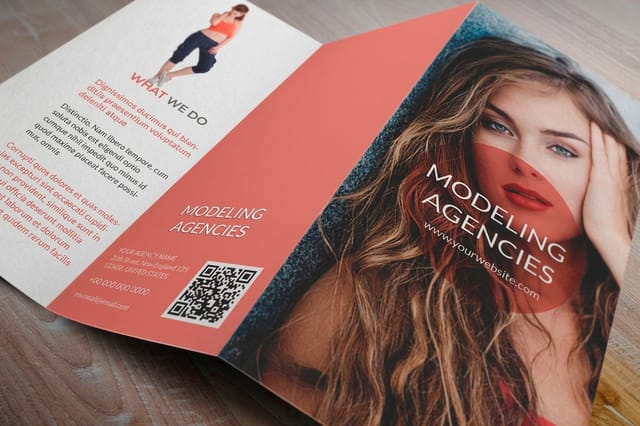
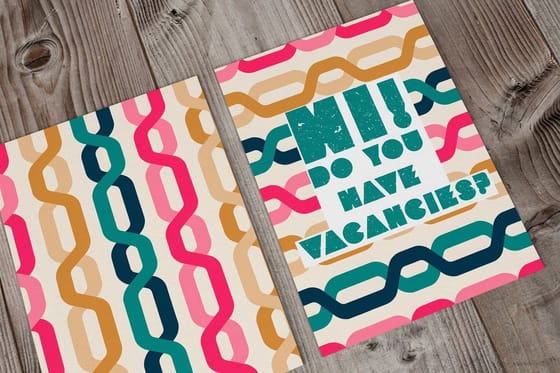
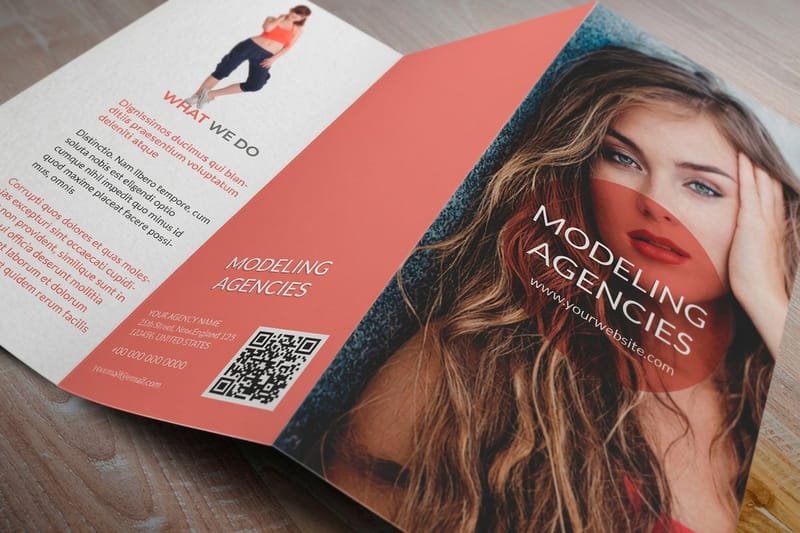
Which is why the businesses getting the most out of automation tend to spend part of the saving on the channels the software cannot flood. A mailbox holds a handful of pieces a day. A counter holds one stack of cards. Those are still scarce, and scarcity is what a mailer is buying. Standard postcards start at $16.48 and carry a single offer and a scan point straight into a household. Standard business cards start at $17.57 and are the cheapest thing on this page per conversation. Standard flyers from $39.54 work where you need volume in one neighbourhood, and standard brochures from $57.11 carry the longer explanation a considered purchase needs.
Let the software do the parts it is genuinely better at. Segment the customer list, draft three versions of the offer, then print the one that tested best. Put a distinct QR code on each piece so the attribution comes back clean, which our QR code guide walks through step by step. If design is the bottleneck, the online designer and the design template library take the layout off your desk entirely, and free paper samples settle the stock question before you commit to a run.
For a ready-made set rather than a shopping list, the small business starter pack and the solo entrepreneur lineup group the pieces most owners end up ordering anyway.
Subscription Creep Is the Quiet Margin Killer

The spend that hurts is never the one you argued about. It is the four trials that became annual plans, the writing tool you replaced but never canceled, and the seat for the assistant who left in March.
Run a stack audit once a quarter. It takes twenty minutes and it is the highest paid twenty minutes in the calendar.
- List every recurring charge with a name next to it. If nobody owns the tool, nobody is using it.
- Write the saved hours beside each line. Not the feature, the hours. A tool with no number is a cancellation.
- Collapse the overlaps. Most owners are paying three companies for text generation because each arrived attached to something else.
- Check the plan tier, not just the subscription. Per-seat pricing quietly scales with a team that has changed size twice since you signed up.
- Move the survivors onto one card and one renewal date. Visibility does more for this line item than discipline does.
The point is not frugality for its own sake. It is that the money released here is the same money that funds a mail drop or a proper set of printed business cards, and one of those two things is measurable this quarter. Our guide to stretching every marketing dollar is the companion piece on the spending side.
What AI Still Gets Wrong, and What It Costs You
Every guide on this subject lists the upside. The reason most rollouts stall is on this list instead, and none of these are exotic edge cases.
It states things confidently that are not true. A model will produce a delivery timeframe, a warranty term or a code section that sounds exactly right and is invented. Anything a customer could hold you to gets checked by a person before it leaves the building. That rule alone prevents most of the expensive failures.
It flattens your voice toward the industry average. Run enough of your copy through the same tool and everything you publish converges on the same competent, forgettable register as your competitors. That is a pricing problem, not a style problem: when nothing distinguishes the words, the customer distinguishes on price.
It leaks whatever you feed it. Consumer tiers may train on your prompts unless you switch that off. Customer records, supplier pricing and anything under a confidentiality clause do not belong in a chat window on a personal plan.
It cannot carry local trust. The reason a neighbourhood business wins work is that somebody recognised the van, kept the card, or was recommended over a fence. Software does not participate in that. It can remind you to ask for the review and draft the thank-you note, then the physical proof has to exist: postcard printing for the follow-up, a card in the wallet, a brochure left behind after the quote.
Handled together, those four limits define the split cleanly. Give the machine volume, repetition and first drafts. Keep judgement, pricing, apologies and the handshake. The sales automation chatbots guide sets out where exactly to draw that handover line in a live conversation, and the digital marketing guide for small business puts the whole stack in order.
Wally explains the saved hour
The tool gives the hour back. You decide whether it becomes money
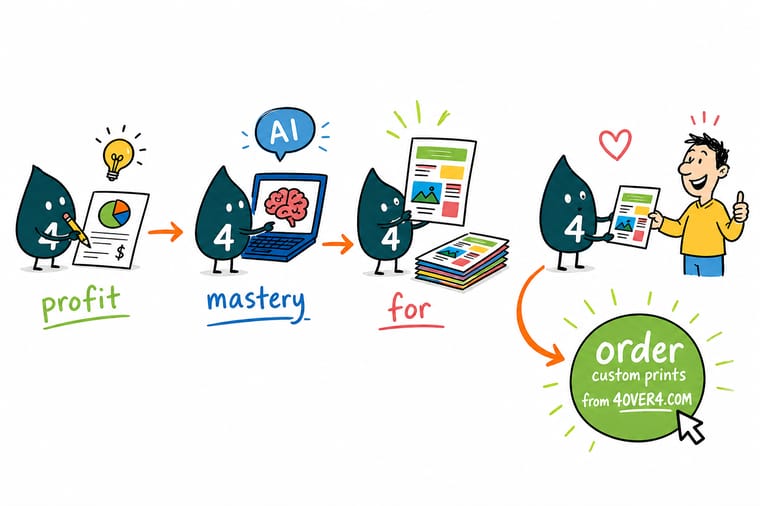
Wally lets the software draft the quote emails and win him an hour. Then he does the part that pays: he calls the three quotes that went quiet, and he sends the offer that tested best to the households on his street. The hour only turned into profit because it went somewhere. When he skipped that step, the subscription still charged him and nothing else changed.
Print the offer on postcards →Specs and pricing
The pieces that close what the software started
Sizes, stocks and starting prices straight from the 4OVER4.COM configurator, for the three formats most small businesses put an AI-tested offer on.



Print it
Put the winning message somewhere an algorithm cannot bury it

Explore more
Where to go next



By the numbers
The print side of the plan, backed by 4OVER4
Common Questions
Your AI and small business profit questions, answered
What should a small business automate with AI first?
Start with the task you do most often that has a clear right answer and no legal exposure. For most owners that is written follow-up: quote emails, appointment reminders, review replies, and the first draft of anything repetitive. These are high frequency, low risk, and easy to check. Leave pricing decisions, contract language, medical or financial claims, and anything a regulator reads to a person. The order matters more than the tool: automate the boring middle of your day before you touch the parts where a wrong sentence costs you a customer.
How do I stop AI copy from sounding like everyone else in my trade?
Give it material only you have. A model with no input writes the average of your industry, because that is literally what it was trained on. Paste in three real customer objections you heard this month, your actual price bands, the two things you refuse to do, and a paragraph you wrote yourself that sounds like you. Then ask it to edit rather than to write. The tell of generic output is that you could swap your business name for a competitor and the sentence would still be true. If a line survives that swap, cut it.
Is it safe to paste customer information into a chatbot?
Treat every prompt as if it might be read by someone else, because on a consumer plan it can be used for training unless you turn that off. Names, addresses, card details, health information and anything covered by a contract should not go in. Where you genuinely need the record, strip it first: replace the customer with "the customer", the address with the ZIP, and the amount with a band. Business plans from the major providers offer no-training terms, which is the setting to check before you standardise a workflow on it.
Does AI replace what I spend on print and direct mail?
It changes what you spend it on rather than removing it. AI makes the cheap channels cheaper, so email and social get noisier for everyone at the same time, and the response rate that a mailbox piece earns holds up partly because fewer people are competing for that inch of counter space. The practical move is to let AI do the targeting and the drafting, then put the winning message on something physical. Print does not remove the digital work, it catches the people the digital work reached and did not convert.
How do I actually measure whether AI raised my profit?
Pick one number before you switch anything on and write it down: hours spent on the task per week, cost per booked job, or gross margin per job. Run four weeks without the tool and four weeks with it, holding everything else steady. Then subtract the subscription. Most owners skip the baseline, which makes the result unarguable in both directions. If the number will not move by at least the cost of the seat, you already know the answer without running the test.
How much should a small business budget for AI each month?
Budget by task, not by tool. Add up the hours a workflow eats, multiply by what an hour of your time is worth, and cap the spend at a fraction of that number so the payback is obvious rather than argued. The failure mode is not one expensive seat, it is nine cheap ones nobody cancels. Put every AI subscription on one card, review the list on the first of the month, and cancel anything you cannot name a saved hour for.
Get Started
500 postcards mailed for $89.68 is one saved hour
Pick the offer that tested best, drop it into a template, and send it somewhere no feed can bury it. Cards, postcards and brochures printed and shipped from Queens.
Legal Disclaimer
Gold Standard guarantees apply to all standard orders placed through 4over4.com. Price match requires verifiable proof of a competitor's published price for an equivalent product with matching specifications and turnaround time. Satisfaction guarantee covers manufacturing defects and print quality issues. Contact support with order number and documentation. On-time delivery rate based on tracked orders 1999 to 2026. Individual results may vary based on shipping carrier performance.
