
How Sales Automation Chatbots Qualify, Book, and Hand Off Leads


What to automate, what to leave to a person, and how a printed QR code puts a real prospect in the chat with the context already known.
A sales automation chatbot handles the repeatable front end of a sale: it answers the questions you already answer daily, qualifies the visitor in about three questions, books the call, and hands over to a person the moment the deal stops being routine. It earns its cost where enquiries repeat and replies are slow. It loses deals when every job is bespoke, or when it is allowed to quote a price, promise a date, or argue with a complaint.
Quick answer
Automate the opening exchange, escalate everything with money attached
The bot owns the first reply and the booking; a person owns the deal. Ground it in pages you have actually published, cap qualification at three questions, and route discounts, complaints, contract wording and any request for a human straight to a rep with the transcript attached. Feed it from offline as well as online: a QR code on a card, a mailer or a sticker starts the chat with the campaign already known, which is one fewer question the visitor has to answer.
The Three Ways a Sales Chatbot Gets Built
Every sales bot on the market is one of three things underneath, and the choice decides what it will get wrong rather than what it will get right.
| Build | How it answers | How it fails | Best fit |
|---|---|---|---|
| Rule-based tree | Buttons and keyword matches down a path you wrote. | Misses anything phrased outside the script and dead-ends the visitor. | A short, stable set of questions and a booking link at the end. |
| Retrieval-grounded model | Finds passages in your own pages and answers from them. | Answers confidently from a stale page, or fills a gap it should have refused. | A real catalog, spec sheets and a policy library worth quoting. |
| Hybrid | Model for open questions, hard-coded flows for pricing, booking and order status. | Two systems to maintain, and drift between what each one says. | Most teams, once the tree starts missing intents. |
The failure column is the one to read. A tree that cannot answer is annoying and obvious. A model that answers wrong is quiet, and you find out when a customer holds you to a delivery date the bot invented. That is why grounding matters more than model choice: the bot should be allowed to answer only from material you have published, and it needs a sentence it can fall back on when the answer is not in there.
Skip the whole category if your inbound is thin or every job is bespoke. A bot pays for itself on repetition. Two enquiries a week do not repeat enough to be worth the build, and a scoping conversation that changes shape every time will be handled worse by software than by the person who already knows the answer. If you are still building the channels that produce the enquiries, start with the small business marketing checklist instead.
A Qualification Flow People Actually Finish
Most qualification flows fail for one reason: they are a lead form wearing a chat costume. The visitor opened the window to get something, and the first thing they meet is an interrogation.
Three questions is the working limit before you give something back. Ask what they need, ask when they need it, and ask how to reach them. Then offer the calendar, the quote, or the answer they came for. Anything else you want to know, a rep can ask on the call.
- Lead with the answer, not the capture. If someone asks what a job costs, give the range you publish before you ask for an email. Withholding a public number to force a form fill is the fastest way to lose the chat.
- Ask for the phone number last, or not at all. Email converts; a phone number early reads as a sales trap and drops completion.
- Offer a visible exit. A persistent option to reach a person costs you nothing and stops the visitor from bouncing to a competitor to find one.
- Preset the context when you know it. A visitor who arrived from a mailer or a paid ad should not be asked what brought them here. You already know.
Write the greeting last, once the flow works. A greeting that promises help with anything sets up an expectation the bot cannot keep. A greeting that says what it can do, in one line, sets the visitor up to ask a question it can answer.
Printed Touchpoints That Start the Conversation
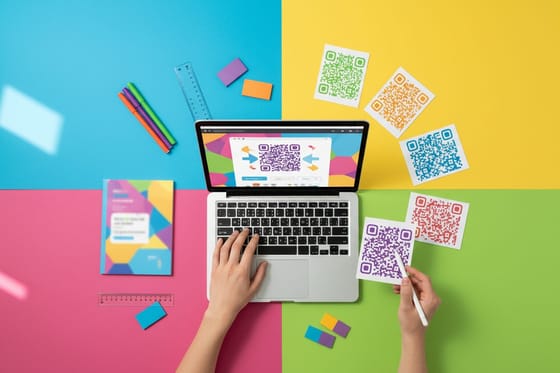
A chatbot only works on traffic that reaches it, and a good share of that traffic can be started in someone's hands. A QR code on a printed piece opens the chat with the campaign, the audience and the offer already known, which means the bot can skip its first question and get to the useful one.
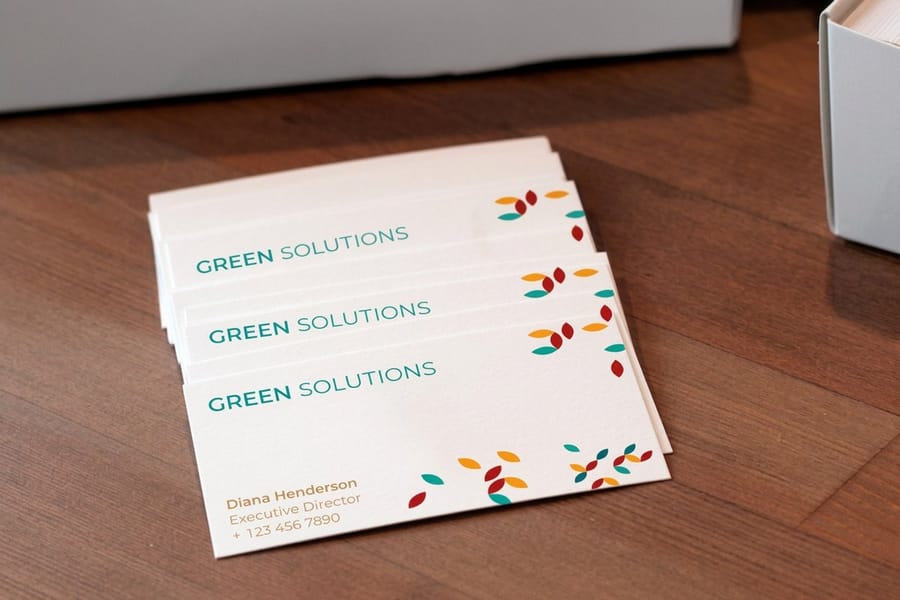
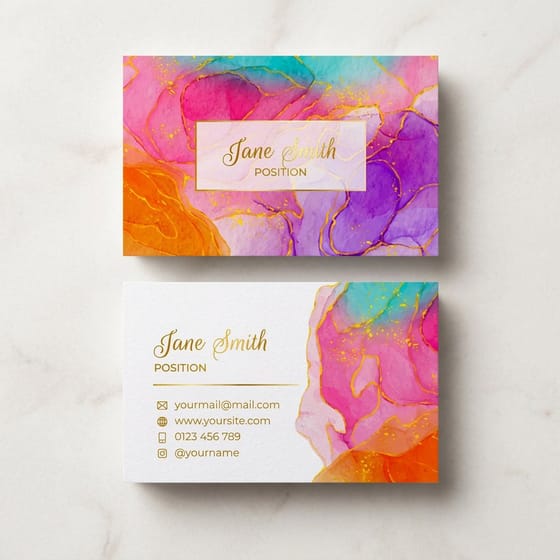
Four pieces carry a scan point well. Standard business cards start at $17.57 and turn a handshake into a booked call, because the code sits with the person who just talked to you. Standard postcards start at $16.48 and carry most mailed campaigns, with room for one offer and one code on the reverse. Standard stickers start at $23.88 and put the code on packaging, a laptop or a shop window, where it gets scanned long after the sale. Standard flyers start at $39.54 and suit a counter stack or a door drop, where the code carries the detail the page has no room for.
Four things decide whether the code actually works. Give every printed piece its own short link so you can tell a postcard scan from a sticker scan, and keep that URL genuinely short, because a shorter URL produces fewer modules and a lower-density code that still reads at small print sizes. Leave the quiet zone clear on all four sides; a code crowded by a border or a photo edge is the most common scan failure on a card. Never print a code below roughly 0.8 inch on a handheld piece, and go considerably larger on anything read from across a room. Then scan the printed proof itself under ordinary indoor light rather than the artwork on your monitor, because a matte laminate and a dim shop are the real conditions.
Point the code at a chat entry, not a homepage. Landing someone on the front page and hoping they find the widget wastes the scan. The guide to QR codes on business cards covers the layout side, and the InDesign walkthrough keeps the code vector so it stays crisp at any size. Browse marketing materials for the pieces that suit your audience.
The Handoff Rules That Keep the Trust
The moment a bot loses a customer is almost never the moment it fails to answer. It is the moment it keeps trying after everyone can tell it should stop.
Set the escalation triggers before you write a single response. Any request for a discount or a negotiated price, any complaint or late order, anything touching contracts, refunds, legal wording or compliance, the third answer a visitor rejects in a row, and anyone who types some version of "talk to a human" all leave the bot immediately. None of those are edge cases. They are the conversations with money attached.
Two things make a handoff feel like service rather than a dropped call. The transcript travels with it, so the person picking up does not ask the same three questions again. And the bot states plainly what happens next, including when: a named window beats "someone will be in touch shortly". If nobody is available, say so and capture the time to call back rather than leaving the visitor typing into a room with nobody in it.
Then use the escalations. Every question that forced a handoff is either a gap in your published pages or a flow that needs building. Fix the page and the same question stops escalating next month. That loop, not the model, is what makes a bot better over a year.
Measuring It, and Knowing When to Switch It Off
Chatbot dashboards are generous with numbers that flatter and thin on the ones that decide. Four are worth watching, and each has a way of lying to you.
| Metric | What it tells you | The trap |
|---|---|---|
| Booked or captured | Conversations that ended with a call on a calendar or a usable lead. | The only number worth a target. Everything else supports it. |
| Handoff rate | Share of chats that went to a person. | Driving it down looks like progress and usually means the bot started guessing. |
| Time to human | How long an escalated visitor waited. | Invisible on most dashboards, and the thing customers remember. |
| Refusal rate | How often it admitted it did not know. | A rate near zero is a warning, not a win. Nothing knows everything. |
Measure all four against what happened before the bot, on your own site. Vendor benchmarks are averages across industries with nothing in common with yours, and a page-two enquiry volume behaves nothing like a busy storefront.
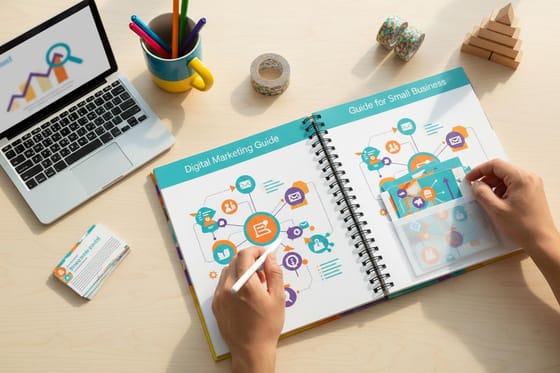
Switch it off when booked conversations do not move after a fair run and the transcripts show visitors going in circles. That is not a tuning problem, it is a fit problem, and the money is better spent on the pieces that create demand in the first place. A steady stream of enquiries beats a clever front door on an empty one, which is the argument the comparison of digital and traditional marketing works through, and the sales collateral examples cover what a rep needs once the meeting is booked.
Wally explains the sales bot
Three questions, one booking, one clean handoff
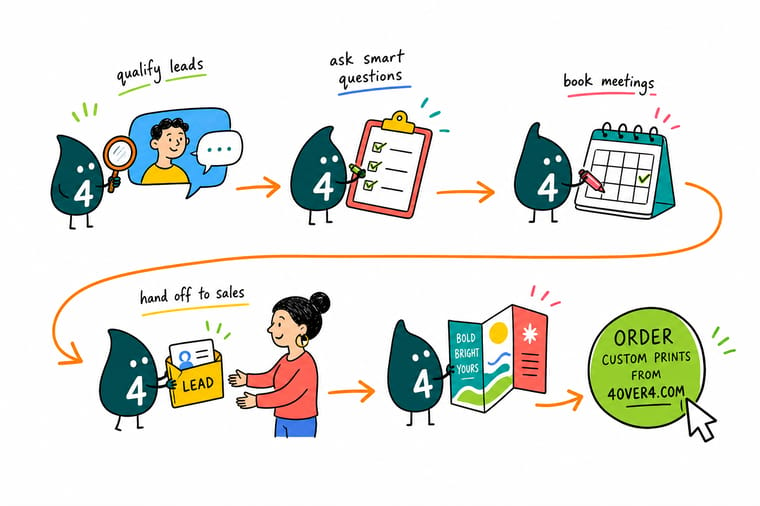
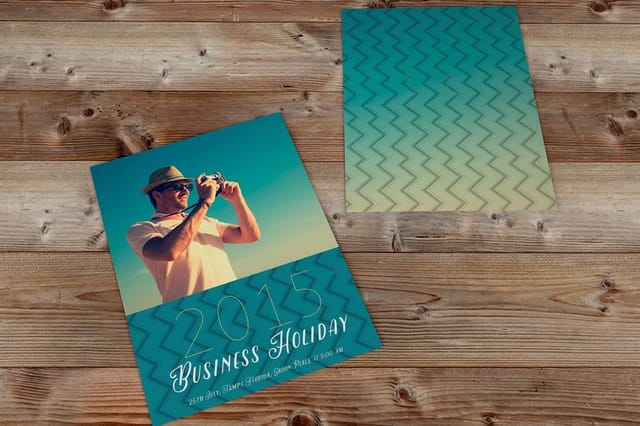
Wally lets the bot take the first reply. It says what he sells, checks the area, asks when the job is needed, then puts the call on the calendar. The second someone asks for a discount or types that they want a human, Wally takes over with the whole transcript already in front of him. And the chat often starts off a printed piece: scan the code on the postcard and the bot already knows which campaign brought you.
Print cards that start the chat →Specs and pricing
Scan points, sizes, and starting prices
The printed pieces that carry a QR code into the chat, with live configuration choices and starting prices from the 4OVER4.COM configurator.



Print it
Give the chatbot something to scan

Explore more
Where to go next

By the numbers
Print that feeds the funnel, from 4OVER4
Common Questions
Your sales chatbot questions, answered
What is a sales automation chatbot?
It is software that runs the repeatable front end of a sale without a person on the other side. It answers the questions you already answer twenty times a week, checks whether the visitor is a fit, books a call or a demo, and passes the conversation to a salesperson with the transcript attached. The useful ones are narrow on purpose: a defined set of questions they can answer from your own published material, and a defined set of moments where they stop and fetch a human.
Do sales chatbots actually work for B2B?
They work for the parts of B2B that repeat, and they get in the way everywhere else. Qualifying an inbound form fill, confirming that you serve a region, answering turnaround and file-format questions, and booking a slot on a rep calendar are all routine enough to automate. Multi-stakeholder deals with custom scoping are not. If your average deal needs a discovery call to even quote, the bot should be a fast router to that call rather than an attempt to replace it.
Should a small team pick a rule-based bot or an AI one?
Start rule-based if your questions are few and your answers are fixed, because a decision tree never says anything you did not write. Move to a retrieval-grounded model when the same intent arrives phrased fifty ways and the tree keeps missing it. The hybrid that most teams land on is a model that must quote from your own pages, with a hard-coded tree for the three flows that matter: pricing enquiry, booking, and order status.
What should a chatbot never be allowed to say?
A firm price on a custom job, a delivery date it cannot see in your system, a discount, anything about a contract or refund policy that is not quoted word for word from your published terms, and any claim about safety, health or legal compliance. Those are the sentences that cost real money when they are wrong. Put them behind an escalation trigger and let the bot say plainly that a person will confirm it.
How do I connect a printed QR code to a chatbot?
Give every printed piece its own short link that redirects to a chat entry point, and tag it so the conversation arrives already labeled with its source. The link should preset the intent, so a scan from a spring service postcard opens with that campaign in context rather than a blank greeting. Keep the destination URL short, because a short URL produces a lower-density code that survives small print sizes, and leave the quiet zone clear. Then scan the printed piece itself under normal indoor light, not the version on your monitor.
How do I know whether the chatbot is earning its cost?
Compare it against your own numbers before it existed, not against a figure from a vendor page. Three things matter: how many conversations ended with a booked call or a captured lead, how many had to be handed to a person, and how long those handed-over visitors waited before someone picked up. Total conversation count is a vanity number. A bot that holds a hundred chats and books none is worse than no bot, because those visitors think they have been dealt with.
Get Started
Standard stickers run 25 for $23.88, or 96 cents each
Pick the stock, drop your QR code on the layout, and we print cards, postcards and stickers that open the chat with the campaign already known.
Legal Disclaimer
Gold Standard guarantees apply to all standard orders placed through 4over4.com. Price match requires verifiable proof of a competitor's published price for an equivalent product with matching specifications and turnaround time. Satisfaction guarantee covers manufacturing defects and print quality issues. Contact support with order number and documentation. On-time delivery rate based on tracked orders 1999 to 2026. Individual results may vary based on shipping carrier performance.
