
The Cash Flow System That Keeps a Small Business Solvent


Four routines, run on a schedule: a rolling 13-week forecast, a fixed invoicing day, a collections ladder in writing, and a buffer counted in weeks of operating cost.
A cash flow system is four habits on a fixed schedule: a 13-week rolling forecast updated the same day every week, one invoicing day so no finished job waits to be billed, a written collections ladder with a date on every step, and a buffer target set in weeks of operating cost. Profit tells you whether the business model works. Cash tells you whether you can make payroll on Friday, and the two disagree for months at a time in any business that sells on terms.
Quick answer
Forecast, invoice, collect, hold a buffer
Run the same four routines every week and the cash stops surprising you. Forecast thirteen weeks ahead using the date each customer really pays. Invoice on a fixed day, on delivery rather than at month end. Chase to a written ladder that ends with new work stopping. Hold a reserve measured in weeks of fixed cost, in a separate account. The diagram below shows why the timing matters more than the amount on any single job.
The Four Parts of a Cash Flow System That Holds

Most small businesses have one part of a cash flow system and call it the system. Usually it is the bank balance, checked whenever something feels tight. That is a smoke alarm, not a fire plan.
A working system has four moving parts, and each one fails in a way you can recognize:
- A 13-week rolling forecast. Without it you find out about a shortfall in the week it happens, when your only remaining options are expensive.
- A fixed invoicing day. Without it, billing slides to whenever the office is quiet, which is never the same week twice.
- A written collections ladder. Without it, chasing depends on who feels brave, and the customers who pay slowest are the ones nobody wants to phone.
- A buffer target in weeks. Without it, every good month gets spent and every bad month gets borrowed.
Thirteen weeks is the horizon because it is one quarter, long enough to see a tax payment or a seasonal dip coming and short enough that you can still name the customers in it. Beyond a quarter you are guessing. Inside a fortnight you are reacting.
The parts are also ordered. There is no point tightening collections while jobs sit unbilled, and no point setting a buffer target before you can see which weeks will need it. If you are still setting the business up, the structure questions in our guide to starting a small business from home come first, because a separate business account is what makes any of this measurable.
Build the 13-Week Rolling Cash Forecast
One tab, thirteen columns, one column per week. Row one is the opening bank balance. Under it, expected receipts named by customer. Under those, committed outflows: payroll and the tax that rides with it, rent, loan payments, insurance, supplier bills by due date, and the quarterly items people forget until the letter arrives. The last row is the closing balance, which becomes next week's opening balance.
Two rules decide whether the thing is useful. First, enter the date the money clears, not the date you sent the invoice. If a customer has paid at day 45 four times running, they are a day 45 customer no matter what net 30 says on the document. Second, update it on the same day every week and roll a new week onto the end. A forecast rebuilt from scratch each month tells you nothing about your own accuracy, and accuracy is the only thing that makes the fourth week believable.
Keep receipts and outflows on separate rows even when they net out. The whole value is seeing that week 6 has a payroll run, a quarterly tax payment and one large customer who pays late, all landing together. That is the week you move something, and you have five weeks to do it in.
| Tool | Question it answers | How often you touch it | What it catches first |
|---|---|---|---|
| 13-week cash forecast | Can I cover what is committed, week by week? | Weekly, same day, rolled forward. | The specific week that breaks, while there is still time to move a payment. |
| Annual budget | Is the plan for the year affordable? | Once, then reviewed quarterly. | Overspending against plan, months after the cash has gone. |
| Profit and loss | Does the business model make money? | Monthly, after the books close. | Margin drift and pricing problems, never a timing problem. |
The three are not substitutes. A profit and loss statement can look excellent in the exact month the account runs dry, because it counts a sale you have not been paid for and ignores the tax bill due Friday.
Pull the Money In Sooner Than It Goes Out

Every day you shave off the front of the payment cycle is free money, and the front is where the easy days are. Bill on delivery rather than at month end and a job finished on the second of the month stops waiting four weeks to start its terms. Ask for a deposit on anything with material cost, and bill long projects at milestones instead of at the end, so the customer funds the work rather than you.
Then remove the excuses. An invoice that arrives without a purchase order number, or goes to a person who left, sits in a pile until you chase it, and the delay is recorded as the customer being slow. Send it to the accounts inbox, name the job, and put the due date in words rather than a code.
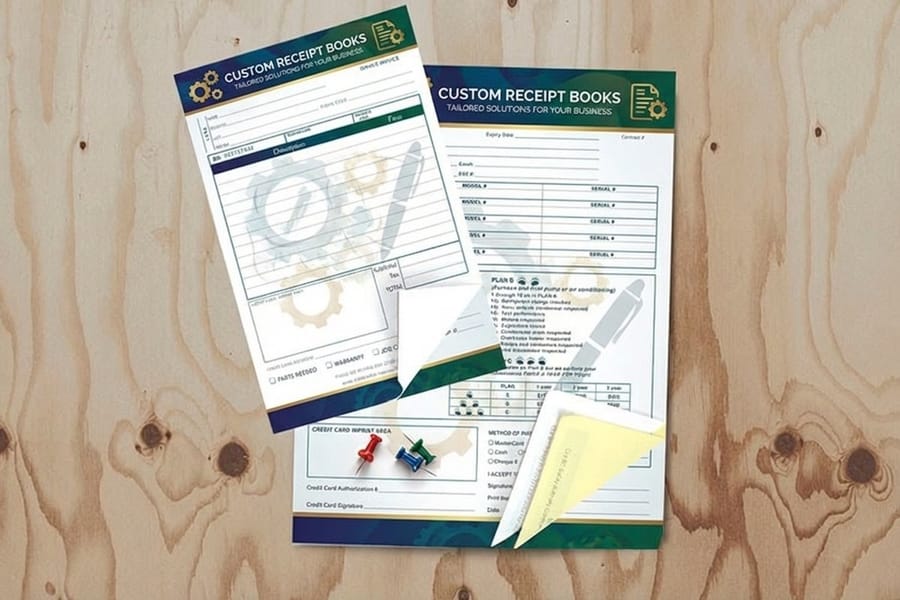
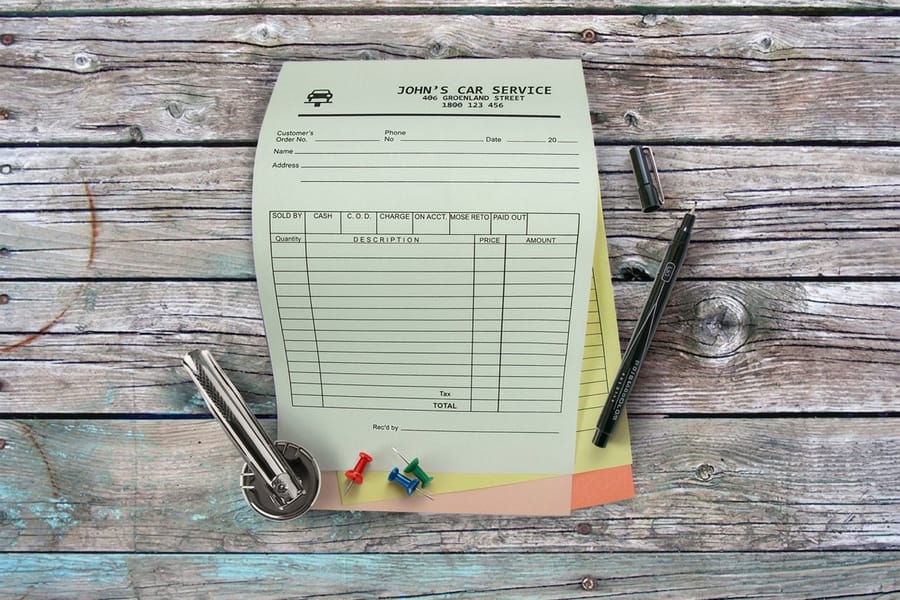
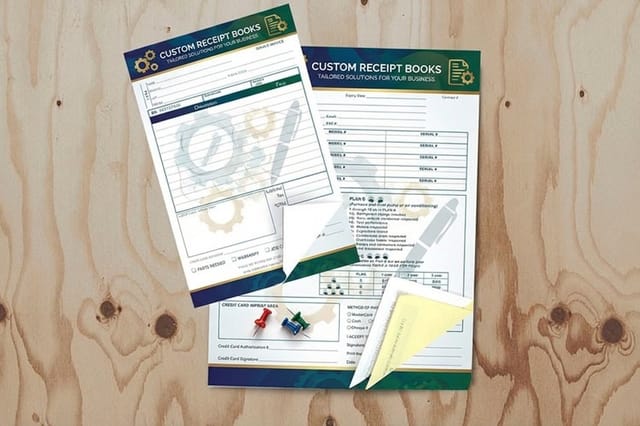
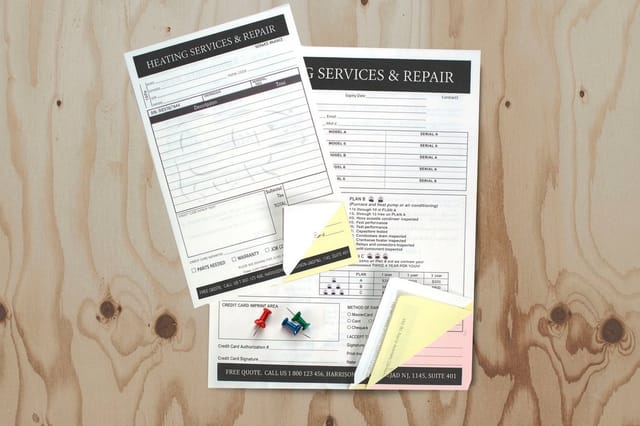
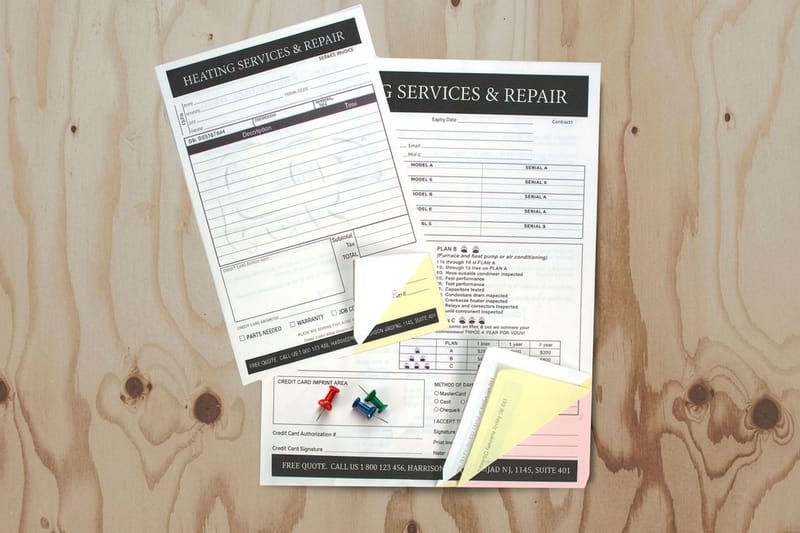
For work that happens away from a desk, paper is still faster than a phone. A crew in a driveway, a stand at a market, a trade counter: the customer signs, keeps a copy, and you keep the numbered original. Carbonless Forms start at $120.82 for a printed run and come as 2-part or 3-part sets, and our breakdown of 2-part against 3-part sets is worth two minutes before you order, because a third copy nobody files is money spent on paper. Receipt Books also start at $120.82 and suit anyone taking payment on the spot. If you would rather see the layout rules first, our guide to printing business receipts covers what has to be on the document.
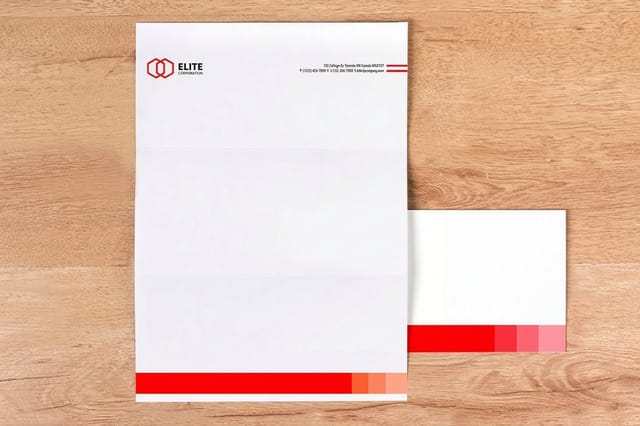
Statements do the quiet part of the work. A monthly statement of account on Standard Letterheads, from $99.95, showing every open invoice and its age, gets paid more often than a fourth copy of an invoice they have already ignored, because it lands on a different desk and reads as a summary rather than a nag. Compare stocks across the range on the carbonless forms printing page.
The trade-off nobody mentions: card payments cost you a percentage but clear in a couple of days, while a check on net 30 is free and lands six weeks after the job. On a small invoice the fee is cheaper than the wait every time. On a large one, run the number before you default to cards.
A Collections Ladder You Can Follow Without Losing the Customer
Chasing money goes badly when it is improvised, because the tone tracks the mood of whoever is doing it. Write the ladder once, put a name and a date against each rung, and it stops being a confrontation and becomes admin.
| When | What you do | Why it works |
|---|---|---|
| Day 1 | Confirm the invoice arrived and nothing is disputed. | Kills the filing problems that later look like refusals. |
| Day 25 | Short reminder before the due date, no tone at all. | Gets you into that week's payment run instead of the next one. |
| Day 31 | Phone the person, not the inbox. Ask for a payment date. | A named date is a commitment. An email is a queue position. |
| Day 45 | Posted statement of account showing every open item and its age. | Reaches a different desk and reads as a record, not a complaint. |
| Day 60 | New work stops until the balance clears. Say so plainly, in writing. | The only real leverage a small supplier holds, and it fades the longer you wait. |
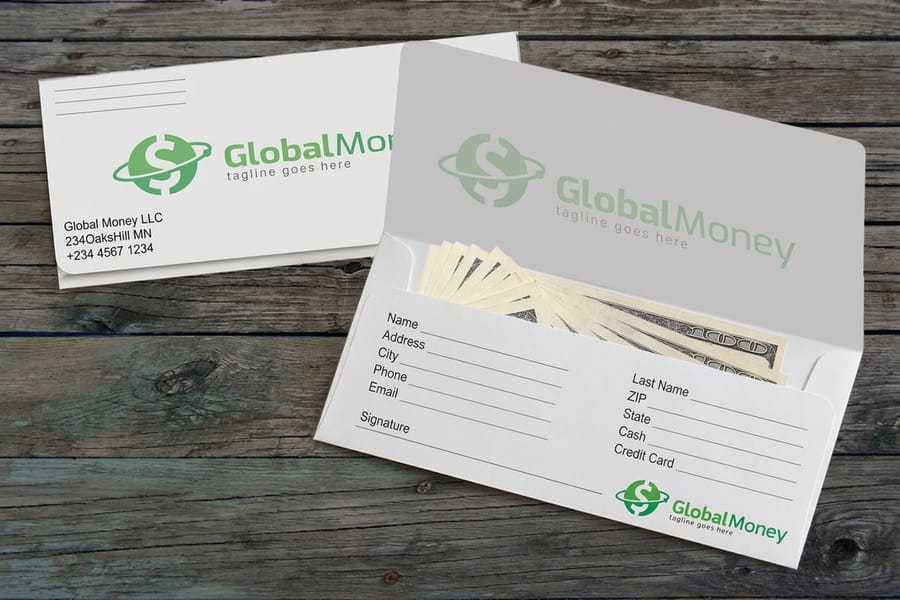
Posting a statement sounds old-fashioned until you watch how quickly a printed one gets actioned. Include the return envelope and you remove the last small friction. Remittance Envelopes start at $617.67 because they run in large quantities, so they only pay for themselves once you are mailing hundreds of statements a month. Below that, plain Printed Envelopes from $142.99 do the same job for less. Sizes matter more than people expect, and our note on 6 3/4 and A7 remittance fit saves a reprint. The full range sits on the envelopes printing page.
Decide the stop line in advance: the balance and the age at which you pause new work. Written down in a calm month, it is a policy. Invented in a bad month, it is a fight. And keep the arithmetic honest about who your worst customer is. A large account that pays at day 70 can consume more cash than a small one that never pays at all, because you keep giving it more.
Keep the Pipeline Full So the Gap Never Widens
Collections and forecasting manage the cash you have already earned. Neither creates any. The last part of the system is filling the weeks that the forecast shows as thin, and the cheapest revenue to find is from people who have already bought from you.
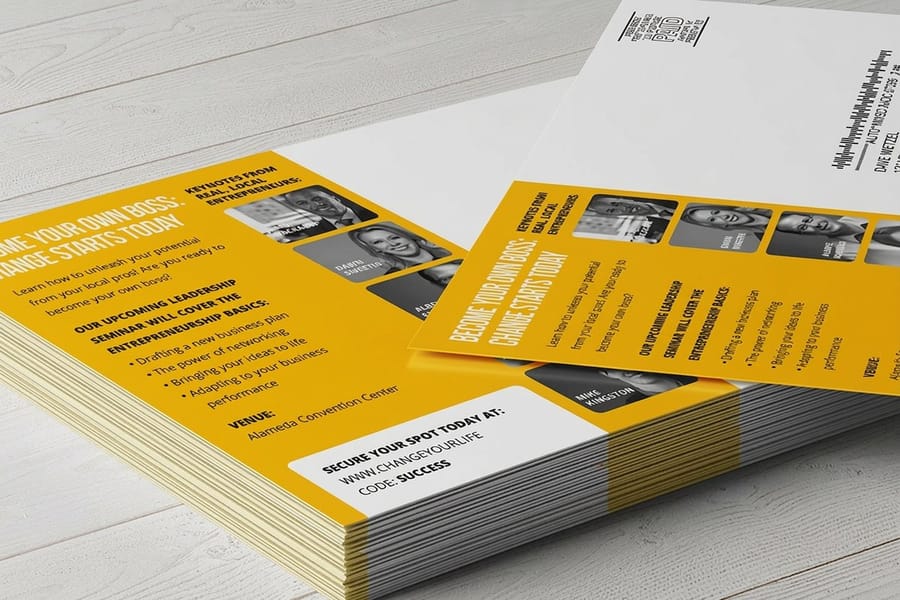
Pull the list of customers who bought nine to eighteen months ago and stopped. They know the work, they need no convincing on price, and they are reachable by name and address. A short mailing to that list ahead of a quiet stretch pulls work into it. Direct Mail Postcards start at $89.68, and because the mailing cost is known before you send it, you can put the spend in the forecast in the week it leaves and the expected work three to six weeks later. Our breakdown of direct mail cost per piece gives you the real per-unit number to budget with, and the small business marketing plan guide sets out how to schedule it against the rest of the year.
Time the buying too. Print, packaging and anything else you use continuously gets cheaper per unit as the run grows, which our guide to how print price breaks work lays out. That is a genuine saving and also a genuine cash decision. Committing to a year of stock to save twelve percent moves money out of the buffer and into a cupboard, so the right time to take a price break is a week the forecast shows as fat, not the week you happen to run out.
Run the four parts for a quarter and the forecast starts predicting your own business to within a few percent. That accuracy is the actual deliverable. It is what lets you take the large order, hire the extra pair of hands, or turn down a customer who costs more in delay than they pay in margin.
Wally explains the cash gap
You pay on day one and get paid on day sixty-eight
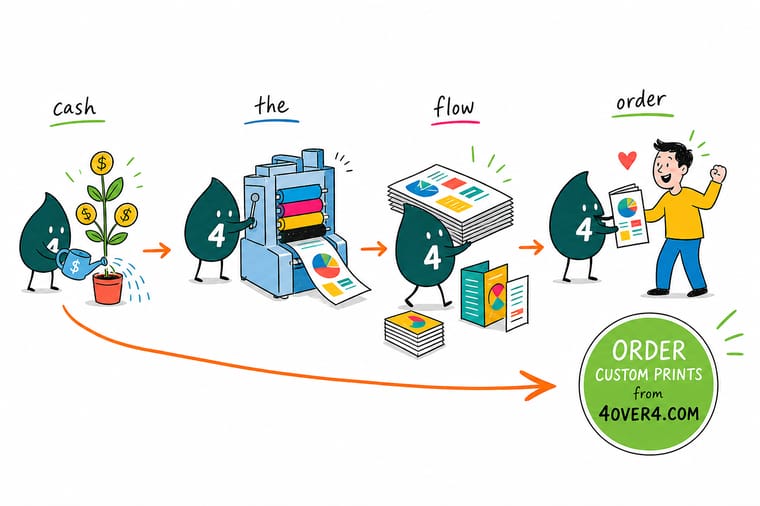
Wally buys the materials on Monday, does the work by Friday, and waits. If he bills at month end on net 30 terms and the customer pays a week late, the money lands more than two months after it left. Nothing went wrong and nobody was difficult. He fixes it by billing the day he delivers, phoning before the due date instead of after it, and keeping a few weeks of fixed costs in an account he does not spend from.
Print your invoice and receipt books →Specs and pricing
The paperwork that shortens the cycle
Live configuration options and starting prices for the forms, books and mailers that keep money moving, straight from the 4OVER4.COM configurator.



Print it
Order the documents that get you paid
Explore more
Where to go next




By the numbers
Business printing you can plan around at 4OVER4
Common Questions
Your cash flow questions, answered
What is a cash flow system?
It is four routines run on a fixed schedule rather than when someone panics. A 13-week rolling cash forecast updated on the same day each week, a fixed invoicing day so no job waits to be billed, a written collections ladder with a named person and a date for every step, and a buffer target expressed in weeks of operating cost. The system is not the spreadsheet. The system is that all four happen whether or not the week is busy, because the weeks you skip are always the weeks that go wrong.
Why is my business profitable but always short of cash?
Profit records a sale when you earn it. Cash records it when the money lands. Between those two dates you pay for materials, wages, rent and tax, and the gap is funded by you. Growth widens it, because every new job costs money before it pays. Three things close it: bill earlier, collect harder, and stretch supplier terms so your money goes out closer to when it comes in. Rapid growth with net 30 customers and net 7 suppliers is the most common way a good business runs itself dry.
How much cash buffer should a small business hold?
Work in weeks, not in a round dollar figure. Add up one week of fixed costs, which is payroll, rent, insurance, loan payments and the subscriptions you cannot switch off, then decide how many of those weeks you want to survive with no receipts at all. Businesses with lumpy project revenue need more weeks than a shop taking cash daily. Hold it in a separate account so it never quietly funds a slow Tuesday, and re-run the number each time payroll changes.
Should I offer an early payment discount?
Only after you price it. Two percent off for payment in ten days when your terms are net 30 buys you twenty days, and on an annual basis that costs somewhere near thirty-seven percent. If your bank line costs less than that, borrowing on the line is the cheaper way to bridge the same twenty days. Discounts make sense when you have no line, when the customer is slow and reliable rather than slow and risky, or when a single large invoice is blocking payroll.
What do I do when a customer will not pay?
Follow the ladder and keep it unemotional. Confirm the invoice was received and is not disputed, because a surprising share of late payments are filing problems rather than refusals. Then reminder, phone call, statement of account in writing, and a firm stop on new work until the balance clears. Stopping work is the only real leverage a small supplier has, and it works best used early and calmly. Decide in advance the balance and the age at which you stop, so the decision is already made when it is awkward.
Do I still need paper invoices and receipts if my accounting is online?
Not for the books, but often for the job. Crews working in driveways, at markets, at trade counters and in customer homes need something signed on the spot, and a duplicate book gives the customer their copy while you keep the original. Carbonless Forms and Receipt Books at 4OVER4.COM both start at $120.82 for a run, and the numbered copy is what turns a verbal agreement into a document you can chase. The paper feeds the accounting software. It does not replace it.
Get Started
Receipt books run 100 for $120.82, remittance envelopes 250 for $617.67
Numbered carbonless sets, receipt books and statement letterheads, printed and shipped fast, so the invoice leaves with the job instead of waiting for month end.
Legal Disclaimer
Gold Standard guarantees apply to all standard orders placed through 4over4.com. Price match requires verifiable proof of a competitor's published price for an equivalent product with matching specifications and turnaround time. Satisfaction guarantee covers manufacturing defects and print quality issues. Contact support with order number and documentation. On-time delivery rate based on tracked orders 1999 to 2026. Individual results may vary based on shipping carrier performance.
