
6 Print Picks for Testing an Offer Before You Bet the Budget
Most marketing arguments are two people guessing. These six printed pieces settle the argument cheaply: a split run to ask the question, a board to hold the decision rule, and a pad to remember the answer. Every price on this page is live.
To test an idea in print you need three things: two versions with one difference, a way to tell the replies apart, and a written rule for what counts as a win. Postcards from $16.48 carry the offer, flyers from $39.54 carry the headline, a $29 dry erase poster holds the hypothesis and the kill number, a notepad logs what came back, a $5.00 notebook keeps the quarterly review, and direct mail scales whichever version won.

The picks
Six picks, from a $5.00 notebook to $93.37 notepads
Buy the board and the postcards first. Between them they cover the two halves of a test: a written rule everyone can see, and something real in a customer's hand. Each item can be laid out in our free online designer or started from a ready-made design template, and every price updates in the configurator as you change size, stock and quantity.
What each pick is for
The piece, the format, and the question it answers
Read this as six jobs rather than a shopping list. Each row names the printed piece, the format and starting price, and the part of a test it handles. Tap a row to jump to the full explanation, including where each one falls down.
| Pick | Format and starting price | The part of the test it handles |
|---|---|---|
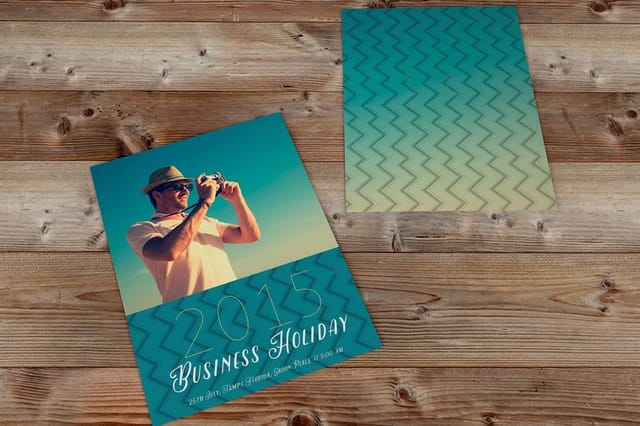
| 1. Standard postcards | 4.25 in x 6 in up to 6 in x 11 in, 14pt or 16pt stock. From $16.48 | The offer itself. Two versions, two codes, and the reply count tells you which one people wanted. |
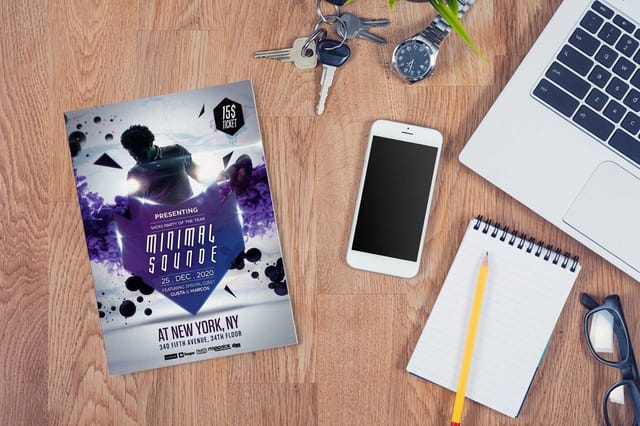
| 2. Standard flyers | 8.5 in x 11 in and smaller, 100lb gloss text upward. From $39.54 | The headline. Flyers are cheap enough per piece to run both versions in the same week without flinching. |
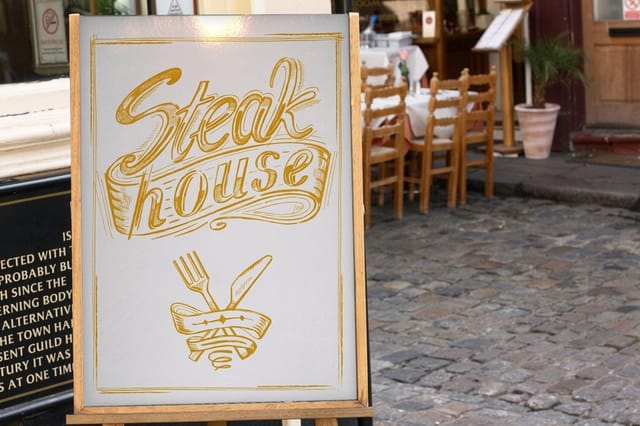
| 3. Dry erase posters | 11 in x 17 in up to 48 in x 72 in, write-on surface. From $29 | The decision rule. The hypothesis and the kill number go on the wall before the test runs, where the team can see them. |
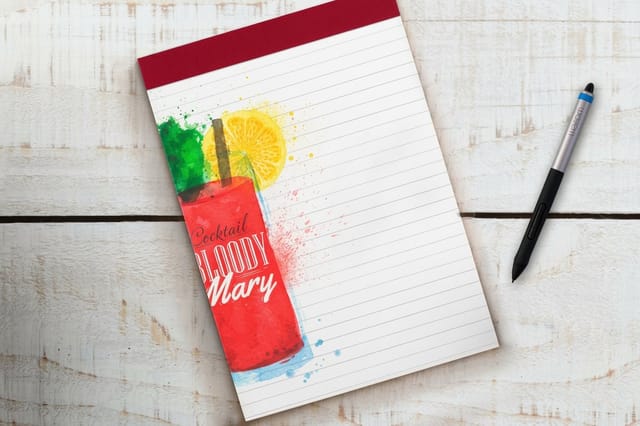
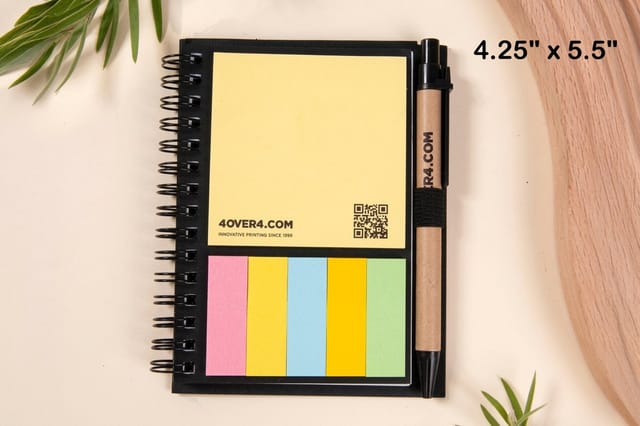
| 4. Standard notepads | 25, 50 or 100 sheets glued at the head, 4.25 in x 5.5 in up to 8.5 in x 11 in. From $93.37 | The result log. One sheet per test, filled in at the counter while the answer is still fresh. |
| 5. Deluxe spiral notebook | Spiral bound, priced per book. From $5.00 | The review habit. A page per test and a quarterly read-back, so the same idea does not get tried twice. |
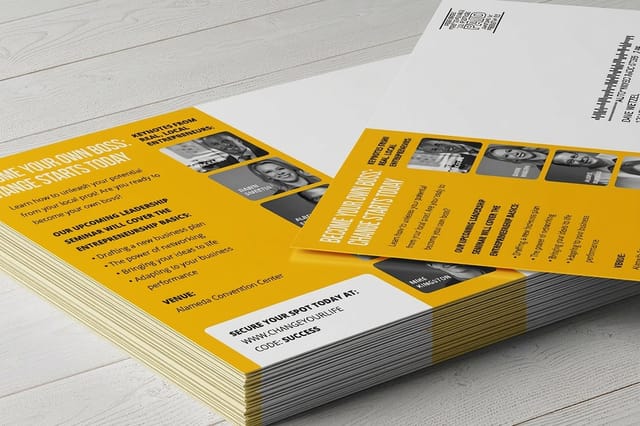
| 6. Direct mail postcards | 4.25 in x 6 in, 6 in x 9 in or 6 in x 11 in, addressed and mailed for you. From $89.68 | Scaling the winner. Once a version has proved itself in hand, mail is how it reaches a list you do not walk past. |
Start here
Write the rule down before you spend a dollar
A test only pays for itself if you decided in advance what would change your mind. Before you order anything, write three lines on the board: what you believe, what result keeps the idea, and what result kills it. Then pick one variable, hold everything else still, and give each version a code so the replies can be told apart. The reasoning behind which beliefs are worth buying an answer to, and when to stop asking, is set out in our testing mindset guide. If the split-test mechanics are the part you are unsure about, start with the beginner's guide to A/B testing.
1. Standard postcards are the cheapest way to buy an answer
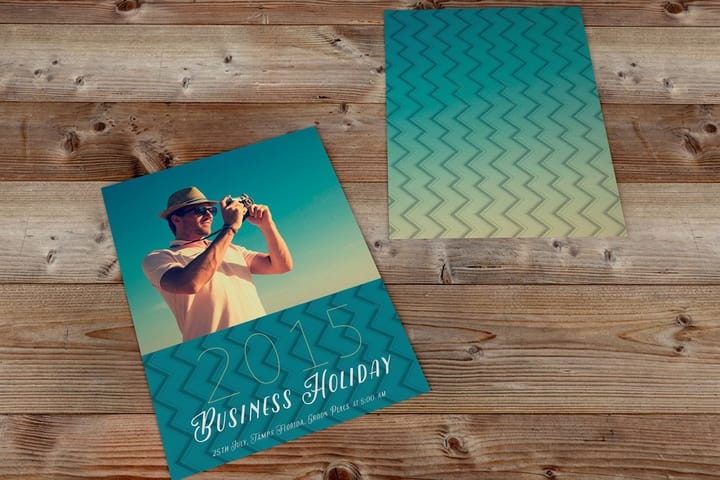
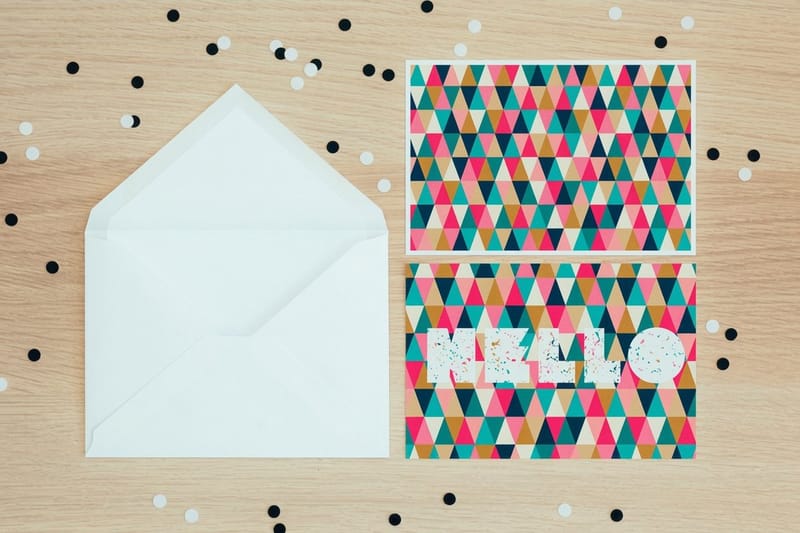
A postcard is the smallest complete offer you can put in somebody's hand, which is exactly what makes it the first thing to test with. Standard postcards start at $16.48, so buying an answer to "does the free consult pull better than ten percent off" costs less than one hour of arguing about it in a meeting.
The mechanics are simple once you accept one thing: our configurator prices a run, not a split, so a real A/B is two orders. Place version A and version B separately, give each one its own offer code, QR destination or phone extension, then count what comes back against the code rather than against a feeling. Without a distinct code per version you have printed two cards and learned nothing, because every reply arrives at the same place.
Keep the difference honest. One variable, same size, same stock, same drop week. Version A says the offer one way, version B says it another, and everything else is held still. Layout rules that keep both versions equally readable are in how to lay out a postcard for mailing, and the wider reasoning about which beliefs are worth testing at all sits in our testing mindset guide.
2. Standard flyers test the headline at street prices

Where a postcard tests the offer, a flyer tests the sentence at the top of it. Flyers start at $39.54 and print in volume, which means you can put two headlines in front of real people this week instead of surveying six friends about which one they prefer.
The trap with flyers is geography. Hand version A out downtown and version B out by the college and you have compared two neighborhoods, not two headlines. Alternate the versions block by block, or hand them out at the same location on the same day, so the only thing that differs is the paper. Distribution is the variable most flyer tests fail on, and it fails quietly.
Build both versions to one focal point so the comparison is fair: a flyer with a clear single message against a flyer that lists nine services is not a headline test, it is a layout test. The focal-point method is in how to design flyers, and you can start both versions from the same layout in our design templates so the only edit between them is the line you are testing.
3. A dry erase poster puts the decision rule where everyone can see it
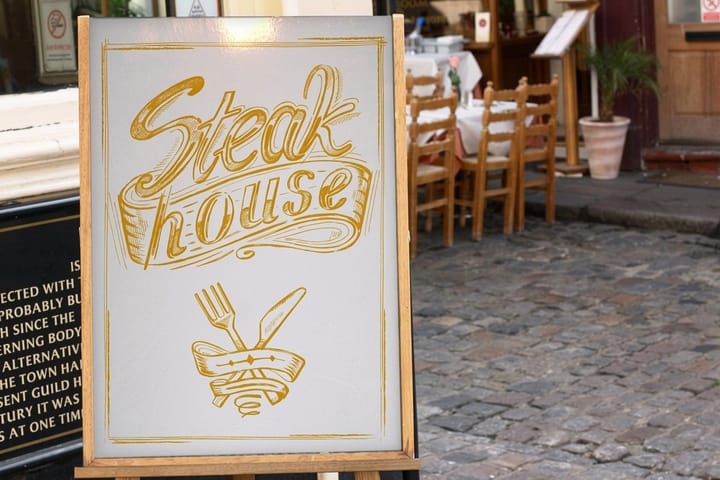
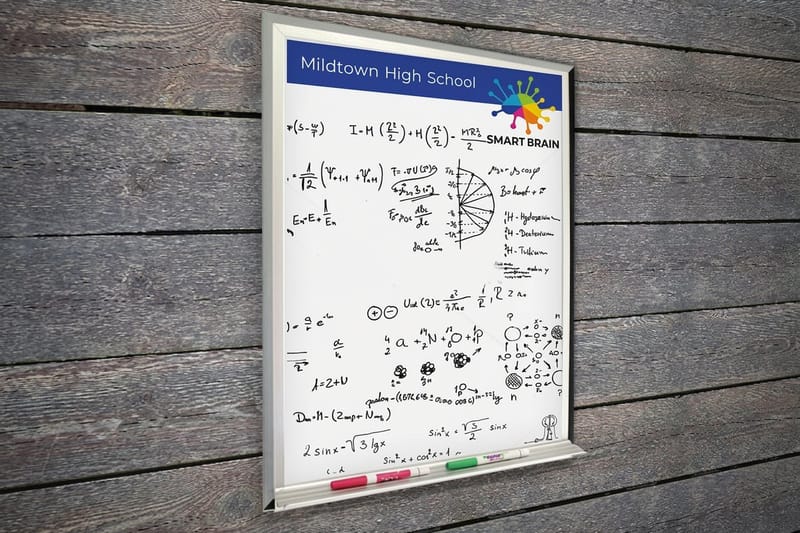
This is the pick that makes the rest work, and it starts at $29. A dry erase poster is a printed board with a write-on surface, so you can print your own column headings once and rewrite the contents every fortnight. Three columns are enough: what we believe, what result would change our mind, and what we found.
Print sizes run from 11 in x 17 in up to 48 in x 72 in. An 18 in x 24 in board is the one that actually gets used, because it fits above a desk and stays in the room where decisions get made. Hang it where the team walks past rather than in the manager's office. A test that is visible has a much better chance of being called dead on schedule.
The catch is in the name. Dry erase means the record disappears the moment somebody needs the space, so photograph the board before you wipe it and copy the outcome into the log pad below. If you want a chart that cannot be erased at all, standard posters start at $108.75 and print your framework permanently, which suits a process you have already settled on rather than one you are still shaping.
4. Notepads turn each test into a record you can find again
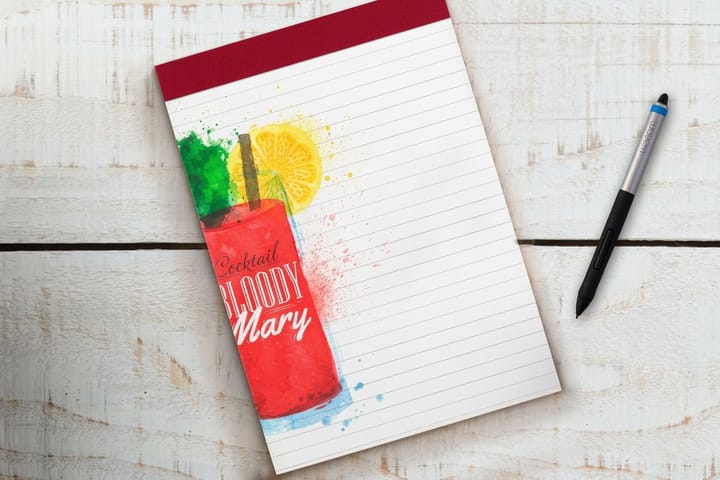
Most businesses do not have a testing problem. They have a memory problem. The same promotion gets tried in 2023 and again in 2026 because nobody wrote down how the first one went. A printed notepad from $93.37 fixes that for less than the cost of the reprint you would otherwise repeat.
Print the fields on the sheet: what we changed, what we expected, dates it ran, how many pieces, what came back, and the one line that says keep or kill. A form on paper gets filled in at the counter the day the results land. A spreadsheet gets filled in never, because it lives on a laptop that is somewhere else.
Order the sheet count for how settled the form is. Take 25 sheets while you are still adding fields, because a 100-sheet pad locks a form you will want to change after three tests. Sizes and sheet counts are laid out in standard notepad sizes, and the field layout side is covered in how to design a custom notepad.
5. A spiral notebook keeps the review on a schedule
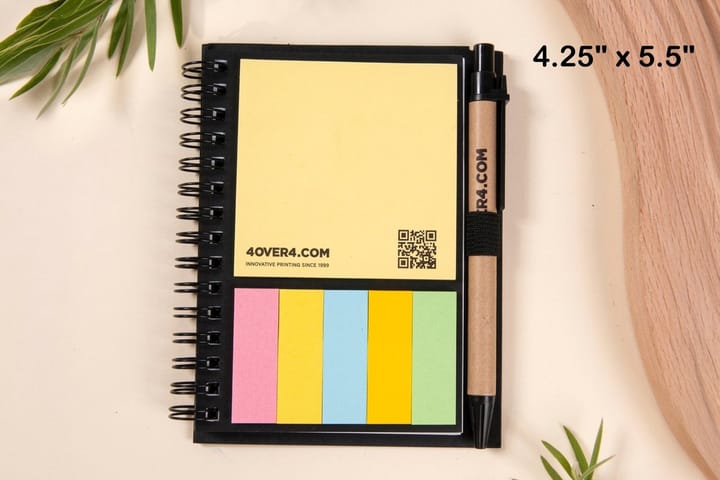
The board holds the current test and the pad holds the result sheet. The deluxe spiral notebook holds the year, and at $5.00 a book it is the only pick here you can buy one of. One page per test, one read-back per quarter, and the pattern across ten tests starts to show up in a way no single result ever does.
Spiral binding matters more than it sounds for this job. The book lies completely flat on a desk and folds back on itself in a bag, so it gets written in during the meeting rather than after it. A perfect-bound book closes itself while you are holding a pen.
Use it for the things a form field cannot hold: why you thought the idea would work, what the customer actually said on the phone, what you would try next. If you want a dated structure rather than a blank one, our note on the perpetual planner explains the undated format that carries over from one year to the next without wasting the unused months.
6. Direct mail postcards scale the version that won
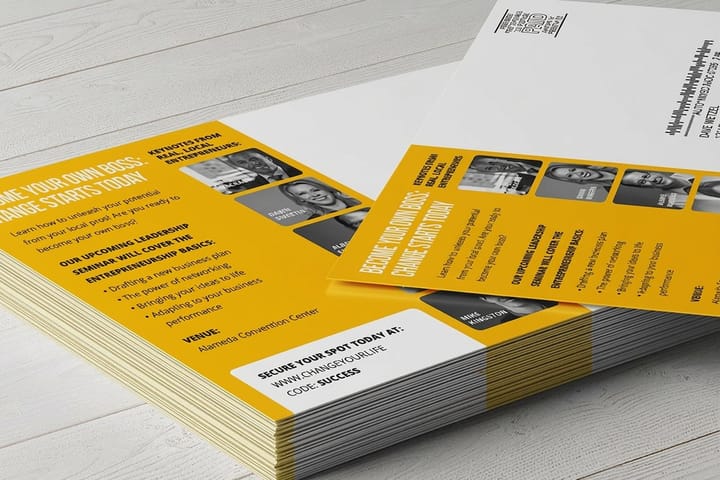
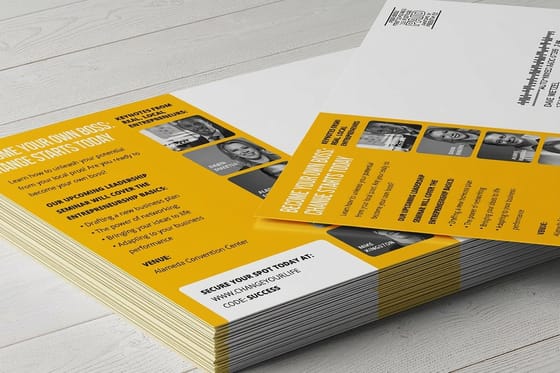
Testing has an end, and this is what the end looks like. Once a version has proved itself in hand-to-hand distribution, direct mail postcards from $89.68 take it to a list you never walk past. We print, address and hand the batch to the USPS, so the only decisions left are the list and the drop date.
Size does more work than design at this stage. A 4.25 in x 6 in card is the cheapest to mail and gets skimmed on the walk back from the mailbox. A 6 in x 9 in card cannot hide inside a stack of envelopes. A 6 in x 11 in card costs more per piece and earns it only when the offer needs the room.
Two honest limits before you scale. Postage is charged on top of the print, so the budget is bigger than the quote you are looking at, and mail is the slowest loop in this kit: a drop takes weeks to report back, which is why you test the offer on cheap postcards first and mail the winner rather than mailing the question. The send itself is walked through in five quick steps to send direct mail postcards, and if you are weighing doing it yourself against hiring it out, direct mail agency versus DIY lays out both costs.
Specs and pricing
The two you will order twice: postcards and flyers
A split test means two orders of the same piece, so the price break matters more here than on anything else in the kit. These are the live specs and price ladders for standard postcards and standard flyers, straight from the configurator.


| Quantity | Price Per Unit | Total |
|---|---|---|
| 50 | 33.0¢ | $16.48 |
| 100 | 24.2¢ | $24.16 |
| 200 | 15.9¢ | $31.86 |
| 300 | 12.8¢ | $38.45 |
| 400 | 11.3¢ | $45.04 |
| 500 | 10.3¢ | $51.62 |
| 600 | 9.89¢ | $59.31 |
| 700 | 9.57¢ | $67.00 |
| Quantity | Price Per Unit | Total |
|---|---|---|
| 50 | 79.1¢ | $39.54 |
| 100 | 57.1¢ | $57.11 |
| 200 | 37.3¢ | $74.69 |
| 300 | 28.6¢ | $85.68 |
| 400 | 24.4¢ | $97.76 |
| 500 | 21.8¢ | $108.75 |
| 600 | 18.7¢ | $112.03 |
| 700 | 16.5¢ | $115.33 |
Wally explains testing with paper
Two versions, one difference, and a rule written down first
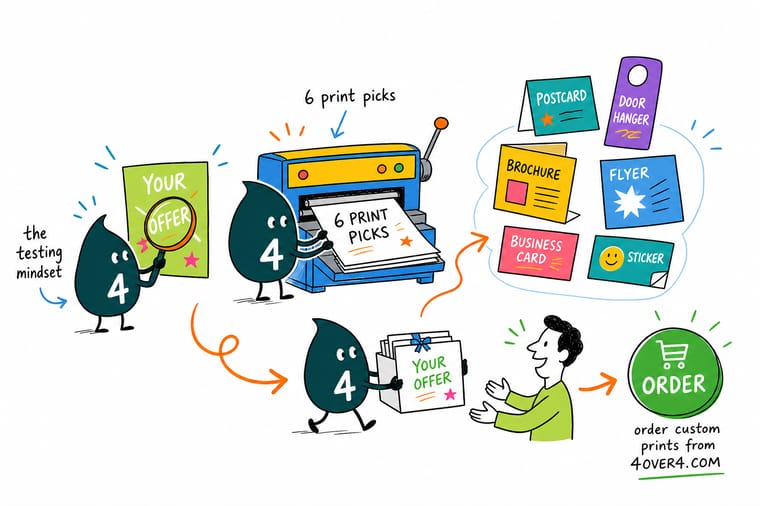
Wally writes the rule on the board before he prints anything: this is what I believe, this is the number that keeps it, this is the number that kills it. Then he orders two short runs of the same postcard with one line changed and a different code on each, hands them out the same week, and counts the codes instead of the compliments. Whatever comes back goes on a result sheet the same day, because the test he cannot remember is the test he will pay to run again in three years.
Shop business basics printing →See it in use
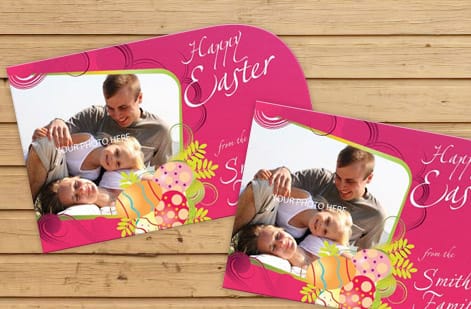
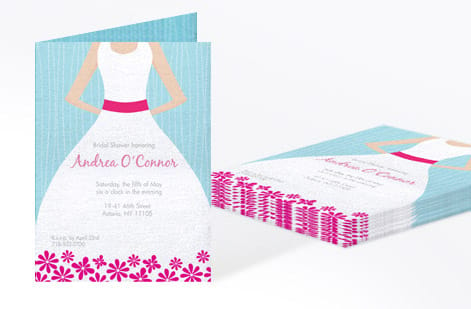
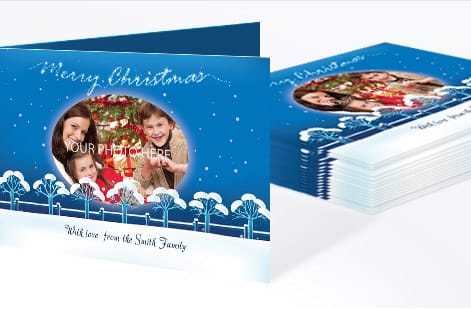
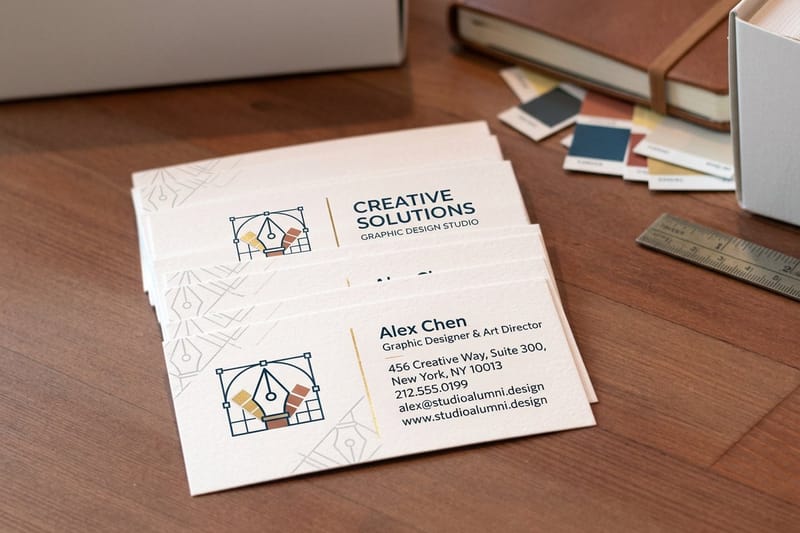
Postcards printed to run a split test





Explore more
Where to go next
By the numbers
What a cheap test can be printed on
Common Questions
Common questions about testing marketing in print
How do I run an A/B test when a print order is a single run?
Place two orders instead of one. Version A and version B are separate runs, each with its own offer code, QR destination or phone extension so replies can be told apart when they arrive. Splitting 500 pieces into two 250-piece orders costs more per piece than one 500-piece order, because setup is paid twice. That gap is the price of the answer, and standard postcards start at $16.48, so it stays small next to a full run of a card nobody responds to.
How many pieces do I need before the result means anything?
Enough that the difference between the two versions is obvious rather than arguable. Four replies against six is noise, and no amount of analysis turns it into a finding. If your response counts are going to land in single figures, treat the test as a way to rule out a disaster rather than a way to pick a winner, and either raise the quantity or accept that both versions are close enough that the choice does not matter.
What should I change between the two versions?
One thing. The offer, or the headline, or the call to action, not all three. If you change the offer and the photograph and the size at once, a winner tells you nothing about why it won, so you cannot repeat it on the next piece. Hold the size, the stock and the distribution identical, and put the single variable somewhere it cannot be missed.
How do I know which printed version produced a response?
Print the difference into the piece. A distinct offer code on each version, a separate QR link per version, or a different phone extension are the three that work without asking the customer to remember anything. Asking staff to say "where did you hear about us" is the method that fails most often, because it depends on somebody remembering to ask during a busy moment.
Which of these six should I buy first?
The dry erase poster and the postcards. The board at $29 gets the hypothesis and the kill rule out of your head and onto a wall, and postcards at $16.48 give you something real to put in front of customers this month. The notepad and the notebook matter from the second test onward, when you start needing to remember what the first one told you. Direct mail comes last, once a version has already earned it.
Is print too slow to test with compared to running ads?
It is slower, and it is more honest. A digital test reports in days but measures a click, which costs the person nothing. A printed test takes a couple of weeks and measures somebody walking in, calling or redeeming, which is a decision with cost attached. Use digital for fast reads on wording, and use print when you want to know whether the offer moves people who have to get out of a chair.
Can I test without committing to a full print run?
Yes. Set the smallest quantity in the configurator on each product and the price updates as you go, so a first test can be a few hundred pieces rather than a few thousand. Build both versions from the same design template and change only the line you are testing, then order the winner at a quantity that earns the better price break once you know which card deserves the volume.
Get Started
Order 50 postcards at $16.48 and run the test
Print two versions, code them, and let the replies pick the winner. Set size, stock and quantity on any product at 4OVER4.COM and the price updates as you go, so a first test costs a few hundred pieces rather than a full run.
Legal Disclaimer
Gold Standard guarantees apply to all standard orders placed through 4over4.com. Price match requires verifiable proof of a competitor's published price for an equivalent product with matching specifications and turnaround time. Satisfaction guarantee covers manufacturing defects and print quality issues. Contact support with order number and documentation. On-time delivery rate based on tracked orders 1999 to 2026. Individual results may vary based on shipping carrier performance.
