
6 Print Pieces That Turn LinkedIn Ads Leads Into Signed Deals
LinkedIn buys you the most precise B2B targeting there is and then hands you a lead who tapped a prefilled form twice. These six printed pieces cover the ground the ad account cannot reach, from the badge scan that builds your audience list to the report that lands on a director desk. They start at $16.48 for 50 postcards.
A LinkedIn lead gen form costs the lead two taps, which is why the lead is cold by Friday. The fix is one printed piece per stage: a banner stand that turns an event into a matched audience list, a QR code card that drops a hallway scan into the same tracking as a paid click, a hand addressed postcard for the days after the download, a sales sheet that leaves the price behind, a brochure for the colleagues who never saw your ad, and a printed booklet for the accounts worth a package.
The picks
Six pieces, from $16.48 postcards to a $240.55 booklet run
Start with the card and the postcards, then add the rest as the pipeline earns them. Each piece below is laid out in our free online designer or started from a design template, and every price comes straight from the configurator and drops as the quantity climbs.
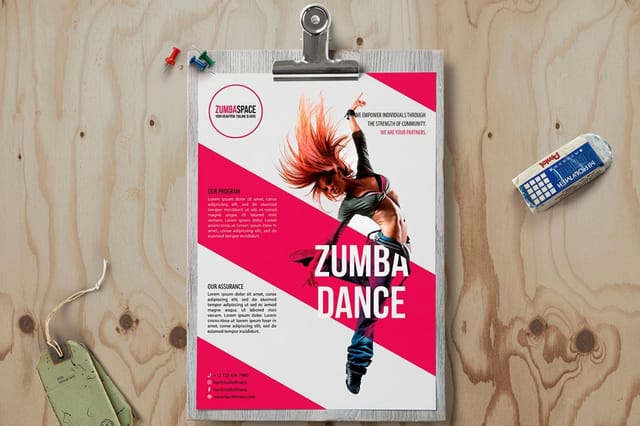
Sizes and stages
What each piece is, and where it lands in the funnel
Read the kit as a sequence rather than a shopping list. The banner builds the list, the card carries the scan into your tracking, the postcard restarts a thread the emails lost, and the sheet, the brochure and the booklet do the work of the meeting and everything after it. Tap a piece to jump to its section.
| Piece | Size and starting price | Where it lands in the LinkedIn funnel |
|---|---|---|
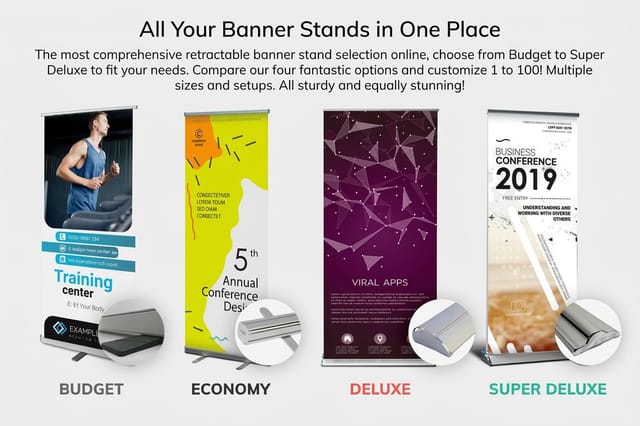
| 1. Retractable banner stands | 33 in x 80 in printed panel in a weighted base. From $139 | The event or the seminar. The badges you scan there become the company list you upload as a matched audience, which is how the ad account gets a warm target instead of a job title filter. |
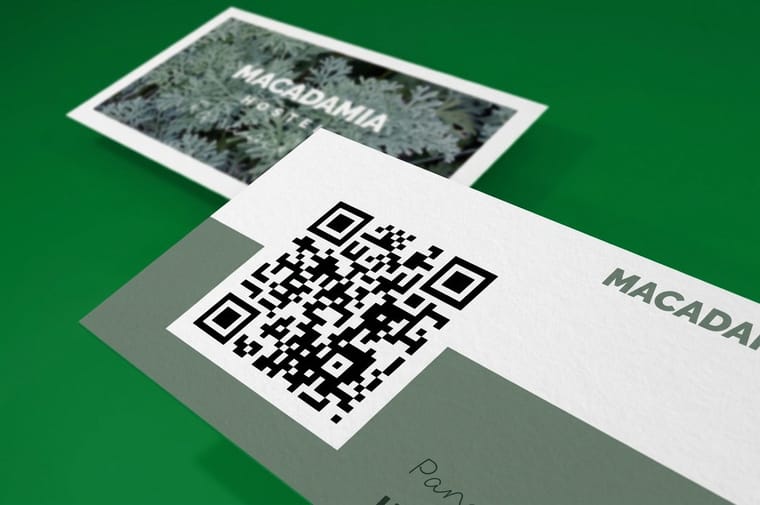
| 2. QR code business cards | 3.5 in x 2 in, QR at least 0.8 in square. From $17.57 | Every hand-to-hand meeting. The code points at the same landing page as the ad, so a scan is tracked and retargetable rather than a name in a phone. |
| 3. Standard postcards | 4 in x 6 in, hand addressed and stamped. From $16.48 | Days three to ten after the form fill, when the download has been read and the email thread has stopped moving. |
| 4. Sales sheets | 8.5 in x 11 in, one sheet per offer. From $75.80 | The first call that becomes a meeting. It leaves the price in the room after you log off. |
| 5. Standard brochures | Bi-fold or tri-fold, letter size. From $57.11 | The internal sell. Your contact has to explain you to a finance lead and an IT lead who were never on the call. |
| 6. Standard booklets | Saddle stitched, page count in multiples of 4. From $240.55 | The named accounts worth a real package. The gated report becomes an object on a desk instead of a PDF in a downloads folder. |
1. Retractable banner stands: where the target list comes from
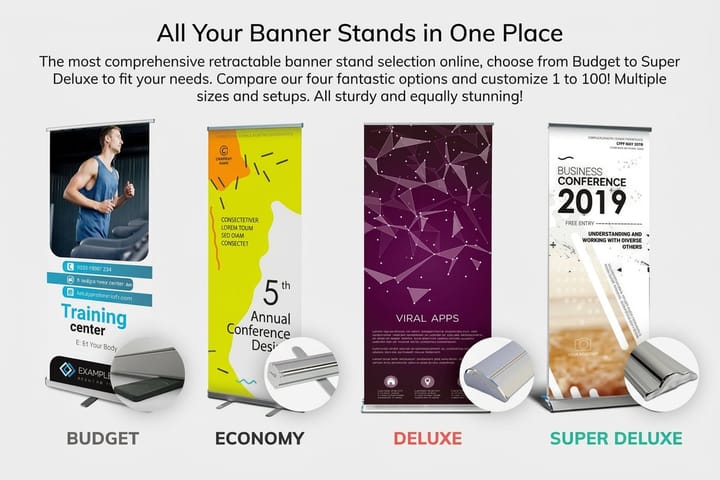
Good LinkedIn targeting starts with a list of real companies, not a stack of job title filters. A retractable banner stand starts at $139 and it earns its place at the event, the seminar or the partner breakfast where you collect those names. Upload the companies you met as a matched audience and the ad account stops guessing at an industry and starts serving people who already shook your hand.
Design it for the room, not for the file. The bottom foot of a 33 in x 80 in panel disappears behind a table and a row of shoulders, so anything below knee height is decoration. Put the offer and the company name in the top third, keep the body text to one line, and give the QR code its own clear panel at about chest height where a person can hold a phone steady.
The honest limit is that a banner converts nobody on its own. It holds attention for the ten seconds it takes to start a conversation, and everything after that runs on the card in your pocket and the follow-up you send. If events are a real channel for you, the best B2B trade shows is worth a read first, and the trade show lead capture lineup covers the rest of the booth.
2. QR code business cards: the scan that lands in the same funnel
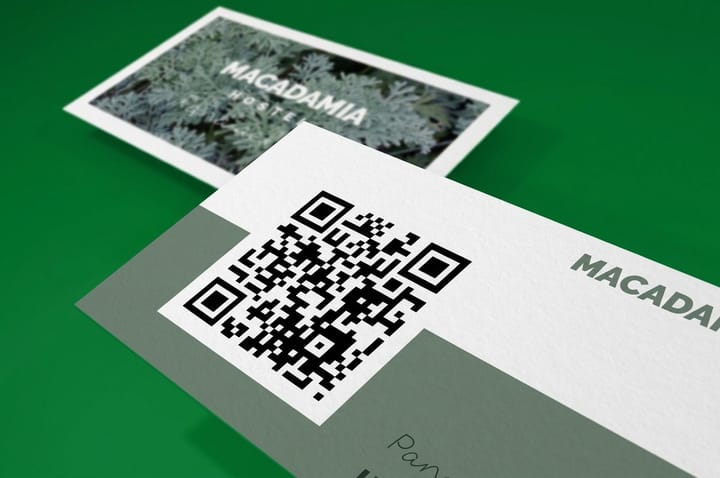
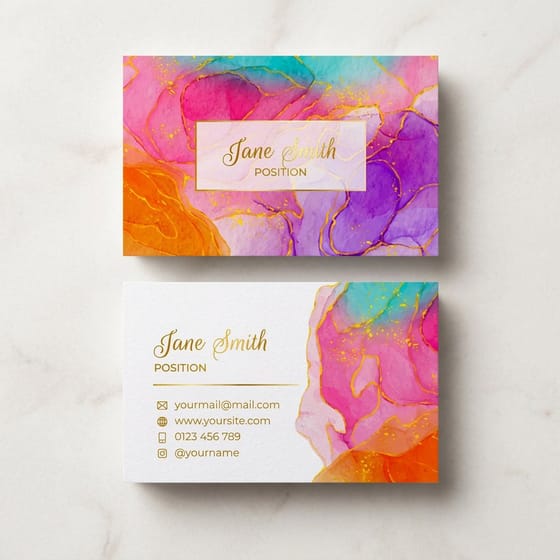
QR code business cards start at $17.57 and they solve a specific accounting problem. Point the code at the same landing page your LinkedIn ad sends traffic to, with its own UTM tag, and a scan from a conference hallway shows up in the same report as a paid click. The Insight Tag fires on that page, so the person becomes retargetable instead of being a name you meant to look up later.
Two printing details decide whether the code works at all. Give the QR at least 0.8 in square with a clear quiet zone around it, because a code squeezed into a corner beside your address fails at the exact moment somebody is holding a phone in one hand and a coffee in the other. And keep it off high gloss or spot UV: a booth spotlight bounces straight back off a coated square and the camera hunts for focus for five seconds, which is four seconds longer than anyone tries.
Give the code a destination worth scanning. A calendar booking page or a current price list is a step forward. A homepage is a dead end, and a vCard just duplicates what the phone already stores. Our guide to putting your LinkedIn on a business card covers the profile URL and the layout, and you can start the artwork from a design template instead of a blank file.
3. Standard postcards: the follow-up that is obviously not automated
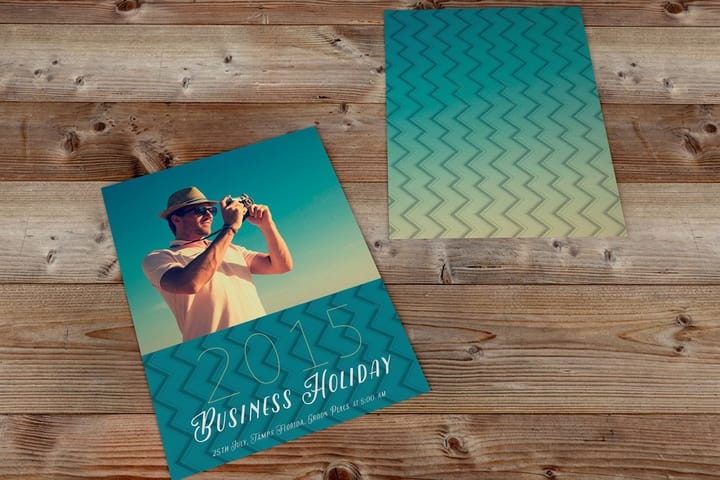
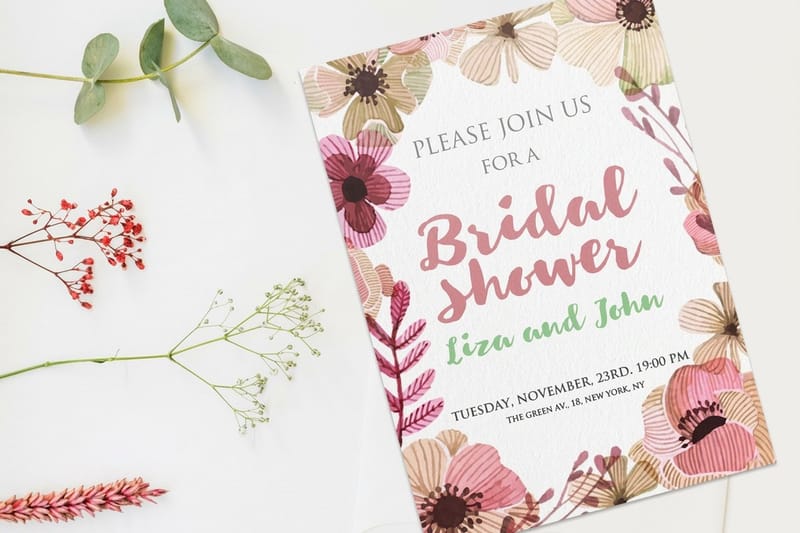
Standard postcards start at $16.48 and this is the piece you address yourself. Somebody downloaded your report on Tuesday. By Friday two automated emails have gone out and neither was opened, because everybody knows what a nurture sequence looks like. A 4 in x 6 in card with six handwritten lines and a stamp is the one follow-up in the sequence that could not have been sent by software.
It does not scale, and that is the whole point. Forty cards a week is about the ceiling for one person, so spend them on the leads worth four minutes: the director who downloaded twice, the account already on your matched audience list, the demo that went well and then went silent. Reference the exact thing they downloaded. A generic card reads like mail and gets treated like mail.
The real blocker is the address, not the writing. LinkedIn hands you a name, a company and an email, never a street address, so either ask for it on your own landing page after the form or pull the company office from your CRM and address the card to the person there. If the volume outgrows your handwriting, the case for scaling it up sits in B2B direct mail ideas that win new clients, and direct mail versus digital marketing weighs the two channels side by side.
4. Sales sheets: the price stays in the room after the call ends
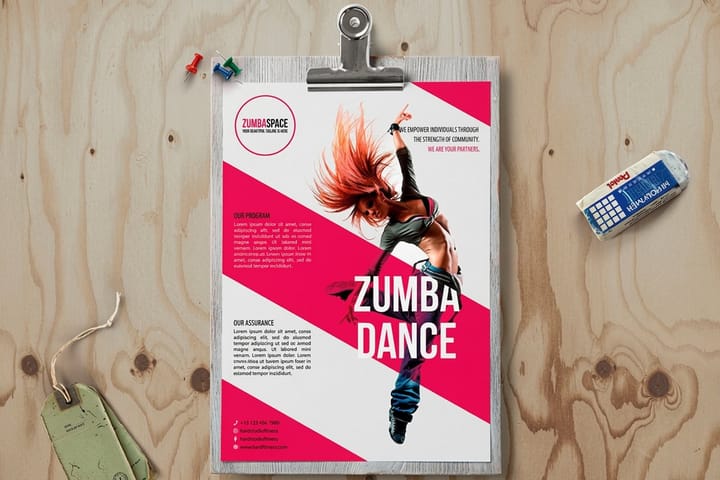
Sales sheets start at $75.80 and they carry the number. One sheet per offer, not one sheet for the company. When a LinkedIn lead turns into a first call, the follow-up they actually want is the page that says what this costs, and a sheet you mail or hand over does that without the buyer digging through a slide deck for the pricing slide.
Printing the price is what separates a sales sheet from a brochure, and it is also what limits the run. A number changes and the sheet is wrong, so order a quarter of stock rather than a year. Keep one side for the offer, the price and the next step, and only go to two sides when there is a genuine spec table or a comparison worth the space.
If you are weighing the two formats before you order either, brochures versus sales sheets sets out where each one pays for itself, and these sales collateral examples show what other B2B teams put in front of a buyer at this stage.
5. Standard brochures: for the three people who were not on the call
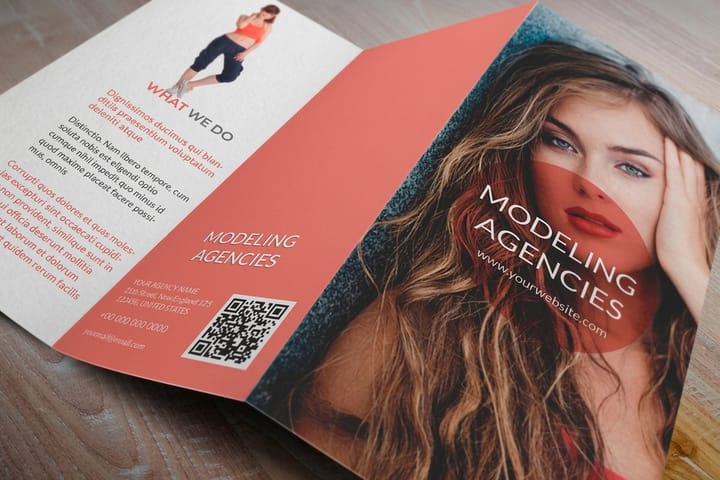
Standard brochures start at $57.11 and they work the part of a B2B deal you are not invited to. LinkedIn is good at reaching one manager. That manager then has to explain you to a finance lead, an IT lead and a director who never saw your ad, and a folded piece does that explaining in a meeting you are not in.
Write it for the person who missed the call. No prices, no staff names, no founding year, because those three lines are what force an early reprint. What belongs inside is the process, the proof and the range: the parts of the business that will still be true in two years when the box is half empty.
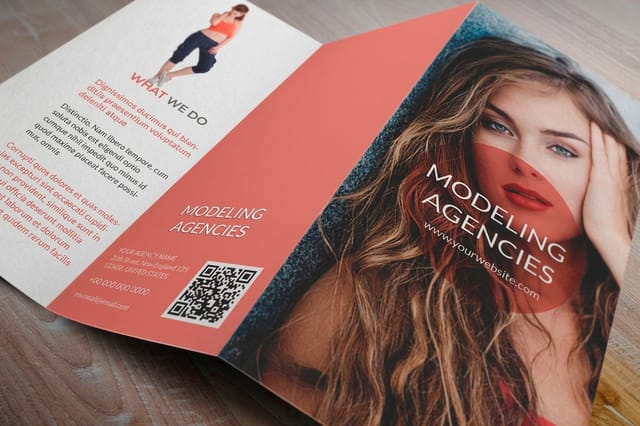
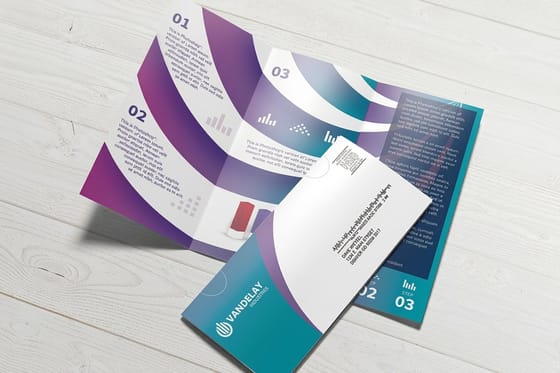
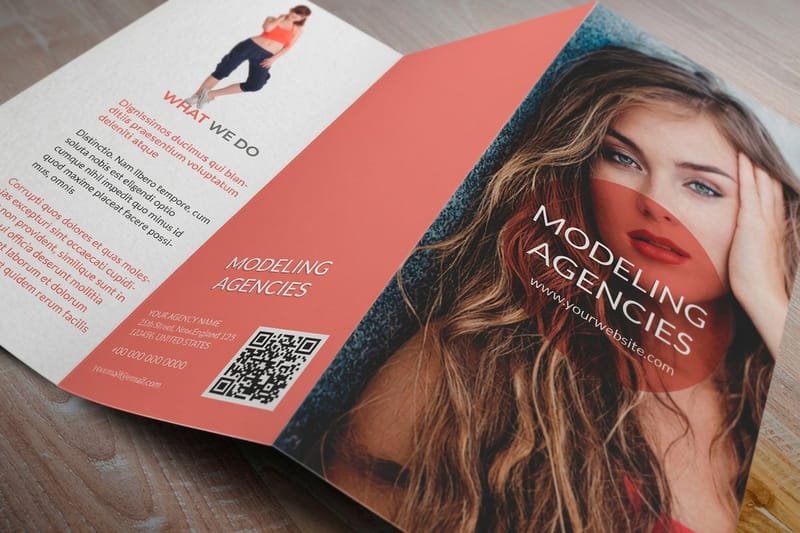
Fold is a working choice. A tri-fold gives six narrow panels and fits a number 10 envelope, which matters when the brochure is going in the mail alongside a card. A bi-fold gives four wide panels and suits a table and a photo that needs room. Marketing brochures that drive sales walks the panel order, and the rest of the range sits in marketing materials.
6. Standard booklets: the gated report as an object, not a download
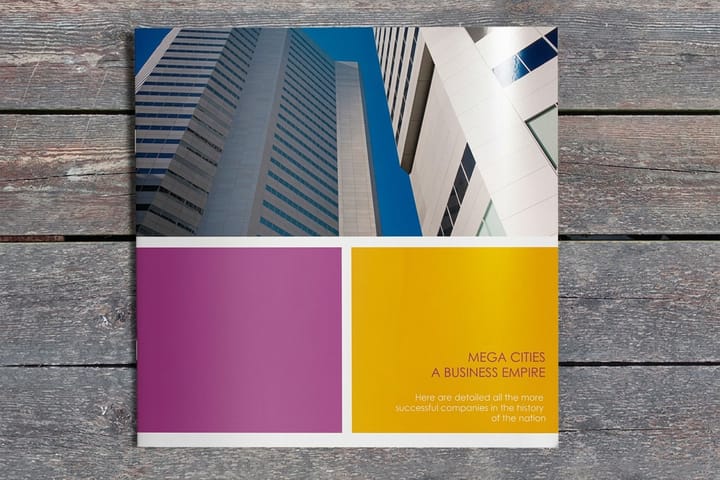
Standard booklets start at $240.55 and they are the most expensive piece in this kit by a wide margin, so use them narrowly. The report you gated behind the lead gen form is a PDF sitting in a downloads folder with forty other PDFs. Printed, saddle stitched and mailed to the twenty accounts you actually want, the same document turns into a thing on a desk that somebody has to decide what to do with.
Plan the page count before you plan the layout. Saddle stitching folds sheets in half and staples the spine, so the total has to be a multiple of four. Land on 14 pages and you either write two more or you accept two blanks. Set the page count first, then fit the content to it, which is the reverse of how most reports get made.
The math only works at the top of the list. At this price a booklet is a package for a named account, never a giveaway for every form fill, and the honest version of this kit sends most leads a postcard and reserves the booklet for the handful worth a meeting. The wider follow-up sequence sits in our sales follow-up print set, and if the mailing has to catch a Friday deadline, same-day printing explains the cut-off you have to hit.
Specs and pricing
The two pieces you reorder most: postcards and sales sheets
The postcards go out every week and the sales sheet gets reprinted whenever a price moves, so these are the two lines on the order that repeat. Here are the live specs and the price ladders for both.
| Quantity | Price Per Unit | Total |
|---|---|---|
| 50 | 33.0¢ | $16.48 |
| 100 | 24.2¢ | $24.16 |
| 200 | 15.9¢ | $31.86 |
| 300 | 12.8¢ | $38.45 |
| 400 | 11.3¢ | $45.04 |
| 500 | 10.3¢ | $51.62 |
| 600 | 9.89¢ | $59.31 |
| 700 | 9.57¢ | $67.00 |
| Quantity | Price Per Unit | Total |
|---|---|---|
| 50 | $1.14 | $57.11 |
| 100 | 82.4¢ | $82.38 |
| 200 | 53.3¢ | $106.55 |
| 300 | 41.0¢ | $123.02 |
| 400 | 34.9¢ | $139.49 |
| 500 | 31.2¢ | $155.97 |
| 600 | 26.7¢ | $160.36 |
| 700 | 23.5¢ | $164.75 |
Wally explains the six stages
The ad buys the click, print keeps the lead
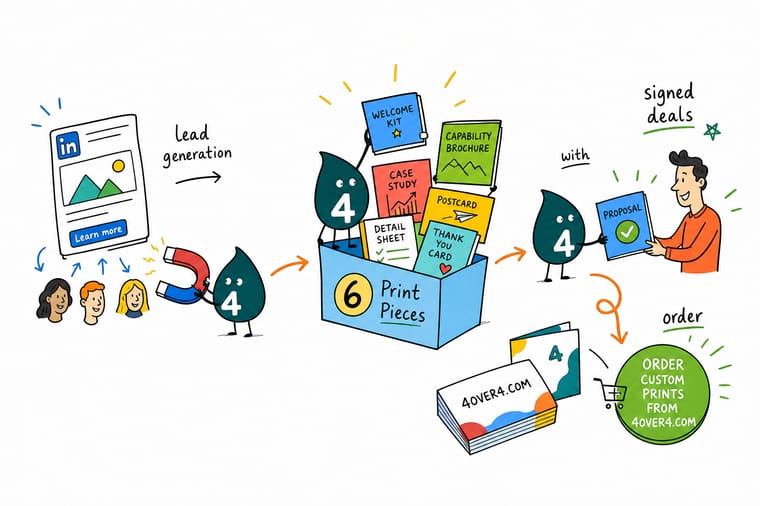
Wally walks the path a LinkedIn lead actually takes. The banner stand at the event turns badges into the company list you upload as a matched audience. The QR card sends a hallway scan to the same landing page as your ad. The postcard arrives in the quiet week after the download, the sales sheet leaves the price behind, the brochure explains you to the colleagues who never saw the ad, and the booklet lands on the desk of the account worth the package. Pick the stage that is leaking, or print the whole set at 4OVER4.
Shop marketing materials →See it in use
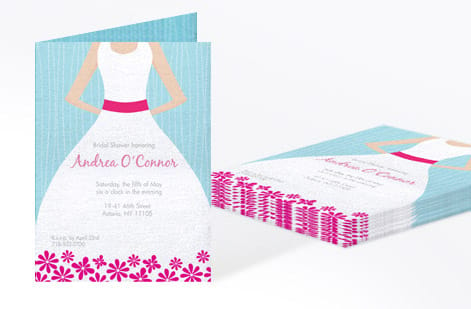
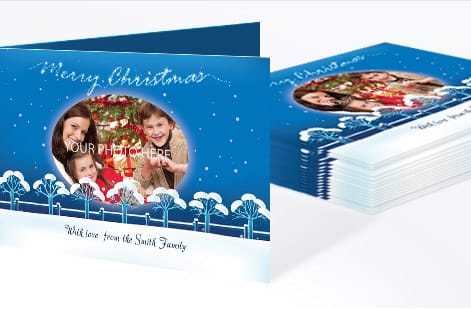
Postcards printed for a B2B list






Explore more
Where to go next
By the numbers
What a B2B follow-up can be printed on
Common Questions
Common questions about following up LinkedIn Ads leads
What should I send a LinkedIn lead after they download the PDF?
A hand addressed postcard, sent between day three and day ten, that names the exact report they downloaded. By then the automated emails have gone out and the thread has usually stopped moving, and a stamped card is the only touch in the sequence that clearly took a person four minutes. Keep the booklet and the folder for the accounts you have already had a call with, because mailing a printed report to every form fill is how a print budget disappears in a fortnight.
How do I get a mailing address from a LinkedIn lead gen form?
You do not. The form prefills from the profile, so it hands over a name, a job title, a company and a work email, and no street address. There are two workarounds that hold up: send the ad to your own landing page instead of the native form and ask for the address as an optional second step, or take the company office address from your CRM and address the piece to the person there. Attribute B2B mail to the office, not to a guessed home address.
Does print belong in a LinkedIn Ads budget at all?
It belongs after the click, not instead of it. LinkedIn is the strongest B2B targeting available and it stops the moment you pause the spend, so the pieces here cover what the ad account cannot do: put something in a hand, sit on a desk for a month, and reach the people inside a company who never saw the ad. A practical split is a card and a stack of postcards from day one, roughly $34 for both starting quantities, and the booklets only once you know which accounts are worth the mailing.
Sales sheet or brochure for a LinkedIn lead?
The sales sheet, if you print only one. It carries the price, it answers the question the lead already asked, and it is cheap to reprint when that number moves. The brochure earns its place later, at the point where your contact has to sell you internally to a finance lead and an IT lead who never joined a call. One is for the person you spoke to, the other is for the people you will never meet.
Will a QR code on a business card really track back to the campaign?
Yes, if the code points at a landing page carrying its own UTM parameters and your LinkedIn Insight Tag, rather than at your homepage. A scan then appears in analytics next to your paid clicks and the visitor joins your website retargeting audience. Print the code at 0.8 in square or larger, keep a clear quiet zone around it, and keep it off a high gloss or spot UV panel, because a spotlight bouncing off a coated square is the most common reason a code will not scan at an event.
What does the six-piece kit cost to start?
About $546.51 for one starting quantity of each at 4OVER4.COM: a retractable banner stand from $139, QR code business cards from $17.57, standard postcards from $16.48, sales sheets from $75.80, brochures from $57.11 and booklets from $240.55. Every price moves with size, stock, finish and quantity in the configurator, and the per-piece cost falls as the run climbs. Most teams start with the card and the postcards and add the rest as the pipeline justifies it.
How many pages should a printed lead magnet booklet be?
A multiple of four, because saddle stitching folds full sheets in half and staples the spine. Sixteen pages is the comfortable size for a report that came from a PDF, and 24 is the sensible next step. Decide the count before you lay anything out, since discovering you have written 14 pages means either two more spreads or two blanks left in the middle.
My target list is smaller than 300 companies. Can I still run this?
Run the print half and treat the ads as a supporting channel. LinkedIn will not serve a matched audience below 300 matched members, so a tight named account list either sits under the floor or gets padded with companies you did not choose. Mail the postcards and the booklets to the list you actually want, keep a broader retargeting audience running against your website traffic, and let the two meet on the same landing page.
Get Started
Print the follow-up before the next campaign goes live
Order the six-piece LinkedIn lead kit as one branded set at 4OVER4.COM. Standard postcards start at $16.48 for 50 on 14pt gloss cover in 3 business days, and each other piece is configured for size, stock and finish on its own page.
Legal Disclaimer
Gold Standard guarantees apply to all standard orders placed through 4over4.com. Price match requires verifiable proof of a competitor's published price for an equivalent product with matching specifications and turnaround time. Satisfaction guarantee covers manufacturing defects and print quality issues. Contact support with order number and documentation. On-time delivery rate based on tracked orders 1999 to 2026. Individual results may vary based on shipping carrier performance.
