
How to Create a Marketing Brochure That Drives Sales


Goal, fold, panel flow, copy, paper and print file, in the order a working designer tackles them. This guide walks the full pipeline so the brochure you hand a prospect does one job well: it asks for the sale and makes saying yes easy.
To create a marketing brochure that drives sales, start with the one action you want a reader to take, then choose a fold that reveals your story in that order. Map a job to every panel before designing, lead each panel with a reader benefit backed by specific proof, hold body copy to short paragraphs, and pick a paper and finish that match the perception you want. Finish with a press ready file built at flat size with bleed, then test a short run before printing the full quantity.

Start here
The whole brochure pipeline in one paragraph
A marketing brochure works when six decisions line up: the action you want, the fold that reveals your story, a job assigned to every panel, copy that leads with reader benefit, a paper and finish that match your positioning, and a press ready file built at flat size with bleed. Skip any one of them and the piece becomes an expensive company biography. Work through them in order and you get a brochure that keeps selling long after the handshake.
What a marketing brochure should actually do for your business
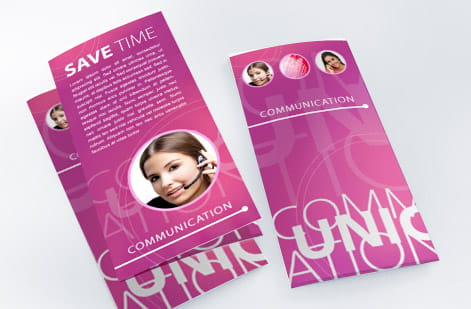
A brochure is not a company biography. It is a sales conversation you hand to someone who has already shown a flicker of interest, and its only job is to move that person one step closer to buying. Before you touch a layout, write the sentence that describes what a reader should do after they put it down. Call, book a walkthrough, visit a landing page, bring the coupon to the counter.
That single decision organizes everything else. It tells you how many panels you need, which proof belongs on the inside spread, and what the back panel has to carry. If your offer itself is thin, fix that first: our guide to building a marketing offer that creates new sales is worth an hour before any design work starts.
Brochures also outlive the moment they are handed over. They sit in a rack, a glovebox or a folder, which means they are read cold, days later, by someone with no memory of your pitch. Write for that reader. If you are planning a wider campaign around the piece, these ways to use marketing promotions show how a brochure pairs with the rest of your print.
Choosing a fold and format that fits your message
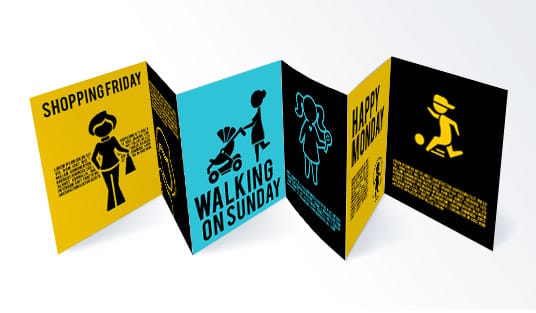
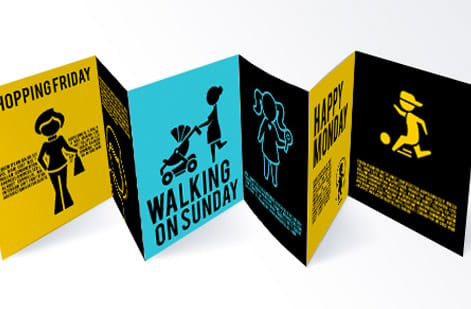
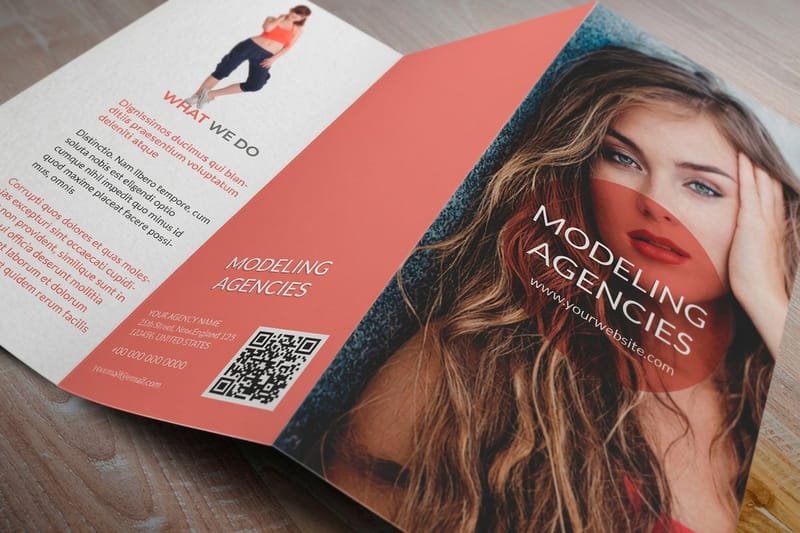
The fold is the first structural decision, and it quietly controls the order in which your story is revealed. A bi-fold gives you four generous panels and a proper spread, which suits one continuous argument. A tri-fold gives you six narrow panels and naturally splits content into three beats, which is why it dominates racks and counters. A Z-fold reveals panels in strict sequence, so it reads like a short story. A gate fold opens outward to a single wide reveal, which is the right choice for a floor plan, a menu or a hero product shot.
Format follows fold. An 8.5x11 flat sheet folded in three lands at a rack friendly 3.67x8.5. An 11x17 folded in half gives you an 8.5x11 spread that feels closer to a mini catalog. Larger flat sizes give photography room to breathe but cost more to mail, so check postage before you fall in love with a format.
If you want to see the real options side by side with live pricing, the brochure printing category lists every fold and flat size we run, and standard brochures start at $57.11 so you can price a small test run before committing to a campaign quantity.
Planning panels and reading flow before you design
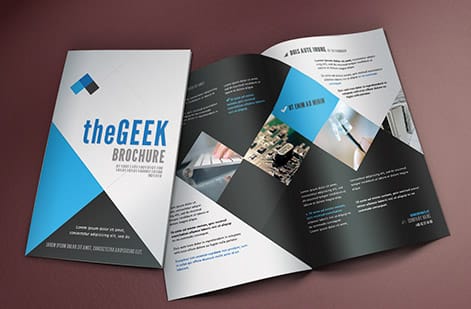
Sketch the piece on a folded sheet of scrap paper first. Write one line per panel describing its job, not its content. Cover: earn ten more seconds. Panel two: name the problem in the reader language. Panels three and four: the solution and the proof. Panel five: pricing, packages or specifics. Back panel: contact details, hours, map and the single call to action.
That one line per panel discipline is what prevents the most common brochure failure, which is a wall of unbroken paragraphs that nobody reads. It also exposes the panels you do not need. If two panels want the same job, you have a bi-fold pretending to be a tri-fold.
Reading flow matters as much as content. On a tri-fold, the reader sees the cover, then the flap, then the full interior spread, so never split a headline across a fold line. Short form print follows the same logic at a smaller scale, which is why table tent marketing strategies translate neatly to a brochure panel plan.
Writing brochure copy that sells instead of describing
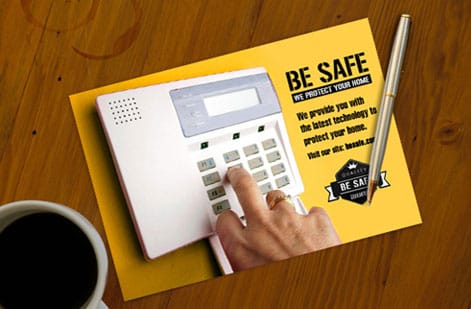
Most brochure copy fails in the same way. It describes the company instead of addressing the reader. The fix is a simple order: benefit, evidence, offer, action. Lead every panel with what the reader gets, back it with something specific such as a warranty, a timeline or a named customer, then state the offer and the step that claims it.
Keep paragraphs to three lines and under forty words. Use subheads that make sense on their own, because half your readers will only read the subheads and the caption under the photo. Prices, timelines and guarantees should be printed as numerals, not spelled out, so they catch the eye during a scan.
Direct mail writing is the closest cousin to brochure writing, and the discipline transfers well. Our guide to direct mail postcards that convert covers the offer and call to action structure in depth, and these lead generation ideas from a service trade show how specific a real offer needs to be before it earns a response.
Design and layout best practices for print that gets read
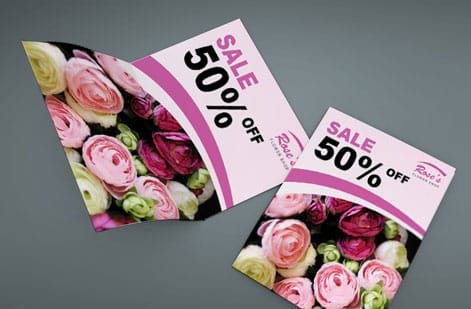
Build a grid and stay on it. Set consistent margins on every panel, keep a single baseline rhythm for body text, and align photos to the same column edges. A brochure that follows a grid looks professional even with modest photography, and one that ignores the grid looks amateur even with beautiful images.
Limit yourself to two typefaces and three type sizes. Body copy between 9 and 11 points reads comfortably in hand. Keep line length between forty five and seventy five characters, which on a narrow tri-fold panel usually means a single column and nothing else. Reserve your brand accent color for headlines and calls to action so it keeps its signaling power.
Give the fold lines room. Nothing important should sit within a quarter inch of a fold or a trim edge, because folding tolerance shifts slightly across a run. If you are weighing a print piece against a plain sales sheet for the same campaign, this sales sheet comparison lays out where each format earns its keep.
Choosing paper and finish that match how you want to be perceived
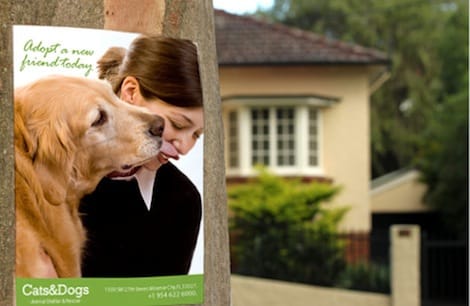
Paper is the first thing a reader judges, and they judge it before they read a word. Lighter text weights fold crisply and keep mailing costs down, which suits high volume rack distribution. Heavier cover weights feel substantial and hold up in a folder or a glovebox, which suits a high value pitch where the piece has to survive a week on a desk.
Coating sets the tone. Gloss makes photography snap and reads as promotional. Matte calms the page and makes long copy easier on the eye, which is why advisory and educational pieces lean matte. High gloss UV feels retail and showroom bright. Soft touch adds a velvet surface that slows a reader down, which is exactly what a premium offer wants.
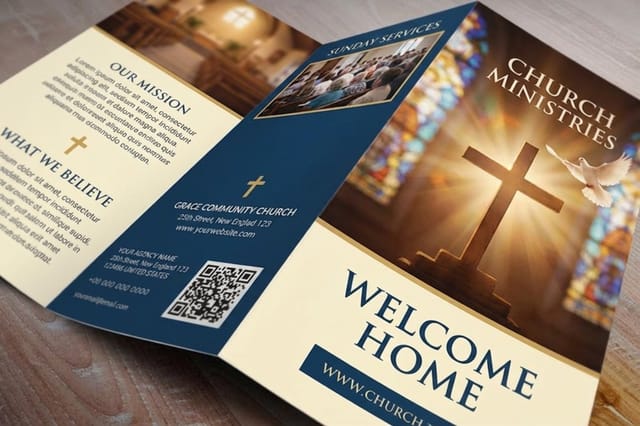
Different audiences reward different choices. A congregation newsletter and a luxury listing are not the same brief, which is why church brochures at $57.11 and a glossy property piece rarely share a stock. When you are undecided, order free paper samples and hold the options in your hand before you approve a full run.
Setting up a print-ready brochure file the press will accept

Build the document at the flat size, not the folded size, and add an eighth of an inch of bleed on all four outer edges. Place guides at the exact fold positions and remember that on a tri-fold the inward folding panel is slightly narrower than the other two, usually by about a sixteenth of an inch, so it tucks cleanly instead of buckling.
Keep a safety margin of a quarter inch inside every trim edge for text, logos and anything you cannot afford to lose. Work in CMYK, place images at 300 dpi at final size, and convert rich blacks deliberately rather than letting a default do it for you. Export a single press ready PDF with pages in reader order, fonts embedded or outlined, and bleed and crop marks included.
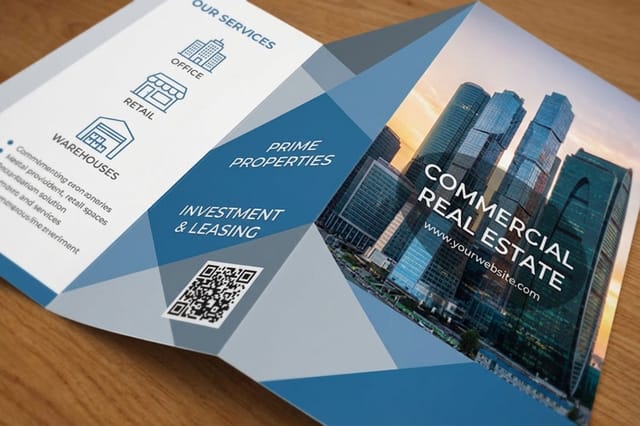
Double check the panel order by printing the PDF on your office printer and folding it by hand. It takes two minutes and catches reversed panels before they become a reprint. Photo heavy formats such as commercial real estate brochures from $57.11 are the ones where resolution and bleed mistakes show up most obviously.
Printing your brochure and getting it into the right hands
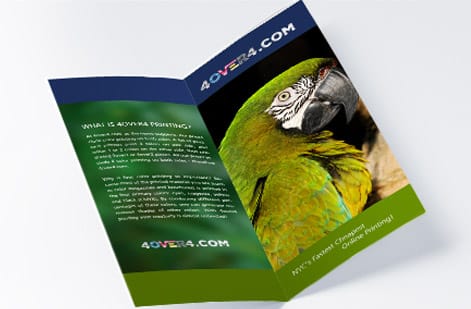
Order a small quantity first when the piece is new. A short run lets you test the offer, the headline and the paper in the real world before you commit budget to thousands of copies. Once the piece proves itself, larger quantities bring the per piece cost down sharply because setup is spread across the run.
Plan the calendar backward from the day the brochures must be in hand. Production turnaround and transit time are separate, and specialty coatings add a pass, so a soft touch cover needs more lead time than a standard gloss. Seasonal campaigns punish a late delivery, which is why Thanksgiving campaign planning and Memorial Day promotion ideas both start with a print date, not a design date.
Then decide distribution before the boxes arrive. Racks, counters, trade show tables, sales appointments, mailers and leave behinds all reward different panel plans. When the plan is set, configure and price your run on standard brochures, and request free paper samples first so the stock in your hand matches the one in your head.
Wally explains the panel plan
Every panel needs a job before it gets a design
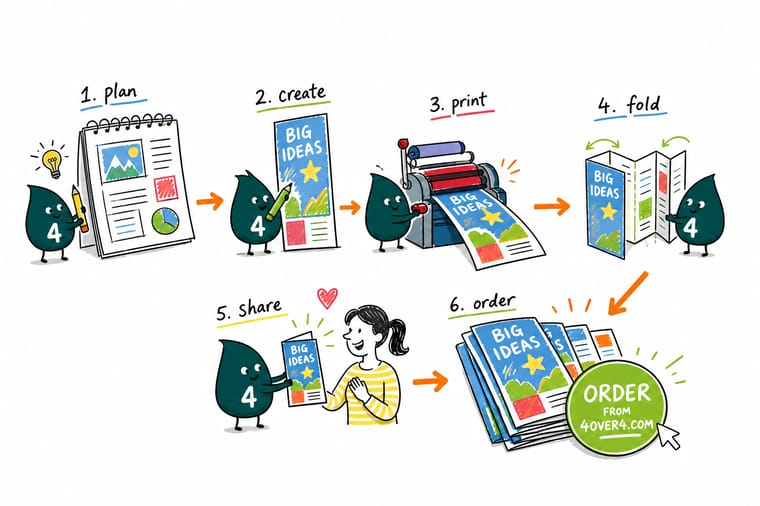
Wally folds a blank sheet before he opens a design tool, then writes one line on each panel describing what that panel has to accomplish. Cover earns attention. Flap names the problem. The interior spread proves the claim. The back panel closes with the offer and how to act on it. When each panel has a single job, the copy writes itself and the layout stops fighting the fold.
Design and print brochures →Infographic
Seven brochure folds and the story each one tells
One frame, seven folds. Save it, print it, or keep it open while you sketch panels, because choosing the fold first is what keeps your copy from being cut in half by a crease.
Pick the fold before you write a word. The crease decides what a reader sees first, second and last, and rewriting a headline is far cheaper than discovering it lands across a fold line after the run is printed.
Specs and pricing
Brochure specs and live pricing
When the panels are planned and the file is built, these are the real specifications and current prices for standard brochures, so you can size the run and the stock against your budget before you order.

| Quantity | Price Per Unit | Total |
|---|---|---|
| 50 | $1.14 | $57.11 |
| 100 | 82.4¢ | $82.38 |
| 200 | 53.3¢ | $106.55 |
| 300 | 41.0¢ | $123.02 |
| 400 | 34.9¢ | $139.49 |
| 500 | 31.2¢ | $155.97 |
| 600 | 26.7¢ | $160.36 |
| 700 | 23.5¢ | $164.75 |
Print it
Print your marketing brochure at 4OVER4
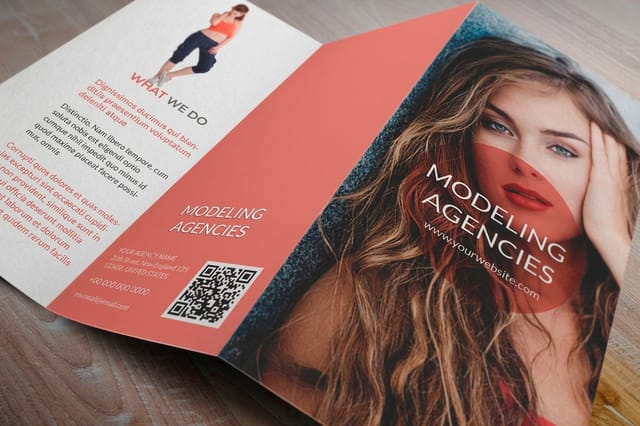
See it in use
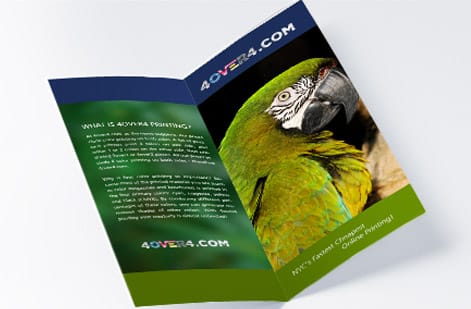
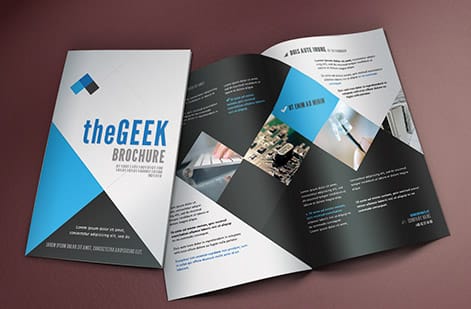
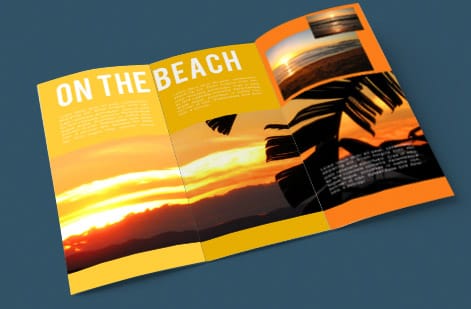
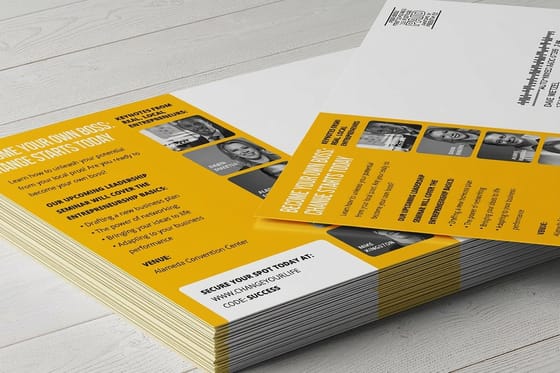
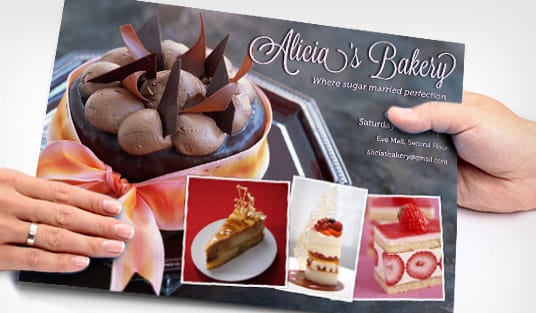
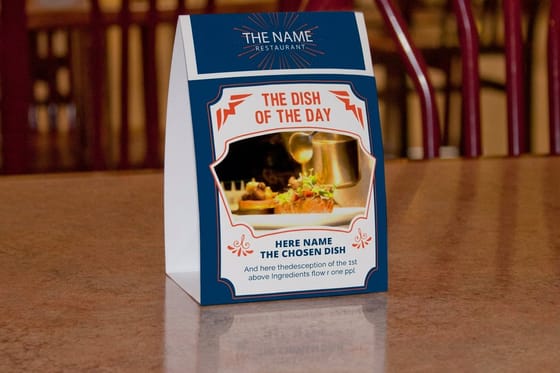
Real brochure designs, printed in-house


Explore more
Where to go next
By the numbers
Printing you can count on at 4OVER4
Common Questions
Common questions about marketing brochures
What is a marketing brochure?
A marketing brochure is a folded print piece that carries a complete sales story in a format a reader can hold, keep and pass along. It sits between a flyer, which delivers one message fast, and a booklet, which behaves like a small catalog. A brochure gives you a cover to earn attention, interior panels to explain and prove your offer, and a back panel to close with contact details and a clear next step.
How do I choose the right fold for my brochure?
Match the fold to the shape of your message. Use a bi-fold when you have one story with a beginning, middle and end. Use a tri-fold when your content splits naturally into three parts such as problem, solution and proof. Use a Z-fold when you want each panel revealed in sequence like a short narrative, and use a gate fold when a single dramatic reveal, such as a floor plan or a hero product, deserves the whole interior spread.
What does brochure printing cost and how are prices set?
Price is driven by quantity, flat and folded size, paper weight, whether you print one side or both, the coating you choose and your turnaround. Standard brochures at 4OVER4.COM start at $57.11, and the cost per piece drops sharply as quantity climbs because setup is spread across the run. The live price table on the product page updates as you change each option, so you can compare configurations before you order.
What sizes, stocks and finishes are available for brochures?
Common flat sizes include 8.5x11, 8.5x14, 11x17 and 11x25.5, folding down to familiar pocket and rack friendly formats. Stocks run from lighter text weights that fold cleanly to heavier cover weights that feel substantial in hand. Finishes include gloss for saturated photography, matte for calm readable type, high gloss UV for a showroom shine, and soft touch for a premium tactile surface that slows a reader down.
How long does brochure printing take to print and ship?
Production time depends on the turnaround you select at checkout and on the coating, since specialty finishes add a pass. Faster turnarounds cost more per piece, so build a few extra days into your campaign calendar when budget matters. Transit time is separate from production time, which is the detail most people miss when they plan an event date, so count backward from the day the brochures must be in hand.
How much copy should a marketing brochure hold?
Far less than most first drafts contain. Aim for roughly seventy to one hundred and twenty words per panel, broken into short paragraphs, a subhead and a bulleted list. If a panel needs more, the content probably belongs in a booklet or on a landing page you link to from the brochure. White space is not wasted space, it is what makes the words you keep look important enough to read.
Do I need bleed on a brochure file, and how do I set it up?
Yes, if any color, photo or background touches the edge of the panel. Build the document at the flat size, add an eighth of an inch of bleed on every outer edge, and keep text and logos at least a quarter inch inside the trim so nothing is clipped when the sheet is cut. Set up panel guides at the fold positions, export a press ready PDF in CMYK at 300 dpi, and keep fonts outlined or fully embedded.
Get Started
Ready to put your brochure in a customer hand?
Bring your panel plan to 4OVER4.COM and print it on the stock and finish that fit your offer, with live pricing, in-house production and a short test run whenever you want one.
Legal Disclaimer
Gold Standard guarantees apply to all standard orders placed through 4over4.com. Price match requires verifiable proof of a competitor's published price for an equivalent product with matching specifications and turnaround time. Satisfaction guarantee covers manufacturing defects and print quality issues. Contact support with order number and documentation. On-time delivery rate based on tracked orders 1999 to 2026. Individual results may vary based on shipping carrier performance.
