
6 Print Products That Turn Google Search Ad Clicks Into Repeat Customers
A search campaign buys attention by the click and stops the hour the budget pauses. These six printed pieces catch the customers it already won and bring them back without a second click, and every one of them starts under $60.
Print the pieces that keep working after the campaign is paused, and let the ad account keep doing what it is good at. Postcards mailed to the postal codes your campaign already converted in, business cards that produce the referral, magnets so the repeat call comes in direct, yard signs that make people search your name, flyers for the boards nobody bids on, and brochures for what a short landing page had to leave out. Six starting prices come to $175.38, or $78.73 for the four retention pieces.
The picks
Six pieces, from $16.48 postcards to $290.41 door hangers
Work down the list, cheapest first. The first four are aimed at customers the campaign has already paid to win, which is where an ad budget leaks hardest. The last two go looking for new ones in places that have no auction. Prices come from the configurator and fall per unit as the quantity climbs.
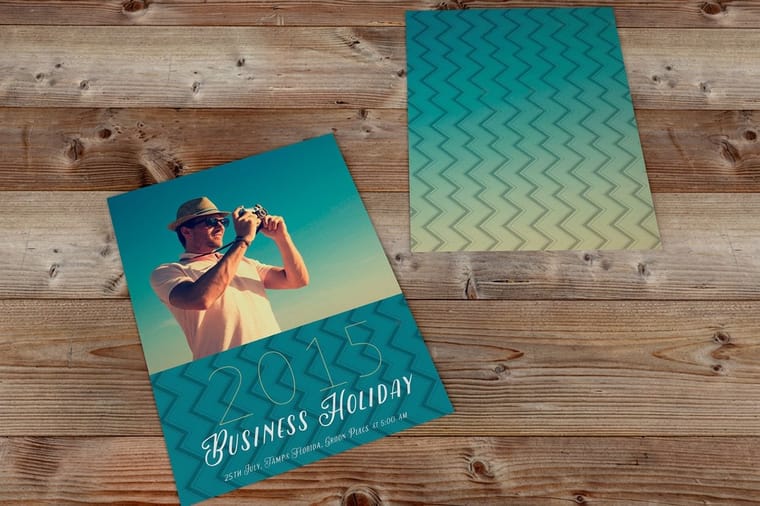
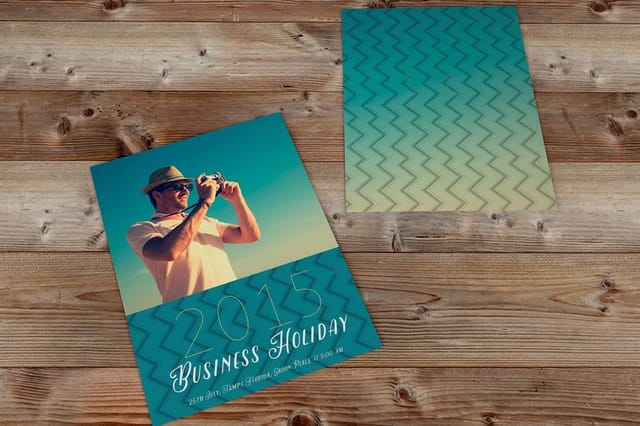
Standard postcards from $16.48
Your location report already names the ZIP codes that convert. Mailing those same ZIP codes is the one direct mail test that starts with evidence instead of a guess.
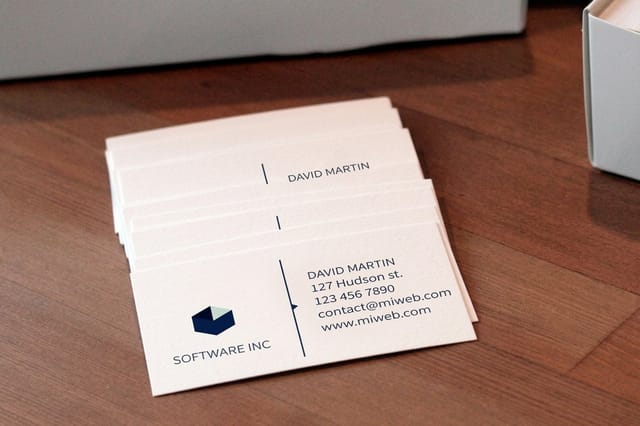
Standard business cards from $17.57
A search lead that ends with somebody standing in a kitchen is one card away from the neighbor who asks who did the work. That referral arrives with no click attached.
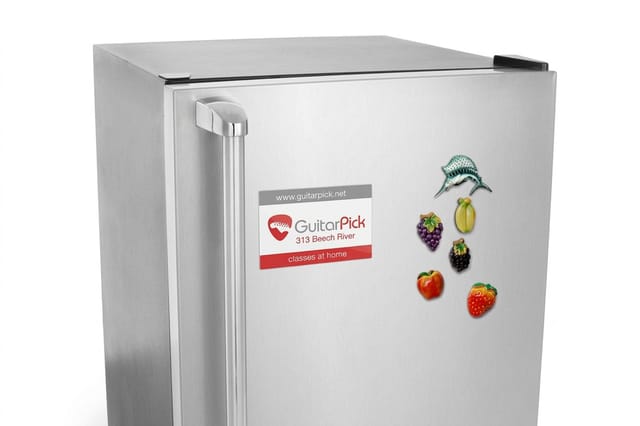
Standard magnets from $19.68
The cheapest way to stop paying for the same customer twice. A number on the door of a refrigerator gets dialled directly, months after the campaign that won them.
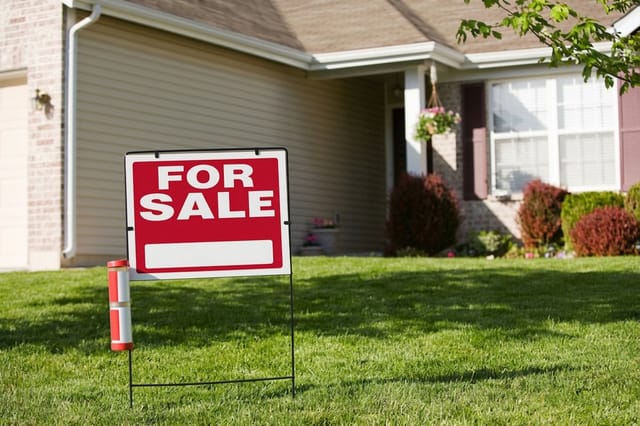
Yard signs from $25
Every finished job on a residential street is a free position in front of an audience that lives there. It works by making people search your name rather than the category.
Standard flyers from $39.54
Counters, community boards and reception desks have no auction and no daily budget. Nobody is bidding against you on a corkboard in a laundromat.
Standard brochures from $57.11
A landing page has to stay short to keep converting. The four questions you had to cut go in the leave behind that stays on the table after you go.

Where the money leaks
The click is spent the moment the sale closes
This is the part of a paid search account that never shows up in the interface, and it is where a print budget earns its place.
Everything an ad account does happens between the search and the sale. You bid, you win a position, somebody clicks, they land, some of them buy. Google measures that stretch beautifully. What it cannot do is anything after the sale, because the customer has left the funnel and the next time they need you they arrive as a fresh auction, at whatever the going price is that month, against the same competitors.
A printed piece is the only thing in the transaction that goes home with them. That is the whole mechanism, and it explains why the four cheapest items in this kit are the ones aimed at people who already bought: a card, a magnet, a postcard, a sign on the lawn of the job you just finished. None of them find new customers efficiently. All of them make the ones you have expensive to lose. The Google Search Ads guide covers the auction side of the same picture, including why raising a bid is usually the wrong first move.
There is one condition attached. Every piece needs its own countable destination, meaning a short URL that redirects and a phone number that is not the Google forwarding number your call extensions use. Skip that and the referral calls a business card produced will be credited to the last keyword the customer happened to click, which is how businesses end up raising a bid to defend traffic that print already sent them. The wider habit of measuring the offline half is covered in our small business profit guide.
What each piece does
The six pieces and what each one catches
Each piece is aimed at a different moment the ad account cannot reach. Read the row, tap the piece to jump to its section, and start with whichever gap your campaign is bleeding into.
| Piece | What it catches | Where it goes | Starts at |
|---|---|---|---|
| Standard postcards | Households in the ZIP codes your campaign already proved | A mailbox in a converting postal code, or the box a product ships in | $16.48 |
| Standard business cards | The referral that follows a job somebody watched you do | A pocket, a kitchen counter, the neighbor two doors down | $17.57 |
| Standard magnets | The repeat call you would otherwise buy a second time | A painted refrigerator door, a tool chest, a filing cabinet | $19.68 |
| Yard signs | The street that watched the work happen | The lawn of a finished job, with the owner saying yes first | $25.00 |
| Standard flyers | Local foot traffic no keyword reaches | A counter, a community board, a reception desk, a doorstep | $39.54 |
| Standard brochures | The considered buyer who needs more than a landing page holds | A table after the quote, a folder, a showroom rack | $57.11 |
1. Standard postcards: mail the postal codes the campaign already proved
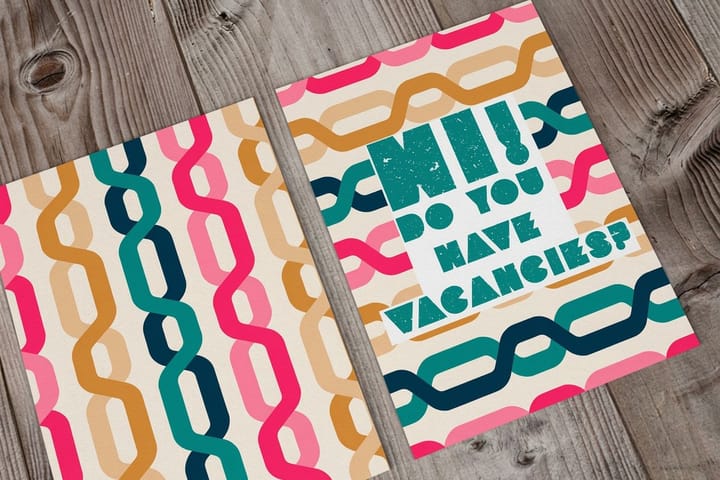
Most direct mail fails because somebody bought a list. You do not need one. Your campaign has been recording which postal codes the converting clicks came from since the day it turned on, and standard postcards from $16.48 let you mail exactly those. That is targeting you already paid for, applied to a channel that does not charge per view.
Print the same headline and the same offer as the winning ad. Not a version of it, the same one, because the point of the drop is to find out whether the message that works in a results page also works on a kitchen counter. Then give the card its own landing page path, something short you own that redirects, so the visits from the mailing sit in your analytics separately from the paid clicks. Adding a QR code to postcards shows where a code can sit without a sorting machine printing straight across it.
Sizes matter more here than people expect. Cards start at 4 by 6 in and run up through 5 by 7 in, 6 by 9 in and 6 by 11 in, and the bigger formats exist because a card has to survive a stack of envelopes on a counter. Whatever size you pick, keep the artwork off the address panel and out of the barcode clear zone at the bottom right, or the postal machinery will decorate your offer for you. The full range of stocks and sizes is on the postcard printing page.
Here is the honest limit. This works because the ZIP codes came from your own conversion data. Mail a rented list of strangers at the same ticket size and the postage usually outruns the margin before the responses come in. If you want the addressing, the sorting and the postal paperwork handled as one job rather than stuffing cards yourself, direct mail postcards from $89.68 do it, and the five steps to send direct mail postcards covers the sequence.
2. Standard business cards: the referral the ad account never sees
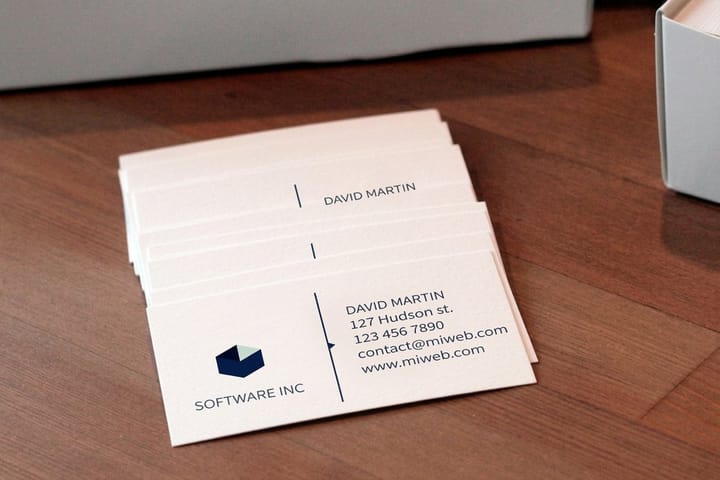
A search ad can win you a job in somebody's house. It cannot win you the neighbour who watched the van sit there all morning. Standard business cards from $17.57 are the cheapest piece in this kit and the one that most often produces a call with no click behind it at all.
Leave two cards, not one, and say why: one for them, one for whoever asks. That single sentence turns a card from a formality into a request, and it is the difference between a card that goes in a drawer and one that crosses the street. A card is 3.5 by 2 in, so the back holds one line of text and one code comfortably and nothing more. Put the code there, not a second copy of the logo.
Track it properly or do not bother. Google can serve a forwarding number in your call extensions, which is how the account records calls from the ads. If the card carries that same number, every referral call lands in the ad account's column and you will keep bidding on traffic you did not need to buy. Give print its own tracked line. The mechanics of code size, contrast and quiet zone are in the complete guide to QR codes.
Stock is the last decision and it is cheaper than people assume. A heavier card feels like a business that expects to still be there next year, which is exactly the signal a homeowner is reading when they decide whether to keep it. Our breakdown of what business cards cost and why explains where the money actually goes, and the design templates already respect the trim and the safe margin.
3. Standard magnets: stop buying the same customer twice
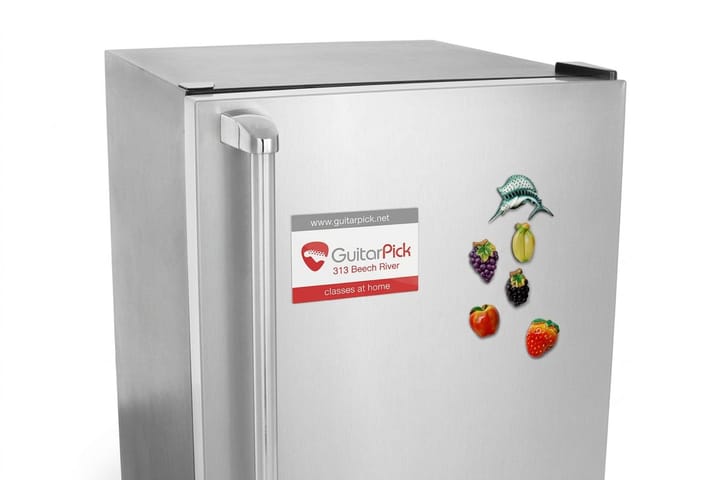
The expensive part of a search campaign is not the first sale. It is paying for the second one. When a customer with a blocked drain searches the category again eighteen months later, you bid for them all over again, against the same competitors, at the same price. A standard magnet from $19.68 is how that call comes in directly instead.
Design it as a phone number with a business attached, not a business card with a magnet on the back. The number should be readable from across a kitchen, which means bigger type than feels comfortable and far fewer words than you want to include. One service line, the number, the town. Leave a clear panel if you want the technician to write the next service date on it in marker, because a date is a reason to look at the thing again.
Now the limit nobody mentions until the box arrives. A printed magnet holds on painted steel. It will slide straight off a stainless steel refrigerator door, and stainless is what a lot of newer kitchens have. Have the technician stick it on the side of the fridge, on a metal filing cabinet, on a tool chest or on the panel of the furnace, and it stays. Handing it over to be placed later is how it ends up in a drawer.
Magnets are also the piece that survives a rebrand worst, so print a run you will use within the year rather than the biggest quantity break on the page. If your work is on vehicles or storefronts rather than in houses, yard signs from $25.00 do the same job of putting your name in front of people who live nearby.
4. Yard signs: manufacture the branded searches you want to buy
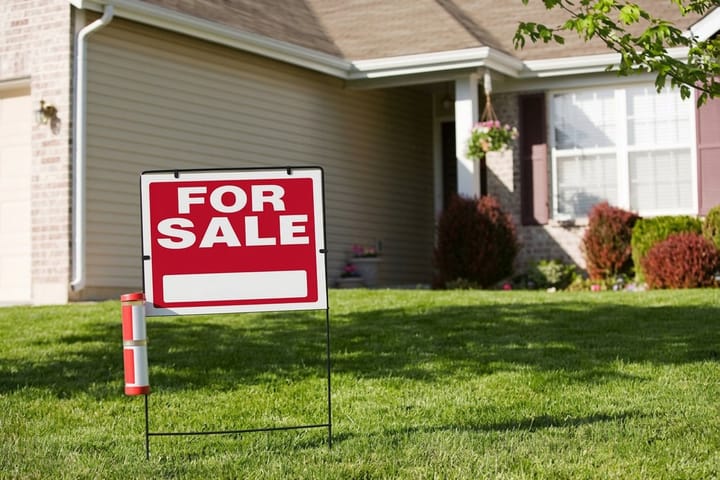
Branded keywords are the cheap end of a Google Ads account, and the reason is mechanical rather than mysterious. Ad Rank combines your bid with expected click-through rate, ad relevance and landing page experience, and somebody who typed your company name clicks your ad at a far higher rate than somebody who typed a generic service term. The catch is that nobody searches a name they have never seen. Yard signs from $25.00 are one of the few cheap ways to put it in front of a street.
The standard is an 18 by 24 in corrugated plastic panel on a wire H stake, with 12 by 18 in and 24 by 36 in available when the viewing distance is shorter or longer. Design for a driver, not a reader. Company name, one service word, the phone number, and nothing else. Colour choice does real work outdoors, and our notes on the best colors for yard signs cover the combinations that hold up in bright sun.
Two limits, both worth knowing before you order a hundred. First, a sign on somebody's lawn needs their permission, and asking at the end of a job that went well is the only time you will get a yes. Second, many towns restrict signs in the public right of way and on utility poles, so the shoulder of a road is where signs get collected by a municipal truck. Stay on private property with consent and the sign stays up.
They work far outside the trades that usually order them. For a business that turned staked signage into booked jobs, read the yard sign case study, and the wider response numbers are collected in our signage effectiveness data.
5. Standard flyers: the places with no auction and no daily budget
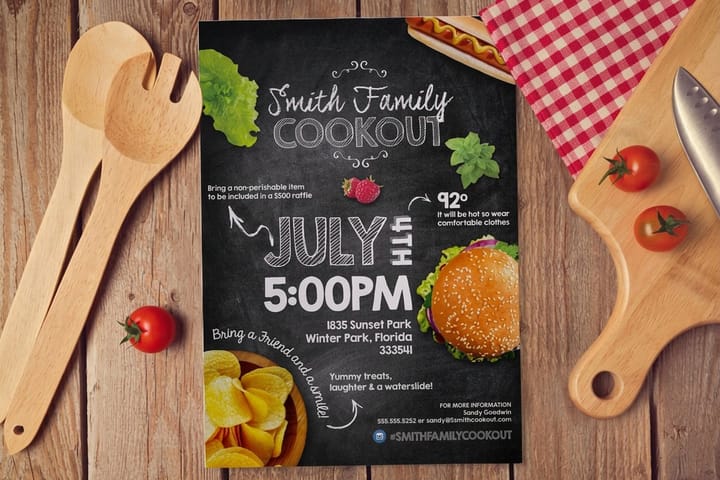
Everything in a search campaign is contested. Somebody else is bidding on your term right now, and the price goes up when they raise their bid. The corkboard in a laundromat has none of that. Standard flyers from $39.54 buy attention in the places your competitors have decided are beneath them.
The format that works is 8.5 by 11 in, printed on both sides, with the offer readable from about six feet and the detail readable in the hand. Give the flyer a distinct short URL and a distinct tracked number so a corkboard test can be measured against a keyword. Our guide on how to design flyers covers the hierarchy that survives being pinned between two other notices, and flyer distribution best practices covers where they actually get read.
One rule catches everybody who tries doorstep distribution for the first time. In the United States a mailbox is federal postal property, and only mail that has paid postage may go inside it or be attached to it. Tucking a flyer under the flag is not a gray area. If you want the doorstep without the postage, hang it on the handle instead, which is what door hangers from $290.41 are made for, or put the piece into the mail properly as a postcard.
Flyers reward volume and honesty about hit rate. A counter drop of 500 that produces a handful of calls is doing roughly what a modest keyword does, at a cost you paid once. Print a version with the date or the season on it so you can tell a stale stack from a current one, and reprint rather than let a faded sheet represent you for a year.
6. Standard brochures: the answers you had to cut from the landing page
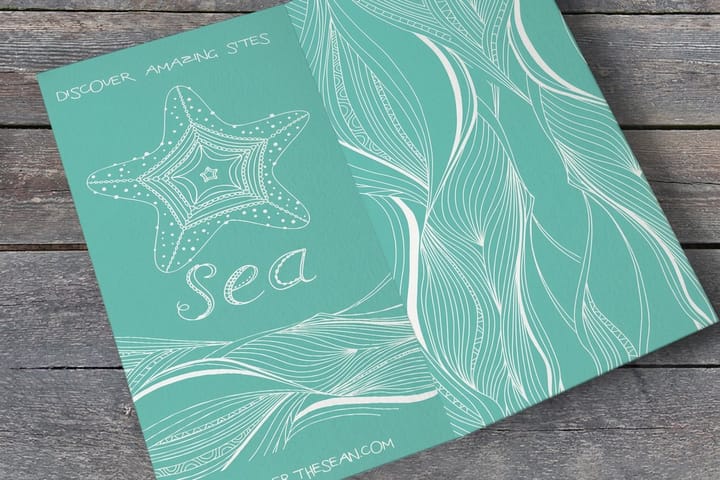
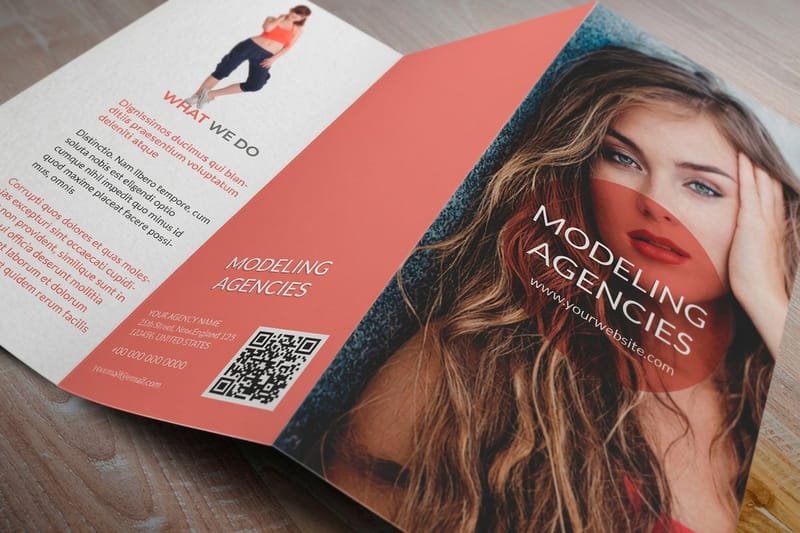
A landing page that converts is short, and short means questions go unanswered. That is the right call for a page whose only job is a form fill, but the buyer still has the questions. A standard brochure from $57.11 is where the warranty, the process, the timeline and the price bands go, and it stays on the table after the salesperson leaves.
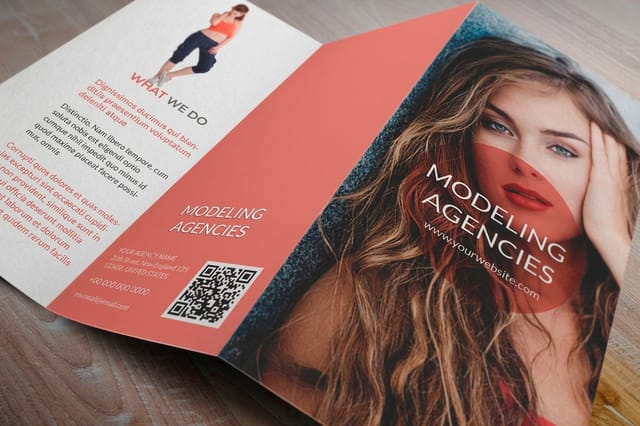
Two folds cover almost every job. A bi-fold gives you four large panels and suits a service with a process worth laying out in order. A tri-fold gives you six narrower panels and suits a menu of options where each panel is one choice. Pick by how the content is shaped, not by which looks busier. Our brochure fold types guide walks the full set, including the ones worth avoiding on a first order.
A production detail that trips up first timers: on a tri-fold, the three panels are not the same width. The panel that tucks inside has to be roughly a sixteenth of an inch narrower than the others, or the fold buckles and the piece will not sit flat in a rack. Set that up in the file, not at the folding machine. Paper weight matters here too, because a brochure that flops when it is picked up reads as cheap before a word is read, and the best paper types for brochure printing covers the stocks that hold a fold.
Keep the brochure free of anything that changes monthly. Prices, promotions and staff names belong on a printed sheet you reprint, or behind a code. The brochure carries what is still true next year, which is also what makes it worth the higher unit cost of the six pieces here. For a broader look at what offline pieces do for a business already running paid traffic, see our roundup of print marketing examples that still win customers.
Specs and pricing
The two pieces most campaigns reorder
Postcards and business cards are the cheapest pair here and the two that get reprinted the most, so they are worth comparing side by side. These are the live specs and price ladders from the configurator.
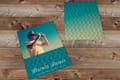
| Quantity | Price Per Unit | Total |
|---|---|---|
| 50 | 33.0¢ | $16.48 |
| 100 | 24.2¢ | $24.16 |
| 200 | 15.9¢ | $31.86 |
| 300 | 12.8¢ | $38.45 |
| 400 | 11.3¢ | $45.04 |
| 500 | 10.3¢ | $51.62 |
| 600 | 9.89¢ | $59.31 |
| 700 | 9.57¢ | $67.00 |
| Quantity | Price Per Unit | Total |
|---|---|---|
| 100 | 17.6¢ | $17.57 |
| 200 | 11.5¢ | $23.07 |
| 300 | 9.15¢ | $27.46 |
| 400 | 7.96¢ | $31.86 |
| 500 | 7.25¢ | $36.26 |
| 600 | 6.77¢ | $40.64 |
| 700 | 6.43¢ | $45.04 |
| 800 | 6.18¢ | $49.43 |
Wally paused the campaign for a week
The ads went quiet. The refrigerator did not.
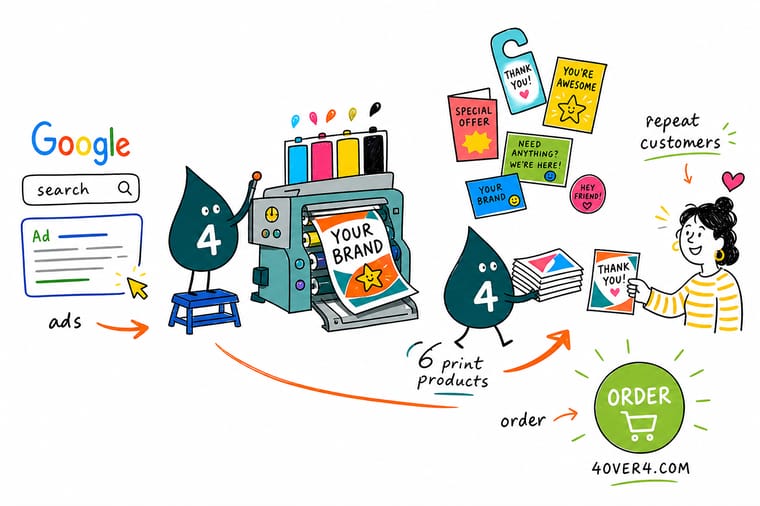
Wally turned the budget off on a Monday to see what would happen. The paid clicks stopped inside the hour, exactly as designed. The calls did not stop, because a magnet with his number on it was still stuck to the side of a hundred refrigerators, and two of them rang that week. Print the four pieces that go home with a customer, give each one its own tracked number, and the account stops being the only thing standing between you and a quiet phone.
Shop marketing materials →See it in use
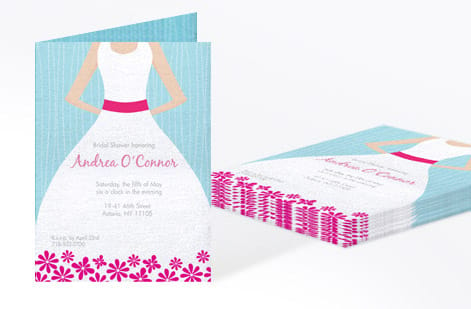
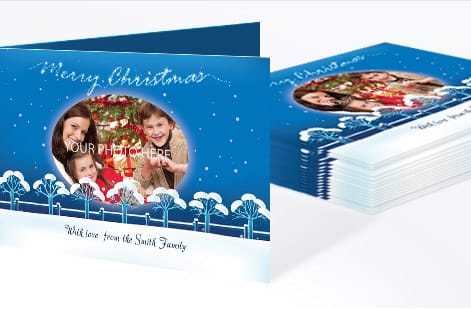
Postcards printed here for local offers






Explore more
Where to go next


By the numbers
Sixty materials behind a search ad follow-up
Common Questions
Common questions about print alongside Google Search Ads
What should a business running Google Search Ads print?
Six pieces cover it. Postcards from $16.48 mailed to the postal codes your campaign already converted in, business cards from $17.57 for the referral a job produces, magnets from $19.68 so the repeat call comes in directly, yard signs from $25.00 to put your name in front of a street, flyers from $39.54 for counters and community boards, and brochures from $57.11 for the questions a short landing page had to leave out. The first four work on customers you have already won, which is the cheaper half of the list.
Which ZIP codes should I mail postcards to?
The ones your own campaign already named. Google reports the geographic areas your clicks and conversions came from, so before buying any list, pull the postal codes that produced converting traffic and mail those. It is targeting you paid for once and can use as often as you like. Start with a small drop to the top two or three, print the headline and offer from the winning ad, and give the card its own short URL so the visits are countable separately.
How do I tell whether a printed piece produced a sale?
Give every piece its own destination. One short path per piece, all redirecting to the same page, plus a tracked phone number that is not the Google forwarding number used in your call extensions. Without the split, a referral call lands in the ad account column and you end up crediting a keyword for work a business card did. If you sell by phone or in person, Google also accepts offline conversion imports, which lets a call that closed weeks later attach to the click that started it.
Will printing anything make my clicks cheaper?
Not directly, and anyone who says otherwise is selling something. What print changes is the mix. Ad Rank is built from your bid plus expected click-through rate, ad relevance and landing page experience, and searches for your actual business name earn a much higher click-through rate than generic category terms. Print is what makes people search the name. The cheaper account is a side effect of a shift in what gets typed, not of the printing itself.
Can I put flyers in mailboxes?
No. In the United States a mailbox is federal postal property and only material that has paid postage may be placed in it or attached to it, including under the flag or on the post. The two legal doorstep options are a door hanger on the handle, from $290.41, or putting the piece through the mail as a postcard with postage paid. Counters, community boards, reception desks and windscreens are all fair game.
Do printed magnets still get used?
They do, in the kitchens that can hold them. Printed magnets grip painted steel and will slide off a stainless steel refrigerator door, which is what many newer kitchens have. Have whoever finishes the job place it themselves on the side of the fridge, a filing cabinet, a tool chest or the furnace panel rather than handing it over to be dealt with later. Design it as a phone number large enough to read across the room, with a blank panel if you want a next service date written on it.
Is direct mail worth it when the ad budget is already tight?
It depends entirely on where the addresses came from. A rented list of strangers at a low ticket price rarely pays back the postage. A short drop to postal codes your own conversion data has already validated is a different proposition, because the expensive part of targeting is done. Treat the first mailing as a test with a countable destination, at a quantity small enough that being wrong costs less than a week of clicks.
What does this six-piece print kit cost to start?
The six starting prices add up to $175.38 at 4OVER4.COM: postcards from $16.48, business cards from $17.57, magnets from $19.68, yard signs from $25.00, flyers from $39.54 and brochures from $57.11. The four retention pieces on their own start at $78.73. Every price falls per unit as the quantity climbs, and the configurator updates live as you change size, stock and finish.
Get Started
Give the campaign something to leave behind
Print the six-piece kit as one branded set at 4OVER4.COM. Standard postcards start at $16.48 for 50 on 14pt gloss cover and leave in 3 business days, and the rest are configured for size, stock and finish on their own pages. Same-day turnaround is available on the flat pieces when a promotion date moves.
Legal Disclaimer
Gold Standard guarantees apply to all standard orders placed through 4over4.com. Price match requires verifiable proof of a competitor's published price for an equivalent product with matching specifications and turnaround time. Satisfaction guarantee covers manufacturing defects and print quality issues. Contact support with order number and documentation. On-time delivery rate based on tracked orders 1999 to 2026. Individual results may vary based on shipping carrier performance.
