
Google Search Ads Explained, From Ad Rank to Profitable Clicks


What the auction really rewards, how match types decide where your budget goes, and the weekly habit that stops a search campaign from buying queries you would never pay for.
Google Search Ads place your listing on a results page for queries you bid on, and you pay only when someone clicks. Position is not bought outright: Google multiplies your maximum bid by how good it expects your ad to be, so a relevant ad with a smaller bid regularly outranks a bigger one. The three levers that move an account are keyword match type, the negative keyword list, and whether the landing page answers the query it was bought for.

Quick answer
Bid times quality, then whatever it takes to hold the spot
Google ranks search ads by Ad Rank, which is your maximum bid weighted by expected click-through rate, ad relevance and landing page experience. The winner then pays only enough to stay ahead of the ad below, so the price on the invoice is usually under the bid you set. That is the whole reason relevance is cheaper than bidding: improving the ad and the page lifts your position and lowers your cost at the same time, while raising a bid only does the first.
How the Auction Decides Which Ad Sits on Top
Every time someone searches, Google runs an auction among the advertisers whose keywords match. Two things go in: what you are willing to pay, and how good Google expects your ad to be. The output is Ad Rank, and Ad Rank decides both whether you appear at all and where you appear.
Ad quality breaks into three parts you can see in the Google Ads interface as Quality Score components. Expected click-through rate asks whether people historically click this keyword and ad pairing. Ad relevance asks whether the ad text actually matches the intent behind the query. Landing page experience asks whether the page delivers what the ad promised, loads quickly, and works on a phone. All three are judged against other advertisers chasing the same query, so the bar moves when your competitors improve.
The second surprise is what you pay. The auction charges you only enough to hold your position against the ad below you, so the actual cost per click usually lands under your maximum bid. Raise a bid and you raise your ceiling, not your bill. That is why the fastest way to cut cost per click is rarely bidding: it is writing an ad that earns clicks and sending those clicks somewhere that answers the question.
One limit worth naming early. Ad Rank also has to clear a threshold before any ad shows, and that threshold is higher for the top-of-page slots. A poor quality ad can be priced out of position one entirely, no matter how high the bid goes.
Match Types, Negative Keywords and Where the Budget Leaks

A keyword is not a query. A keyword is an instruction about which queries you are willing to buy, and match type is the strength of that instruction. Most wasted spend in a small account comes from one loose instruction nobody read back.
| Match type | What it buys | Control you keep | Use it when |
|---|---|---|---|
| Exact | The query and close variants: misspellings, plurals, and same-meaning rewordings. | Highest. You see roughly what you asked for. | Terms you already know convert, and anything with an expensive click. |
| Phrase | Queries that contain the meaning of your phrase, with words before or after. | Middle. Enough reach to find new terms, tight enough to audit. | Building out a new service or product line from a proven core. |
| Broad | Anything Google reads as related, using the query, your landing page, and the rest of the ad group. | Lowest. The system decides, and it decides fastest with conversion data. | An account with real conversion history and an active negative list. |
Now the habit that pays for itself. Open the search terms report every week and read what people actually typed. You will find the free version of your paid product, the job applicants, the students writing a paper, and the town you do not serve. Each one becomes a negative keyword. Negatives have their own match types, and one detail catches people out: negative keywords do not match close variants, so blocking a misspelling means adding that exact misspelling.
Two structural rules keep relevance high enough to matter. Keep each ad group to one tight theme, because ad relevance is judged against the ad group, and a group holding fifteen unrelated keywords cannot have an ad that suits all of them. Second, add your own brand name as a negative in prospecting campaigns unless you deliberately want to buy it, so branded searches do not flatter numbers that are meant to measure new demand.
Give the Click Somewhere to Go After the Tab Closes

A search ad rents attention for the length of one visit. Most of those visitors leave without buying, and unless you paid for a second impression they are gone. Print is the cheapest way to make the same spend leave something behind, and it works because it is not competing for the same second of attention.
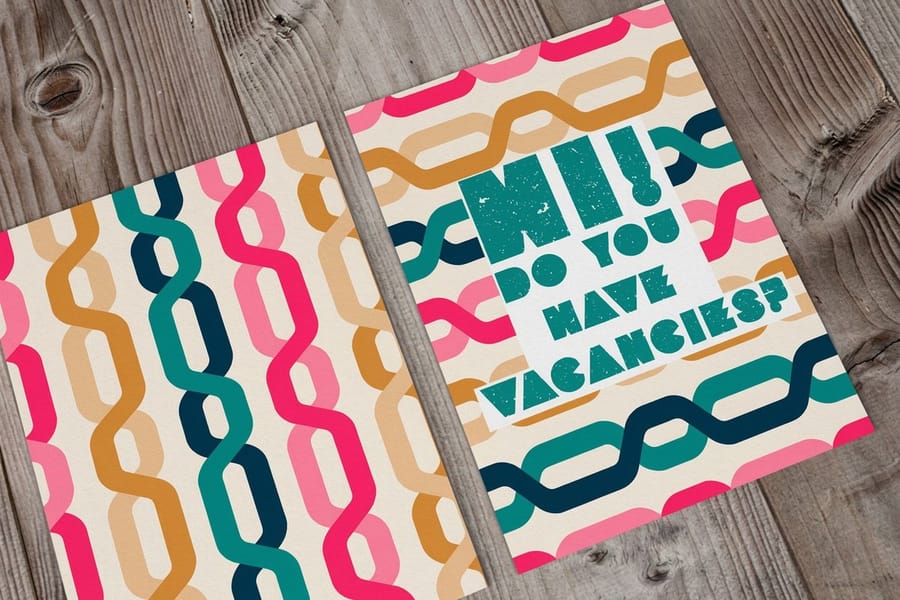
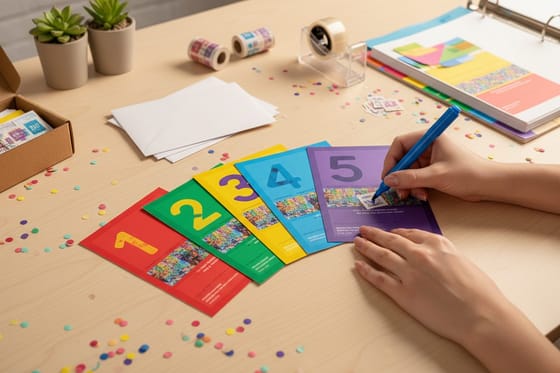
Three pairings do most of the work. Mail the map you already bought. Your campaign settings hold the ZIP codes that convert; those are the same ZIP codes worth a mailing. Standard postcards start at $16.48, so a small drop on your best few ZIP codes is testable money rather than a project. Print the same headline and the same offer as the ad, and use a distinct landing page URL on the card so you can see which channel brought the visit.
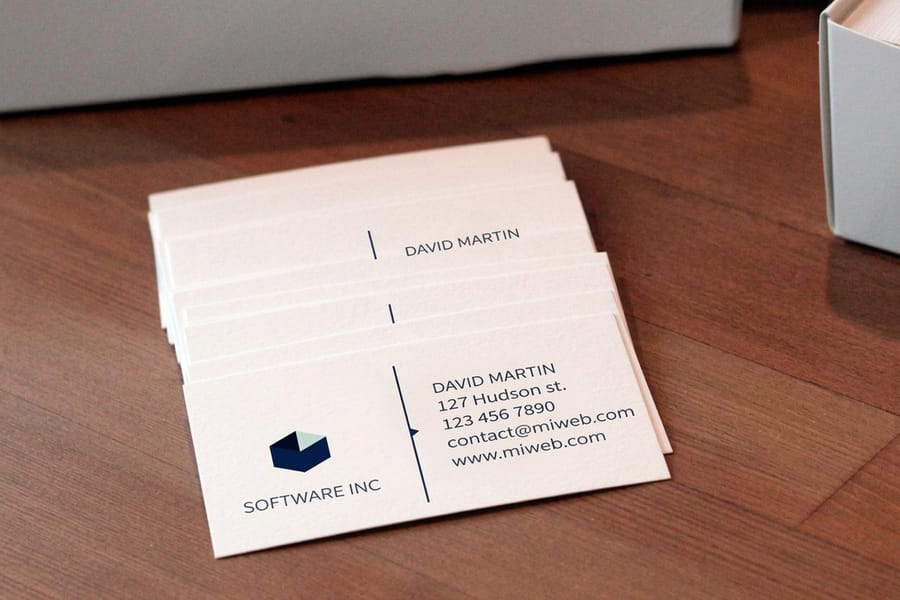
Close the loop in person. Service businesses that win a search lead then send a technician to a house are one card away from a referral. Standard business cards start at $17.57 for a box that lasts months. Answer the questions the landing page could not. When the sale involves choices, a brochure from $57.11 left on a kitchen table does the explaining that a phone screen rushed, and flyers from $39.54 cover counter drops and community boards where your search competitors are not bidding.
The discipline that makes this measurable is boring and it matters: one offer, one headline, one phone number per channel. Our flyer distribution guide covers the handout side, the direct mail postcard steps cover the mailing side, and the postcard printing range holds the sizes and stocks worth testing first.
Building the Campaign, the Ads and the Page Behind Them

Structure first, copy second, bidding last. Almost every account that struggles has this order backwards.
- One campaign per budget decision. If you would ever want to spend differently on two things, they belong in separate campaigns. Budget lives at campaign level, so mixing your best service with an experiment means the experiment eats the money.
- One theme per ad group. Five to twenty closely related keywords, all answered by the same ad and the same page. This is what keeps ad relevance from sliding to below average.
- Write for the query, not the brand. Responsive search ads take up to 15 headlines and 4 descriptions, and Google assembles combinations. Give it headlines that repeat the search language, headlines that carry the offer, and headlines that name the constraint the searcher cares about, such as the service area or the turnaround.
- Pin sparingly. Pinning a headline to position one guarantees your legal line appears, and it also removes most of the combinations the system was going to test. Pin what you must and leave the rest loose.
- Treat Ad Strength as a checklist, not a score. It is a diagnostic about variety. It is not a ranking factor, and chasing Excellent by adding weak headlines makes ads worse.
The landing page is the part most owners under-build. Repeat the ad headline at the top of the page so the visitor knows they arrived in the right place. Put the phone number where a thumb reaches it. Ask for the fewest fields you can act on, because every extra field costs completions. Then set up conversion tracking before you spend a dollar, and count things that are worth money, not page views. A form submission, a call over 60 seconds, a booked appointment. If you cannot count it, Smart Bidding cannot optimize toward it, and neither can you.
If you need a matching offline asset built at the same size and bleed as the campaign creative, start from a correctly sized file in the blank template library rather than resizing a web graphic.
The Numbers That Tell You to Scale or Stop
Work out your break-even cost per acquisition before you look at any Google metric. Take the gross profit on an average sale, multiply by the share of leads that become customers, and you have the most you can pay for a lead. Every decision after that is a comparison against that one number.
Then read four things in order. Conversions and cost per conversion tell you whether the campaign is above or below break-even. Search terms tell you whether the money is buying the right queries. Impression share lost to budget versus lost to rank tells you which lever is holding you back: budget means demand exists and you cannot afford it yet, rank means quality or bid is short. Conversion rate by landing page tells you whether the problem is the traffic or the page, and it is the page more often than owners expect.
Scale when cost per conversion sits comfortably under break-even and impression share lost to budget is high. Raise budgets in steps of roughly 20 percent and wait, because a large jump resets the learning period and the first days after a reset are not representative. Cut when a keyword has spent more than two break-even acquisitions with nothing to show, and pause rather than delete so the history stays available.
Keep a monthly view that includes the offline half. If a postcard drop went to your three best ZIP codes in the same month, branded searches and direct visits usually move too, and attributing all of that to the ad account overstates one channel while starving another. Our small business profit guide covers the wider measurement habit, print marketing examples show what the offline half looks like when it works, and the direct mail statistics roundup collects the response data worth planning against.
Wally explains the search auction
The big bid loses to the ad that answers the question
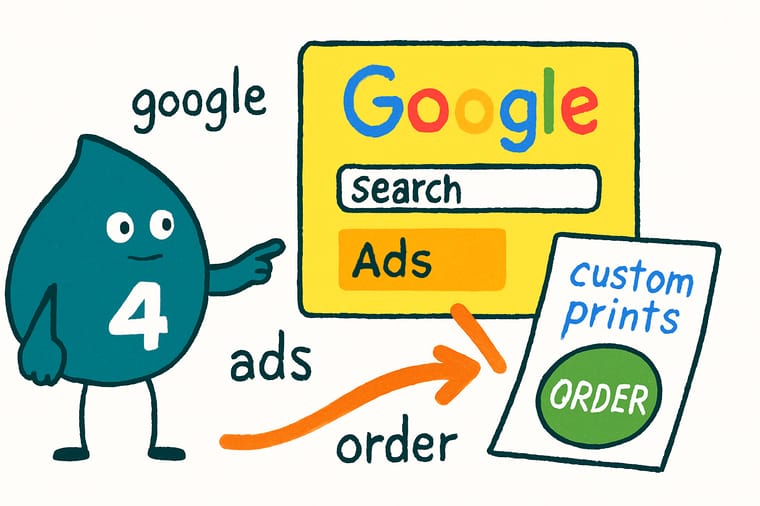
Wally puts two ads on the scale. One shouts a huge bid and sends people to a home page that never mentions what they typed. The other bids less, repeats the exact words of the search, and lands on a page that answers in the first line. Google multiplies bid by expected quality, so the second ad wins the higher spot and pays less for it. Wally then mails a postcard to the ZIP codes those clicks came from, because the ad stops the day the budget does and the postcard sits on a fridge.
Order standard postcards →Specs and pricing
The offline half, sized and priced
The formats that carry a campaign offer off the screen, with live sizes, stocks and starting prices from the 4OVER4.COM configurator.



Print it
Put the same offer where a browser tab cannot close it


Explore more
Where to go next




By the numbers
The print side of your campaign, handled
Common Questions
Your Google Search Ads questions, answered
How much do Google Search Ads cost per month?
You set the number. A campaign has a daily budget, and Google can spend up to twice that amount on a single busy day while keeping the month at or under your daily budget multiplied by 30.4. The click price itself is set in the auction, so it moves with how many advertisers want the same query and how relevant your ad is judged to be. Legal, insurance and home services keywords cost several times what a local retail keyword costs, so build the budget from your own math: what a customer is worth, how many leads become customers, and how many clicks it takes to get a lead.
What is a good Quality Score?
Quality Score is reported on a 1 to 10 scale per keyword and it is a diagnostic, not the number the auction uses directly. Treat 8 to 10 as healthy, 6 to 7 as workable, and anything at 5 or below as a signal to open the three component columns. Expected click-through rate below average usually means the ad does not repeat the query language. Ad relevance below average usually means the ad group holds too many unrelated keywords. Landing page experience below average usually means the page answers a different question than the ad promised.
Should a small account use broad match?
Not on day one. Broad match works best when Smart Bidding has conversion data to steer it, and a new account has none, so it spends your first weeks buying loosely related queries. Start with phrase and exact match on the terms you already know convert, build a negative list from the search terms report, and add broad match later on a separate campaign where you can watch it in isolation and switch it off without touching the ads that work.
How long before Google Search Ads produce results?
Clicks arrive within hours. Reliable decisions do not. Give a campaign enough clicks per keyword to tell a real difference from noise, which for most small accounts means two to four weeks before you judge anything at keyword level. Changing bids daily in week one is the most common way to keep an account permanently in learning mode. Set a review rhythm instead: search terms and negatives weekly, bids and budgets every two weeks, ad copy monthly.
Do I need a separate landing page for each ad group?
You need a page that answers the query, which is not always a separate page. If someone searches for emergency drain cleaning and lands on a general plumbing home page, they have to hunt, and both conversion rate and landing page experience suffer. One page per service or per offer is usually enough. What matters is that the headline on the page repeats the promise in the ad, the phone number is visible without scrolling, and there is one obvious next action rather than five.
Are search ads better than direct mail?
They answer different questions. Search ads catch demand that already exists, so they win when someone is actively looking for what you sell. Direct mail creates demand in a place you choose, which is why it still works for services people do not search for until something breaks. The two also cost differently: a mailed piece has a fixed price you know before you send it, while a click price is set by an auction you do not control. Running both on the same offer, with the same headline, lets each one cover the other.
Get Started
Mail the same offer on 50 postcards from $16.48
Take the ZIP codes your search campaign already proved, print the same offer on a postcard, and keep working the neighborhood after the daily budget runs out.
Legal Disclaimer
Gold Standard guarantees apply to all standard orders placed through 4over4.com. Price match requires verifiable proof of a competitor's published price for an equivalent product with matching specifications and turnaround time. Satisfaction guarantee covers manufacturing defects and print quality issues. Contact support with order number and documentation. On-time delivery rate based on tracked orders 1999 to 2026. Individual results may vary based on shipping carrier performance.
