
6 Print Products That Make Dark Psychology Awareness Training Stick
Awareness training fails at the moment it is needed, which is a phone call four months after the session when nobody is holding a slide deck. These six printed pieces are each bought for a different one of those later moments, and every one is priced live.
Print for the moment the tactic arrives, not for the session. A rack brochure reaches the person who will not sign up in public, an uncoated workbook and a 2.5 by 3.5 in tactic deck do the work in the room, a six line poster holds the two tests on the wall, a preprinted incident pad turns memory into a dated record, and a bookmark keeps the two questions on the desk. Six starting prices add up to $527.51, or $84.84 for the three lightest.

The picks
The 6 picks, numbered and priced live
They are numbered in the order a person meets them, from the rack outside the room to the pad in the drawer months later. Start with whichever moment your program currently has nothing covering. Prices come straight from the configurator and drop per unit as the quantity climbs.
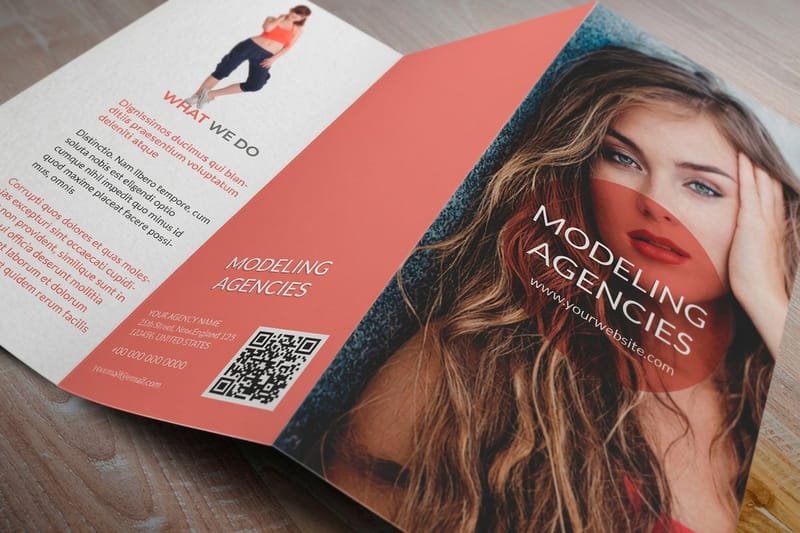
Standard brochures from $57.11
The piece someone takes without having to ask a question in front of colleagues. It names the pattern and gives one next step, which is all a folded sheet can honestly do.
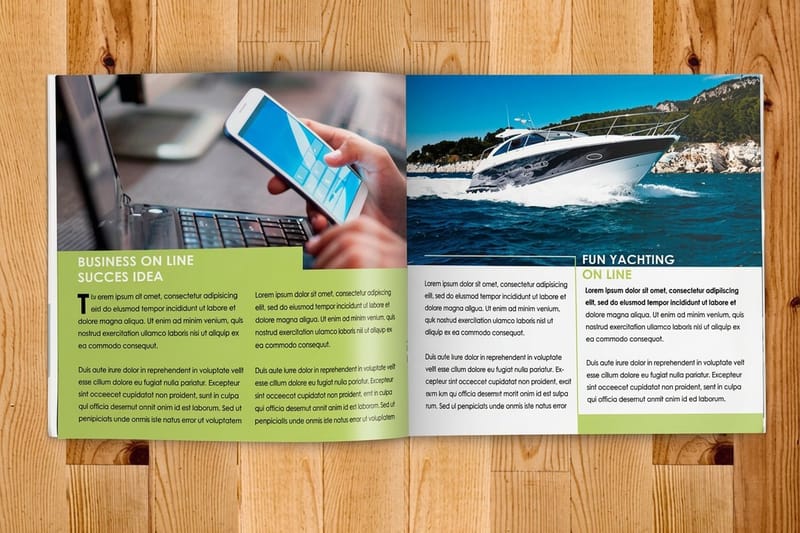
Standard booklets from $240.55
The workbook where people write down the call they actually got, instead of reading a case study about somebody else. Order the interior uncoated or nobody can write in it.
Trading cards from $11.25
One tactic per 2.5 by 3.5 in card. Deal the deck out and ask which card was played on them last month. The cheapest piece here and the one that changes the room.
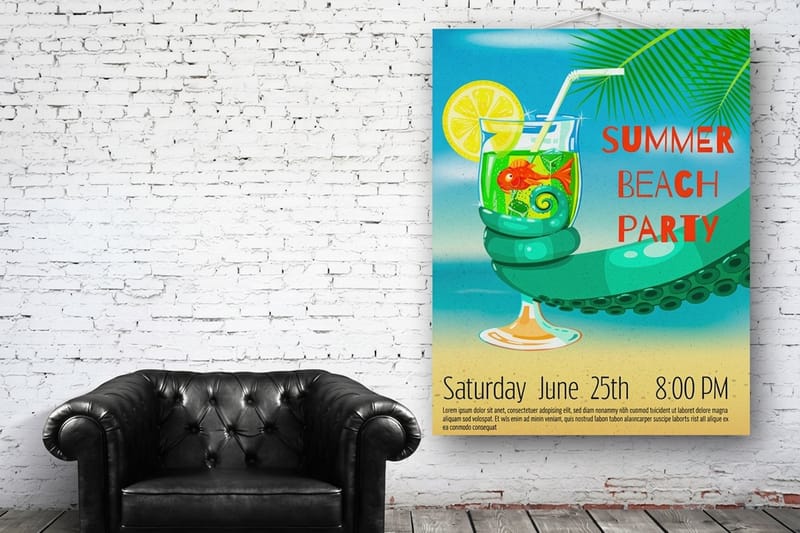
Standard posters from $108.75
Two questions on a break room wall, not nine tactics. At fifteen feet you get about six lines, so the poster carries the test and the booklet carries the detail.
Standard notepads from $93.37
A preprinted incident pad with date, time, who was present and what was said. This is the piece that turns an argument about memory into an argument about a record.
Standard bookmarks from $16.48
The two tests on the front, the internal number to call on the back, nothing else. It survives because it never leaves the desk, and it costs the least to reprint.


Before you design any of it
Two decisions to make before a single file goes to print
Both are cheap to make now and expensive to fix after a run of 500. Neither is about layout.
Decision one: name the moment each piece has to survive to. Recall after a session falls fast and keeps falling, and nothing on the order form changes that. What you can do is put a piece of paper at each point on the way down. The brochure works before anyone has committed to attending. The workbook and the deck work in the room, where there is a pen and an argument. The poster carries the two tests through week six, until it becomes part of the wall and has to be swapped. The bookmark works in month three because it is still on the desk. The notepad works in the one hour nobody can schedule, when something has just happened and the details are still exact. Choose a piece by which of those it covers, and you stop buying duplicates of the same moment.
Decision two: everything reads from the side of the person it is being done to. This is the line that separates awareness material from a manual, and print makes it permanent. A card that says "you were told not to tell anyone, and that is the finding" teaches somebody to notice. The same information turned around into an instruction teaches the behavior, and a printed deck leaves the building in a bag on day one, so you do not get to choose who reads it next. Write every tactic as a warning sign. Cut any line that could be lifted as a script.
Two smaller rules follow from the same place. Do not print a case that identifies a real person, because a workbook describing a recognisable manager is an HR problem you manufactured yourself. And put a real escalation contact on every piece, not a slogan, since the awareness guide is clear that noticing a pattern is where this material ends and a person with authority has to take over.
What each piece does
The six pieces, what each carries and when it works
Read the row, tap the piece to jump to its section, and start with the moment your program is currently missing. Every price is the live starting price at 4OVER4.COM.
| Piece | What it carries | When it works | Starts at |
|---|---|---|---|
| Standard brochures | The pattern named in plain language, and who to call | Before anyone signs up, on a rack where reading it is private | $57.11 |
| Standard booklets | The exercises, with ruled space to write a real incident into | In the room, during the session, with a pen in hand | $240.55 |
| Trading cards | One tactic per card, named from the target side | In the room, as the exercise that starts the arguments | $11.25 |
| Standard posters | The two tests, in six lines readable at fifteen feet | Weeks two to twelve, until it becomes wallpaper | $108.75 |
| Standard notepads | Date, time, who was present, what was said, what was asked | The hour it happens, months after the session | $93.37 |
| Standard bookmarks | Two questions and one phone number | Every day, propped against a monitor, indefinitely | $16.48 |
1. Standard brochures: the piece people take without raising a hand
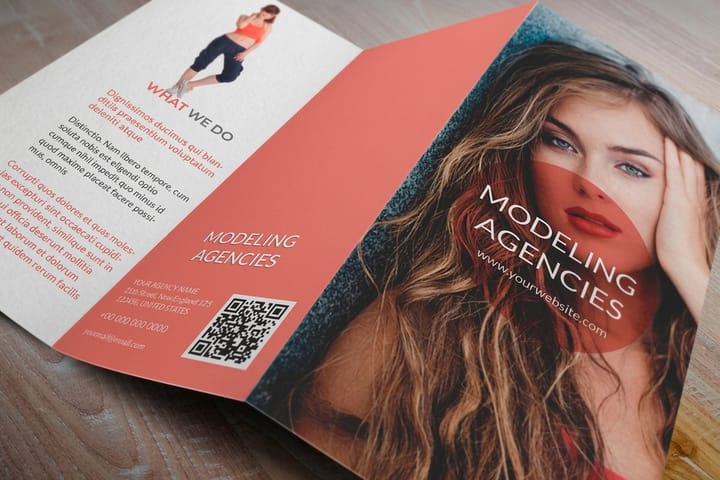
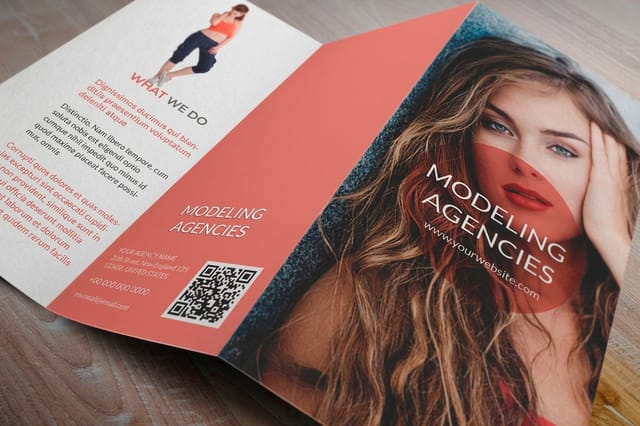
Nobody volunteers for a session on manipulation in front of their team. That is the whole reason a rack piece exists. A standard brochure from $57.11 sits in the HR corridor, the clinic waiting room or the staff kitchen, and it gets picked up by the person who most needs it and least wants to be seen needing it. Reading it is private. Attending is not.
The default here is an 8.5 by 11 in sheet folded three ways into six panels, printed on 100 lb gloss text. Text weight is the right call for a piece that gets opened, refolded and shoved into a bag: a heavier cover stock feels better in the hand for about a week and then cracks white along the fold unless it has been scored first. If you want the panel count and what each fold style does to your reading order, the brochure fold types guide lays them out, and the brochure paper guide covers weights.
Put a question on the front panel, not a title. "Did the offer really expire at midnight?" gets picked up. "Dark Psychology Awareness" does not, because it labels the reader as somebody with a problem before they have opened anything. Inside, name the tactics in the words people actually use: manufactured urgency, guilt, flattery, isolation, rewritten history. The full breakdown lives in our dark psychology awareness guide, and the brochure should be a short door into it rather than a summary of it.
The back panel matters more than the rest combined, and it is where most of these get it wrong. It carries a real internal name, a real number and a real inbox, not a slogan. A brochure that names a pattern and then offers nowhere to take it has done half a job, and the half it skipped is the one somebody was reading for.
2. Standard booklets: the workbook people write their own case into
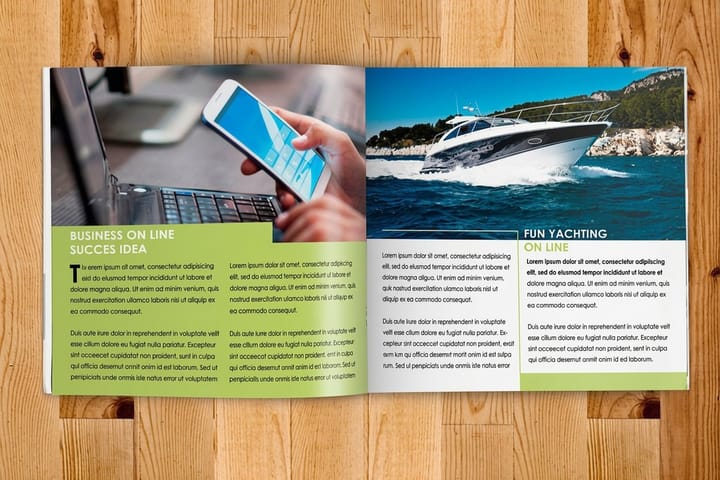
A slide deck teaches with things that happened to other people. A standard booklet from $240.55 makes somebody write down the call they got last Tuesday, and that is the sentence where the material stops being interesting and becomes personal. Leave ruled space under every prompt. More than feels comfortable.
Saddle stitch folds sheets and staples through the spine, so one sheet carries four pages and the total has to land on a multiple of four: 8, 12, 16, 24, 32. A 30 page manuscript becomes 32 with two pages of notes at the back, which for this kind of workbook is a feature. Past roughly 48 pages the staples buckle and the booklet will not lie flat, which matters when somebody is trying to write in it. Our page counts and creep guide explains why the inner pages also shift outward at the fold, and the binding methods guide compares staples against coil for a workbook that has to stay open.
One line on the order form decides whether the whole exercise works, and it is the interior stock. Gloss text reproduces photographs beautifully and repels ballpoint; the ink sits on the surface, smears under the side of a hand, and pencil barely registers. Order an uncoated interior and accept flatter images. Nobody in this session is looking at your photography. The paper selection guide has the weights that take pen without ghosting through to the next page.
Write the prompts so they ask for facts, not feelings first. "What was said, in their words. What were you asked to do. Who were you told not to tell." Then the reflection. Facts written the same day are usable later; a page of adjectives is not. For the individual practice side of the same skill, our self coaching guide covers the review habit that keeps a workbook in use after the session ends.
3. Trading cards: a tactic deck turns a lecture into an argument

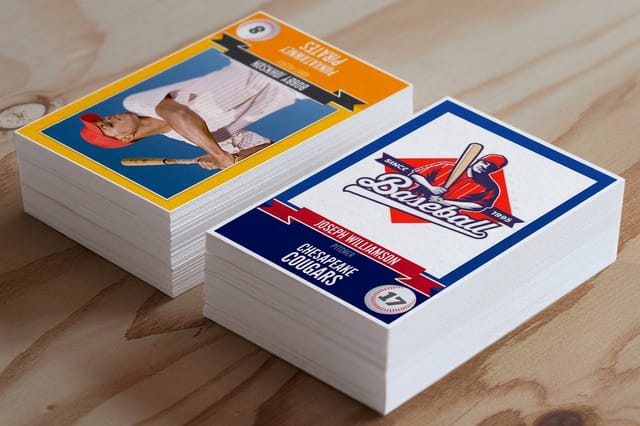
Trading cards from $11.25 are the cheapest thing in this kit and the piece that changes what happens in the room. Print one tactic per card at 2.5 by 3.5 in, the same footprint as a playing card, deal a hand to each table and ask a single question: which of these was run on you in the last six months. People stop listening and start arguing. Arguing is the exercise.
Be honest about what a card face holds. At that size you get a name and a prompt, somewhere between ten and twenty words, before the type drops under comfortable reading. The definition, the example and the counter belong in the booklet. A card that needs a paragraph is a booklet page wearing the wrong format. Our trading card sizes guide has the trim and bleed figures, and how to make trading cards walks the file setup for a deck of unique faces.
The coating decision follows from who owns the deck. A shared classroom set gets shuffled by forty pairs of hands a term and the edges will fur within a few months unless it is coated. A personal set that each participant keeps and annotates has to stay uncoated, because nothing writes on a gloss card except a permanent marker. Pick one. A deck that is both is a deck that is neither.
There is a line to hold on the copy, and it is not a technicality. Every card is written from the side of the person it is being done to. "You were told not to tell anyone" is an awareness card. The same content written as an instruction is a manual for the behavior, and a printed deck walks out of the building in somebody's bag on the first day. We print the defensive version. If your draft reads like a how-to, it is the wrong draft.
4. Standard posters: the wall does the reminding for about three months

A standard poster from $108.75 is the piece that works when nobody is being trained. 18 by 24 in and 24 by 36 in cover most break rooms and corridors. What decides the design is reading distance: roughly an inch of capital height reads at ten feet, so a poster read from fifteen feet away wants a headline near an inch and a half, and that arithmetic leaves you about six lines. Not fourteen. The poster sizes guide has the standard trims and how to design a poster covers the hierarchy.
Because six lines is the budget, the poster carries the two tests rather than the tactic list. "Would this still make sense after a night of sleep?" and "Why am I being asked not to tell anyone?" Both are readable across a room, both apply to a supplier call and a family argument equally, and both are the questions the awareness guide spends its longest section on. A list of nine tactics at that size is a wall of grey.
Ask for matte rather than gloss when the poster hangs under ceiling fluorescents. Gloss throws the tube straight back at the person standing exactly where you want them to stand, and a glare band across the middle of a headline is not fixable with a better design.
The limit nobody prints on the poster is that posters stop being seen. Two or three weeks in, it is part of the wall. A bigger poster does not fix that; a different poster does. Print three versions and swap one in at the start of each quarter, which is cheap on a short run and is the only version of this piece that keeps working past week six. Bulk poster printing explains where the quantity breaks fall if you are covering several sites.
5. Standard notepads: the dated note that beats a good memory
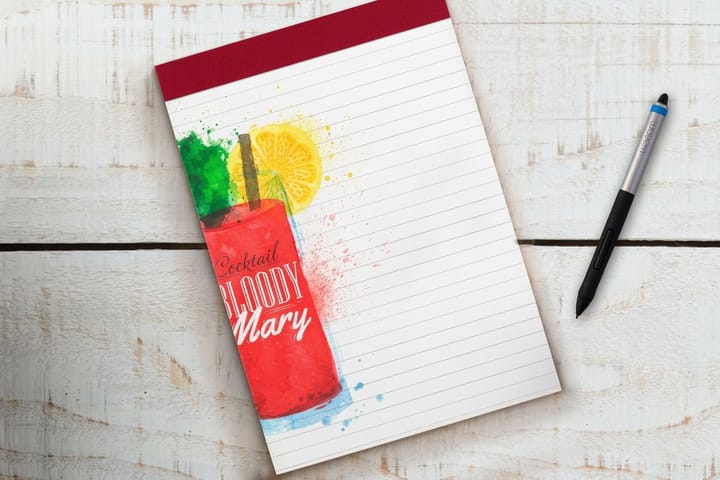
This is where the kit stops being about awareness and starts being about evidence. An argument over what was said is winnable. An argument over what you remember is not, and the whole point of rewriting history as a tactic is that memory has no receipts. A standard notepad from $93.37, filled in the same day, quietly ends that.
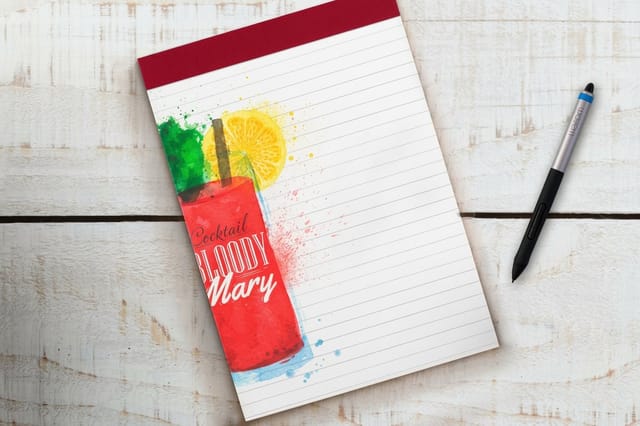
Print the form, not a blank pad. Date, time, who was present, what was said in their words, what was asked of me, what I did. Preprinted fields get filled in because the paper asks a question; blank paper gets a shrug and an intention to write it up later. Pads run at 4.25 by 5.5 in, 5.5 by 8.5 in and 8.5 by 11 in, glued at the head in 25, 50 or 100 sheet counts. The half letter size is the one that lives in a drawer and still holds a real note. Standard notepad sizes has the full list and how to design a custom notepad covers the layout.
Here is the trade-off most people find out too late. A glued pad tears off, and a torn sheet is loose paper. Loose paper goes missing in exactly the situation where it counts. If the note may end up in front of HR, a union representative or a lawyer, print carbonless duplicate sets instead: the top sheet goes to whoever needs it and the copy stays bound in the book, in sequence, with the numbers intact. It costs more per sheet than a plain pad and it is the difference between a note and a record.
One caution worth printing on the pad itself. A record is not a remedy. Where the pattern is a coercive manager, an abusive relationship or a fraud already running, the note is what you carry into a conversation with HR, a lawyer or a licensed professional, and going alone is the mistake the awareness guide ends on. Print the escalation contact at the bottom of every sheet so the next step is on the same piece of paper as the incident.
6. Standard bookmarks: two questions, still on the desk in March
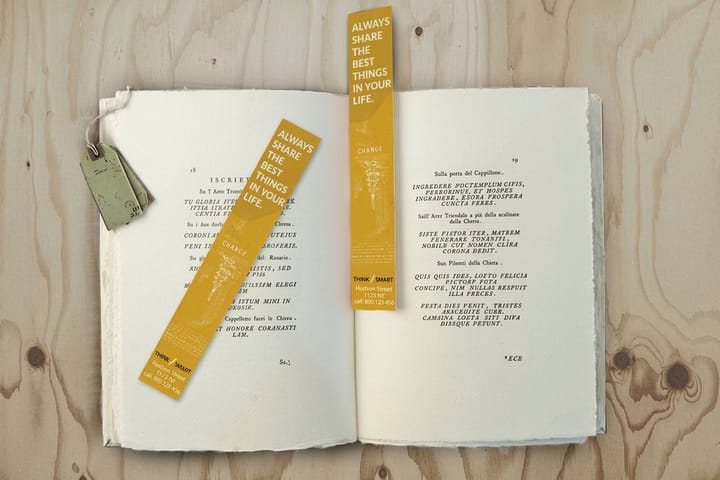
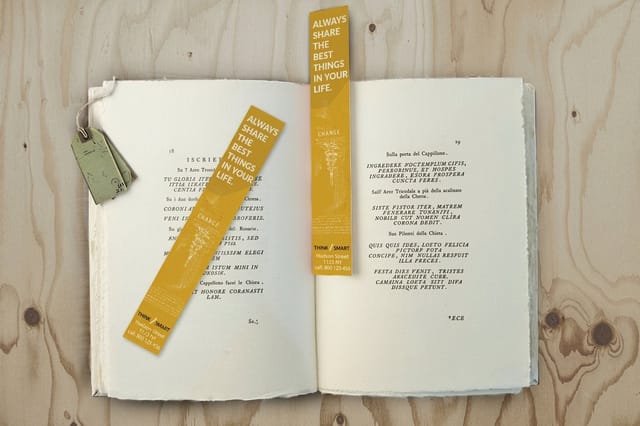
Standard bookmarks from $16.48 are the cheapest piece to reprint and the one that outlasts everything else here, for an unglamorous reason: it never leaves the desk. Two tests on the front, one internal number on the back. Nothing else fits and nothing else should. Sizes run 2 by 6 in, 2 by 7 in and 2 by 8 in, and the tallest is worth it if you want the type large enough to read while the card is propped against a monitor rather than held. The bookmark sizes guide has the trim and safe margins, and how to design a bookmark covers the layout.
Say plainly what it is not. A 2 in wide card does not go in a wallet, whatever anyone tells you at the design stage. It goes in the front of the workbook, under a keyboard, clipped into a planner or in a lanyard sleeve if the sleeve is a tall one. If the piece genuinely has to live in a wallet, that is a business card at 3.5 by 2 in and the business card size guide has the dimensions. Choosing the wrong one here is the difference between a card people keep and a card people bin on the way out.
Lamination is the last fork and it cuts both ways. Gloss lamination stops the edges furring after a term in a bag and makes the card feel like part of something rather than a handout. It also means the number on the back is fixed until you reprint, and nobody can write an alternative contact on it. If your escalation contact changes when staff change, order it uncoated and reprint at $16.48 rather than laminating a phone number that will be wrong by autumn.
Tuck one into every workbook before the session starts. The booklet ends up on a shelf within a month, which is fine, because the card was already taken out and put somewhere in reach. That is the piece doing the work in month three, and it is the cheapest line on the whole order.
Specs and pricing
The workbook and the poster, side by side
These are the two pieces with real money attached, and the two where a spec choice decides whether the piece works at all. Page count and stock drive one, reading distance drives the other. Live specs and price ladders straight from the configurator.


| Quantity | Price Per Unit | Total |
|---|---|---|
| 25 | $9.62 | $240.55 |
| 50 | $6.04 | $302.06 |
| 100 | $3.61 | $361.37 |
| 200 | $2.22 | $444.85 |
| 300 | $1.65 | $495.38 |
| 400 | $1.29 | $515.14 |
| 500 | $1.06 | $531.61 |
| 600 | 91.5¢ | $549.19 |
| Quantity | Price Per Unit | Total |
|---|---|---|
| 50 | $2.18 | $108.75 |
| 100 | $1.64 | $163.67 |
| 200 | $1.01 | $202.11 |
| 300 | 80.2¢ | $240.55 |
| 400 | 69.7¢ | $278.99 |
| 500 | 63.5¢ | $317.44 |
| 600 | 55.8¢ | $335.02 |
| 700 | 50.4¢ | $352.59 |
Wally prints for month three, not for Tuesday
The session ends. The paper has to still be there.
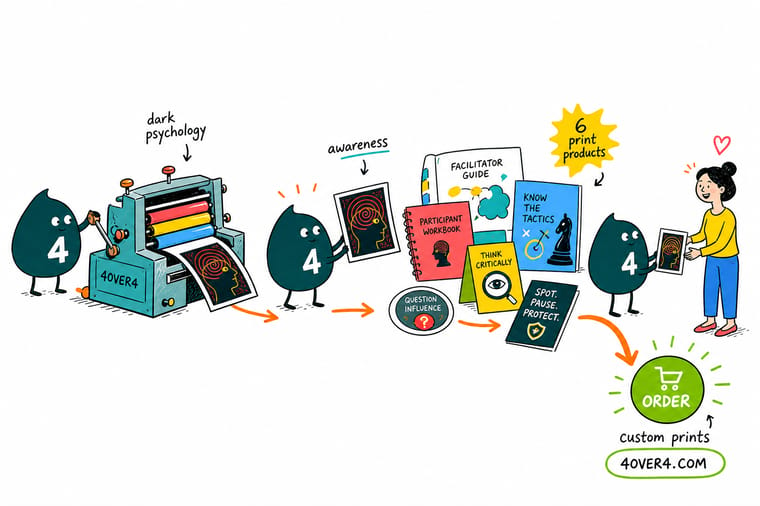
Wally ran a good session once. Ninety minutes, everybody nodded, and four months later somebody took a call with a deadline that expired at midnight and no reason to tell anyone. Nothing in the room was still in the room. Now he prints for the later moment instead: the two tests on a poster that gets swapped every quarter, an uncoated workbook people can actually write in, a card deck that starts the argument, and a preprinted pad so a note gets written the same day with a date on it. Awareness that is not within arm's reach on the day is a nice afternoon and nothing else.
Shop marketing materials →See it in use
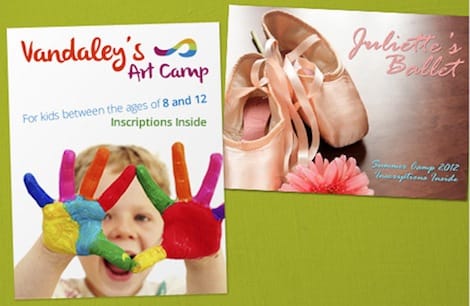
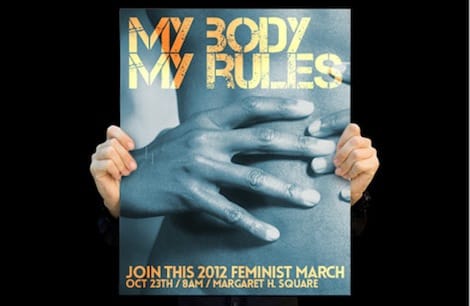
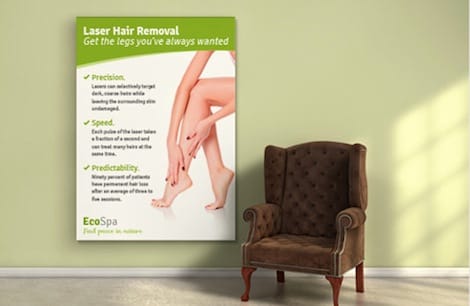
What our poster printing looks like





Explore more
Where to go next


By the numbers
Printing that makes a training session stick
Common Questions
Common questions about printing awareness training materials
Does printed material actually help awareness training, or is it a slide problem?
It is a timing problem, and paper is the cheapest fix for it. The session happens on one Tuesday; the tactic arrives four months later on a phone call nobody scheduled. Slides are gone by then. A poster on the break room wall, a bookmark propped against a monitor and a preprinted incident pad in a drawer are all bought for that later moment rather than for the session itself. Judge each piece by whether it will be within reach on the day it is needed, not by how good it looks in the room.
What goes in the workbook and what goes on the wall?
The wall gets the two tests, because a poster read from fifteen feet has room for roughly six lines. The workbook gets everything that needs a paragraph: the tactic definitions, the worked examples, the counters and the ruled space where somebody writes their own incident. Splitting it this way is not a design preference, it follows from the reading distance. Around an inch of capital height reads at ten feet, so a nine item list at poster size is unreadable from where people actually stand.
How many pages should an awareness workbook be?
Plan 16 to 32 pages and land the total on a multiple of four, because saddle stitch folds sheets that carry four pages each. Sixteen pages is enough for five or six tactics with a writing exercise after each one. Past about 48 pages the staples start to buckle and the booklet stops lying flat, which is a real problem for a book people are meant to write in. If your material genuinely runs longer, coil binding lies flat and is the better format.
Can people write in a printed booklet?
Only if the interior is uncoated. Gloss text stock repels ballpoint, so the ink sits on the surface, smears under the side of a hand and takes hours to set. Pencil barely marks it at all. Order an uncoated interior for any workbook with fill-in space and accept that photographs will look flatter. For a session where the writing is the exercise, that is not a compromise worth arguing about.
How many cards should a tactic deck have?
Between 12 and 24 faces is the working range for a training deck. Fewer than a dozen and there is nothing to sort or argue about; past about two dozen the exercise turns into reading rather than discussion. Keep each face to a name and a prompt of ten to twenty words at 2.5 by 3.5 in, and put the definitions in the booklet. If you are printing a shared classroom set, coat it so the edges survive a term of shuffling; if each person keeps their own to annotate, leave it uncoated.
Should the incident notepad be carbonless?
If the note may ever be seen by HR, a union representative or a lawyer, yes. A standard notepad is glued at the head so the sheet is meant to come off, and a loose sheet goes missing exactly when it matters. Carbonless duplicate sets keep a copy bound in the book in sequence while the top sheet travels. It costs more per sheet than a plain pad. For a personal reflection pad that nobody else will read, a plain 5.5 by 8.5 in pad is fine.
Is it safe to print the tactics at all?
It is, as long as every piece is written from the side of the person the tactic is being used on. "You were told not to tell anyone" describes a warning sign. The same information written as an instruction is a manual for the behavior, and printed material leaves the building on day one, so you do not control where it lands. Keep the copy defensive, avoid naming any real individual or a case that identifies one, and remember that a booklet describing a named manager becomes its own problem.
What does the six-piece awareness kit cost to start?
The six starting prices add up to $527.51 at 4OVER4.COM: standard brochures from $57.11, standard booklets from $240.55, trading cards from $11.25, standard posters from $108.75, standard notepads from $93.37 and standard bookmarks from $16.48. The three lightest pieces, the deck, the bookmark and the brochure, start at $84.84 together and are the sensible first order. Every price falls per unit as the quantity climbs, and the configurator updates live as you change size, stock and finish.
Does this replace HR, a lawyer or a therapist?
No, and any material that suggests otherwise is doing harm. Awareness training helps somebody name a pattern early and write it down accurately. It does not stop a coercive manager, end an abusive relationship or unwind a fraud already in motion. Those need HR, legal advice or a licensed professional, and the printed pieces should say so with a real contact on them rather than implying that noticing is enough.
Get Started
Print for the day it is needed
Order the six-piece awareness kit as one branded set at 4OVER4.COM. Pick your sizes, stocks and finishes, and watch every price update live. Ask for uncoated on anything people are meant to write in.
Legal Disclaimer
Gold Standard guarantees apply to all standard orders placed through 4over4.com. Price match requires verifiable proof of a competitor's published price for an equivalent product with matching specifications and turnaround time. Satisfaction guarantee covers manufacturing defects and print quality issues. Contact support with order number and documentation. On-time delivery rate based on tracked orders 1999 to 2026. Individual results may vary based on shipping carrier performance.
