
Online Business Security Best Practices, 6 Printed Pieces That Close the Physical Gap
Most security advice for an online business stops at the browser. These six pieces cover what happens after that: the parcel in a stranger’s van, the handover nobody wrote down, and the phone number a customer reaches for when an email claims to be you.
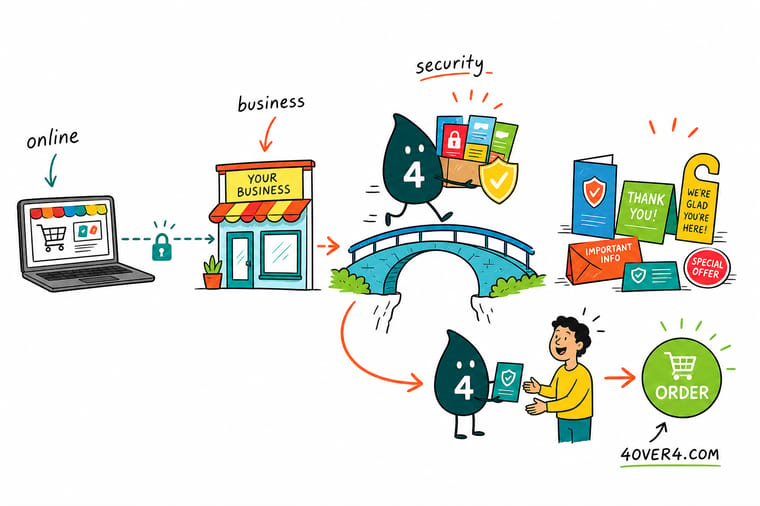
Software secures the store, and print secures the handoff. Six pieces do the physical half: printed tape that makes a re-opened carton obvious, a serialised hologram seal on the item itself, a warning label that gets the seal inspected, carbonless forms that record custody in two hands at once, printed envelopes a customer recognises, and a card carrying the real support number. The six start at $980.63 together, or $167.55 for the three that matter most at low volume.
The picks
Six pieces, from $120.82 carbonless forms to $347.11 tape
Buy them in reverse price order if you are shipping fewer than a hundred parcels a month. The label, the card and the form do most of the work for $167.55 together. Tape and hologram rolls come in case quantities and start earning past a few hundred parcels a month. Prices come straight from the configurator and drop per piece as the quantity climbs.
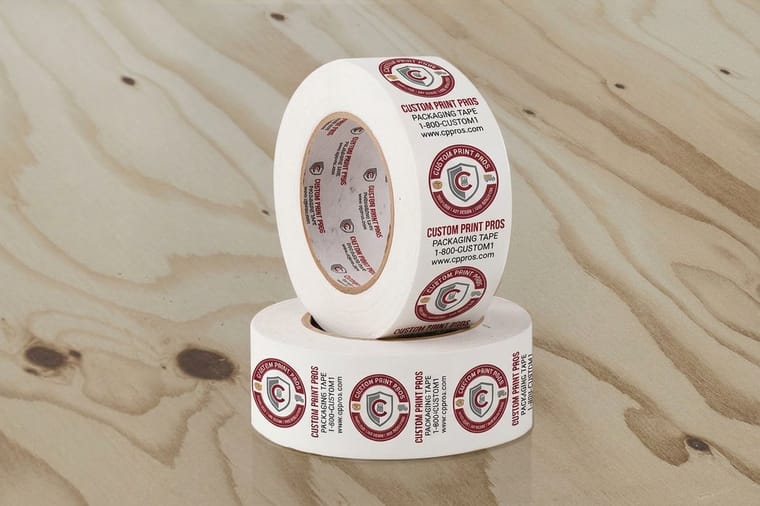
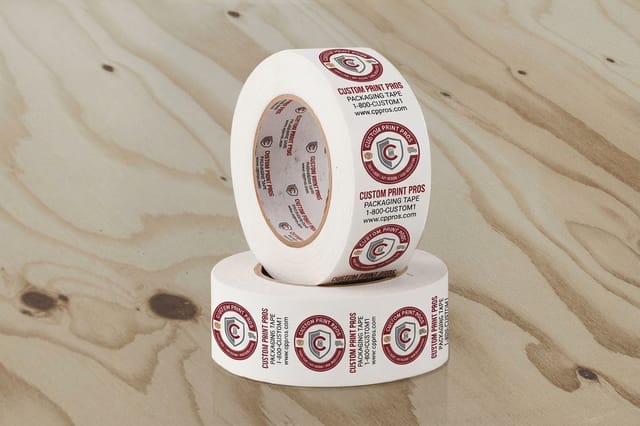
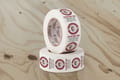
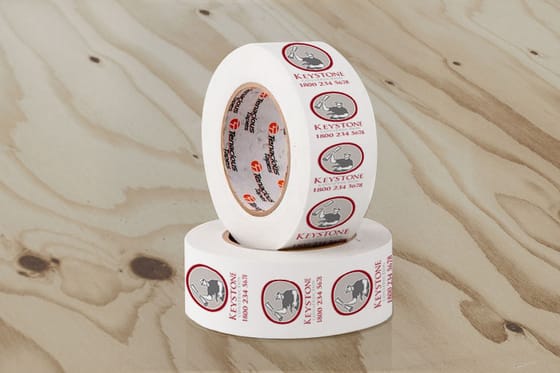
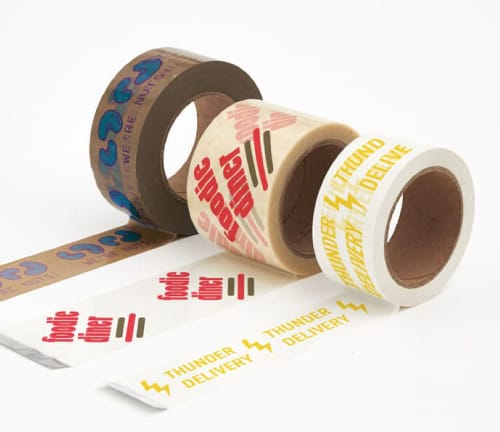
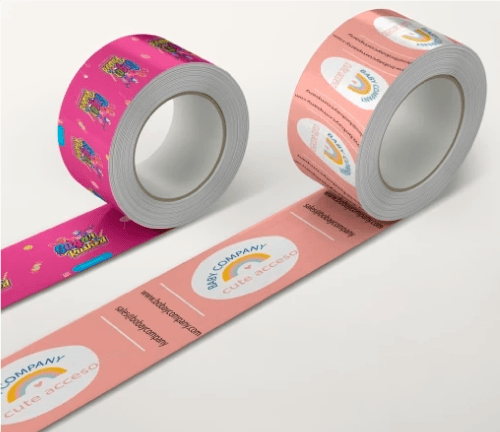
Printed packaging tape from $347.11
Your mark running across both H seams. A box opened in transit cannot be closed again with matching tape, so the damage shows before the customer touches the flaps.
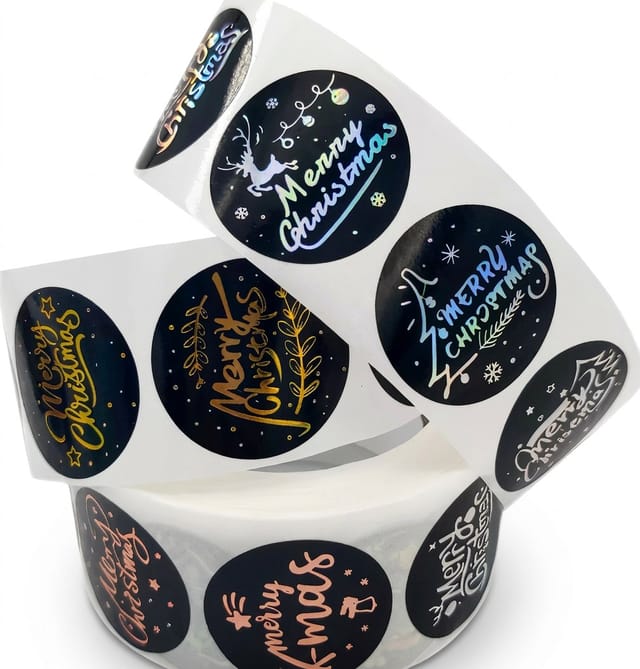
Hologram sticker roll from $322.98
The seal that destroys itself when it is lifted. Serialise it and a returned unit can be matched to the order it shipped on, which is what stops the swap.
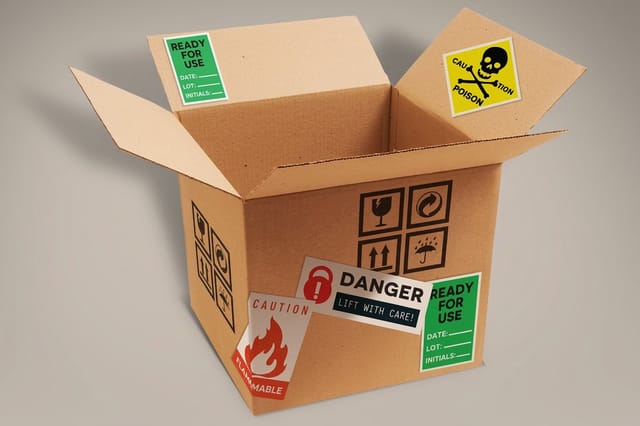
Premium warning labels from $29.16
The cheapest piece in the kit and the one that makes the other two work. Nobody inspects a seal unless a label on the same face tells them to inspect it first.
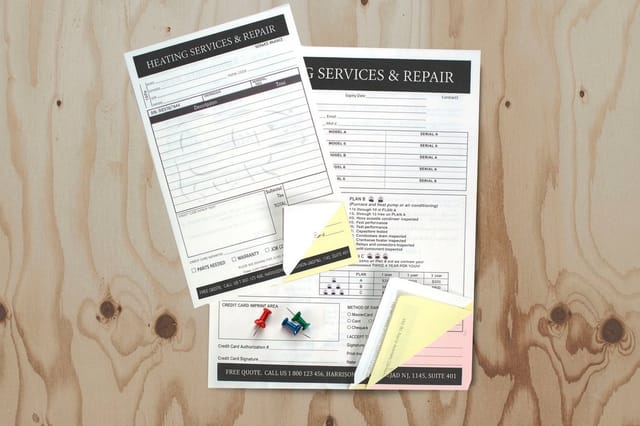
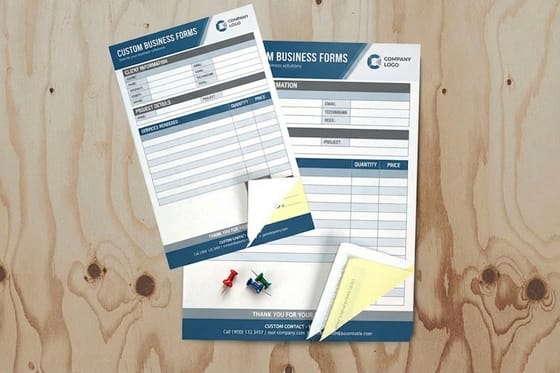
Carbonless forms from $120.82
Two copies written in one stroke, one in your hand and one in the driver’s. Neither can be edited afterwards without the other showing the change.
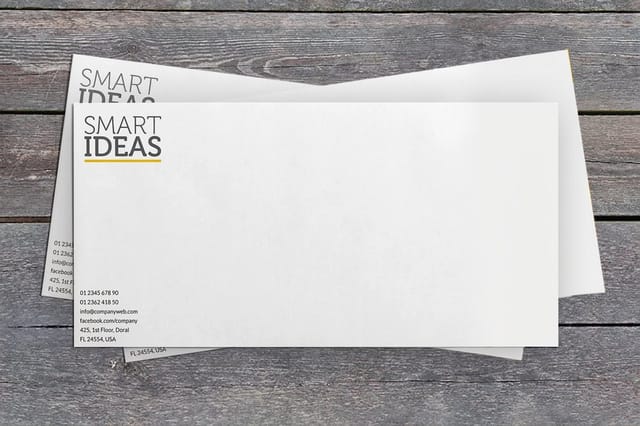
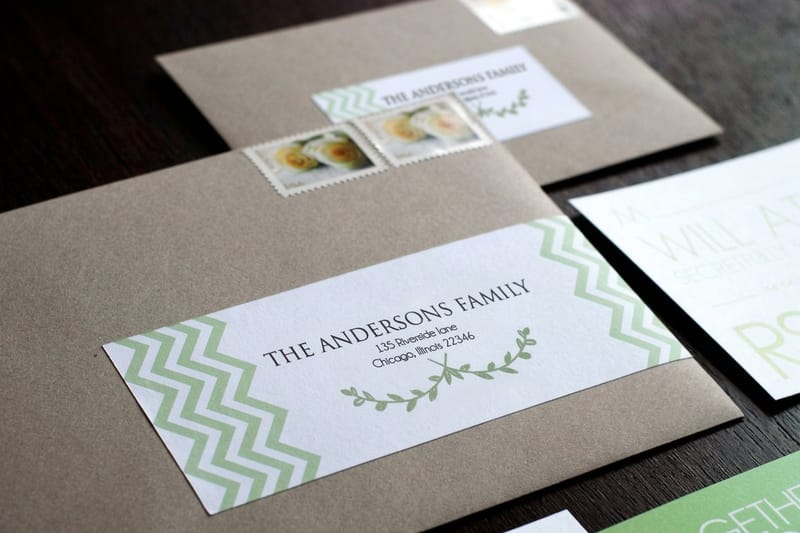
Printed envelopes from $142.99
A consistent printed return address is how a customer tells your mail from a lookalike. Scammers use plain white stock because plain white stock costs nothing.
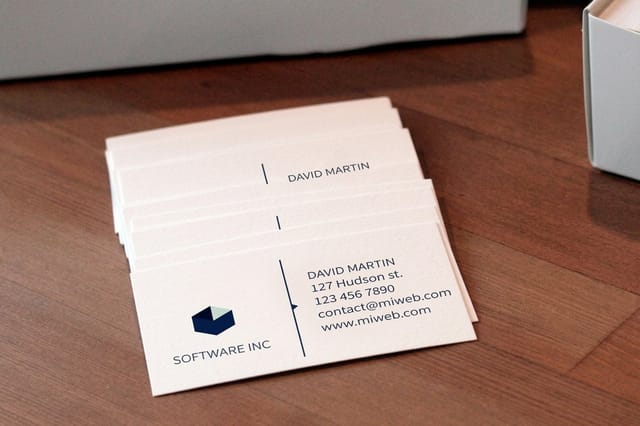
Standard business cards from $17.57
The support number a customer got out of the box instead of out of an email. It is the one contact route a phishing message cannot rewrite.
Before you order any of it
Know where the evidence is made and where it is read
Seals fail for a process reason far more often than a material one. The window in which tamper evidence is worth anything is short, and it closes at the doorstep.
You create the evidence at the packing bench, in about five seconds, when the tape crosses the seam and the seal goes on the item. Then it travels through a system you have no visibility into. It is read once, by one person, at the doorstep, and the reading takes less than a second because most people go straight through the top with a knife. After the box is open, there is no seal to examine and no photograph to send, and the conversation becomes a customer’s word against a carrier’s delivery scan.
That is why the $29.16 warning label is the piece to buy first, not last. It is the only item in the kit that acts at the moment the evidence is read. Everything else is preparation for a check that will not happen unless someone is told to make it. Write the instruction as three actions, put it on the same face as the address panel, and accept that a percentage of customers will still cut straight in.
Then decide what you can prove after the fact. The carbonless copy of the handover is the only record that survives the parcel being opened, which is what makes it the piece that matters in a dispute with a courier rather than with a customer. Our guide to addressing an e-commerce package covers what belongs on the outer face, and the wider parcel range sits in the packaging printing collection.
What each piece proves
The six pieces, what they prove and where they act
Each item covers a different gap and works at a different point in the journey. Read the row, tap the piece to jump to its section, and start with the gap that has already cost you an order.
| Piece | What it proves | Where it acts | Starts at |
|---|---|---|---|
| Printed packaging tape | The outer carton has not been opened and re-closed | Both H seams, top and bottom, at the packing bench | $347.11 |
| Hologram sticker roll | This unit is the unit that shipped on this order | The inner item or the poly bag, under the outer carton | $322.98 |
| Premium warning labels | The recipient was told to inspect before opening | The largest outer face, next to the shipping label | $29.16 |
| Carbonless forms | Who took custody of what, and when, with a signature | The dispatch desk and the courier handover | $120.82 |
| Printed envelopes | The letter came from you and not from a lookalike | Anything posted that carries account or payment detail | $142.99 |
| Standard business cards | The support number is real and predates the problem | In the box with the order, and in the returns pack | $17.57 |
1. Printed packaging tape: a seam that cannot be closed twice
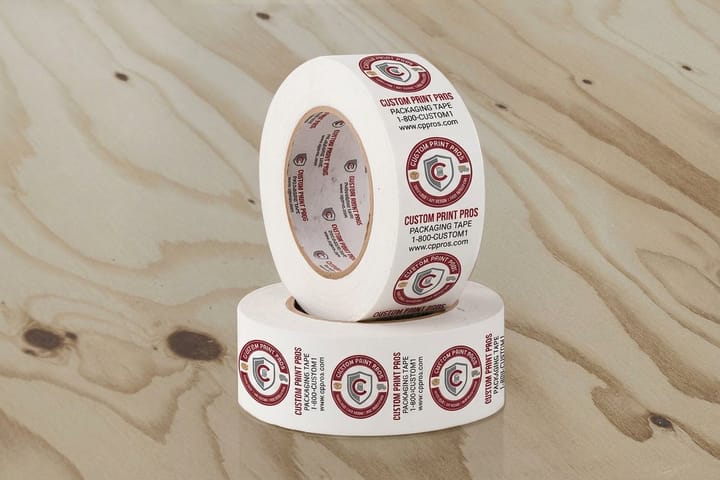
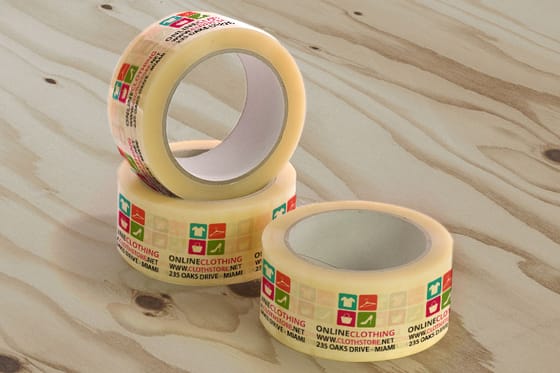
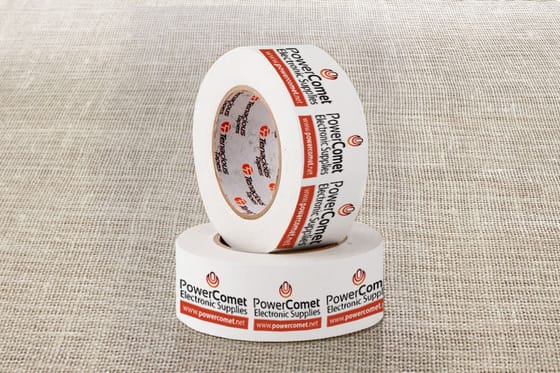
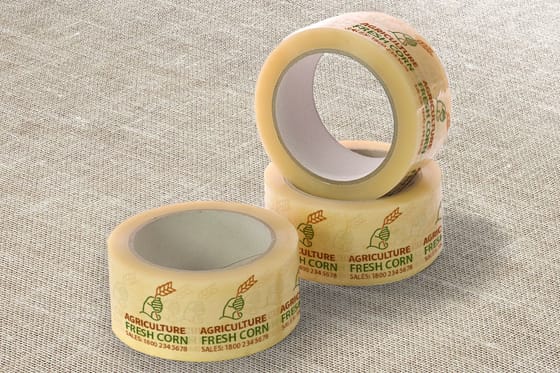
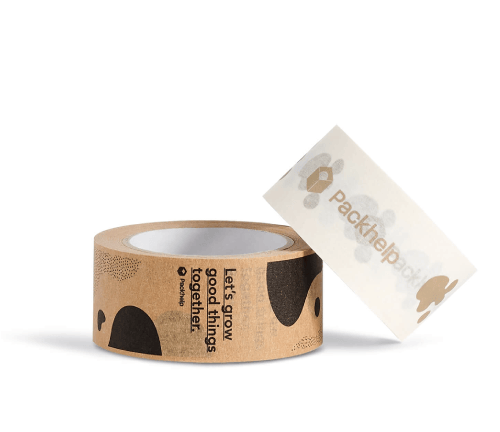
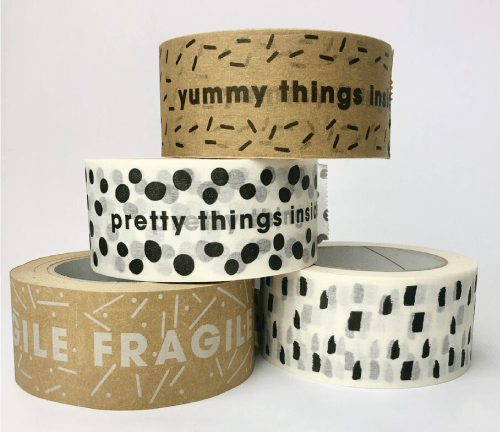
Clear tape from a hardware store is the same clear tape everyone else has, which is exactly why a box sealed with it can be opened and re-closed with nobody the wiser. Printed packaging tape from $347.11 removes that option. Your logo, a repeating pattern, or a line of type runs along the seam, and a replacement strip either interrupts the pattern or is missing entirely.
Where you run it matters more than what it says. Tape the top H seam and the bottom H seam, not just the lid, because the bottom is where a carton gets slit and re-taped by anyone who knows what they are doing. Carry each strip about two inches down the side walls so the ends are visible rather than tucked. If your artwork is a repeating mark, keep the repeat short, around three to four inches, so a two-inch splice cannot hide inside one cycle of the pattern.
Here is the honest limit, and it is the reason the third pick exists. Printed tape is tamper evident, not tamper proof. It makes an intrusion visible; it does not prevent one, and a carton wall can be cut without going near a seam at all. The value is that a customer who opens a damaged parcel has something specific to photograph, and you have something specific to send a carrier.
The other limit is the order size. Tape prints in case quantities, so $347.11 buys a supply rather than a roll, and that only makes sense once you are shipping in the hundreds per month. Below that, put the money into a seal on the flap instead. If you are laying out the artwork, our guide on preparing print files for packaging products covers the bleed and repeat setup, and the packaging tape designs from real customers show how short a repeat can go and still read.
2. Hologram sticker roll: the seal that destroys itself

A hologram sticker roll from $322.98 does the job the tape cannot, which is protecting the item rather than the carton. Applied across the opening of the inner box or the poly bag, the foil face splits or leaves a residue pattern when it is lifted, so a seal that has been peeled and pressed back down does not look like a seal that was never touched.
This is the piece that answers return fraud. A customer sends back a box containing a brick, or a unit that is not the one you shipped. With a serialised seal, the number on the returned item either matches your dispatch record or it does not, and the argument ends there rather than in a chargeback queue. Rolls are the right format for that because they feed off a dispenser at the bench and get applied in a second, which is the only way a warehouse habit survives a busy week.
Do not buy the shine and skip the number. Rainbow foil is available to anyone with a supplier, so the hologram on its own deters casual copying and nothing more. The security lives in a unique serial printed on each seal and written against the order at dispatch. Our guide on how tamper evident and tamper proof stickers work goes through the destruct patterns and where each one fails, and security printing and how it stops document fraud covers the same logic applied to paper.
One surface warning worth knowing before you order. Destruct seals need a clean, dry, reasonably smooth face to key into. Straight onto a dusty corrugated flute or a low-energy plastic film they lift cleanly, which defeats the whole point. Test the roll on your actual packaging before you commit to a case, and if the surface is wrong, move the seal onto a printed label or the inner carton where it can grip. More options sit in the sticker and label printing range.
3. Premium warning labels: the instruction that turns a seal into evidence
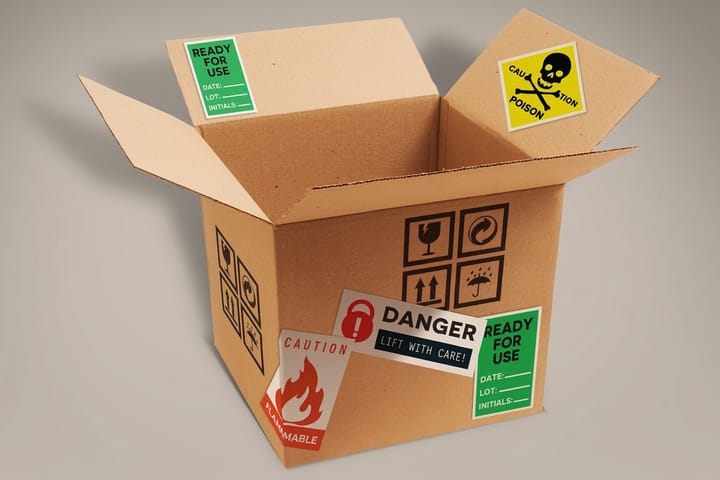
Almost nobody inspects a parcel. The box arrives, a knife goes through the top, and whatever the seal was going to prove is gone. Premium warning labels from $29.16 fix that for less than the cost of one lost order, and they are the piece most sellers leave out of the kit.
Put the label on the largest outer face, beside the shipping label where a recipient is already looking, and keep the wording to three steps: inspect the seal, photograph the box before opening it, contact us if the seal is broken. Short and specific beats stern. A label that says "security sealed" tells the customer nothing they can act on, while a label that names the three actions gets you a timestamped photo you can attach to a carrier claim.
Be careful with one line that appears on a lot of templates: telling the customer to refuse delivery. Refusal has real consequences depending on the carrier and the service, and it can put the parcel into a return loop you did not want. Ask for an inspection and a photograph instead, and make the decision yourself once you have seen it.
Order these on a durable stock rather than plain paper, because the outside of a carton meets rain, a wet trolley and a courier’s sleeve. Sizes and material options are laid out under warning labels printing, and if the same label needs to carry the address panel as well, shipping labels from $25 print both jobs on one face.
4. Carbonless forms: two copies made in one stroke
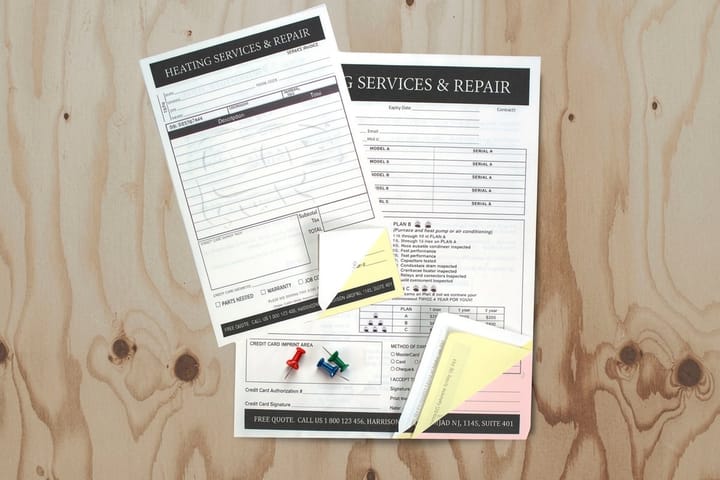
Every parcel that leaves your unit changes hands at least once, and the moment it does, the question of who had it and when becomes worth money. Carbonless forms from $120.82 answer it on paper. The driver signs the top sheet, the pressure transfers the same writing to the copy underneath, and the two copies separate into two different sets of hands at the same second.
That is the property a phone photo does not have. A photo lives in one place, on one device, controlled by one party. A two-part form exists in two places from the instant it is written, so neither side can quietly amend a quantity or a time without the other copy contradicting it. For a dispatch manifest, a courier handover, or a customer collection, that is the difference between a record and a claim.
Two-part is the sensible default: white for your file, yellow for the person signing. Go to three-part only when a third party genuinely needs a copy at the same moment, such as a fulfillment partner, because every extra ply reduces how sharply the bottom sheet takes the impression. Press hard with a ballpoint, and never a felt tip. The mechanics are in what carbonless forms are and how they make instant copies, and the anti-alteration features worth specifying are in the security features that make an NCR form hard to alter.
The limit is discipline, not paper. A pad of unsigned forms in a drawer is worse than nothing, because it looks like a process while providing no record at all. Number the sets sequentially so a missing form is obvious, and keep the file copies in date order. Formats and part counts are listed under carbonless forms printing.
5. Printed envelopes: a return address a customer recognises
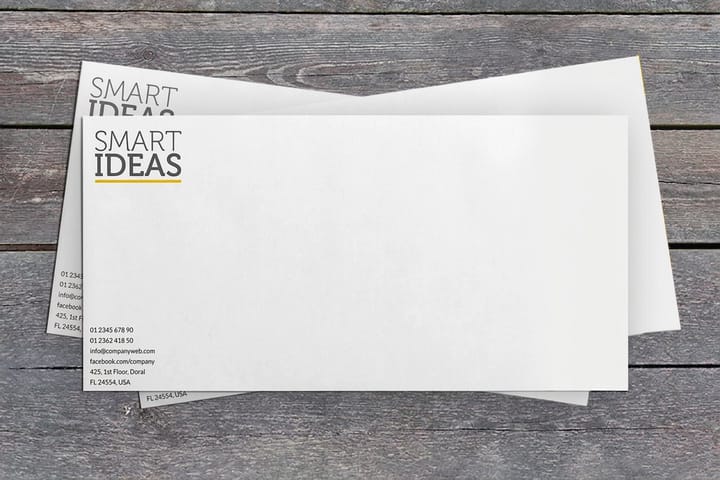
Anything you post that carries an account number, a refund cheque, a contract or a password reset is a target, and the attack is simple: send a lookalike letter first. Printed envelopes from $142.99 make that harder, because a customer who has seen your envelope twice notices the third one that is a plain white window with no return address on it.
Print the return address and the logo on every envelope you use for account mail, and keep the design stable. Consistency is the whole mechanism here. A brand that changes its envelope every quarter has taught nobody anything, while one that looks the same for two years has given its customers a free check they perform without thinking about it. Size options and the mailing panel rules are covered in 5 full-color envelope sizes for business and marketing mail.
Now the part people get backwards. Do not print anything identifying on the outside beyond your own address. No customer account number, no order value, no product name, no "renewal notice enclosed". The outside of an envelope is read by everyone in the delivery chain and by anyone standing next to a mailbox, and each detail you add narrows down what is inside for someone deciding whether to take it.
Window envelopes are worth a moment of thought too. They save you addressing a second time, but they show whatever sits behind the window, so the insert has to be folded such that only the name and address land in the aperture. Stock weights and window options are under envelopes printing, and how we handle your own data is set out in our privacy policy.
6. Standard business cards: the phone number that predates the problem
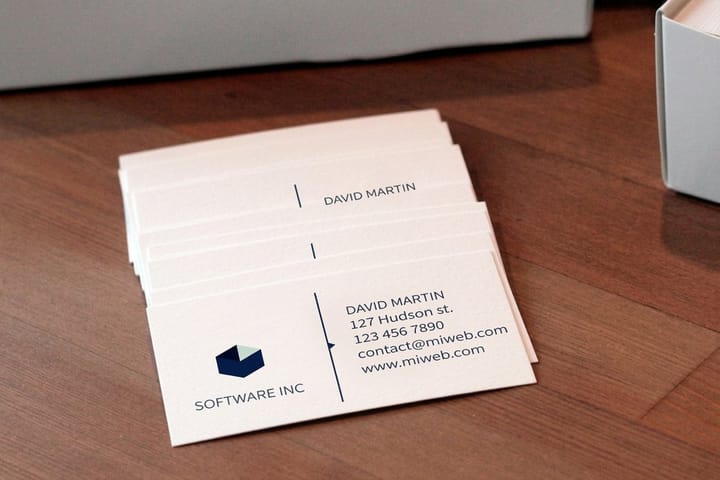
The most common attack on an online business is not a breach. It is an email to your customer that looks like you, carrying a number to call. Standard business cards from $17.57 are the cheap counter to it: a card in every box with your real domain and support number, obtained from the parcel rather than from a message that arrived later.
Give the card one job. Your business name, the support address, the phone number, and one plain line that removes the attacker’s script: we will never call to ask for your password, a code from a text message, or a gift card. That sentence has stopped more losses than any badge graphic, and it costs a line of type.
If you add a QR code, point it at a path on your own domain and say above it what the scan opens. A code that scans to a marketplace listing or a shortener trains exactly the reflex you are trying to break. The size floor, the quiet zone and the contrast rules are in the complete guide to QR codes, and if you would rather not build the layout, our design templates already respect the trim.
Keep the expectation right. The card does not authenticate you; anyone can print a card. What it does is give a customer a number they already had before the suspicious email arrived, which is the only thing that helps at the moment they need to check. Order it in the same colors as the tape and the labels so the whole parcel reads as one business, an idea our guide on ecommerce branding takes further.
Specs and pricing
The two pieces with a case quantity behind them
Printed tape and hologram rolls are the two decisions with real money attached, because both ship as a supply rather than a handful. Here are the live specs and price ladders straight from the configurator.

| Quantity | Price Per Unit | Total |
|---|---|---|
| 1 | $347.11 | $347.11 |
| 2 | $302.40 | $604.80 |
| 5 | $272.53 | $1,362.67 |
| 10 | $233.28 | $2,332.75 |
| 20 | $189.39 | $3,787.89 |
| 30 | $176.79 | $5,303.65 |
| 40 | $166.70 | $6,667.83 |
| 50 | $162.16 | $8,107.79 |
| Quantity | Price Per Unit | Total |
|---|---|---|
| 100 | $1.21 | $120.82 |
| 200 | 63.7¢ | $127.41 |
| 300 | 44.3¢ | $132.91 |
| 400 | 35.7¢ | $142.79 |
| 500 | 30.8¢ | $153.78 |
| 600 | 27.5¢ | $164.75 |
| 700 | 25.1¢ | $175.74 |
| 800 | 23.3¢ | $186.73 |
Wally seals the box, then tells you to look at it
Evidence nobody checks is just decoration
Wally spent a case of printed tape on every parcel for six months and still lost three disputes. Not one customer had photographed a box before opening it, because nothing on the carton asked them to. Now a warning label sits beside the shipping label with three lines on it: inspect the seal, photograph the box, message us before you open it. The tape did not change. The evidence did. Buy the label first, then the seals.
Shop the ecommerce collection →See it in use
Packaging tape shops have sealed parcels with
Explore more
Where to go next



By the numbers
What a parcel can be printed to prove
Common Questions
Common questions about print and online business security
Can printing really improve online business security?
It improves three specific things and nothing else. It makes tampering with a parcel visible, it creates a signed record of who took custody of what, and it puts your real support number in a customer’s hands before an attacker sends them a fake one. Everything else, the account takeovers, the card testing, the plugin exploits, is software work: two-factor authentication on every admin account, a password manager, patched software, and a backup you have restored at least once to prove it works. Print is the physical layer under that, not a substitute for it.
What is the difference between tamper evident and tamper proof?
Tamper evident means an intrusion leaves a mark you can see: a split hologram seal, a broken tape pattern, a void residue on the carton. Tamper proof would mean the box cannot be opened at all, which no adhesive product achieves, because a carton wall can be cut anywhere and never touch a seal. Every product on this page is the first kind. That is not a weakness as long as you build the process around it, which means telling the recipient to look before they open.
Do hologram seals actually stop counterfeits?
Only when they carry a unique number. Rainbow foil is sold to anyone, so a hologram by itself deters a casual copy and stops nothing organized. What works is a serial printed on each seal and logged against the order at dispatch, so a returned or resold unit can be matched to the parcel it left in. Hologram sticker rolls start at $322.98 and feed off a bench dispenser, which is what keeps the habit alive during a busy week.
Is printed packaging tape worth it at 40 orders a month?
No. Tape prints in case quantities, so $347.11 buys a supply that will sit on a shelf for a year at that volume, and the money does more work elsewhere. At 40 orders a month, spend $29.16 on warning labels and put a serialised seal on the inner item. Printed tape starts paying once you are shipping in the hundreds per month, when the per-parcel cost of the case drops and the branded seam is doing marketing work as well as security work.
What should a tamper warning label actually say?
Three actions, in order: inspect the seal before opening, photograph the box if anything looks wrong, contact us before you go further. Avoid instructing the customer to refuse delivery, because refusal behaves differently by carrier and service and can send the parcel into a return loop you did not choose. You want a timestamped photograph and a message, then you decide. Print it on a durable label stock, not plain paper, and put it on the largest outer face next to the shipping label.
Why use a carbonless form instead of a photo on a phone?
Because the form exists in two hands at the same moment it is written. The driver signs the top sheet, the pressure copies the same writing onto the sheet below, and the two go to different places immediately, so neither side can change a quantity or a time later without the other copy disagreeing. A phone photo sits on one device controlled by one party. Two-part carbonless forms start at $120.82; number the sets sequentially so a missing form is obvious at a glance.
Should the order number or customer name go on the outside of the box?
The address needs to be there and nothing else does. Skip the product name, the value, the account number and anything hinting at what is inside. The outside of a parcel is read by everyone in the delivery chain and by anyone walking past a doorstep, and each extra detail helps someone decide whether the box is worth taking. Keep the identifying information on a packing slip inside, and put only the address panel, your return address and the inspection instruction on the outer face.
What does the six-piece security print kit cost to start?
The six starting prices add up to $980.63 at 4OVER4.COM: printed packaging tape from $347.11, hologram sticker rolls from $322.98, premium warning labels from $29.16, carbonless forms from $120.82, printed envelopes from $142.99 and standard business cards from $17.57. If you are shipping small volumes, the three cheapest cover most of the value at $167.55: the warning label that gets the seal checked, the carbonless form that records custody, and the card that carries your real support number. Every price drops per piece as the quantity climbs.
Get Started
Close the physical gap
Print the six-piece security set as one branded batch at 4OVER4.COM. Carbonless forms start at $120.82 for 100 in two part white and canary, and printed packaging tape at $347.11 with a 20 business day build. Start with the warning label if the budget is tight, because it is the piece that makes the rest count.
Legal Disclaimer
Gold Standard guarantees apply to all standard orders placed through 4over4.com. Price match requires verifiable proof of a competitor's published price for an equivalent product with matching specifications and turnaround time. Satisfaction guarantee covers manufacturing defects and print quality issues. Contact support with order number and documentation. On-time delivery rate based on tracked orders 1999 to 2026. Individual results may vary based on shipping carrier performance.
