
The Art of Storytelling and How to Build a Business Story People Repeat


Five beats, one placement rule, and a checklist you can run on a draft in ten minutes. Written for the founder who has to tell it on a call, on a page, and on a card.
Storytelling moves an audience from one belief to another by putting a person under pressure and showing what they chose. It beats a feature list because listeners hold on to a chain of causes far longer than a set of attributes. Five beats carry it: status quo, rupture, stakes, choice, resolution. Your product belongs in the last one, named once, because anything earlier reclassifies the whole telling as an advertisement.

Quick answer
Change, causality, and a choice somebody could have got wrong
A story is a change caused by a choice. Someone wants something, an obstacle makes the wanting expensive, they decide without enough information, and the situation ends somewhere other than where it started. Tension climbs to the decision and drops after it, which is why the win deserves the fewest words and the choice deserves the most. Say the product name before the stakes land and the audience rereads the whole thing as a pitch.
What Counts as a Story, and What Does Not
Most things called brand stories are timelines. Founded in 2009, moved to a bigger space in 2014, added a second product in 2019. Nobody repeats a timeline.
Four parts turn events into a story. A character who wants something specific. An obstacle that makes the wanting cost. A choice made without enough information. A situation that ends different from how it began. Drop any one and the structure sags: no want and the audience has nothing to root for, no obstacle and the ending feels unearned, no choice and your character is a passenger, no change and there was no reason to speak.
Test a draft with one word. Put "so" between your sentences instead of "and then". We lost our biggest client, so we rebuilt how we quote is a story. We lost our biggest client and then we rebuilt how we quote is a report. The second version is what most about pages contain.
Knowing when to skip the story matters as much. A customer asking what something costs wants the number. A support ticket wants a fix. A spec sheet wants specs. Storytelling earns its space where you need someone to change what they believe, and it wastes everyone's time where they only need information. If the job is to make a claim credible rather than to move a belief, brand messaging does that work more directly.
The Five Beats, and the Question Each One Answers
Any workable business story runs through five beats. They are not chapters and they are not equal in length. Each one exists to answer a question the listener is already asking, silently, and a beat that answers nothing gets cut.
| Beat | What happens | The listener is asking | How it usually fails |
|---|---|---|---|
| Status quo | One concrete detail of the world before anything moved. | Who is this about and why should I care? | It runs for three paragraphs of company history. |
| Rupture | The thing that broke, arrived, or was taken away. | What went wrong? | It is softened into a challenge or an opportunity until it stops hurting. |
| Stakes | What it costs if nothing changes, named in real terms. | Why does this matter to anyone? | It gets skipped, which is why the ending lands flat. |
| Choice | A decision made with incomplete information, and what was given up. | What would I have done? | It is written as an obvious call, so there is no tension. |
| Resolution | The new situation, above the old one, plus what it taught. | So what changed? | It becomes a victory lap with the product in it. |
Look at the third row. Stakes is the beat people delete first, usually because naming the cost feels like admitting weakness in front of customers. Delete it and the choice has nothing to weigh against, so the audience hears a decision with no risk in it, which is a memo. Founders who say "we nearly ran out of runway in the eleventh month" get repeated. Founders who say "we faced some headwinds" do not.
Length distributes unevenly on purpose. Status quo takes a sentence. Rupture and stakes together take a third of the telling. The choice takes the most room, because that is where the listener does the work of putting themselves in the seat. Resolution should be shorter than you want it to be. If you are writing this for a sales conversation, the business pitch guide covers what has to sit either side of it.
Where Your Product Is Allowed to Enter
One placement rule saves more stories than any writing technique: the product appears in the resolution, once, and never before the stakes land.
The reason is mechanical. A listener holds a story open while they still believe it might be about a person. The instant a product name appears, they reclassify the whole thing as an advertisement and start discounting every fact retroactively, including the ones you have not said yet. Placed after the choice, the same sentence reads as evidence that the decision worked. Same words, opposite effect, and the only variable is the order.
Once the words are right, the story has to travel, and the format decides how much of it survives. Three lengths cover almost every situation.
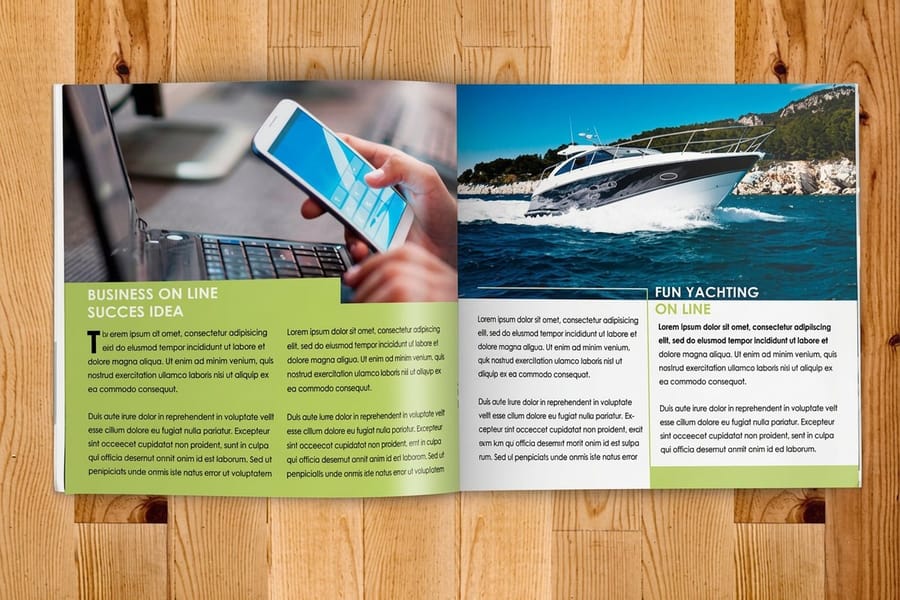
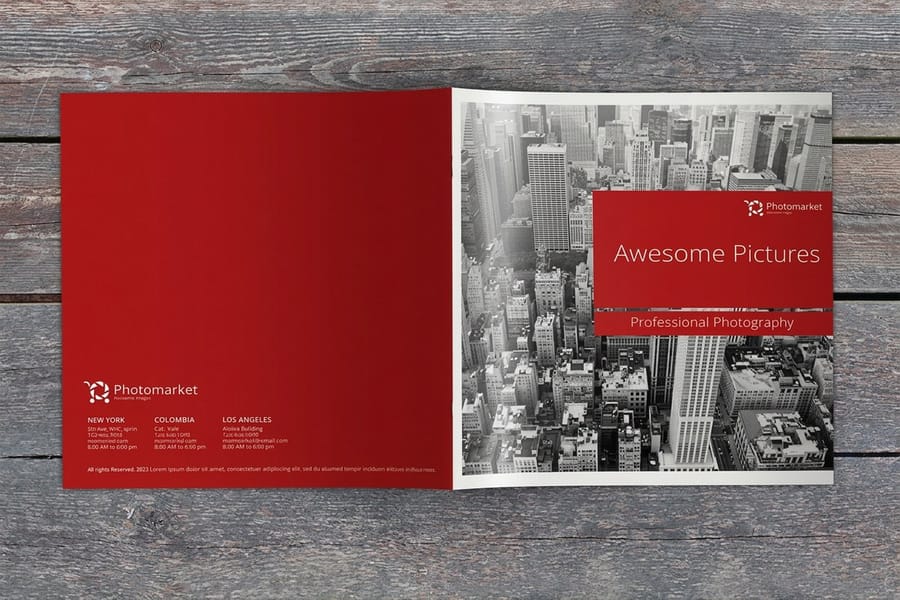
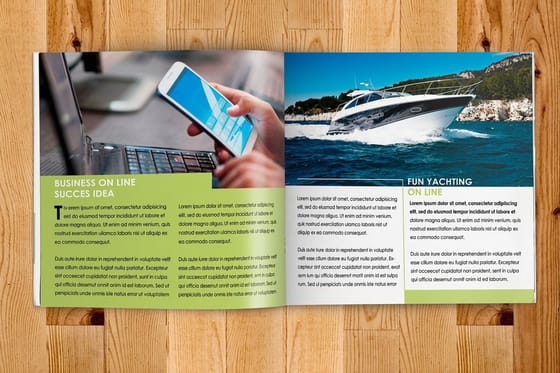
- The long version, roughly 800 to 1,200 words. This is the one people read while they are already interested. It suits a saddle stitched piece a prospect keeps: standard booklets start at $240.55 and give you spreads, which means the rupture can sit on a left page and the choice on the right, where the reader turns into it.
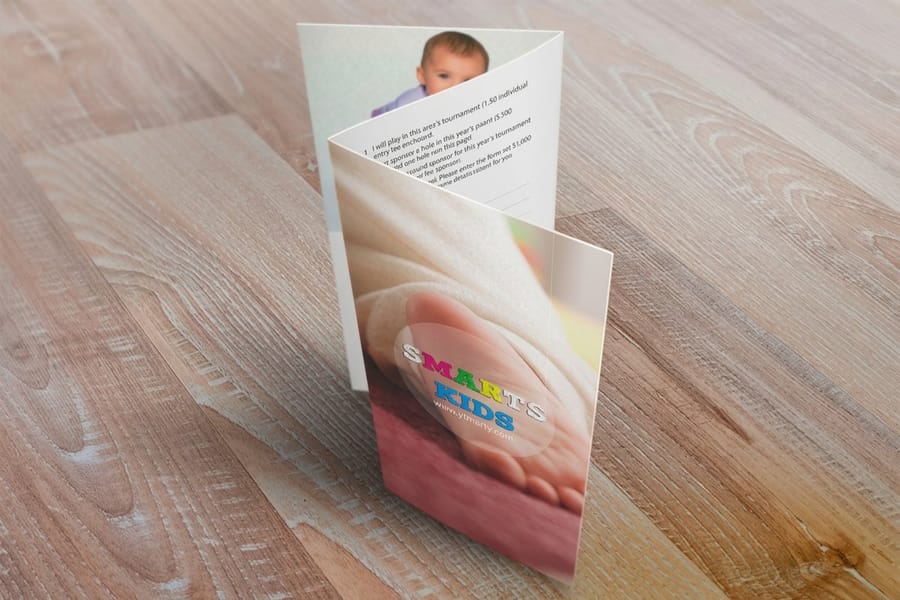
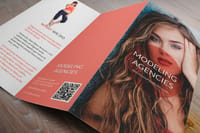
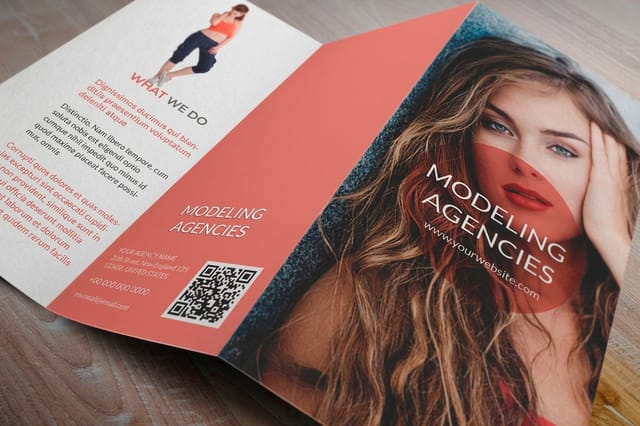
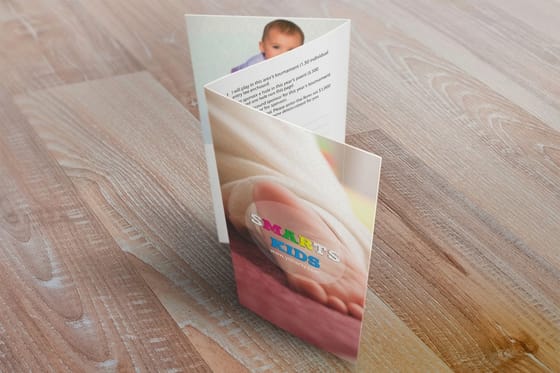
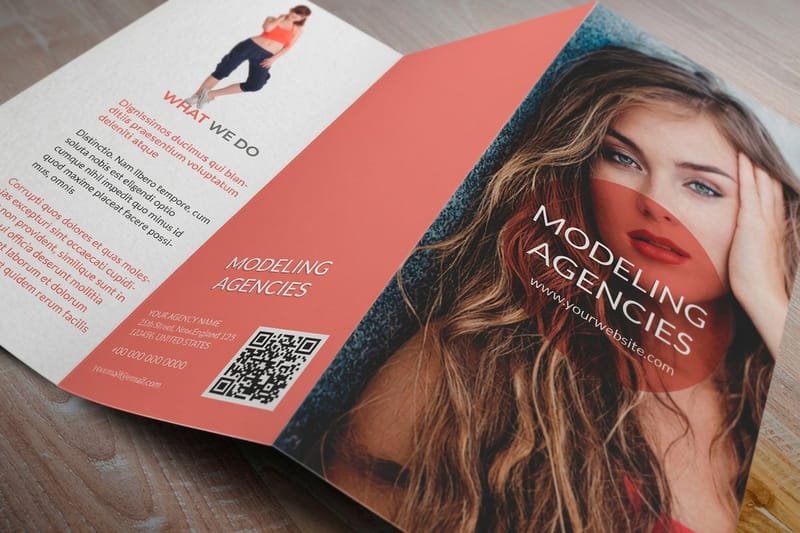
- The medium version, one panel. A brochure panel holds about 120 words comfortably at readable type, which is a brutal and useful limit. Standard brochures start at $57.11, and the fold does structural work: put the rupture on the panel that shows first, the choice inside. Our guide to choosing between a booklet, a brochure and a flyer works through which format the length actually fits.
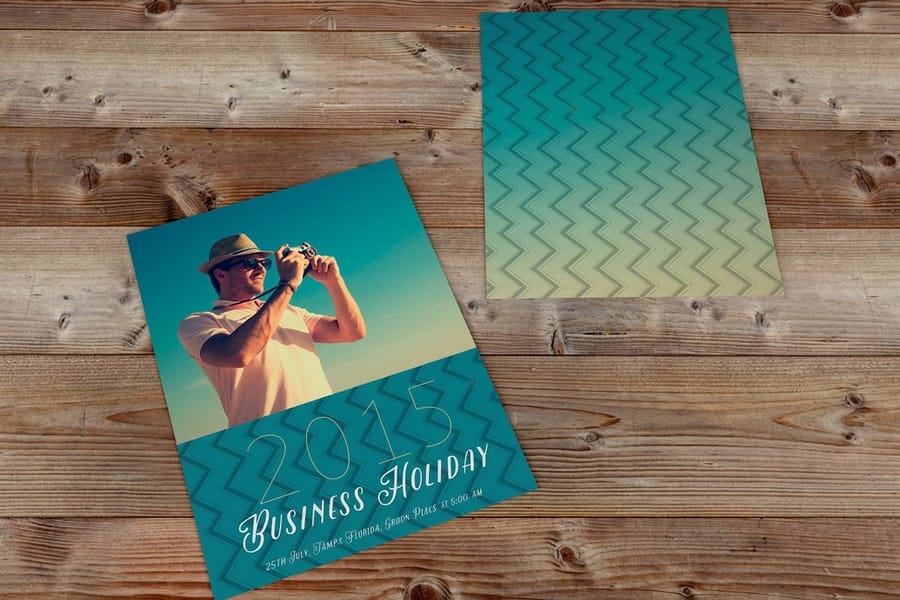
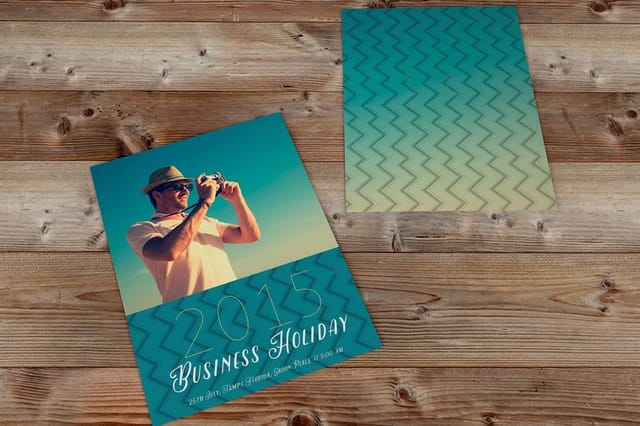
- The one sentence version. The hardest to write and the one you use most. It goes on the back of standard business cards at $17.57, in an email signature, or across the front of standard postcards at $16.48 where you have room for a single beat and nothing else.
Write all three from one source rather than separately. Teams that draft each version on its own end up with three subtly different stories, and customers notice the seams even when they cannot name what is off. Browse the full range of brochure printing formats before you fix the word count, because the panel size decides the edit.
Finding the Stories You Already Have
"Nothing interesting has happened to us" almost always means nobody has looked in the four places where business stories live.
The founding constraint. Not the inspiration, the constraint. What you could not afford, could not access, or were told you could not do. Constraints create choices, and choices are the material. A workshop that started in a garage because the lease fell through is a story; a workshop that started because the founder loved the craft is a preference.
The customer who nearly left. Somebody was about to walk and stayed. What did you change, and what did it cost you to change it? This is the most persuasive story most companies own and the one they are most reluctant to tell, because it opens with a failure. That opening is exactly why it works.
The job that went wrong. A print run that came back short, a delivery that missed a launch, a spec somebody misread. Tell what broke, what it cost, and the process you built afterwards so it could not happen twice. Prospects have all been burned by a supplier, and they trust a company that can describe a failure precisely more than one that claims never to have had one.
The work you refuse. What you turn down defines you faster than what you sell. A shop that will not rush a job past the point where it can check color is telling a story about what it values, and it costs revenue to tell it, which is what makes it credible.
Collect these before you need them. Keep a running file of what customers say in the moment they are relieved or annoyed, because their exact words beat anything you compose later. Advertising copywriting covers how to keep that raw phrasing intact once the piece goes to layout.
The Story Audit Checklist
Run a draft through this before it goes anywhere near a designer. Every item is a question with a yes or no answer, and a single no is worth a rewrite.
- Can you name the character in one clause, and does that character want something specific rather than something general like growth?
- Does the word "so" fit between your sentences better than "and then"?
- Is the rupture stated plainly, without being softened into a challenge, a journey or a learning?
- Are the stakes in real terms, using a number, a deadline or a name you are allowed to print?
- Could a reasonable person have chosen the other way at the choice? If not, add back what your character gave up.
- Does the ending sit above the beginning, and can you say what changed in a sentence a stranger would understand?
- Does the product appear once, after the choice?
- Have you cut every sentence that survives having your company name swapped for a competitor's?
- Do you have permission in writing for any customer, client or logo you name?
- Does the one sentence version still carry the change, or has it collapsed into a slogan?
Read the draft aloud last. Sentences that all run the same length are the clearest sign the piece was assembled rather than told, and reading it out is the fastest way to hear it. When you are happy with the words, the psychology of conversions covers what has to sit next to the story on the page for a reader to act on it.
Wally explains the story arc
Five beats, and the product waits at the end

Wally starts with one detail of how things were, breaks it, then says out loud what it would cost if nothing changed. That is the beat everyone skips and the one that makes the next part matter. Then comes the choice, made without enough information, with something given up. Only after that does he mention what he printed. Say it any earlier and the whole thing sounds like an ad, which is the same words doing the opposite job.
Print your story as a booklet →Specs and pricing
Formats for the long, medium and short version
Sizes, stocks and starting prices straight from the 4OVER4.COM configurator, so you can pick the panel before you fix the word count.


Print it
Put the story somewhere people can keep it

Explore more
Where to go next

By the numbers
The print side of your story, handled at 4OVER4
Common Questions
Your storytelling questions, answered
What makes a business story different from an anecdote?
Causality. An anecdote reports that things happened in a sequence. A story shows one thing causing the next, with a person who wants something and pays for the wanting. Test any draft by putting the word "so" between your sentences. If "and then" fits better than "so", you have a list of events, and the listener will forget it before the meeting ends.
How long should a brand story be?
Write it at three lengths from one source. Ninety seconds for a stage or a sales call, roughly 200 words for a brochure panel or an about page, one sentence for a business card back or an email signature. The one sentence version is the hardest and the most used, so draft it last, once you know which beat actually carries the meaning.
Where does the product belong in the story?
In the resolution, after the choice, and named once. Mentioned earlier it turns the whole telling into an advertisement and the audience starts discounting the facts. A useful rule for a founder story is that the product is what the character built because of what happened, not the reason the story is being told.
What if nothing dramatic has ever happened to my business?
Drama is not the requirement, pressure is. Four places usually hold a real story: the constraint you started under, the customer who nearly left, the job that went wrong and what you changed afterwards, and the work you turn down. Any of those has a want, an obstacle and a choice, which is everything the structure needs.
Do I need permission to tell a customer story?
Ask, in writing, before it goes to print. Naming a client, quoting them, or using their logo can breach a confidentiality clause that neither of you remembers signing. When permission is slow or refused, keep the structure and strip the identity: an industry, a size and a problem carry the story fine, and no reader was ever persuaded by a company name they did not recognize.
Does storytelling still work in print, where nobody has to keep reading?
It works harder in print, because the reader can see the whole surface at once and decides in about a second whether to start. Front load the rupture rather than the setup, put the change in the largest type, and let the body copy carry the sequence. A story printed on standard postcards from $16.48 has one beat of room, so choose the beat before you write.
How do I know a story is working?
People repeat it back to you with the details wrong but the shape right. That is the only reliable field test. If your team retells the features and drops the choice, the choice was not clear enough, and no amount of production polish on the video or the booklet will fix a spine that never held.
Get Started
Booklets run 25 for $240.55, or $9.62 a copy
Pick the format that fits the length you wrote, upload the file, and we print the booklet, brochure or card that carries your story out of the meeting.
Legal Disclaimer
Gold Standard guarantees apply to all standard orders placed through 4over4.com. Price match requires verifiable proof of a competitor's published price for an equivalent product with matching specifications and turnaround time. Satisfaction guarantee covers manufacturing defects and print quality issues. Contact support with order number and documentation. On-time delivery rate based on tracked orders 1999 to 2026. Individual results may vary based on shipping carrier performance.
