
Standard Booklets vs Square Booklets and How to Pick the Right Format


Same binding, same stocks, same price to start. The shape changes the spread, the rack, and the postage, and those are the three things that decide the job.
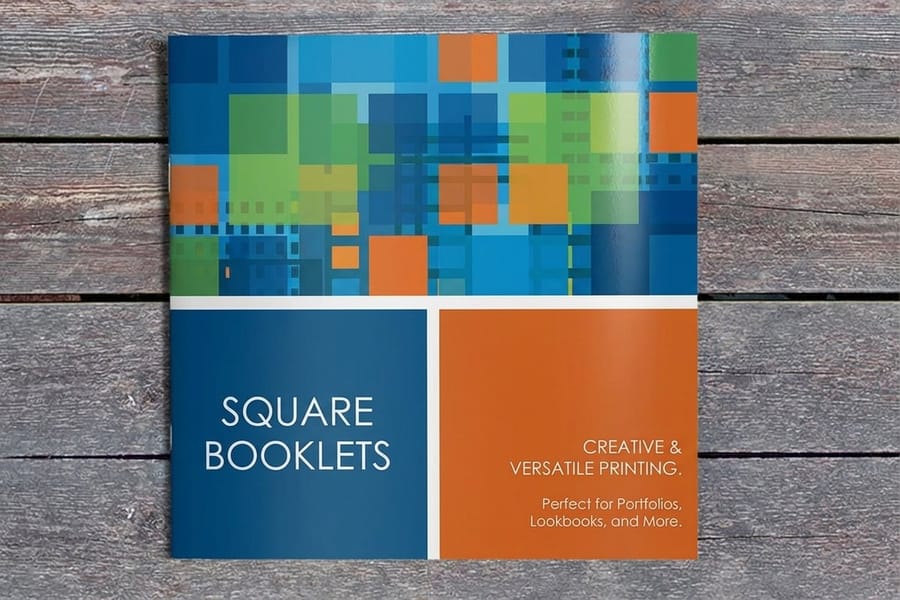
Choose a standard booklet when the piece is text-led, sits in a literature rack, or mails at volume. Choose a square booklet when photography carries the message and the piece is handed over rather than displayed. An 8.5 by 11 booklet opens to a 17 by 11 spread built for reading. An 8 by 8 square booklet opens to a 16 by 8 panorama built for pictures, but it will not fit a rack and it costs more to mail. Both start at $240.55 at 4OVER4.COM, so the shape is a content decision, not a budget one.
Quick answer
The page looks similar. The open spread does not.
A standard booklet is shaped for reading and a square booklet is shaped for looking. Letter trim opens to a 17 by 11 inch spread at roughly 1.55 to 1, which holds text columns comfortably and slides into any literature rack. An 8 by 8 square opens to a 16 by 8 inch spread at exactly 2 to 1, which frames a photograph across two pages without a crop, but drops off USPS letter-sorting equipment and does not fit a rack pocket. Binding, stocks and starting price are identical, so let the content and the delivery route decide.
What Actually Changes When a Booklet Goes Square
Hold one page of each and the difference looks cosmetic. Open them and it stops being cosmetic.
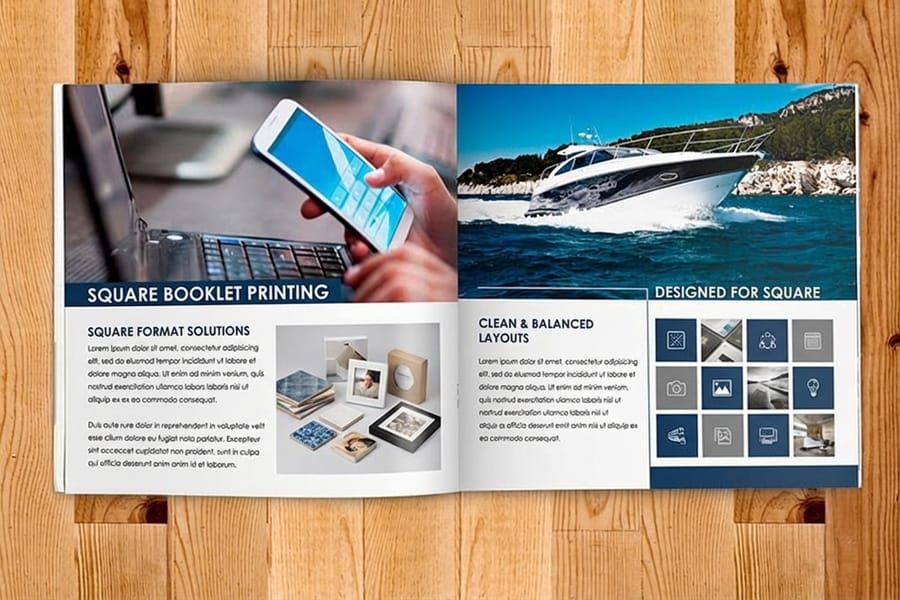
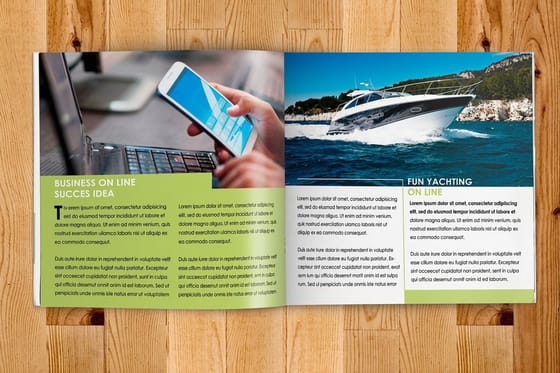
A standard 8.5 by 11 booklet opens to a 17 by 11 inch spread. That is roughly a 1.55 to 1 rectangle, the same proportion your eye has been trained on by every magazine and annual report, and it takes two comfortable text columns per page. An 8 by 8 square booklet opens to a 16 by 8 inch spread, which is exactly 2 to 1. A panorama. One photograph can run the full width of that spread with no crop, and that single fact is why lookbooks, wedding albums, restaurant menus and photography portfolios keep going square.
The same geometry works against body copy. At 11 point text an 8 inch measure gives you a line most readers lose their place in, so a square page carrying real writing needs either two columns or an outside margin wide enough to pull the measure back down to something readable. Designers who ignore that end up with pages that look airy in a PDF and feel exhausting in print.
Everything else stays the same. Both formats run saddle stitched from folded sheets, both take the same coated and uncoated stocks, and both are set up from the same kind of file. If you have never built one, start from a correctly sized layout in our blank template library and read how to order booklet printing before you export.
Standard and Square, Compared Spec by Spec
This is the table to read before the design starts, because two of these rows are impossible to fix once the file is built.
| Spec | Standard booklet | Square booklet |
|---|---|---|
| Common trims | 5.5 x 8.5, 6 x 9, 8.5 x 11 inches | 5.5 x 5.5, 6 x 6, 8 x 8 inches |
| Open spread | 17 x 11 in on letter, about 1.55 to 1 | 16 x 8 in on 8 x 8, exactly 2 to 1 |
| Body copy | Comfortable single or double column | Needs two columns or wide outside margins |
| Full-bleed photography | Portrait crops sit naturally, panoramas fight the gutter | Square and panoramic images land without a crop |
| Literature racks | Fits standard pockets and display stands | Does not fit, tips forward or hides the title |
| Mailing | Runs on standard equipment, predictable postage | Nonmachinable, quote the postage before you print |
| Page count rule | Multiples of four | Multiples of four, no exception |
| Starting price | $240.55 for Standard Booklets | $240.55 for Square Booklets |
Two rows carry most of the decision. The rack row kills square for anything that has to sit unattended at a counter or a trade-show table. The mailing row kills it for volume campaigns. If neither applies to your job, the rest of the table is a design preference rather than a constraint, and you are free to pick the shape that suits the pictures.
Binding, Creep and the Page Count Where Square Gets Awkward
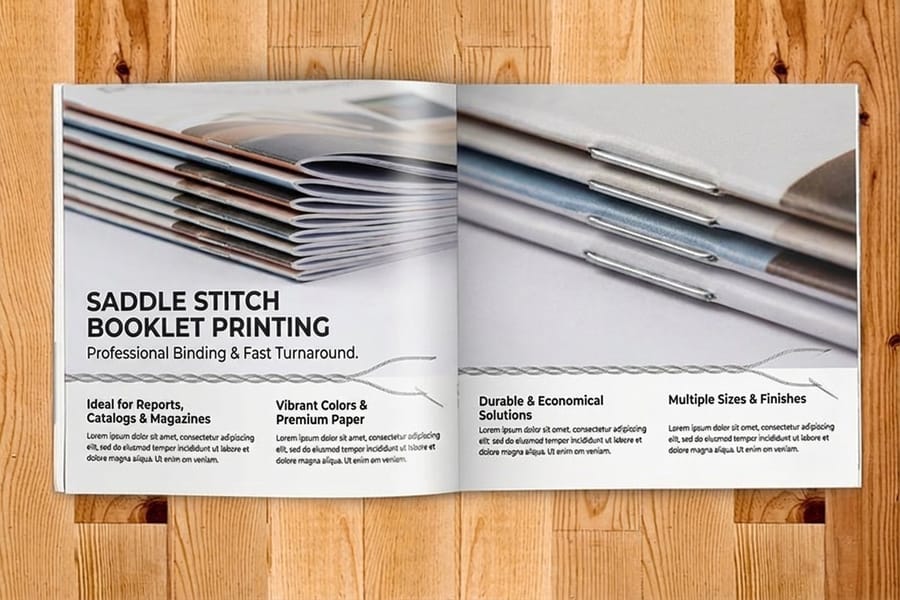
Both formats are saddle stitched by default, which means folded sheets nested inside each other and stapled through the fold. That mechanism sets three rules you cannot design around.
- Every page count is a multiple of four. One folded sheet is four pages. Land on 14 pages of content and you either grow to 16 or trim to 12.
- Creep pushes the inner pages outward. Each nested sheet sits slightly further out at the fore edge than the one around it, so the trimmer takes a little more off the inside pages. On a square booklet that shows up faster, because the eye reads a square page as symmetrical and notices when the outside margin is not.
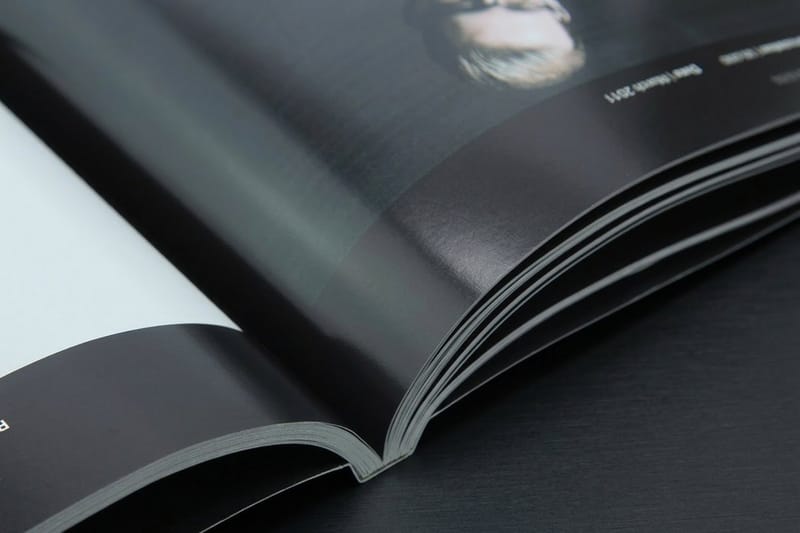
- The spine bulks. Past roughly 60 to 80 pages on typical text stock, a saddle stitched booklet springs open, will not lie flat, and starts to look thick at the spine and thin at the fore edge. That is the point to move to a bound spine.
The practical answer to creep is margin discipline: keep live text at least a quarter inch inside the trim, more on the fore edge, and never park a page number where the trim can clip it. Our guide to booklet page counts, multiples of four and creep has the full set-up rules, and what a saddle stitched booklet is covers the binding itself.
If the page count is heading north of 80, stop comparing shapes and compare bindings instead. Booklet binding methods explained lays out where perfect binding and wire-o take over, and booklets versus catalogs covers what changes when the piece becomes a product listing rather than a story.
The Verdict: Which One to Order
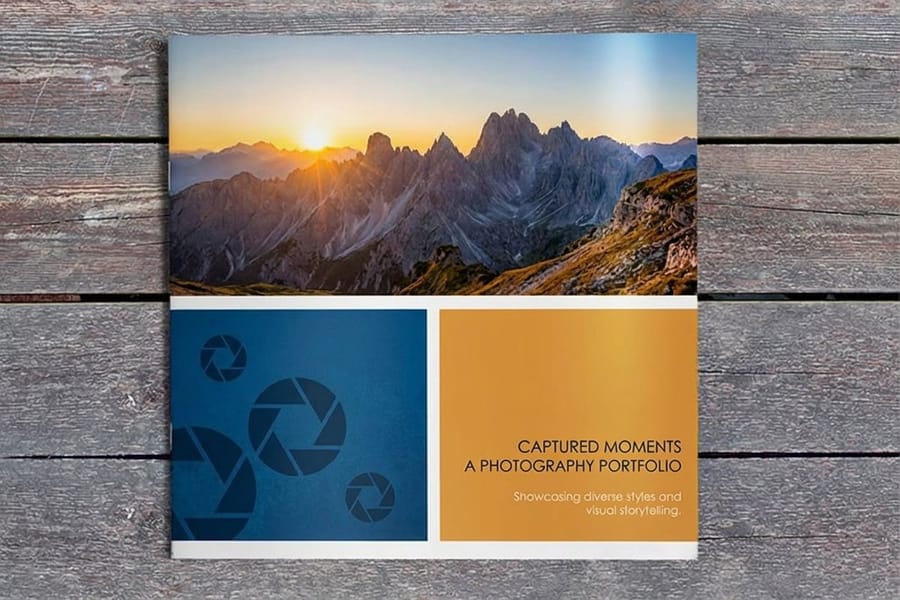
Order a standard booklet when the piece has to work without you standing next to it. Anything that goes in a rack, mails at volume, files in a binder, or carries more text than pictures belongs in a portrait trim. Programs, manuals, service guides, annual reports, price lists and anything a customer will scan for information all read better on a page shaped for reading. Standard Booklets start at $240.55 and cover the full range of trims and page counts.
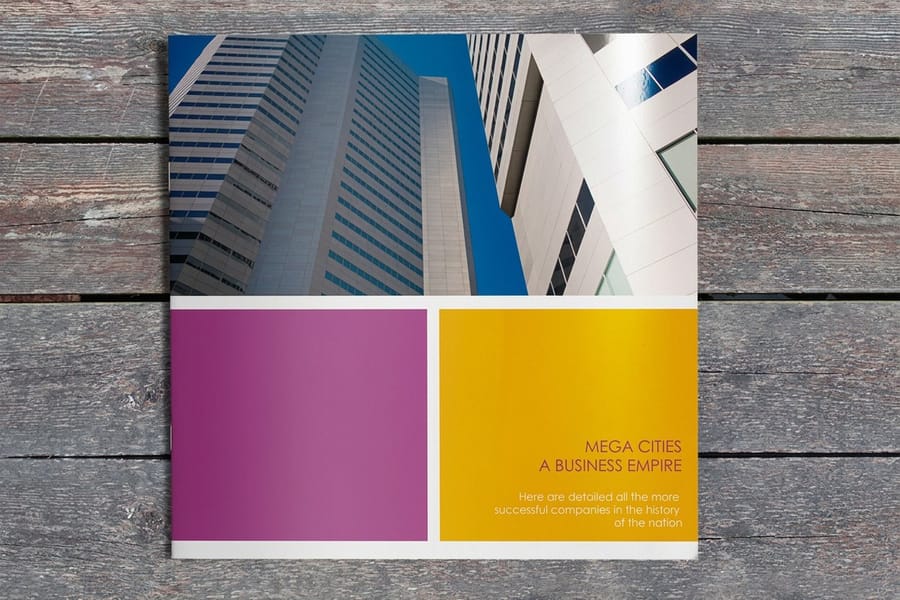
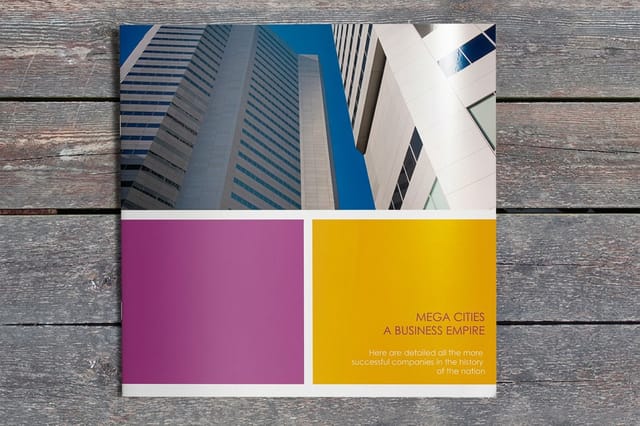
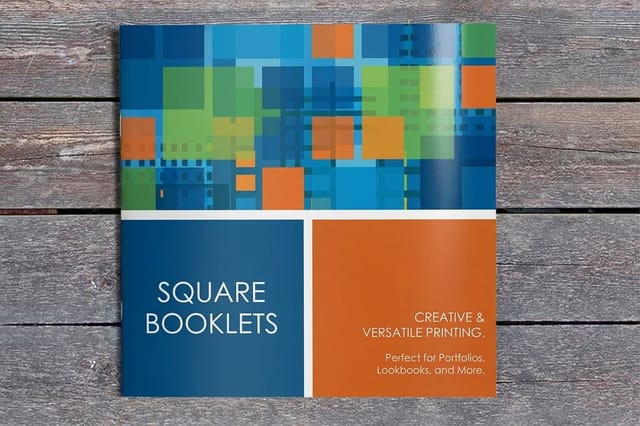
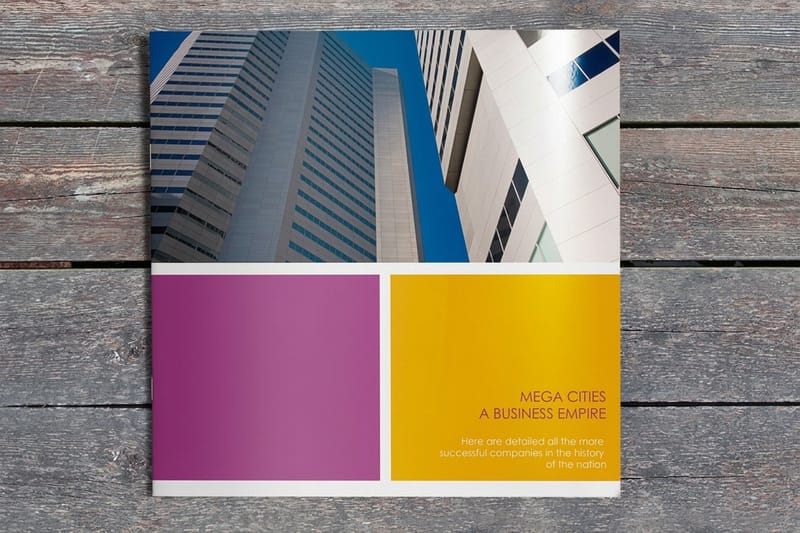
Order a square booklet when the images carry the message and the piece is placed into someone's hands. Lookbooks, portfolios, wedding and event albums, restaurant and hotel pieces, product stories with big photography. The 2 to 1 spread does something a portrait booklet cannot, and the unusual shape gets picked up off a table. Square Booklets start at the same $240.55, so you are trading reach for impact rather than paying for it.
When it is genuinely close, decide on distribution. Ask where the piece physically ends up: a rack, an envelope, a tote bag, or a hand. Racks and envelopes point to standard. Bags and hands point to square. If the answer is a rack and the client insists on square, print a standard version for the rack and a square version for the meetings, then order both on the same run of stock so the brand still matches.
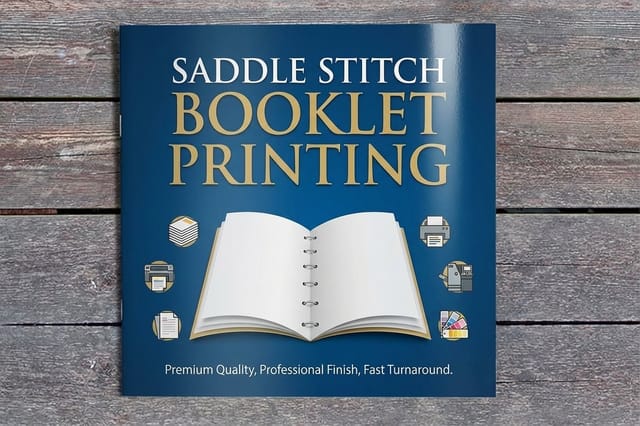
Not sure yet? Ordering a small quantity of each is cheaper than reprinting the wrong 2,000. Browse the full range on the booklets and catalogs printing page, or start with saddle stitch booklet printing if you already know the binding and just need the size.
Wally explains the two shapes
One spread reads, the other one shows
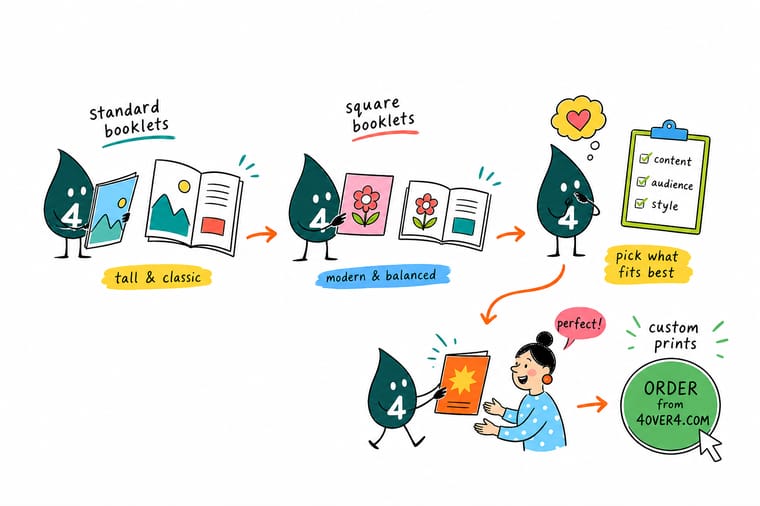
Wally opens both booklets on the counter. The letter one gives him a 17 by 11 spread with room for two tidy columns, and it slides straight into the rack by the door. The square one gives him a 16 by 8 panorama where a single photograph runs edge to edge, and it will not go anywhere near that rack. Same staples, same stocks, same starting price. Ask Wally where the piece ends up, and he will tell you which shape to print.
Configure square booklets →Specs and pricing
Sizes, page counts and starting prices
Both formats side by side with live configuration choices and starting prices straight from the 4OVER4.COM configurator.

Print it
Order the format that fits the job
Explore more
Where to go next

By the numbers
Standard, square and saddle stitch booklets
Common Questions
Your booklet format questions, answered
Are square booklets more expensive than standard booklets?
Not at the entry point here. Standard Booklets and Square Booklets both start at $240.55 at 4OVER4.COM, and what moves the price after that is page count, paper weight, cover stock and quantity. The reason square carries a reputation for costing more is imposition: a square page is cut out of the same rectangular parent sheet as a letter page, and the offcut is larger. In a shop that quotes strictly by sheet yield you feel that. In our configurator you do not, so choose the shape on content and delivery, not on a price guess.
What size is a square booklet?
The sizes that come up most often are 5.5 by 5.5, 6 by 6, and 8 by 8 inches, with 8 by 8 the usual pick for portfolios and lookbooks. Remember what the size means once the piece is open: an 8 by 8 booklet gives you a 16 by 8 inch spread, so a single photograph can run edge to edge across two pages without being cropped to a tall shape. Live sizes and page-count options for both formats sit in the configurator further down this page.
Can you mail a square booklet?
You can, but check the postage before you commit. Square pieces do not run through USPS letter-sorting equipment, so mailed on their own they attract a nonmachinable surcharge, and rates differ again once a piece is thick or heavy enough to be handled as a flat. If the booklet is going into an envelope or a poly wrap, take the finished size and weight to the post office or to your mail house and get the rate in writing first. For a campaign that has to mail at volume, a standard booklet is the safer spec.
Do square booklets still need a page count in multiples of four?
Yes. Saddle stitching works by folding sheets in half and stapling through the spine, and one folded sheet always makes four pages. That is a property of the fold, not of the trim shape, so a square booklet follows the same rule as a portrait one. If your content lands on 14 pages, you either grow to 16 or cut to 12. Our guide to booklet page counts, multiples of four and creep walks through what to do with the leftover pages.
Which format is better for a photography portfolio?
Square, in most cases. Camera crops and social feeds have trained people to read 1 to 1 images, a square page frames one photograph per page without a tall gutter of white space, and the 2 to 1 spread is close to a panoramic frame. The catch is caption text. If every image needs a paragraph of context, a square page pushes you into narrow columns or small type, and a 6 by 9 portrait booklet handles that mix more gracefully.
Will a square booklet fit a brochure rack?
No. Wall racks, counter stands and trade-show literature pockets are built around 4 by 9 rack cards and 8.5 by 11 sheets, so an 8 by 8 booklet either falls forward in the pocket or hides its own title. If the piece has to sit unattended in a rack, print it standard. Square works when the piece is handed to someone, left on a table, or shipped inside a package where the shape is part of the surprise.
Get Started
Both trims run 25 for $240.55 in seven business days
Pick your trim, set the page count in fours, choose a cover stock, and we saddle stitch it clean at the spine and square at the fore edge.
Legal Disclaimer
Gold Standard guarantees apply to all standard orders placed through 4over4.com. Price match requires verifiable proof of a competitor's published price for an equivalent product with matching specifications and turnaround time. Satisfaction guarantee covers manufacturing defects and print quality issues. Contact support with order number and documentation. On-time delivery rate based on tracked orders 1999 to 2026. Individual results may vary based on shipping carrier performance.
