
The MicroSaaS Success Blueprint for Building One Profitable Product


A micro-SaaS is a subscription product one person can run. This is the five step blueprint, with the arithmetic that decides whether your niche can carry it.
The blueprint is five moves: pick a niche narrow enough to list by name, sell ten seats before you build, ship the smallest version that solves the one problem, price high enough that the customer count fits one person's week, and work a single channel for ninety days. The number that decides everything is churn, because your revenue stops at monthly new MRR divided by monthly churn rate. That ceiling exists whether or not you calculate it.
Quick answer
Five moves, and one number that caps them all
A micro-SaaS works when the niche is small enough to name, the price is high enough to keep the customer count inside one person's week, and churn stays low. Sell ten seats before you build. Ship the smallest thing that solves the one problem you sold. Work a single channel for ninety days and measure it. Then watch churn, because monthly new MRR divided by monthly churn is where your revenue flattens out, and no amount of extra hours moves that line.
Pick a Problem Narrow Enough That You Can Name the Buyers
The first move is subtraction. A micro-SaaS survives because it serves a group too small for a funded company to bother with, and that only works if the group is specific enough to count.
That is the test. Open a document and write down two hundred real companies or people who have the problem, by name, with a way to reach each one. If you can fill the list in an afternoon, the niche is workable. If you find yourself writing categories instead of names, you have picked an audience, not a segment, and every later decision will stay fuzzy for the same reason.
The counting matters beyond the list itself. Take the number of companies in the niche, the share you could realistically win, and the monthly price you intend to charge. Four thousand companies, two percent won, forty-nine dollars a month gives you eighty customers and about $3,920 a month. Some founders read that and stop. Others read it and realize it is exactly the income they wanted. Both outcomes are useful, and both are cheaper to reach now than after a year of building.
Where a niche fails, it usually fails in one of three ways: the buyers have the problem but no budget line for it, the problem is annoying rather than expensive, or a platform they already pay for could add the feature in a sprint. Write down which of those three is the biggest risk in your niche before you write any code. The one-page framework in our business model blueprint guide forces the same discipline across nine blocks, and it pairs well with this step.
Sell It To Ten People Before You Write the Second Line of Code
Validation is not a survey. It is somebody handing over money, or signing something that commits them to hand over money, in exchange for a product that does not exist yet.
The version that works for a solo founder is small: a one-page description of the product, a price, and a link that charges a real card for the first month or takes a refundable deposit. Show it to the two hundred names on your list. If ten of them pay, you have a product. If forty of them say it sounds interesting and none of them pay, you have a hobby with good manners.
Getting in front of that list is where most founders stall, because email is the only channel they try and inbox filters do not care how good the idea is. Three physical routes still work for narrow B2B, and they are cheap enough to test in a week.
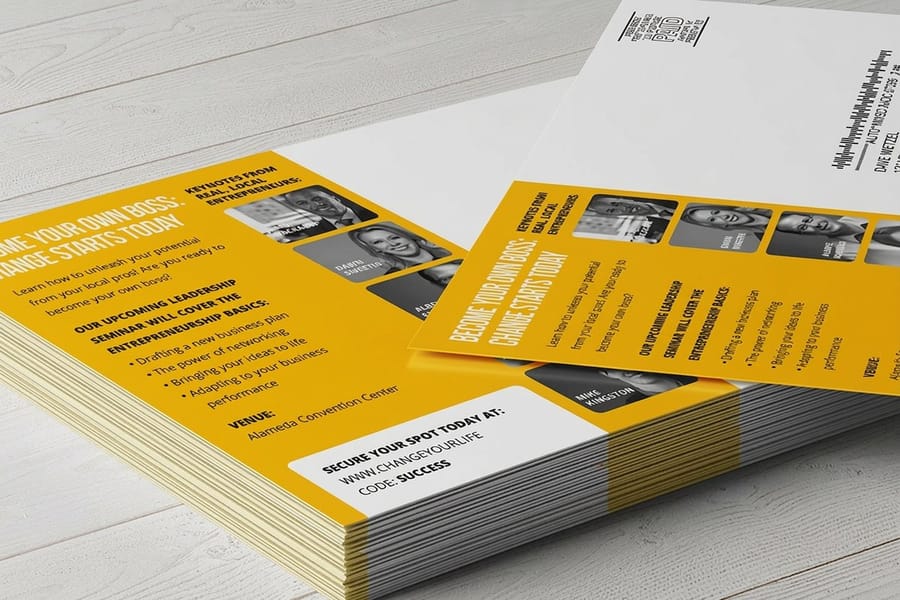
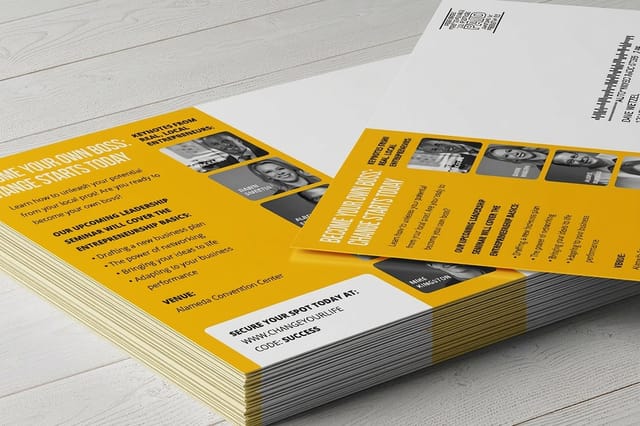
- A mailer to the named list. A hundred addressed pieces land on a hundred desks with no spam filter in between. Direct mail postcards start at $89.68 and 4OVER4.COM handles the addressing and the postage, so the whole test costs you an afternoon of writing rather than a week of logistics.
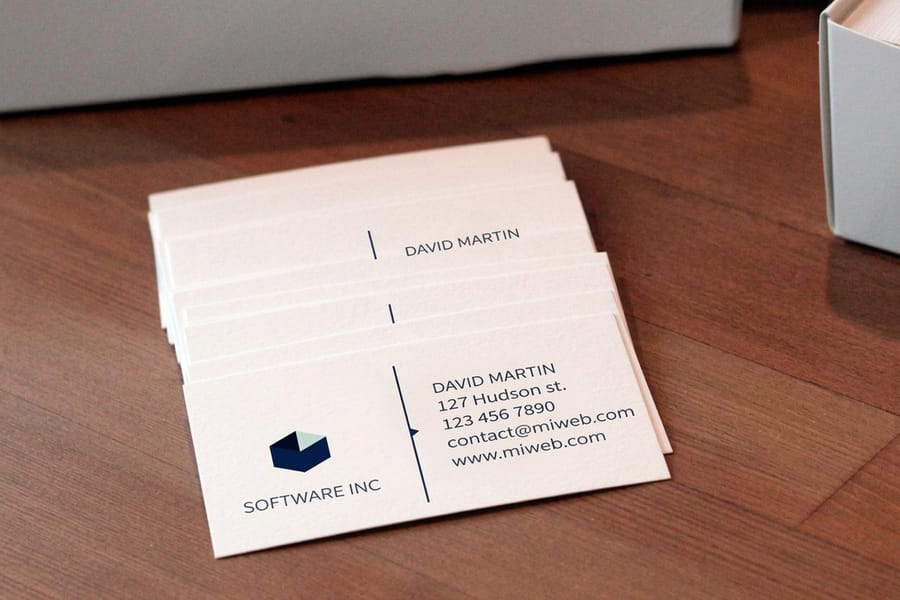
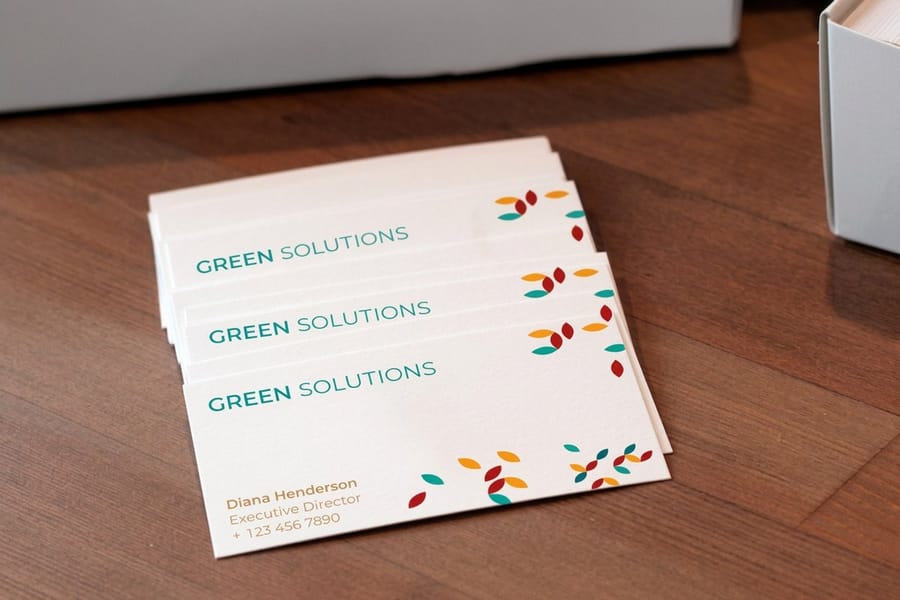
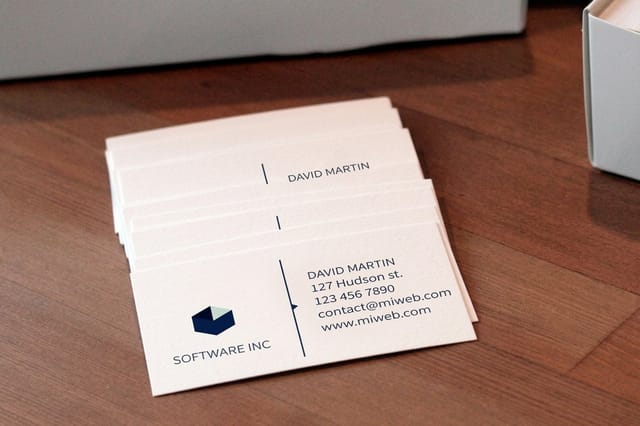
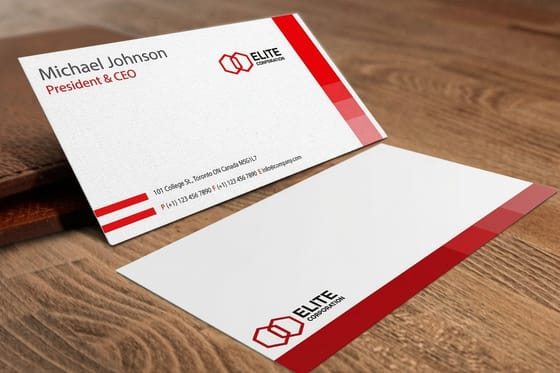
- A card you can hand over at the event your niche attends. Every industry has one conference and a handful of regional meetups. Standard business cards start at $17.57, which is the cheapest introduction you will ever buy, and a card with your product line on it starts more conversations than a card with a job title.
- Stickers for the community that already talks about the problem. Developer and operator communities put logos on laptops. Die-cut stickers start at $93.37 and travel further than any post you write, because somebody else carries them into rooms you are not in.
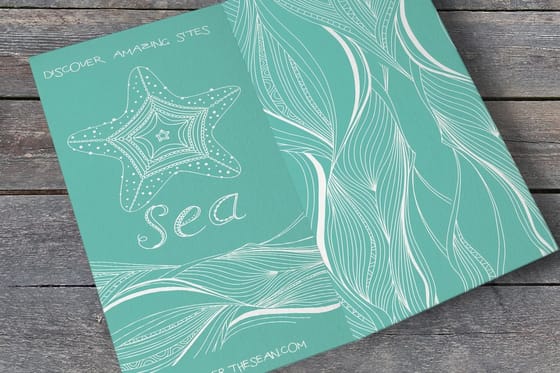
When a conversation turns into a pilot, a leave-behind earns its cost. Standard brochures start at $57.11 and give the person who liked your demo something to put in front of the colleague who controls the budget. Everything in this step lives in the marketing materials collection, and none of it is worth ordering until you have the list of names to send it to.
Track what comes back with the same rigor you would apply to a paid ad. If you send a hundred mailers and get four calls, that is a real number you can act on. Our guide to lead generation with LinkedIn ads covers the digital half of the same test, and running both at once tells you which channel your niche actually lives in.
Price for the Customers Who Stay, Not the Ones Who Sign Up

The pricing mistake that kills small products is charging a low price to reduce friction, then discovering that low prices attract the customers who leave fastest and ask the most questions. A solo founder cannot carry that combination.
Start from the ceiling. Your revenue stops at monthly new MRR divided by monthly churn, which means a product adding $500 of new revenue a month at 5 percent churn flattens out around $10,000 and stays there. Cut churn to 3 percent and the same $500 flattens near $16,667. That is a bigger gain than tripling your acquisition effort, and it costs a lot less to achieve.
The second constraint is your own week. One person can answer a certain number of support messages and still ship features. Twenty customers at $200 and two hundred customers at $20 produce the same revenue, but only one of them leaves you time to build anything.
| Model | What it rewards | Where it hurts a solo founder | Best fit |
|---|---|---|---|
| Flat monthly | Simple sales conversations and predictable revenue. | Heavy users cost the same as light ones, so your worst-margin customers are invisible. | Tools where usage does not vary much between accounts. |
| Per seat | Revenue that grows as the customer's team grows. | Customers share logins to avoid the next tier, and you have to police it. | Products used by a team every day, not by one specialist. |
| Usage based | Aligning price with the value delivered and with your hosting bill. | Unpredictable invoices trigger cancellations, and forecasting gets hard. | Anything where a single customer can multiply your infrastructure cost. |
| Annual only | Cash up front and churn measured once a year. | A much harder first sale, and refund requests hit your bank balance. | Products bought against a budget cycle by a finance approver. |
Read the third column before the second. The right model is the one whose failure mode you can live with, and for a one-person product that usually means flat monthly at a price high enough to keep the customer count small. Raise it earlier than feels comfortable, grandfather the first ten accounts, and tell them you are doing it. The detail is worked through in our pricing strategies guide, and the margin arithmetic behind it in price and profits of online stores.
The Ninety Day Launch Checklist

A launch is not a day. It is a quarter of doing the same handful of things often enough that the numbers stop being noise, and this is the shortest version of that quarter that still works.
- Weeks 1 to 2. Write the named list of two hundred. Write the one-page offer with a price on it. Decide the single channel you will work for the whole ninety days.
- Weeks 3 to 4. Take payment or a signed pilot from ten of them. Do not build past the demo until this number is real.
- Weeks 5 to 8. Ship the smallest version that solves the one problem you sold. Onboard each customer yourself, by call, and write down every question they ask.
- Weeks 9 to 10. Fix the three things that generated the most questions. Those three are your onboarding, not your roadmap.
- Weeks 11 to 12. Measure churn, count support hours per customer, and raise the price for new signups if the hours are too high.
- Every week, without exception. Twenty new conversations in your one channel. This is the habit that separates products that grow from products that get built.
Two things belong on the list that founders usually skip. The first is a cancellation email you actually read, because the reason a customer leaves in month two is almost always a fixable onboarding problem rather than a missing feature. The second is a written note of what you will not build, kept where you can see it, since the fastest way to lose a quarter is to say yes to a feature request from an account paying you forty-nine dollars.
By the end of ninety days you either have a base of paying customers with flat churn, or you have proof the niche does not pay. Both are results. What you must not have is a half-built product and no list. If the answer is to keep going, the next lever is usually taking work off your own plate: our guide to sales automation with chatbots covers the support side, and building an ecommerce store that sells is worth reading if part of your product ends up selling physical goods alongside the subscription.
Wally explains the churn ceiling
Why the revenue curve flattens even when you keep working
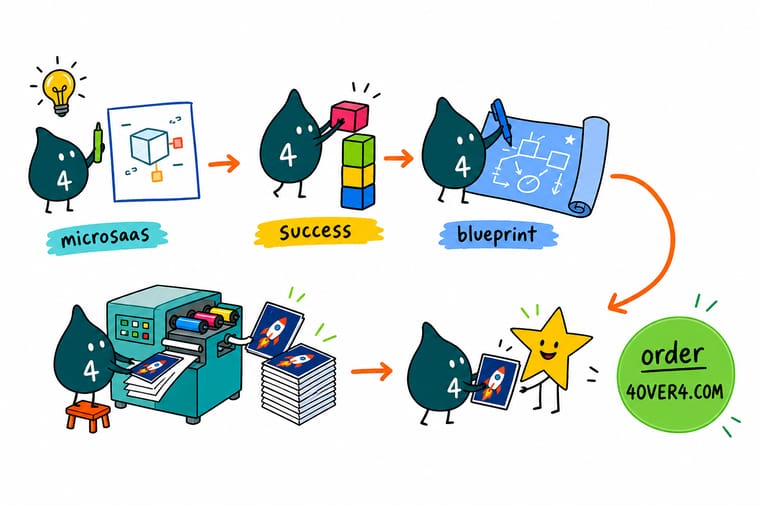
Wally pours $500 of new revenue into the bucket every month. The bucket has a hole in it sized by churn. At 5 percent leaking out each month, the water stops rising at $10,000 and stays there, however fast he pours. Patch the hole down to 3 percent and the same pouring gets him to $16,667. That is why keeping the customers you have beats chasing new ones, and why a solo founder should read every cancellation email.
Print business cards for your first ten calls →Specs and pricing
What the outreach step actually costs
The three pieces most useful in the first ninety days, with live configuration choices and starting prices straight from the 4OVER4.COM configurator.



Print it
Reach the named list on your desk

Explore more
Where to go next


By the numbers
The print partner behind a lot of first customers
Common Questions
Your micro-SaaS questions, answered
What actually counts as a micro-SaaS?
A subscription software product run by one or two people, aimed at a narrow audience, with no outside investors and no plan to hire a team. The defining constraint is the headcount, not the revenue. A product doing $20,000 a month with two founders and no staff is a micro-SaaS. The same revenue with eight employees is a small software company, and it needs a different plan for support, hiring and cash.
How much money do I need to start one?
Less than the time. The recurring bills for a small product are hosting, a domain, a payment processor that takes a percentage rather than a fee, and email sending. What people underestimate is the unpaid months before the first customer, so the real question is how many months of your own expenses you can cover while the product earns nothing. Budget that number first and the software budget takes care of itself.
Should I build it myself or pay a developer?
Build the first version yourself if you can write code at all, because the first version changes weekly and paying by the hour for weekly changes gets expensive fast. If you cannot code, buy a narrow prototype rather than a full product, and spend the rest of the money on getting ten people to pay for it. A founder who cannot ship a change without a contractor loses the speed that makes a small product competitive in the first place.
How do I find the first ten customers?
By name, one at a time, in the place they already gather. That is usually an industry association list, a trade show floor, a subreddit or forum where the work gets discussed, or a mailing list you build yourself. Cold email works only until deliverability catches up with you, which is why a physical mailer to a hundred named companies still converts for niche B2B products. Ten conversations that end in a price beat a thousand signups from a launch post.
What is a realistic revenue ceiling for a solo product?
Work it out rather than guessing. Count the companies in your niche, multiply by the share you could plausibly win, and multiply by your monthly price. If the niche has 4,000 companies, you win 2 percent of them, and you charge $49, the ceiling is 80 customers and about $3,920 a month. That number is either enough for you or it is not, and it is much cheaper to learn it now than after a year of building.
Do I need a free plan?
For most solo products, no. A free tier adds support load, hosting cost and abuse handling without adding revenue, and it trains an audience to value the product at zero. A time-limited trial that requires a card, or a live demo you run yourself, gives you the same reassurance for the buyer without the permanent cost. Free plans earn their place when the free users create something paying users need, which is rare in narrow B2B tools.
When is it safe to quit the job?
When the product covers your fixed costs for three months running and churn is flat rather than climbing. One good month is noise. Three consecutive months at the same level, with renewals landing on schedule, means the revenue is a base rather than a launch spike. Quitting on the launch spike is the most common way founders end up taking contract work six months later.
Get Started
500 direct mail postcards cost $89.68, or $0.18 a name
Print the cards, the mailers and the leave-behinds that turn a list of companies into ten paying customers, and get them on your desk this week.
Legal Disclaimer
Gold Standard guarantees apply to all standard orders placed through 4over4.com. Price match requires verifiable proof of a competitor's published price for an equivalent product with matching specifications and turnaround time. Satisfaction guarantee covers manufacturing defects and print quality issues. Contact support with order number and documentation. On-time delivery rate based on tracked orders 1999 to 2026. Individual results may vary based on shipping carrier performance.
