
How to Build an Ecommerce Store That Actually Sells


Five stages in the order they matter: what you sell, how the store is built, what arrives in the box, where the first orders come from, and how you earn the second one.
A store sells when three things line up: a product with enough margin left after shipping and returns, a product page that answers the buying question in one screen, and a checkout that shows the delivered total before the payment step. Everything after that is traffic and repeat purchase, and repeat purchase is decided by what the customer opens rather than by what the home page said. Get the arithmetic right first, launch the plain version, then spend on the parcel that arrives.
Quick answer
Margin first, one path to checkout, then the parcel
Most stores fail on arithmetic, not aesthetics. Work out what is left after landed cost, payment fees, subsidized shipping and returns, and only then choose a platform. Build the plain version with one route from product page to payment, and put the delivered total in front of the shopper early. Once orders start, the money moves to the parcel, because the box is the only place you have the customer alone with nothing else competing for attention.
Pick a Product Whose Numbers Survive Shipping
Start with the arithmetic, because it decides whether the rest of the work has anywhere to go. Take your landed cost, which is the unit price plus freight plus duty plus the packaging it ships in, and subtract it from the price you can honestly charge. What is left has to cover the payment processor, the shipping you subsidize, the orders that come back, and whatever you spend to find the next customer.
Run one example. A unit lands at $8 and sells at $18. The processor takes its cut, you absorb $4 of the shipping to stay competitive, and one order in twenty comes back and cannot be resold. You are near $5 before a single dollar of advertising. That product can work through a market stall or a community that already knows you. It cannot carry paid acquisition, and no theme, font or hero video changes that.
Weight is the second filter, and it is the one new sellers ignore. Anything flat and light travels for a stamp and never fights you on freight. Anything bulky, fragile or heavy is a different business, with dimensional weight, breakage and a returns process that costs as much as the outbound leg. This is why so many first stores sell prints, die-cut stickers, apparel and small goods: the parcel is cheap, predictable and hard to damage.
The last filter is demand you can point at. Not a category you like, but a specific group of people who are already searching for the thing, already complaining about the options, or already buying a worse version. If you cannot name where those people gather, you do not have a product yet. Our small business marketing plan guide works through that part before any money moves.
Build the Store So There Is One Path to Checkout
A store that sells is boring to walk through. Home page, category, product, cart, pay. Every extra decision you offer along the way is a place where somebody stops and does something else, so build the plain version first and let real behaviour tell you what to add.
The product page carries the weight. Answer the buying question in the first screen: what it is, what it costs delivered, when it arrives, and what happens if it is wrong. Then the measurable detail, which is usually dimensions, material, weight and care. Write that specification once and reuse it, because the same words belong on the product label as on the page, and a shopper who reads one and then finds the other says something different quietly stops trusting both. If you are printing labels for the first time, choosing the correct label size saves a reprint.
Photographs do more than copy. Shoot the item in a hand or beside something familiar so scale is obvious, show the finish honestly rather than flattered, and include one photograph of the packed parcel. That last shot quietly answers whether the thing will arrive intact, which is the question nobody types into the search box but everybody has.
Then checkout. Allow guest orders, keep the form to what you truly need to ship the parcel, and display the shipping cost before the payment step. The most expensive habit in ecommerce is holding the total back until the last screen. If free shipping over a threshold is your policy, put it in the header where it can lift the basket instead of hiding it in a footer link nobody opens.
What the Customer Opens Is Your Second Advertisement
Every other channel is rented. The parcel is the one moment you have the customer alone, holding something they paid for, with nothing competing for attention. Treat it as media and it pays for itself. Treat it as a shipping problem and you have paid for a brown box twice.
Buy it in the order that matches your volume, not the order that looks impressive on a moodboard.
| Piece | Starts at | What it does | Buy it when |
|---|---|---|---|
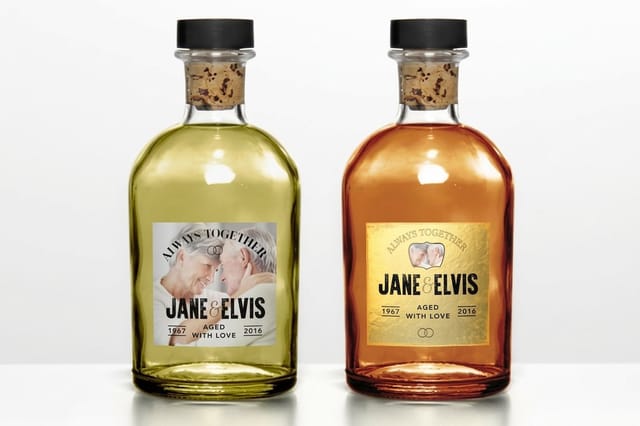
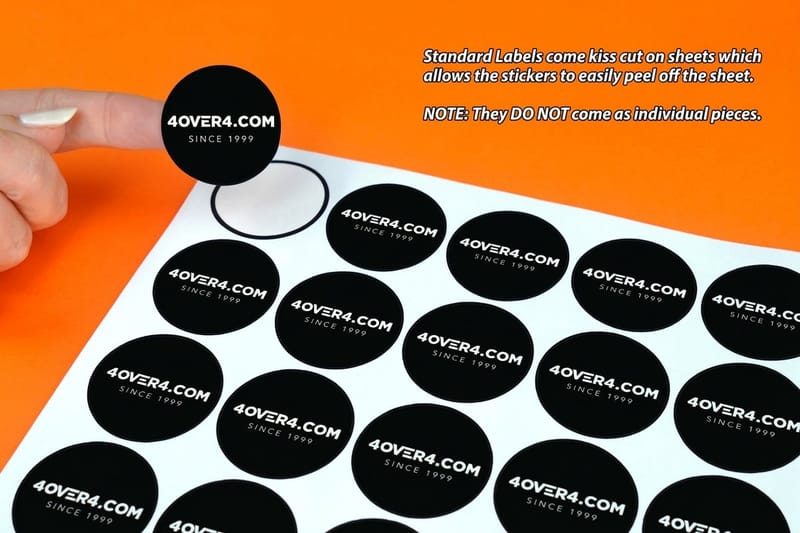
| Custom labels | $25 | Turns a plain shipper or jar into your product, front and back. | From the first order. Cheapest branding per parcel by a wide margin. |
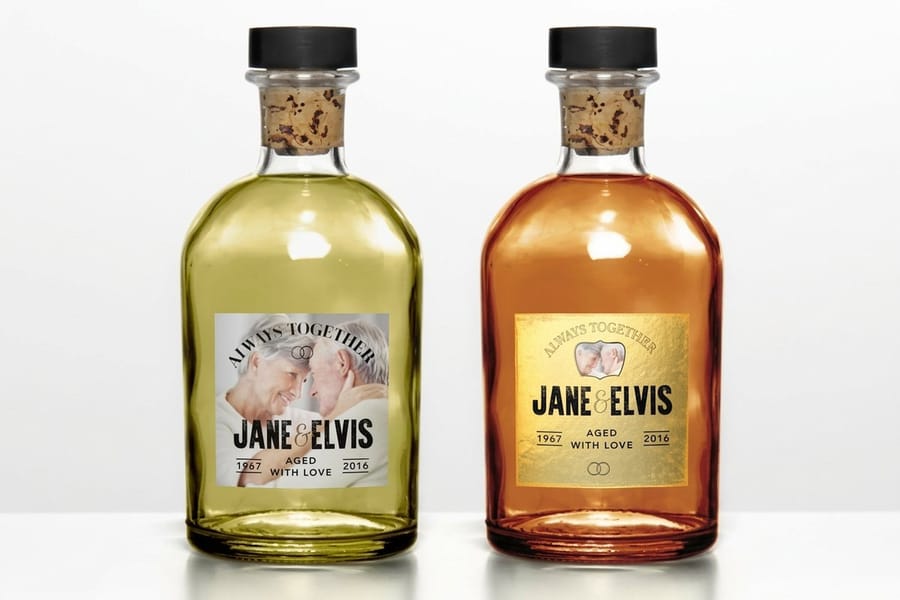
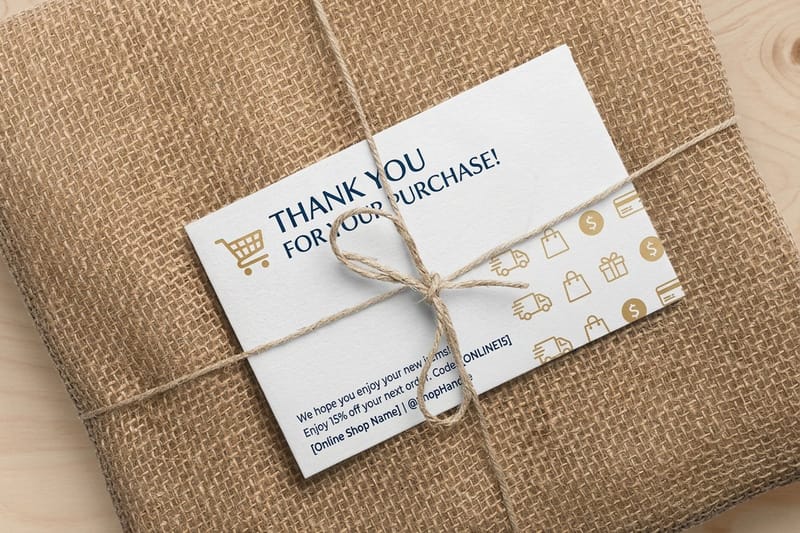
| Flat thank you cards | $19.77 | Carries the note, the discount code and the social handle inside the box. | From the first order, and the single highest-return print you will buy. |
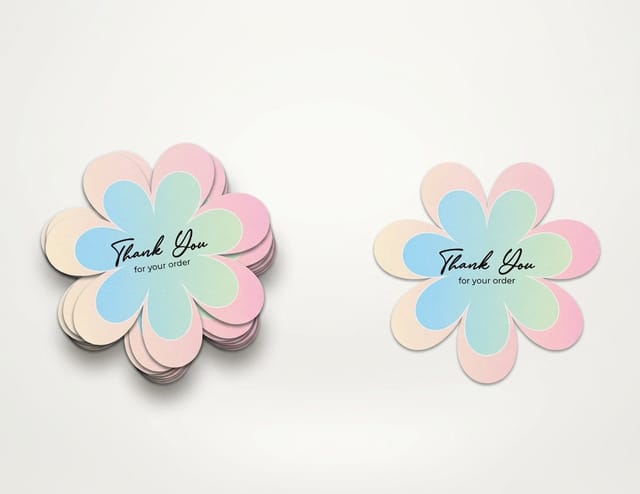
| Die-cut stickers | $93.37 | The freebie people keep and stick somewhere other people see. | Once orders are regular enough to use a run inside a few months. |
| Packaging tape | $347.11 | Brands a plain box on all four sides while it is still in transit. | When you are sealing enough parcels weekly to work through a roll. |
| Custom mailer boxes | $711.78 | The full unboxing, printed inside and out. | When the design is settled and monthly volume would clear the run. |
Read the last column, because that is where money gets wasted. Printed boxes are the piece everybody wants first and the piece that should come last. The run is large, the design has to be right, and a logo you are still arguing about becomes a pallet you cannot use. A plain shipper closed with a printed label and a card inside gives most of the effect for a fraction of the commitment, which is the honest trade. When volume does justify the step, choosing the right packaging for your product covers box style and fit, and addressing a package for ecommerce shipments covers the label side.
One warning about protection. Branding never outranks arrival. A beautiful box with the wrong internal fit produces a broken item, a refund and a review that costs more than the packaging saved. Fit first, print second. The full range sits in the packaging printing collection.
Getting the First Hundred Orders
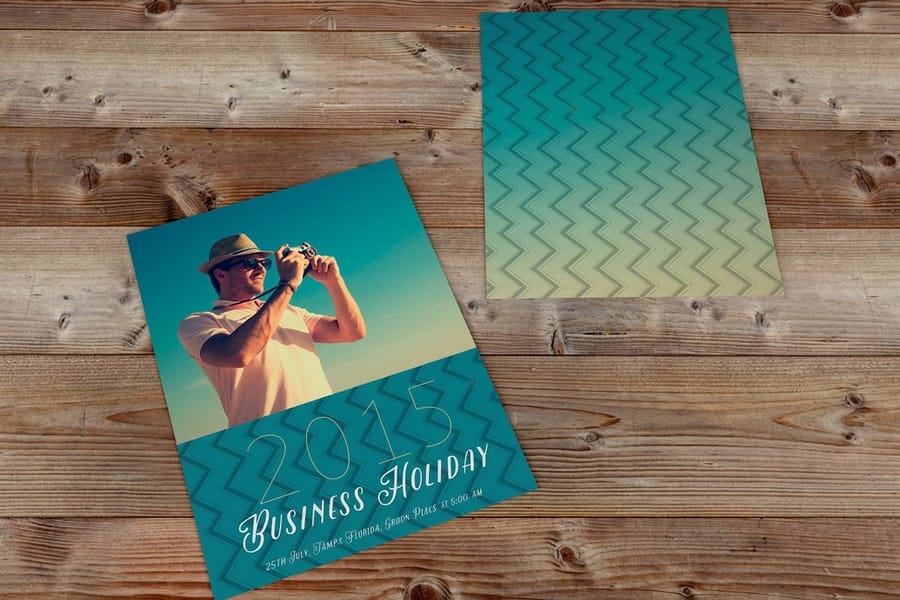
The first hundred orders are not a marketing problem, they are a proximity problem. You are looking for people who already gather somewhere, and you are going to that place rather than buying your way into a feed. Paid advertising is a multiplier, and multiplying zero conversion rate gives zero.
Four routes work early, and each one has a real cost and a real limit.
- In person. A market stall, a fair, a pop-up in a friendly shop. You get cash, faces and objections you can hear out loud, which is worth more than any analytics screen this early. It does not scale, and a wet Saturday costs you the whole day.
- The community that already exists. Forums, group chats, subreddits, local associations. Turn up as somebody useful, not as a link. The limit is patience: it takes weeks, and one promotional post too early ends it.
- Your own list. Everybody who has ever given you an email address or an order. Small, warm, and the only audience you own outright.
- Print into a defined area. If your buyers cluster geographically, postcards at $16.48 reach letterboxes no algorithm gates, and how postcard mailers work explains the mechanics. The limit is targeting: mail is blunt outside a genuinely local product.
Whichever route you take, carry something physical that survives the conversation. A card or a sticker with the store address on it sits in a wallet or on a laptop for months, which is longer than any impression you rent. The marketing materials range covers the pieces worth having in a bag.
Then measure honestly. Count orders, not likes. If a channel has produced no orders after a genuine effort, stop it rather than optimizing it.
The Second Order Is Where the Business Starts
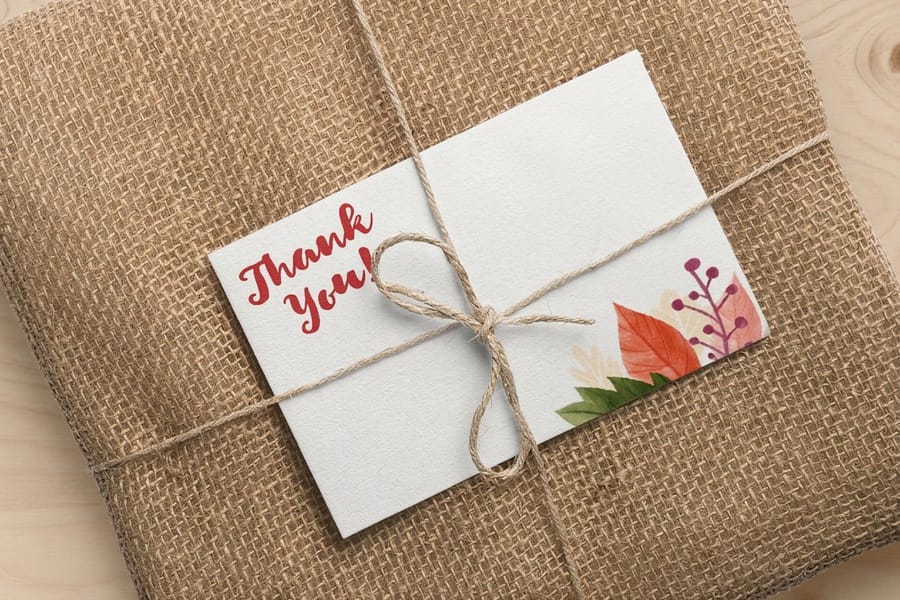
Everything up to the first sale costs money. The second sale from the same person costs a card and a code, because you have already paid to find them and they have already decided you are safe to buy from. A store that never earns a second order needs new customers forever, which is the most expensive way to run anything.
The insert card does most of the work here. A short written thank you, a code that only works for people who already bought, and one instruction that is easy to follow, whether that is a reorder link or an invitation to send a photograph. Flat thank you cards start at $19.77 for a run that covers a lot of parcels, and packaging inserts that drive repeat sales covers what to actually write. Handwrite the first hundred if you can. People notice, and they say so publicly.
After that, timing beats cleverness. Work out roughly how long your product lasts and reach out slightly before it runs out. Consumables have an obvious cycle, apparel follows the season, gifts follow the calendar. For a list that has gone quiet on email, a physical mailer often lands where a message does not, since a postcard in a hand competes with far less than a subject line in an inbox.
Ask for the review at the same moment the customer is happiest, which is when the parcel is open and the thing is in their hand rather than three weeks later. That is exactly what the card in the box is for, and it is why a thank you card that gets remembered is worth more thought than most product pages get. If the shop still feels anonymous once orders are steady, ecommerce branding is the next piece to work on, and print for ecommerce brands lists what to add as volume grows.
Wally explains the second order
You pay once to find them, then the box does the rest
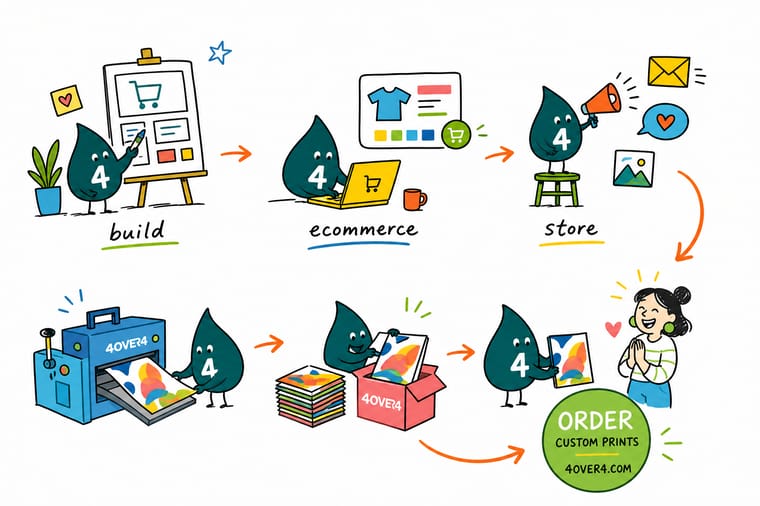
Wally spends real money getting somebody to the checkout. Then he packs the parcel, seals it with a printed label, and drops a card inside with a code that only works for people who already bought. That card costs cents. The advertising that found the customer did not. When they order again, the card is the reason, and it travels inside a box he was shipping anyway.
Print flat thank you cards →Specs and pricing
The three prints a new store uses first
Labels for the product, insert cards for the box, postcards for the buyers you already have. Sizes, options and starting prices come straight from the 4OVER4.COM configurator.


Print it
Kit out the parcel before you spend on ads

Explore more
Where to go next


By the numbers
The printer behind a lot of small online shops
Common Questions
Your ecommerce store questions, answered
How much does it cost to start an ecommerce store?
The store itself is the cheap part. A hosted platform costs a monthly fee plus a percentage of each sale, a domain is a few dollars a year, and a theme can be free. The money goes into inventory, photography and the first advertising tests. Plan the first spend around stock you can sell, one set of photographs good enough to carry a product page, and a small print run of labels and insert cards. Custom labels start at $25 and flat thank you cards at $19.77, which is a smaller line item than most people expect when they budget for branding.
Which platform should I use?
Pick the one you can operate on a bad day, not the one with the longest feature list. A hosted platform handles payments, taxes, security patches and mobile checkout for you, and the trade-off is a percentage of every sale plus limits on how deeply you can change the checkout. A self-hosted store removes that percentage and hands you the maintenance, the plugin conflicts and the security updates. If nobody on the team runs updates, that saving is theoretical.
Should I offer free shipping?
Free shipping is a price change, not a shipping policy, so treat it that way. Either the cost is inside the item price, or you set a threshold that pushes the basket above the point where the subsidy stops hurting. The version that fails is free shipping bolted onto prices you never adjusted, because a $6 subsidy on a $18 item removes most of what was left after the landed cost. Whatever you choose, state it above the fold so the shopper is not learning it at checkout.
How many products should I launch with?
Enough to look like a shop and few enough to photograph properly. Somewhere around five to twelve variations of a coherent idea works: one hero item, a few colors or sizes, and one low-priced item that lets a hesitant buyer test you. A hundred listings you cannot photograph, describe or keep in stock is worse than eight you can, because every out-of-stock page is a dead end that paid traffic still lands on.
When is it worth printing custom mailer boxes?
When the volume is steady and the unboxing is part of what people are buying. Custom mailer boxes start at $711.78, which is a real commitment, so the honest sequence is a plain shipper with a printed label first, then branded packaging tape at $347.11 once you are shipping enough to use the roll, then printed boxes when your monthly order count would consume the run in a few months rather than a few years. Ordering boxes for a brand that has not settled its logo is the most common way to end up with a pallet of the wrong design.
How do I get the first sale without an ad budget?
By going where an audience already gathers instead of buying one. Sell in person at a market with a card reader, post the making of the product rather than the product, answer questions in the communities that care about your category, and give a small number of items to people whose recommendation is genuinely trusted. Take a stack of business cards and stickers with the store address on them to every one of those events. Die-cut stickers start at $93.37 and get kept, which is more than most paid impressions manage.
What belongs on a product page so people actually buy?
The buying question answered in one screen: what it is, what it costs delivered, when it arrives, how it comes back if it is wrong. Then the specifics a shopper measures against their own situation, which usually means dimensions, material, weight and care. Photographs carry more of that than copy does, so shoot the item in a hand or on a table to give it scale, and include one image of the packed parcel. That last shot answers the quiet question about whether it will arrive intact.
Get Started
Ready to make the box do some selling?
Labels for the product, a card inside the parcel, stickers people keep. Print the pieces that turn one order into the next one, and ship them to your packing table.
Legal Disclaimer
Gold Standard guarantees apply to all standard orders placed through 4over4.com. Price match requires verifiable proof of a competitor's published price for an equivalent product with matching specifications and turnaround time. Satisfaction guarantee covers manufacturing defects and print quality issues. Contact support with order number and documentation. On-time delivery rate based on tracked orders 1999 to 2026. Individual results may vary based on shipping carrier performance.
