
Church Direct Mail That Fills Seats on Sunday


Mailer ideas by occasion, the drop dates that get them delivered on time, where the addresses come from, and what a church mailing costs to print and send.
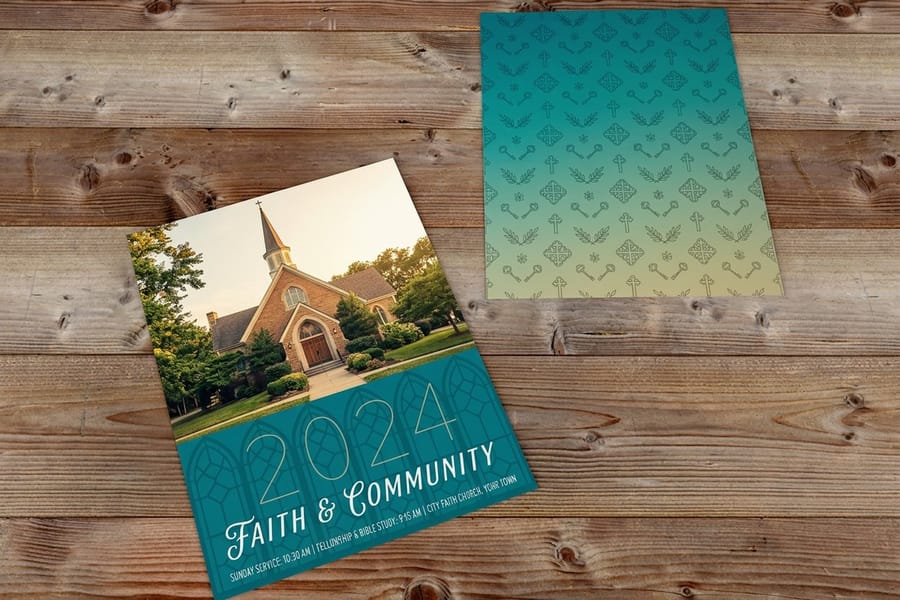
Church direct mail works when it is aimed at a tight radius and timed to one specific service. Mail an invite postcard to the households closest to the building about fourteen days before Easter or Christmas Eve, then mail a welcome card to every first-time visitor within seventy two hours of the visit. Everything else, the seasonal mailers, the newsletter and the donation envelope, hangs off those two moves.
Quick answer
A tight radius, one dated service, and a card back within seventy two hours
Pick the carrier routes inside a ten minute drive, mail them fourteen days before the service, and mail a welcome card to every first-time visitor three days after it. USPS Marketing Mail is quoted at three to ten business days, which is why the drop date is counted backward from the service rather than forward from the day the artwork is ready. EDDM removes the list and the permit but cannot exclude your own members. A rented list costs more per piece and lets you suppress them and target new movers.
Why a Mailed Invitation Still Reaches Your Neighborhood
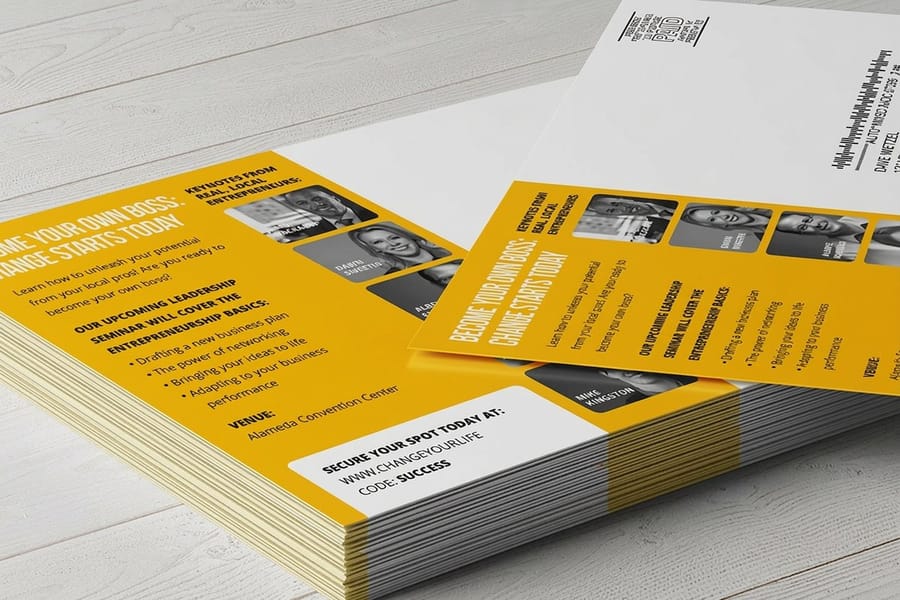
A church has a geography problem, and mail is one of the few tools that solves it directly. You choose the households by where they live, not by what an ad platform decides to show. Draw the routes around the building, and every family on them gets the same card on roughly the same day.
The second thing mail does is sit still. A postcard lands on a kitchen counter and stays there through the week, which is why the invitation to a dated service works better on card than in a feed. Nobody has to be online at the right moment.
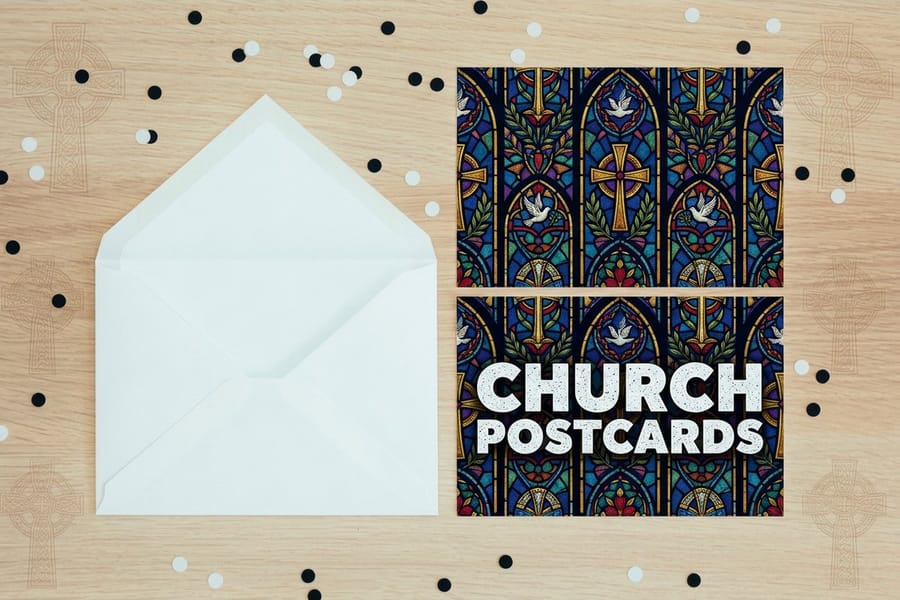
The cost is the honest limit. You pay printing and postage on every household, including the ones that bin it at the door, so the radius has to be small enough that repeat mailing is affordable. A congregation that mails 3,000 nearby homes three times a year will out perform one that mails 12,000 homes once. Our church marketing basics guide covers where mail fits alongside signage and the welcome desk, and our direct mail service handles the addressing and drop so nobody spends a Saturday with labels. Church postcards start at $16.48 for a printed run before postage.
Inviting New Visitors With Postcards
An invite card carries one service, one date, one time and one address, set large enough to read at arm length. Anything else competes with those five facts. The most common mistake is a card that lists the whole ministry programme and never states when to show up.
Size decides postage before it decides anything else. Stay inside 4.25 by 6 inches and the piece mails at the USPS postcard rate. Cross that line and it pays the letter rate, which is why a 6 by 9 card costs more to send but is much harder to lose in a handful of mail. EDDM runs on the opposite rule: the piece must exceed 6.125 inches high or 11.5 inches long to qualify at all, so EDDM church mailers are usually 6.5 by 9 or larger.
| Route | List needed | Targeting | Speed to mailbox |
|---|---|---|---|
| EDDM Retail | None. You pick carrier routes on a map. | Whole routes only. Members cannot be excluded. | Marketing Mail window, roughly three to ten business days. |
| Targeted list mail | Rented or owned addresses. | Radius, new movers, household filters, member suppression. | Same window, plus list turnaround before the drop. |
| First Class | Addresses required. | Same as targeted list mail. | One to five days, at a higher price per piece. |
Read the third column before the fourth. If your congregation is large enough that a meaningful share of nearby homes already attend, EDDM will mail invitations to your own members, and that is worth avoiding even at a higher cost per piece. The invite card wording guide works through what a stranger needs to read, and the postcard printing range shows the sizes and stocks available.
Welcoming Newcomers and Following Up
The invitation gets somebody through the door once. What decides whether they come back is what happens in the ten days afterward, and mail is the least intrusive way to do it. A card is not a phone call from a stranger.
Three touches cover it, and the order matters more than the wording:
- The connect card, in the service. Name, email, and one line asking how they heard about the visit. Keep it short enough to complete in the time it takes to sing one song.
- The welcome card, mailed within seventy two hours. Signed by a person, not by the church. Two or three handwritten words on a printed card do more than a full printed paragraph.
- The next step, about three weeks later. One specific invitation to one specific thing with a date on it, not a general encouragement to get involved.
Leave the giving ask out of all three. A first mailing that asks for money reads as a transaction and closes the door quietly. Save the donation envelopes for the newsletter that goes to people who already belong. For the mechanics of the card people fill in on the day, see how to design church connect cards and what to put on church connection cards. Invitation cards start at $19.77 and work well for the welcome piece because the folded and flat formats both take a handwritten line.
Easter, Christmas and the Rest of the Church Calendar

Two services a year carry their own intent. At Easter and Christmas Eve a large number of people who attend nothing the rest of the year are already half decided to go somewhere, and the card only has to answer where. Those two drops deserve the biggest share of the mail budget.
The rest of the calendar works differently. Vacation Bible School mails to households with children in April or early May, before summer plans set. A back to school service mails in the middle of August. A community event, a food drive or a concert mails ten days out with the event as the headline and the church as the host, which reaches people who would ignore a service invitation. Christmas Eve needs its service times printed on the card, because multiple times are the whole selling point for families with small children.
Printing the year in one order costs less per piece than four separate runs, since the setup is spread across the quantity. The trade is that you commit the artwork months early, so leave the date and time in a panel you can change rather than woven through the design. Church flyers start at $39.54 and suit the events that need a handout as well as a mailer, and the church flyer guide shows layouts that work in both places.
Designing Church Mail That Connects
Two rules decide whether the card gets read: it has to look like it came from a real place, and the address side has to satisfy the USPS before it satisfies you.
On the front, use a photograph of your own building or your own congregation. Stock photography of a generic worship scene reads as an advertisement and gets treated like one. A visitor is trying to work out what walking in feels like, so the picture that answers that question is a picture of the room they will sit in. Put the service time in the largest type after the headline. Add parking directions if the lot is hard to find, because that single line removes the most common reason somebody drives past.
On the address side, keep the bottom right clear for the barcode, leave the return address in the top left, and remember the panel gets smaller once the indicia and the address block are placed. The address side layout rules set out the clear zones exactly. If you add a QR code, give it its own quiet space and a printed URL underneath for anyone who will not scan it; the QR code guide covers minimum size and contrast. Direct mail design best practices applies to everything else on the piece.
One material note. Uncoated stock takes a handwritten note and a signature, which matters on a welcome card. Coated gloss holds a photograph better and shrugs off rain in an open mailbox, which matters on the invite. Pick per piece, not per campaign.
Building and Targeting Your Mailing List
Three lists exist for a church, and most congregations only ever use one of them.
- Carrier routes. No names, no permit, no list cost. You select routes by map and mail everyone on them under EDDM Retail, capped at 5,000 pieces per ZIP code per day.
- A rented consumer list. Addresses filtered by radius, household composition, and, most usefully for a church, new movers. Families that moved in during the last ninety days have not chosen a church yet, which is the single most productive filter available.
- Your own file. Members, past attenders, everyone who ever filled in a connect card. This is the list you own outright, and it responds better than any rented one, so it is worth the work of keeping addresses current.
Whichever route you take, suppress the member file before the drop. It costs almost nothing to match the two lists and it prevents the most avoidable form of waste, which is postage spent inviting the people who opened the building this morning. Building or renting a mailing list walks through sources and pricing, and the EDDM explainer covers the no-list route in detail. Our EDDM service handles bundling and the paperwork at the entry office.
Printing and Mailing It Without a Volunteer Assembly Line
There are two ways to get the job done, and only one of them survives a busy Holy Week. Print and ship sends the cards to the church, where volunteers address, sort and stamp them. Print and mail sends the file and the list to one place, and the cards go from the press into the mail stream without ever passing through the building.
Print and mail wins on anything over a few hundred pieces, because the sorting is where volunteer mailings fail. Bulk rates require a minimum of 200 pieces or 50 pounds and a presort the post office will accept, and a tray that fails inspection comes back. It also removes the risk of the drop date slipping by a week because the team that was going to label the cards had a funeral that Thursday.
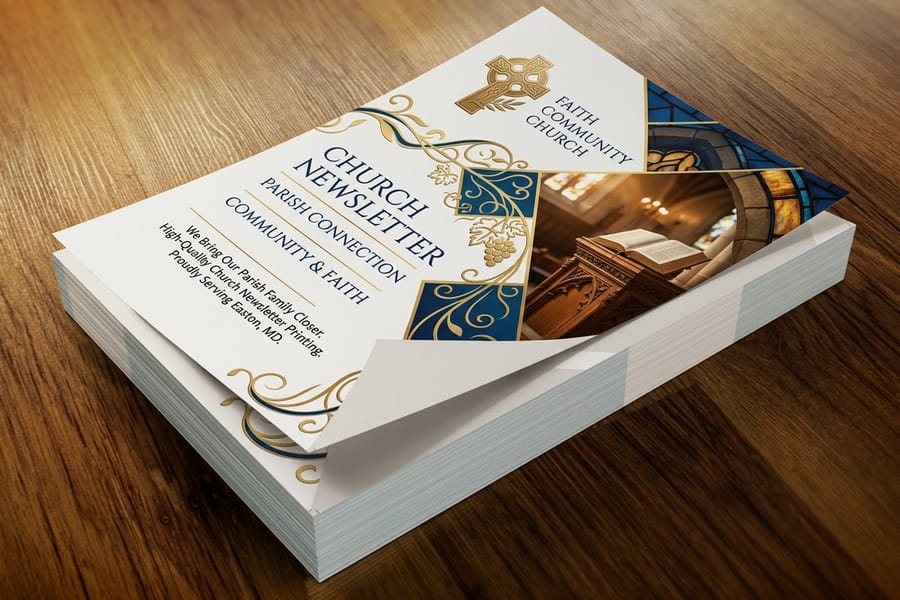
Prices to plan around: church postcards from $16.48, direct mail postcards from $89.68 with the mailing built in, church newsletters from $75.80, church brochures from $57.11, and donation envelopes from $617.67 for the larger remittance runs. Postage sits on top of all of them and varies by size, weight and class. Our mailing services cover addressing, presort and drop, and the direct mail collection lists every product that ships with mailing included.
Measuring Response Without Guessing
Give the mailing somewhere to go that nothing else points to, then count what arrives there. Without that, Easter attendance rises, everyone assumes the postcard worked, and next year the same budget gets spent on the same guess.
Three things make it measurable. Print a short URL used only on the card, so any traffic to it came from mail. Point the QR code at the same page rather than the homepage. Keep the question on the connect card that asks how the visitor heard about the service, and read the answers rather than filing them.
Then count the right number. New households, not total attendance, because a Christmas Eve crowd swells for reasons unrelated to your mail. Expect the count to build slowly: mail response arrives across weeks, and a card kept on a fridge until a family has a free Sunday is still a response. If you want a wider view of what nonprofit mailings return, our direct mail fundraising benchmarks collect the published figures, and how to improve direct mail results covers the changes worth testing between drops.
Wally explains church mail
Small radius, one date, and a card back within three days
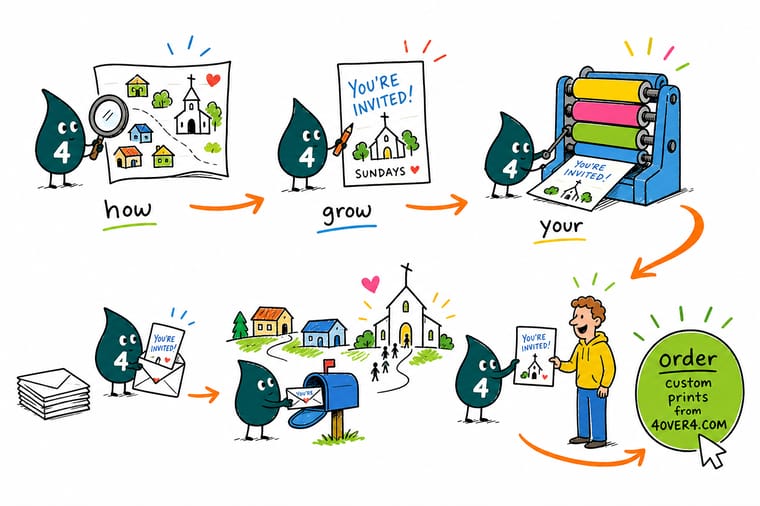
Wally walks the streets around the church rather than the whole city, because every extra block costs postage on people who will never drive that far. He drops the invite fourteen days before the service so it lands while the decision is still open. He leaves the members off the list, since inviting them to their own church is money spent twice. Then, three days after a stranger shows up, he mails one card with a handwritten line on it, and that is the piece that decides whether they come back.
Order church postcards →Specs and pricing
Church mail formats, sizes and starting prices
Compare the pieces a congregation actually mails, with live configuration choices and starting prices straight from the 4OVER4.COM configurator.



Print it
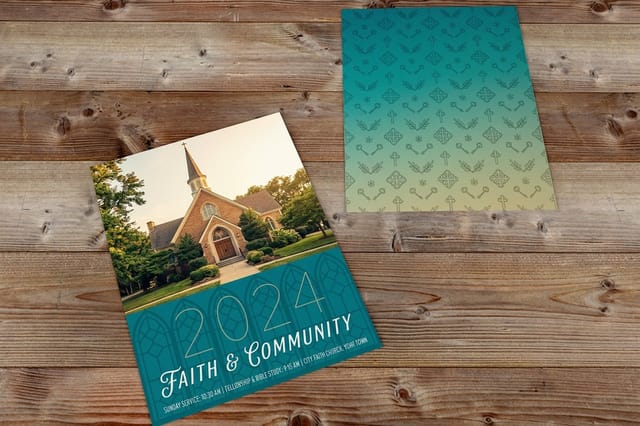
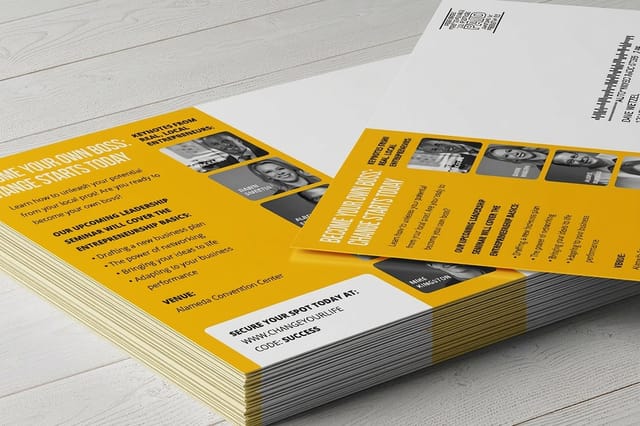
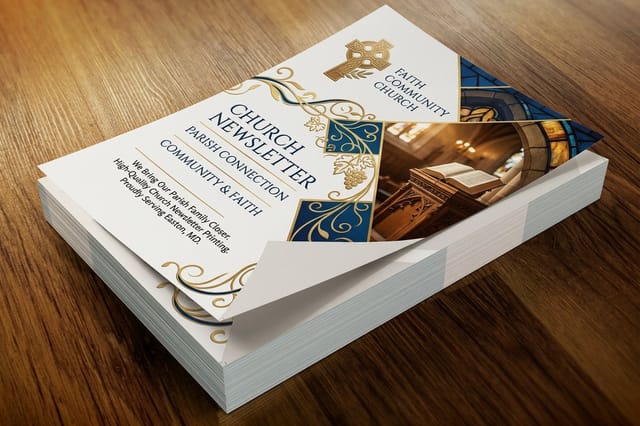
Print the invitation, the newsletter and the welcome card
Explore more
Where to go next




By the numbers
Church printing you can count on at 4OVER4
Common Questions
Your church direct mail questions, answered
How many homes should a church mail to?
Start with the carrier routes inside a ten minute drive of the building, which for most congregations is somewhere between 2,000 and 6,000 households. Mail that set twice rather than mailing twice as many homes once. A household that sees your name on a card before Easter and again the week of Easter recognises it; a household that sees it once does not. If the budget only covers one drop, cut the radius, never the repeat.
Do we need a mailing list, or can we use EDDM?
EDDM works without any list at all. You pick USPS carrier routes on a map, print a piece that carries the EDDM Retail indicia instead of an address, and drop bundles at the post office that delivers those routes. The limits are real: 5,000 pieces per ZIP code per day, no names, and no way to exclude your own members, so regular attenders receive an invitation to the church they already attend. A rented consumer list costs more per piece but lets you filter by radius and by new movers, and lets you suppress your member file.
What size postcard should a church mail?
For the cheapest postage, stay within 4.25 by 6 inches, which is the USPS ceiling for the postcard rate. Go past that and you pay the letter rate, so 5 by 7 and 6 by 9 cards cost more to send but are far harder to miss in a stack of mail. EDDM is different again: the piece has to exceed 6.125 inches high or 11.5 inches long to qualify, which is why EDDM church mailers are usually 6.5 by 9 or 8.5 by 11.
Can our church get nonprofit postage rates?
Yes, if the organisation qualifies and the paperwork is in place first. You file USPS Form 3624 with the post office where the mailings will be entered, along with proof of your nonprofit status and samples of what you plan to mail. Approval is not instant and it is tied to that entry office, so a church that decides in March to mail at nonprofit rates for Easter will almost always end up paying regular prices that year.
When should the Easter invitation drop?
Fourteen days before the service for USPS Marketing Mail. That leaves room inside the three to ten business day service window and still lands close enough to the date that the card feels current. If the artwork slips and you are inside a week, move that drop to First Class, which is quoted at one to five days and costs more per piece. Paying the difference beats mailing an invitation that arrives after the service.
How do we know the mailing worked?
Give the card its own destination and count what arrives there. A short landing page URL printed only on the mailer, a QR code that points to the same page, and one question on the connect card asking how the visitor heard about the service will separate mail response from everything else. Count new households, not total attendance, because attendance on Easter rises for reasons that have nothing to do with your postcard.
What should a church mail between the big services?
A newsletter to the member and lapsed member file, and nothing cold. Cold mail works for one specific invitation with a date on it. A newsletter works on people who already know you: it reports what happened, names the people involved, and gives the next date. Many churches mail it quarterly and pair it with a donation envelope bound inside so the ask is present without being the point of the piece.
Get Started
Ready to invite the street outside your door?
Pick the size, upload the artwork, and we print and mail your invitation so the cards land before the service instead of after it.
Legal Disclaimer
Gold Standard guarantees apply to all standard orders placed through 4over4.com. Price match requires verifiable proof of a competitor's published price for an equivalent product with matching specifications and turnaround time. Satisfaction guarantee covers manufacturing defects and print quality issues. Contact support with order number and documentation. On-time delivery rate based on tracked orders 1999 to 2026. Individual results may vary based on shipping carrier performance.
