
How to Design a Church Connect Card People Actually Fill Out


A connect card is judged by how many come back completed. Here is the size, the stock, the fields and the file setup that decide it, and the one coating mistake that ruins the whole run.
A church connect card is a small printed card a visitor fills in with their name and contact details and drops in the plate or hands to a greeter, and the design that works is 4 by 6 inches on 16pt stock with an uncoated writing side. Coating is the decision that makes or breaks the run, because ballpoint and gel ink skip across a sealed gloss or matte surface. Ask for three write-in fields and put everything else in checkboxes, hold the rules 0.125 inches inside the trim, and keep the year off the artwork so the card lasts a full print cycle.
Quick answer
Uncoated back, 4 by 6, three fields
Design the card around the pen and the rest follows. Specify no coating, or coating on the front only, so the back is open fiber that takes ballpoint without beading. Set the piece at 4 by 6 inches on 16pt stock, which gives about an inch and a half of writing room and still holds its shape when someone fills it in against a knee. Ask for name, email and phone, move every other question into checkboxes, and keep the year and the series name off the artwork so one print run covers the whole cycle.
Start With the Pen, Not the Layout
Most connect cards fail at the same second. Someone clicks a pen, drags it across a glossy card balanced on a knee, and the line breaks into dots. They shrug and put the card back in the rack.
Aqueous and UV coatings sit on top of the sheet as a sealed film. Ballpoint and gel ink have nothing to soak into, so the stroke beads, skips, and then smears the first time a thumb crosses it. The fix is not a better pen. Order the card with no coating at all, or with coating on the front only so the artwork keeps its punch while the back stays open fiber. Uncoated 16pt takes ballpoint, gel, felt tip and pencil without argument, and it dries fast enough that a stack of cards in an offering plate does not transfer wet ink onto the card underneath.
Two things surprise people the first time they spec it. Matte coating is still coating. It is less shiny, but it still seals the surface, and a fine gel pen will still skate across it. And uncoated stock absorbs more ink, so the same artwork prints roughly one step duller and softer than it looked on a coated proof. If the back of the card carries your brand color behind the write lines, weight it a little heavier in the file, or pull it back to a tint so handwriting stays readable on top of it.
Everything else on this page is downstream of that one decision. Get the coating wrong and the card is decoration. Get it right and the rest is layout. Our full range of congregation pieces sits in the church printing collection, and the same uncoated rule applies to any of them that someone has to write on.
Size, Stock, and Where the Card Actually Lives

Pick the size by where the card sits before the service and what has to be written on it after. A card that fits the rack but leaves an inch of writing room for a Gmail address is the wrong card.
| Size | Room to write | Where it fits | Use it when |
|---|---|---|---|
| 3.5 x 2 in | One short line, and email addresses run off the edge. | Wallet, shirt pocket, welcome-desk holder. | The card is meant to be kept and handed on, not completed. |
| 4 x 6 in | About 1.5 in of vertical room, enough for three legible lines. | Pew rack, seat-back pocket, chair clip, offering plate. | This is the default connect card. Start here. |
| 5 x 7 in | Three fields plus a checkbox column and a short note area. | Bulletin insert, welcome bag. Too tall for most racks. | The card doubles as a service-times handout. |
| 5.5 x 8.5 in | Room for everything, which is usually the problem. | Clipboard, welcome table, new-member packet. | A staffed sign-up, not a card passed down a row. |
On weight, connect cards are the rare printed piece that gets written on with nothing solid underneath. A knee, a hymnal, the back of the seat in front. 14pt buckles in that position and the pen digs through. 16pt stays rigid enough to write against, and it still fits a rack four hundred deep. Text weights are out entirely: 100lb gloss text is fine for a bulletin, hopeless under a ballpoint.
Format follows the same logic. Standard postcards at 4 by 6 are the straightforward choice and start at $16.48. Club flyers give you the same footprint on heavy 16pt stock from $16.48 when you want more presence in the rack. For a pocket-sized card a greeter hands over rather than collects, church business cards start at $17.57, and the business card versus postcard comparison covers which one survives being kept.
What the Card Should Ask, and What It Should Not
Three write-in fields is the ceiling. Name, email, phone. Every field past that is one more reason to put the card down half finished, and a half-finished card is a card you cannot follow up on.
Everything else you want to know goes in a row of checkboxes down the side or across the bottom. First time here. Would like prayer. Interested in a group. Would like to serve. Updating my details. A tick costs a second and people keep ticking long after they have stopped writing sentences, so the checkbox row is where the real segmentation happens. Set them as open squares at least 0.18 inches across, because a smaller box gets an ambiguous scribble instead of a clean mark.
Two judgment calls are worth making before the file goes out. The first is the mailing address. It eats three lines and slows everyone down, and unless you actually post things, email and phone do the same job. The second is the open prayer request box. It draws the single most valuable response on the card, and it obliges someone to read every card within the week. An unanswered prayer request does more harm than a card you never printed, so only put the box on when a named person owns the follow-up.
Split the two sides deliberately. The front carries the church name, one line about who you are, service times, and a QR code to the same form online. The back carries the write lines and nothing else, on uncoated stock. Keep the phrase "connect card" or "welcome card" on the front in plain type, because a visitor who does not recognize the object never picks it up. For the wording on the front itself, our church invite card wording guide works through the lines that get used and the ones that get ignored.
Setting the File Up So Nothing Gets Trimmed Off
A connect card has one setup risk the average postcard does not: the write lines. Rules that run to the edge of a 4 by 6 layout are the first thing a trim variance eats, and a rule that stops half an inch short of the field label looks like a mistake.
Build the file at 4.25 by 6.25 inches so artwork extends 0.125 inches past the trim on every side, and hold every rule, label and checkbox 0.125 inches inside the trim line. Set the write lines at 0.5pt to 1pt and print them at 40 to 60 percent black rather than solid, so a ballpoint sits clearly on top of them instead of fighting them. Give each line 0.33 inches of clear space above it. Three fields therefore need about an inch and a half of the card, which is precisely why 4 by 6 works and 3.5 by 2 does not.
The rest is standard file prep. CMYK, 300ppi on any placed image, fonts converted to outlines, and no white type under 8 point on an uncoated back where the ink spreads slightly into the fiber. Field labels want to be readable at arm length in dim light, so 9pt is the floor and a medium weight beats a light one. Start from a correctly sized layout in the blank template library instead of building the trim box by hand, and the postcard anatomy guide maps every zone on the 4 by 6 canvas if you want the full picture before you draw anything.
Quantities, Cost, and the Reprint Cycle
Count seats and weeks, not attendance. A card in every seat every Sunday burns through seat count multiplied by the weeks until you reprint, and the untouched ones still get bent, pocketed or binned. That arithmetic usually lands well above what a first-time order looks like it should be.
Per-card cost drops steeply with quantity, so one run covering six to twelve months almost always beats four cautious ones. The only real argument against a long run is design churn, and that is a self-inflicted problem. Keep the year, the sermon series, the campaign name and any individual staff member off the card. Print those on a bulletin insert or a brochure that changes on its own schedule, and let the connect card stay valid until the service times change.
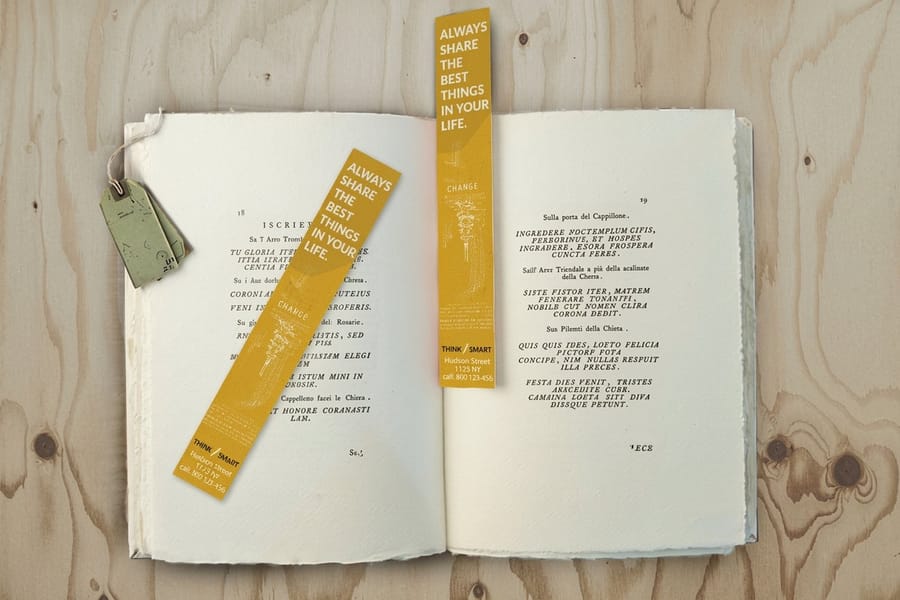
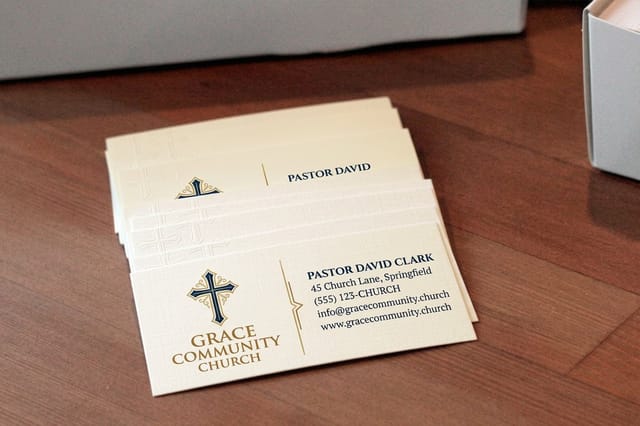
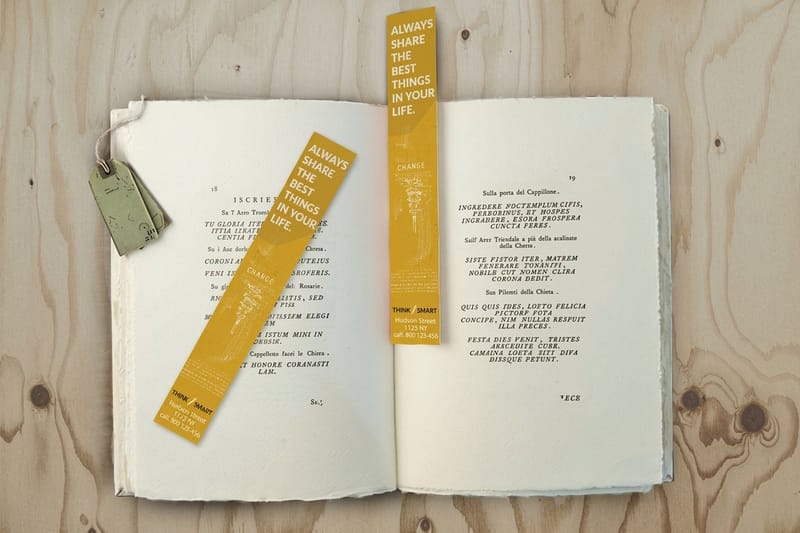
Two variants earn their place alongside the main card. A printed bookmark version, from $16.48, lives inside a Bible or a hymnal instead of a rack, which puts it in the hands of regulars who need to update details rather than visitors. And a pocket-size card from the church business cards range, from $17.57, is what a greeter hands over at the door when there is nothing to fill in at all.
Order the way you would any short-run print job: upload the press-ready PDF, choose 16pt uncoated, confirm the proof, and check the turnaround against the Sunday you need them on the seats rather than the day they leave our floor. How online printing works walks through proofing and production timing end to end, and everything a congregation prints regularly sits together in the church printing collection.
Wally tests the connect card
Same pen, two stocks, one obvious winner
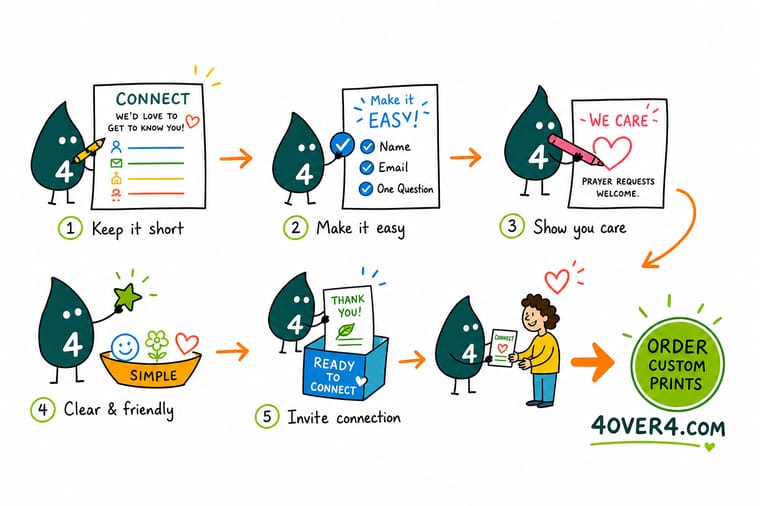
Wally takes the same ballpoint to two cards. On the glossy one the ink beads up and the line breaks into dots. On the uncoated 16pt card it sinks in and stays put. That is the whole decision. He keeps the coating on the front where the artwork lives, leaves the back bare for the write lines, gives each field a third of an inch, and stops asking after name, email and phone. Everything else he wants to know is a checkbox.
Order 4 by 6 connect cards →Specs and pricing
Connect card formats, sizes and starting prices
Compare the three formats congregations actually order, with live configuration choices and starting prices straight from the 4OVER4.COM configurator.


Print it
Order connect cards that come back filled in

Explore more
Where to go next


By the numbers
Church printing you can count on at 4OVER4
Common Questions
Your connect card questions, answered
What size should a church connect card be?
4 by 6 inches for the standard version. It gives roughly an inch and a half of vertical room for three handwritten lines, it fits the pew rack and the seat-back pocket, and it prints at postcard rates. Drop to 3.5 by 2 only when the card is meant to be pocketed rather than filled in, because a full email address written by hand rarely fits that width legibly. Go up to 5 by 7 when the card doubles as a welcome insert with service times on the back, and accept that the piece stops fitting most racks.
Can people write on a glossy connect card?
Not reliably. Aqueous and UV coatings sit on the surface as a sealed film, so ballpoint and gel ink have nothing to soak into. The stroke breaks up, then smears when a thumb crosses it. Matte and dull coatings are still coatings and still cause skipping with a fine gel pen. Specify no coating at all, or coating on the front only, so the artwork keeps its punch and the back still takes a pen. Pencil and felt tip behave on almost anything, but you cannot control which pen a visitor picks up.
What should a church connect card ask for?
Name, email and phone, then a row of checkboxes. Three write-in fields is the practical ceiling on a card someone is completing during a song. Checkboxes carry the rest: first time here, would like prayer, interested in a group, want to serve. A tick takes a second and gets made long after a visitor has stopped writing sentences. If you add an open prayer request box, only do it when a real person reads those cards inside the week, because an unanswered prayer request does more damage than a card you never printed.
Should we just use a QR code instead of a printed card?
Put the QR on the card rather than instead of the card. A code needs a phone already in hand, a signal inside a concrete-walled building and a visitor willing to type on a form mid-service, and it quietly loses everyone over about seventy. A printed card needs a pen. Running both on the same 4 by 6 piece costs nothing extra, since the code prints on the front with the artwork while the back stays uncoated for handwriting.
What paper weight works best for connect cards?
16pt uncoated cover. Connect cards are filled in against a knee, a hymnal or the seat in front, with no hard surface underneath, and 14pt visibly buckles under a pen in that position. 16pt holds its shape. Text weights such as 100lb gloss text are far too limp for handwriting and should be kept for bulletins and inserts. If the card also has to survive a week in a pocket before anyone drops it in the box, 16pt is the only weight that comes back readable.
How many connect cards should we print at once?
Work from seats and weeks, not from average attendance. A card in every seat every Sunday consumes seat count multiplied by the number of weeks until you reprint, and the ones nobody fills in still get bent, taken home or binned. Standard Postcards start at $16.48 at 4OVER4.COM, and the per-card price falls steeply with quantity, so a single run covering six to twelve months usually beats four small ones. The reason to hold back is design churn, which is exactly why the year and the series name belong on an insert rather than on the card.
Get Started
Ready to print a card people will actually fill in?
Choose 4 by 6 on 16pt stock, leave the writing side uncoated, upload your file, and we print connect cards that take a ballpoint the first time.
Legal Disclaimer
Gold Standard guarantees apply to all standard orders placed through 4over4.com. Price match requires verifiable proof of a competitor's published price for an equivalent product with matching specifications and turnaround time. Satisfaction guarantee covers manufacturing defects and print quality issues. Contact support with order number and documentation. On-time delivery rate based on tracked orders 1999 to 2026. Individual results may vary based on shipping carrier performance.
