
EDDM Pricing in 2026 and What Each Piece Actually Costs

Nadia is our customer education voice, built from the knowledge of our production team, with over 20 years in printing.
Postage, printing, design and prep, priced line by line, with the one number USPS fixes for you and the three you negotiate.
EDDM Retail postage costs $0.260 per piece as of July 12, 2026, and that rate is identical whether you mail a 6.5 by 9 card or a 12 by 15 flat. Printing is the only other line that scales with the piece, so a working budget is the route count from the USPS EDDM tool times $0.260, plus a print quote at that exact quantity, plus an hour of bundling. Retail needs no permit and stops at 5,000 pieces per ZIP code per day.
Quick answer
One fixed rate, one variable quote, and a route that sets the quantity
Postage is the only line USPS decides for you. EDDM Retail runs $0.260 per piece as of July 12, 2026, flat for every eligible size up to 3.3 ounces, which means a size upgrade costs you nothing at the post office and everything at the printer. The carrier route decides how many pieces you buy, because a route is all or nothing, and the piece has to break a letter limit to qualify at all. Price the postage from the route count first, then quote the printing at that quantity.
EDDM Postage Rates for 2026 in One Table
These are the EDDM Retail postage figures this page works from, as published in the USPS price list.
| Rate | Per piece | In effect | 1,000 pieces | 5,000 pieces |
|---|---|---|---|---|
| EDDM Retail, current | $0.260 | From July 12, 2026 | $260 | $1,300 |
| EDDM Retail, previous | $0.247 | Until July 11, 2026 | $247 | $1,235 |
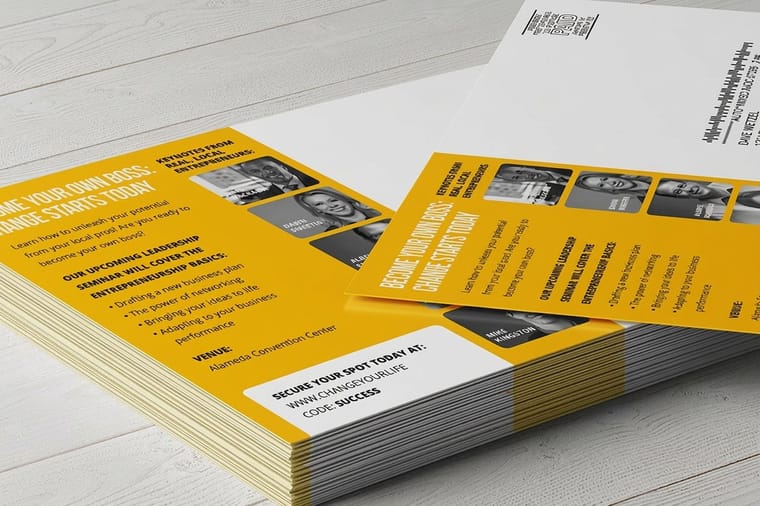
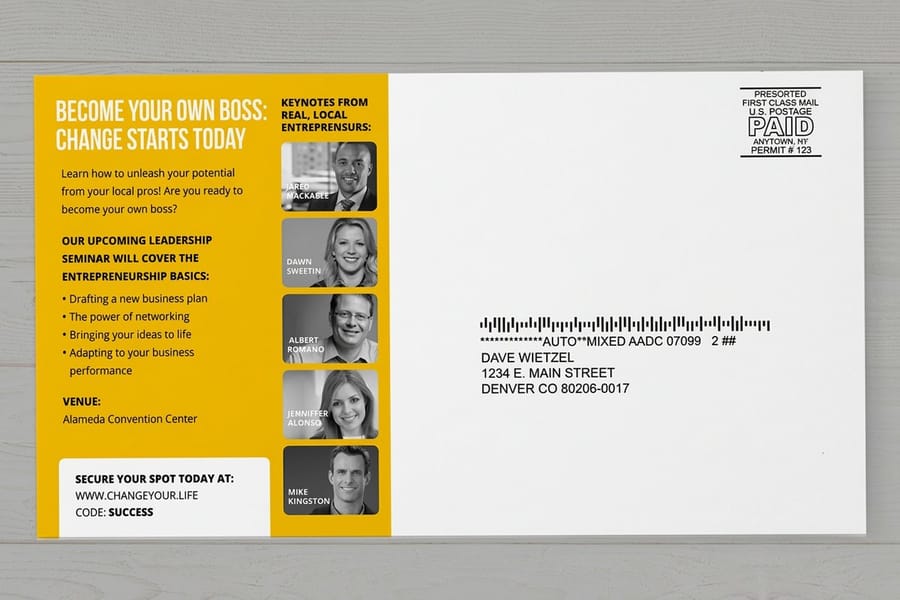
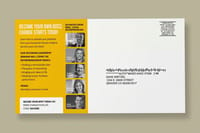
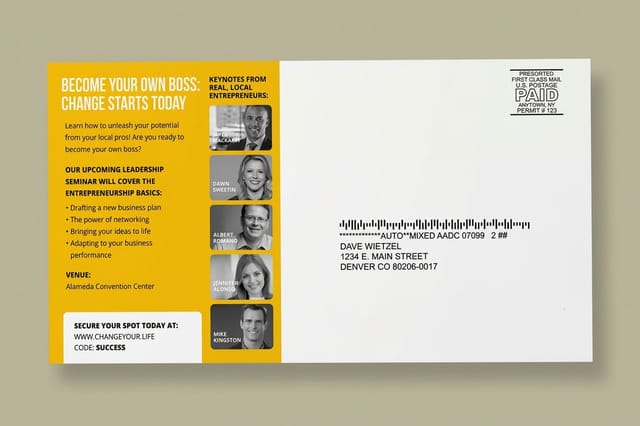
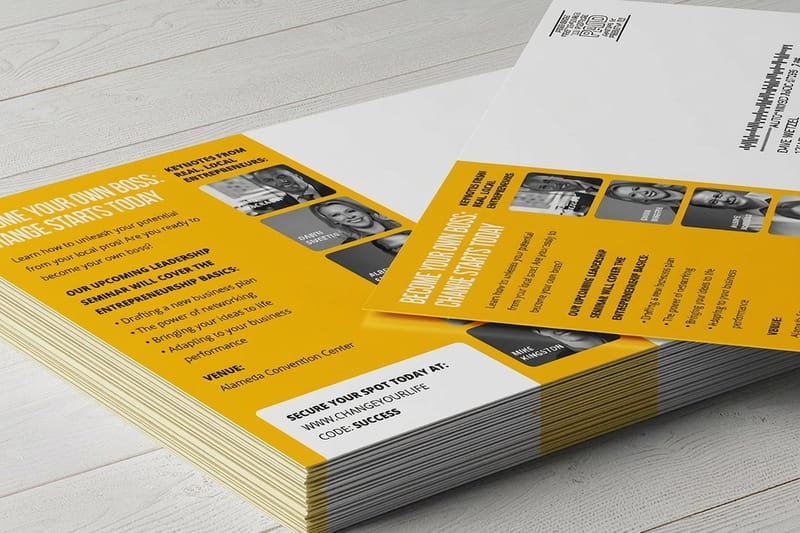
BMEU carries a lower per-piece rate with a permit and an annual fee; take that figure, and any nonprofit rate, from the current USPS price list rather than from this page. The rate is the same for every flat up to 3.3 ounces, so an 8.5 by 11 inch flyer on 14pt gloss cover, which clears the 6.125 inch height line, mails for the same $0.260 as a 6.5 by 9 card. Upload the print file with the upper right of the address side kept clear for the indicia.
The Four Lines in an EDDM Budget
An EDDM campaign has exactly four costs, and only one of them is fixed. Getting them in the right order stops the budget drifting.
| Line | Who charges it | What moves it | How to lock it down |
|---|---|---|---|
| Postage | USPS | Nothing except the piece count, up to 3.3 ounces per piece | Route count times $0.260, taken from the EDDM tool |
| Printing | Your printer | Size, stock, coating, sides and quantity | One quote at the exact route quantity, not a round number |
| Design | You, a designer, or nobody | Whether the layout already exists | Start from a correctly sized template and the line goes to zero |
| Prep and drop | You, or a mail house | Bundling, facing slips, and the trip to the post office | Budget an hour per few thousand pieces, or pay for full service |
Postage is the anchor. USPS raised EDDM Retail to $0.260 per piece on July 12, 2026, up from $0.247, and that number is public, flat, and identical for every mailer in the country. For a storefront that pairs the drop with a sign in the window, the Retail Signs video shows the options. Everything else is a quote you negotiate. Rates move roughly once a year, so look up the current figure before you sign off on a spreadsheet.
Printing is the line most people guess at, and the guess is usually wrong in both directions. Direct mail postcards start at $89.68, and the per-piece cost falls steeply as the run grows, which is why a 2,500-piece quote is never simply half of a 5,000-piece quote. Price the real quantity your routes require rather than a tidy number.
How to Price a Route Before You Order Anything
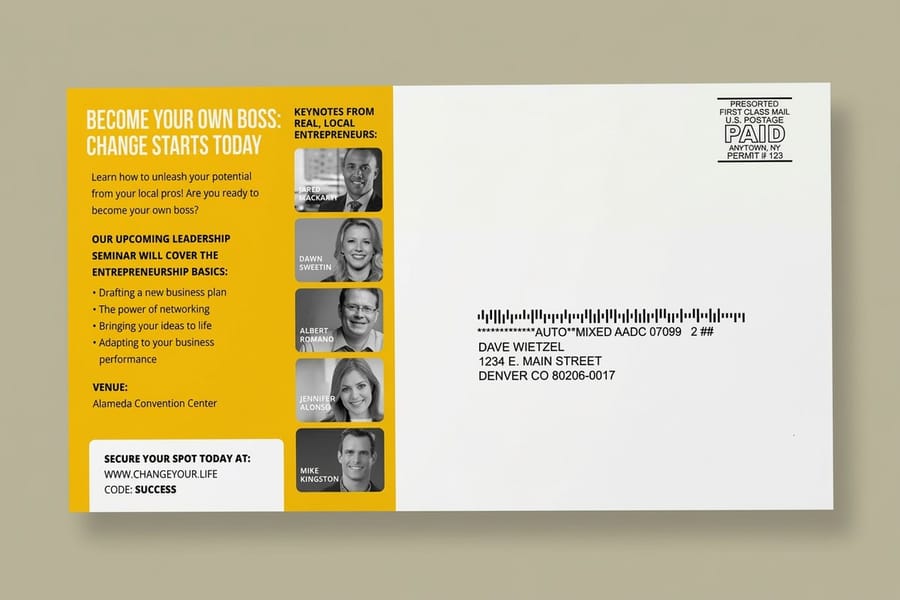
Work in this order and the number you end up with is the number you actually pay.
- Pull the route counts first. The USPS EDDM tool maps carrier routes over a ZIP code and shows the residential and business count on each one. That count is your quantity. Do not start from a budget and work backwards, because a route is all or nothing: you mail every door on it.
- Multiply by the postage rate. Route count times $0.260 gives your postage, exactly, before anything is printed. A 5,000-piece drop is $1,300 in postage on its own.
- Check the cap. EDDM Retail stops at 5,000 pieces per ZIP code per day, with a 200-piece minimum. A dense ZIP with several routes will pass 5,000 fast, and then you split the drop across days or move to BMEU.
- Confirm the piece qualifies as a flat. It must exceed 6.125 inches tall, 11.5 inches long, or 0.25 inches thick. If it clears none of the three, USPS treats it as a letter and it cannot go EDDM.
- Then get the print quote, at that quantity. Not before. The route count sets the run length, and the run length sets the per-piece print cost.
Step four is where most first campaigns die at the counter. A standard 4 by 6 card is a letter, so the low postcard price never applies here, and 6.5 by 9 is the smallest size worth setting up. The popular EDDM postcard sizes guide lists the ones USPS accepts without argument, and the EDDM mailing walkthrough covers bundling and the facing slip. You can lay the artwork out at the right trim from the blank template library so nothing gets rebuilt after the quote.
Where an EDDM Budget Leaks and Where It Does Not
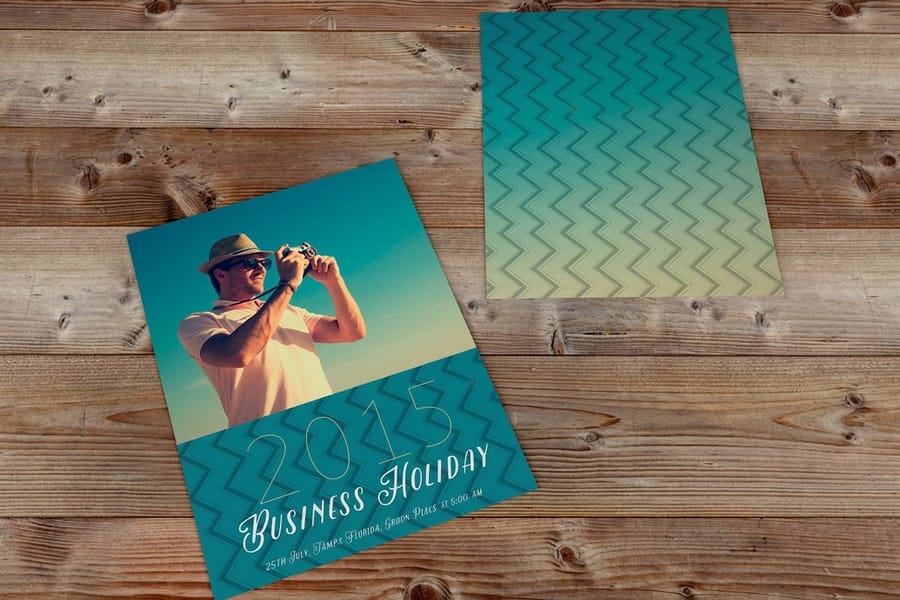
The savings people chase on EDDM are usually the wrong ones. Three that work, and two that do not.
Go bigger, not smaller. Since postage does not change with size, the only cost of a larger piece is paper and press time. Moving from 6.5 by 9 to 8.5 by 11 adds nothing to the $0.260 and buys a piece that is genuinely hard to ignore on a kitchen counter. Shrinking to save money saves the smallest line item and gives up the attention you paid postage for.
Print the whole campaign in one run. If you plan to hit the same routes three times over a quarter, print all three drops together and store them. Setup is charged once, and the per-piece cost at 15,000 is meaningfully lower than at 5,000. The mailing still goes out in three separate drops.
Bundle the pieces yourself. Sorting into bundles of 50 or 100 with the facing slips on top is dull work, not skilled work. On a few thousand pieces it is an evening, and it is the cheapest hour you will spend on the campaign. Hand it to a mail house only when volume makes your own time the more expensive input.
Cutting stock weight is a false saving. Dropping from 16pt to a thin gloss text saves a few dollars per thousand and produces a piece that arrives creased in a bundle of mail. If the budget is tight, cut a route, not the stock.
Skipping design is only free when a template exists. A layout that ignores the EDDM indicia and the address block gets rejected or reprinted, and a reprint costs more than any design fee. The direct mail cost per piece comparison is worth reading before you decide the design line is optional, and if you are weighing saturation against a rented list, the mailing list guide sets out what a list actually costs.
When Retail Stops Being the Cheaper Lane
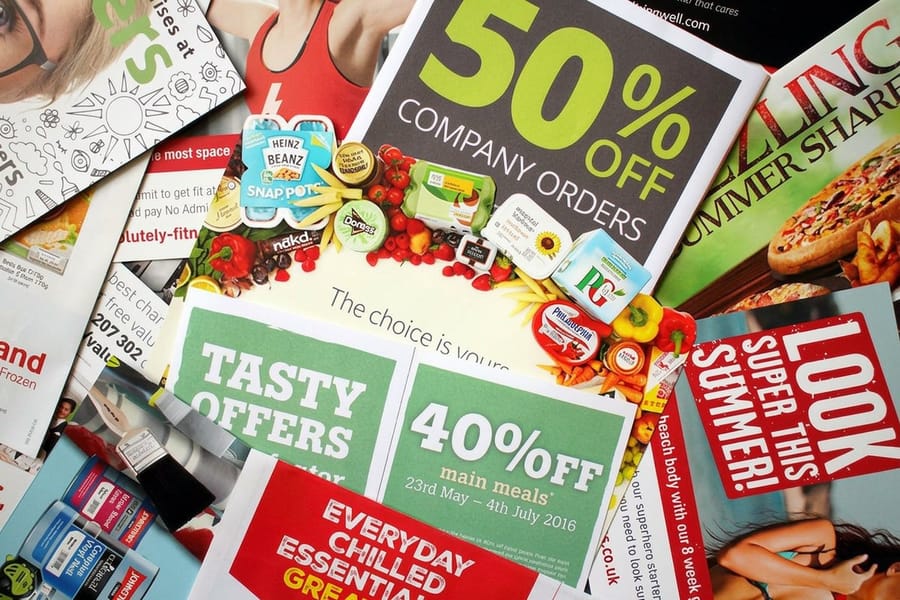
EDDM comes in two lanes and the cheaper one flips at a volume most small campaigns never reach.
EDDM Retail is the walk-in lane. No permit, no annual fee, no address list, up to 5,000 pieces per ZIP code per day, paid at the counter or through the online tool. For a restaurant hitting three routes around its block, this is the whole answer, and the arithmetic is route count times $0.260.
EDDM BMEU lifts the daily cap and carries a lower per-piece rate, but it requires a mailing permit with an annual fee and the paperwork goes through a Business Mail Entry Unit rather than a retail clerk. The permit and the fee are fixed costs, so they only pay for themselves once you are mailing enough pieces for the rate difference to swallow them. Most businesses cross that line when a campaign runs to tens of thousands of pieces, or when the same routes get mailed monthly all year.
The practical test: add the permit and annual fee, divide by your planned annual piece count, and compare that number against the rate difference per piece. If it is smaller, BMEU is cheaper. Our EDDM Retail versus BMEU guide walks through the submission side, and what EDDM is covers the ground rules if this is your first drop. When you are ready to print, mailing flyers start at $89.68, and the mailing flyers video shows the piece up close, and standard postcards at $16.48, though only the flat sizes are EDDM eligible. The full range sits in postcard printing.
Wally prices an EDDM drop
Route count first, postage second, print quote third
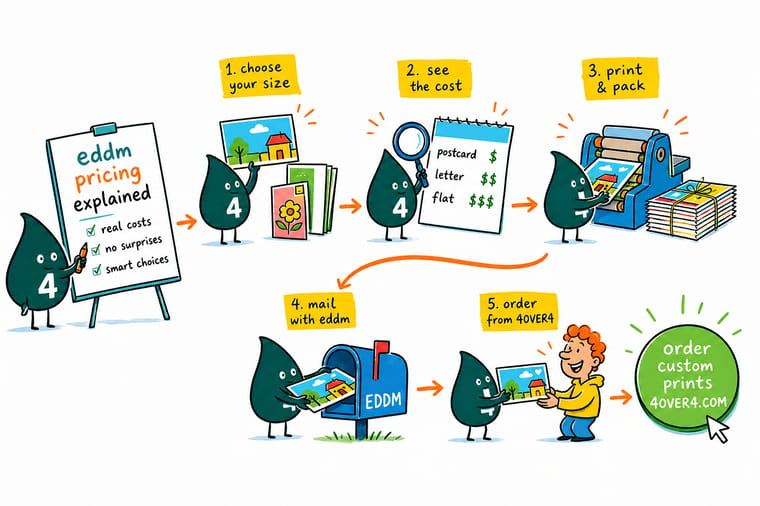
Wally opens the USPS EDDM tool, picks the routes around the shop, and writes down the exact number of doors. He multiplies that by 26.0 cents and there is the postage, done, no negotiating. Then he asks the printer for a quote at that precise quantity instead of a round one. He checks the piece is over 6.125 inches tall so USPS calls it a flat, notices that going up a size costs nothing in postage, and orders the bigger card. Bundles of 50, facing slips on top, and it goes to the counter.
Price direct mail postcards →
Specs and pricing
EDDM sizes, stocks, and starting prices
Configure the piece at the quantity your routes actually require. Direct mail postcards and mailing flyers run from 4 by 6 to 6 by 11 inches on 14pt or 16pt cover from 500, which mail as letters to a list, and standard postcards come in 14 sizes from 50. Prices update live from the 4OVER4.COM configurator, so the print half of the budget stops being a guess.

Print it
Pieces that qualify as a flat and mail at the EDDM rate
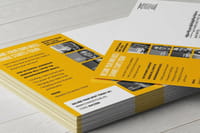
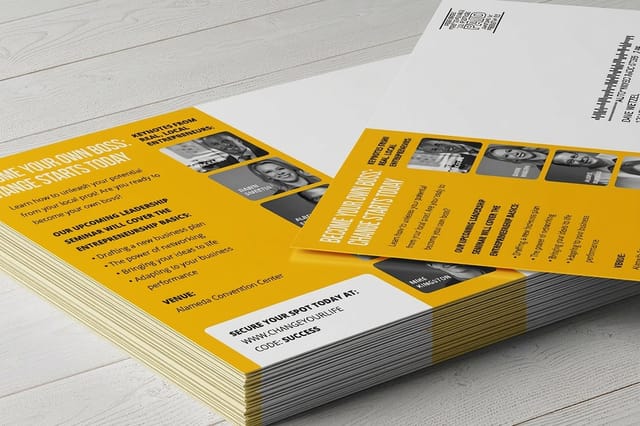
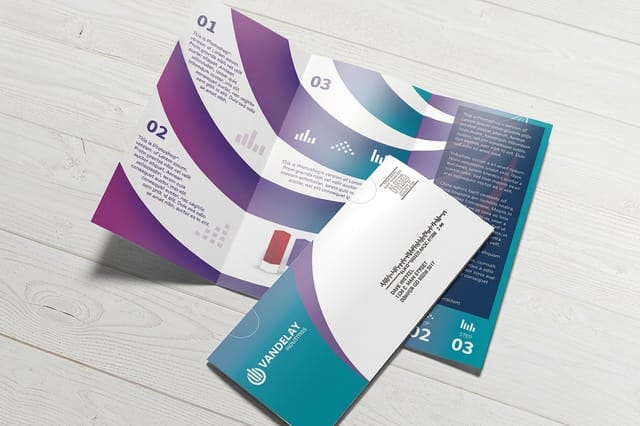
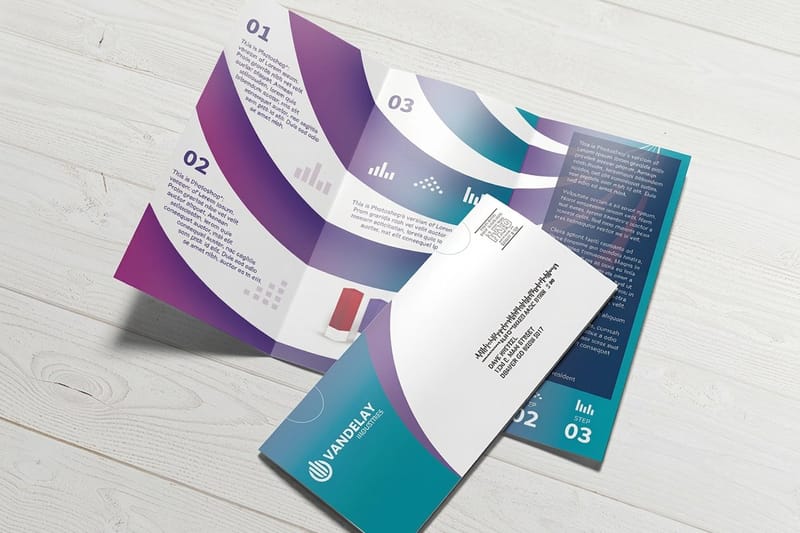
Of these three, direct mail brochures at 8.5 by 11 up to 11 by 17 inches clear the 6.125 inch height line and print in 6 business days from 500. Postcards and mailing flyers top out at 6 by 11 inches, so check the height before you plan a route.

Explore more
Where to go next
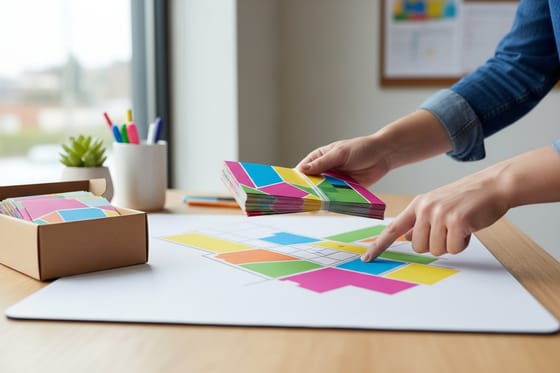
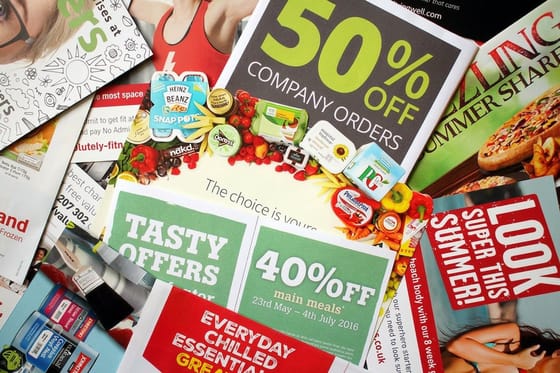
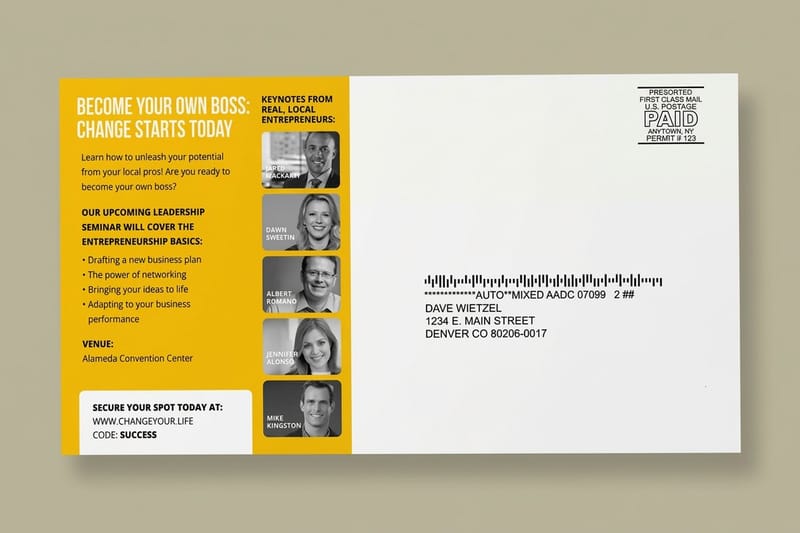
The EDDM ground rules, Retail against BMEU, the drop from bundling to facing slip, the full cost per piece, and the postcard and direct mail ranges.
By the numbers
Twenty five years of EDDM and mail pricing
Common Questions
Your EDDM pricing questions, answered
How much does EDDM cost per piece in 2026?
Postage is $0.260 per piece on EDDM Retail, effective July 12, 2026, up from $0.247. Printing sits on top of that and depends on size, stock, coating and quantity. Direct Mail Postcards at 4OVER4.COM start at $89.68 for the job, and the per-piece print cost drops as the run grows, so the honest way to answer the question for your own campaign is to price the postage first from the route count, then quote the print at that exact quantity. Rates change, so check the current figure on usps.com before you commit a budget.
Is EDDM worth it?
Yes, when almost every household around you could buy. A 6.5 by 9 inch card to 5,000 homes costs $1,300 in postage at $0.260 a piece, plus the print at that quantity, with no list to rent. For a niche offer where one house in twenty is a buyer, a smaller targeted mailing usually costs less per lead.
Is there a minimum or a maximum number of pieces?
EDDM Retail asks for at least 200 pieces and caps you at 5,000 pieces per ZIP code per day. The minimum rarely bites, because a single carrier route is usually several hundred addresses. The cap does bite: a dense ZIP with four or five routes can exceed 5,000 in one drop, and then you either split the mailing across days or move up to EDDM BMEU, which has no cap but requires a permit.
Does a bigger EDDM postcard cost more to mail?
No. Postage is the same flat rate for every eligible size up to 3.3 ounces, so a 9 by 12 flat mails for the same $0.260 as a 6.5 by 9 card. The extra cost is entirely in printing. That is the most useful thing to know about EDDM pricing, because it means the decision about size is a print decision, not a postage decision, and going one size up is usually cheaper than most people assume.
Why is my 4 by 6 postcard not eligible for EDDM?
Because it is a letter, not a flat. An EDDM piece has to break at least one letter limit: taller than 6.125 inches, longer than 11.5 inches, or thicker than 0.25 inches. A 4 by 6 or a 5 by 7 card sits inside all three, so it does not qualify at any price. The smallest size most printers set up for EDDM is 6.5 by 9, which clears the height limit with a margin.
Is EDDM cheaper than mailing to a purchased list?
Per piece, yes, and by a wide margin, because you skip the list cost and the addressing pass and you pay saturation postage. Per customer, not always. EDDM buys every door on the route, including the ones that will never call you. If your buyer is a narrow slice of a neighborhood, a smaller targeted mailing at higher postage can produce leads more cheaply. EDDM wins when almost any household on the route could plausibly buy, which is why it works for pizza, dentistry, lawn care and roofing, and works badly for niche business-to-business offers.
Do I pay the printer for postage, or the post office?
On EDDM Retail you pay USPS directly, either at the retail counter when you drop the bundles or through the EDDM online tool with a card. The printer only bills you for printing. That split catches people out when they compare quotes, because a full-service mail house quote includes postage and a print-only quote does not. Always ask which one you are looking at before you compare two numbers.
Get Started
500 mailing flyers cost $89.68 before postage
Pick the size that clears the USPS flat threshold, set the quantity to your route count, and see the print half of the budget before you pay a cent of postage.
Legal Disclaimer
Gold Standard guarantees apply to all standard orders placed through 4over4.com. Price match requires verifiable proof of a competitor's published price for an equivalent product with matching specifications and turnaround time. Satisfaction guarantee covers manufacturing defects and print quality issues. Contact support with order number and documentation.
