
Flat Flyers vs Folded Flyers and When the Fold Pays Off


Same sheet, same ink, one bindery pass apart. Here is what the fold buys you, what it costs, and how to tell which one your job actually needs.
Choose a flat flyer when the message is one offer read in seconds, and a folded flyer when the reader will stop and open it. Flat gives you two faces at the lowest price and runs on any stock. Folding the same sheet gives four or six panels, fits a brochure rack, mails as a letter rather than a flat, and adds a bindery pass that shows up in the price and in the paper you can use.

Quick answer
The fold buys panels and costs a pass
A flat flyer is one sheet with two faces. A folded flyer is the same sheet turned into four or six panels by a machine after printing. Flat is cheaper, faster to produce, readable at a glance, and happy on any weight of paper. Folded holds more, opens in a sequence you control, drops into a 4 by 9 rack pocket, and mails at letter dimensions instead of flat dimensions. It also demands text weight stock, a scored crease on anything heavier, and a file built as panels rather than as pages.
What Changes the Moment You Add a Fold
Four things change, and only one of them is the price.
The reading order changes. A flat flyer has no sequence. The eye lands wherever the biggest element is, takes in the offer, and moves on. A folded piece has a cover, an inside, and a back, so the reader meets your copy in the order you set. That is useful when you have a story and a liability when you have one number to shout.
The stock choice narrows. Flat flyers run happily on anything from 70 lb text to 14 pt cover. Folded flyers want text weight. Fold a coated cover sheet without scoring it and the coating splits along the crease, showing a white line through your ink. It is the single most common complaint we field on folded work, and it is entirely preventable.
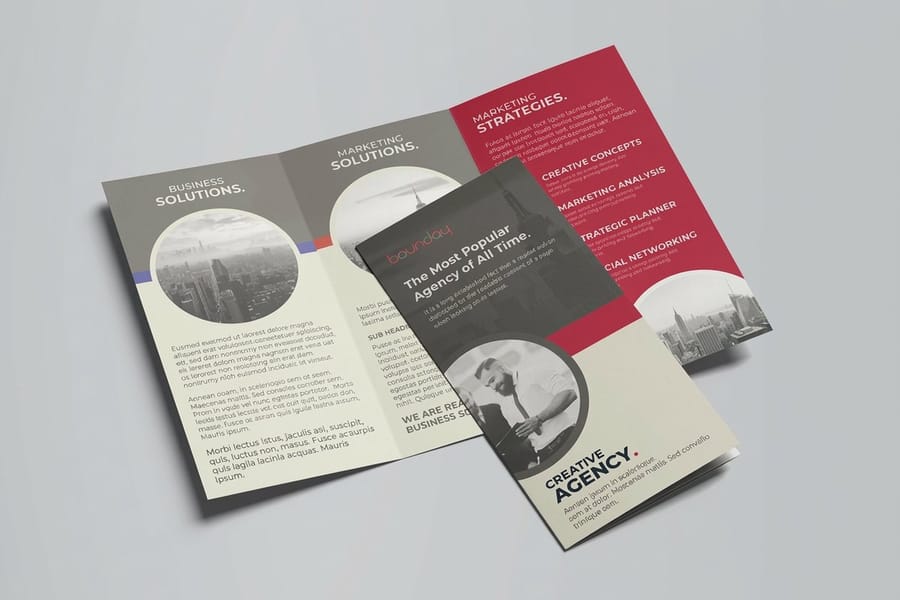
The file stops being pages. Panels are not pages. On a tri-fold the outside of the sheet carries the back panel, the flap, and the cover, in that order left to right, and the inside carries the three reading panels. Design it as page one, page two, page three and the piece comes back with the cover on the wrong end.
The schedule gains a pass. Folding happens after printing and trimming, on a separate machine with its own setup. It is not slow, but it is real, which is why a rush job that has to ship the same day is easier to hold flat. Our guide to print folding options lays out every fold we run and what each one is good for.
Flat, Half Fold and Tri Fold Side by Side
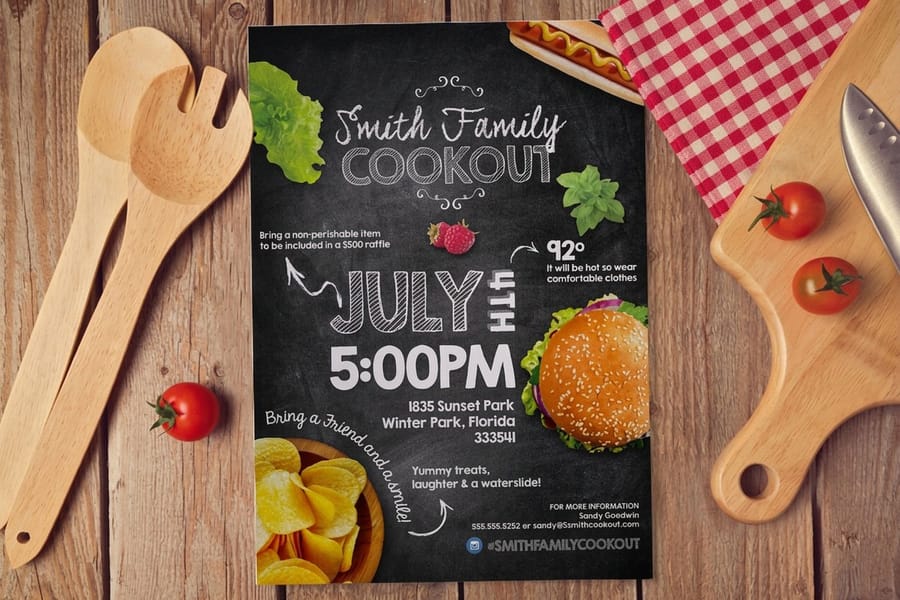
The same 8.5 by 11 sheet gives you three genuinely different products depending on what the bindery does to it afterward. Compare them by what they hold and where they physically fit, not by which looks better in a mockup.
| Format | Faces or panels | Closed size from 8.5 x 11 | Best stock | Where it wins |
|---|---|---|---|---|
| Flat flyer | 2 faces | 8.5 x 11, unfolded | 70 lb to 100 lb gloss text, or 14 pt cover for counter stacks | Handbills, windshields, poles, counter piles, one offer read at arm's length |
| Half fold | 4 panels | 5.5 x 8.5 | 100 lb gloss text | Event programs, menus, a full bleed image across the inside spread |
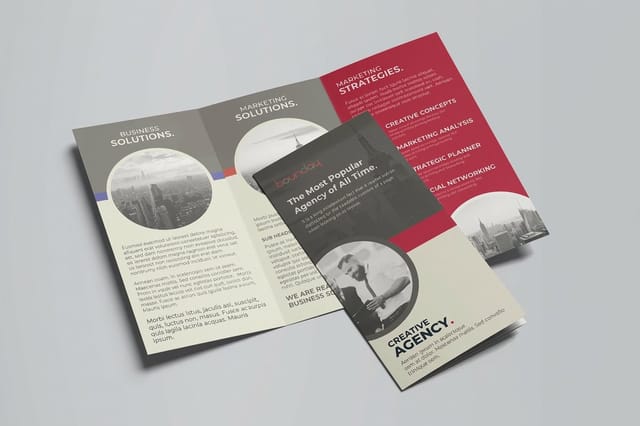
| Tri-fold | 6 panels | 3.6875 x 8.5 | 100 lb gloss text | Rack pockets, mailers, price lists, service menus with sections |
| Z-fold | 6 panels | 3.6875 x 8.5 | 100 lb gloss text | Step by step content, timelines, anything read as one continuous strip |
Read the third column before the fifth. A flat 8.5 by 11 will not stand in a brochure rack, and it flops over in a counter display unless you print it on cover. A tri-fold drops into a standard 4 by 9 rack pocket without modification, which is why hotels, clinics and visitor centres are full of them. That physical fit decides more orders than design ever does.
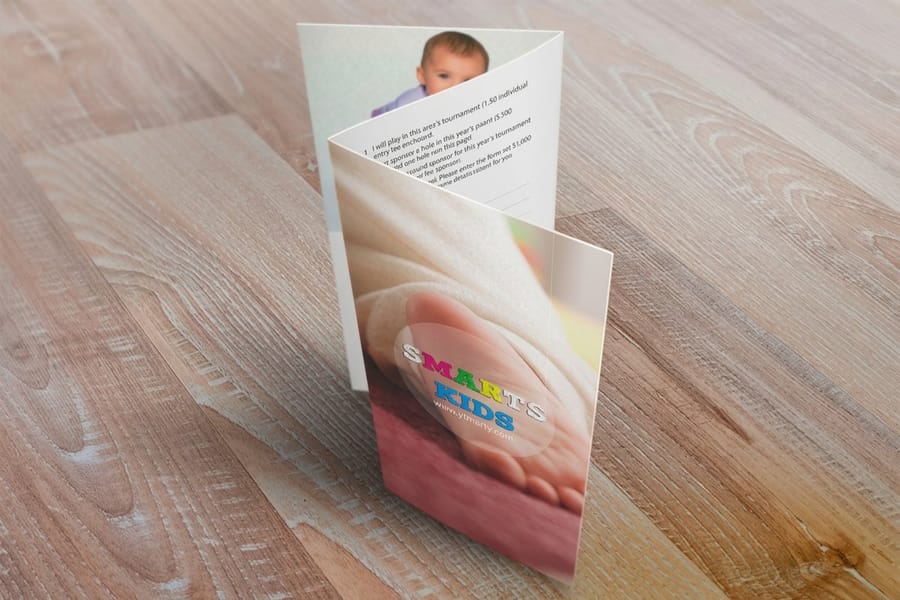
The z-fold deserves a mention because people order tri-folds when they mean it. A tri-fold nests its panels inside each other, so the reader opens a flap and then a spread. A z-fold concertinas, so all six panels pull out as a strip. If your content is a sequence, the z-fold shows it in order. If it has a cover and then a body, the tri-fold is right. Same price, completely different reading experience.
Building a Folded File So the Panels Land Right
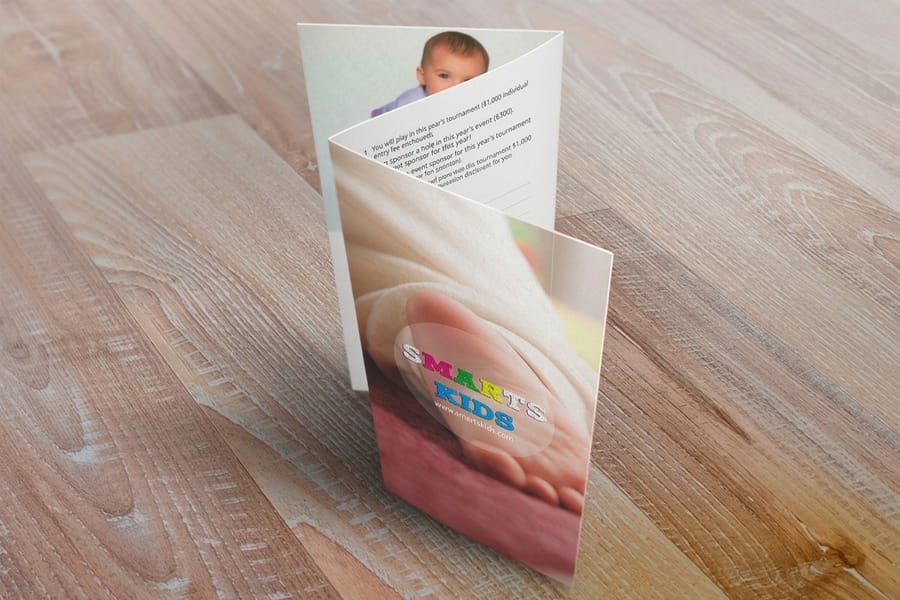
A folded file that comes back wrong almost always fails on one of three things, and none of them are design decisions.
- Panel widths are not equal. On a tri-fold from an 8.5 by 11 sheet the panels are 3.6875, 3.6875 and 3.625 inches. The narrow one is the flap that folds inside. Give it the full 3.667 and it fouls the spine, and the closed piece bows open in the middle of the stack.
- Content sits on the crease. Keep type and logos at least a quarter inch clear of every fold line. Folding tolerance is real, and a headline that straddles a crease will look off centre on some sheets even when the file is perfect.
- Bleed stops at the trim, not at the fold. Extend background art an eighth of an inch past the outer trim on all four sides as usual. Across a fold, art should run continuously through the crease with no gap, because the fold is not a cut. Our explainer on bleed and trim covers the measurements.
Grain direction is the fourth thing, and it is the one designers never see. Paper fibres line up during manufacture, and a fold parallel to the grain folds smooth while a fold across the grain fights back and cracks. We set the sheet so the fold runs with the grain on standard sizes. On a custom size, ask, because it is not always possible and it is better to know before the run than after.
The quickest way to avoid all four is to start from a template built for the fold. Grab the right layout from the blank template library, drop your artwork onto the panels, and the widths and safety margins are already correct. If you want the setup explained fold by fold, bifold flyers explained takes the half fold apart in detail.
The Verdict: Which One to Order
Print it flat when the piece has to work in three seconds and when volume matters more than depth. Street handouts, door drops, event promos, a single offer with a date and a call to action. Standard Flyers start at $39.54, they are the cheapest way to put your message in a hand, and every dollar you do not spend on folding can go into a heavier sheet or a bigger run. If cost is the whole question, our breakdown of flyer printing prices shows where the money actually goes.
Print it folded when the reader has already committed to looking. Folded Flyers start at $68.54 and earn it in three situations: the piece has to fit a rack, the piece is going in the mail as a self mailer, or the content genuinely needs sections. Real estate feature sheets, clinic service lists, restaurant menus, trade show handouts that have to survive a bag.
Two cases sit outside both. If the piece is mostly a photograph and an address, a heavier card does the job better than either flyer format, and Standard Postcards start at $16.48 with postal rates that beat any flyer. If the content has outgrown six panels, stop folding and bind it. A stitched booklet costs more per piece but stays readable, and cramming a catalogue into a tri-fold produces six point type that nobody reads.
Still deciding between formats rather than folds? Flyer vs brochure compares the two product families directly, and Standard Brochures from $57.11 sit between a folded flyer and a booklet. Everything flat and folded is priced live on the flyer printing pages.
Wally explains the fold
Two faces flat, six panels folded, same sheet of paper
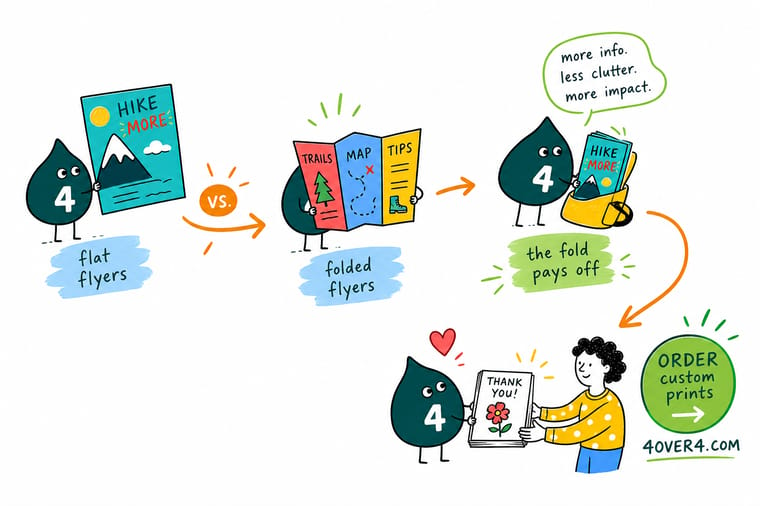
Wally prints one 8.5 by 11 sheet. Left hand, he keeps it flat: two faces, cheapest price, and the whole offer visible from arm's length. Right hand, he runs it through the folder: six panels, a cover, and a piece that fits a rack pocket and mails as a letter. The catch is that folding wants text weight paper and a file laid out in panels, because the flap panel is a sixteenth of an inch narrower than its neighbours. Get that wrong and the piece bows open in the box.
Compare flat and folded flyer pricing →Specs and pricing
Flat, folded and brochure specs side by side
Sizes, stocks, fold options and starting prices, straight from the 4OVER4.COM configurator.


Print it
Order the format your job actually needs

Explore more
Where to go next


By the numbers
Flyer printing you can count on at 4OVER4
Common Questions
Flat and folded flyer questions, answered
What is the difference between a flat flyer and a folded flyer?
The paper is the same. A flat flyer is a single trimmed sheet with a front and a back, so you get two faces. A folded flyer is that sheet run through a folder afterward, which turns it into four panels on a half fold or six on a tri-fold or z-fold. Folding is a separate bindery pass, so a folded flyer costs more and takes slightly longer than the same sheet flat, and the file has to be built as panels rather than as pages.
Which one is cheaper to print?
Flat, always. Standard Flyers start at $39.54 at 4OVER4.COM and Folded Flyers start at $68.54, because the folded version carries a machine setup and a folding pass the flat one does not. On short runs that setup is a big slice of the price. On a run of several thousand it spreads out and the per piece difference gets small, which is why folded pieces make more sense in bulk than in test quantities.
Can I fold a flyer myself to save money?
For fifty pieces, yes. Beyond that it goes badly. Hand folding drifts, so panels end up short or long by an eighth of an inch and the stack looks amateur, and any coated stock heavier than about 100 lb text will crack along the crease without a score. A machine fold registers to the trim edge on every sheet. If the budget is tight, keep the piece flat and spend the difference on paper weight instead.
Do folded flyers cost more to mail?
Not necessarily, and often less. A flat 8.5 by 11 sheet is a flat in postal terms and priced accordingly, while the same sheet folded to 5.5 by 8.5 falls inside letter dimensions. The catch is that a folded self mailer has to be sealed with tabs or a wafer seal so it does not open in the sorting equipment, and the fold orientation matters to the machines. Confirm the tabbing with us before the run rather than after.
What paper should I use for a folded flyer?
Text weight. A 100 lb gloss text folds cleanly, drapes properly, and still feels substantial in the hand. Cover stocks fold too, but they need a score and they will never lie as flat, which is why a tri-fold on cover stock springs open in a rack. If you want the heft of cover, keep the piece flat. Our guide to flyer paper stocks and weights walks through the options with the trade offs on each.
How many panels do I actually need?
Count the things you have to say. One offer and one call to action fits on a flat sheet and reads faster there. Three to five short blocks, a price list, a menu, or a before and after sequence needs a tri-fold. More than that and you are past what a folded sheet handles well, and a stitched booklet is the honest format, because a six panel piece crammed with copy is a booklet that nobody bound.
Get Started
Ready to print flyers people keep?
Pick your size and stock, choose flat or a half fold, tri-fold or z-fold, and we print, fold and ship the whole run.
Legal Disclaimer
Gold Standard guarantees apply to all standard orders placed through 4over4.com. Price match requires verifiable proof of a competitor's published price for an equivalent product with matching specifications and turnaround time. Satisfaction guarantee covers manufacturing defects and print quality issues. Contact support with order number and documentation. On-time delivery rate based on tracked orders 1999 to 2026. Individual results may vary based on shipping carrier performance.
