
The Ultimate Guide to Flyer Sizes and Dimensions


Sofia is our design and templates voice, built from the knowledge of our production team, with over 20 years in printing.
From the 4.25 by 5.5 inch handbill to the 11 by 17 inch large-format sheet, here is every common flyer size in inches and centimeters, when to use each, and how to print it in the size that actually fits your message.
The most common flyer size is the half sheet, 5.5 by 8.5 inches (14 by 21.6 cm). Standard flyers run from a 4.25 by 5.5 inch handbill up to an 8.5 by 11 inch full sheet, with large-format sheets reaching 11 by 17 inches and beyond. Pick the size by how the flyer will be received: small for handouts, medium for promotion, large for posting and impact.
Quick answer
The short answer on flyer sizes
The most common flyer size is the half sheet, 5.5 by 8.5 inches (14 by 21.6 cm). Standard flyers run from a 4.25 by 5.5 inch handbill up to an 8.5 by 11 inch full sheet, with large-format sheets reaching 11 by 17 inches and beyond. Pick the size by how the flyer will be received: small for handouts, medium for general promotion, large for posting and impact. 4OVER4.COM prints all of these in nine set sizes plus custom.
To scale
Common flyer sizes at a glance
Six of the most-ordered flyer sizes, drawn to scale. The half sheet in the accent color is the average size of a flyer and the safest default for most jobs.
Sizes shown in inches, drawn to relative scale. In centimeters: 4.25 × 5.5 in = 10.8 × 14 cm, 5.5 × 8.5 in = 14 × 21.6 cm, 8.5 × 11 in = 21.6 × 27.9 cm, 11 × 17 in = 27.9 × 43.2 cm.
What size is a flyer?
A flyer is a single sheet printed on one or both sides to promote one thing: an event, a sale, an opening, a service. Because the job varies so much, there is no single "flyer size." The average size of a flyer sits around a half sheet, roughly 5.5 by 8.5 inches, but useful sizes run from a pocket-friendly 4.25 by 5.5 inch handbill up to an 11 by 17 inch sheet that behaves almost like a small poster.
The right size is the one that carries your message without wasting paper or attention. A dense event lineup needs room to breathe, so it leans larger. A "10% off today" handout can be tiny and still do its job. The size chart above lays the common formats out to scale so you can see the jumps at a glance.
Everything here maps to real formats you can order. 4OVER4.COM Standard Flyers ship in nine set sizes with custom sizing in between, so once you know the dimension you want, printing it is the easy part.
Flyer sizes in inches and centimeters

Most US printing is quoted in inches, while metric A-series sizes are quoted in millimeters and centimeters. If you are designing for a US audience, work in inches. If your flyer crosses borders, the A-series keeps you consistent with the rest of the world. The common flyer sizes convert like this:
- 4.25 × 5.5 in is 10.8 × 14 cm, the quarter-sheet handbill.
- 4 × 6 in is 10.2 × 15.2 cm, the classic postcard-style flyer.
- 5 × 7 in is 12.7 × 17.8 cm, a friendly invitation size.
- 5.5 × 8.5 in is 14 × 21.6 cm, the half sheet and the most-ordered size.
- 6 × 9 in is 15.2 × 22.9 cm, a roomy mailer.
- 8.5 × 11 in is 21.6 × 27.9 cm, the full letter sheet.
- 11 × 17 in is 27.9 × 43.2 cm, the large-format sheet.
Prefer the A-series? A6 is 10.5 by 14.8 cm, A5 is 14.8 by 21 cm, and A4 is 21 by 29.7 cm, which lines up closely with the US half sheet and full sheet. If a term trips you up, the printing terms glossary spells it out.
You do not have to memorize any of this to order. Build your art in 4OVER4's free Online Designer, choose a size, and the layout snaps to the right dimensions, or upload a print-ready file to Standard Flyers and pick from nine sizes at checkout. Building the file in your own software? Start from a blank flyer template with the bleed and safe zone already drawn at your size.
Half sheet flyer size

The half sheet flyer is 5.5 by 8.5 inches, or 14 by 21.6 centimeters. The name is literal: take a standard 8.5 by 11 inch letter sheet, cut it across the middle, and each piece is a half sheet. That simple math is why it is the default flyer size for so many businesses. It prints two-up on a common sheet, which keeps cost down, and it hands out easily without folding.
It is big enough for a headline, a short pitch, an image, and a call to action, but small enough that nobody feels handed a homework assignment. Retail promotions, class schedules, menu inserts, and event announcements all live comfortably at this size. If you plan to mail it, the half sheet also drops neatly into common envelopes, and it pairs well with the advice in our guide on how to mail flyers.
Want the half sheet with a premium hand-feel? Silk Flyers add a soft, velvety coating that makes the same dimensions feel far more expensive, and Foil Flyers add metallic shine where it counts.
Standard flyer sizes
"Standard" just means the sizes printers keep ready because they cut cleanly from press sheets with little waste. Ordering a standard size is faster and cheaper than a custom cut. These are the ones worth knowing:
- 4.25 × 5.5 in (quarter sheet): the handbill. Cheap to print in volume, easy to hand out on the street or tuck into a bag.
- 5.5 × 8.5 in (half sheet): the all-rounder covered above, and the size most people picture when they say "flyer."
- 8.5 × 11 in (full sheet): the letter size. Maximum room for detail, which suits bulletin boards, storefront windows and info-heavy handouts.
- 5 × 7 and 6 × 9 in: the in-between sizes that read more like an invitation or a premium mailer.
4OVER4.COM Standard Flyers cover this whole range across seven paper stocks, from gloss and silk text to heavy 14pt cover, so you can match weight to the size. Heavier stock keeps a full sheet from flopping, while lighter text stock keeps a handbill affordable. Our guide to the best paper weight for flyers breaks that trade-off down.
Large format flyer dimensions

When a flyer needs to work from across a room, size up. Large-format flyers start at 11 by 17 inches (27.9 by 43.2 cm), the tabloid size, and 4OVER4 Standard Flyers stretch all the way to a full 11 by 25.5 inches for a near-poster presence. At this scale a flyer doubles as signage: taped in a window, pinned to a community board, or propped at a trade-show table.
Bigger sheets change two things. First, they beg for heavier stock so they hold their shape instead of curling, which is where a 14pt cover earns its keep. Second, they change how you design. A large sheet read from a distance needs a bolder headline and more contrast, closer to poster thinking than handout thinking. If you are heading fully into wall territory, our poster sizes guide picks up where flyers leave off.
For a flyer that folds into multiple panels instead of growing flat, Folded Flyers give you brochure-style real estate, and the brochure sizes and folds guide covers the layouts.
Which flyer size should you use?

Size follows purpose. Match the format to the way people will receive it:
- Handing out in person: 4.25 × 5.5 in. Light, cheap, and easy to print in the thousands for street teams and events.
- General promotion: 5.5 × 8.5 in. The safe default that balances message room and cost.
- Detail-heavy or posted: 8.5 × 11 in. Room for schedules, menus, maps, and fine print, and big enough to read on a wall.
- Mailing: 6 × 9 in or 5.5 × 8.5 in. Both fit standard mailing rates and envelopes cleanly.
- Maximum impact: 11 × 17 in and up. A flyer that works like a poster.
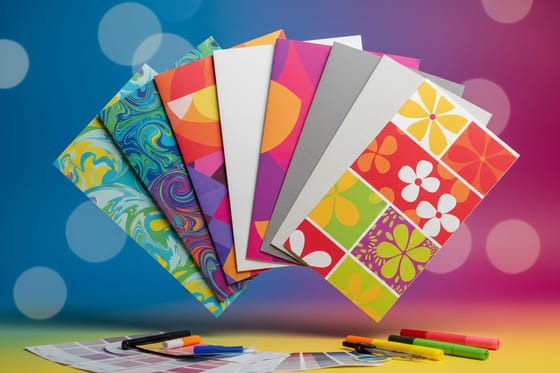
Still deciding? Order free paper samples and hold the sizes in your hand before you commit. Seeing a half sheet next to a full sheet on real stock settles the question faster than any spec sheet.
Bleed, margins, and setting up your flyer file
Once you have a size, set the file up correctly so the trim is clean. Three numbers matter:
- Trim size: the final size of the flyer, for example 5.5 × 8.5 in.
- Bleed: extend any background color or image 0.125 in (about 0.3 cm) past every edge. This gives the cutter room, so you never get a thin white sliver along the edge.
- Safe margin: keep text and logos at least 0.25 in (about 0.6 cm) inside the trim, so nothing important sits near the blade.
Design at 300 DPI in CMYK for print-accurate color, and export a flattened PDF. If that sounds like a lot, the Online Designer builds the bleed and margins in for you automatically. For a full walk-through, our guides on how to design flyers and how to make flyers cover layout from blank page to print-ready file.
Shapes and specialty flyer sizes
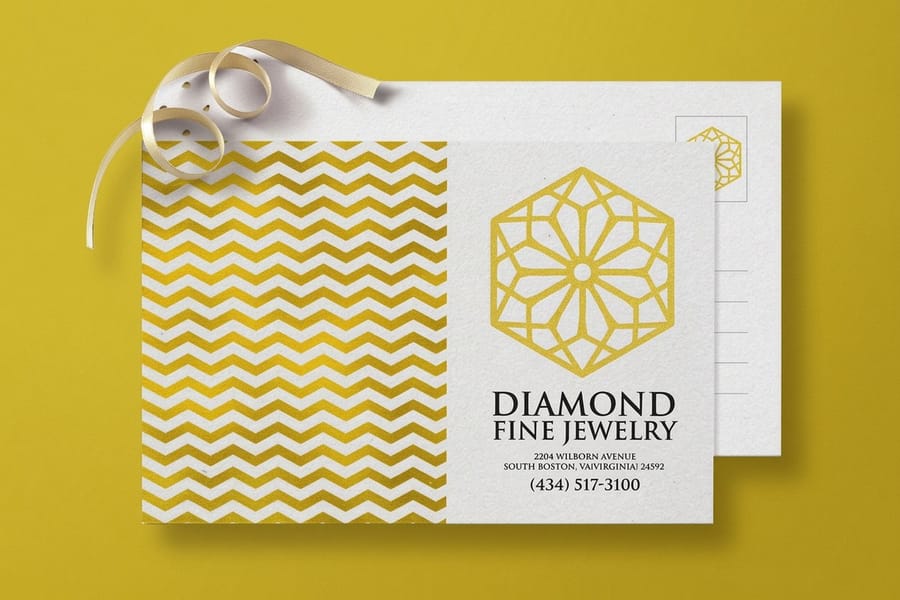
Rectangles are not your only option. Once the message calls for something that stands out in a stack, the shape becomes the size:
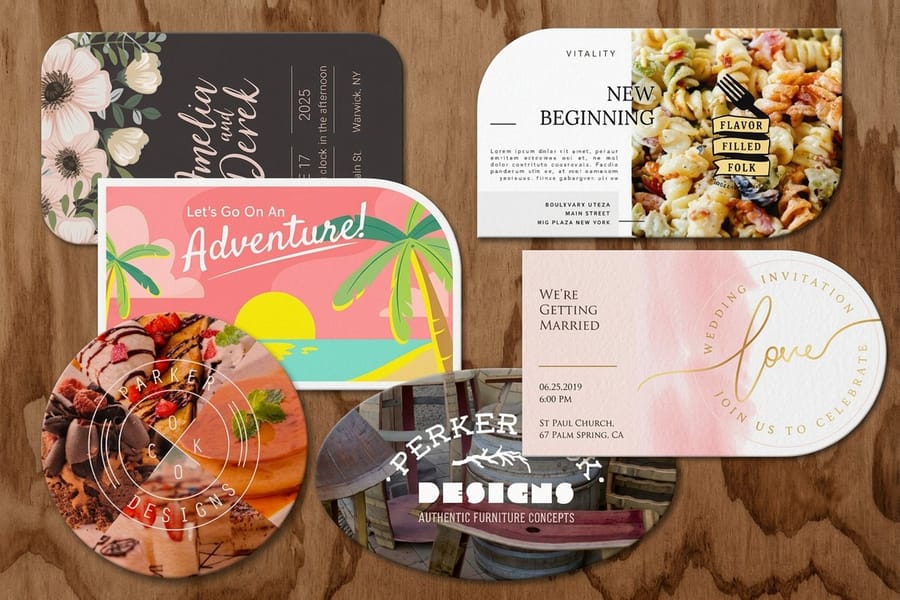
- Circle Flyers trade corners for a round format that reads as a coaster, a badge, or a sticker-style handout.
- Die Cut Flyers take any custom shape you can draw, cut to your outline.
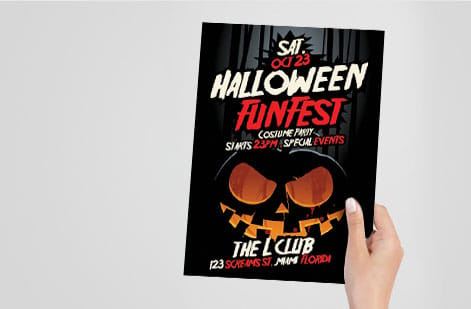
- Club Flyers print on heavy cardstock in 14 sizes, from a 2.5 inch square up to 6 by 11 inches, built for nightlife and events that want a postcard-thick feel.
These specialty formats still follow the same sizing logic: pick dimensions that suit the hand and the message, then add the shape or stock that makes it memorable. Browse the full lineup under marketing materials to see how flyers sit next to postcards, brochures, and door hangers.
Common flyer sizing mistakes

A few sizing errors show up again and again. Avoid them and your print job lands right the first time.
Designing without bleed. Backgrounds that stop exactly at the trim line risk a white edge. Always extend to the bleed.
Picking a size for the design instead of the reader. A gorgeous full sheet is wasted if people were only going to glance at it for two seconds on a busy sidewalk. Start from how it will be received.
Cramming a full sheet of copy onto a handbill. Small sizes force focus. If the message will not fit at 4.25 by 5.5, either cut the copy or size up, do not shrink the type to 6 points.
Ignoring mailing dimensions. If the flyer is going in the mail, confirm it fits standard postal sizes before you print, and read up on flyer distribution first.
Guessing at units. Mixing up inches and centimeters can turn a tidy 5.5 by 8.5 inch flyer into an oversized 5.5 by 8.5 centimeter stamp. Confirm the unit before you export.
Print your flyer in the optimal size at 4OVER4

Once the size is settled, printing it should be the simple part. 4OVER4.COM Standard Flyers cover nine set sizes plus custom, on seven stocks, with pricing that starts at $57.11 for 100 and keeps dropping across 24 quantity tiers as the run grows. That means the same file scales from a small test batch to a full campaign without redesigning anything.
Not sure the size will feel right on your stock? Get free samples, then upload your art or build it in the Online Designer. Every order is backed by the Gold Standard guarantees, including a price match that beats a lower price from a U.S. retail printer by 10%. Pick your dimension, and the crisp, correctly-cut flyer follows. New to the format? Start with the guide hub or compare siblings like the postcard sizes guide.
Wally sizes up your flyer
Right size, right message, clean cut every time
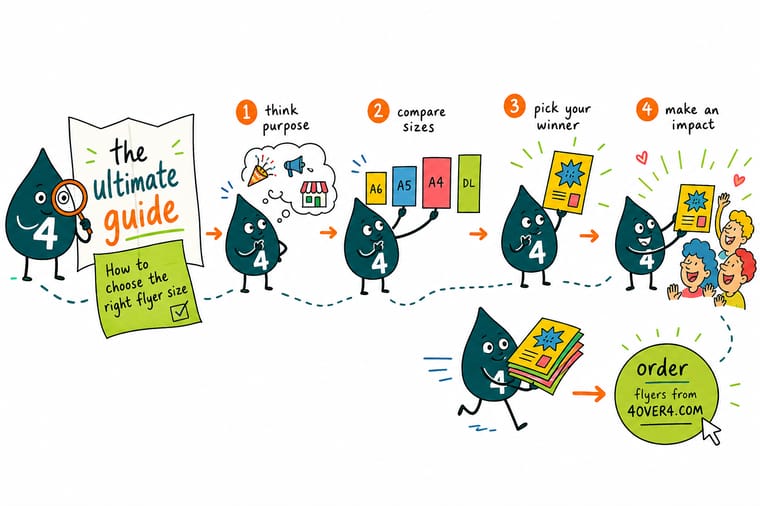
Wally lines up the whole flyer family with a ruler: the little 4.25 by 5.5 handbill, the trusty 5.5 by 8.5 half sheet, and the big 11 by 17 sheet that reads from across the room. His rule is simple, let the job pick the size, not the other way around. Once you know the dimension, print it in the optimal size on real stock at 4OVER4, with nine set sizes plus custom and a price that keeps dropping as the run grows.
Order flyers →
Specs and pricing
Standard flyer specs and live pricing
Once you have your size, here is what a run of 4OVER4.COM Standard Flyers gives you, with live specs and price-per-unit straight from the configurator.

| Quantity | Price Per Unit | Total |
|---|---|---|
| 50 | 79.1¢ | $39.54 |
| 100 | 57.1¢ | $57.11 |
| 200 | 37.3¢ | $74.69 |
| 300 | 28.6¢ | $85.68 |
| 400 | 24.4¢ | $97.76 |
| 500 | 21.8¢ | $108.75 |
| 600 | 18.7¢ | $112.03 |
| 700 | 16.5¢ | $115.33 |
Print it
Flyers worth handing out


See it in use
Flyers we trimmed to every standard size


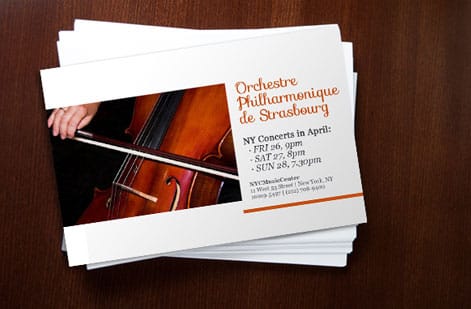

Explore more
Where to go next
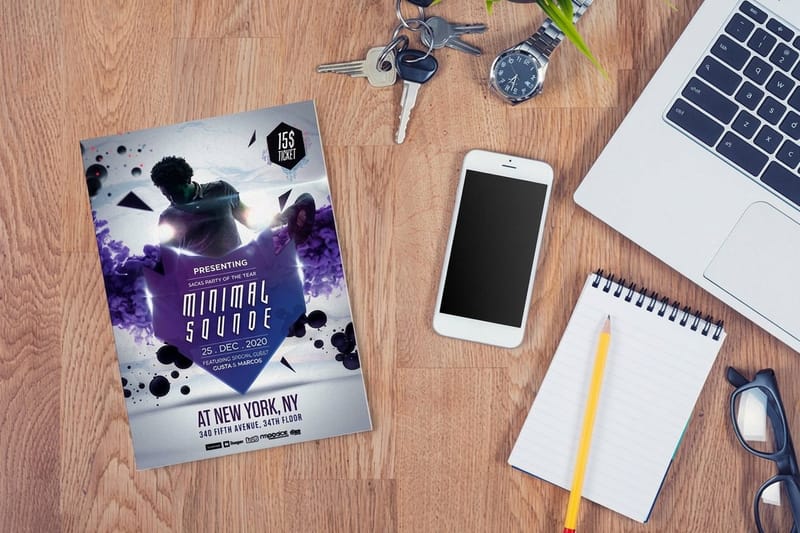
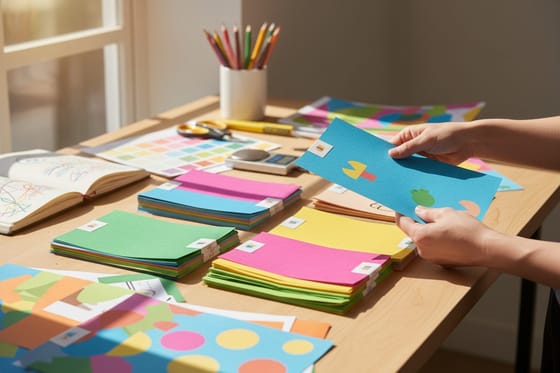

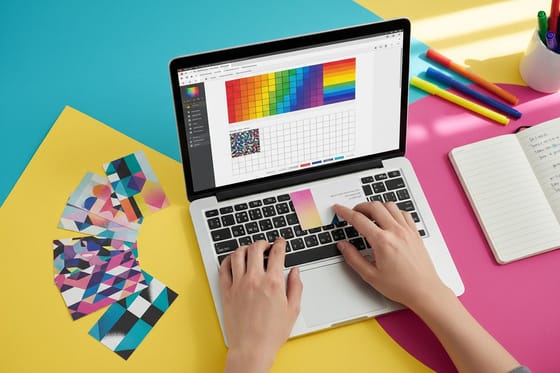
By the numbers
Club flyers at $0.33, circle flyers at $1.96
Common Questions
Common questions about flyer sizes
What are flyer sizes in inches and centimeters?
The common flyer sizes are 4.25 by 5.5 inches (10.8 by 14 cm), 4 by 6 inches (10.2 by 15.2 cm), 5 by 7 inches (12.7 by 17.8 cm), 5.5 by 8.5 inches (14 by 21.6 cm), 6 by 9 inches (15.2 by 22.9 cm), 8.5 by 11 inches (21.6 by 27.9 cm), and 11 by 17 inches (27.9 by 43.2 cm). If you work in the A-series, A6 is 10.5 by 14.8 cm, A5 is 14.8 by 21 cm, and A4 is 21 by 29.7 cm.
What is the half sheet flyer size?
A half sheet flyer is 5.5 by 8.5 inches, or 14 by 21.6 centimeters. The name is literal: cut a standard 8.5 by 11 inch letter sheet across the middle and each piece is a half sheet. It prints two-up on a common sheet, so it is affordable, and it holds a full message without needing a fold.
What is the average or most common flyer size?
The average size of a flyer is the half sheet at 5.5 by 8.5 inches. It is the default most businesses reach for because it balances message room against cost, hands out easily, and fits standard envelopes for mailing. Smaller handbills and full 8.5 by 11 inch sheets are the next most common.
Does this flyer get handed over, posted or mailed?
Match the size to how people receive the flyer. Use 4.25 by 5.5 inches for in-person handouts, 5.5 by 8.5 inches for general promotion, 8.5 by 11 inches for detail-heavy or posted flyers, and 11 by 17 inches when you want near-poster impact. Ordering free samples first lets you feel each size on real stock before you commit.
What does printing a flyer cost, and how is the price set?
At 4OVER4.COM, Standard Flyers start at $57.11 for 100, and the per-flyer price keeps dropping across 24 quantity tiers all the way to 25,000. Price is driven by quantity, paper stock, and size, so a larger run on a lighter stock costs far less per piece than a small run on heavy cover.
What is the largest flyer size I can order?
Standard Flyers at 4OVER4.COM go up to a full 11 by 25.5 inches, which reads almost like a small poster. Large-format flyers usually start at 11 by 17 inches (the tabloid size). For anything larger and wall-bound, a dedicated poster format is the better fit.
Get Started
Order 50 die-cut flyers from $34.05
Pick your size, drop in your art or build it in the browser, and we print crisp, correctly-cut flyers on the stock you want.
Legal Disclaimer
Gold Standard guarantees apply to all standard orders placed through 4over4.com. Price match requires verifiable proof of a competitor's published price for an equivalent product with matching specifications and turnaround time. Satisfaction guarantee covers manufacturing defects and print quality issues. Contact support with order number and documentation.
