
Return Address Format That USPS Equipment Reads Correctly


Jordan is our labels, packaging and sustainability voice, built from the knowledge of our production team, with over 20 years in printing.
The corner card is four lines in one corner, and almost every mistake is a placement mistake. Here is the format, the zones to avoid, and when a return address stops being optional.
A return address goes in the upper left corner of the address side, reading the same direction as the delivery address, on four lines: name, company if there is one, street or PO Box, then city, state and ZIP. Keep it at 8 to 10 point, smaller than the delivery block, a quarter inch clear of the top and left edges, and entirely out of the bottom five eighths of an inch, which a letter reserves for the barcode. It is optional on a single stamped First Class letter and required on Priority Mail, bulk rate mail, package services and anything insured, certified or endorsed.
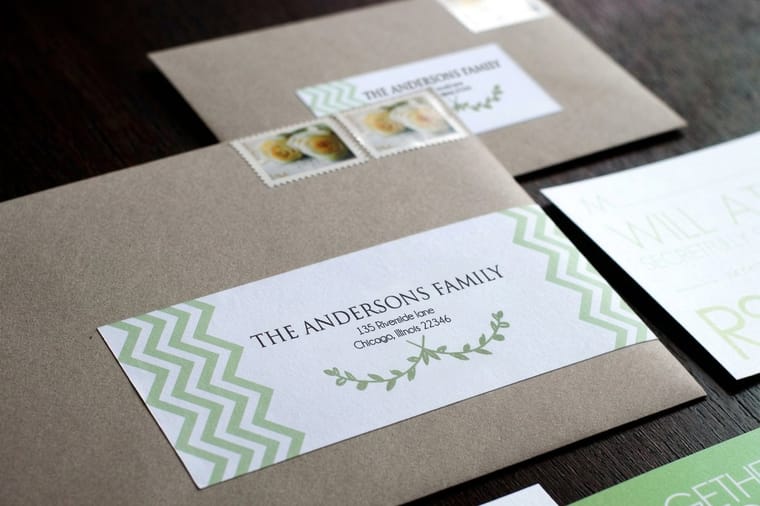
Quick answer
Top left, four lines, and out of the barcode strip
The return address is the only block on an envelope you place by eye, which is why it is the one that goes wrong. Set it in the upper left corner of the address side, reading the same direction as the delivery address, on four left justified lines: name, company, street or PO Box, then city, state and ZIP. Hold it to 8 to 10 point so the delivery block stays visibly larger, keep a quarter inch clear of the top and left edges, and never let ink or a label edge reach into the bottom five eighths of an inch. The diagram below shows all three zones drawn to scale on a #10 envelope.
The Exact Corner, and the Two Zones You Must Stay Out Of
Put the return address in the upper left corner of the address side, printed parallel to the longest edge so it reads the same way as the delivery address. That is the whole placement rule. What trips people up is everything around it.
A letter is sorted by a machine that looks at fixed regions of the envelope. The delivery address has to fall inside the read area, which starts half an inch in from the left and right edges and runs from five eighths of an inch to about two and three quarter inches above the bottom edge. Below that read area, the bottom five eighths of an inch across the full width belongs to the barcode. Nothing prints there. Not a tagline, not a corner of a label, not the bottom of an oversized logo.
So the return address has one job beyond being legible: stay high and stay left. On a #10 envelope you have roughly two and a half inches of width and three quarters of an inch of height in that corner before you reach the stamp on one side and the read area below. Keep a quarter inch clear of the top and left edges as well, because envelope presses cannot lay ink reliably over a glued seam or a fold, and because a label placed by hand drifts more than people expect.
One more thing worth knowing: the return address should be visibly smaller than the delivery address. Set the corner card at 8 to 10 point and the delivery block at 10 to 12 point. If both are the same size, a rushed clerk reading a returned piece has to work out which is which. Our guide to addressing an envelope covers the delivery block in the same detail.
What Goes on Each Line, in Order
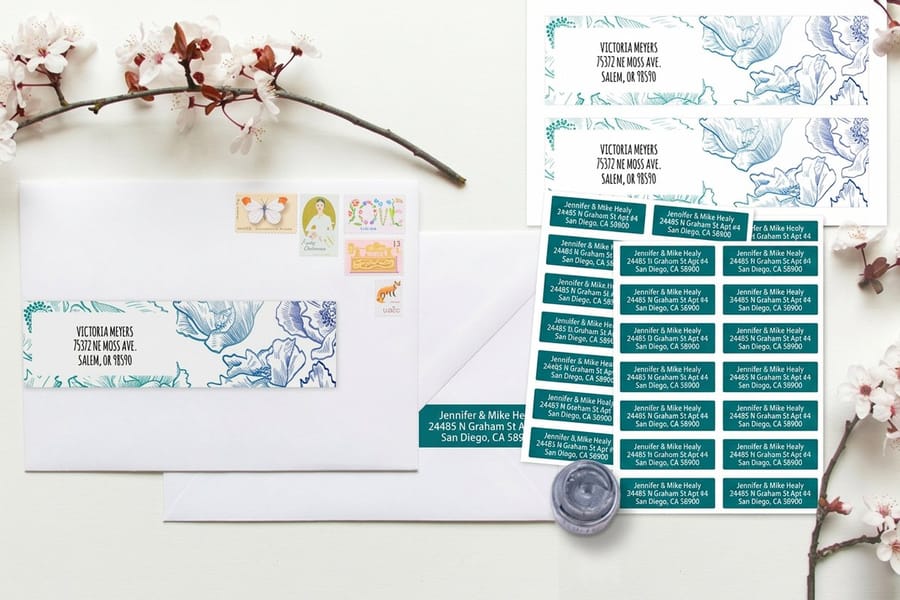
A return address uses the same line order as any US address. Four lines is the normal shape, three when there is no company name.
- Line 1, the name. A person for personal mail, the business name for business mail. If you want replies routed to a department, use the department here and the company on line 2.
- Line 2, the company or unit. Skip it entirely when there is none. Do not pad the block with an empty line.
- Line 3, the street or the PO Box. Apartment, suite and floor numbers go on this line, after the street, not on a line of their own. Use one or the other, never a street address and a PO Box together.
- Line 4, city, state and ZIP. Two letter state abbreviation, then the ZIP. Adding the four digit extension is worth the effort because it routes a returned piece faster.
Left justify everything. Postal addressing standards ask for uppercase with no punctuation and standard abbreviations, and that request is aimed squarely at the delivery address, which optical character recognition has to resolve at speed. The return address is only read after a failure, so mixed case is acceptable there and often looks better on stationery. What is not negotiable is the ZIP and the state code.
Keep the block to the address. Phone numbers, web addresses and slogans crammed into the corner card make the whole thing harder to scan and eat the space you need for the actual lines. Put the marketing on the letterhead inside, where somebody is already reading. If you are building a matched stationery set, the letterhead and stationery design guide shows how to carry one corner card treatment across the sheet and the envelope.
The Return Address on International Mail
International mail adds one line and one rule. The return address gains a country line at the bottom, USA or UNITED STATES OF AMERICA in capitals, on its own line under the city, state and ZIP, because the foreign post that fails to deliver the piece routes it home by that line alone. Everything else stays where it was, upper left of the address side, smaller than the delivery block.
The delivery address mirrors it. The destination country goes on the last line in English capitals, the postal code sits where that country puts it, which is often before the city, and the country is never abbreviated. On a package the customs form repeats the sender's full address, so the two have to match to the letter or the piece can be held. A corner card printed for domestic mail is easy to reuse abroad by adding the country line on a small label beneath it, as long as the label stays clear of the bottom five eighths of an inch.
Printed Corner Card, Label, or Stamp: Which One to Use
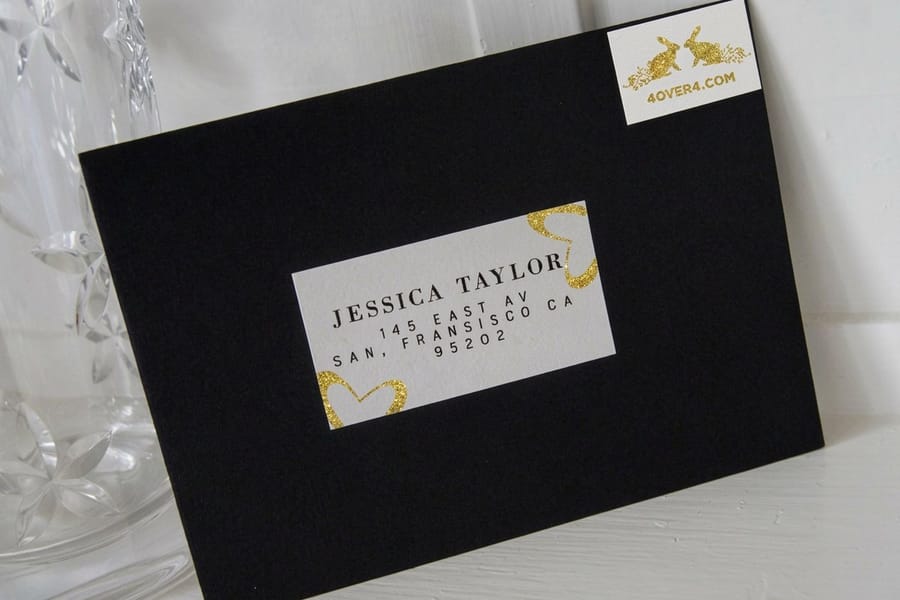
There are four ways to get a return address onto an envelope, and the right one depends less on looks than on how often the address changes.
| Method | How it looks | Best for | Where it fails |
|---|---|---|---|
| Printed corner card | Ink on the envelope itself, full color, no visible edge. | A fixed address and a run you will use up within a year. | An address change turns the remaining stock into scrap. |
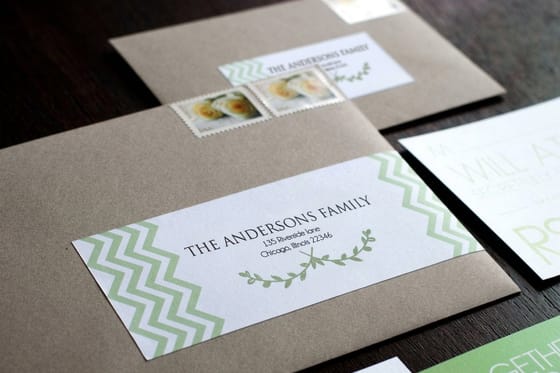
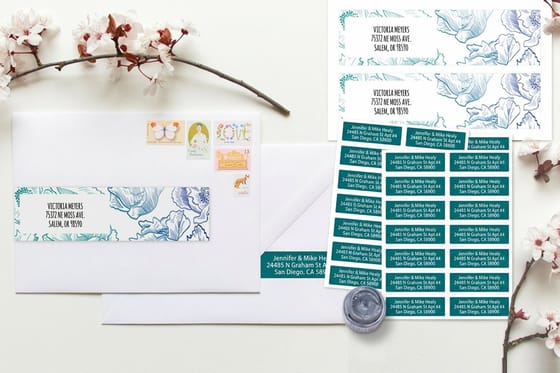
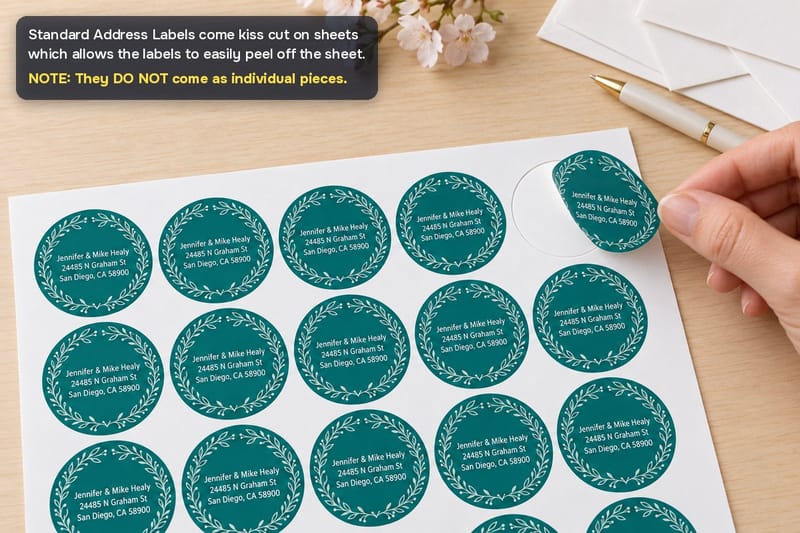
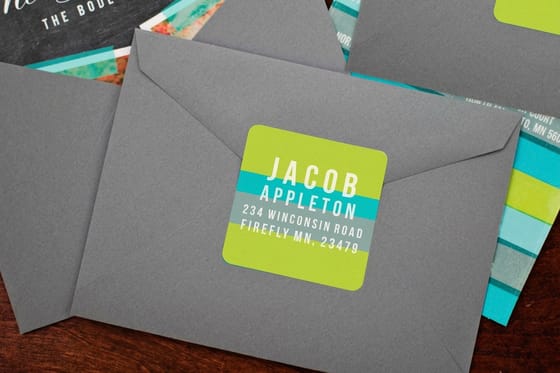
| Sheet labels | A clean rectangle with a slight edge you can feel. | Mixed envelope sizes, short runs, addresses that may change. | Hand application drifts, and a crooked label reads as careless. |
| Roll labels | Same as sheet, applied faster and straighter. | High volume with a label applicator or a dispenser. | Wasted spend without the equipment to feed the roll. |
| Rubber stamp | Single color, slightly uneven by design. | Low volume, craft and small batch mail. | Smears on coated or glossy envelope stock, and slow past 50 pieces. |
The money runs in a clear direction. Standard address labels start at $23.88 and premium address labels at $29.16, so a label solution costs less to start than almost anything else and survives a move. Printed envelopes start at $142.99, which buys the cleanest result and removes a handling step from every piece you send, but it locks the address into the paper. Roll address labels start at $322.98 and only make sense once somebody is applying enough labels per day that hand peeling is the bottleneck. To see each label format before you choose, watch the short stories on Premium Custom Labels, roll address labels, Roll Business Labels and Roll Custom Labels.
A practical rule from the counter: if a rebrand, an office move or a new phone number is plausible inside the next twelve months, buy plain envelopes and labels. If the address has been the same for five years, print the corner card and stop touching it. Shop the full range in address label printing or in envelope printing.
When USPS Requires a Return Address, and What Happens Without One
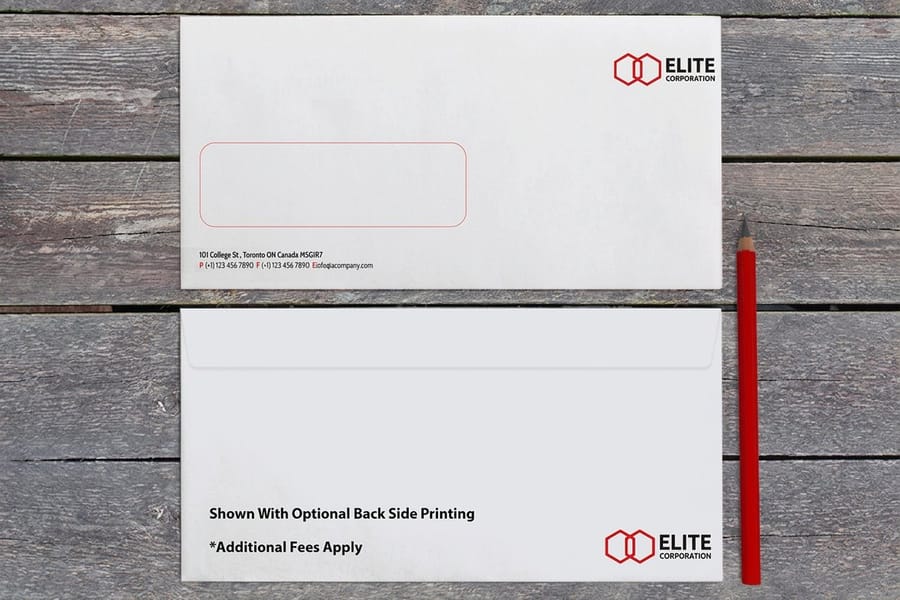
A single First Class stamped letter is allowed to travel with no return address at all. That exception is why most people assume the return address is decoration. It is not, and the list of mail that requires one is long.
USPS requires a return address on Priority Mail and Priority Mail Express, on package services, on bulk rate mail including USPS Marketing Mail and Periodicals, on insured, registered, certified and COD pieces, on anything carrying an ancillary service endorsement such as Address Service Requested, and on mail paid with a permit imprint. In practice that covers nearly every business mailing worth sending. If you are running a direct mail campaign, the return address is also the mechanism that gets your list cleaned, because undeliverable pieces come back with the reason printed on them.
Without one, an undeliverable piece cannot be returned. It goes to a Mail Recovery Center, and for ordinary printed mail that is the end of it. You lose the piece, you lose the postage, and you never learn that the address was bad, which means you pay to mail it again next quarter.
The endorsement is worth understanding on its own. Adding Address Service Requested above the return address tells USPS to forward the piece and send you the new address, or return it with the reason. It costs a fee per piece, and on a list you plan to mail repeatedly it pays for itself the second time around. For postcards the same placement logic applies but the geometry is tighter, which is covered in the postcard address side layout rules.
Where the Return Address Goes on a Package or a Padded Mailer
A package follows the same corner rule as a letter, on the largest flat face rather than the address side of an envelope. Put the return address in the upper left of the face that carries the delivery address, at least an inch in from both edges, and never across a seam, a flap or the tape line, where a label wrinkles and the ink breaks. On a padded mailer that face is the one without the fold over flap. Handwriting is acceptable, but a printed label reads faster and survives a wet truck.
Two things differ from a letter. USPS requires a return address on every package service, so leaving it off is not an option the way it is on a stamped letter. And a shipping label from a postage tool already carries the return address in its own block, so do not add a second one beside it, because two sender addresses on one box slow a clerk down when the box comes back. Standard address labels from label printing fit the corner of any mailer.
Setting Up the Artwork So It Prints Where You Drew It
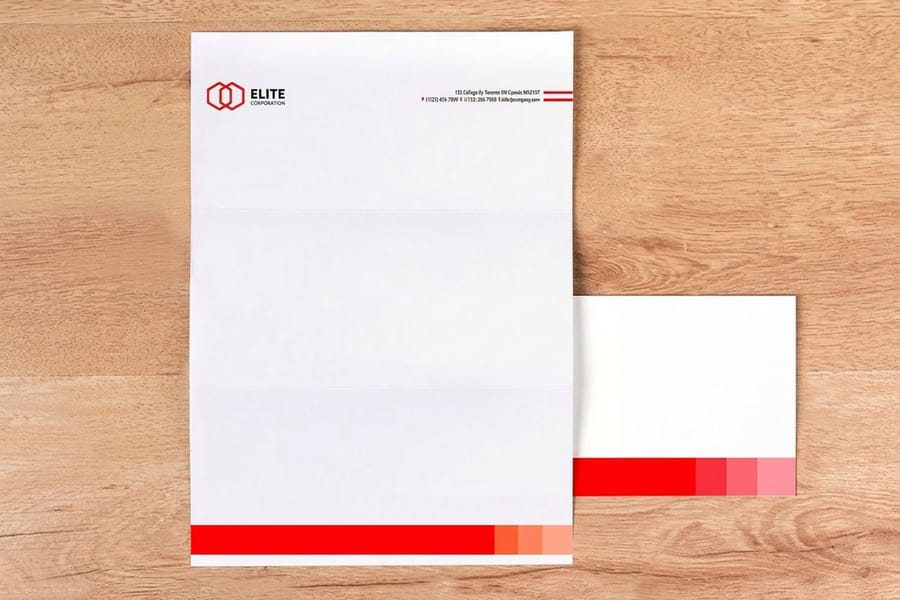
Most return address problems are file problems, not design problems. Four checks catch nearly all of them.
- Respect the no-print margin. Keep the whole block a quarter inch clear of the top and left edges. Converted envelopes have glue seams and a folded flap under the printing surface, and ink laid over a seam sits unevenly.
- Measure from the bottom, not the top. Before you send the file, check the distance from the bottom edge to the lowest ink in your corner card. Anything within five eighths of an inch of the bottom is in the barcode zone, which matters most on small envelopes and on postcards where the block sits lower.
- Watch the window. On a window envelope the return address must be printed on the envelope, never inside the window, and it needs clearance from the window opening because the insert shifts as it settles. The window envelope setup guide has the tolerances.
- Outline the type. Convert fonts to outlines and supply artwork at full size. Small type is where a substituted font shows up first, and 8 point text that reflows loses a line.
If you are printing labels rather than envelopes, size the artwork to the label, not to the corner of the envelope, and leave an eighth of an inch of quiet space inside the label edge. Type that runs to the die line looks trimmed even when it is not. Start from a correctly sized file in the blank template library, and if you are laying out both the sheet and the envelope, our stationery set guide keeps the two consistent.
One last check before you order a long run: print a single sheet at 100 percent, cut it out, and hold it against an envelope. Reading the block at actual size catches an address error faster than any amount of screen proofing, and it costs nothing.
Wally explains the corner card
Four lines, top left, and stay off the bottom strip
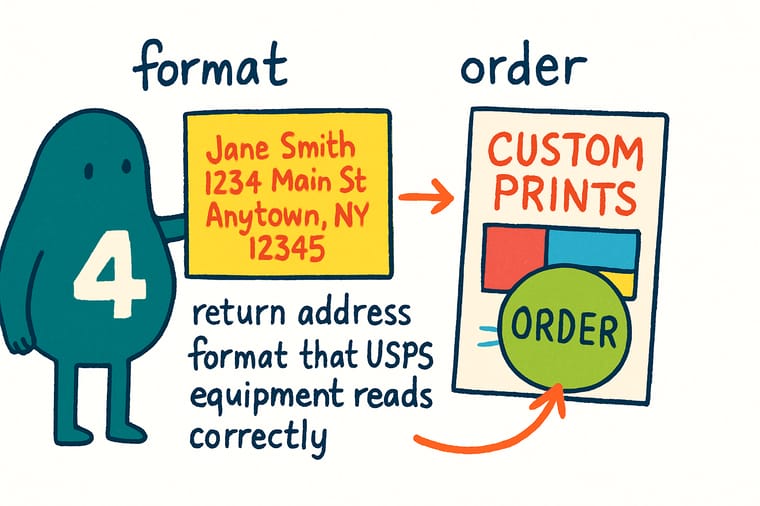
Wally puts the return address where the machine expects it: upper left, reading the same way as the delivery address, four lines and nothing else. Name, company, street or PO Box, then city, state and ZIP. He keeps it a quarter inch off the top and left edges so the press does not fight a glued seam, and he keeps every drop of ink out of the bottom five eighths of an inch, because that strip belongs to the barcode. Smaller type than the delivery block, always. That size difference is how a clerk knows which address is the destination.
Order premium address labels →
Specs and pricing
Labels, envelopes, sizes and starting prices
Standard address labels start at $23.88 for 25, in sizes that include the 1 x 2.625 inch address label, on uncoated, semi gloss, hi gloss, white vinyl or clear stock. Premium address labels start at $29.16 for 25, from 3 x 5 to 5 x 7 or any size, with rounded corners as an option. Printed envelopes start at $142.99 for 250, #10 or #9 in regular or window styles, on White Wove or Royal Laid paper, with 7 business days of standard production. Compare the two ways to carry a return address side by side, with live configuration choices and starting prices straight from the 4OVER4.COM configurator.
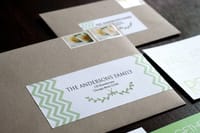
Print it
Put your address in the right corner
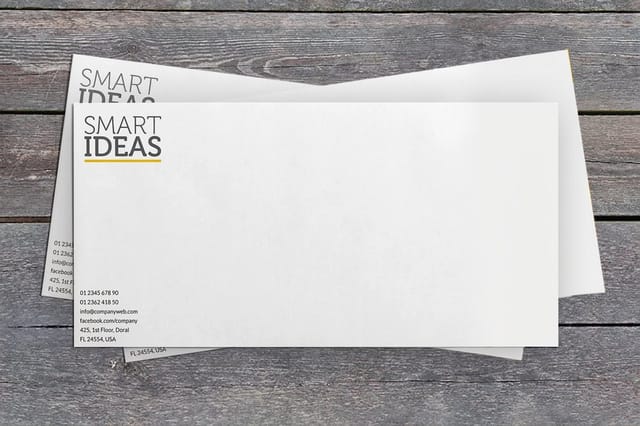
A label goes in the upper left corner of any envelope you already own; a printed envelope carries the four line block from the press, 8 to 10 point, a quarter inch from the top and left edges. Standard labels start at $23.88 for 25 and printed envelopes at $142.99 for 250.
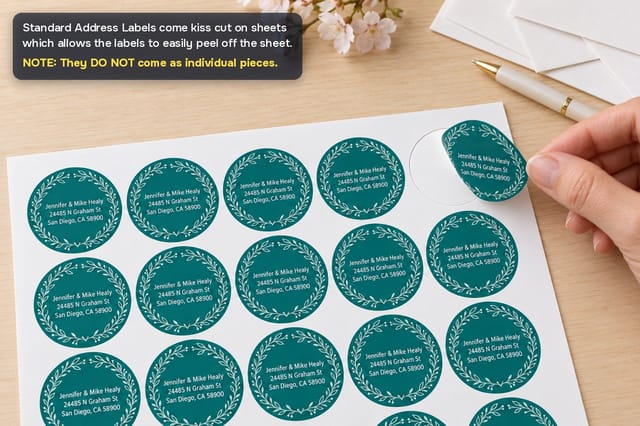
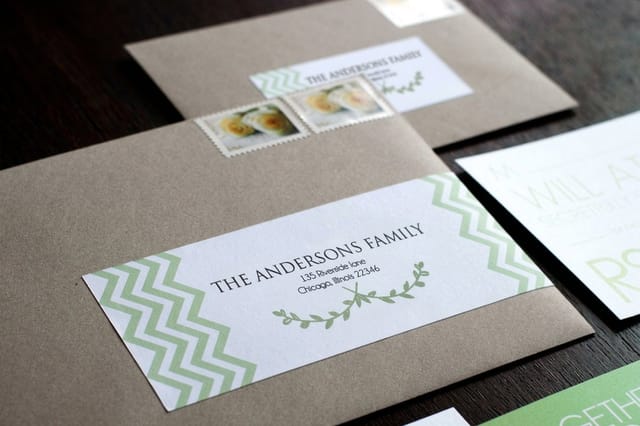
%22%2F%3E%3Ccircle%20cx%3D%2242%22%20cy%3D%2249%22%20r%3D%2227%22%20fill%3D%22%23f59e0b%22%20opacity%3D%220.15%22%2F%3E%3Ccircle%20cx%3D%2278%22%20cy%3D%2258%22%20r%3D%2214%22%20fill%3D%22%23f59e0b%22%20opacity%3D%220.1%22%2F%3E%3Crect%20x%3D%2272%22%20y%3D%2229%22%20width%3D%2227%22%20height%3D%2234%22%20rx%3D%224%22%20fill%3D%22%23f59e0b%22%20opacity%3D%220.08%22%20transform%3D%22rotate(37%2080%2030)%22%2F%3E%3C%2Fsvg%3E)
Explore more
Where to go next
The return address is one block; these guides cover the rest of the envelope: the delivery address and its abbreviations, printing labels from a spreadsheet, which envelope sizes take which insert and where a window has to sit. The last cards list every address label and the common printing questions.
By the numbers
The printer your envelopes come from, in four numbers
Common Questions
Your return address questions, answered
How do I put a return address on an envelope in Word?
Open the Mailings tab, choose Envelopes, and type the return address in the return address box. Word places it in the upper left at a smaller size than the delivery address and prints it when you feed the envelope. To control the position, draw a text box instead, anchor it a quarter inch from the top and left edges, set it to 8 to 10 point, and print one test envelope to check that it lands clear of the barcode strip.
How do I write a return address for international mail?
Use the same four lines and add a fifth line, USA, in capitals at the bottom. Keep it upper left on the address side, smaller than the delivery address, and leave the ZIP and the two letter state code in place, because the returning post routes by the country line first and the ZIP second. On a package the customs form repeats the sender address, so the two must match exactly.
Where does the return address go on a wedding invitation envelope?
On the back flap is the tradition, centered on the flap, and USPS accepts it because a person rather than a machine handles a returned social piece. Put nothing in the front upper left so the envelope does not read as having two return addresses. If a large batch is going out and you want undeliverables back fast, print it on the front instead, since sorting equipment only looks at the address side.
What is the correct return address format?
Four lines, top left corner of the address side, reading the same direction as the delivery address. Line one is the person or the business name. Line two is the company or department, and you skip it if there is none. Line three is the street address with the unit number on the same line, or the PO Box. Line four is city, state and ZIP, with the state as the two letter abbreviation and no comma needed before it. Left justify every line and keep the whole block at 8 point or larger.
Can the return address go on the back flap of the envelope?
USPS accepts it, and it is still the convention for wedding and social stationery, but it costs you time on anything undeliverable. Sorting equipment only looks at the address side, so a flap return address is found when a person turns the envelope over. For business mail, and for anything you actually want back quickly, print it on the front. If the design calls for a flap address, keep it centered on the flap and put nothing on the front upper left so the piece does not read as having two return addresses.
Is a return address required on every piece of mail?
No. A single piece First Class stamped letter can travel without one. USPS does require a return address on Priority Mail and Priority Mail Express, on package services, on bulk rate mail such as USPS Marketing Mail and Periodicals, on insured, registered, certified and COD pieces, on anything with an ancillary service endorsement such as Address Service Requested, and on mail paid with a permit imprint. Leave it off an undeliverable letter and it ends up at a Mail Recovery Center rather than back in your hands.
Should the return address be in all caps with no punctuation?
Postal addressing standards ask for uppercase, no punctuation and standard abbreviations because that is what reads cleanest through optical character recognition. That matters most for the delivery address, which the machine has to resolve. The return address is only read when a piece fails, so mixed case is fine there if it suits the design. What does matter is the ZIP, and adding the four digit extension speeds up anything that comes back.
What size are return address labels?
The classic size is half an inch by one and three quarter inches, which fits 80 to a letter sheet and sits comfortably in the top left corner of a #10 envelope. Larger labels around one inch by two and five eighths inches give you room for a logo but start competing with the stamp. Standard address labels at 4OVER4.COM start at $23.88 and premium address labels at $29.16, so testing a size before committing to a long run costs very little.
Is it cheaper to print the return address on the envelope or use labels?
It depends on how long the address stays true. Printed envelopes start at $142.99 and give you the cleanest result with no extra handling step, which wins on any repeating mailing from a fixed address. Labels start at $23.88, work on stock you already have, and can be reprinted the day you move offices. If you expect an address change, a phone number change or a rebrand inside the next year, buy the labels and keep the envelopes plain.
Can I use a PO Box as the return address?
Yes, and you should not mix it with a street address in the same block. Pick one. A block that carries both a street line and a PO Box line forces the equipment to choose, and it will use the line directly above the city, state and ZIP. If you need the street address visible for branding, put it in the letterhead rather than in the corner card on the envelope.
Get Started
Ready to get your return address printed right?
Pick a label size or a printed corner card, drop in four lines, and we print a return address that lands in the corner the sorting equipment expects.
Legal Disclaimer
Gold Standard guarantees apply to all standard orders placed through 4over4.com. Price match requires verifiable proof of a competitor's published price for an equivalent product with matching specifications and turnaround time. Satisfaction guarantee covers manufacturing defects and print quality issues. Contact support with order number and documentation.
