
Custom Tuck Boxes Explained, Styles, Sizing And Dieline Prep


The carton style behind most retail shelf packaging. Here is how the two tuck ends differ, how to size one from the product out, and how to build a dieline that folds without a fight.
A tuck box is a folding carton glued on one vertical seam and closed at the top and bottom by flaps that tuck inside the box, so it ships flat and needs no tape. Straight tuck end hinges both flaps off the back panel and leaves the front face unbroken. Reverse tuck end hinges the top off the back and the bottom off the front, which lets blanks nest on the press sheet for a lower unit cost. Both are sized by inside dimensions, length by width by depth, on 14pt to 24pt board.

Quick answer
One hinge separates a straight tuck from a reverse tuck
Straight tuck end puts both closures on the back panel; reverse tuck end splits them between the back and the front. That is the whole structural difference, and it decides two things you care about: whether a score line crosses your front graphic, and how efficiently the blanks nest on the press sheet. Straight tuck protects the face, reverse tuck protects the budget. Everything else, board weight, finish, window, foil, is a choice you make on top of either one.
What Is Actually In A Tuck Box
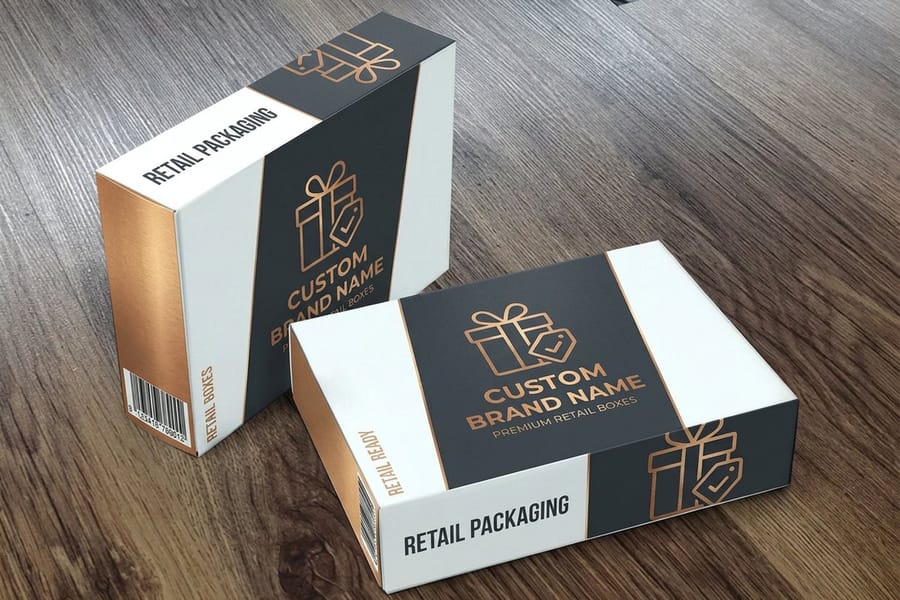
Flatten a tuck box and you get one continuous blank with five vertical panels and a set of flaps. Every rule about sizing and artwork comes out of that shape, so it is worth naming the parts before touching a file.
The five panels are the glue flap, then front, side, back, side. The glue flap is a narrow strip, usually around half an inch, that the folder gluer wraps behind the last panel to close the sleeve. It never carries artwork, because adhesive does not bond well through a heavy ink film and any graphic that lands there disappears inside the seam anyway.
At the top and bottom of the sleeve sit the tuck panels and the dust flaps. The tuck panel is the lid: a rectangle the depth of the box with a small tab that slips down behind the front wall. The dust flaps are the two little wings on the side panels that fold in first, close the corners, and give the tuck panel something to slide against. On shallow boxes, anything under about an inch deep, the tuck panel gets shortened and a pair of slit locks cut into the shoulders, otherwise the lid simply falls open.
The whole thing runs on paperboard rather than corrugated. Typical weights are 14pt to 24pt, with 16pt and 18pt covering most retail work, and the choice between coated white board and kraft decides how colour behaves later. The folding carton guide walks through the board options in more detail, and retail boxes is the product where you configure them.
Straight Tuck, Reverse Tuck, And The Styles People Confuse Them With
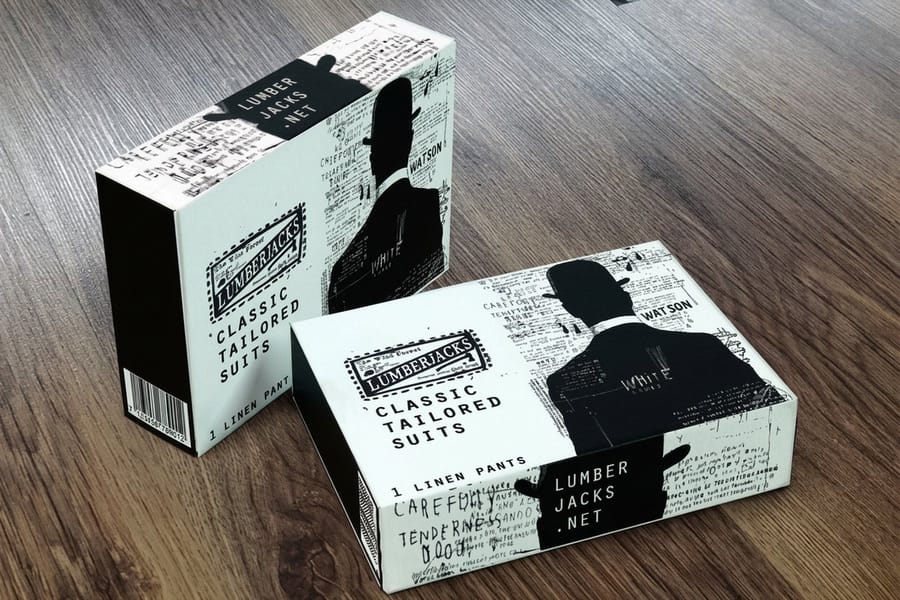
The difference between the two tuck styles is one hinge, and it changes both the front graphic and the price. Straight tuck end hinges the top and bottom flaps off the same panel, the back. Reverse tuck end hinges the top off the back and the bottom off the front.
That single change matters twice. On a straight tuck, the front panel is a clean rectangle with no flap attached to it, so a full bleed image runs corner to corner without a score crossing it. On a reverse tuck, the bottom flap grows out of the front panel, so there is a fold along the bottom edge of your main face. Set against that, reverse tuck blanks nest into each other on the press sheet, which means more boxes per sheet, less board, and a lower unit cost once the run is large enough for that to show.
| Style | How it closes | Board | Best for |
|---|---|---|---|
| Straight tuck end | Both tuck panels hinge off the back panel. | 14pt to 24pt paperboard | Retail faces where the front graphic must stay unbroken. |
| Reverse tuck end | Top off the back, bottom off the front. | 14pt to 24pt paperboard | Longer runs where board efficiency beats a perfect front. |
| Roll end tuck top | A hinged lid folds over from the back, side walls roll up. | Corrugated or heavy board | Subscription and gift packs that get opened like a book. |
| Sleeve | Open ended band that slides over a plain box. | Light board or thick paper | Branding a stock box without paying for a carton die. |
Two of these get quoted as tuck boxes when they are not. A roll end tuck top box is a shipper with a book style lid, much stronger and much bulkier. A packaging sleeve is a band, not a box, and it holds nothing on its own. If you are still weighing formats, choosing the best box style lays the whole family out.
Sizing A Tuck Box Without Guessing
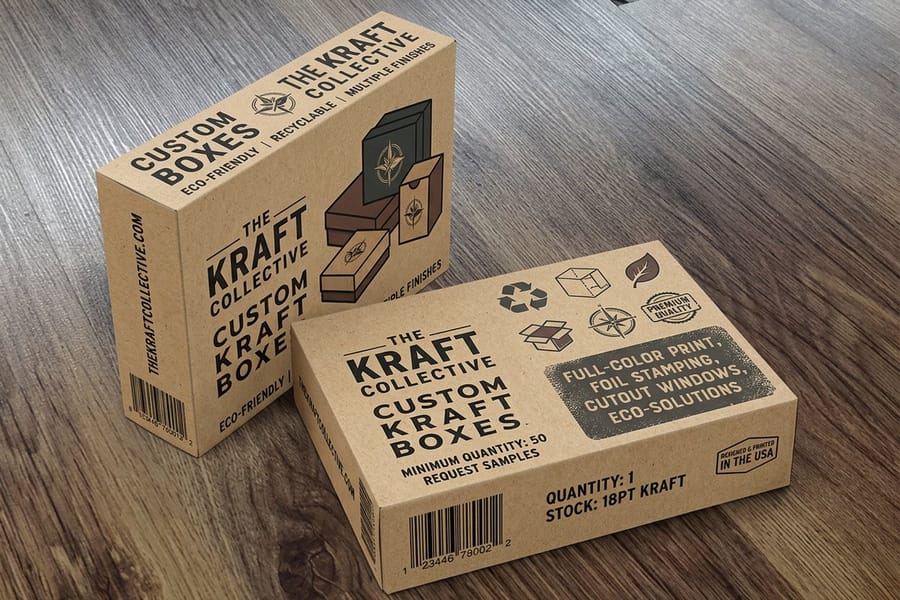
Carton sizes are inside dimensions, written length by width by depth, and read in that order every time. Length is the long edge of the opening, width is the short edge of the opening, depth is how far down the product sits. Get the order wrong on an order form and you receive a box with the right volume and the wrong shape.
Measure the product, not an existing box. If you take an outside measurement off a carton you already have and send that, the new dieline adds board caliper to it and the finished box ends up a caliper tight, which is exactly the amount that makes a product scrape going in. Add a small amount of ease instead. Around a tenth of an inch on each dimension suits a rigid product loaded by hand, a little more if the box is filled on a line or the contents are soft and inconsistent.
Depth deserves its own thought, because the tuck panel is cut to roughly the depth of the box. Go too shallow and the lid has no purchase, which is where slit locks come in. Go very deep with a narrow face and the sleeve racks sideways under its own height, so a stiffer board earns its cost. For a starting point by product type, the box size chart saves a round of measuring, and measuring a box properly covers the arithmetic.
One honest limit before you go further. A tuck box is a presentation carton, not a shipping container. Under a carrier network on its own it comes back with crushed corners, because paperboard has no flute to absorb an impact. Anything shipped direct either travels inside a corrugated outer or becomes a custom mailer box instead. The cardstock versus corrugated comparison draws that line clearly.
Building The Dieline So It Folds Right
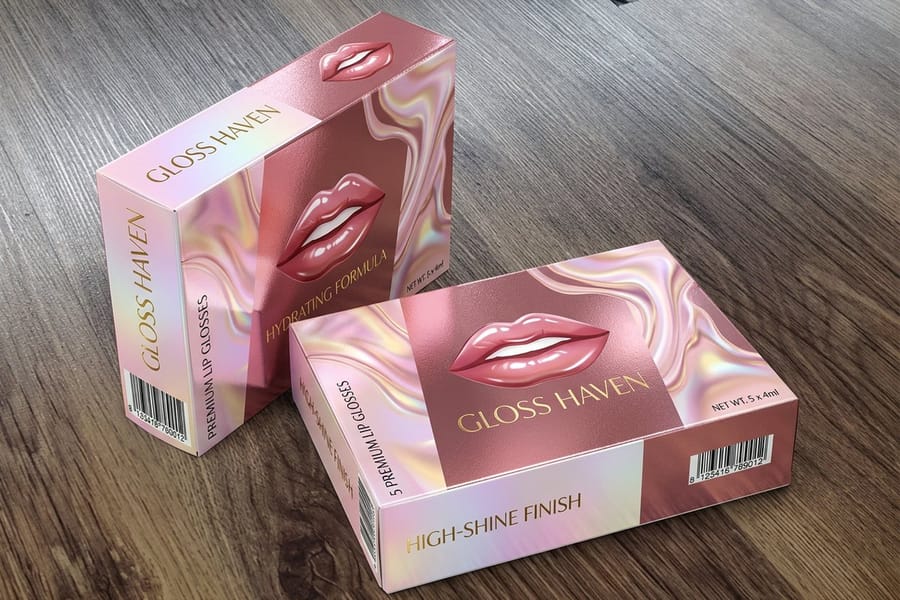
A packaging file is not a flat print file with folds drawn on. The dieline is a real object in the artwork, and how you supply it decides whether the proof comes back clean or bounces.
Keep the dieline on its own layer, drawn in a spot colour swatch named Dieline, set to overprint so it never knocks a hole in the artwork beneath it. Cut lines and fold lines get separate colours so the diemaker can tell them apart. The dieline itself does not print, and nothing else should live on that layer.
Then treat the flat blank like any print job. Bleed runs a full eighth of an inch past every outside cut line, including around the tuck tabs and the dust flaps, because a carton blank is trimmed on a rotary die that moves slightly more than a guillotine. Keep type and logos at least an eighth of an inch clear of every fold, since a score is a hinge with a real width and any element sitting on it distorts. Leave the glue flap empty.
Two things catch people out. Artwork on side panels and tuck panels has to be rotated so it reads correctly once the box stands up, and it is easy to build a beautiful flat file where the side copy reads upside down. And heavy dark solids crossing a fold on coated white board will show a fine white crack line along the crease, which is a property of the board rather than a print fault. Kraft has no white core to reveal, which is one quiet reason custom kraft boxes forgive rough handling. Our packaging file preparation guide has the full checklist, die cutting explained covers what the die actually does, and the blank template library serves the flat products that do have fixed templates.
What A Custom Tuck Box Run Costs And How To Order One

Cartons price the opposite way to flat print. A die has to be made and the folder gluer has to be set up before a single good box comes off, so the first unit is expensive and every unit after it is cheap. That is why the starting numbers look high next to a box of business cards and why doubling a quantity rarely doubles the bill.
Retail boxes start at $711.78, and so do custom kraft boxes and gloss boxes, which are the same carton in different board and finish. If your quantity is genuinely small, the honest answer is to avoid the die: packaging sleeves start at $438.25 and wrap a plain box in your branding for a fraction of a full carton programme.
Finish choice is where a tuck box earns shelf attention. Gloss lamination lifts colour saturation and wipes clean, matte reads more expensive and shows fingerprints on dark solids, and uncoated kraft turns every colour warmer and kills pale tints entirely. Design for the board you picked rather than correcting later. Spot gloss, foil and a die cut window all sit on top of any of them.
When the proof lands, check it as a folded object and not as a flat picture: read the side panels in the direction they will stand, confirm the barcode is on a panel that faces out, and verify the tuck depth against the depth you asked for. Checking a packaging proof lists what to look at in order. Browse everything in the custom box printing range, or compare boards across the packaging printing collection and the kraft printing collection.
Wally explains the tuck
One glue seam, two flaps, no tape anywhere
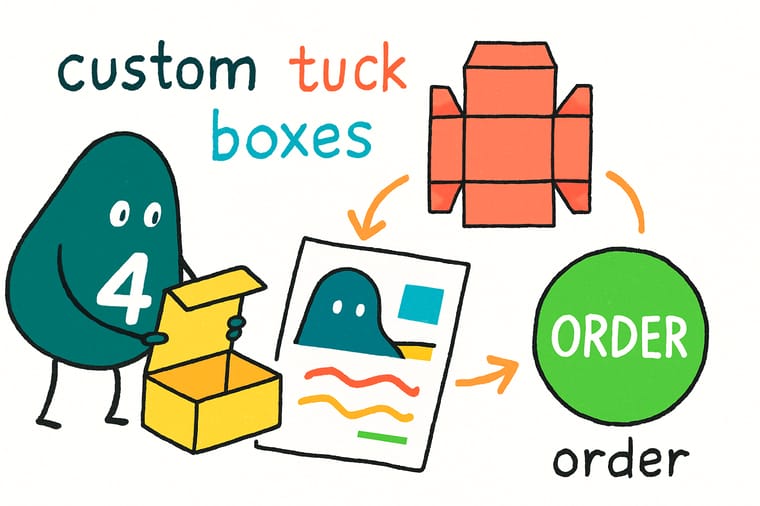
Wally starts with a flat blank: glue flap, front, side, back, side. The gluer wraps that narrow flap behind the last panel and the sleeve is done. Everything after that is folding. Dust flaps in first, then the tuck panel drops down behind the front wall and holds. Put both tucks on the back panel and the front stays a clean canvas. Split them front and back and the blanks nest on the sheet, so you pay for less board. That is the entire decision.
Configure custom tuck boxes →Specs and pricing
Tuck box options, boards, and starting prices
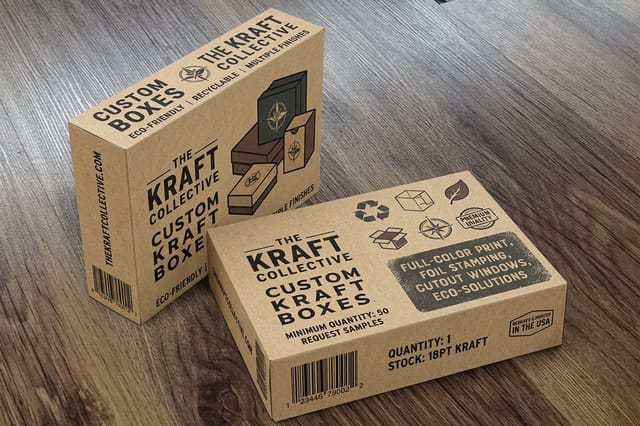
The same carton in three boards. Compare the configuration choices and starting prices straight from the 4OVER4.COM configurator.

Print it
Order a tuck box built to your product

Explore more
Where to go next
By the numbers
Packaging you can count on at 4OVER4
Common Questions
Your tuck box questions, answered
What is a tuck box?
A tuck box is a folding carton built from a single flat blank of paperboard, glued along one vertical seam and closed at the top and bottom by flaps that tuck into the box body. No tape, no second glue pass. It arrives flat, pops open into a rectangular sleeve, and locks shut when you fold the dust flaps in and push the tuck panel down behind the front wall. Almost everything you see boxed on a retail shelf at eye level, cosmetics, supplements, candles, small electronics, cartridges, is a tuck box of one style or another.
Straight tuck or reverse tuck, which should I order?
Straight tuck end if the front of the box is doing the selling, reverse tuck end if the run is large and the front graphic is forgiving. On a straight tuck both flaps hinge off the back panel, so the front is a single uninterrupted face with no score line crossing it. On a reverse tuck the bottom flap hinges off the front, which puts a fold across the bottom edge of your main graphic and can leave a faint line through a dark solid. In exchange, reverse tuck blanks interlock on the sheet, use less board, and come in slightly cheaper on a long run.
Do I give you the product size or the box size?
Give us the product size plus how snug you want it. Carton dimensions are always stated as inside dimensions, length by width by depth, and the dieline then adds board caliper on top so the flaps actually clear when the box is folded. If you hand over an outside measurement taken from an existing box, the new one comes back a caliper too small and the product fights going in. A tenth of an inch of ease on each dimension is usual for a rigid product, a little more for anything that has to slide in on a line.
Can I mail a tuck box on its own?
Not safely. A 16pt or 18pt carton is designed to sit inside an outer shipper, on a shelf, or in a hand. Sent alone through a carrier it arrives with crushed corners and a scuffed face, because there is no flute to absorb the hit. Put the tuck box inside a corrugated mailer for anything that ships direct, or skip the carton and use custom mailer boxes as the primary pack.
Do you supply a tuck box template?
A carton dieline is specific to the exact inside dimensions and the board caliper, so there is no generic file to download the way there is for flat print. Send the size and the style you want, and the dieline that gets built for your job comes back on the proof with the fold lines, the glue flap and the safety margins drawn. For the flat products where a fixed template does exist, the blank template library covers them.
Why did the fold crack on my dark box?
A heavy ink solid on coated white board is the one place carton folds show damage. The coating and the ink film sit on the surface, and when the score bends outward the fibres open and a fine white line appears along the crease. Three things reduce it: keep saturated solids off the fold itself, let the printer set grain direction so the main panel scores run with the grain, and consider kraft board, which has no white core to reveal. This is worth raising before the proof rather than after the run.
What quantity does a custom tuck box start at?
Custom cartons are die-based, so the economics are the opposite of business cards. Retail boxes start at $711.78 for the smallest configured run at 4OVER4.COM, and the per-unit cost drops steeply as the count climbs because the die and the setup are already paid for. If the quantity you need is genuinely small, a printed packaging sleeve around a plain box starts at $438.25 and gets you branded shelf presence without a carton die.
Get Started
Ready to put your product in its own box?
Send the product dimensions and the tuck style, pick a board and a finish, and we build the dieline, print the blank and ship it flat and ready to fold.
Legal Disclaimer
Gold Standard guarantees apply to all standard orders placed through 4over4.com. Price match requires verifiable proof of a competitor's published price for an equivalent product with matching specifications and turnaround time. Satisfaction guarantee covers manufacturing defects and print quality issues. Contact support with order number and documentation. On-time delivery rate based on tracked orders 1999 to 2026. Individual results may vary based on shipping carrier performance.
