
Best Paper for Pamphlets, From 80 lb Text to 100 lb Cover


The weights that fold without cracking, the coatings that survive a crease, and the point where a score stops being optional.
Print most pamphlets on 100 lb gloss text, about 148 gsm. It has enough body to stand in a rack, it holds saturated color, and it folds without a score on a standard folder. Drop to 80 lb text for high-volume mailings where postage matters, and move to 100 lb cover only for leave-behinds that must survive handling, in which case the sheet has to be scored before it is folded or the coating will split white along the crease.
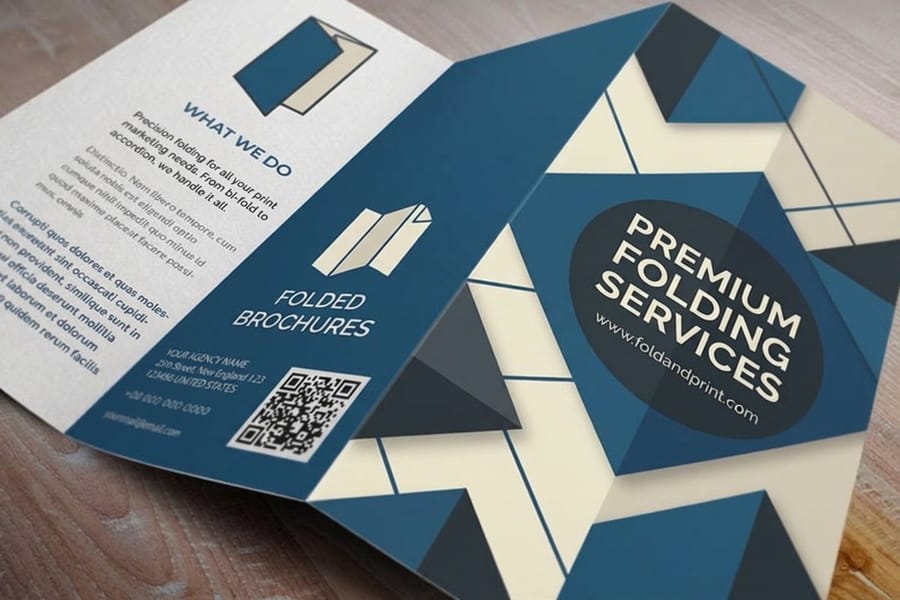
Quick answer
100 lb text folds. Cover weight has to be scored.
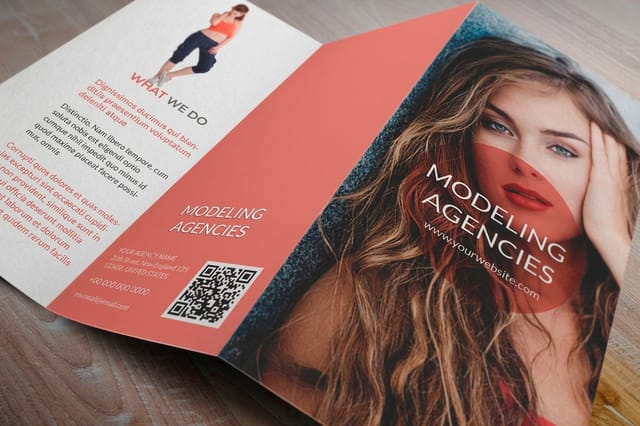
The pamphlet stock question is a folding question. Text weights up to 100 lb bend along the crease and the coating stretches with them. Cover weights do not, so the clay layer on the outside of the fold splits and shows white unless a score is pressed in first. Coating matters the same way: aqueous stays flexible, UV cures hard and cracks. Everything else, gloss against matte, coated against uncoated, is a choice about how the piece is read and handled.
Pamphlet Paper Weights, and What Each One Feels Like
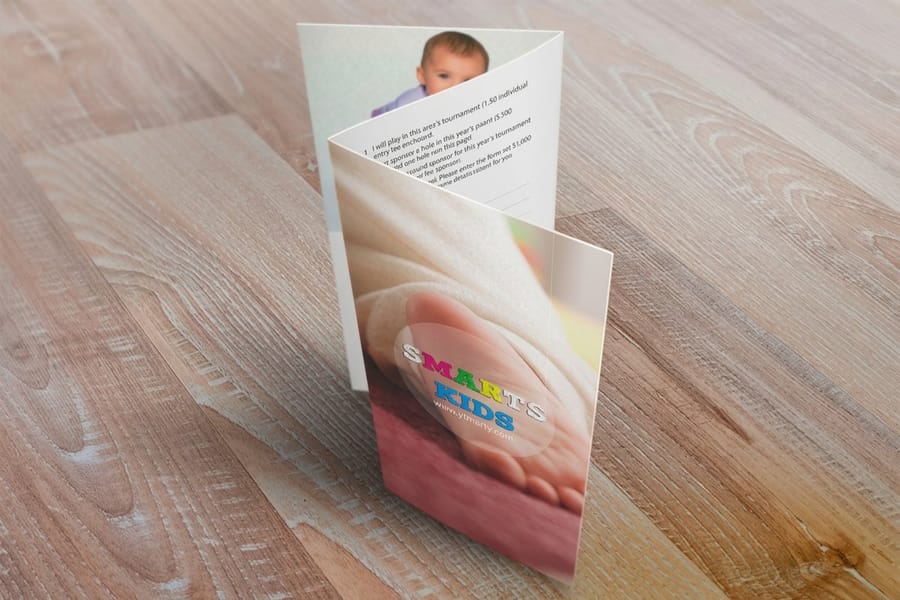
Paper weight for pamphlets is measured two different ways, and that is the source of most of the confusion. Text stock is weighed as a ream of large book sheets, cover stock as a ream of smaller cover sheets, so 80 lb text and 80 lb cover are nowhere near each other. Cover is roughly twice the sheet.
| Stock | Metric | How it feels | Use it for |
|---|---|---|---|
| 70 lb text | 104 gsm | Slightly heavier than office paper. Flexible, a little translucent under a light. | High-volume handouts and inserts where cost per piece rules. |
| 80 lb text | 118 gsm | Clearly a printed piece rather than a photocopy. Still folds and stacks easily. | Mailed pamphlets and event handouts in the thousands. |
| 100 lb text | 148 gsm | Has body. Holds its shape in a rack instead of flopping over the lip. | The default for almost every pamphlet and folded brochure. |
| 80 lb cover | 216 gsm | Card, not paper. Stands up on its own and resists a crease. | Leave-behinds and menus that get handled repeatedly. Score before folding. |
| 100 lb cover | 270 gsm | Stiff. Close to a postcard in the hand. | Premium single-fold pieces. Always scored, and folded with the grain. |
Below 100 lb text the sheet folds cleanly with no help. At 100 lb text a coated sheet is at the edge and benefits from a score. At cover weight a score is not optional. If you want the full pound-to-gsm crosswalk for every stock we run, the paper thickness and weight chart lays them side by side, and 100 lb gloss book paper gets its own breakdown.
One thing weight does not tell you is opacity. A pamphlet printed both sides on 70 lb text can show ghosting from the reverse panel, especially where a dark solid backs up a white panel. Moving to 100 lb text usually kills it. Flyers face the same question from a different angle, covered in the flyer paper weight guide.
Coatings Change How the Sheet Folds, Not Just How It Looks
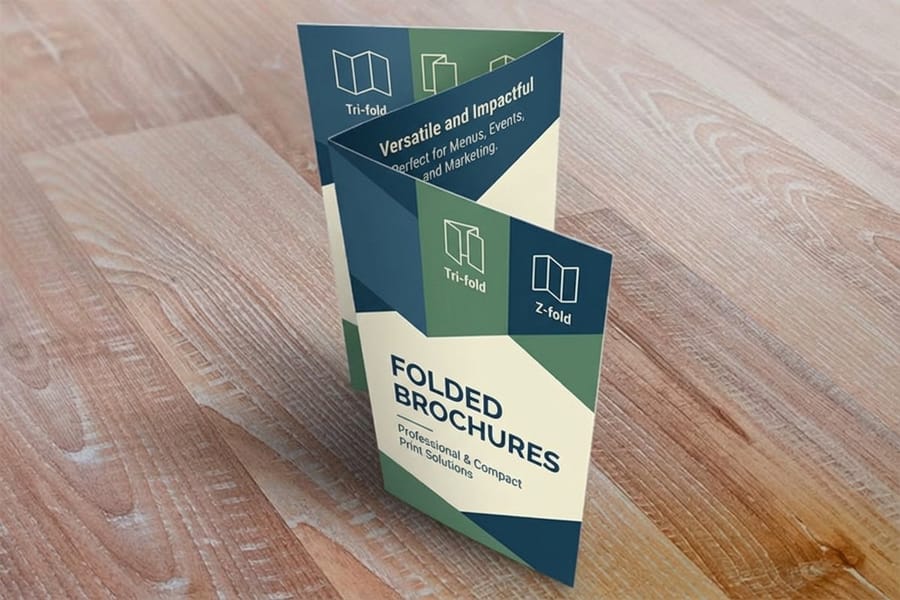
Every coated sheet carries a thin mineral layer that stops ink soaking into the fibres. That layer is why color looks sharp on coated stock, and it is also the layer that splits when you fold the sheet too hard. Which coating you pick changes how much abuse the crease can take.
| Coating | What it is | At the fold | Best fit |
|---|---|---|---|
| Gloss | Mill coating on the stock, applied before printing. | Folds well up to text weight, needs a score at cover weight. | Photo-led pamphlets that want saturated color. |
| Matte or dull | Mill coating with the shine taken out. | Same as gloss. Shows a crease slightly less because there is no reflection. | Text-heavy pamphlets read under overhead lighting. |
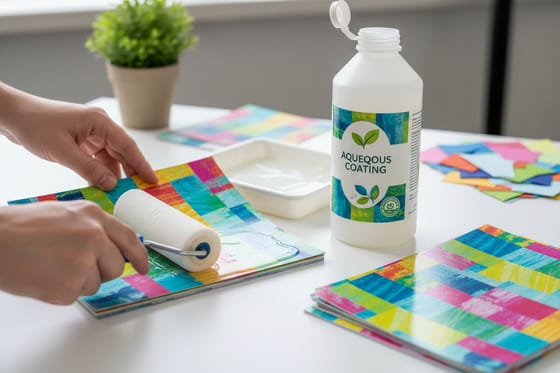
| Aqueous | Water-based sealer flooded over the printed sheet. | Stays flexible. The safest coating on anything that gets folded. | Folded pieces that also need scuff protection. |
| UV | Liquid cured hard under ultraviolet lamps. | The hardest film and the worst at a crease. It cracks. | Flat pieces. Keep it off fold lines. |
| Uncoated | No surface layer at all. | Folds cleanly at any weight. Nothing to crack. | Forms, checklists, anything written on. |
Two of those deserve a longer look before you commit. Aqueous coating is the one most people should be asking for on a folded pamphlet, because it protects the surface during handling without turning brittle. UV coating looks spectacular and is the wrong answer here, unless it is applied as a spot treatment that deliberately avoids the fold.
Uncoated is undersold. If your pamphlet is a clinic intake sheet, a workshop worksheet or a sign-up piece, ink has to dry on it. Coated stock repels a ballpoint and smears. Take the softer photos and give people a surface they can use. The broader stock comparison lives in printing paper stocks explained.
Scoring and Grain, the Two Things That Stop a Fold Cracking
A score is a channel crushed into the paper along the fold line, pressed in by a rule or a scoring wheel before the sheet reaches the folder. It is not a cut and it does not weaken the sheet. What it does is force the fibres to bend along a wider, controlled radius, so the outer surface stretches gradually instead of snapping.
Ask for it whenever the stock is cover weight, whenever it is coated and heavy, and whenever the fold crosses a dark solid. That last one catches people out. A crack in the coating shows white, so a hairline split is invisible on a pale panel and glaring across a black or deep blue one. If your fold line runs through a solid, treat the job as cover weight even when it is not.
Grain is the other half. Paper fibres align in the direction the sheet travelled through the mill, and a fold parallel to that alignment closes softly while a fold across it has to break fibres to close. On a trifold this matters because both folds run the same way, so the press operator sets the sheet up to run the grain with them. You do not specify grain when ordering, but it is why the same artwork folds beautifully at one size and roughly at another.
Three habits keep the crease clean. Keep small type at least an eighth of an inch away from a fold, because even a good score shifts the surface slightly. Avoid running a thin rule directly along a fold line, since any tiny variance in the fold makes it look crooked. And build the panels to the right widths, which is the single most common file error we see. Start from a correctly sized layout in the blank template library, and check the maths against the brochure sizes and fold options guide.
Picking the Stock for the Pamphlet You Are Actually Printing
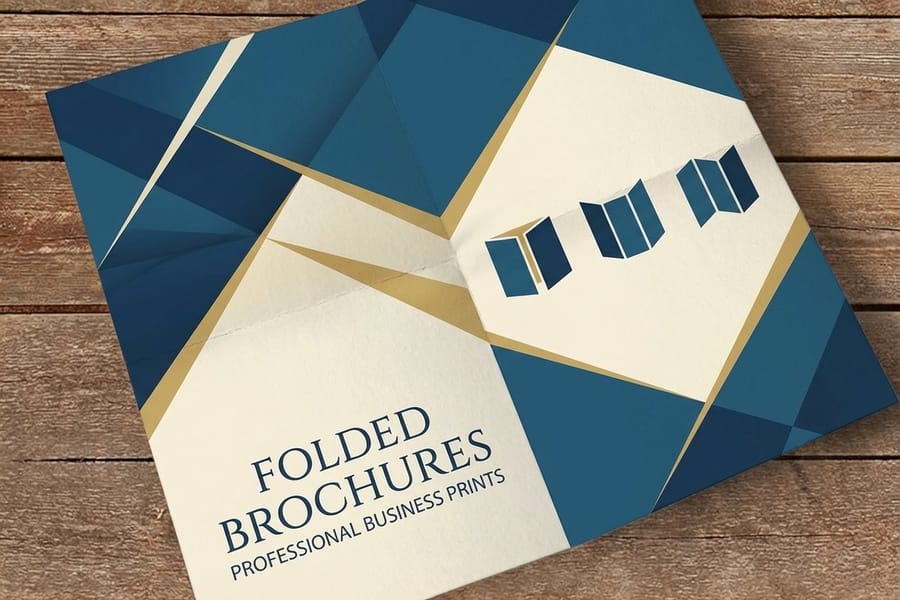
Work backwards from where the piece ends up. It settles the stock faster than any chart does.
- Rack or literature holder. 100 lb gloss text. Lighter stock curls over the lip of the holder within a day and looks abandoned.
- Mailed in an envelope, high volume. 80 lb text. It keeps the weight and the postage down while still reading as printed rather than photocopied.
- Handed over at a meeting as a leave-behind. 100 lb cover, scored. The stiffness is the message, and it survives a bag.
- Filled in, ticked or written on. Uncoated text. Give up the photo punch and get a surface that takes a pen.
- Menu or price list handled all day. 100 lb cover with aqueous coating. Fingerprints and grease are the enemy, not color.
Once you know the stock, the format follows. A single folded sheet is a folded brochure, starting at $57.11. If the pamphlet is flat and unfolded, order it as a standard brochure, also from $57.11, or as a standard flyer from $39.54 when the piece is a straightforward one-sheet handout. A multi-page pamphlet that needs a spine is a booklet, from $240.55, and a longer folded newsletter format runs from $75.80 on standard newsletters.
If you are still weighing formats rather than stocks, booklet vs brochure vs flyer settles it in one read, and brochure paper types covers the same stock question from the brochure side. To see live weights, coatings and quantity pricing, open brochure printing or flyer printing and configure the job.
Wally explains the fold
Score first, then fold, and nothing cracks
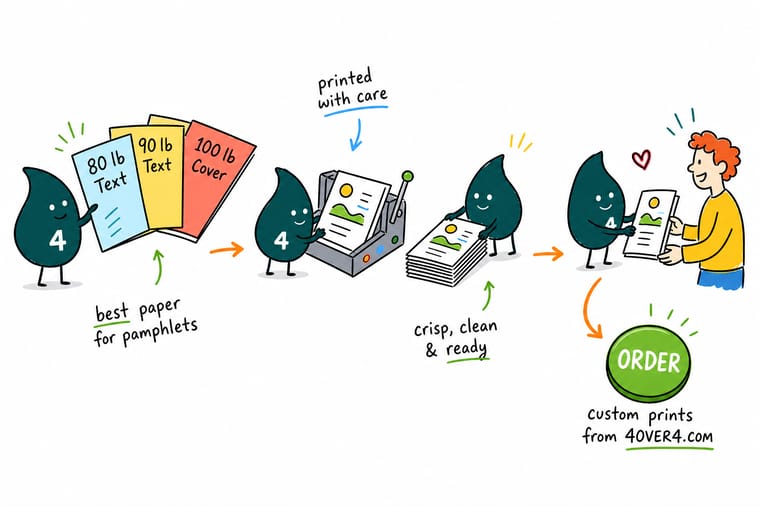
Wally holds two sheets. The light one, 100 lb text, folds shut and the crease stays clean. The heavy coated one splits white down the fold because the coating cannot stretch that far. So he runs a scoring rule down the line first, crushing a shallow channel into the fibres, and folds it again. This time it closes soft. Pick the weight for where the pamphlet lives, then let the score handle the rest.
Order folded brochures →Specs and pricing
Pamphlet formats, stocks, and starting prices
Compare the three formats a pamphlet usually lands on, with live stock and coating choices and starting prices from the 4OVER4.COM configurator.


Print it
Order the pamphlet on the right stock
Explore more
Where to go next


By the numbers
Pamphlet printing you can count on at 4OVER4
Common Questions
Your pamphlet paper questions, answered
What weight paper is best for a pamphlet?
100 lb gloss text, which is about 148 gsm, is the standard and the safest starting point. It is roughly twice the thickness of copier paper, so it does not go limp on a rack, and it still folds without special handling. Drop to 80 lb text when you are printing several thousand and want the weight and the postage down. Move up to 100 lb cover only when the pamphlet is a leave-behind that has to survive a bag or a glove box, and expect to score it before folding.
Why does my pamphlet crack along the fold?
The coating on the outside of the fold cannot stretch. A coated sheet carries a thin clay layer on the surface, and when you bend the sheet the outer face is pulled in tension while the inner face is compressed. On light text stock the fibres take that stretch. On cover stock they do not, so the clay layer splits and shows the white paper underneath. The fix is a score, which is a channel crushed into the sheet along the fold line so the fibres bend along a controlled radius instead of tearing.
What is scoring and does it cost extra?
Scoring presses a groove into the sheet with a rule or a wheel before folding. It is not a cut and it does not perforate anything. On a folded brochure run it is part of the folding operation rather than a separate line item, which is why it is worth asking for on any cover-weight job instead of hoping the fold survives. The one thing scoring cannot fix is a fold running against the grain on very heavy stock, which still feathers.
Gloss or matte for a pamphlet?
Gloss if photography and color are carrying the message, matte if the piece is text-heavy or someone is going to write on it. Gloss reflects light off the coating, which makes dark areas look deeper and colors look more saturated, and it resists scuffing better. Matte scatters light, so type is easier to read under office fluorescents and there is no glare on a page of body copy. Matte does show fingerprints and handling marks on dark solids.
Can I print a pamphlet on uncoated paper?
Yes, and it is the right choice for anything people fill in or write notes on, because ink from a pen sits on a coated sheet and smears. The trade-off is color. Uncoated fibres absorb ink, so images look softer and dark solids print lighter than they appear on screen. Build the artwork for it: larger type, higher contrast, fewer subtle tonal shifts, and no expectation of a deep rich black.
Is a pamphlet the same as a brochure?
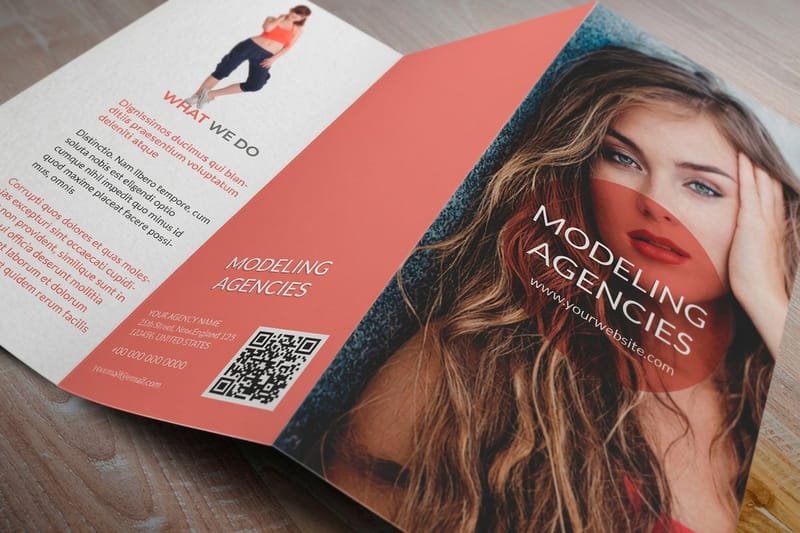
In the print shop they are the same job. Pamphlet usually describes an informational piece, often a single folded sheet handed out at a clinic, a school or an event, while brochure suggests something selling a product. Both are ordered as folded brochures, both use the same stocks, and both are quoted the same way. Folded brochures start at $57.11 at 4OVER4.COM, whichever word you use for the piece.
What size should a pamphlet be?
An 8.5 by 11 inch sheet folded in three is the workhorse, because it fits a standard rack, a number 10 envelope and most literature holders. An 11 by 17 sheet folded in half gives you four larger panels when you have more to say. A 8.5 by 14 sheet folded in four suits menus and step-by-step instructions. Check the panel widths before you design: on a trifold the panel that tucks inside has to be about an eighth of an inch narrower so it does not buckle.
Get Started
Ready to print a pamphlet that folds clean?
Pick the weight, pick the coating, and we score the sheet before it goes through the folder so the crease stays sharp instead of splitting white.
Legal Disclaimer
Gold Standard guarantees apply to all standard orders placed through 4over4.com. Price match requires verifiable proof of a competitor's published price for an equivalent product with matching specifications and turnaround time. Satisfaction guarantee covers manufacturing defects and print quality issues. Contact support with order number and documentation. On-time delivery rate based on tracked orders 1999 to 2026. Individual results may vary based on shipping carrier performance.
