
How to Plan and Print Business Pamphlets That Get Read


A pamphlet is a folded sheet, and the fold decides everything after it. Here is how to choose one, size the panels, pick stock that folds cleanly, and get the file to press without a reprint.
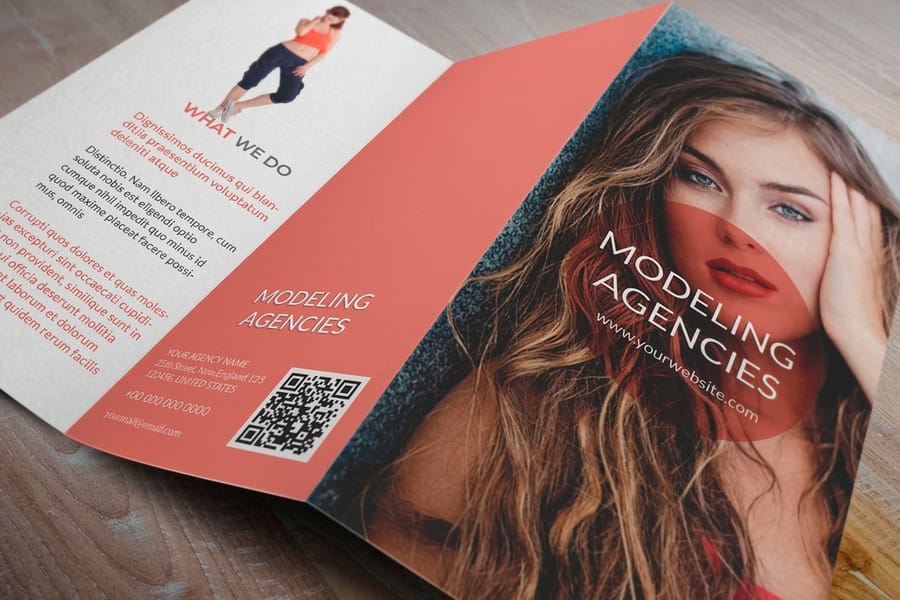
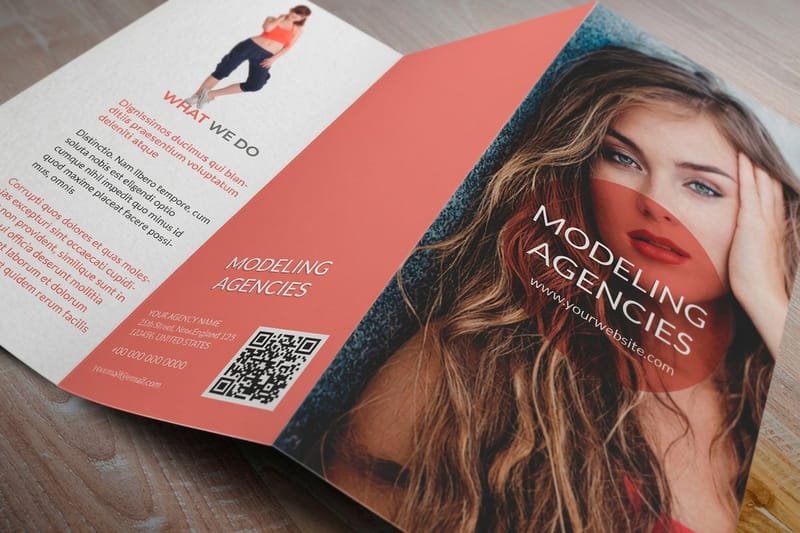
A business pamphlet is one sheet printed on both sides and folded into panels, which printers sell as a brochure. Plan it by choosing the fold first: a half fold gives four wide panels, a letter fold or Z fold gives six narrow ones at about 3.67 by 8.5 inches. Then size the panels, remembering that the panel which tucks inside a letter fold is trimmed 1/16 inch narrower, keep type a quarter inch off every crease, and print on 100lb gloss text so the fold does not crack.
Quick answer
Fold first, panels second, paper third
Order a business pamphlet as a brochure, because that is what it is: one sheet, both sides, folded. Pick the fold before the layout, since it fixes both the panel count and the panel width. Four wide panels from a half fold suit a menu or one big image; six narrow panels from a letter or Z fold suit three short sections plus a cover and a back. Size the tuck panel 1/16 inch narrower than its neighbors, keep type clear of the creases, and run it on a text weight that folds without cracking.
Pamphlet, Brochure, Leaflet or Flyer: What You Are Actually Ordering
The words overlap in everyday use and separate cleanly in a print shop. Pamphlet is the umbrella term for a small unbound piece. Brochure is what printers call the folded sheet you almost certainly mean.
| Word | What it means at press | Folds | What to order |
|---|---|---|---|
| Pamphlet | Any small unbound printed piece, folded or stitched. | None to many | Depends on page count |
| Brochure | One sheet, printed both sides, folded into panels. | 1 or 2 | Standard Brochures |
| Leaflet | British usage for the same folded sheet. | 1 or 2 | Folded Brochures |
| Flyer | A single flat sheet with no fold at all. | None | Standard Flyers |
| Booklet | Several sheets gathered and stitched at the spine. | Bound | Standard Booklets |
The practical consequence sits in the fold column. A flyer carries two sides, so it holds one message. A folded pamphlet carries four or six panels, which means it can hold a sequence: what you do, how it works, what it costs, how to get in touch. If your content genuinely fits two sides, do not pay for the fold. Our guide to what a brochure is covers the formats in more depth.
Choose the Fold Before You Design a Single Panel
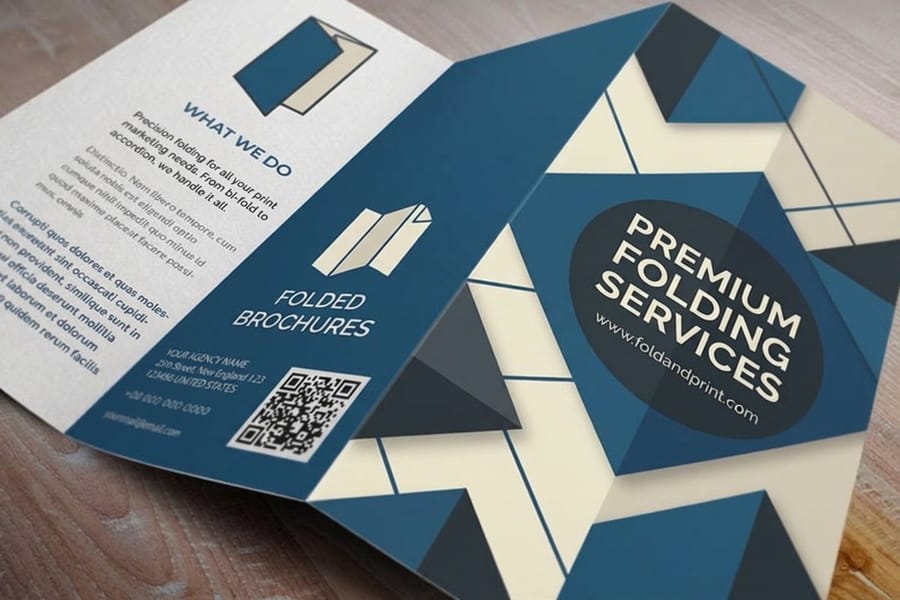
The fold sets the panel count, the panel width, and the order in which a reader sees your content. Design first and fold second, and you get a headline crossing a crease.
- Half fold, four panels. An 8.5 by 11 sheet folded once gives four panels at 5.5 by 8.5 inches, the widest of any option. Best for a menu, a price list or a single strong photograph. It is also the cheapest to fold and the least likely to go wrong.
- Letter fold, six panels. Three panels a side, finishing near 3.67 by 8.5 inches. This is the rack standard and it fits a #10 envelope unfolded. The trade-off is width: a three column table will not fit on a 3.67 inch panel, and neither will a wide photograph without cropping it hard.
- Z fold, six panels. Same panel count as a letter fold but the sheet zigzags, so all three inside panels appear at once when it opens. Use it for a timeline, a process, or a before and after. The catch is that readers find a Z fold harder to close again, which matters for anything you want kept.
- Gate fold, six panels. Two flaps open outward from a double width center panel. It creates a genuine reveal and it is the fussiest to set up, because the two flaps must be trimmed slightly short of the center so they meet without overlapping.
One limit worth knowing before you commit: the fold behaves differently on different stock. On 100lb gloss text every fold above folds cleanly straight off the machine. Take the same letter fold to a cover weight and it needs scoring first, or the coating splits along the crease. How to fold a brochure walks through fold direction and scoring, and common brochure sizes and fold options lists the finished dimensions for each.
Panel Widths, Bleed, and the Sixteenth of an Inch That Saves the Job
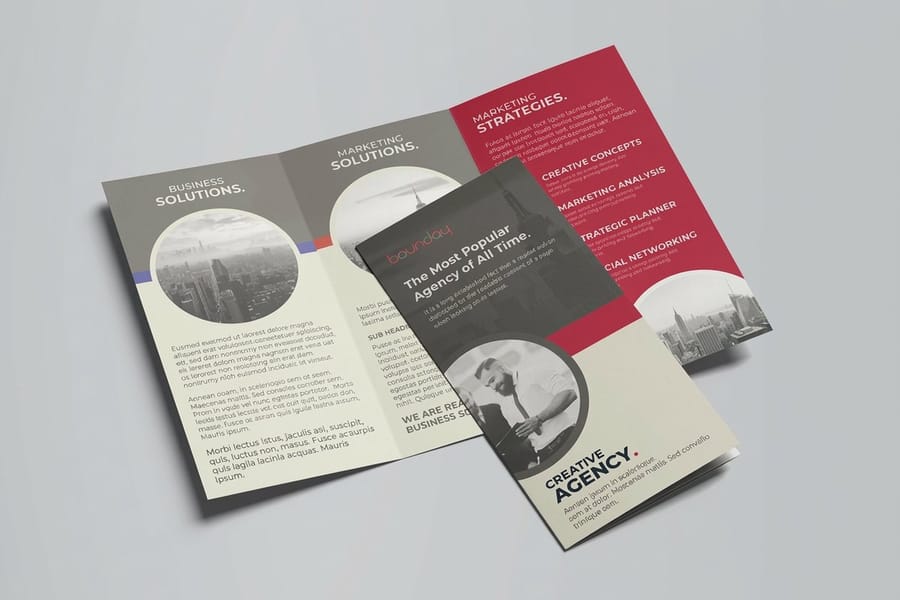
Most pamphlet reprints come from one of three setup mistakes, and all three are avoidable in about ten minutes of file prep.
Equal panels on a letter fold. The panel that folds in first has to be narrower than the two wrapping around it, or the closed piece buckles at the second fold. On an 11 inch sheet the standard split is 3.6875, 3.6875 and 3.625 inches. On a 14 inch legal sheet folded in three the tuck panel drops by the same sixteenth. Set that in the document before you draw anything.
Type sitting on a crease. Keep text and logos at least a quarter inch clear of every fold line, not just the trim edge. Folding tolerance is real, and a headline that straddles a crease will look misaligned on some copies even when the file is perfect. Background colors and images can cross the fold happily; words and faces should not.
Missing bleed. Any color running to the edge needs an eighth of an inch of bleed past the trim, and everything you care about should stay an eighth of an inch inside it. That part is the same as any other print job.
The quickest way past all of this is to start from a file that already has the panels and folds marked. Our blank template library has correctly split layouts for each fold, and the how to make brochures guide covers the build from blank page to print ready PDF.
Paper, Quantity, and What a Pamphlet Really Costs
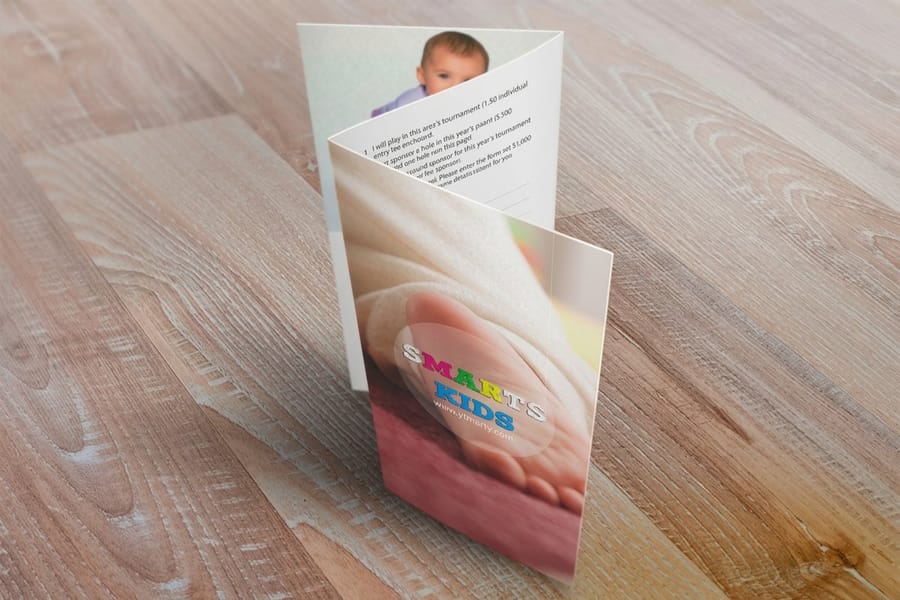
Stock choice is where a pamphlet either feels like a business is doing well or feels like a photocopy. It is also where people overspend without gaining anything.
100lb gloss text is the workhorse. It has enough body that the piece does not flop in the hand, it holds photographs with good contrast, and it folds without a score because the sheet is thin enough to bend rather than crack. Move to an uncoated text weight when someone has to write on the piece, because pen ink sits on top of a gloss coating and smears. Move up to cover weight only when the pamphlet is a leave-behind that lives in a bag for weeks, and expect to pay for a scoring pass on top of the fold. Matte versus glossy covers the finish side of that decision, and best paper types for brochure printing covers the weights.
On cost, the shape of the curve matters more than the starting number. Standard Brochures start at $57.11 and Standard Flyers at $39.54, and most of that difference is the bindery pass that puts the fold in. Folded Flyers start at $68.54. Because setup is a fixed cost spread across the run, the price per piece drops sharply from 100 copies to 1,000, which is why ordering a realistic year of stock usually beats reordering in small batches. The exception is anything with a date, a price or a phone number that will change.
Once the content outgrows six panels, stop folding. Standard Booklets start at $240.55 and give you a stitched spine, a proper page sequence, and room to breathe. The full range sits in brochure printing and booklets and catalogs.
Plan the Panels in the Order a Reader Opens Them
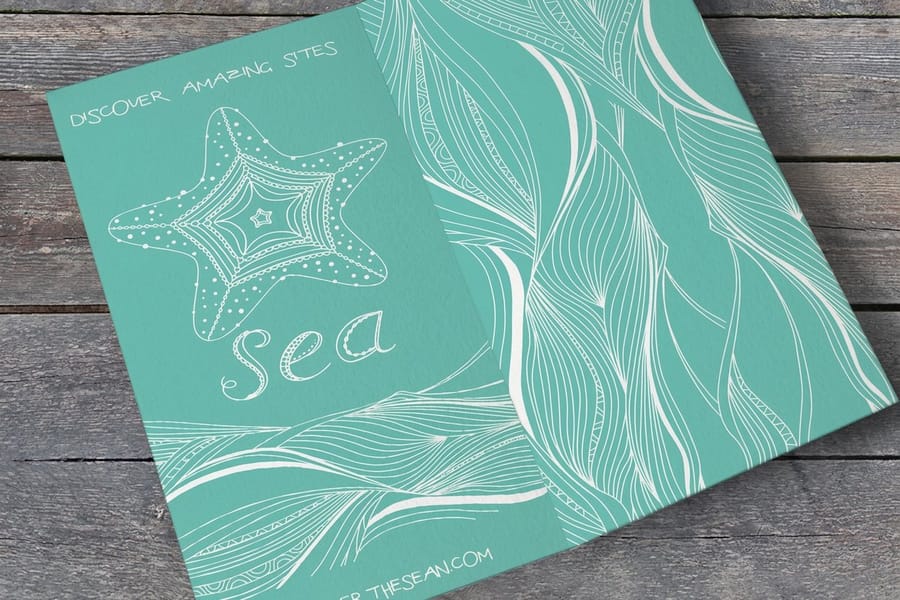
A pamphlet is read in a fixed sequence, and writing it in that sequence is the difference between a piece that gets kept and one that gets binned at the door.
The cover panel gets one idea. Not a logo floating in white space. A short statement of what you do for whom, and enough of a reason to open the thing. The logo can sit small at the bottom; it is not the argument.
The first panel opened is the tuck flap. On a letter fold, the reader lifts the cover and sees the narrow tucked panel before the full spread. That panel has to make sense on its own, so it is the right place for the short version: three bullets, a proof point, or the single offer.
The inside spread is the argument. Two or three panels visible at once is the most attention the piece will ever get. Put the detail here, in scannable blocks rather than a wall of text, and keep one clear path through it.
The back panel does the work everyone forgets. Contact details, hours, a map if location matters, and a QR code that goes somewhere specific rather than to your homepage. If the pamphlet is going in the mail as a self mailer, this panel is also the address area, and it has to stay clear of the barcode zone. Our guide to QR codes on flyers, brochures and postcards covers sizing and placement, and Direct Mail Brochures handle the mailing side of a self mailer from $238.73.
Wally folds a pamphlet
Three panels, and one of them is deliberately narrower
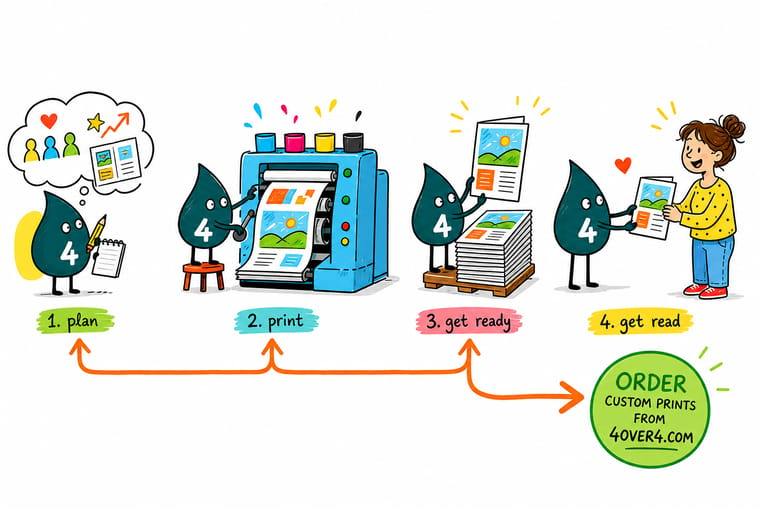
Wally prints the sheet flat, then folds it into three. The panel that goes in first is cut 1/16 inch narrower than the other two, which is the only reason the closed pamphlet lies flat instead of bulging at the second crease. He keeps the headline a quarter inch clear of the folds, runs it on 100lb gloss text so the coating bends instead of splitting, and puts the address panel on the back before anyone asks about mailing it.
Configure your brochures →Specs and pricing
Folds, sizes, and starting prices
Compare the folded and flat options side by side, with live configuration choices and starting prices straight from the 4OVER4.COM configurator.

Print it
Order the pamphlet you just planned
Explore more
Where to go next
By the numbers
Folded printing you can count on at 4OVER4
Common Questions
Your business pamphlet questions, answered
Is a business pamphlet the same thing as a brochure?
For ordering purposes, yes. Pamphlet is the general word for a small unbound printed piece, and it covers everything from a single folded sheet to a stitched booklet. Brochure is the trade name printers use for the folded sheet specifically, which is why our product is called Standard Brochures rather than pamphlets. If your piece is one sheet with one or two folds, order brochures. If it runs to eight pages or more with a stitched spine, order booklets.
What size is a standard business pamphlet?
The common one is an 8.5 by 11 inch sheet folded into three panels, which finishes at roughly 3.67 by 8.5 inches. That finished size is not an accident: it drops into a standard literature rack pocket and slides into a #10 business envelope without a second fold. The other sizes worth knowing are 8.5 by 14 legal folded to 3.67 by 8.5 when you need more room, and 11 by 17 half folded to 8.5 by 11 when you want magazine-sized panels.
How many panels should a pamphlet have?
Four if you have one story to tell, six if you have three. A half fold gives four panels that are each 5.5 inches wide, which suits a menu, a price list or one large photograph. A letter fold or Z fold gives six panels at about 3.67 inches, which suits three short sections plus a cover and a back. Past six panels the reader loses the thread and the folded piece gets bulky, so that is the point to move to a saddle stitched booklet.
Which paper weight should I choose for a folded pamphlet?
100lb gloss text is the default and it earns the position. It feels substantial, holds photographs well, and folds without cracking because the fibers are thin enough to bend rather than break. Choose 100lb uncoated text instead if anyone needs to write on the piece, since ink beads on a gloss coating. Only go to cover weight when the pamphlet is a leave-behind that has to survive a briefcase, and score it before folding when you do.
Can I mail a pamphlet without an envelope?
Yes, as a self mailer, but the setup rules are strict and they are the usual reason a mailing gets rejected at the counter. USPS wants the folded closed edge as the bottom leading edge of the piece, the open edge sealed with tabs rather than left loose, and a clean address area with nothing printed into the barcode zone. Design the address panel while you design the cover, not afterwards. Direct Mail Brochures start at $238.73 and include the mailing side of the job.
What does it cost to print business pamphlets?
Standard Brochures start at $57.11 and Standard Flyers start at $39.54, and most of that gap is the folding pass rather than the paper. Folded Flyers start at $68.54 for the heavier folded options, and Standard Booklets start at $240.55 once you need a stitched spine. Setup dominates at low quantities, so the price per piece falls steeply between 100 and 1,000 copies. Run the configurator on the product page with your real quantity before you commit to a fold, because a fold you do not need is the easiest cost to remove.
Get Started
Ready to print a pamphlet that opens the right way?
Choose your fold, set the panels, pick a stock that creases cleanly, and we print folded brochures that lie flat in a rack and survive a pocket.
Legal Disclaimer
Gold Standard guarantees apply to all standard orders placed through 4over4.com. Price match requires verifiable proof of a competitor's published price for an equivalent product with matching specifications and turnaround time. Satisfaction guarantee covers manufacturing defects and print quality issues. Contact support with order number and documentation. On-time delivery rate based on tracked orders 1999 to 2026. Individual results may vary based on shipping carrier performance.
