
12 Small Business Flyer Examples That Get Calls


Sofia is our design and templates voice, built from the knowledge of our production team, with over 20 years in printing.
The small business flyers that produce calls all do the same three things: one offer stated in the headline, one photograph of work you actually did, and one way to respond with a date on it. Below are twelve real layouts by trade, each with the trim size and paper weight it should be printed on, from lawn care and plumbing through restaurants, studios, club nights and fundraisers. Every example fits one of five trim sizes from 4 x 6 to 11 x 17 inches, and standard flyers start at $39.54 for 50. Two trades have their own pages: lawn care flyers and our Plumbing Flyers story.
Flyer examples by business type
| Business type | Trim size | Stock | What the layout carries | Product at 4OVER4 |
|---|---|---|---|---|
| Trades and home services | 8.5 x 11 in | 100 lb gloss text | Before-and-after photo, flat price, service radius | Standard Flyers |
| Restaurants and cafes | 5.5 x 8.5 in | 100 lb gloss text | One dish shot, hours, pickup number | Standard Flyers |
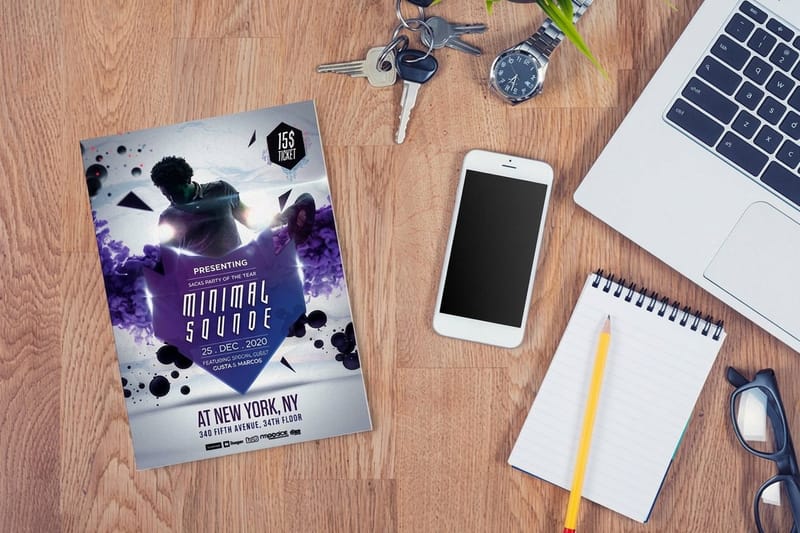
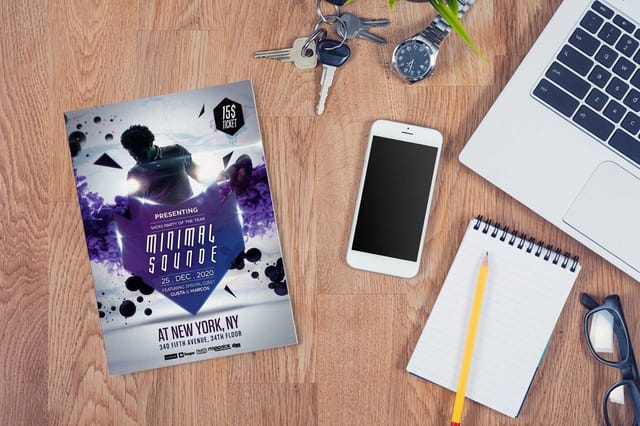
| Clubs, DJs and bar nights | 4 x 6 in | 16 pt cardstock, gloss | Lineup, door time, venue address | Club Flyers |
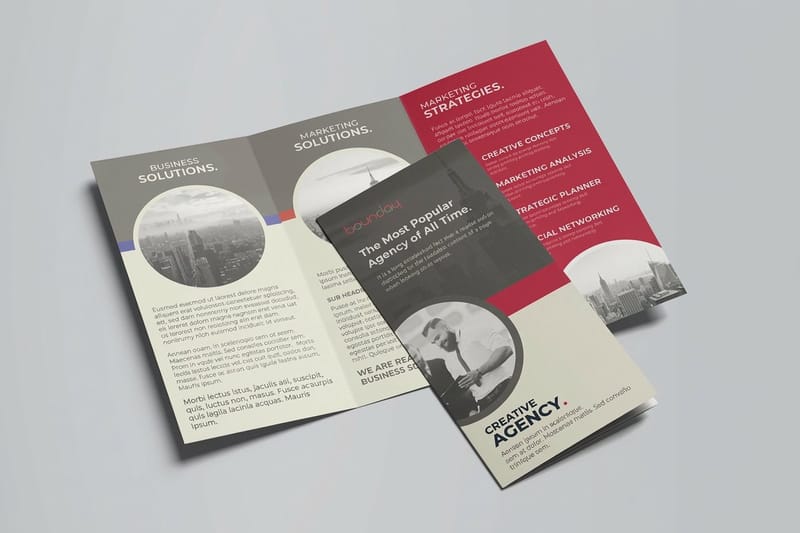
| Studios with a timetable | 8.5 x 11 folded | 100 lb gloss text, folded | Offer outside, full class grid inside | Folded Flyers |
| Anything posted or mailed | 4 x 6 or 6 x 9 in | 14 pt or 16 pt cardstock | Address panel, one offer, expiry date | Standard Postcards |
Trim size follows distribution, not word count. Print the smallest run available, 50 standard flyers for $39.54 or 50 club flyers for $16.48, put it where it will live, and read it from the distance the customer will. You can order standard flyers in any of these sizes straight from the configurator.
What separates a flyer that gets calls from one that gets binned
A flyer gets about two seconds on a windscreen and maybe four on a counter. In that window a reader takes in the top third and nothing else, which is why the offer belongs in the headline and not in a paragraph halfway down. Everything under the fold is for the small number of people the top third already convinced.
The second thing that separates them is proof. A photo of a lawn you actually cut, a room you actually painted or a plate you actually serve outperforms a stock image of a smiling stranger, because a local reader recognises the street or the crockery. Stock photography signals that the business could be anywhere, which is the opposite of what a neighborhood flyer is for.
Third is a single route to respond. Two phone numbers, a website, an email and a QR code together make a reader choose, and choosing is friction. Pick one number or one code, put a date on the offer, and let the rest of the contact detail live on the site the code opens. Our rules for flyer design that gets read go deeper on the layout side, and our guide to flyer design covers the file from blank page to upload.
The three zones every working flyer uses
Split the sheet into thirds. The top carries the offer in six words or fewer, sized to read from about six feet away. The middle carries one photograph and the price or the scope. The bottom carries the response block: one number, one QR, one expiry date.
On a 5.5 x 8.5 inch flyer that top zone shrinks to under three inches, so the headline loses roughly two words before it stops reading at arm’s length. That is the real reason to move up to 8.5 x 11 inches, not the extra room for body copy.
Where the flyer is going decides half the design
A flyer handed to someone at an event can be busier, because the reader is standing still and holding it. A flyer left under a wiper is read while walking, so it needs to work at a glance and survive being folded into a pocket. A flyer taped to a community board competes with thirty others, which is where a strong flat color field beats a photograph.
Doors are the other constraint. Loose flyers slide off handles and end up in the gutter, so for door work either use a proper hanger or wedge the flyer in the frame. Door hangers versus flyers compares the two on cost and survival rate, and the rules on flyers in mailboxes explain why the slot is not an option in the United States.
Twelve flyer examples by trade

Each example below is a layout, not a template. The pattern is what transfers: what goes in the top third, what the photograph has to show, and which trim size and stock the piece should be printed on. For any of them, upload a PDF at the trim size with 0.125 inch bleed on all four sides and 0.25 inch of clear margin inside the trim.
Prices are the live configurator starting points, so you can see which examples are cheap to test. Club flyers start at $16.48 and standard flyers at $39.54, which puts a first run of most of these inside a small monthly marketing budget. Standard production on flyers takes 3 business days, and 2 day or next day production adds 25 or 50 percent to the order.
Examples one to six: the trades and the storefronts
1. Lawn care, one price and one photo. Headline the flat price for a standard yard, show a strip of the same lawn before and after, and name the streets you cover. Print it 8.5 x 11 on 100 lb gloss text so the grass reads green rather than gray.
2. HVAC or plumbing seasonal tune-up. The headline is the season and the deadline, not the company name. Add the license number in small type near the phone, because a homeowner letting a stranger into the house looks for it. Same size and stock as the lawn flyer.
3. Restaurant new menu or opening hours. One dish, shot large, cropped tight. Hours and the pickup number underneath, and nothing else. A 5.5 x 8.5 inch flyer on gloss text fits a takeaway bag and costs half the paper of a full sheet.
4. Coffee shop opening with a tear-off stub. Perforate or score a stub for a free drink and put an expiry two weeks out. The stub is what gets kept, so print the shop name and address on the stub itself, not just on the body.
5. Fitness studio timetable. The offer goes on the outside panel and the full class grid inside, which is exactly what a folded flyer is for. From $68.54, and it saves printing a separate schedule card.
6. Salon or barber introducing a new stylist. A headshot, the days they work, and a QR straight to that stylist’s booking page. Pointing the code at the homepage wastes the scan, a point covered in using QR codes on flyers and postcards.
Examples seven to twelve: events, services and causes
7. Real estate open house. Address and viewing time in the top third, three photographs in the middle, and the agent’s direct mobile at the bottom. Print on 14 pt cardstock so it survives being handed around a viewing.
8. Community or church event. Date, time and place first, everything else after. Nobody reads the mission statement of an event they have not yet decided to attend. Uncoated text stock here, because volunteers write directions on the back.
9. Club night or DJ lineup. The 4 x 6 inch club flyer on 16 pt gloss cardstock exists for this. Lineup, door time, venue. Heavy stock matters because these get shoved in a jacket pocket and pulled out at the door.
10. Tutoring or music lessons with tear-off tabs. Ten tabs across the bottom, each carrying the number and the subject. Print on uncoated text so the tabs tear cleanly instead of stretching, and see flyer design ideas that get noticed for the tab layouts that actually strip off.
11. Moving or junk removal, priced. A flat price for a common job beats "free quotes" because it removes the phone call the reader is avoiding. Add the insurance line and the truck size. Full sheet, gloss text.
12. Nonprofit fundraiser with one concrete ask. Convert the goal into a single unit the organization already publishes, so the ask is a real number rather than a slogan. Print it on uncoated stock and leave a blank block for a handwritten note from a volunteer.
Picking the size and the stock
Three decisions set the cost and the feel: trim size, paper weight, and coating. Artwork is free to change. These are not.
Trim size is a distribution decision. Full sheet at 8.5 x 11 inches for anything with a photograph and a price. Half sheet at 5.5 x 8.5 for volume handouts and bag stuffers, where you are printing twice as many pieces from the same sheet. 4 x 6 for club and counter work. Standard flyer sizes explained lists every trim we run with the bleed measurements.
Weight is a durability decision. 100 lb gloss text is the working default: thin enough to hand out by the hundred, heavy enough that it does not curl in the rain. Move to 14 pt or 16 pt cardstock when the piece has to sit on a counter, go in the post, or get handled repeatedly. Paper weight for flyers sets out where each one starts to fail.
The coating trade-off nobody mentions
Gloss makes photographs sing and shrugs off a drizzle. It also refuses ballpoint ink, shows every fingerprint, and throws glare under the strip lighting of a shop or a gym lobby. If a member of staff needs to write an appointment time or a name on the flyer, gloss is the wrong choice and no amount of design fixes it.
Uncoated takes pen, pencil and a rubber stamp, reads calmer, and costs the same. It gives up perhaps fifteen percent of the punch on a full-bleed photograph. Matte sits between the two: it kills the glare and still holds photographic detail, which is why it wins on anything that gets read indoors.
Print a short run before you print a thousand
Order the smallest run the configurator offers, put it in the actual place it will live, and look at it there. A headline that reads fine on a monitor at 100 percent can vanish on a noticeboard at six feet. A color that looked rich on screen can go muddy on uncoated stock.
Then scale. Flyer printing prices explained covers how the per-piece cost drops as the run grows, and where to distribute flyers covers the placements that return more than they cost.
Flyer pricing and specs at 4OVER4.COM
Flyer pricing moves with size, stock, finish and quantity, and the per-piece cost falls as the run grows: at the starting spec, 50 standard flyers cost $39.54, 500 cost $108.75 and 1,000 cost $126.32, which takes the price per flyer from about 79 cents to under 13 cents. Standard flyers come in nine sizes from 4.25 x 5.5 to 11 x 25.5 inches. The numbers below come straight from the live configurator, so you can size a campaign budget before you commit artwork.
Quantity and price
Flyer pricing and specs
Live configurator numbers on standard flyers, where the per-piece cost drops as the run climbs.
| Quantity | Price Per Unit | Total |
|---|---|---|
| 50 | 79.1¢ | $39.54 |
| 100 | 57.1¢ | $57.11 |
| 200 | 37.3¢ | $74.69 |
| 300 | 28.6¢ | $85.68 |
| 400 | 24.4¢ | $97.76 |
| 500 | 21.8¢ | $108.75 |

You can also earn coins on every order and redeem them against future printing, which stretches a small marketing budget across more distribution.
When a flyer is the wrong format
A flyer carries one offer. The moment the piece needs three services, a price list and a map, it has become a brochure, and forcing that onto one sheet produces type nobody reads. Standard brochures start at $57.11 and give the same reader four to six panels of structure instead of one crowded page. Our flyer versus brochure comparison draws the line by content volume rather than by budget.
Print it
Flyers, ready to hand out
Preset trim sizes on gloss or uncoated text, the fastest way to get a local campaign into hands.
The other wrong-format case is delivery. If the plan is to reach homes rather than hand out at a location, a flyer is a walking job and a postcard is a mailing job. Standard postcards start at $16.48, carry an address panel, and go through the mail legally, which a loose flyer in a mailbox does not. Mailing flyers covers the sizes and folds that qualify, and the types of flyers businesses use maps each format to a job.
Flyer formats by industry
The same three zones apply everywhere, but the format that carries them changes by trade.
- Home service trades. One photograph of your own work, one flat price, and the streets you cover. Full sheet on gloss text, because the photo is doing the selling.
- Food and drink. Half sheet, one dish shot large, hours and the pickup number. Cheap enough to restock the counter every week when the specials change.
- Fitness and studios. Folded flyer with the offer outside and the timetable inside, so one printed piece replaces a flyer and a schedule card.
- Nightlife and events. Club flyers at 4 x 6 on 16 pt cardstock. Heavy stock survives a pocket, and gloss holds the saturated artwork these use.
- Nonprofits and community groups. Uncoated stock with a blank block for a handwritten note. A volunteer adding a line by hand outperforms another printed sentence.
Blanks at the five trim sizes
Starting from a blank at the right trim size, 4 x 6, 5.5 x 8.5, 8.5 x 11, 8.5 x 14 or 11 x 17 inches, saves the round of resizing that eats most of a first attempt. 4OVER4.COM sizes its blanks to exact product specs, so the 0.125 inch bleed and the cut lines are already marked. Pull one from the blank template library, or start from a designed layout and swap the copy. Type choice matters more than most people expect at flyer distances, which the best fonts for flyers covers with the sizes that hold up.
Start fast
Blanks at the five trim sizes
Flyer design templates and exact-size blanks so artwork lands inside the cut line.



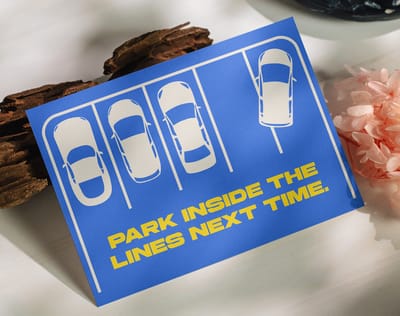

Wally reads the top third and stops
That is exactly what your customer does too
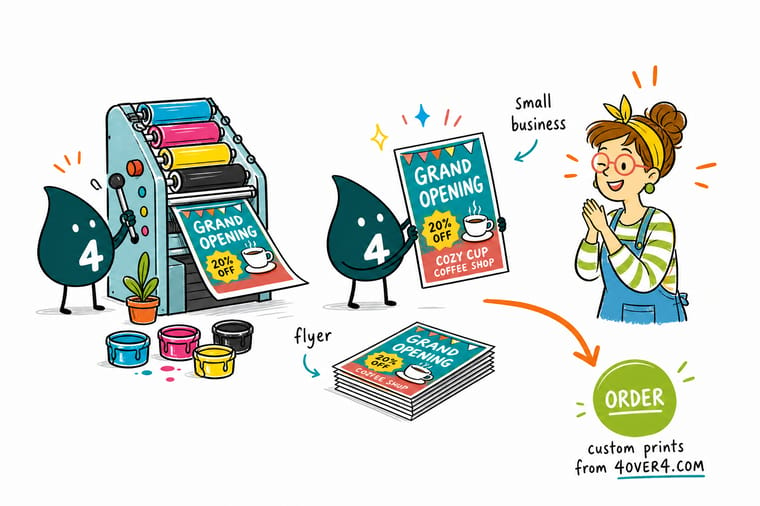
Put the offer in six words at the top, one photo of your own work in the middle, and one phone number or QR with an expiry date at the bottom. Build at 300 DPI in CMYK, add 0.125 inch bleed on all four sides, and hold type 0.25 inches inside the trim. 8.5 x 11 inches on 100 lb gloss text is the default, and 4OVER4.COM prints it fast.
Order flyers →What turns a flyer into a phone call
Design tips that hold at every size
- Six words in the headline. Count them. If the offer takes a sentence, it is not an offer yet, and the top third is the only part most readers see.
- One photograph of real work. A job you did on a street the reader knows beats any stock image. Crop it tight and let it run to the bleed.
- One response route, with a date. A single number or a single QR, plus an expiry. Two routes split the response, and no deadline means no reason to act today.
- Keep type inside the safe margin. Trim moves. Hold all text 0.25 inches inside the cut line and extend backgrounds 0.125 inches past it.
- Match the stock to the pen. If anyone will write on it, order uncoated. Gloss will not take ink, and that discovery always happens after the run arrives.
Explore more
More ways to print and promote
Club flyers run 50 for $16.48 and folded flyers 50 for $68.54, both out in 3 business days.
Product Standard Flyers Full sheet and half sheet on gloss or uncoated text. Product Club Flyers 4 x 6 inches on 16 pt cardstock for nights and counters. Product Folded Flyers Offer outside, timetable or menu inside. 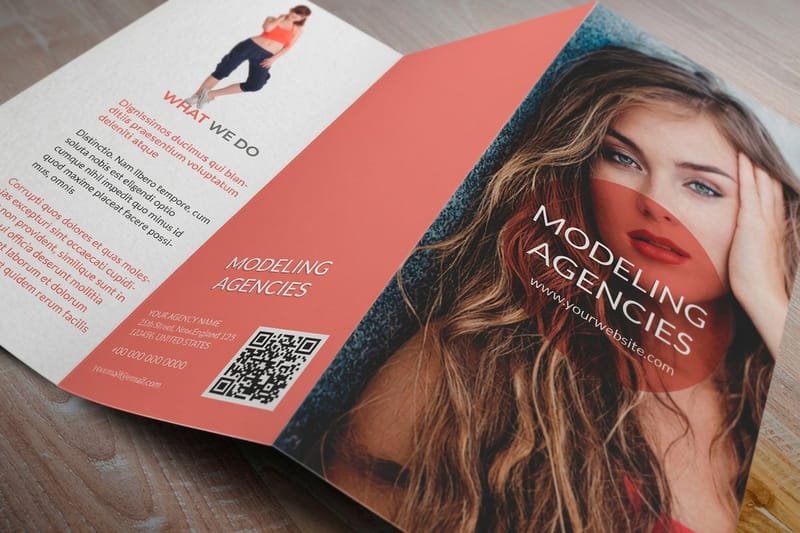 Product Standard Brochures When the flyer runs out of room for the detail. Category Flyer Printing Every trim size, stock and finish in one place.
  Guide Standard Flyer Sizes Every trim we run, with bleed and safe margins.
 Ready to print your flyers?
Pick the trim size, drop in your design or a free blank, and 4OVER4.COM prints it sharp on gloss, matte or uncoated stock, as fast as your deadline needs.
Common questions about small business flyers
What size should a small business flyer be?
Use 8.5 x 11 inches when the flyer carries a photograph and a price, because the top third stays large enough for a headline that reads from six feet away. Drop to 5.5 x 8.5 inches for volume handouts, bag stuffers and counter piles, where you get twice as many pieces from the same sheet and the reader is already holding the flyer. Use 4 x 6 inch club flyers for nights out and counter stacks, where the piece has to survive a pocket. The size follows how the flyer reaches the reader, not how much copy you want to fit.
What paper should I print small business flyers on?
100 lb gloss text is the working default for handouts: it holds photographic color, resists light rain, and stays cheap enough to print by the thousand. Switch to 14 pt or 16 pt cardstock when the flyer sits on a counter, goes in the post, or gets handled repeatedly, because text stock softens at the corners fast under that kind of use. Choose uncoated text whenever anybody will write on the flyer, since ballpoint ink beads up and smears on a gloss coating. Matte is the compromise for anything read indoors, because it holds detail without the glare.
How many flyers should a small business print for a first run?
Print the smallest run the configurator offers, place it where it will actually live, and look at it there before you scale. The common mistake is ordering five thousand of a design that has never been seen on a noticeboard or under a wiper, where headline sizes and color choices behave differently than they do on a monitor. Once a version has produced calls, reorder at a quantity that matches your distribution plan rather than the cheapest unit price, because the per-piece cost keeps dropping past the point where you can realistically hand them out.
Can I put flyers in mailboxes?
Not in the United States without postage. A residential mailbox is reserved for mail that has been paid for and carried by the postal service, so an unstamped flyer placed inside is a postal offense rather than a gray area. Hang the piece on the door handle, wedge it in the frame, or mail it properly as a postcard with an address panel and postage. Mailing turns out to be competitive for small areas once you count the time spent walking a route, and standard postcards start at $16.48.
How much do 1000 flyers cost?
At 4OVER4.COM, 1,000 standard flyers cost $126.32 at the starting spec, about 13 cents each, against $39.54 for a first run of 50. Size, stock and finish move that number, and 2 day or next day production adds 25 or 50 percent. For 4 x 6 club flyers, 1,000 cost $86.78. Check the live configurator for your exact size before you order.
What is the cheapest way to make flyers?
Print a small first run of club flyers, 50 for $16.48 at 4 x 6 inches, from a free blank template so you pay no designer fee. Test the piece where it will live, then reorder in bulk, since 1,000 standard flyers cost $126.32 against $39.54 for 50. Standard 3 day production costs nothing extra, so plan ahead instead of paying for rush.
How to print mini flyers?
Order club flyers, the mini format on this page, in sizes from 2.5 x 2.5 up to 6 x 11 inches, starting at $16.48 for 50. Build the file at the trim size with 0.125 inch bleed and 0.25 inch of safe margin, keep the headline to six words, and upload a PDF. Heavy cover stock keeps a mini flyer flat in a pocket or on a counter.
Should a flyer have a QR code or a phone number?
One of them, chosen by what you want the reader to do. A phone number wins for urgent trade work, where somebody with a leak calls rather than scans. A QR code wins for booking, menus and timetables, where the reader is browsing and the destination does the selling. Give a code somewhere specific to land, such as the booking page for the stylist named on the flyer, because a code that opens a homepage teaches people that scanning your codes is not worth the effort. Printing both splits the response instead of doubling it.
