
Mug Design Ideas That Turn Blank Cups Into Gifts People Keep


A mug design works when it is built for a wrap instead of a rectangle: keep the name, the joke or the logo inside the middle three inches, leave about an inch clear on both sides of the handle, and remember there is no white ink, so every white area in your file is just the mug showing through. Everything else, the ideas, the finish, the packaging, sits on top of those three rules.
Mug sizes and what fits on them
| Blank | Typical wrap area | Visible at once | What it suits |
|---|---|---|---|
| 11 oz ceramic | Around 8.5 x 3.5 in | About 3 in head-on | Gifts, staff swag, the default for almost everything |
| 15 oz ceramic | Around 8.75 x 4.5 in | About 3.25 in head-on | Longer copy, illustrations with vertical detail |
| 12 oz enamel camp mug | Around 8 x 3 in, flared | About 2.75 in head-on | Outdoor and retail, one or two colors, no microwave |
| 20 oz stainless tumbler | Around 9 x 7 in | About 3 in head-on | Laser engraving, single mark, hand wash |
| Color-changing 11 oz | Around 8.5 x 3.5 in | About 3 in head-on | Reveal jokes and photo surprises, hand wash only |
Wrap sizes vary a little between blank suppliers, so measure the mug you are actually printing on before you lock the artboard. The visible figure is the one that decides the layout: it is roughly what a person sees without turning the cup.
Design for a wrap, not a rectangle
A mug design fails or works on two decisions made before anyone opens a design app: where the art sits relative to the handle, and what happens to the white parts of your file. The wrap is a long thin strip, roughly 8.5 by 3.5 inches on a standard 11 oz ceramic blank, and only about three inches of it faces a person at any moment.
That is the whole geometry problem. Art laid out edge to edge looks balanced flat and then curves away, so the left and right thirds are read one at a time, never together. Put the punchline, the name or the logo in the middle. Use the outer thirds for pattern, texture, a repeated icon, or nothing at all.
The handle takes the rest. Leave roughly an inch clear on both sides of it, because that band is where the transfer seam lands and where a right-handed drinker’s fingers sit. A design that runs straight into the handle looks like a mistake even when the print is perfect. If you want the full walkthrough of setting one up, our guide to designing your own mug takes the file from blank artboard to print-ready wrap.
White is not a color you can print
Mug decoration has no white ink. Sublimation dyes the coating, so lighter areas simply show more of the mug underneath. A white logo on a black mug is not a printing choice, it is a mug choice: order black blanks and laser engrave, or screen print with an opaque white, or redraw the mark so the light parts are the ceramic itself.
This catches people out with photographs. A picture with a bright sky prints fine on white ceramic and turns muddy on a colored one, because the sky has nowhere to come from. Test one before you commit to a hundred.
Center panel, wrap, or a single small mark
Three layouts cover almost every mug worth printing. A center panel keeps the art in a 3 by 3 inch square opposite the handle, which is the safest and the one most people should use. A full wrap uses the whole strip and suits patterns, maps, skylines and anything that repeats without a focal point.
A single small mark, a two inch logo or monogram placed just off the handle, is the layout that reads most expensive. It is also the cheapest to prepare, and the one most brands skip because it feels like they are not getting their money’s worth. The same restraint that makes a logo work on a mug is what the principles of logo design are built on, and balance in graphic design is easier to judge on a curve than anywhere else.
Eleven mug ideas worth printing
These are directions that hold up on a curved surface and give someone a reason to keep the cup instead of retiring it to the back of a cupboard. They run roughly from the easiest to prepare to the most involved.
The test for every one of them: would the person who receives it use it on a Tuesday morning when nobody is watching? A mug that only works as a joke on the day it is handed over is a mug that ends up at a thrift store.
Ideas one to six: gifts and personal
1. The name, set properly. One word, one typeface, centered opposite the handle, at a size that fills about two thirds of the visible panel. Nothing else. It is the most given and least regretted mug design there is.
2. A single line in their voice. A phrase the person actually says, printed plainly. Specific beats clever. "Ask me after coffee" wears out; a line only two people understand does not.
3. A photo in a shape. Crop the photo into a circle or an arch rather than a full-bleed rectangle. The soft edge hides the fact that a curved print never quite lines up at the seam, and it stops the image looking like a screenshot.
4. A hand-drawn map. The street, the coastline, the trail. Line art wraps better than photography because there is no tonal gradient to shift, and the outer thirds carry detail without competing with the middle.
5. A recipe or a measure chart. Something the mug owner reads while the kettle boils. It earns a second look every morning, which is more than most gifts manage.
6. A color-changing reveal. The coating hides the art until hot liquid goes in. Good for a surprise, and worth knowing before you order: these are hand wash only, and the black coating never quite disappears when cold.
Ideas seven to eleven: brands, teams and retail
7. The small logo, well placed. A two inch mark just off the handle, printed once. Studios and agencies that do this end up with the mug clients actually keep on their own desks.
8. A role, not a name. "Head of Fixing Things" beats a printed job title on staff swag, because it is funny to the team and meaningless to a stranger, which is exactly right for something that lives in an office kitchen.
9. One color, one shape, a set of four. Same layout, different accent per mug. A four-mug set reads as a designed range rather than four separate gifts, and it prints from a single layout with the color swapped. The same logic that makes a calendar range hang together works here.
10. A pattern that survives the curve. Small repeating marks with no orientation, so the seam never matters and there is no wrong way to hold it. Terrazzo, dots, tiny botanicals.
11. A mug that comes with something. The mug plus a printed card, a note, and a sleeve or envelope it arrives in. This is the difference between a mug and a gift, and it is the part almost everyone skips.
Artwork prep that survives the kitchen
Build the file at 300 DPI at the final wrap size, in CMYK, with type converted to outlines. A mug wrap is small enough that a 150 DPI image looks acceptable on screen and soft in the hand, and the curve exaggerates it.
Expect color to shift. Sublimation runs through a four color process, so fluorescents, bright oranges and deep navy all come back duller than the screen promised. Brand greens are the usual casualty. If a color has to be exact, ask for a printed sample on the same blank before the run, because a proof on paper tells you very little about how a dye behaves in a ceramic coating.
Keep strokes at 0.5 pt or heavier and type at 8 pt or larger. Hairlines and thin serifs break up on a curved transfer in a way they never do on flat stock, which is the same reason t-shirt artwork needs heavier line weights than a business card does.
What washing actually does
Properly sublimated ceramic is dishwasher safe and microwave safe, and the print is in the coating rather than on top of it, so it does not peel. Three things break that rule. A metallic rim or handle cannot go in a microwave at all. Color-changing mugs are hand wash, because the coating clouds. Enamel camp mugs are usually screen printed and the ink is the layer that goes first.
The failure people report as "the print washed off" is nearly always a mug that was decorated with a vinyl decal rather than printed. Ask which process is being used before you judge the durability, because the two look identical in a product photo and behave nothing alike after a month.
The paper that turns a mug into a gift

4OVER4.COM does not print mugs. We print the part that arrives with them, and after enough client gift runs it is clear which half people remember. A cup handed over bare is merchandise. The same cup with a written note in an envelope is a gift, and the note is the thing that gets kept in a drawer.
For a personal gift, one blank envelope and a handwritten card is enough. For client and staff gifts, print a card with the reason for the gift on it. Studios that send branded mugs to clients tuck an interior design business card inside the cup, which is a smarter placement than the box, because the recipient finds it when they first pick the mug up.
Short runs matter here. A set of twenty gifts should not force an order of a thousand of anything, which is why both pieces below start low. Envelopes begin at $13.17 and cards at $17.57.
Quantity and price
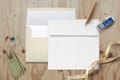
Blank envelope pricing and specs
Live configurator numbers, so you can budget the paper side of a gift run before you order the mugs.
| Quantity | Price Per Unit | Total |
|---|---|---|
| 50 | 26.3¢ | $13.17 |
| 100 | 26.2¢ | $26.20 |
| 200 | 17.3¢ | $34.60 |
| 250 | 14.5¢ | $36.24 |
| 300 | 12.1¢ | $36.24 |
| 400 | 9.47¢ | $37.87 |
Print it
A card for the inside of the cup
Short-run business cards on premium stock, sized to sit flat inside a standard 11 oz mug.
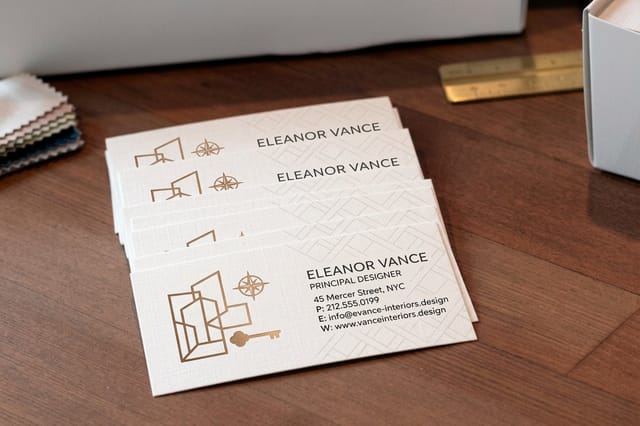
Card stock is the decision most people rush. A 14pt or 16pt card holds its edge in a mug that gets moved around; a thin card curls against the ceramic within a week. The same rules that govern the anatomy of a postcard apply to anything small and printed that has to survive being handled, and the current business card design ideas are worth a look before you set the layout.
Mug designs by who they are for
The right design changes with the audience more than with the printing method. Here is what tends to work by business type.
- Studios and agencies. One small mark, placed off the handle, on white ceramic. Pair it with a card so the mug arrives as a gift rather than as merchandise.
- Cafes and roasters. Retail mugs carry the logo big and the address small. Print a second design for staff that customers cannot buy, because that is the one people ask about.
- Teams and offices. Roles instead of names, so a mug survives someone changing desks. A four-color set from one layout keeps the kitchen looking deliberate.
- Wedding and event favors. Date, initials, a single line. Center panel only, and order two spares, because at least one gets dropped before the day.
- Retail and gift shops. Patterns and maps outsell jokes on a shelf, because a shopper is buying for someone whose humor they cannot predict.
Seasonal mugs and short runs
Seasonal mugs are the easiest print to get wrong, because the deadline is fixed and the design is usually approved late. Set the artwork three weeks before you need the boxes in hand, keep the seasonal element to a single color swap on an existing layout, and print a run you can genuinely give away rather than one that leaves a box in a store room until next year.

Holiday runs follow the same logic as any dated print job. The design work that goes into seasonal poster and flyer ideas transfers straight onto a mug, with one change: a mug lives in someone’s kitchen for years, so a design tied hard to a single date gets retired the week after. Date the card, not the cup.
If the gift set needs more than a card, a small printed booklet works: a coffee guide, a brewing method, a short story about where the beans or the brand came from. Booklet design ideas covers the formats that fit a gift box without overwhelming it.
Wally lays the art out on the curve
Middle three inches, an inch clear of the handle
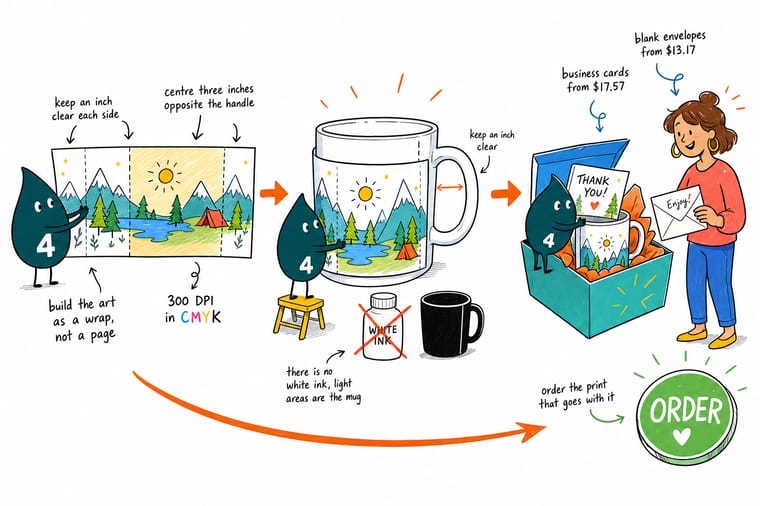
Build the wrap at 300 DPI in CMYK at final size, put the name or the logo in the center three inches opposite the handle, and leave about an inch clear on each side of it. Keep strokes at 0.5 pt or heavier, treat every white area as the mug color showing through, and print one sample before the run because dye colors shift in the coating.
Print the card that goes with it →What a wrap does to a rectangle
Design tips that hold up on a curve
- Put the point in the middle three inches. That is all a person sees at once. Anything important on the outer thirds is read late or not at all.
- Leave an inch clear each side of the handle. It is where the seam lands and where fingers sit. Art that touches the handle reads as a printing error.
- Treat white as the mug, not as ink. There is no white ink. Choose the blank color first, then design the light areas around it.
- Heavier lines than you think. 0.5 pt strokes and 8 pt type minimum. The curve eats thin marks that look fine flat.
- Print one before you print a hundred. Colors shift in the coating and the seam only shows on a real mug. One sample answers both questions.
Explore more
More design ideas and printed pieces
Blank envelopes run 50 for $13.17 and leave the press in 1 business day.
 Guide How to Design Your Own Mug The full walkthrough from blank artboard to print-ready wrap.
 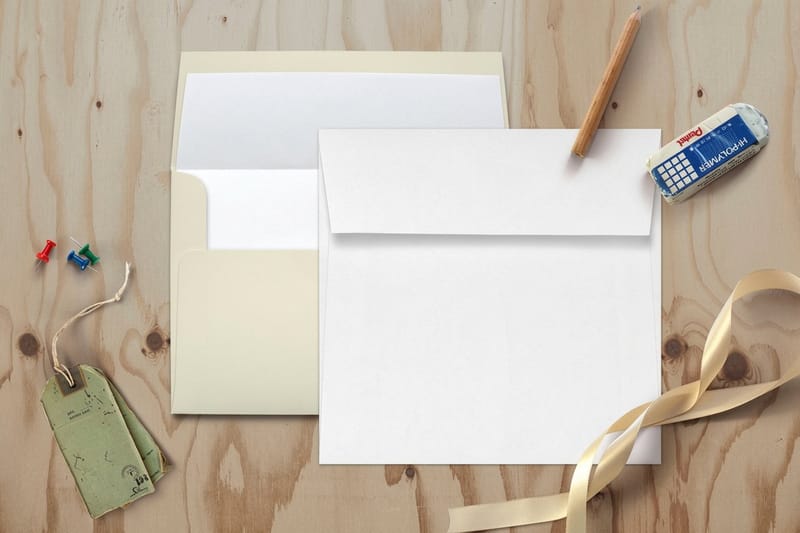 Product Blank Envelopes The envelope that carries the note the mug arrives with.
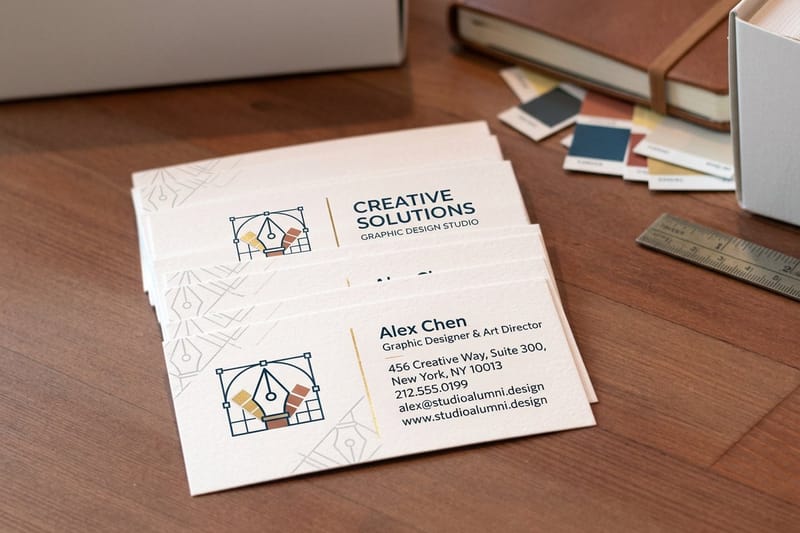
 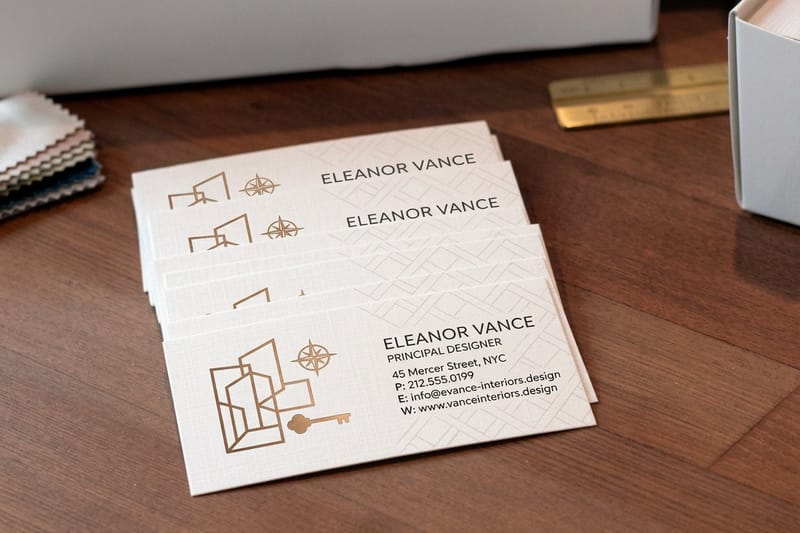 Product Interior Design Business Cards A printed card to tuck inside a branded gift mug.
  Guide 6 Key Principles of Logo Design Why a mark that works small works best on a curve.
  Guide Balance in Graphic Design Judging weight and spacing when the canvas curves away.
  Article 30 Calendar Design Ideas Range thinking: one layout, many variants, still one brand.
 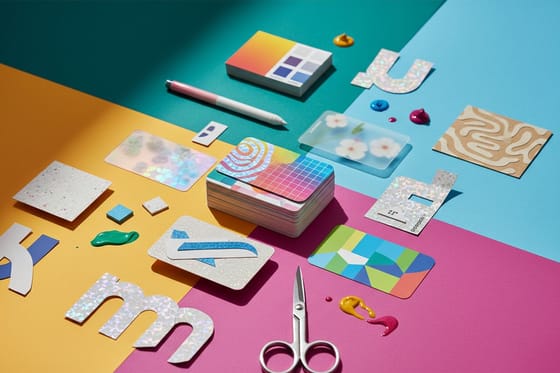 Article Business Card Design Ideas The card that goes in the box with the mug.
  Article 7 Booklet Design Ideas For gift sets that need more than a single card.
 Printing the gift, not just the mug?
Cards, notes and envelopes in short runs, printed sharp on premium stock and shipped as fast as your gift date needs.
Common questions about mug design and printing
What is the actual print area on an 11 oz mug?
Most standard 11 oz ceramic blanks take a wrap of roughly 8.5 by 3.5 inches, with about an inch left clear on each side of the handle. The important number is not the wrap though, it is the three inches or so that face a viewer at any one moment. Design as if that center panel is the whole mug and treat the rest as supporting pattern. A 15 oz blank gives you a little more height, around 4.5 inches, which is worth having if your artwork has vertical detail that gets cramped on the smaller size.
Can I print a white logo on a dark mug?
Not with sublimation, because there is no white ink in the process. The dye colors the mug coating, so anything white in your file is simply the mug showing through, and on a black mug that means the logo disappears. Three ways around it: order white blanks and print normally, use laser engraving on a coated or stainless mug so the mark is cut rather than printed, or screen print with an opaque white ink. Decide this before the artwork, not after, because it changes how the design has to be drawn.
Are printed mugs dishwasher safe?
A properly sublimated ceramic mug is dishwasher safe and microwave safe, because the image sits inside the coating rather than on top of it and has nothing to peel. The exceptions matter. Color-changing mugs are hand wash only, since repeated hot cycles cloud the coating. Anything with a metallic rim or handle must stay out of the microwave. Enamel camp mugs are usually screen printed, and that ink layer is what wears first. If a supplier will not tell you which process they use, assume the least durable one.
What file should I send for mug printing?
Send a 300 DPI file at the final wrap size, in CMYK, with all type converted to outlines and the background flattened to whatever the mug color will be. Keep strokes at 0.5 pt or heavier and type at 8 pt or larger, because thin marks break up on a curved transfer in a way they never do on flat stock. Include a note saying where the center of the design should sit relative to the handle. Printers guess when you do not tell them, and the guess is not always the one you wanted.
What should go in the box with a printed mug?
A card and an envelope, at minimum. A mug on its own is merchandise; a mug with a written note is a gift, and the difference costs less than a dollar. For client and staff gifts, a printed card with the reason for the gift does more for the relationship than anything printed on the cup. 4OVER4.COM prints the paper side of it: Blank Envelopes start at $13.17 and Interior Design Business Cards at $17.57, both in short runs so a set of twenty gifts does not mean ordering a thousand of anything.
