
Custom Poly Mailer Ideas That Brand Every Shipment


Nadia is our customer education voice, built from the knowledge of our production team, with over 20 years in printing.
Custom poly mailers are printed polyethylene bags, normally 2 to 4 mil thick, and they earn their place the moment you ship soft goods in volume. Below a few thousand bags per size the flexographic minimums stop making sense, and branding a stock mailer with printed packaging tape and a die-cut label costs far less while looking the same on a doorstep. For film, thickness and print methods, read our buyer's guide to custom poly bags.
Poly mailer sizes at a glance
| Size | Film | What fits | How it bills | Brand it with |
|---|---|---|---|---|
| 6 x 9 in | 2.0 mil | Jewelry, phone cases, one tee folded small | Actual weight on every ground service | A 2 x 2 in die-cut label on the face |
| 9 x 12 in | 2.5 mil | One or two shirts, a hoodie folded flat | Actual weight, packed height under an inch | Printed tape strip plus a label |
| 10 x 13 in | 2.5 mil | Two hoodies, sneakers out of the shoebox | Actual weight in most zones | Full-width printed tape across the seal |
| 12 x 15.5 in | 3.0 mil | Bedding, a folded jacket, three or four tees | Watch the height once the bag bulges | Label on the seal, tape over the seam |
| 14.5 x 19 in | 3.0 mil | Bulk apparel, cushions, soft homeware | Dimensional weight starts to bite | Compare against a printed mailer box |
| 19 x 24 in | 4.0 mil | Comforters and large soft goods | Often cheaper and safer in a box | Custom mailer boxes |
Measure a real packed parcel before you standardize on a size, because the packed height is what the courier charges on. Our guide to parcel size and weight limits lists where each carrier sets its cutoffs. A 9 x 12 in bag with one or two shirts should close under an inch high; if yours bulges past that, move up to the 10 x 13 in bag. If the contents will not lie flat, price the same order in a printed mailer box before you commit to bags. If you are asking what is a mailer box and how it differs from a shipping carton, our guide sets the two side by side.
What a poly mailer is, and when it is the wrong bag
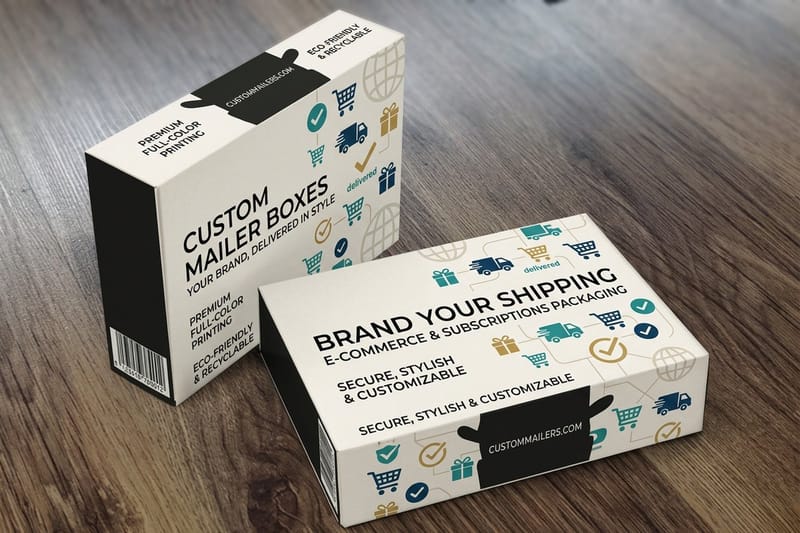
A poly mailer is a co-extruded polyethylene bag with an adhesive strip along the flap. It is opaque, waterproof, tear resistant along the seams, and it weighs almost nothing. For a folded tee, a swimsuit, a poster in a sleeve or a set of cotton napkins, nothing beats it on cost.
It protects against water and abrasion. It protects against nothing else. There is no crush resistance, no corner protection and no rigidity, so a candle jar, a framed print, a ceramic mug or a hardback book will arrive in whatever shape the truck decided. That is the line: soft and squashable goes in a bag, everything else goes in a printed mailer box.
Brands get caught out by the in-between items. A pair of sneakers survives a bag; the shoebox they came in does not, and a crushed shoebox reads as a damaged order even when the sneakers are fine. If the packaging inside is part of what the customer paid for, the bag is the wrong choice. Our comparison of cardstock against corrugated sets out how much protection each board actually buys.
Mil thickness, plainly
A mil is one thousandth of an inch. Stock mailers run from 2.0 mil up to 4.0 mil, and the number describes puncture resistance, not strength of the seal. At 2.0 mil the film is fine for soft goods with no corners. At 2.5 mil you get enough thickness that a zip, a button or a plastic hanger will not work through the film in transit. Above 3.0 mil you are usually paying for weight you do not need, unless the contents have hard edges.
Opacity matters as much as thickness. A cheap thin bag lets the color of the garment show through, which looks like a trash bag on a doorstep. Co-extruded film with a black inner layer costs a fraction more and hides the contents completely, which is also the difference between a parcel that gets left and one that gets taken.
The products that belong in a box instead
Anything rigid, anything fragile, anything that has to lie flat, and anything where the unboxing is the product. Subscription boxes, gift sets, glassware, electronics and anything with a printed inner sleeve all need structure. Kraft mailer boxes and full-color mailer boxes both start at $711.78 for a printed run, and both survive a stack of parcels on a van floor in a way film cannot.
The honest test is to pack one, drop it from waist height onto a hard floor, and open it. Do that with the bag and with the box before you commit to thousands of either. Our breakdown of ecommerce packaging formats covers the middle ground, including rigid mailers and padded options.
Branding a stock mailer without a custom print run
Custom-printed poly mailers are made on a flexographic press. Each color needs its own plate, the plates are charged once and then sit in storage against your next order, and the minimum order is measured in thousands per size. Change the size, and you buy the plates again. That model works beautifully at volume and it punishes anyone shipping a few hundred parcels a month.
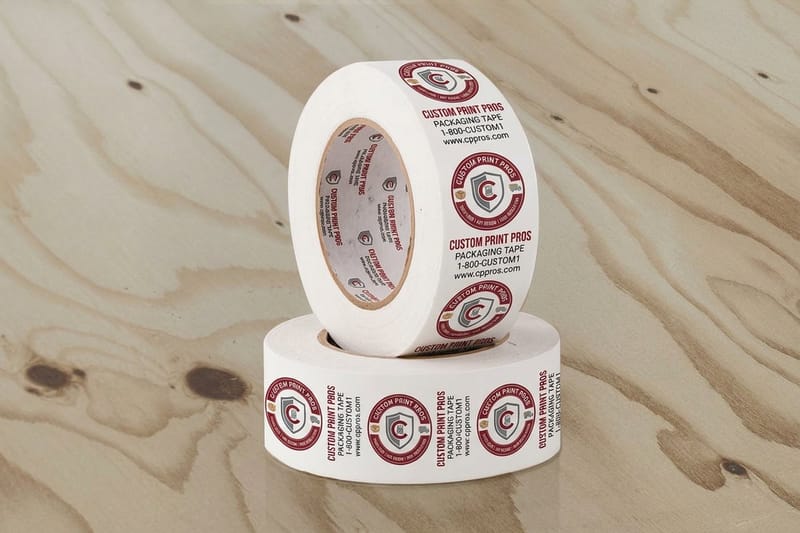
The alternative most growing brands use: buy plain black or white stock mailers, then brand them with two printed pieces that carry no size minimum of their own. Printed packaging tape starts at $347.11 and shipping labels at $25, and the pair of them read as deliberate packaging on a doorstep. Nobody outside the industry can tell the difference between a printed bag and a plain bag wearing your tape.
Printed tape does most of the work
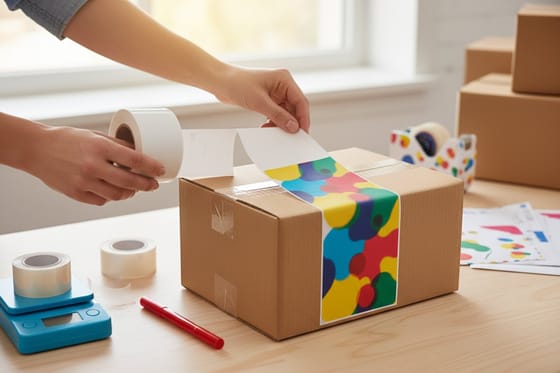
Tape is the cheapest branded surface in the whole parcel because it is priced by the roll and used by the inch. A single strip across the seal of a poly mailer covers the flap, reinforces it, and puts a repeating logo where the customer looks while opening. On a box it does the same job across the seam. There is a practical bonus: tamper evidence, because a strip that has been lifted and re-stuck is visible.
Keep the artwork simple. Tape prints in spot colors on a moving web, so a solid mark with clear counters holds up and a photograph does not. One or two colors on a contrasting background is the format that survives a rainy doorstep. We wrote up the full approach in branding every box you ship with custom tape.
A die-cut label turns a stock bag into yours
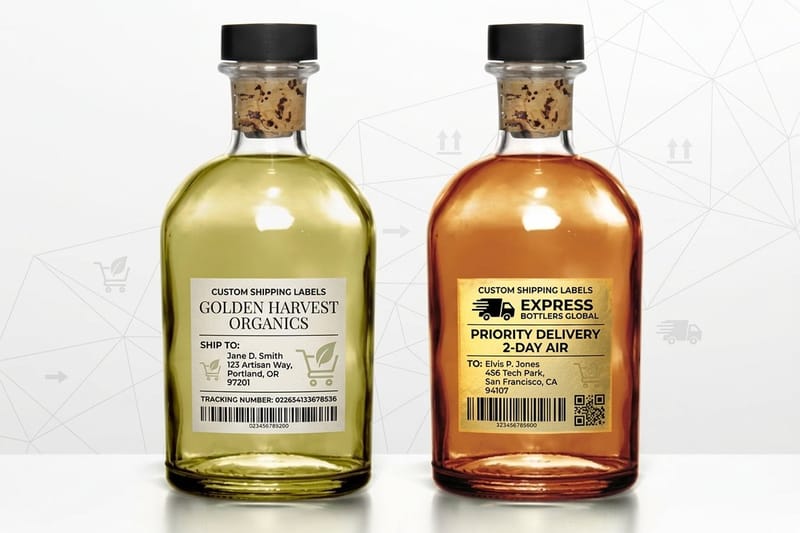
A label gives you the detail that tape cannot: full color, fine type, a batch number, a QR code, a handwritten thank-you line printed in. Put it on the face of the bag, above the shipping label, and it becomes the first thing the customer sees. Because it is printed on paper or film rather than the bag itself, you can change the artwork per drop, per season or per campaign without touching your mailer stock.
Size it to the bag, not to the artboard. On a 9 x 12 in mailer a 3 x 3 in label reads as branding; a 5 x 5 in one competes with the carrier label and confuses the courier. Keep the whole label clear of the seal strip so the flap still closes flat. If you are choosing between formats, how to choose the correct label size works through it, and shipping label printing lists the stocks that survive a wet van.
Where the shipping savings actually come from
The saving is not really the price of the bag against the price of the box, although a bag is cheaper. It is dimensional weight. Domestic couriers bill the greater of actual weight and dimensional weight, and the common retail formula is length times width times height in inches, divided by 139. USPS applies its own version, using a divisor of 166, to parcels over one cubic foot traveling to the further zones.
Run the numbers on a hoodie. Packed in a 10 x 8 x 4 in box, the dimensional weight is 320 divided by 139, which rounds up to three pounds, and you pay for three pounds even though the hoodie weighs one and a half. The same hoodie in a 10 x 13 in poly mailer packs down to roughly an inch of height, so the dimensional figure lands under the actual weight and you pay for what you actually shipped.
That gap is the whole argument, and it only holds while the bag stays flat. Overstuff a 14.5 x 19 in mailer until it is a pillow and the measured height climbs, dimensional weight comes back, and you have given up protection for nothing. Weigh and measure a real packed parcel of each type before you switch a whole product line across.
What the saving costs you
Two things. The first is damage rate: every order that arrives creased, dented or scuffed costs a replacement, a return label and a customer who tells people. Take your damage rate on bags, multiply it by the value of the order, and set that against the postage you saved. For a $25 tee the bag wins easily. For a $120 gift set it rarely does.
The second is the unboxing. A bag is a bag. If your brand sells partly on how the parcel feels, the format is working against you, and no amount of printed tape fixes it. Plenty of brands split the line: bags for basics, printed mailer boxes for the gifting range and anything over a set order value. That split is usually the right answer rather than a compromise.
What the branded pieces cost at 4OVER4.COM
Printed packaging tape sells by the case: one case of 36 rolls, 2 in by 55 yards on white polypropylene with one ink color, costs $347.11, and two cases cost $604.80, so the second case runs $257.69. Tape takes 20 business days in production, so order it before the stock bags run low. Shipping labels start at $25, in 13 set sizes from 2 x 3.5 to 5 x 7 in or any size you enter. The tables below come from the live configurator, so you can budget the tape and labels for a stock bag program before you order anything.
Quantity and price
Printed packaging tape pricing and specs
Live configurator numbers, where a longer run drops the cost per roll and the cost per parcel with it.
| Quantity | Price Per Unit | Total |
|---|---|---|
| 1 | $347.11 | $347.11 |
| 2 | $302.40 | $604.80 |
| 5 | $272.53 | $1,362.67 |
| 10 | $233.28 | $2,332.75 |
| 20 | $189.39 | $3,787.89 |
| 30 | $176.79 | $5,303.65 |
You can also earn coins on every order and spend them against future printing, which takes a little off the cost of the next packaging run.
Matching the rest of the parcel
A branded mailer only works if the pieces agree with each other. Pick one accent color and one logo lockup, then apply them to the tape, the face label and the box for the orders that need one. Printed tape carries one or two ink colors picked from a PMS list, such as PMS 286 blue or PMS 485 red, on white or clear polypropylene, so choose the accent from that list first and match the label and the box to it. Customers do not consciously notice a matched parcel; they notice a mismatched one, because it reads as three suppliers rather than one brand.
Print it
Mailer boxes for the orders a bag cannot take
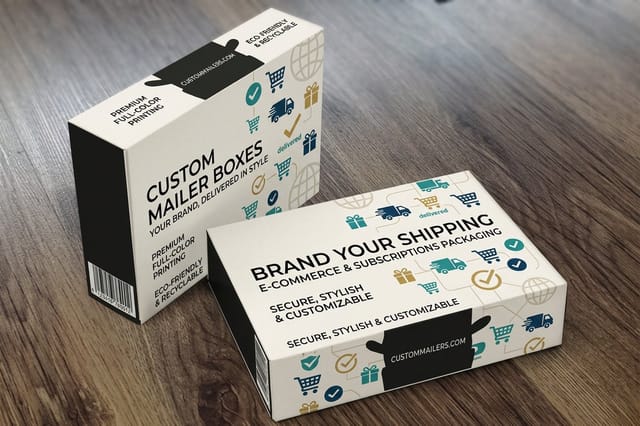
Printed corrugated mailers for gifting, glassware and anything that has to arrive square.
Keep the artwork consistent across both formats and let the substrate change. Tape prints spot colors on film, labels take full-color CMYK on paper or vinyl, and corrugated sits somewhere in between depending on the board. Setting the file up once for each is a job worth doing properly, and how to prepare files for packaging products walks through bleed, dielines and color build. If you are still choosing formats, the nine types of packaging lays them out side by side, and our packaging printing range shows what we run.
Choosing the format by what you sell
The right answer changes with the product, so here is the breakdown by category.
- Apparel and streetwear. The clearest fit. Folded tees and hoodies in a 10 x 13 in bag at 2.5 mil, branded with printed tape and one die-cut label. Keep mailer boxes for collaborations and gift orders.
- Print-on-demand sellers. Posters and prints ship rolled in a tube or flat in a rigid mailer, never in a poly bag. Use the bag for the fabric side of the range and label everything clearly so packers do not guess.
- Beauty and skincare. Sachets and cloth items fine, glass and pumps never. Most beauty brands run a bag for refill pouches and a printed box for the core line, with matching tape across both.
- Subscription boxes. The box is the product, so the bag is out. Spend the packaging budget on the printed mailer box and the inner label rather than on postage arbitrage.
- Homeware and soft furnishings. Cushion covers and throws suit the larger 12 x 15.5 in bags, but watch the packed height. Anything ceramic or framed goes into corrugated with corner protection.
Blanks for the tape and the label
Tape blanks come in the four formats we print, 2 or 3 in wide by 55 or 110 yards, and shipping label blanks cover the 13 set sizes from 2 x 3.5 to 5 x 7 in. Each blank marks the cut line and the bleed, so you spend no round of proofs moving a logo that sat on the edge of a 2 in roll. Pull a print-ready blank from the blank template library before you draw anything.
Start fast
Blanks for the tape and the label
Exact-size blanks for tape and shipping labels, so the artwork lands inside the cut line.
Wally brands a stock poly mailer in two moves
Tape across the seal, one label on the face
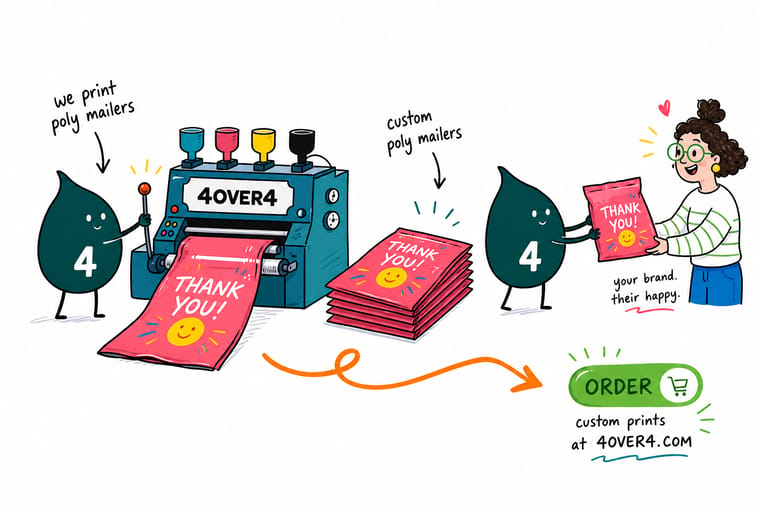
Buy plain 2.5 mil mailers, run a strip of printed packaging tape across the flap for a repeating logo and tamper evidence, then add a 3 x 3 inch die-cut label on the face, clear of the adhesive strip. Keep the carrier label flat and separate so the courier scanner reads it first time, and switch to a printed mailer box the moment the contents stop being soft.
Order printed packaging tape →What a poly bag saves and what it costs
Packing habits that keep the savings real
- Fold to the bag, not the bag to the fold. Pick the size that lets the item lie flat with about an inch of slack. A bag that has to be stretched around the contents splits at the seam, and one that swallows the item creases it.
- Keep the seal strip clear. Nothing prints or sticks within half an inch of the adhesive strip. Labels that creep onto it stop the flap sealing flat, which is where water gets in.
- One carrier label, one brand label. The courier scanner needs a clean, flat, uncreased barcode. Put your own label somewhere it cannot be mistaken for the shipping label, and never on the reverse of a bulging bag.
- Print a test strip before the run. Order the smallest quantity of tape and labels, pack ten real orders, and photograph them on a doorstep. Colors that looked right on screen often read differently against a black bag.
- Write the size on the shelf. Packers default to the bag nearest to hand. Label the shelf by product type, or you will pay for oversized bags on half your orders without ever seeing it in a report.
Explore more
More ways to pack and brand an order
Shipping labels print in 3 business days and printed packaging tape takes 20.
Product Custom Mailer Boxes Full-color corrugated mailers for orders a bag cannot protect. 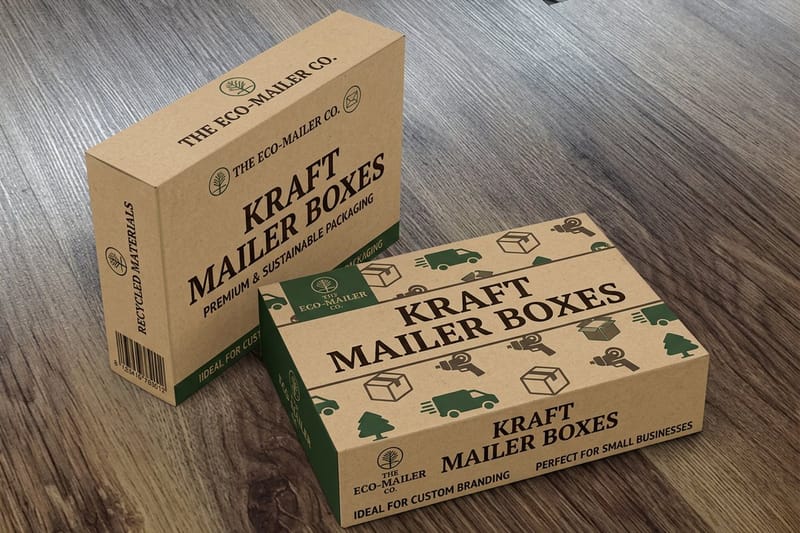 Product Kraft Mailer Boxes Uncoated kraft board, printed, for a plainer unboxing. Product Custom Printed Packaging Tape Brand the seal of every bag and box you send out. Product Custom Shipping Labels Carrier labels and brand labels that stay stuck in the wet.
  Category Custom Box Printing Every box style, board and finish we print, in one place.
  Guide How to Label a Package for Shipping Placement, barcodes and the mistakes couriers reject.
 Ready to brand every parcel you send?
Pick your tape width, your label size and a mailer box for the orders that need one, and 4OVER4.COM prints them sharp and ships them fast.
Common questions about poly mailers
Does 4OVER4.COM print custom poly mailers?
No. Poly mailers are printed flexographically on polyethylene film, which is a different press and a different supply chain from the paper, board and vinyl we run. What we do print is everything that goes on and around the bag: custom printed packaging tape from $347.11, shipping labels from $25, packaging labels, and custom mailer boxes from $711.78 for the orders a bag cannot protect. In practice that combination is how most brands under a few thousand parcels a month get branded packaging, because it carries no per-size film minimum and the artwork can change whenever you want it to.
What mil thickness should I order?
Use 2.0 mil for small soft items with no hard edges, 2.5 mil as the general default for apparel, and 3.0 mil when the contents have zips, buttons, hangers or anything else that can work through film in transit. Above 3.0 mil you are mostly adding weight and cost without adding useful protection, because the failure mode on a poly mailer is almost always a punctured corner or a lifted seal rather than the film itself tearing. Opacity is the specification people forget: a thin translucent bag shows the color of the garment through it and looks cheap on a doorstep.
Is a poly mailer really cheaper to ship than a box?
Usually, and the reason is dimensional weight rather than the price of the packaging. Couriers bill the greater of actual weight and dimensional weight, and the common domestic retail formula is length times width times height in inches divided by 139, with USPS using 166 on parcels over one cubic foot to the further zones. A box carries a fixed height whether or not the contents fill it, so you pay for the air. A packed poly mailer flattens to roughly an inch, which normally keeps the dimensional figure below the actual weight. Overstuff the bag until it is a pillow and that advantage disappears.
How do I brand a plain poly mailer on a small budget?
Buy stock black or white mailers, then add two printed pieces. A strip of printed packaging tape across the seal covers the flap, reinforces it and gives you a repeating logo exactly where the customer is looking while they open the parcel. A die-cut label on the face, three inches or so on a 9 x 12 in bag, carries the full-color detail that tape cannot hold. Keep both clear of the adhesive strip so the flap still seals flat. Order the smallest run of each, pack ten real orders, and photograph them outside before you commit to volume.
Can poly mailers be recycled?
Not in most curbside collections. Poly mailers are low-density polyethylene film, the same family as carrier bags and bread bags, and curbside sorting equipment treats film as a contaminant because it wraps around the machinery. They can go into store film-drop bins where those exist. If recycling is part of your brand promise, corrugated is the straightforward answer, because curbside programs take it everywhere. Our note on eco-friendly packaging ideas covers the honest trade-offs rather than the marketing version.
